

How Long Immunotherapy Takes to Show a Response and Why Early Scans Can Mislead

Key Takeaways
- The first scan after starting checkpoint inhibitor immunotherapy is usually scheduled around 8 to 12 weeks in, and stable disease at that point is often considered an encouraging early result rather than a failure.
- Under the iRECIST guidelines, apparent tumor growth on an early scan is labeled 'unconfirmed progression' and is meant to be rechecked with a repeat scan no sooner than 4 and no later than 8 weeks later before any conclusion is drawn.
- Pseudoprogression, in which immune cell infiltration makes a tumor look larger before it shrinks, is a real but minority phenomenon, most described in melanoma and rarer in other cancers.
- Immunotherapy works indirectly by blocking checkpoint proteins such as PD-1, PD-L1 and CTLA-4 so your own T cells can attack the cancer, which is why it typically takes longer to show effects than chemotherapy.
- Immune-related side effects are associated with response in some analyses but many people respond without any, so feeling well is never a sign that treatment is failing.
- Side effects from immunotherapy can appear weeks or months into treatment and even after it ends, which is why blood tests before each infusion and prompt reporting of new symptoms are part of the treatment itself.
Immunotherapy for cancer usually takes longer to show a measurable response than chemotherapy. Most people have their first scan roughly 8 to 12 weeks after starting, and a clear picture often needs a second scan several weeks later, because the immune system builds its attack gradually and inflamed tumors can look larger before they shrink. Your oncology team interprets each scan in context; no single image decides the outcome.
Six weeks in, the tumor on the screen looked bigger. Not by much, but enough that Marta, a retired schoolteacher with lung cancer, read the radiology report twice in the parking garage before driving home. Her oncologist had warned her this could happen. It did not make the number any easier to look at.
Anyone starting this treatment eventually asks the same thing: how long does immunotherapy take to work, and how will I know? The honest answer is slower and stranger than most people expect. Chemotherapy poisons dividing cells and can shrink a tumor within a cycle or two. Immunotherapy does something indirect. It removes the brakes from your own immune cells and then waits for them to find, recognize and dismantle cancer, a process that unfolds over weeks and sometimes months.
That lag, and the odd ways a tumor can behave on an early scan, is what this explainer is about. It will not tell you what your scan means. Only your treating team can do that.
How long does immunotherapy take to work? The honest short answer
There is no single number, and anyone who gives you one is guessing. What the evidence supports is a range and a pattern.
Immune checkpoint inhibitors, the most widely used form of cancer immunotherapy, are typically given as infusions in repeating cycles, and the first formal check on how the cancer is responding is usually a scan scheduled a couple of months after the first infusion. In clinical trials that shaped modern practice, imaging was commonly performed every 6 to 12 weeks, and the first assessment landed most often around the 8 to 12 week mark (PubMed, iRECIST guidelines). Many treatment centers follow a similar rhythm outside of trials, though your own schedule may differ based on the cancer type, your symptoms and what your team wants to watch.
Why so long? Because the drug is not the thing that kills the cancer. Your T cells are, and they need time to multiply, travel to the tumor and do their work. The National Cancer Institute describes this as the immune system needing time to build a response after treatment begins, which is why immunotherapy can be slower to show results than chemotherapy or radiation (NCI).
Three points matter more than any calendar date. First, a stable scan at two months is often considered a reasonable early result, not a failure. Second, some tumors appear to grow before they shrink, a phenomenon called pseudoprogression that we will unpack below. Third, the interval between the first and second scan usually tells the team more than either scan alone. Hold onto that idea when you read your first report.
What actually happens inside the body: how checkpoint inhibitors work
Think of a T cell as a security guard with a very specific badge reader. It patrols the body looking for cells that display abnormal proteins on their surface, and when it finds one it can destroy it. Cancer cells often carry exactly the kind of abnormal proteins a T cell should notice. So why does cancer grow?

Part of the answer is a set of molecular brakes called immune checkpoints. Checkpoints are proteins on immune cells that switch the attack off, a safety feature that normally stops the immune system from damaging healthy tissue. Some tumors learn to press those brakes. A tumor cell displaying a protein called PD-L1, for example, can bind to the PD-1 checkpoint on an approaching T cell and effectively tell it to stand down (NCI, checkpoint inhibitors).
Checkpoint inhibitors are antibodies, laboratory-made versions of the proteins your immune system uses to tag targets. They block that handshake. With PD-1, PD-L1 or CTLA-4 blocked, the T cell is released to do what it was already trying to do. The drug does not touch the cancer cell directly; it changes a conversation between two cells.
This explains the timeline. After the brakes come off, T cells that recognize the tumor have to expand in number, which takes days to weeks. They then need to infiltrate the tumor, which is a physical journey through blood vessels and dense tissue. Only after that does cell killing begin at a scale a scan can detect. Other immunotherapies, such as CAR T-cell therapy, in which a person’s own T cells are collected, engineered to recognize a cancer marker and returned by infusion, work on a different schedule and are used for specific blood cancers (NCI). This article focuses mainly on checkpoint inhibitors, because they are what most people mean when they ask how long immunotherapy takes.
Why immunotherapy is often slower than chemotherapy at first
A useful comparison is fire versus compost. Chemotherapy is fire: it damages any cell that is dividing quickly, cancerous or not, and the effect on a tumor can be visible within one or two cycles. Immunotherapy is compost. Nothing looks different for a while, and then the change, when it comes, tends to be biological rather than chemical, and sometimes longer lasting (NCI).
The delay has three mechanical causes. The first is expansion. A handful of T cells that recognize a tumor is not enough; they must divide repeatedly to become an army, and immune cell expansion is measured in days and weeks, not hours. The second is access. Tumors are not neatly stacked; they have chaotic blood supplies and tough, fibrous surroundings that immune cells must cross. The third is that killing by T cells happens one contact at a time, so the visible shrinkage of a mass lags behind the start of the attack.
There is also a subtler reason scans lag behind reality. Imaging measures size, not life. A tumor that has been flooded with immune cells and is dying from the inside may occupy the same volume it did before, or even more, because inflammation swells tissue and immune cells take up space. The radiologist sees a shadow of a certain diameter and cannot tell from that shadow alone whether it is full of cancer or full of your own white blood cells.
This is why the standard scoring rules used for chemotherapy trials, known as RECIST, were adapted into a version for immunotherapy called iRECIST, which builds in a waiting period before calling early growth a true failure (PubMed). Your team is trained to read early images with that caution. It helps if you can, too.
Immunotherapy first scan results: why the earliest images are read cautiously
Marta’s report used the phrase ‘interval increase in size.’ Those four words sent her spiraling, and she is far from alone. The first scan after starting immunotherapy is one of the most misunderstood documents in oncology, partly because radiology reports describe what is seen, not what it means for treatment.
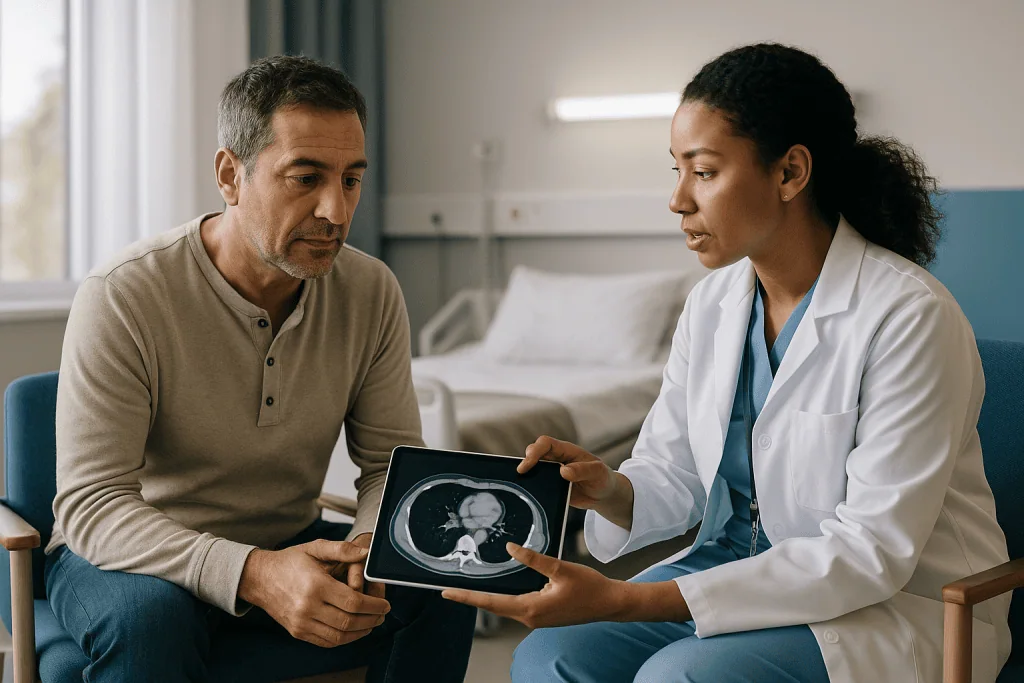
Here is how the first scan is generally interpreted. A shrinking tumor is encouraging. A stable tumor, one that has not grown beyond a small margin, is frequently considered a positive early result, because it may mean the immune system has halted the cancer even if it has not yet cleared it. A tumor that has grown is the tricky one. Under iRECIST, a first appearance of growth is classified as ‘unconfirmed progression,’ a deliberately provisional label, and the recommendation is to repeat imaging at least 4 weeks later and no more than 8 weeks later before deciding whether the growth is real (PubMed, iRECIST).
That waiting window exists because of what happened in early melanoma studies, where some patients whose tumors initially enlarged went on to have clear responses. Calling those cases failures would have stopped treatments that were quietly working.
What the team weighs alongside the image matters as much as the image. Are you feeling better, worse or the same? Have blood markers moved? Has a new lesion appeared in a new organ, which is less likely to be inflammation? Is the growth modest or dramatic? A radiologist’s measurement is one input; the oncologist’s judgment integrates all of them. If your report contains alarming words, ask your team to translate before you draw a conclusion. The decision to continue, pause or change treatment sits with them, informed by far more than a diameter in millimeters.
What is immunotherapy pseudoprogression?
Pseudoprogression is the name for a tumor that looks bigger on a scan, or seems to sprout a new spot, and then shrinks on later imaging without any change in treatment. The prefix says it all: false progression. The cancer was not advancing; the picture was misleading.
Two things can produce it. The first is immune cell infiltration. When T cells and other immune cells pour into a tumor, they add volume. Picture a sponge that has soaked up water; it is the same sponge, but it is larger. The second is that small deposits of cancer too tiny to see before treatment can become visible once they are inflamed, appearing as ‘new’ lesions when they are really old ones made visible by the immune attack.
How common is it? Less common than the internet suggests. In the melanoma studies that first described the pattern and informed the iRECIST framework, pseudoprogression affected a minority of patients, and it appears to be rarer in most other cancer types (PubMed). It is a real phenomenon worth knowing about, not the expected course. Most people whose tumors grow substantially on immunotherapy have true progression, which is why teams do not simply wait indefinitely.
Distinguishing the two relies on time and context. Pseudoprogression usually shows itself within the first few months of treatment, tends to be modest in degree, and is more plausible when a person feels well or improving. True progression is more likely when growth is large, when clearly new lesions appear in new organs, or when symptoms are worsening. Sometimes a biopsy settles the question by showing immune cells rather than viable tumor.
The practical lesson is simple to state and hard to live: an early scan that looks worse is not automatically bad news, and an early scan that looks unchanged is not automatically disappointing. Your team will usually want a confirmatory scan before acting on either.
How fast does immunotherapy shrink tumors when it does work?
When immunotherapy works, shrinkage is not a straight line. Some people see measurable reduction on the first scan. Others see stability for months, then a response. A smaller group see growth, then shrinkage. And in some people the immune response controls the cancer without ever making it disappear, which can still translate into long periods of good health (NCI).
The following table summarizes the response patterns clinicians describe. It is a map, not a forecast for any individual.
| Pattern on scans | What the images show | What usually happens next |
|---|---|---|
| Early response | Measurable shrinkage on the first scan, often around 8–12 weeks | Treatment usually continues; scans repeat on schedule |
| Stable disease | No meaningful growth or shrinkage | Often treated as a favorable early sign; watched over subsequent scans |
| Delayed response | Stability for several months, then shrinkage | Recognized pattern with immunotherapy; time is the diagnostic tool |
| Pseudoprogression | Apparent growth or new small spots, then shrinkage without changing treatment | Confirmatory scan 4–8 weeks later per iRECIST before any decision |
| True progression | Confirmed growth, clearly new lesions, often worsening symptoms | Team reassesses; other options discussed |
| Hyperprogression | Unusually rapid growth after starting | Rare and not fully understood; prompts urgent reassessment |
Notice how many rows involve waiting. That is not indecision. Under iRECIST the confirmatory interval is set at a minimum of 4 weeks and a maximum of 8 weeks precisely so that neither a false alarm nor a real problem is allowed to drift (PubMed).
One more truth belongs here. The speed of shrinkage is not the same as the durability of benefit. A modest response that holds for years can matter more than a dramatic one that fades. Oncologists increasingly focus on how long a response lasts rather than how quickly it arrives, and that is a conversation worth having with your team about your own situation.
Signs immunotherapy is working: what patients notice and what doctors measure
People want a signal they can feel. Sometimes there is one. A cough that has been constant for months may ease. Pain from a bone deposit may quiet. Energy can return in a way that surprises everyone, including the oncologist. When symptoms caused by the cancer itself improve, that is meaningful information, and you should report it just as faithfully as you would report something bad.
But the absence of a felt change tells you very little. Many tumors are silent; a shrinking mass in the liver or a lymph node deep in the chest produces no sensation at all. Feeling exactly the same at week six is entirely compatible with a treatment that is working.
What doctors actually measure falls into three buckets. Imaging is the primary tool: CT, MRI or PET scans compared against a baseline taken before treatment. Blood tests are the second, and they vary by cancer. Some cancers release tumor markers, proteins measurable in blood that can rise or fall with disease activity, and a falling marker can sometimes precede visible shrinkage. Others have no reliable marker at all. The third bucket is your own clinical status: weight, appetite, function, symptoms, the things a good clinician notices when you walk into the room.
What about side effects as a sign? This comes up constantly, and it deserves its own section below, but the short version is that immune-related side effects have been associated with response in some analyses and yet plenty of people respond without any side effects at all (NCI, immunotherapy side effects). Their presence is not a signal to seek, and their absence is not a reason to worry.
If you are looking for a single reliable sign, there is not one. There is a trend, built over scans and visits, and your team is the only one positioned to read it.
Who immunotherapy is usually for, and who is usually asked to wait
Immunotherapy is not one treatment for all cancers. Checkpoint inhibitors are approved for a specific and growing list of cancer types, including certain skin, lung, kidney, bladder, head and neck cancers, some lymphomas, and tumors that carry particular genetic features regardless of where they started (NCI, checkpoint inhibitors). Whether it is offered depends first on the type and stage of cancer, and then on biomarkers, which are measurable features of the tumor that predict how likely an immune response is.
Two biomarkers come up most often. PD-L1 expression describes how much of the checkpoint protein the tumor displays; higher levels are associated with a greater chance of benefit in several cancers, though people with low levels can still respond. Mismatch repair deficiency or high microsatellite instability describes a tumor whose DNA repair machinery is broken, producing many mutations that make the cancer more visible to the immune system. Your pathology report may mention these; your oncologist can explain what they mean for you.
Who is typically asked to wait, or offered something else? People with active autoimmune disease, such as certain forms of inflammatory bowel disease, lupus or rheumatoid arthritis, because releasing the immune brakes can flare those conditions. People who have had an organ transplant, because the same release can threaten the transplanted organ. People taking high-dose steroids or other immune-suppressing medicines for other reasons. And people whose cancer is growing so fast that a treatment needing weeks to build may not be the right first move; in those cases chemotherapy or a combination may be chosen to gain time.
None of these are absolute. They are weighed, case by case, by a multidisciplinary team looking at the whole person. If you have been told you are not a candidate, or that you should start with something else, it is reasonable to ask why and what might change that assessment later.
What the first days and weeks usually look like
The first infusion is usually uneventful, which is its own kind of strange after months of anticipation. Checkpoint inhibitors are given through a vein, typically over half an hour to an hour, and most people go home afterward and feel much as they did before. There is no hair loss to brace for in the first week and no predictable nausea; those belong to chemotherapy’s rhythm, not this one.
The early weeks often feel like waiting. Infusions repeat in cycles, the exact interval set by your treatment plan and the specific medicine (NCI). Between visits, the most common experiences are fatigue, sometimes a rash or itching, occasionally joint aches or mild diarrhea. Many people notice nothing at all. Fatigue with immunotherapy tends to be a background tiredness rather than the wall that chemotherapy can produce, though it varies.
Side effects from immunotherapy follow their own clock. Because they arise from immune activity rather than direct cell damage, they can appear at any point, including weeks or months into treatment and even after treatment has ended (NCI, side effects). Skin reactions tend to show up earliest. Gut, liver, lung and hormone gland effects more often appear later. This is why your team will run blood tests before each infusion, checking liver enzymes, kidney function, thyroid hormones and blood counts, looking for inflammation you cannot yet feel.
The first scan, usually around two to three months in, is the first milestone. Before it, most people are in a kind of holding pattern, and it is normal to find that psychologically harder than the infusions themselves. Some find it helpful to ask, at the very start, when the first scan will be and how results will be communicated, so the waiting at least has a shape.
Do side effects mean immunotherapy is working?
This question hides a wish. If the rash meant the tumor was dying, the rash would be easier to bear. The evidence is more complicated and, in an important way, more reassuring.
Immune-related side effects happen because the same unleashed T cells that attack cancer can also attack healthy tissue: skin, colon, liver, lungs, thyroid, pituitary, joints. In some retrospective analyses, people who developed certain of these effects were more likely to have responded to treatment. That association is real enough that oncologists notice it. It is not strong or consistent enough to use as a test. Many people respond with no side effects, and some people have severe side effects without any tumor response (NCI, side effects).
So the practical guidance runs in one direction only. Never conclude that treatment is failing because you feel fine. Never tolerate a worsening symptom because you hope it means the treatment is working. Immune-related inflammation can escalate, and colitis, pneumonitis and hepatitis in particular are far easier to manage when caught early. Your team wants to hear about new diarrhea, new shortness of breath, new abdominal pain or new confusion promptly, not at the next scheduled visit.
There is a second reason the question matters. Serious immune-related side effects are usually managed with corticosteroids or other immune-suppressing medicines to calm the reaction, and treatment may be paused while that happens. People sometimes fear that pausing will undo everything. The evidence from checkpoint inhibitor use is that immune responses, once established, can persist through pauses and even after stopping, which is one of the distinctive features of this class of treatment (NCI). Whether and when to resume is a decision for your team, weighing the severity of what happened against the benefit you were seeing.
How long does immunotherapy take to work fully, and how long does treatment continue?
Two different questions live inside this one. The first is when the response becomes clear. The second is how long infusions go on once it has.
On the first, the pattern from checkpoint inhibitor use is that responses often become evident on the first or second scan, but the depth of response can keep increasing over subsequent months. A tumor that has shrunk partially at three months may shrink further at six or nine. Some people also see a delayed response after a period of stability. Doctors therefore avoid declaring a final verdict on early images and prefer to describe a trajectory built from several scans (PubMed, iRECIST).
On the second, there is no universal stopping rule. The National Cancer Institute notes that how long treatment lasts depends on the type of cancer, the type of immunotherapy and how your body responds (NCI). Some treatment plans continue for a fixed period. Others continue as long as the cancer is controlled and side effects are acceptable. Others stop earlier because a complete response has been reached and the team judges that the immune system has taken over. Which of these applies to you is a conversation, not a lookup.
The phrase you may hear is durable response. It means a response that persists over time, and in some people it persists well beyond the end of treatment, because the immune system retains memory of the target. This durability is the reason immunotherapy changed oncology, and it is also why no one can tell you on day one how long your own course will be. Scans after treatment ends continue on a schedule your team sets, and the question shifts from ‘is it working’ to ‘is it holding.’
Which is harder, chemo or immunotherapy?
People ask this hoping for a ranking. The truthful answer is that they are hard in different ways, and the harder one depends on the person, the cancer and the specific drugs.
Chemotherapy’s difficulty is often predictable and front-loaded. Nausea, hair loss, low blood counts and infection risk tend to follow a known schedule tied to each cycle, peaking and recovering in a rhythm patients learn to anticipate. The effects come from direct damage to fast-dividing cells and generally ease after treatment ends.
Immunotherapy’s difficulty is less predictable. Most people tolerate it well, and day-to-day quality of life is often better than during chemotherapy. But when immune-related side effects occur, they can affect almost any organ, can appear months in, and can occasionally be serious, particularly inflammation of the lungs, colon, liver or hormone glands (NCI, side effects). Some effects on the thyroid or adrenal glands can be permanent, requiring long-term hormone replacement. There is also the psychological weight of uncertainty: the slower timeline, the ambiguous first scan, the waiting.
Combination treatment, in which immunotherapy is given alongside chemotherapy, is common in several cancers and brings both profiles together, sometimes making the early months busier but potentially improving results in specific settings. Whether that trade is worth it is exactly the judgment your team is making when they propose a plan.
If you are weighing these options, the useful questions are not ‘which is harder’ but ‘what side effects are most likely with my proposed plan, how will we monitor for them, and what would prompt a change.’ Neutral comparisons of benefit and risk for your cancer type exist in the guideline literature, and your oncologist can walk you through the ones that apply to you.
What people often get wrong about how long immunotherapy takes
Marta’s first mistake was reading her scan as a verdict. It is the most common one, and it has company.
Myth: if the tumor is not smaller at the first scan, it is not working. Stable disease is a recognized early outcome, and delayed responses are well documented with checkpoint inhibitors. The first scan is a baseline for comparison as much as a judgment (PubMed).
Myth: growth on the first scan means it has failed. Sometimes it does. Sometimes it is pseudoprogression. The iRECIST framework was written specifically because early growth cannot be interpreted without a confirmatory scan 4 to 8 weeks later. Your team is following that logic, not stalling.
Myth: pseudoprogression is common, so growth is probably fine. The opposite error. Pseudoprogression is a minority phenomenon, most described in melanoma and rarer elsewhere. Marked growth, new lesions in new organs and worsening symptoms usually mean what they appear to mean.
Myth: no side effects means it is not working. Plenty of responders have none. Side effects are not a dosimeter of success (NCI, side effects).
Myth: immunotherapy is ‘natural’ and therefore gentle. It uses your immune system, which is exactly why it can inflame your own organs. It is a powerful medical treatment with a specific risk profile.
Myth: it works for every cancer. It is approved for particular cancers and situations, and biomarkers help predict who is likely to benefit. For many cancers it is not yet a standard option (NCI).
Myth: once it starts working, you can stop worrying. Responses can be durable, but monitoring continues, and immune-related side effects can appear even after treatment ends. Follow-up is part of the treatment, not an epilogue to it.
Questions to ask your care team before and during immunotherapy
Good questions turn waiting into something you can participate in. Bring these to your appointments, or pick the few that matter most to you.
- When will my first scan be, and what would you consider an encouraging result at that point?
- If the first scan shows growth, what is your plan for confirming whether it is real, and how soon would a repeat scan happen?
- Does my cancer have biomarkers, such as PD-L1 level or mismatch repair status, that affect how likely I am to respond?
- Are there blood markers we can track between scans for my cancer type, or is imaging the only measure?
- Which side effects are most likely with my specific treatment, when do they usually appear, and which ones should I call about the same day?
- What blood tests will be checked before each infusion, and what are you looking for?
- If I develop a significant side effect and treatment is paused, what does the evidence say about resuming?
- How long do you anticipate treatment continuing if it is working, and what would lead you to stop?
- If this does not work, what are the next options, and would any of them be affected by having had immunotherapy first?
- Who do I contact after hours, and what information will they need from me?
A final suggestion: ask how results will be communicated. Some people want the radiology report the moment it posts to a patient portal. Others, having lived through a parking garage moment, prefer to hear it first from a clinician who can put it in context. Either preference is reasonable, and your team can usually accommodate it if they know in advance.
When to call your doctor during immunotherapy
Immune-related side effects are manageable when caught early and dangerous when ignored, so the threshold for calling should be low. Your team would far rather hear about something minor than miss something serious (NCI, side effects).
Contact your oncology team the same day, or use their urgent line, for any of the following:
- Diarrhea that is new or increasing, especially more than a few loose stools above your normal in a day, or any blood or mucus in stool, or severe abdominal pain. This can signal colitis.
- New or worsening shortness of breath, a new dry cough, or chest pain. Pneumonitis, inflammation of the lungs, can progress quickly.
- Yellowing of the skin or eyes, dark urine, pale stools, or pain under the right ribs. These can indicate liver inflammation.
- Severe fatigue that is sudden or profound, dizziness, fainting, or persistent nausea, which can reflect problems with the adrenal or pituitary glands.
- Severe headache, vision changes, confusion, or unusual weakness, which need urgent assessment.
- A widespread rash, blistering, peeling skin, or sores in the mouth.
- Fever, chills, or signs of infection.
- Excessive thirst and urination, which can signal new diabetes triggered by the immune system.
- Palpitations, chest tightness, or swelling of the legs, which can indicate heart inflammation.
Seek emergency care immediately for severe breathing difficulty, chest pain, signs of a stroke, a seizure, or any collapse. Tell emergency staff that you are receiving cancer immunotherapy; it changes how they interpret your symptoms and what treatments they choose.
None of this means you should live on alert. Most infusions pass quietly, and most side effects that do occur are mild. The point is that with this class of treatment, early reporting is part of how it is made safe. Every decision about pausing, treating a side effect or resuming rests with your treating team, who know your history and your scans in a way no article can.
Frequently asked questions
What are the signs that immunotherapy is working?
The most reliable sign is a trend across scans showing the cancer shrinking or holding steady over time, interpreted by your oncology team. Some people also notice cancer-related symptoms easing, such as less pain or a quieter cough, and certain cancers have blood markers that may fall. Feeling no different is common and does not mean the treatment is failing.
How fast does immunotherapy shrink tumors?
It varies widely. Some tumors show measurable shrinkage on the first scan, typically around 8 to 12 weeks after starting; others stay stable for months and then respond; a minority appear to grow before shrinking. Response depth can keep increasing over subsequent months. Your team judges the pattern across several scans rather than a single image.
How long after immunotherapy do you feel better?
There is no fixed timeline, and many people do not feel dramatically different because the tumors being treated cause no symptoms. When cancer-related symptoms do improve, it often happens over weeks to a few months as the immune response builds. Fatigue from the treatment itself can coexist with a tumor that is responding, so how you feel is only one piece of the picture.
What is immunotherapy pseudoprogression and how common is it?
Pseudoprogression is an apparent increase in tumor size or new small spots on an early scan, caused by immune cells flooding the tumor, followed by shrinkage without any change in treatment. It was first described in melanoma and affects a minority of patients there, with lower rates in most other cancers. Teams confirm early growth with a repeat scan before acting on it.
Why do doctors wait to repeat the scan instead of changing treatment right away?
Because early growth on immunotherapy can be inflammation rather than cancer, and stopping a treatment that is quietly working would be a serious loss. The iRECIST guidelines recommend a confirmatory scan 4 to 8 weeks after unconfirmed progression. If symptoms are clearly worsening or growth is dramatic, teams act sooner; the waiting period is a safeguard, not a rule that overrides clinical judgment.
Which is harder, chemo or immunotherapy?
Neither is universally harder. Chemotherapy side effects like nausea, hair loss and low blood counts are more predictable and tied to each cycle. Immunotherapy is often better tolerated day to day, but its immune-related side effects can affect almost any organ, appear months in, and occasionally be serious or permanent. The right comparison is the specific plan proposed for your cancer, discussed with your team.
Does having no side effects mean immunotherapy is not working?
No. Although some analyses link certain immune-related side effects to higher response rates, many people respond fully with no side effects at all, and others have significant side effects without response. Side effects are not a measure of success. What matters is the trend on your scans and, where available, blood markers, as interpreted by your oncologist.
What does the first immunotherapy scan result usually show?
The first scan, typically around 8 to 12 weeks in, most often shows either stable disease or some shrinkage. Stability is generally considered a reasonable early result. A smaller number show apparent growth, which is labeled unconfirmed until a repeat scan clarifies whether it is real. Radiology reports describe size changes only; your treating team interprets them in the context of symptoms and blood tests.
Can immunotherapy keep working after treatment stops?
Yes, this is one of the distinctive features of checkpoint inhibitors. Because the treatment trains and releases your own immune cells, which retain memory of the cancer, responses can persist after infusions end, sometimes for long periods. Whether and when to stop is decided by your treating team based on your cancer type, your response and your side effects, and follow-up scans continue afterward.
Who should not have immunotherapy or may be asked to wait?
People with active autoimmune disease, those who have had an organ transplant, and those taking significant immune-suppressing medicines are often steered toward other options because releasing immune brakes can trigger flares or rejection. People whose cancer is growing very rapidly may start with faster-acting treatment first. These are individual judgments made by a multidisciplinary team, not absolute exclusions.
References
- iRECIST: guidelines for response criteria for use in trials testing immunotherapeutics (PubMed)
- Cancer Immunotherapy (MedlinePlus)
- Immunotherapy (Cleveland Clinic)
This article is for general information only and is not a substitute for professional medical advice. Please consult a qualified doctor about your individual situation.
Add us as a Preferred Source to see more of our trusted health content across Google Search, AI Overviews and Discover.

More from the Blog
How Head Cancer Treatment Is Planned for Mouth, Throat, Sinus and Salivary Gland Tumors
Head and neck cancer treatment planning starts with a biopsy to confirm the cancer type, imaging and examination to assign a stage, and a…

Can Skin Cancer Be Fatal? Which Types Are Dangerous and How Early Detection Changes the Outlook
Yes, skin cancer can be fatal, but the risk depends heavily on the type and the stage at diagnosis. Melanoma causes most skin cancer…

Why a Sarcoma Biopsy Is Planned So Carefully and What the Pathology Review Adds
A sarcoma biopsy is planned carefully because the needle path can seed tumor cells, so the route is chosen to be removed with the…

What International Patients Ask Before Leukemia or Lymphoma Treatment Abroad
Before leukemia or lymphoma treatment abroad, patients usually want to know which exact subtype they have, how urgently treatment must start, how long the…
What a Liver Tumor Board Weighs When Cirrhosis and Cancer Are Present Together
A liver cancer tumor board is a scheduled meeting where surgeons, liver specialists, oncologists, radiologists and pathologists review one patient's case together. When cirrhosis…

Kidney-Sparing Endoscopy or Nephroureterectomy for a Ureteral Tumor: How Surgeons Choose
Surgeons choose between kidney-sparing endoscopy and nephroureterectomy for a ureteral tumor mainly by risk. Small, single, low-grade tumors with no sign of invasion on…