

How Scoliosis Surgery Straightens the Spine: Screws, Rods, Bone Graft and Correction
Key Takeaways
- Scoliosis is defined as a Cobb angle of 10 degrees or more, and idiopathic curves, whose cause is unknown, are the most common type according to the NIAMS.
- Fusion surgery for adolescents is typically considered when a curve passes roughly 45 to 50 degrees or keeps progressing despite bracing, per the Mayo Clinic.
- Pedicle screws and rods correct the curve on the operating table, but it is the bone graft maturing over several months that makes the result permanent.
- Braces are most effective when worn 13 to 16 hours a day and aim to stop progression during growth, not to straighten an existing curve.
- Children typically stay in hospital about a week after fusion, return to school after a few weeks, and resume sport over months, according to NHS guidance.
- Nerve injury during scoliosis surgery is rare, and continuous spinal cord monitoring throughout the operation is one of the main reasons.
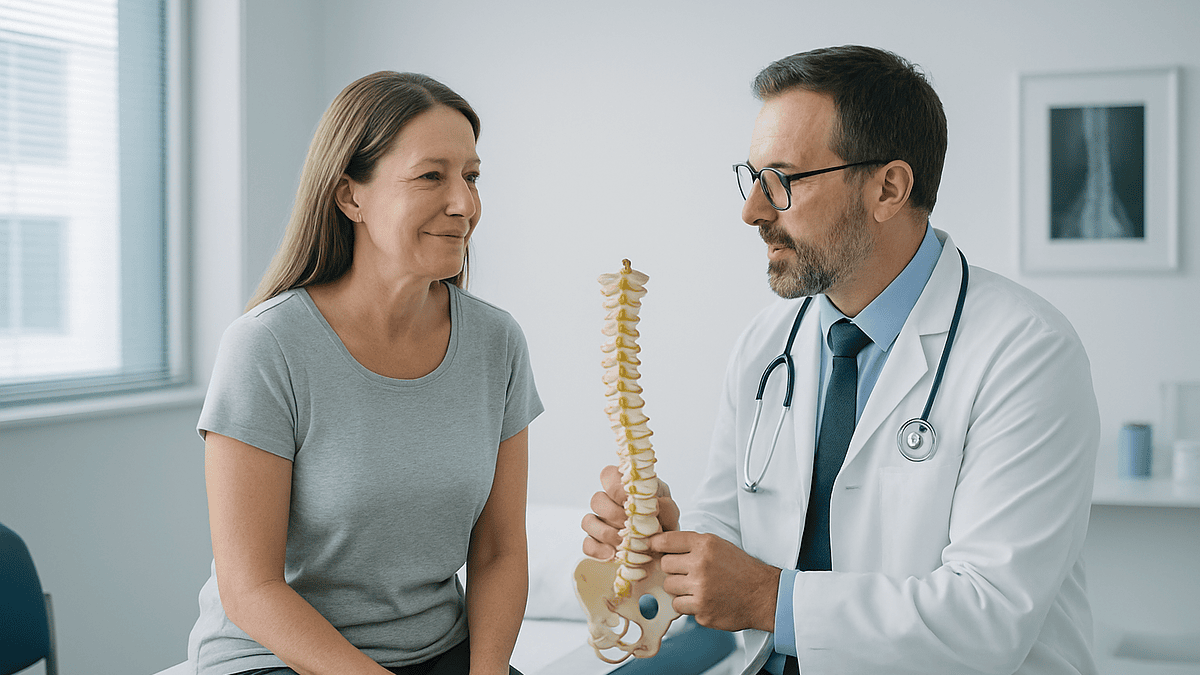
Scoliosis surgery is most often a spinal fusion. Through an incision, usually along the back, the surgeon anchors screws into the vertebrae of the curve, attaches two rods, and uses them to rotate and straighten the spine as far as is safe. Bone graft is then packed along the corrected segment so the vertebrae knit into one solid piece over months. Nerve monitoring runs throughout, and every decision rests with the treating team.
The X-ray goes up on the screen and a fifteen-year-old who has spent two years in a brace stares at a curve that now looks like a question mark. Her mother asks the question that has been sitting in the car on every drive to clinic: what would they actually do to her spine? Not the brochure version. The real one.
This article is that answer. It explains how scoliosis surgery is done, from the moment the anesthetic starts to the day the bone finally fuses, and why a procedure built around titanium screws is, at heart, a bone-healing operation. It covers teenagers, young children and adults, because the same word covers three rather different problems.
Some of it is reassuring, some of it is sobering, and all of it is drawn from mainstream clinical sources rather than forums. The surgical decision itself belongs to the person, their family and the treating team.
What surgery do they do for scoliosis?
Almost always, the answer is a spinal fusion. Scoliosis is a sideways curve of the spine, usually with a twist, and clinicians define it as a curve of 10 degrees or more on an X-ray, measured by the Cobb angle, which is simply the angle between the most tilted vertebra at the top of the curve and the most tilted one at the bottom. In most children and teenagers the cause is unknown, which is what the word idiopathic means, and according to the National Institute of Arthritis and Musculoskeletal and Skin Diseases it is the most common form.
A fusion joins two or more vertebrae, the individual bones of the spine, into one solid block of bone so that the segment can no longer bend, and therefore can no longer curve further. Metal implants hold the corrected position while new bone grows; the bone is the permanent part.
Three goals sit behind the operation. The first is to stop progression, because large curves tend to keep growing even after skeletal maturity. The second is to improve balance, so the head sits over the pelvis and the shoulders and hips are more level. The third is partial correction of the curve itself. Surgeons rarely aim for a perfectly straight spine; they aim for a balanced, stable one, and the amount of correction depends on how flexible the curve is before surgery.
Other procedures exist. Growing rods and growth-modulating tethers for young children, and decompression combined with fusion for adults whose nerves are pinched, are covered later. Fusion remains the backbone of all of them.
How scoliosis surgery is done, step by step
The day starts with a general anesthetic. Once asleep, the patient is turned face down on a padded frame that lets the abdomen hang free, which reduces pressure on the veins around the spine and lowers bleeding. Small electrodes are placed on the scalp, arms and legs. These belong to intraoperative neuromonitoring, a continuous test of the signals travelling through the spinal cord, and a technician watches them for the entire operation.
The surgeon then makes an incision along the midline of the back over the levels to be fused. The muscles are lifted off the bone to expose the back of each vertebra. An X-ray taken in the operating room confirms the exact levels, because counting vertebrae by feel alone is not reliable enough.
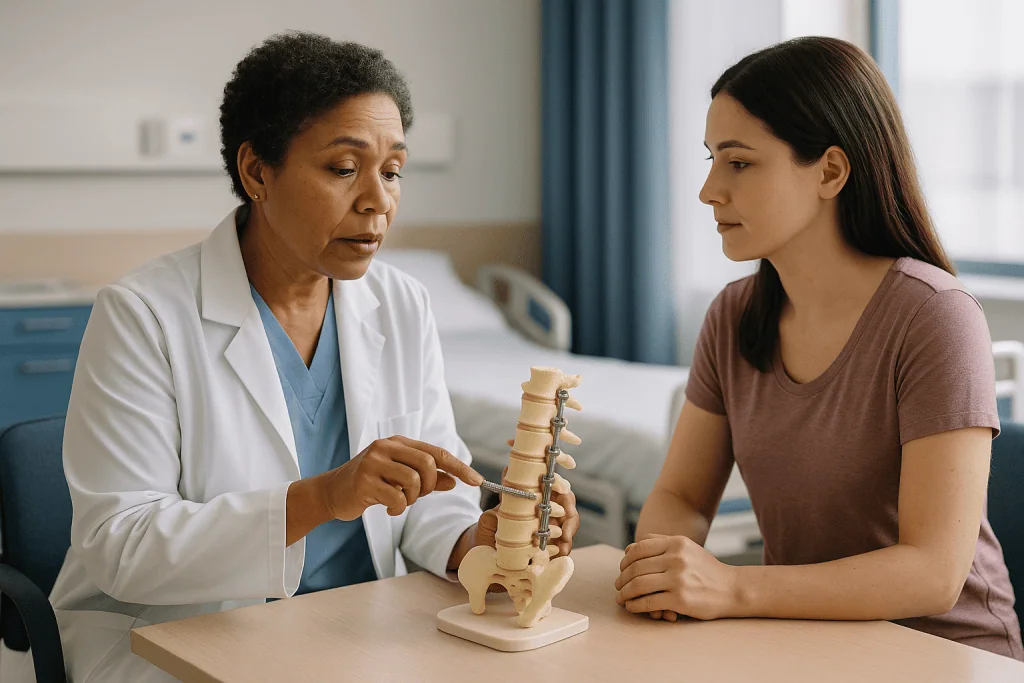
Next come the anchors. Screws are placed into the pedicles, the short bony bridges that connect the back of each vertebra to its body, on both sides of the spine along the curve. Two rods are then bent to the shape the surgeon wants the spine to take and seated into the screw heads.
Correction happens here, and the next section explains the maneuvers in detail. When the position is right, the screws are locked. The surgeon roughens the exposed bone surfaces and lays bone graft along the whole segment. The wound is closed in layers, often with a drain, and a final X-ray checks the result.
Timing varies with the length of the curve and the approach. The NHS describes the operation as taking several hours, and most patients wake in a recovery area before moving to a ward or, for some adults, a high-dependency bed.
Screws, rods and correction: how the spine is actually straightened
Pedicle screws do the heavy lifting. Each one passes through the pedicle into the vertebral body, gripping the strongest bone in the segment, and because scoliosis twists as well as bends, a screw that grips the body of a vertebra gives the surgeon leverage to untwist it. Hooks and wires that cup the bone from behind are older alternatives still used in some situations.
With screws in place, the correction itself is a sequence of controlled moves. In rod rotation, a rod bent to match the sideways curve is rotated roughly 90 degrees so that the sideways bend becomes a front-to-back one, which is the spine’s natural profile. In direct vertebral derotation, instruments attached to the screws turn the rotated vertebrae back toward the midline. Compression brings two screws closer together on the long side of the curve; distraction pushes them apart on the short side. In situ bending adjusts the rod while it sits in the body.
Flexibility sets the limit. Before surgery, X-rays taken with the patient bending sideways show how much the curve will give. A supple adolescent curve may yield most of its angle; a stiff adult curve may yield far less, and forcing it risks pulling a screw out of bone or stressing the spinal cord. For rigid curves, surgeons may perform an osteotomy, the removal of a wedge of bone from one or more vertebrae, to create room for correction.
Throughout, the neuromonitoring trace is the safety net. If signals weaken during a maneuver, the team can ease the correction, raise blood pressure or pause until they recover. The Mayo Clinic notes that nerve injury in scoliosis surgery is rare, and this monitoring is one of the main reasons.
Why bone graft, not metal, is the real fix
People picture rods as the thing that holds the spine straight for life. In truth, metal under constant load will eventually fatigue and break. What makes a fusion permanent is bone. The implants are scaffolding; the graft is the building.
Bone graft comes from several places. Local graft is the most common: as the surgeon roughens the back of each vertebra and removes small spurs and joint surfaces to prepare for fusion, that bone is collected and laid back along the spine. Bone may also be taken from the rim of the pelvis, the iliac crest, though this adds a second painful site and is used less often than it once was. Donor bone from a tissue bank, called allograft, and synthetic materials that act as a lattice for new bone are often mixed in to bulk up the volume.
Healing then follows the same biology as a broken arm. Cells from the roughened vertebrae grow into the graft, forming soft new bone that hardens over time. The Cleveland Clinic describes this maturation as taking several months, and the spine is not considered truly fused until X-rays or a CT scan show a continuous bridge of bone across every level. During that window, the hardware holds the position and the patient is asked to avoid activities that would strain it.
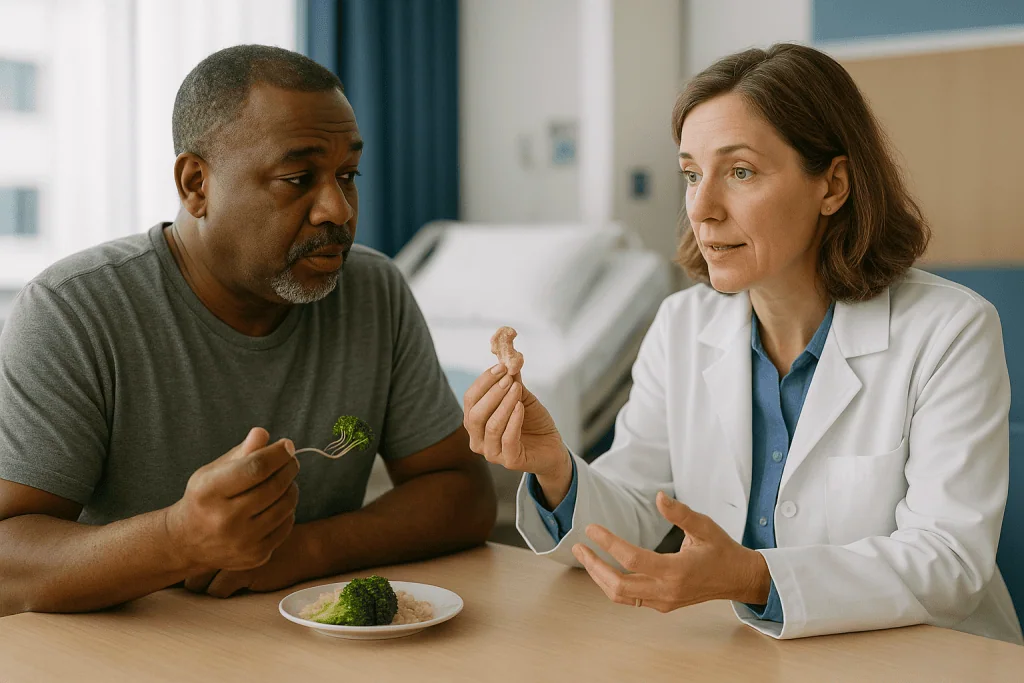
When bone fails to bridge a level, the result is a pseudarthrosis, a false joint where motion persists. It can cause pain and eventual rod breakage and sometimes needs revision surgery. Smoking, poor nutrition and some medical conditions impair bone healing, which is why teams raise these topics before scheduling an operation.
Posterior, anterior or both: the approaches compared
Most scoliosis fusions are performed from the back, the posterior approach, because it gives access to every level of the spine through one incision and allows pedicle screws at each vertebra. It is not the only route, and the choice depends on the location, size and stiffness of the curve, the patient’s age and the surgeon’s judgment.
| Approach | Where the incision is | Typically chosen when | Trade-offs the team weighs |
|---|---|---|---|
| Posterior fusion | Midline of the back | Most adolescent and adult curves, any level | Longer scar; muscles lifted off bone; versatile |
| Anterior fusion | Side of the chest or abdomen | Some single thoracolumbar or lumbar curves | Fewer levels fused; requires working around lung or abdominal organs |
| Combined anterior and posterior | Both, same day or staged | Very rigid or very large curves, some revisions | Greater correction and fusion rates in stiff curves; longer surgery and recovery |
| Growth-friendly procedures | Back (rods) or side (tethers) | Young children with growth remaining | Preserves growth; usually needs further procedures |
Anterior surgery enters from the side, moving the lung or abdominal contents aside to reach the front of the vertebrae, where discs are removed and screws placed in the vertebral bodies. Its appeal is that fewer levels often need to be fused, preserving motion below. Its drawbacks include the organs that must be navigated and a smaller range of curves for which it suits.
Combined procedures pair an anterior release, which loosens a stiff curve by removing discs, with a posterior fusion. They carry more surgical time and a heavier recovery and are reserved for curves that cannot be adequately corrected from one side.
None of these is universally better. A team selects the approach for the curve in front of them, and a good explanation of why should be part of any consultation.
Who scoliosis surgery is usually for, and who is asked to wait
Numbers guide the conversation, but they do not end it. The Mayo Clinic describes surgery for adolescents as something typically considered when a curve passes roughly 45 to 50 degrees, because curves of that size tend to progress even after growth stops and may eventually affect posture, comfort and, in very large thoracic curves, lung function. A curve that is still growing quickly despite a well-worn brace also prompts the discussion.
Skeletal maturity matters. Operating on a child with a great deal of growth left can lead to the front of the spine continuing to grow while the fused back cannot, twisting the fusion over time, a problem known as crankshaft. Surgeons therefore judge maturity from the pelvis and hand X-rays, and this is the real answer to what age for scoliosis surgery: it is a stage of growth, not a birthday. Many adolescents are operated on in the mid-teens, but younger children with large curves are managed with growth-friendly techniques instead.
For adults, the trigger is rarely the angle alone. Pain that limits daily life, leg symptoms from pinched nerves, progressive leaning forward or sideways, and a curve documented to be getting worse are what bring surgery onto the table, and only after physical therapy, activity changes and other non-surgical care have been tried.
Who waits? Anyone with a mild curve, which Mayo and the NHS describe as simply monitored with regular checkups and X-rays while growth continues. Anyone whose curve is stable and causing no symptoms. People with uncontrolled medical conditions, very low bone density or active infection, who may need those addressed first. Waiting, in scoliosis, is a treatment plan, not neglect, and the team should explain what would change the recommendation.
What are the treatment options for scoliosis in teenagers before surgery?
Surgery is the last of three tiers, and most teenagers never reach it. The NIAMS notes that scoliosis affects an estimated 2 to 3 percent of adolescents, and the great majority have curves small enough to need nothing more than observation.
The first tier is watching. A growing teenager with a mild curve returns to clinic at intervals for an examination and an X-ray, so that any change can be caught while bracing is still an option. Nothing is done to the spine; the point is simply to measure.
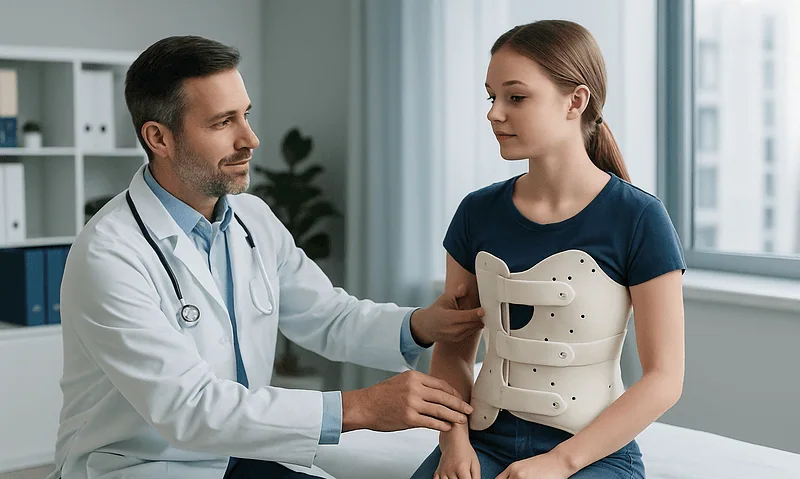
The second tier is bracing. A brace does not straighten a curve. Its job is to hold the spine while the child finishes growing, so the curve does not reach the surgical range. The Mayo Clinic describes modern braces as rigid plastic shells fitted under clothing and notes that they are most effective when worn for 13 to 16 hours a day, with wear stopping once growth is complete. Bracing is offered to children who are still growing with moderate curves, and the NHS describes it as a way to prevent progression rather than to correct what is already there.
Exercise-based programs, physical therapy and chiropractic care are often asked about. Staying active is good for anyone with scoliosis, and specific exercise programs may help posture and comfort. The Mayo Clinic is clear, however, that no exercise, manipulation or dietary approach has been shown to stop a curve from progressing, so none of them replaces monitoring or a brace.
The third tier is fusion, for curves that reach the surgical range or that keep progressing despite a brace. Reaching it is not a failure of the teenager or the family. Some curves simply grow regardless of how diligently a brace is worn.
Growing rods, tethering and surgery for younger children
Young children present a different puzzle. A spine fused at age six stops growing where it is fused, and the chest grows with the spine, so an early long fusion can leave the lungs short of room. Surgeons therefore use techniques that hold or guide the curve while growth continues, and reserve the definitive fusion for later.
Casting comes first for the youngest. The NHS describes plaster casts, changed as the child grows, for some infants and toddlers with progressive curves, sometimes followed by a brace.
Growing rods are the classic surgical option. Screws or hooks are placed above and below the curve, connected by rods that span it without fusing the levels in between. Traditional rods are lengthened in short operations every few months as the child grows. Magnetically controlled growing rods, which the NHS lists among current options, can be lengthened in clinic with an external magnet, avoiding repeated anesthetics. Both still end with a final fusion in most children once growth is nearly complete.
Vertebral body tethering is a newer idea. Through small incisions in the side of the chest, screws are placed in the vertebral bodies along the outer, longer side of the curve and connected by a flexible cord that is tensioned. The cord slows growth on that side so the shorter side can catch up, straightening the curve as the child grows. It preserves motion, which is its attraction. It is also young as a technique, and the long-term evidence on how often it holds, over-corrects or needs conversion to fusion is still accumulating, which teams should say plainly.
Comfort and preparation matter as much as hardware. Child-life specialists, clear explanations pitched at the child’s age, and a plan for school and play are part of good pediatric spine care.
How adult scoliosis surgery differs
Adults arrive with scoliosis by two roads. Some have carried an adolescent curve into adulthood. Others develop a new curve in later life as discs thin and the small facet joints at the back of the spine wear unevenly, letting the vertebrae settle sideways. This degenerative, or de novo, scoliosis is less about the angle and more about what the collapse does to the nerves and to posture.
The complaint is therefore different. Teenagers are usually operated on to prevent a future problem. Adults are usually operated on for a present one: back pain, leg pain or numbness from spinal stenosis, which is narrowing of the channels the nerves run through, and a forward or sideways lean that becomes tiring to hold. The Mayo Clinic describes pain and nerve symptoms as the main drivers of surgery in adults.
The operation reflects that. Decompression, the removal of bone and ligament pressing on nerves, is often combined with fusion. Restoring sagittal balance, the front-to-back alignment that lets a person stand upright without effort, is a central aim, sometimes requiring osteotomies and cages placed between vertebrae to rebuild height. Fusions may extend into the pelvis for stability.
Bone quality shapes the plan. Osteoporosis makes screws less secure, and a team may check bone density and address it before scheduling surgery, deferring any medicine decisions to the prescribing clinician. Heart, lung and kidney health, diabetes control and smoking are reviewed the same way, because adult spinal surgery is longer and recovery slower than in teenagers.
Non-surgical care comes first and often suffices. Physical therapy, activity modification, weight management and targeted injections to diagnose or ease nerve pain are the usual path, and surgery is discussed when they no longer hold the line.
Scoliosis surgery risks, and how teams reduce them
Every long spine operation carries risk, and a trustworthy consultation names each one rather than waving at them. The Mayo Clinic and Cleveland Clinic list the following as the main concerns.
- Bleeding. Exposing many vertebrae releases blood from bone. Teams reduce it by positioning, careful technique, machines that collect and return the patient’s own blood, and medicines that limit bleeding, chosen by the anesthesia team.
- Infection. Both at the skin and, less commonly, deep around the implants. Antibiotics given at the start of surgery, strict sterile technique and attention to wound care afterward are the standard defenses. Deep infection can require washout surgery.
- Nerve or spinal cord injury. The most feared risk, and, per the Mayo Clinic, a rare one. Continuous neuromonitoring and a wake-up test if needed are the safeguards.
- Failure to fuse (pseudarthrosis). Persistent motion at a level, which can lead to pain and rod breakage. Good graft, stable fixation and not smoking all favor healing.
- Implant problems. A screw placed outside the pedicle, a rod that breaks after years of load, or hardware that becomes prominent under thin skin.
- Adjacent segment problems. Levels above and below a fusion work harder and may wear faster over the years.
- Blood clots, lung complications and anesthetic risks that attach to any long operation, more so in adults.
- Loss of flexibility. Fused levels do not move. Lumbar fusions cost more bending than thoracic ones.
Alternatives always exist and should be stated: continued observation, bracing in a growing child, physical therapy and pain management in adults, or a smaller operation such as decompression alone where nerve symptoms dominate. Weighing these against the risks is the team’s job, done with the patient, not for them.
Scoliosis surgery recovery time: the first days and weeks
The first morning after surgery is usually the hardest, and it is also the day most people take their first steps. Physical therapists get patients sitting, then standing, then walking the corridor, because early movement reduces clot risk, clears the lungs and begins the retraining of a spine that now has a new shape. Pain control is managed by the ward team and tapered over days; the specifics belong to the prescribing clinicians.
Hospital stay runs about a week for children, according to the NHS. Adults who have had longer fusions, decompressions or pelvic fixation may stay longer and sometimes go through a rehabilitation unit before home. Drains come out within the first days, and the wound is checked before discharge.
At home, the first weeks are about walking, sleeping and letting the incision settle. Bending, lifting and twisting are restricted, and showering guidance is given at discharge. The NHS notes that children can usually return to school after a few weeks and that sport is reintroduced over months, with the team deciding when. Driving is cleared once a person can turn freely and is off medicines that impair alertness.
Fusion itself is slow. The Cleveland Clinic describes the bone taking several months to mature, and X-rays at follow-up visits track it. Contact sports, heavy lifting and high-impact activities are typically deferred until the team is satisfied the fusion is solid.
Fatigue surprises many people. A long operation and a healing spine draw energy for weeks, and a gradual return to a normal day is expected rather than a sign that something is wrong. Adults, especially older ones, should budget for a longer and more variable recovery than the teenage timelines that dominate online accounts.
What people often get wrong about scoliosis surgery
Myth: the spine comes out perfectly straight. It usually does not, and that is deliberate. Correction is limited by curve stiffness and by what the spinal cord will tolerate. The goal is balance and stability, not a ruler-straight X-ray.
Myth: you will never bend again. Fused levels stop moving, but the levels left free, the hips and the thoracic ribs still allow bending. Most of the forward bend in a human spine comes from the lower lumbar levels, so a thoracic fusion that spares them costs surprisingly little everyday motion. A long lumbar fusion costs more, and surgeons weigh that carefully.
Myth: the rods are taken out later. In a completed fusion the hardware is normally left in place for life. Removal is only considered for a specific problem such as infection or prominent, painful metal.
Myth: posture, backpacks or sports caused it. The NIAMS states that the cause of idiopathic scoliosis is unknown and that it is not caused by carrying heavy bags, poor posture or exercise. Nobody did this to themselves or their child.
Myth: scoliosis means a short life. People ask whether you can live a long life with scoliosis, and for the mild and moderate idiopathic curves that make up most cases, the condition does not shorten life. The Mayo Clinic notes that very severe curves can restrict the chest and affect breathing, which is one reason large curves are treated rather than watched.
Myth: exercise or manipulation can reverse a structural curve. They can help comfort and fitness, but no such program has been shown to straighten a curve or stop progression, a point the Mayo Clinic makes directly.
Myth: surgery is a one-day fix. The operation takes hours; the fusion takes months. The patient’s part in the healing is real.
Questions to ask your care team
A spine consultation moves fast, and the best questions are the ones written down beforehand. These are the ones that tend to matter most, grouped by stage.
About the decision
- What is the Cobb angle now, and how has it changed across the last X-rays?
- How much growth is left, and how does that shape the timing?
- What is likely to happen if we wait, and what would change your recommendation?
- Which non-surgical options still apply to this curve?
About the operation
- Which levels would be fused, and why those?
- Which approach would you use, and what are the trade-offs for this curve?
- How much correction do the bending X-rays suggest is realistic?
- Will neuromonitoring be used throughout?
- Where will the bone graft come from?
About risks and recovery
- Which complications concern you most for this particular case, and how do you reduce them?
- How long is the expected hospital stay, and what does the first month at home look like?
- When are school, work, driving and sport usually reintroduced, and who decides?
- How will we know the fusion has healed?
- What symptoms after surgery should prompt an urgent call?
About the longer view
- How often will follow-up imaging be needed in the years after fusion?
- What is the likelihood of further surgery over a lifetime, and for what reasons?
- For adults: how will my bone density, heart and lung health be assessed before scheduling?
Asking for the explanation in plain language, and for time to think, is reasonable. A team that welcomes questions is a team to trust with a spine.
When to call your doctor
Before surgery, two situations need prompt attention rather than the next scheduled visit. The first is new neurological symptoms: numbness, weakness, clumsiness in the legs, or any change in bladder or bowel control, which in a person with scoliosis can signal nerve or spinal cord compression that changes the plan. The second is a curve that is visibly worsening quickly, or a child whose brace no longer fits, both of which may mean imaging sooner.
After surgery, the ward gives written instructions, and the following signs should prompt a same-day call to the surgical team or, where marked, emergency care.
- Fever, chills, or increasing redness, warmth, swelling or drainage from the wound, which can indicate infection.
- New or worsening numbness, tingling or weakness in the legs or feet, or any loss of bladder or bowel control: treat as an emergency.
- Pain that escalates rather than settles, or pain that medicines prescribed by the team no longer touch.
- Calf pain, swelling or redness in one leg, which can signal a blood clot.
- Chest pain, sudden breathlessness or coughing up blood: call emergency services, because a clot may have travelled to the lungs.
- A headache that is severe when upright and eases lying flat, which can follow a leak of spinal fluid.
- Persistent nausea, inability to keep fluids down, or no bowel movement for several days despite the measures the team advised.
- Clear fluid leaking from the incision.
Months and years later, new back pain at the fusion, a click or shift felt in the spine, or a visible change in posture deserves a review and an X-ray, since a broken rod or a pseudarthrosis can appear long after the first recovery is over. When in doubt, the rule is simple: the team would rather hear about something minor than miss something serious.
Frequently asked questions
What is full spinal fusion surgery and how is it performed?
Spinal fusion joins the vertebrae of a curve into one solid block of bone. The surgeon exposes the spine, usually from the back, places screws into the pedicles of each vertebra, attaches rods and uses them to rotate and straighten the curve, then roughens the bone and lays bone graft along the segment. Over the following months the graft matures into solid bone, while the metal holds the position. Nerve monitoring runs throughout.
What age for scoliosis surgery is typical?
Surgeons choose a stage of growth rather than an age. Adolescents are often operated on in the mid-teens, once the spine is mature enough to fuse without the front continuing to grow against the fused back. Young children with large curves are managed with casts, braces, growing rods or tethers until growth is nearly finished. Adults are operated on at any age when pain, nerve symptoms or imbalance justify it and bone and general health allow.
What is the scoliosis spinal fusion surgery recovery time?
Children usually walk within a day or two and stay in hospital about a week, according to the NHS, returning to school after a few weeks and to sport over months as the team allows. Adults, particularly after long fusions, recover more slowly and sometimes via rehabilitation units. The fusion itself matures over several months, per the Cleveland Clinic, so heavy lifting, contact sports and twisting are restricted until imaging shows solid bone.
Can you live a long life with scoliosis?
For the mild and moderate idiopathic curves that make up most cases, scoliosis does not shorten life, and many people live with it unaware or with only routine monitoring. The Mayo Clinic notes that very severe curves, particularly in the chest, can restrict the ribs and affect breathing, which is one reason large curves are treated rather than observed. Regular follow-up during growth is what keeps a curve from reaching that point unnoticed.
What are the main scoliosis surgery risks?
The main risks are bleeding, infection, nerve or spinal cord injury, failure of the bone to fuse, implant breakage or malposition, wear at the levels above and below the fusion, blood clots and anesthetic complications. Nerve injury is rare, per the Mayo Clinic, and continuous monitoring is the main safeguard. Fused levels also lose motion. Your team should explain which risks are most relevant to your curve and how they reduce each one.
Does scoliosis surgery make the spine completely straight?
Usually not, and that is intentional. The amount of correction depends on how flexible the curve is, which bending X-rays show beforehand, and on how much the spinal cord will safely tolerate during the operation. Surgeons aim for a balanced spine with the head over the pelvis and level shoulders and hips rather than a perfectly straight X-ray. A flexible teenage curve typically yields more correction than a stiff adult one.
Are the rods and screws removed after scoliosis surgery?
In a completed fusion the hardware is normally left in place for life. Once the bone has bridged every level, the metal is doing little work, and removing it would require another operation with its own risks. Removal is considered only for a specific problem, such as deep infection, hardware that has become prominent and painful under the skin, or a broken rod. Growing rods in young children are the exception and are adjusted or exchanged over time.
What are the treatment options for scoliosis in teenagers?
Three tiers apply. Mild curves are observed with regular examinations and X-rays during growth. Moderate curves in a still-growing teenager are braced, with braces most effective when worn 13 to 16 hours a day to prevent progression, per the Mayo Clinic. Curves that reach the surgical range or progress despite bracing are treated with fusion. Exercise helps fitness and comfort but has not been shown to stop a curve from progressing.
How long does scoliosis surgery take?
The NHS describes the operation as taking several hours. The exact time depends on how many levels are fused, whether the curve is stiff enough to need osteotomies, whether an anterior release or decompression is added, and whether bone from the pelvis is harvested. Adults with degenerative curves and pelvic fixation often have longer procedures than teenagers. Your surgeon can give a range specific to the planned operation.
Will I set off airport metal detectors or need an MRI differently after fusion?
Modern titanium spinal implants often do not trigger walk-through detectors, though they sometimes do, and a card or letter from the surgical team describing the implants can help. Titanium is also compatible with MRI scanning, although the metal can distort images around the fused levels, so radiologists adjust the technique. Tell any imaging department about your implants in advance. Your team can confirm the material used in your particular operation.
References
- Scoliosis in Children and Teens, NIH National Institute of Arthritis and Musculoskeletal and Skin Diseases
- Scoliosis, MedlinePlus
This article is for general information only and is not a substitute for professional medical advice. Please consult a qualified doctor about your individual situation.

More from the Blog
Does a Scoliosis Brace Straighten the Spine? What Bracing Realistically Aims to Do
A scoliosis brace is not designed to straighten the spine permanently. Its realistic aim is to stop a moderate curve from getting worse while…

Can Exercise Replace a Scoliosis Brace? Bracing Myths Spine Specialists Correct
Exercise cannot replace a scoliosis brace for a growing child whose curve has reached the range where guidelines recommend bracing, usually about 25 to…

When Is Spine Surgery Actually Necessary? Red Flags, Failed Conservative Care and Nerve Damage
Spine surgery is usually necessary in three situations: urgent nerve compression with new bladder, bowel or leg weakness (a possible cauda equina syndrome); progressive…

Life After Spinal Fusion: Bending, Lifting, Desk Work and the Movements to Relearn
Life after spinal fusion usually means a few months of protected movement, then a gradual return to most ordinary activities. Bending, lifting and twisting…

Spinal Stenosis Surgery in Your Seventies: How Fitness, Not Age, Guides the Decision
Spinal stenosis surgery is not ruled out by age alone. Surgeons assess physical fitness, heart and lung health, frailty, bone quality and other medical…

Your First Schroth Assessment: X-Rays to Bring, What to Wear and What the Therapist Checks
For a first Schroth appointment, bring your most recent full-spine standing X-ray (the actual images or a digital copy, plus the radiologist's report with…