

How to Brush After Gum Recession Treatment: Technique Changes That Protect the Result
Key Takeaways
- A gum graft has no blood supply of its own for the first several days; new vessels must grow into it, which is why even light contact from a brush can undo it.
- Mainstream guidance asks you to skip brushing and flossing the grafted teeth for roughly one to two weeks until the surgeon confirms attachment, while cleaning the rest of the mouth normally.
- A white, gray or yellowish graft in the first week is usually surface shedding while circulation establishes; a dark, shrinking or lifted graft is the change that warrants a call.
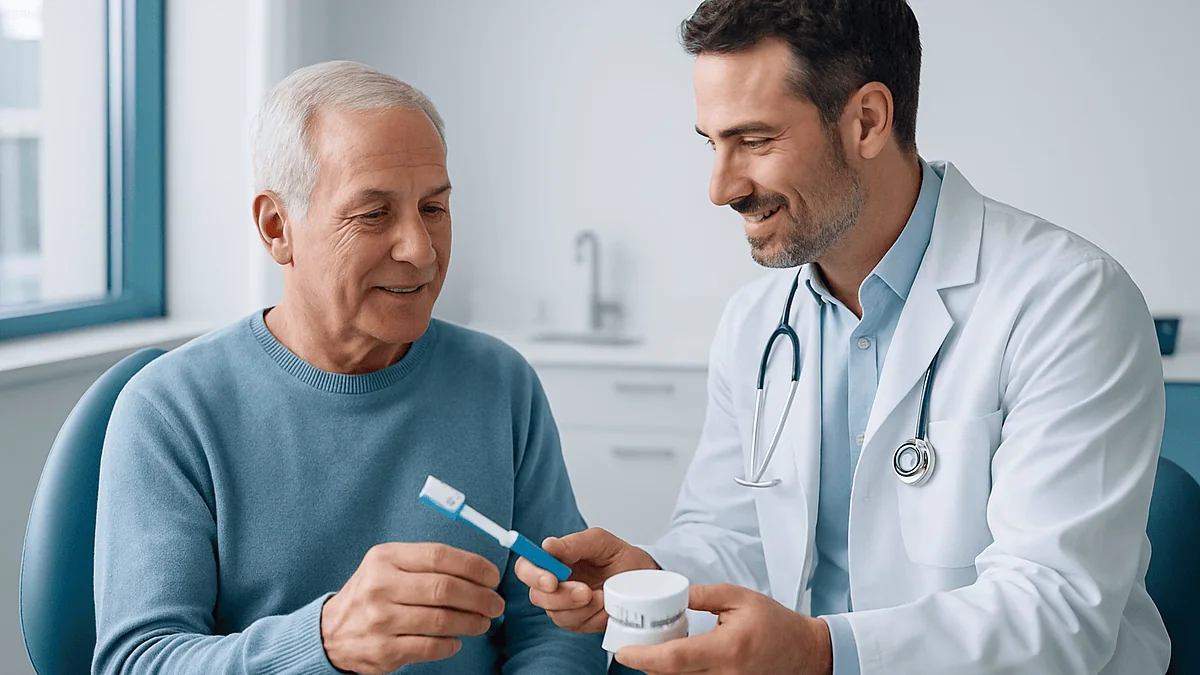
- Holding the brush like a pen, using an extra-soft head and rolling bristles away from the gum line removes plaque with far less force than the horizontal scrub that causes recession.
- Chlorhexidine rinse stands in for brushing at the site for a limited period only, because prolonged use stains teeth and alters taste.
- Smoking constricts the small vessels a graft depends on and is the most consistently cited modifiable risk factor for graft failure in mainstream patient guidance.
After a gum graft, most people are asked not to brush the grafted teeth at all for roughly the first one to two weeks, cleaning the rest of the mouth normally and using any prescribed antiseptic rinse at the site instead. Once the surgeon clears you, resume with an extra-soft brush, a light pen-style grip, short rolling strokes away from the gum line and no scrubbing. Your periodontist's written instructions always take priority.
The toothbrush is already in her hand before she remembers. It is the morning after surgery, the bathroom light is unkind, and a lifetime of habit has carried her to the sink with the brush loaded and lifted. Somewhere behind her upper left canine sits a sliver of tissue held in place by three stitches and a clot. She lowers the brush and stares at it as if it might bite.
That small hesitation is the whole subject of this article. Brushing after gum graft surgery is not a resumption of the old routine with a lighter touch. It is a different skill with a different purpose: keeping a living patch of tissue completely still until it grows its own blood supply, and then retraining the hand that probably contributed to the recession in the first place.
What follows explains what a graft actually is, why it is so sensitive to a bristle in the early days, which technique changes protect it, and how to tell ordinary healing from a problem that needs a call.
What a gum graft actually does, in plain language
A gum graft is a small surgical repair. Gum recession, the gradual loss of gum tissue that leaves more of the tooth and sometimes its root exposed, does not grow back on its own. So a periodontist, a dentist who specializes in the gums and the bone that supports teeth, borrows tissue and moves it to the thin spot.
The borrowed tissue usually comes from one of two places. In a connective tissue graft, the most common type, a small flap is opened on the roof of the mouth, a thin layer of tissue is taken from underneath, and that layer is stitched over the exposed root. In a free gingival graft, a piece of surface tissue is taken directly from the palate, an approach often chosen when the goal is to thicken very thin gum rather than to cover a root. A third option uses processed donor tissue, which spares the palate a second wound. Mayo Clinic lists soft tissue grafts among the standard surgical treatments for recession caused by periodontitis, the advanced form of gum disease that damages bone as well as gum.
Whatever its source, the graft arrives with no blood supply of its own. For the first several days it survives by soaking up fluid from the tissue beneath it, until tiny new blood vessels grow across the junction and knit the two together. That fragile handover is the whole story of early recovery, and it explains nearly every instruction you will be given about brushing. A graft that slides, lifts or gets scrubbed before those vessels connect can lose the connection it needs. The technique changes in this article are not fussiness; they are the practical way of protecting a living patch while it becomes part of you.
Why brushing after gum graft surgery is not ordinary brushing
Ordinary brushing is a controlled disruption. A toothbrush exists to break up plaque, the sticky film of bacteria that forms on teeth every day, and it does that by rubbing. Healthy gums tolerate rubbing without complaint because they are firmly attached to the bone and tooth beneath. A fresh graft is attached by stitches and a clot, and nothing more.
That is why brushing after gum graft surgery is treated as a separate skill. Three things are at risk in the first two weeks. The first is displacement: a bristle catching the edge of the graft can lift it a fraction of a millimeter, enough to tear the developing vessels. The second is the clot at the donor site on the palate, which acts as a natural dressing; dislodging it causes bleeding and slows healing. The third is the sutures themselves, which bristles or floss can snag and loosen.
There is a fourth, quieter risk that matters more in the long run. Many people who develop recession got there partly through years of firm horizontal scrubbing, often with a medium or hard brush. If the same stroke returns the day the sutures come out, the graft meets the same forces that wore the original gum away. Cleveland Clinic names aggressive brushing among the everyday causes of receding gums, alongside gum disease, tobacco use and teeth grinding.
Protecting the result, then, has two halves. Your surgeon’s instructions cover the first two weeks. Retraining your hand covers the next twenty years, and that is where most of this article spends its time.
How long after gum graft can I brush the treated area?
The honest answer is that timing depends on the type of graft, where it sits and how it has been stitched, so the only number that counts is the one on your discharge sheet. Most mainstream patient guidance, including Cleveland Clinic’s description of gum graft recovery, asks people to avoid brushing or flossing the grafted teeth until the surgeon confirms early healing, which commonly falls around the first one to two weeks and often coincides with suture removal.
Away from the graft, brushing usually continues from day one. The rest of the mouth still grows plaque, and letting it build for two weeks would raise the bacterial load right next to a healing wound. The practical instruction is often to brush everything except the treated teeth and the neighbor on either side, keeping the brush well clear of the palate if tissue was taken there.
In place of brushing at the site, many surgeons prescribe an antiseptic mouth rinse. The most widely used is chlorhexidine, an antimicrobial that binds to tooth and gum surfaces and keeps reducing bacteria for hours after rinsing. It is prescribed for a set period because prolonged use can stain teeth and alter taste; how long to use it, and whether to use it at all, is your prescriber’s call. Some teams suggest a gentle salt water rinse instead or as well. Rinsing itself should be soft: let the liquid sit, tip your head, and avoid forceful swishing, since pressure inside the mouth can disturb a graft edge.
When you are cleared to brush the site, the return is gradual rather than a switch. The sections that follow describe what that gradual return looks like in the hand.
Who gum grafting is usually for, and who is asked to wait
Gum grafting is usually offered when recession is causing a problem now or threatening one later. The common triggers are sensitivity to cold or sweet foods from an exposed root; a root surface that is wearing or decaying because it lacks the hard enamel that protects the crown; gum so thin that further loss looks likely; and appearance, particularly when one tooth looks noticeably longer than its neighbors. The National Institute of Dental and Craniofacial Research, part of NIH, describes soft tissue grafts as one of the surgical options when gum disease has destroyed tissue.
Not everyone with recession is a candidate, and not every candidate is treated straight away. Surgeons commonly ask people to wait if active gum disease has not yet been brought under control, because a graft placed into an inflamed, plaque-laden mouth is far less likely to attach. Poorly controlled diabetes, which slows wound healing, and current smoking, which narrows the small vessels a graft depends on, are both reasons a team may postpone surgery until the picture changes. Certain medications affect bleeding or healing and may need a conversation with the prescribing doctor first; never adjust them on your own.
Habits matter too. If heavy brushing or a rubbing oral piercing caused the recession, a periodontist will usually want that habit corrected before operating, since new tissue would otherwise face the same insult. Grinding and clenching may call for a night guard first.
Alternatives exist, and a good team explains them in neutral terms: monitoring stable recession, desensitizing treatments for sensitivity, bonding to cover a worn root, or techniques that reposition existing gum without a donor site. Which path fits you is a decision for you and the treating team together.
Gum graft healing stages: what the first days and weeks look like
Healing after a gum graft does not run to a fixed calendar, but it does follow a recognizable sequence. The windows below are typical ranges drawn from patient guidance published by Cleveland Clinic and Mayo Clinic; your own course may run faster or slower, and your surgeon’s assessment overrides any table.
| Stage | Typical window | What is usually happening | Brushing at the site |
|---|---|---|---|
| Protection | First 24–48 hours | Clot forms; graft absorbs fluid from the tissue beneath; swelling begins | None; no rinsing pressure, no pulling the lip to look |
| Early attachment | Days 3–7 | New vessels bridge into the graft; swelling and bruising peak, then ease | None; rinse as prescribed; brush other teeth gently |
| Review | Around 1–2 weeks | Sutures often removed; surface still pale or reddish | Only if cleared; extra-soft brush, feather contact, no gum-line scrubbing |
| Maturation | Weeks 2–6 | Tissue thickens and blends; sensitivity usually settles | Gentle full technique; interdental cleaning as advised |
| Settled | Beyond 6 weeks, up to several months | Final contour and color emerge | Normal soft-brush routine with the retrained stroke |
Two features of this table deserve comment. The first is how long the site is left alone. A week or two without brushing a few teeth feels wrong to anyone told all their life to brush everything twice a day, and people sometimes sneak a gentle pass over the graft out of guilt. Resist it; the antiseptic rinse is doing the work for now.
The second is that settled arrives months after healed. Color and thickness keep changing well after the tissue is safe, which is why photographs at two weeks are a poor guide to the final look, and why surgeons generally reserve judgment on how much root has been covered until the tissue has fully matured.
Grip, angle, pressure: the technique changes that protect the graft
Pick up your toothbrush the way you normally do and notice your grip. Most people hold it in a fist, the way you hold a hammer, and a fist delivers force. The first change after a gum graft is to hold the brush like a pen, between thumb and fingertips. It is hard to scrub with a pen grip, which is exactly the point.
The second change is pressure. Bristles should touch the tooth and barely bend. A useful check is to brush the back of your hand: anything beyond a light tickle is too much. Another is to look at the brush head after a few weeks; splayed, flattened bristles betray excess force, and in that case the pressure needs fixing, not just the brush.
The third change is direction. The stroke that erodes gum is a horizontal saw along the gum line. Replace it with one of two movements. The roll technique rests the bristles on the gum just beyond the tooth, on the upper jaw above and on the lower below, and rolls them toward the biting edge so plaque is swept away from the gum rather than into it. The other option, often called a modified Bass technique, angles the bristles about 45 degrees toward the gum line and uses tiny vibrations no wider than a single tooth, followed by a roll. During the first weeks after clearance, the roll alone is usually the safer choice because it never drives bristle tips into the graft margin.
Work tooth by tooth around the graft, spending a few seconds on each, then finish the tongue side and the biting surfaces. Time, not force, removes plaque; NHS guidance sets two minutes, twice a day, as the standard. Slow down, and the graft will thank you.
Which toothbrush is right after a gum graft?
Toothbrushes are sold by bristle stiffness, and after a gum graft only the softest end of the range belongs anywhere near the site. Surgeons often supply or recommend a post-surgical brush, an ultra-soft head with fine, densely packed bristles designed for wound margins. Once that phase passes, a soft brush is the long-term standard. MedlinePlus advises a soft-bristled brush for everyday care, and there is no dental reason for someone with a history of recession ever to return to medium or hard.
The manual-versus-electric question comes up in nearly every consultation. NHS guidance is blunt about it: both work well when used properly, and neither is required. For a person with recession, the real advantage of a powered brush is not power but restraint. Many oscillating and sonic models carry a pressure sensor that lights up or stalls when you press too hard, and a built-in two-minute timer discourages the habit of grinding away at one area. Those two features address the two mistakes that wear gums down. If you already own a powered brush, you do not need a new one; if you are choosing, ask your periodontist, whose answer will rest on your dexterity and habits rather than on any brand.
A few points apply to either type. Replace the head when bristles splay; MedlinePlus suggests every three to four months, sooner after illness. Rinse the brush and let it air-dry upright, since a wet, covered brush grows bacteria. Keep the brush that touched a healing site strictly for your own use.
None of this is glamorous. Yet the toothbrush is the one instrument that will contact the graft thousands of times over the coming years, and it deserves to be chosen and handled accordingly.
Rinsing, flossing and cleaning between teeth near the graft
Between-teeth cleaning is where grafts most often get snagged, because floss and small brushes work precisely at the junction where new tissue meets tooth. The standard instruction is to leave the grafted teeth out of your flossing routine entirely until the surgeon says otherwise, while continuing to clean between teeth elsewhere. NHS guidance treats daily interdental cleaning with floss or interdental brushes as routine care, so the rest of the mouth should not pause.
When you are cleared, reintroduce interdental cleaning at the site with a change of method. String floss snapped down through the contact point arrives at the gum with a jolt. Instead, ease it through with a gentle side-to-side motion, wrap it in a C shape against one tooth, and slide only as far as the tissue allows, never forcing it under the gum edge. Interdental brushes, the tiny bottle-brush cleaners, can be kinder than floss around a grafted root because they clean the space without needing to dip below the gum line; ask your team which size fits, since an oversized brush scrapes tissue on both sides. Water flossers are an option some teams permit later in healing, on the lowest setting, aimed at the tooth rather than the gum edge.
Rinsing deserves the same gentleness. Vigorous swishing, spitting hard and drinking through a straw all change pressure inside the mouth and can lift a graft edge or dislodge the palatal clot in the early days. Let a rinse sit, tilt your head, and let it fall into the sink.
Warm salt water is widely suggested for comfort once your surgeon allows it. It is not a substitute for a prescribed antiseptic; the two have different jobs. Ask which you should be using, and when to stop.
What are the worst days after a gum graft?
People who search for the worst days after a gum graft are usually asking whether what they feel is normal, and the answer is often yes. Discomfort tends to be low on the day of surgery, while local anesthetic and any prescribed medication are working, then rises over the second and third days as swelling peaks. If tissue was taken from the palate, the donor site is frequently the sorer of the two, described by many people as a burn-like ache that flares with hot food. Cleveland Clinic notes that most people feel considerably better within about a week, with residual tenderness fading over the following weeks.
Swelling and bruising along the cheek or jaw usually appear within 48 hours and settle over several days. A cold compress against the outside of the face in short intervals during the first day is a standard comfort measure. Light bleeding, or saliva tinged pink, is common early and typically stops with gentle pressure on gauze supplied by your team; bleeding from the palate can be steadied by pressing on the dressing or a protective plate, if one was made.
Eating is where the worst days really live. Soft, cool foods that need no chewing on the treated side keep the graft still: yogurt, smoothies eaten with a spoon, lukewarm soup, mashed vegetables, scrambled eggs. Hot, crunchy, sharp or spicy foods irritate both wounds and risk dislodging tissue. Alcohol and tobacco slow healing and are usually excluded for a period your surgeon defines.
Pain relief is prescribed to fit your history. Over-the-counter pain relievers or a short prescription are commonly suggested; take only what your team advises, and report pain that worsens after day three rather than easing, since that pattern is not the usual course.
Signs a gum graft is healing well
Watching a graft heal is a lesson in how strange normal can look. In the first days the tissue may appear white, gray or yellowish, which alarms people who assume pale means dead. Usually it means the opposite: the surface layer is shedding while new vessels grow beneath, and a whitish film is expected. Reddish-pink color returning over the first week or two is the sign that circulation has arrived.
Other markers of a graft settling in are more mundane. Swelling that peaks around day two or three and then recedes daily rather than growing. Discomfort that steadily fades and stays manageable with what your team suggested. Sutures that stay put, and a graft edge that sits flush with the surrounding gum rather than curled or lifted. At the donor site, a palate that feels rough or tender but stops bleeding after the first day, gradually smoothing over two to three weeks as new surface tissue covers the wound.
Sensitivity to cold on the treated tooth often improves once the root is covered, though not immediately, and some people feel more sensitivity for a while as the tissue adapts. That does not signal failure. Nor does a graft that looks bulky or slightly mismatched in color in the early weeks; contour and shade keep changing for months, which is one reason surgeons ask you to withhold judgment on appearance until the tissue matures.
What healing does not look like is a graft that turns dark, shrinks visibly or exposes the root it was meant to cover; sutures hanging loose; pus; a bad taste that persists despite rinsing; or pain that climbs after the third day. Those belong in the section on when to call your doctor, not on the list of things to wait out.
Gum graft recovery tips the evidence actually supports
Ask what helps a gum graft heal faster and the honest reply is that nothing speeds biology, but several things stop you slowing it down. Most of the evidence here is general wound-healing knowledge rather than trials of graft-specific tricks, and it should be read that way.
Smoking is the most consistently cited risk factor for poor graft outcomes in mainstream guidance from Mayo Clinic and Cleveland Clinic. Nicotine constricts the small vessels the graft depends on, and the heat and chemicals in smoke irritate both wounds. Stopping before surgery and staying stopped through healing is the highest-value change available. If quitting feels out of reach, tell your team honestly so they can plan around it and point you to support.
Keep the graft still. No chewing on that side, no probing with the tongue, no pulling back the lip to inspect the site several times a day, and no strenuous exercise or heavy lifting in the first days, since a surge in blood pressure can restart bleeding. Sleep with your head slightly raised for the first couple of nights to limit swelling.
Take prescribed medication exactly as directed and complete any antibiotic course as written; whether you need one is the surgeon’s decision. Eat enough protein and calories even though everything is soft, because wounds need building materials. Stay hydrated, but skip the straw.
Keep every follow-up appointment. The review at one to two weeks is when the surgeon decides whether you can start brushing the site, checks the sutures and catches small problems before they grow. Skipping it to save a trip is a false economy in the truest sense.
Is it easy to mess up a gum graft?
Easier than most people expect, and less catastrophic than most people fear. Grafts do sometimes fail to take, and the usual reasons are mechanical or vascular: the graft moved before it attached, a clot formed between the graft and its bed and kept them apart, the blood supply was compromised by smoking or by tension in the flap, or infection set in. The encouraging part is that most of these causes are influenced by behavior in the first week, which is why the instructions are so specific.
A graft that fails does not usually harm the tooth. It simply does not deliver the coverage or thickness intended, and the situation returns roughly to where it started. Partial results are common, where the tissue thickens but covers less root than hoped. Whether a second attempt is worthwhile, and when, is a decision for you and your periodontist once the site has fully matured, because judging early can mislead.
Other risks deserve plain statement. Bleeding from the palate, occasionally significant, is the most frequent early complication of donor-site grafts. Infection is uncommon but possible. Numbness or altered sensation near the palate can occur and is usually temporary. Color or contour mismatch is a cosmetic risk, more visible on front teeth. Persistent sensitivity, or a bulky graft, sometimes needs minor reshaping later.
Alternatives carry their own trade-offs. Processed donor tissue avoids the palatal wound but relies on your own cells to repopulate it, which can give a thinner result. Monitoring avoids surgery but leaves existing sensitivity and root wear unaddressed. None of these is universally better; the right choice depends on your anatomy, goals and risk profile, weighed with the treating team.
What people often get wrong about brushing after gum graft surgery
The first misconception is that harder brushing means cleaner teeth. It does not. Plaque is soft and lifts with light contact given enough time; force mostly wears away tooth and gum. If your recession began with a stiff brush and a firm hand, brushing after gum graft surgery is the chance to unlearn that, not to prove the graft can take it.
The second is that leaving the site unbrushed for a week or two is unhygienic. In a healthy mouth that would be true. In a surgical mouth, the prescribed rinse stands in for the brush at the site, and the small local rise in plaque is a lesser risk than tearing the graft. The rest of the mouth is still brushed, so overall hygiene barely changes.
The third is that a white or gray graft has died. Pale tissue in the first week is usually the surface layer sloughing while circulation establishes beneath. Dark tissue, or tissue that visibly shrinks and exposes root, is a different matter and needs a call.
The fourth is that mouthwash can do the whole job indefinitely. Chlorhexidine is prescribed for a limited period precisely because long-term use stains teeth and alters taste, and no rinse removes established plaque from between teeth. Once you are cleared, brushing and interdental cleaning return and the rinse steps back.
The fifth is that the result is fixed at two weeks; contour and color keep changing for months. The sixth, and most costly, is that a graft protects against future recession on its own. It gives you thicker tissue, which resists wear better, but a returning scrub stroke will erode a graft just as it eroded the original gum. The technique is the protection. The graft only gives it something to protect.
Keeping the result: brushing habits that prevent new recession
Once the surgeon signs the site off as healed, brushing after gum graft surgery quietly becomes just brushing. That is the moment habits decide whether the result lasts, because the daily stroke is the only force that will act on the tissue for the rest of your life.
Keep the soft brush permanently. Keep the pen grip and the roll or gently angled technique on every tooth, not only the treated ones, since recession on one tooth hints that the same forces are at work elsewhere. If you use a powered brush, leave the pressure sensor on and pay attention when it fires. Brush for two minutes twice a day, including last thing at night, as NHS guidance recommends, and spit out the toothpaste without rinsing with water afterward so the fluoride stays in contact with exposed root surfaces, which are softer than enamel and more prone to decay.
Address causes as well as effects. If clenching or grinding contributed, wear the night guard your dentist made. If a lip or tongue piercing rubs the gum, that is a conversation worth having. If gum disease was part of the picture, the maintenance appointments your team schedules are not optional extras; NIH describes periodontitis as a common, chronic condition in adults, and stability depends on professional cleaning at the intervals recommended for you.
Watch for early signs that the technique has slipped: a brush head that splays within weeks, a notch forming at the gum line of any tooth, or fresh tenderness to cold on a tooth that was comfortable. Catching these early is far simpler than treating the recession they lead to, and a quick check at your routine visit is all it takes.
Questions to ask your care team
Good questions turn a sheet of instructions into a plan you understand. Take these to your consultation or first follow-up, and write down the answers, because the days after surgery are not the time to rely on memory.
- Which type of graft are you planning, where will the tissue come from, and why is that the right choice for my teeth?
- Exactly which teeth should I avoid brushing, and for how long? Will you tell me when to restart, or should I judge from how the site looks?
- Do you want me to use an antiseptic rinse, a salt water rinse, both or neither, and for how many days?
- What brush and toothpaste do you recommend for the first weeks, and is a powered brush appropriate for me later?
- When can I floss the treated teeth again, and should I switch to interdental brushes or another method?
- What should the graft look like at three days, one week and two weeks, and what would make you want to see me sooner?
- How will you judge whether the graft has covered the root, and when?
- Are any of my current medications a concern for bleeding or healing, and who should I speak to about them?
- If I smoke or vape, how does that change your advice, and what support is available?
- What are the alternatives to grafting in my case, and what happens if I choose to wait?
Two things stand out in that list. Several questions ask what normal looks like, because the most common reason people call in a panic is an appearance that was entirely expected but never described to them. And none asks the surgeon to guarantee an outcome, because no honest clinician can. What you are entitled to is a clear account of what will be done, what you must do, what to watch for and how the result will be judged. A team that answers those patiently is telling you something reassuring about how they will handle the rest of your care.
When to call your doctor
Most recoveries are uneventful, and most calls to a surgeon’s office turn out to be about appearances that were normal all along. Make the call anyway when you are unsure; that is what the after-hours number is for. Some signs, though, should not wait for office hours.
Call your periodontist or dentist promptly if bleeding continues despite steady pressure on gauze for the time your team suggested, or restarts heavily after it had stopped; if the graft looks dark rather than pale, has visibly shrunk, or has lifted so the root beneath is showing again; if sutures come loose or fall out earlier than expected; if pain increases after the third day instead of easing, or is not controlled by what you were prescribed; if you notice pus, a persistent foul taste or smell, or swelling that keeps growing after day three; or if you develop a fever. Numbness lasting well beyond the expected wearing-off of the anesthetic also deserves a report, even though it is often temporary.
Seek urgent or emergency care, rather than waiting for a callback, if bleeding is heavy and will not slow, if swelling spreads toward the eye or under the jaw and begins to affect swallowing or breathing, if you cannot open your mouth, or if a high fever comes with feeling generally unwell. Spreading facial infection is rare after gum surgery, but when it happens it is a medical emergency.
Between those extremes sits ordinary worry, and it is legitimate. A whitish graft, a sore palate, a pink-tinged pillow on the first morning and a face puffier on day two than on day one are all typical. If you cannot tell which category you are in, send a photograph if your team offers that option, or ask to be seen. The judgment about what needs attention always rests with the clinicians who did the work, and they would far rather look at a healthy graft than miss a struggling one.
Frequently asked questions
Is it easy to mess up a gum graft?
It is easier than most people expect, because the graft is held only by stitches and a clot until new blood vessels grow into it over the first week or so. The common causes of failure are the graft moving, a clot forming between graft and bed, smoking, or infection, and most of these are shaped by behavior in the early days. A failed graft usually returns the site to where it started rather than damaging the tooth; whether to try again is a decision for your periodontist once the tissue has matured.
What helps gum grafts heal faster?
Nothing speeds the biology, but several things stop you slowing it. Not smoking is the single most important factor, since nicotine narrows the vessels the graft depends on. Keep the site completely still: no chewing on that side, no tongue probing, no straws, no heavy exertion early on. Follow the prescribed rinse and medication schedule exactly, eat enough protein even from soft foods, sleep with your head raised for the first nights, and keep the follow-up visit where the surgeon checks attachment.
What are the worst days after a gum graft?
For most people, days two and three are the most uncomfortable, when swelling peaks and the local anesthetic has long worn off. If tissue was taken from the palate, that donor site is often sorer than the grafted area and stings with hot food. Cleveland Clinic notes most people feel much better within about a week. Pain that climbs after day three instead of easing is not the usual pattern and should be reported to your surgeon.
What are the signs that a gum graft is healing?
Early healing often looks alarming: the graft may appear white, gray or yellowish in the first week as the surface layer sheds while new vessels grow beneath. Pink color returning over one to two weeks, swelling that peaks and then shrinks daily, discomfort that steadily fades, sutures that stay in place and a graft edge sitting flush with the gum are all reassuring. Final color and contour keep changing for months, so early appearance is a poor guide to the finished result.
How long after gum graft can I brush the rest of my teeth?
Usually from the first day, provided you stay away from the grafted teeth, their immediate neighbors and the palate if tissue was taken there. The rest of the mouth still grows plaque, and leaving it for two weeks would raise bacterial levels beside a healing wound. Use a soft brush with light pressure and rinse gently without swishing. The grafted area itself is normally left alone until your surgeon confirms early attachment, commonly around one to two weeks.
Can I use an electric toothbrush after a gum graft?
Not on the graft itself until your surgeon clears you, and then only on a soft head with light contact. Once healed, a powered brush is a reasonable choice; NHS guidance considers manual and electric brushes equally effective when used properly. The practical benefit for someone with recession is restraint rather than power: built-in pressure sensors and two-minute timers counter the heavy, prolonged scrubbing that wears gums away. Ask your periodontist which style suits your dexterity and habits.
What if I accidentally brushed over the graft?
One light, accidental pass rarely causes harm, especially after the first few days. Look for warning signs rather than assuming the worst: fresh bleeding that does not stop with gentle pressure, a graft edge that looks lifted or curled, a stitch that has come loose, or new pain. If any of those appear, or if the contact was forceful and early in healing, call your surgeon’s office and describe what happened. If everything looks unchanged, simply return to the instructions and avoid a repeat.
Why is my gum graft white?
A white, gray or yellowish graft in the first week is usually normal. The surface layer of the transplanted tissue sheds while the graft survives on fluid from the tissue beneath and waits for new blood vessels to grow in. As circulation arrives, pink color returns over one to two weeks. The change that should prompt a call is tissue turning dark, shrinking visibly or peeling back to expose the root, particularly alongside pain, pus or a persistent bad taste.
When can I floss after a gum graft?
Continue flossing everywhere except the grafted teeth from the start, and wait for your surgeon’s specific clearance before cleaning between the treated teeth, which often comes at or after the one- to two-week review. When you resume, ease the floss through the contact point rather than snapping it down, curve it against the tooth and stop where the tissue resists. Interdental brushes of the correct size can be gentler around a grafted root because they do not need to dip below the gum line.
Will a gum graft stop my gums receding again?
A graft gives you thicker tissue that resists wear better than thin gum, but it does not change the forces that caused the recession. If firm horizontal scrubbing, a hard brush, grinding, a rubbing piercing or untreated gum disease contributed, those need addressing or the new tissue can erode too. Long-term protection comes from a soft brush, light pressure, a rolling or gently angled stroke, and the professional maintenance intervals your team recommends.
References
- NHS: How to keep your teeth clean
- MedlinePlus: Dental care, adult
- NIH National Institute of Dental and Craniofacial Research: Gum Disease
- NHS: Gum disease
This article is for general information only and is not a substitute for professional medical advice. Please consult a qualified doctor about your individual situation.

More from the Blog

Soft vs Hard Night Guards for Bruxism: How Dentists Choose the Splint Type
Dentists usually choose a hard acrylic night guard for moderate to heavy grinding because it resists wear and holds the jaw in a stable…

Bleeding Gums Myths: Stopping Brushing, Harder Brushing and Other Habits to Unlearn
Bleeding gums are usually a sign of gingivitis, early gum inflammation caused by plaque, not a reason to stop brushing or to scrub harder.…

Recovering From Jaw Cyst Removal: Swelling, Cold Compresses and Monitoring the Bone
Jaw cyst surgery recovery usually happens in two stages. Soft tissue swelling and soreness are typically worst in the first two to three days,…
How Dental Lasers Work: What Focused Light Changes for Gum Treatment and Small Cavities
Dental lasers work by emitting a single wavelength of light that particular tissues absorb: water inside enamel and dentin for hard-tissue lasers, and pigment…
Who May Not Suit Teeth Whitening? Crowns, Gum Disease, Pregnancy and Grey Discoloration
People usually asked to wait or skip teeth whitening include anyone with untreated gum disease, cavities or cracked teeth, those who are pregnant or…

What Happens at a Composite Bonding Appointment: Shade Matching, Layering and Polishing
A composite bonding procedure usually takes 30 to 60 minutes per tooth and rarely needs an injection. The dentist selects a resin shade against…