Cosmetic (Aesthetic) Surgery
Cosmetic aesthetic surgery reshapes or enhances facial and body features through personalized surgical procedures. It may include breast, facial, body contouring, and reconstructive-related aesthetic operations.
Quick answer
Cosmetic (aesthetic) surgery is a group of operations that reshape, refine or restore the appearance of the face, breasts or body, including rhinoplasty, facelift, eyelid surgery, breast surgery, liposuction and abdominoplasty. It involves medical assessment, anaesthesia, an operation in a sterile theatre and structured follow-up. It is intended for healthy adults with a structural concern that skincare and non-surgical treatments cannot correct.
Cosmetic (Aesthetic) Surgery: What It Is and Why the Decision Deserves Medical Precision
Cosmetic (aesthetic) surgery is a group of surgical procedures that reshape, refine, restore or enhance the appearance of the face, breasts or body. It covers operations such as rhinoplasty, facelift, eyelid surgery, breast augmentation, breast lift, breast reduction, liposuction and abdominoplasty. It is intended for adults in reasonable general health who have a specific physical concern, loose skin, disproportion, volume loss, asymmetry, a contour that has changed, that creams, devices and non-surgical treatments cannot correct.
Many people arrive at this decision gradually. They have already done everything topical care allows: a carefully built skincare routine, daily sun protection, retinoids, professional facials, makeup techniques that soften whatever bothers them. At some point it becomes clear that the concern is structural, skin that has stretched, tissue that has descended, cartilage or fat in the wrong proportion, and structure is something only surgery can change. Recognising that boundary honestly, rather than promising that one more product will solve it, is where good aesthetic care starts.
Choosing surgery is rarely a quick decision. Many patients spend months, sometimes years, thinking about a facial feature, body contour, breast shape or visible sign of ageing that no longer feels aligned with how they see themselves. Others seek aesthetic improvement after pregnancy, weight loss, previous surgery, trauma, congenital differences or age-related change. For international patients, the decision can feel more complex still, because it involves not only the procedure itself but also the trustworthiness of the medical team, safety standards, travel logistics, recovery planning and communication in another country. Those concerns are legitimate, and a serious clinic should be able to answer them in plain terms before any commitment is made.
Cosmetic surgery is not about following a single standard of beauty. The best outcomes are usually subtle, proportionate and individualised. A sound treatment plan considers anatomy, skin quality, facial or body proportions, ethnicity, lifestyle, medical history and your personal goals. It also requires a clear understanding of what surgery can realistically achieve, what it cannot change, and how recovery will actually unfold, week by week, not in a single before-and-after photograph.
At Acibadem, cosmetic surgery is treated as a medical specialty within Plastic, Reconstructive & Aesthetic Surgery, combining surgical technique, careful planning, patient safety and restrained aesthetic judgement. Whether you are considering rhinoplasty, facelift surgery, breast surgery, liposuction, tummy tuck, eyelid surgery, body contouring after weight loss or another aesthetic operation, the process begins with a detailed consultation and a personalised treatment plan. For many patients, the most reassuring part of the journey is that the procedure takes place in a hospital-based environment, with access to modern diagnostic resources, anaesthesiology teams and multidisciplinary medical support when needed.
Is cosmetic surgery the same as plastic surgery?
Not exactly, cosmetic surgery is one branch of the wider specialty of plastic surgery. Plastic surgery also includes reconstructive work: restoring form and function after cancer treatment, trauma, burns or congenital differences. Cosmetic and reconstructive goals often overlap in practice. Improving contour after significant weight loss, correcting marked asymmetry, revising scars or restoring appearance after a previous operation all sit somewhere between the two. The surgical training is the same, and the same standards of assessment, sterility, anaesthesia and follow-up apply whether an operation is classed as elective or reconstructive.
What Cosmetic Aesthetic Surgery Covers
Cosmetic aesthetic surgery refers to surgical procedures that reshape, refine, restore or enhance the appearance of the face, breasts or body. Some procedures are fully elective, such as facial rejuvenation or breast augmentation. Others overlap with reconstructive aims, such as improving contour after major weight loss, correcting asymmetry, addressing scars or restoring appearance after earlier surgery.
The term covers a wide range of operations. Facial aesthetic surgery may include rhinoplasty, facelift, neck lift, eyelid surgery, brow lift, ear reshaping, facial fat grafting, and chin or jawline contouring. Breast procedures may include breast augmentation, breast lift, breast reduction, implant revision, asymmetry correction and male breast reduction, covered in more detail under aesthetic breast surgery. Body procedures may include liposuction, abdominoplasty, arm lift, thigh lift, lower body lift, Brazilian buttock lift using fat transfer in selected patients, and body contouring after bariatric surgery or major weight loss. Adjacent concerns are handled by neighbouring specialties: the appearance of teeth and smile belongs to cosmetic dentistry, while hairline and scalp concerns fall under aesthetic scalp surgery.
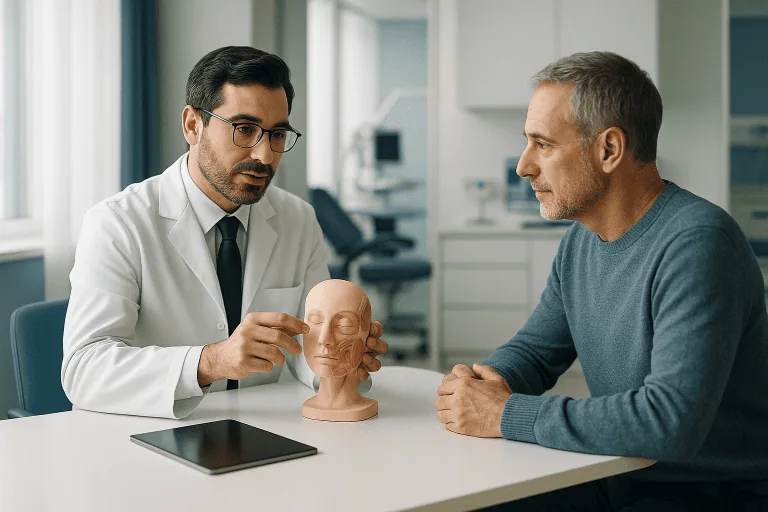
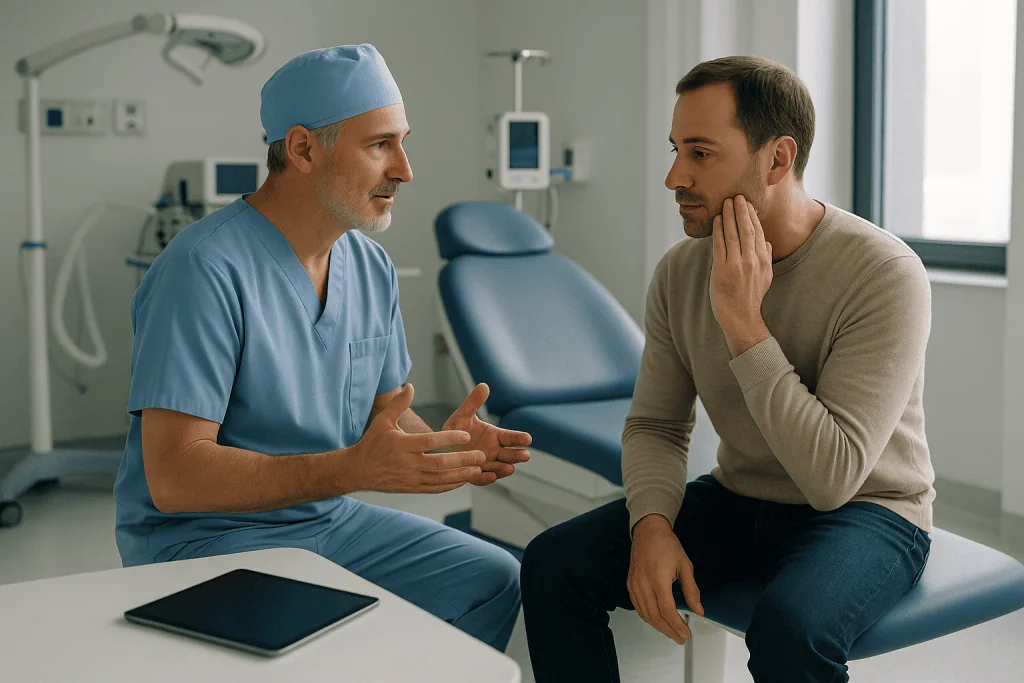
Although the goal is aesthetic improvement, cosmetic surgery is still surgery. It requires medical assessment, careful surgical planning, anaesthesia evaluation, sterile operating conditions and structured postoperative follow-up. The most appropriate procedure is selected after the surgeon evaluates your anatomy, skin elasticity, tissue quality, skeletal structure, fat distribution, prior scars, medical history, medication use and expectations. Two patients asking for “the same” operation may leave the consultation with quite different plans, because their tissues and starting points differ.
In some cases, surgery is combined with non-surgical treatments such as skin resurfacing, injectables, regenerative treatments or medical skin care. These can support a surgical result, but they do not replace surgery when the main concern is significant skin excess, tissue descent, breast position, abdominal muscle separation or structural contour change. A responsible consultation tells you which options are likely to be effective and which will offer limited benefit, including when the honest answer is that surgery is not the right tool either.
Can skincare and makeup replace cosmetic surgery?
No, skincare and makeup work at the level of the skin surface, while surgery works on the structures beneath it. Products from a beauty retailer can genuinely improve texture, tone, hydration, barrier function and pigment, and makeup can conceal a great deal. What no serum can do is remove excess skin, repair separated abdominal muscles, lift a descended breast, reshape nasal cartilage or reposition deep facial tissue. Good products can be worth their price, but no price point changes what a cream can physically reach. The realistic view is that products and procedures are complementary rather than competing: well-chosen skin care supports skin quality before an operation and, under your team’s guidance, can support scar care and sun protection afterwards. When the concern is structural, however, topical care manages appearance without changing the underlying cause, and knowing that difference saves patients years of spending on the wrong solution.
Who May Consider Cosmetic Surgery
Patients consider cosmetic aesthetic surgery for many different reasons. Some want to correct a feature that has bothered them since adolescence, such as a prominent nasal hump, protruding ears, breast asymmetry or a weak chin profile. Others seek surgery after life events that change the body: pregnancy, breastfeeding, ageing, weight fluctuation, bariatric surgery or previous medical treatment. Some are motivated by functional discomfort as much as appearance, heavy breasts causing back and shoulder pain, excess eyelid skin narrowing the visual field, or abdominal skin folds causing recurrent irritation.
Common concerns that bring patients to consultation include loose facial or neck skin, tired-looking eyes, drooping upper eyelids, under-eye bags, nasal imbalance, breast volume loss, breast sagging, overly large breasts, localised fat deposits, abdominal skin excess, separated abdominal muscles after pregnancy, scars, contour irregularities and asymmetry. In men, frequent concerns include gynecomastia, abdominal contour, eyelid ageing, neck fullness and facial definition. None of these concerns is trivial simply because it is aesthetic; how you experience your own appearance affects daily life, and a measured medical assessment takes that seriously without overselling what an operation can deliver.
How do surgeons assess whether you are a suitable candidate?
Through a structured medical and aesthetic evaluation, not a diagnosis in the disease sense, but a genuinely clinical process. The surgeon examines the area of concern, assesses tissue quality, reviews your medical history, discusses prior operations and current medications, and evaluates whether you are medically suitable for surgery. Photographs are usually taken for planning and documentation. In selected cases, imaging, laboratory tests, cardiac evaluation, breast imaging or an additional specialist consultation may be recommended before surgery is scheduled.
A good candidate is generally someone who is physically healthy enough for surgery, has a stable weight when body contouring is planned, does not smoke or can stop smoking for the period the team defines, understands the recovery process and holds realistic expectations. That last point deserves emphasis. Cosmetic surgery can improve shape, proportion and confidence in appearance, but it cannot resolve emotional distress that is unrelated to the physical concern, rescue a relationship or change how other people behave. An honest conversation between patient and surgeon, including, sometimes, the recommendation not to operate, is a marker of good practice, not a rejection.
Conditions and Indications Cosmetic Surgery Can Address
Cosmetic aesthetic surgery may address age-related changes, congenital features, body changes after pregnancy or weight loss, tissue laxity, disproportion, asymmetry, contour irregularities and selected functional concerns. The indications vary by anatomical area and by what you want to achieve.
- Facial ageing: Loose skin, jowls, neck bands, eyelid heaviness, brow descent, under-eye fullness and loss of facial volume may be improved with procedures such as facelift, neck lift, eyelid surgery, brow lift or fat grafting. The choice depends on which layer has changed, skin, fat, muscle or bone support, rather than on age alone.
- Nasal shape and breathing-related concerns: Rhinoplasty can refine the external appearance of the nose. When appropriate, functional nasal surgery may be combined in the same operation to address structural breathing issues such as septal deviation.
- Breast size, shape and position: Breast augmentation, lift, reduction or revision surgery may address volume loss, sagging, asymmetry, overly large breasts, implant-related concerns or changes after pregnancy and weight fluctuation. The right operation depends on skin envelope, nipple position and tissue quality, not just desired size.
- Abdominal changes: Abdominoplasty can remove excess skin and tighten the abdominal wall when there is muscle separation or laxity, particularly after pregnancy or major weight change. Exercise strengthens muscle but cannot close a true separation or remove stretched skin.
- Localised fat deposits: Liposuction may reshape areas such as the abdomen, waist, hips, thighs, arms, back, chin or chest when fat is resistant to diet and exercise. It is a contouring tool, not a weight-loss method.
- Post-weight-loss body contouring: After significant weight reduction, a body lift, arm lift, thigh lift, breast lift or combined procedures may improve skin excess and contour. Patients who have had bariatric surgery are usually advised to wait until weight has stabilised before contouring is planned.
- Scars and contour deformities: Scar revision, fat grafting and tissue rearrangement may improve selected scars, contour depressions or asymmetries. Scars can be improved and repositioned; they cannot be erased.
- Male aesthetic concerns: Gynecomastia surgery, liposuction, eyelid surgery, rhinoplasty and facial contour procedures may be considered for men seeking more balanced proportions. Planning in men accounts for different skin thickness, hair patterns and expectations around scars.
Can several procedures be combined in one operation?
Sometimes, in carefully selected patients. Because many aesthetic concerns overlap: a tummy tuck and breast surgery after pregnancy, or liposuction alongside a body lift, combining operations can reduce the number of anaesthesia episodes and create a coordinated overall result. Safety comes first, however. The surgeon and anaesthesiology team consider total operating time, your medical history, blood loss risk, the physical demands of recovering from two procedures at once, and your travel plans before recommending single-stage or staged treatment. When the combined burden is too high, staging the operations is the responsible answer, even if it means a second trip.
How Cosmetic Surgery Is Performed
Every pathway is individual, but the sequence of steps is broadly consistent:
- Remote review of photographs, health history and any previous operative records, for international patients.
- In-person consultation, physical examination and agreement of a written surgical plan.
- Preoperative testing and anaesthesia evaluation.
- The operation itself, in a hospital operating theatre.
- Early follow-up: dressing checks, drain removal where relevant, and clearance for travel.
- Longer-term follow-up on healing, scar maturation and the settled result.
Consultation and Personalised Planning
The process begins with a consultation. For international patients, the first stage may take place remotely through medical photographs, health history forms, records of previous operations and a virtual discussion. This helps establish whether you may be a candidate, which procedures deserve consideration and what additional information is needed before any travel is arranged.
During the in-person evaluation, the surgeon performs a detailed physical examination and discusses your goals in practical terms. Rather than asking only what you want changed, an experienced aesthetic surgeon evaluates the balance of surrounding structures. Rhinoplasty planning may take chin projection and overall facial proportion into account; eyelid surgery planning considers brow position and skin quality; breast surgery planning weighs chest wall shape, skin envelope, nipple position and body frame. Isolated changes that ignore this balance are how unnatural results happen.
The treatment plan may involve one operation, a combination of procedures or staged surgery. You are told where incisions will sit, what type of anaesthesia is planned, what scars to expect, how long recovery is likely to take, which activities will be restricted, and what the realistic risks and limitations are. Preoperative photographs are typically obtained. Laboratory tests and an anaesthesia evaluation are completed before surgery, and depending on the procedure and your history, additional tests, electrocardiography, imaging, breast ultrasound or mammography, or a specialist consultation, may be requested.
Preparation Before Surgery
Preparation is a genuine safety measure, not paperwork. You may be asked to stop smoking and all nicotine products for a defined period, because nicotine impairs wound healing and increases complication risk; this applies to vaping and nicotine patches as much as cigarettes. Certain medications and supplements that can affect bleeding, blood thinners, anti-inflammatory drugs, some herbal supplements and high-dose vitamins, are reviewed before surgery. Any decision to pause, adjust or continue a medication is made by the treating doctors, never by the patient alone, which is why a complete and honest medication list matters so much.
For body contouring procedures, stable weight is important, because significant fluctuation after surgery changes the result. For breast surgery, appropriate imaging may be recommended depending on age, risk factors and medical history. If you are planning pregnancy, major weight loss or future bariatric surgery, you may be advised to delay certain procedures until your body is more stable: a frustrating answer in the short term, but one that protects the long-term outcome.
International patients also need practical preparation: enough time near the hospital for evaluation, surgery, early recovery, drain removal if needed and a postoperative check before flying home. The required stay varies by procedure. A smaller operation may need only a short stay, while combined body contouring or facial rejuvenation surgery needs a longer recovery window before travel is sensible. Your care team should state the expected stay in writing before you book anything.
What happens on the day of surgery?
Cosmetic surgery is performed in an operating theatre under local anaesthesia with sedation or under general anaesthesia, depending on the procedure, your health and the surgical plan. The anaesthesiology team monitors you continuously throughout the operation. Hospital-based care means recovery units, laboratory resources and additional specialists are on site if they are needed: a level of backup that matters precisely because elective surgery should never have to improvise.
The surgical steps depend on the operation. In rhinoplasty, the surgeon reshapes cartilage and bone to refine nasal contour and, when indicated, the nasal airway. In facelift or neck lift surgery, the deeper facial tissues are repositioned and excess skin removed in a controlled way to create a natural contour rather than a pulled one. In eyelid surgery, excess skin, muscle or fat is adjusted through carefully placed incisions that sit in natural creases. In breast surgery, implants, tissue reshaping, lifting techniques or reduction patterns are used according to your anatomy and goals. In liposuction, small incisions admit fine cannulas that remove selected fat deposits. In abdominoplasty, excess skin is removed, the abdominal wall may be tightened, and the navel repositioned where necessary.
Operating time varies widely. A limited eyelid procedure may be relatively short, while combined breast and body contouring or post-weight-loss surgery can take several hours. Some procedures are outpatient, meaning you return to your hotel or recovery accommodation the same day after a period of observation. Others require one or more nights in hospital, particularly when larger areas are treated, drains are placed or your medical history warrants closer monitoring.
What technology is used in modern aesthetic surgery?
Technology in aesthetic surgery supports planning, precision, safety and postoperative monitoring: it does not replace surgical judgement. Digital photography is standard for documentation and planning. Three-dimensional imaging or simulation tools may be used in selected procedures to discuss proportions, though simulations are planning aids, not promises of a specific outcome, and any clinic presenting them otherwise should be treated with caution. Modern anaesthesia monitoring tracks vital signs continuously during surgery. Energy-based surgical instruments may assist tissue dissection, reduce bleeding or support contouring where appropriate.
For liposuction and body contouring, surgeons choose among different assisted techniques according to the area, tissue quality and indication. The aim is not simply removing fat but creating smooth contours while protecting surrounding tissues. In facial and breast surgery, magnification, refined instruments, careful suture materials and meticulous tissue handling all contribute to scar quality and recovery. Postoperative care may include compression garments, drains, wound dressings, lymphatic support where appropriate and structured follow-up assessments.
Recovery After Cosmetic Surgery
Recovery depends on the procedure, your health and whether operations were combined. Swelling, bruising, tightness, numbness and fatigue are common early experiences. Discomfort is managed with prescribed medication; many patients describe soreness and tightness more than severe pain after certain procedures, although body contouring and muscle repair are more physically demanding, and honest planning accounts for that.
You are encouraged to walk early, usually on the day of surgery or the following day, to support circulation and reduce the risk of blood clots. Heavy lifting, strenuous exercise, swimming, saunas and sun exposure are restricted for a period defined by the surgical team. Compression garments may be worn after liposuction, tummy tuck or body contouring. Drains, if placed, are removed once output settles. Stitches may be absorbable or may need removal, depending on technique. Written instructions cover wound care, medication schedules, sleeping position and which changes in the wound or in how you feel need medical review rather than watchful waiting.
| Time Period | What Patients Can Expect |
|---|---|
| Day 1 | You are monitored after anaesthesia. Mild to moderate discomfort, swelling, tightness and fatigue are common. Walking is usually encouraged early, with assistance if needed. |
| First week | Bruising and swelling are usually at their most noticeable. Dressings, compression garments, splints or drains may be in place depending on the procedure. Follow-up visits assess healing and comfort. |
| First month | Many patients return to light daily activities and non-strenuous work, depending on the operation. Exercise and lifting restrictions often continue, especially after breast or abdominal surgery. |
| Three to six months | Swelling continues to settle, scars begin to mature and contours become more refined. Sensation changes gradually improve, although numbness can persist longer in some areas. |
| Longer term | Final refinement may continue for a year or more, particularly after rhinoplasty, body contouring and as scars mature. Stable weight and healthy habits support the result. |
How long until you see the final result?
Visible improvement is often present early, but the final result takes time. Swelling can continue to settle for weeks to months, and scars mature gradually, often continuing to improve for a year or longer. Rhinoplasty is the slowest to declare itself, because nasal tip swelling resolves gradually. Judging an outcome in the first weeks, favourably or unfavourably, is judging an unfinished picture, which is why structured follow-up over time matters more than early photographs.
When can international patients travel home?
Only after the surgical team has assessed early healing, and the timing differs by procedure. Smaller operations allow an earlier flight; combined or larger procedures require a longer stay before travel is advisable. Before departure, you should receive clear written instructions about wound care, medication, activity restrictions, travel positioning and how to communicate with the medical team once home. Building this window into your travel plans from the start avoids the pressure of flying before your team considers it sensible.
Why Acting at the Right Time Matters
Cosmetic surgery is usually elective, which means you can and should take time to choose the right surgeon, understand the options and prepare properly. Acting early does not mean rushing into surgery. It means seeking qualified medical advice before making decisions based on incomplete information, social media trends or heavily edited images.
Timing matters because specific factors change surgical planning and outcomes. Weight fluctuation alters body contouring results. Ongoing smoking increases wound-healing problems. Pregnancy after abdominal or breast surgery may change the outcome. Untreated medical conditions such as uncontrolled diabetes or high blood pressure raise surgical risk. Patients who delay a proper consultation often continue spending time and money on treatments that cannot correct significant skin excess, muscle separation or structural concerns: the boundary problem described earlier, in a more expensive form.
In some situations, waiting can also worsen discomfort or functional issues. Heavy breasts may contribute to chronic back, neck or shoulder symptoms. Excess abdominal or thigh skin after major weight loss may cause irritation, hygiene challenges or recurrent rashes. Drooping eyelid skin may interfere with vision in selected patients. Revision surgery after a previous aesthetic operation may become more complex if scar tissue, implant issues or tissue thinning progress over time.
The safest approach is to plan surgery when you are medically optimised, emotionally prepared and able to allow adequate recovery time. A measured consultation establishes whether now is the right moment, or whether it is wiser to wait until weight, pregnancy plans, smoking cessation or medical conditions are better controlled. A surgeon willing to say “not yet” is worth more than one who never does.
Benefits of Cosmetic Aesthetic Surgery
When appropriately planned and performed, cosmetic surgery offers both aesthetic and practical benefits for carefully selected patients. The table below summarises what those benefits mean in practice, and, implicitly, what they do not promise.
| Benefit | What It Means for You |
|---|---|
| Improved proportion and contour | Surgery can refine facial, breast or body shape in a way that fits your anatomy and personal goals, rather than a template. |
| Correction of skin and tissue laxity | Procedures such as facelift, breast lift, tummy tuck or body lift address looseness that non-surgical treatments cannot fully correct. |
| More balanced facial or body features | Rhinoplasty, eyelid surgery, chin contouring, breast surgery and body contouring may improve symmetry and overall harmony. |
| Potential relief from selected physical discomfort | Breast reduction, eyelid surgery and removal of excess skin may help selected patients with symptoms related to weight, visual obstruction, irritation or skin folds. |
| Long-lasting improvement with proper maintenance | Results may last for many years, although ageing, weight change, pregnancy and lifestyle continue to influence the body over time. |
| Personalised treatment planning | Your surgical plan is adapted to your anatomy, medical history, recovery needs and preferences rather than following a standard package. |
What Influences a Good Result
A good cosmetic surgery result depends on far more than technical performance in the operating theatre. It begins with the right indication: the procedure must match the anatomy and the concern. Liposuction removes localised fat but cannot reliably tighten significantly loose skin. A breast implant adds volume but may not correct marked sagging without a lift. Non-surgical treatments improve skin quality but cannot substitute for surgery when tissue needs repositioning. Choosing the wrong tool produces disappointment regardless of how well it is used.
Skin quality is another major factor. Elasticity, thickness, sun damage, stretch marks, existing scars and age-related changes all influence how tissue heals and redrapes. Patients with good skin elasticity often achieve smoother contours after liposuction, while those with loose skin may need excisional surgery instead. In facial surgery, skin thickness, bone structure and soft-tissue volume shape how the final result reads. Consistent skin care, whether over-the-counter products or a regimen prescribed by your team, supports skin quality around surgery, but it does not change the deeper variables that decide the outcome.
General health matters too. Smoking, poorly controlled diabetes, certain autoimmune conditions, clotting disorders, obesity, nutritional deficiency and some medications can increase risk or slow healing. A careful preoperative assessment identifies these factors and reduces avoidable complications, which is why you should be completely open with the medical team about all medications, supplements, nicotine use, prior operations, allergies and medical conditions, including the ones that feel irrelevant.
Surgeon experience and aesthetic judgement are central, and judgement often means restraint. Overcorrection can look unnatural or create functional problems; under-correction leaves the concern unresolved. The goal is a balanced result that suits your anatomy and continues to look appropriate as you age. This is especially true in facial surgery, breast surgery and revision procedures, where small decisions have visible, lasting effects.
Your own behaviour during recovery strongly influences healing. Following instructions on garment use, wound care, sleeping position, activity restriction, sun protection, hydration and follow-up appointments reduces complications and supports scar quality. The postoperative instructions you receive also explain which changes need prompt medical review, so that small issues are addressed before they become significant ones.
Expectations may be the most important non-medical factor of all. Aesthetic surgery can create meaningful improvement, but it does not create perfection, stop ageing or make the body immune to future change. Natural asymmetry exists in every face and body. Scars are part of every operation, although surgeons place incisions strategically and use techniques that favour good healing. Patients who understand these realities navigate recovery more comfortably and judge their results more fairly as the swelling resolves.
Why do cosmetic surgery quotes differ so much?
Because the quote reflects far more than the operation’s name. Surgeon and theatre time, the type of anaesthesia, the length of any hospital stay, whether procedures are combined, the materials used, implants, sutures, garments, and the complexity of revision work all shape what a plan involves. Two quotes for “a tummy tuck” may describe genuinely different operations and different levels of aftercare. Before comparing numbers, it is worth understanding what makes a cosmetic surgery quote higher than expected, so that you compare like with like rather than the cheapest headline figure.
Cosmetic Surgery at Acibadem: What Hospital-Based Aesthetic Care Involves
International patients considering aesthetic surgery abroad tend to ask a different set of questions from local patients: who will perform the surgery, where it will take place, how safety is managed, whether the team can communicate clearly, what happens if a medical issue arises during the stay, and how follow-up works after returning home. These questions are entirely appropriate, and they deserve concrete answers before any travel decision.
At Acibadem, cosmetic aesthetic surgery is performed within a hospital environment rather than an isolated clinic. For elective aesthetic patients this matters more than it might first appear: operating theatres, anaesthesia services, sterilisation standards, recovery units, imaging, laboratory testing and inpatient care all contribute to a safer surgical setting, and they are already in place if anything unexpected requires broader medical attention.
Care is personalised rather than procedure-driven. The consultation focuses on your goals, anatomy, health status and realistic options, not on selling a named operation. In more complex situations, such as revision surgery, post-bariatric body contouring, combined operations or patients with significant medical conditions, planning may draw on other specialists. Multidisciplinary collaboration is part of the broader clinical culture at Acibadem, particularly where aesthetic needs overlap with reconstructive, oncological, bariatric, endocrine or other medical considerations.
Technology supports assessment and planning: diagnostic imaging, laboratory evaluation, digital documentation, modern anaesthesia monitoring and procedure-specific surgical tools. Its role is to assist clinical judgement, not to replace it. Patients benefit most when advanced resources are paired with experienced decision-making and clear, honest communication about limits as well as possibilities.
For international patients, Acibadem International provides coordination in many languages, which may include appointment scheduling, medical record collection, interpretation support, airport and accommodation guidance, hospital admission coordination and follow-up communication. The aim is to reduce uncertainty around the practical journey so you can concentrate on the medical decisions and on recovery. Translated written instructions carry particular weight after surgery, when you need to understand medication schedules, activity restrictions, wound care and which signs warrant review.
Continuity is the final piece. Cosmetic surgery does not end when the operation finishes. Early postoperative assessment, drain or dressing management where needed, scar guidance and return-to-travel advice are all part of responsible care. Patients usually remain nearby long enough for the surgical team to evaluate early healing before departure, and the written instructions provided at discharge explain how ongoing follow-up communication works from home, and when a concern needs prompt local assessment rather than remote correspondence.
Making the Decision with Clarity
Cosmetic aesthetic surgery is a personal decision, but it should never be an impulsive one. The right plan begins with careful listening, an honest medical assessment and a clear explanation of the options, including the option of doing nothing, or doing less. Whether you are exploring a single procedure or a broader facial, breast or body contouring plan, the essential first step is understanding what is appropriate for your anatomy, your health and your goals.
Before deciding, it is worth answering a few questions for yourself:
- Is the concern structural, skin excess, tissue position, proportion, or is it something skin care and non-surgical treatments could still address?
- Are your weight, smoking status and general health where they need to be for safe surgery, or is there groundwork to do first?
- Can you realistically set aside the recovery time the procedure demands, including the required stay before flying home?
- Are your expectations anchored in what your own tissues allow, rather than in someone else’s photographs?
Patients who can answer these questions honestly tend to make better decisions, choose better-suited procedures and recover with fewer surprises. That clarity, more than any single technique or technology, is what separates a considered surgical journey from a rushed one.
Preparation
- A plastic surgeon evaluates your goals, medical history, medications, and overall suitability for surgery. Preoperative blood tests, imaging, anesthesia assessment, and smoking cessation may be required. Patients should follow instructions about fasting and stopping certain medications before the procedure.
Aftercare
- After surgery, swelling, bruising, and mild discomfort are common and managed with prescribed medication and follow-up care. Patients may need compression garments, wound care, and temporary activity restrictions. Follow-up visits help monitor healing and guide safe return to daily routines.
Frequently Asked Questions
What affects the cost of cosmetic aesthetic surgery?
The main factors are the procedure type, complexity, treatment areas, surgeon experience, hospital standards, anaesthesia, length of stay, implants or medical materials, aftercare, and travel-related services. A personalised quote is only possible after reviewing your medical history, photos or examination findings, and goals.
How can I get a personalised quote from Acibadem?
You can request a free consultation with the international patient team. A specialist review may include your goals, health background, previous surgery, medications, photos if appropriate, and any relevant test results before a tailored treatment plan and quote are prepared.
Are travel, hotel, and transfer services included in the quote?
This depends on the package and medical plan. Some international patient pathways may coordinate airport transfers, accommodation guidance, interpretation, and appointment scheduling, but inclusions should be confirmed in writing before travel.
Can multiple cosmetic procedures be combined to reduce overall cost?
Some procedures may be combined when it is medically safe, but this decision depends on operation time, anaesthesia risk, recovery needs, and your general health. The specialist will advise whether a combined or staged approach is safer and more appropriate.
Why do quotes differ between clinics or countries?
Quotes may differ because of hospital accreditation, surgeon expertise, facility standards, anaesthesia arrangements, materials used, aftercare policy, revision policy, and local operating costs. It is important to compare what is included rather than looking at the headline price only.
Is the cheapest option the best choice for cosmetic surgery?
Cosmetic surgery should be evaluated with safety, suitability, surgeon qualifications, hospital standards, informed consent, and follow-up care in mind. The lowest quote may not include all necessary services, so patients should request a clear breakdown before deciding.
Medically reviewed by the Acıbadem International Medical Board September 13, 2026
See our medical review board →
Update history
- PublishedJune 8, 2026
- Medical review approvedSeptember 13, 2026
- Last content updateSeptember 12, 2026
References2
- Plastic and Cosmetic Surgery medlineplus.gov
- Cosmetic procedures nhs.uk
Trusted care for international patients
From the Acibadem Blog

What to Ask at a Cosmetic Surgery Consultation: Credentials, Plans and Realistic Limits
At a cosmetic surgery consultation, ask about the surgeon's board certification and how often they perform your exact procedure, where the operation will take…
Doctors Performing This Treatment


Aesthetic Plastic & Reconstructive Surgery
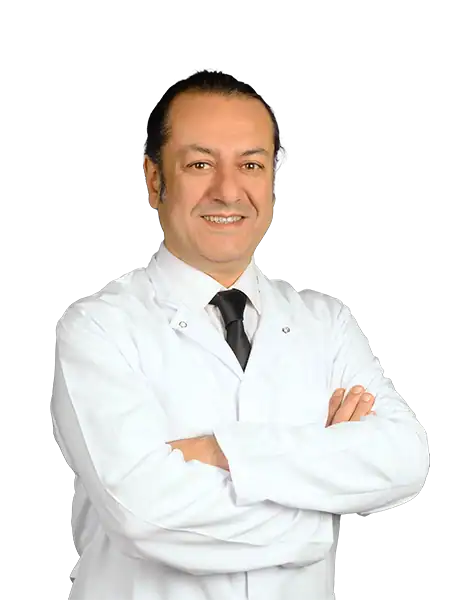
Prof. Mehmet Veli Karaaltın, MD

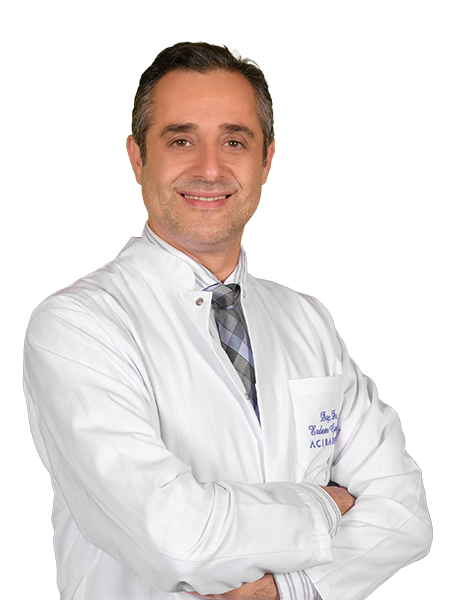
Aesthetic Plastic & Reconstructive Surgery
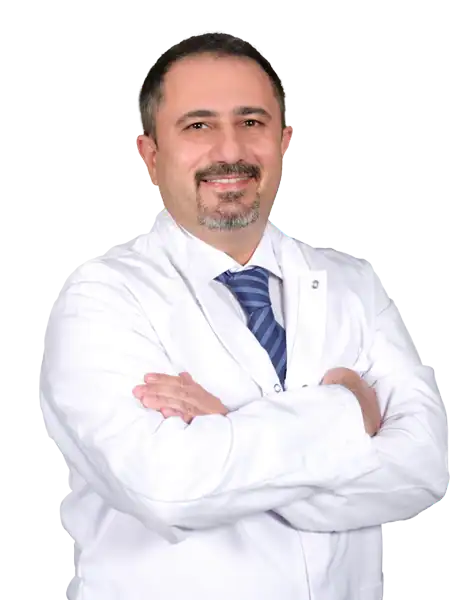
Assoc. Prof. Erdem Güven, MD

Aesthetic Plastic & Reconstructive Surgery
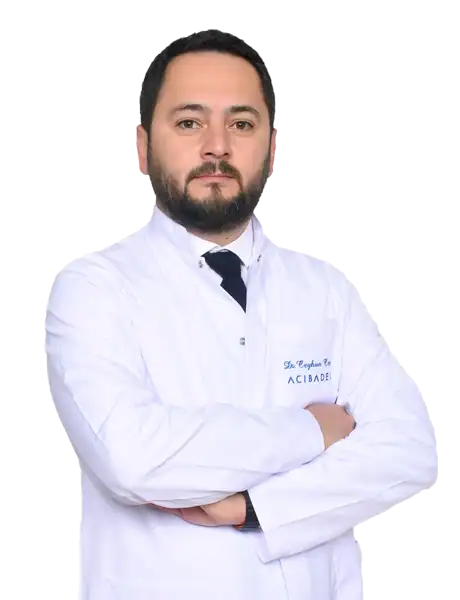
Assoc. Prof. Ahmet Küçükçelebi, MD
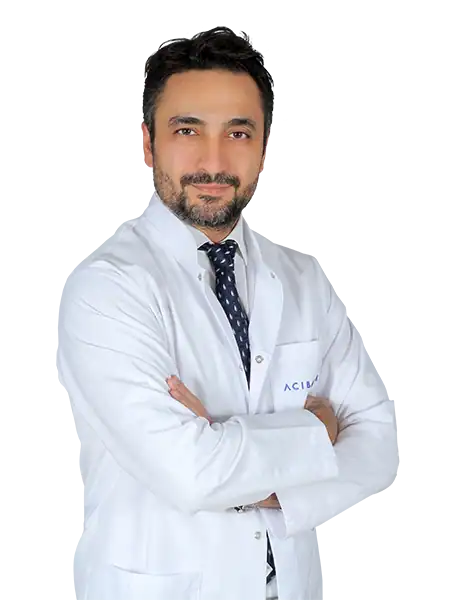
Aesthetic Plastic & Reconstructive Surgery
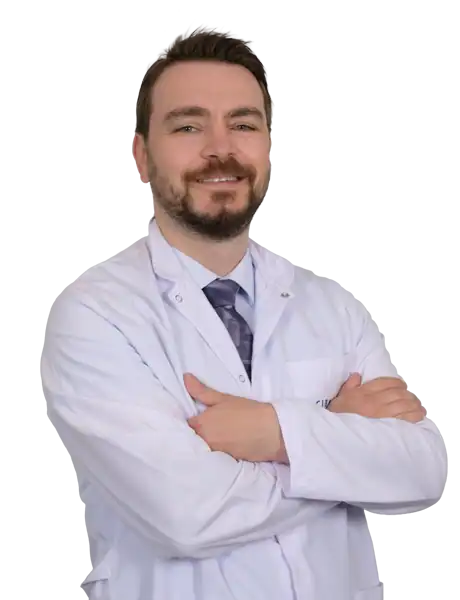
Assoc. Prof. Mehmet Altıparmak, MD

Aesthetic Plastic & Reconstructive Surgery