

How to Prepare for a PET-CT Scan: Fasting, Blood Sugar Checks and What to Wear
Key Takeaways
- The tracer used in most PET-CT scans is a modified glucose, so every preparation rule exists to keep your blood sugar and muscle activity low enough for it to reach the tissue being studied.
- Guidance from the NHS and Cleveland Clinic points to about six hours without food before the scan, with plain water permitted and encouraged throughout.
- Strenuous exercise in the 24 hours before can make muscles glow on the images and mimic disease, which is why the NHS advises against it.
- A finger-prick glucose check before the injection is a quality-control step; a reading above the department's threshold usually leads to a recheck or reschedule rather than a compromised scan.
- Cold activates brown fat in the neck and shoulders that takes up tracer, so warm, metal-free clothing and the blanket in the uptake room are part of the test, not just comfort.
- MedlinePlus notes the tracer is mostly gone within about 24 hours; the only routine aftercare is drinking water and limiting prolonged close contact with pregnant people and small children for a few hours.
To prepare for a PET-CT scan, most people are asked to stop eating for about six hours beforehand, drink only plain water, avoid sugar, caffeine and strenuous exercise for roughly 24 hours, and arrive in warm, metal-free clothing. Staff check blood glucose before the tracer injection, then ask you to rest quietly. Anyone with diabetes should ask the imaging team for specific timing instructions.
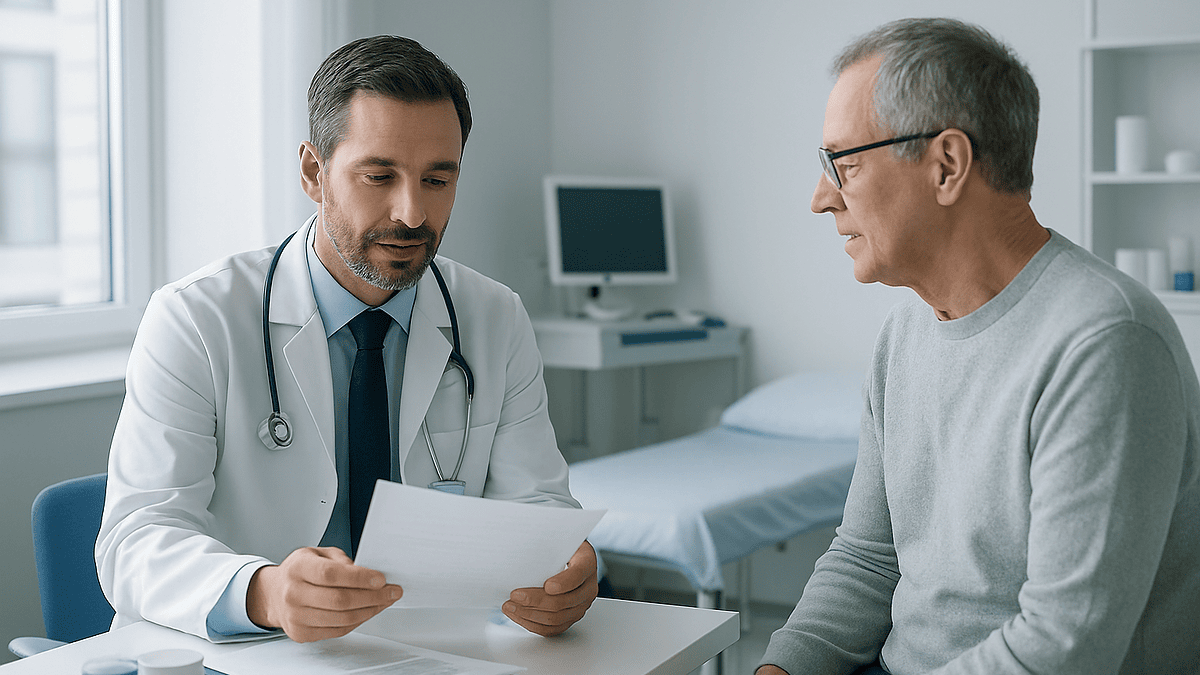
The appointment letter arrives, and the first thing most people notice is not the word scan but the list of rules. Nothing to eat after a certain hour. No coffee. No gym. Wear something warm. It reads like instructions for an exam you did not know you were sitting, and for someone already anxious about why the scan was ordered, the rules can feel like one more thing to get wrong.
Here is the reassuring part. Every line on that list exists for a single reason: the tracer used in most PET-CT scans behaves like sugar, and your body has to be quiet and hungry enough for the picture to be sharp. Once you understand that, knowing how to prepare for a PET-CT scan stops being a memory test and becomes common sense.
This explainer walks through the fasting window, the blood sugar check, the cold waiting room, the clothing, and the hours afterward, with the evidence behind each step and honest notes on what individual departments may do differently.
What actually happens during a PET-CT scan
A PET-CT scan is really two tests performed on one machine, one after the other, while you lie still on the same table. The CT part uses X-rays to build a detailed picture of anatomy: where organs, bones and any lumps sit. The PET part shows activity, meaning which tissues are burning fuel fastest. Layered together, the images tell a radiologist not just where something is, but how metabolically busy it is.
The activity picture depends on a radiotracer, a small amount of a radioactive substance attached to a molecule your cells will take up. In the great majority of cancer imaging, that molecule is a modified glucose called fluorodeoxyglucose, or FDG. According to the Mayo Clinic, the tracer is usually given through a vein in the arm, and you then wait roughly an hour for it to distribute before imaging begins. The scan itself typically lasts around 30 minutes, with the NHS quoting a range of 30 to 60 minutes depending on how much of the body is imaged.
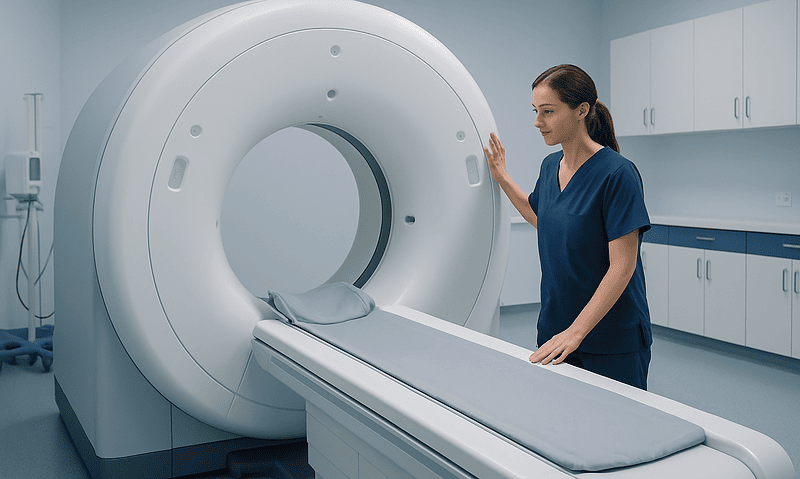
During the scan you lie on a narrow table that slides slowly through a ring-shaped scanner. It is open at both ends and quieter than an MRI. You will be asked to stay still and breathe normally; for some scans, a technologist may ask you to hold your breath briefly. There is no pain from the imaging itself. The only needle is the tracer injection, which feels like any blood test.
After the images are acquired, you can usually get up, dress and leave. The pictures are read later by a nuclear medicine physician or radiologist, who sends a written report to the doctor who ordered the scan. That doctor, not the imaging team, discusses what the findings mean for you.
Why fasting matters: how the FDG tracer competes with sugar
To understand the preparation rules, picture FDG as a look-alike passenger trying to board the same bus as ordinary glucose. Cells that use a lot of energy, including many cancer cells, inflamed tissue and the brain, pull glucose in through transporter proteins on their surface. FDG rides the same transporters. Once inside, it gets stuck at the first step of processing and cannot be burned, so it accumulates. The scanner detects where it has piled up.
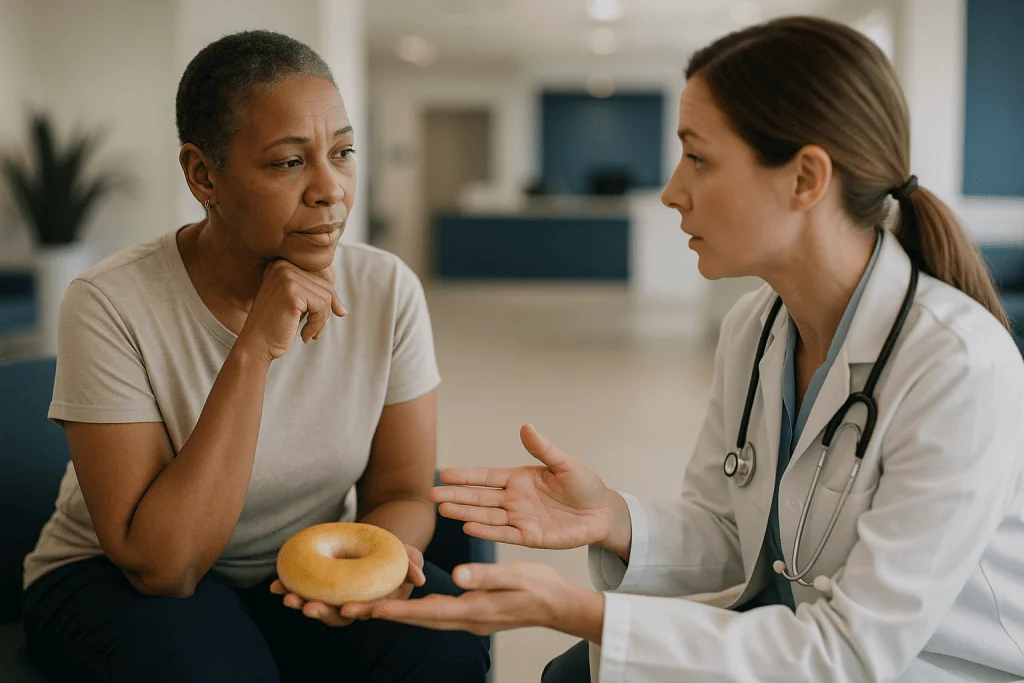
Now imagine you ate a bowl of cereal an hour before the injection. Your bloodstream is flooded with real glucose, so the transporters are busy carrying the genuine article and the tracer has to wait. Less FDG reaches the tissues of interest. At the same time, the insulin your pancreas releases after a meal drives glucose, and the tracer with it, into muscle and fat. The result is a scan where the background glows, the target fades, and a small lesion can be missed or a normal muscle can look suspicious.
This mechanism explains almost every rule. Fasting lowers circulating glucose and insulin so the tracer has clear access. Avoiding sugar in drinks does the same. Skipping exercise stops muscles from soaking up glucose and tracer during recovery. Resting quietly in the uptake room keeps skeletal muscle and the vocal cords calm so they do not light up. Warmth matters because shivering muscle and cold-activated brown fat both consume glucose avidly, as the Cleveland Clinic and other imaging references note.
The Johns Hopkins patient guide summarizes it plainly: because the tracer mimics sugar, what you eat and how active you are in the hours before the scan directly affects image quality.
How to prepare for a PET-CT scan in the 24 hours before
Preparation begins the day before, not the morning of. Many departments ask for a low-carbohydrate, no-sugar eating pattern for roughly 24 hours, a step the Cleveland Clinic includes in its patient guidance. The logic is simple: starting the fast with your glycogen stores already lower and your insulin already settled gives the tracer a cleaner field.
In practice that means leaning toward protein and non-starchy vegetables for the evening meal and skipping bread, pasta, rice, potatoes, fruit, sweets, sweetened drinks and alcohol. Your department may send its own food list, and that list overrides anything general you read here, including this article.
Exercise is the other big lever. The NHS advises avoiding strenuous physical activity for around 24 hours before a PET scan. A hard workout, a long run, or even heavy housework leaves muscles hungry for glucose for many hours afterward. Those muscles will drink up tracer and appear bright on the images, which can obscure lymph nodes or mimic disease. Gentle walking is fine; anything that leaves you sweaty or sore is not.
Caffeine deserves a specific mention. MedlinePlus lists avoiding caffeine for the 24 hours before as a common instruction, and it appears on many department sheets. Caffeine raises heart rate and can stimulate brown fat, and coffee is usually taken with milk or sugar anyway.
Hydration, by contrast, is encouraged. Plain water the day before helps you feel better during the fast and makes the vein easier to find for the injection. Think of the 24 hours as a quiet day: ordinary food minus the starches and sugar, ordinary movement minus the workout, and plenty of water.
PET scan fasting rules: how long, and is water allowed?
The fasting window is the rule people worry about most, and the guidance is consistent across major sources. The NHS advises not eating anything for about six hours before the appointment. MedlinePlus quotes a range of four to six hours. The Cleveland Clinic patient guide also specifies six hours. Your own department will state an exact time; when in doubt, follow the longer window rather than the shorter.
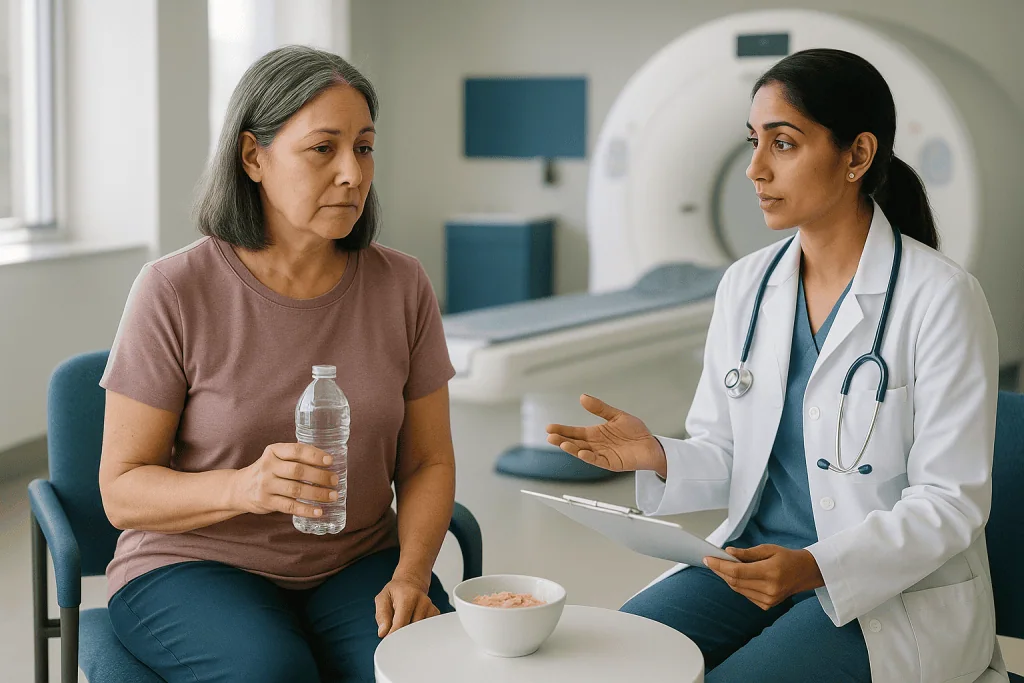
Fasting here means no food and no drinks other than plain water. That includes things people do not think of as food: chewing gum, mints, cough drops, sweetened or flavored water, juice, milk, sports drinks and coffee or tea with or without milk. Even sugar-free gum can stimulate saliva and jaw muscle activity that some centers prefer to avoid. Plain water is not only allowed but encouraged; being well hydrated helps the tracer distribute and clear.
What happens if you slip? Tell the staff. It is far better to reschedule than to have a scan whose images cannot be trusted. A department will not scold you; they will simply check your blood glucose and decide whether the scan can proceed or should be moved.
Appointment timing shapes the fast. For a morning scan, most people simply skip breakfast and stop eating after an early evening meal. For an afternoon slot, some departments allow a very early light, low-carbohydrate breakfast and then a fast; others prefer a full fast from the night before. This is where the department’s instructions matter more than any general rule, because the intervals are built around their injection time.
People who take medicines with food, or who have conditions that make fasting risky, should raise this with the imaging team when the appointment is booked, not on the day.
Can I brush my teeth, chew gum or take my medicines before a PET scan?
These three small questions fill imaging department phone lines, and the answers are refreshingly practical.
Brushing your teeth is fine. Toothpaste contains sweeteners, but the amount swallowed is trivial. Rinse with water and spit as you normally would. What matters is not swallowing anything sweet in quantity, so skip mouthwash that contains sugar or alcohol if you can, and avoid the habit of nibbling while you get ready.
Chewing gum and sucking mints are best avoided during the fasting window. Both can deliver sugar or sugar alcohols, and the repeated jaw movement can make the chewing muscles appear active on the images. Cough drops fall in the same category.
Medicines are more nuanced, and the honest answer is that the decision belongs to the prescribing clinician and the imaging team together. Most regular medicines can be taken as usual with plain water, and the Mayo Clinic and MedlinePlus both advise telling the imaging team about everything you take, including over-the-counter products and supplements. Never stop a prescribed medicine on your own because of a scan.
Two categories need particular attention. Medicines for diabetes, especially insulin and some tablets, interact directly with blood glucose and with how the tracer distributes, so the department will usually give tailored timing advice or coordinate with your diabetes team. Liquid medicines, syrups and lozenges may contain sugar; ask whether they should be taken after the scan instead. If you use an inhaler, a nasal spray, or a patch, mention them too. None of these is a reason for alarm; they are simply details that help the team schedule the injection so your body is in the right state.
The blood sugar check: what happens if your glucose is too high?
Before the tracer is injected, a technologist will prick your finger and check your blood glucose with the same type of meter people with diabetes use at home. This is a quality-control step, not a diagnostic test, and it is standard in PET-CT departments, as the Cleveland Clinic guidance describes.
The reason goes back to the bus analogy. If circulating glucose is high, the tracer competes poorly for entry into cells and image quality suffers. Departments set their own upper threshold, and if your reading exceeds it, the team may wait and recheck, or may reschedule. Being told your sugar is too high for the scan is not a verdict on your health; it is a statement about image reliability on that morning.
For people without diabetes, a high reading is uncommon after a proper fast. The usual culprits are an accidental sweet drink, a stressful commute, or a recent illness.
For people with diabetes, preparation is a partnership. Fasting changes when and whether glucose-lowering medicines should be taken, and insulin given close to the injection can pull tracer into muscle and fat. Departments therefore often schedule people with diabetes early in the day and give specific written guidance, sometimes drawn up with the diabetes team. That guidance may cover when to take your usual medicines, whether to bring them and a snack for immediately after the scan, and what to do if you feel your glucose dropping while fasting.
If you feel shaky, sweaty or confused while waiting, tell staff at once. A low glucose during the fast is treated as a medical priority, and the scan is rearranged around your safety, never the other way round.
What to wear for a PET scan and what to leave at home
Clothing sounds like the least medical part of the day, but it affects both comfort and image quality more than most people expect.
Warmth comes first. Uptake rooms and scanners are kept cool for the equipment, and you will sit still for an hour after the injection. Cold triggers two things the scan does not want: shivering, which activates muscle, and brown fat activity in the neck, shoulders and along the spine, which soaks up glucose and tracer and can be mistaken for disease. Many departments hand out blankets for exactly this reason. Wear soft layers, thick socks and something with long sleeves you can push up for the injection.
Metal comes second. The CT component is degraded by anything dense: zips, underwire, belt buckles, metal buttons, jewelry, hair clips, and clothing with metallic thread or printed glitter. Choose sweatpants or leggings with an elastic waist, a plain T-shirt or sweatshirt, and a wireless bra or none. Some departments provide a gown regardless, but arriving in scan-friendly clothes often means you can stay in your own things.
Leave valuables at home. You will remove watches, phones and jewelry, and although lockers are usually available, less to store means less to worry about.
Bring the essentials: your appointment letter, a list of your medicines, your glucose meter and any diabetes supplies if you use them, a bottle of plain water, reading glasses, and a book or downloaded podcast for the waiting periods. Remember that many departments ask you not to read or use a phone during the uptake hour itself, so plan entertainment for before and after rather than during.
If you have a fear of enclosed spaces, mention it when booking. The PET-CT ring is shorter and more open than an MRI tunnel, and staff can talk you through the scan.
Why do you have to sit in a dark, quiet room before a PET scan?
Of all the rituals of PET-CT, the uptake hour is the one that most puzzles people. After the injection, you are shown to a small room, wrapped in a blanket, and asked to sit or lie quietly, often with dimmed lights, no talking, no reading and no phone. It can feel oddly ceremonial. It is pure physiology.
The brain is the body’s greediest glucose consumer even at rest, and it takes up FDG intensely. Anything that increases regional brain activity, such as reading a dense article or watching a fast-moving video, draws tracer to those regions. That matters most for brain scans, but it also reduces the tracer available elsewhere. Dim light and quiet reduce visual and auditory processing, which is why the lights go down.
Talking is discouraged because the vocal cords and the muscles of the larynx are small, active structures that sit in the neck near lymph nodes the radiologist wants to see clearly. An hour of conversation can make them glow. Texting, scrolling and fidgeting activate the small muscles of the hands and forearms for the same reason.
Cold, as covered above, wakes up brown fat and provokes shivering, so the blanket is not just a kindness.
How long? The Mayo Clinic describes about an hour for the tracer to be absorbed, and the Cleveland Clinic gives a range of 45 to 60 minutes. Departments set their exact protocol, and some scans use different tracers with different timings. You may be asked to drink water during this period and to empty your bladder just before imaging, because tracer collects in urine and a full bladder can obscure the pelvis. Treat the hour as enforced rest. Many people, given permission to do nothing, end up dozing.
Who a PET-CT scan is usually for, and who is asked to wait
PET-CT is most often ordered in cancer care: to work out how far a known cancer has spread, to judge how a treatment is working, to check for recurrence, or to characterize a lump found on another scan. The NHS also lists uses in heart disease, where it can show whether heart muscle is alive and worth revascularizing, and in the brain, for certain forms of epilepsy and dementia. In infection and inflammation imaging it can locate sources of unexplained fever. The referring doctor chooses PET-CT when knowing tissue activity, not just anatomy, will change a decision.
Several groups are usually asked to wait, postpone or discuss alternatives.
Pregnancy is the clearest. Because both the tracer and the CT involve ionizing radiation, the NHS and Mayo Clinic both advise telling staff if you are or might be pregnant; the team will weigh urgency against exposure and may offer an alternative or defer.
Breastfeeding does not usually stop a scan, but the Mayo Clinic advises telling the team, because tracer can pass into milk and there may be advice about expressing and storing milk beforehand and about close contact for a period afterward.
Recent treatment matters for timing rather than eligibility. Chemotherapy, radiotherapy, surgery and biopsy all cause inflammation that lights up on FDG, and departments often schedule scans a set interval after treatment so healing tissue is not mistaken for active disease. Your oncology team sets that interval.
Uncontrolled diabetes, a very high glucose on the day, a current infection, or a recent injection of certain growth factors used during chemotherapy can all prompt a postponement. Severe claustrophobia and an inability to lie still for half an hour are addressed with support or, occasionally, sedation arranged by the referring team.
PET-CT preparation at a glance: a timeline table
Written instructions from different departments vary in wording, but they follow the same skeleton. The table below pulls the common elements together with the reference each is drawn from. Where your own letter differs, it wins.
| When | What to do | Why it matters | Source |
|---|---|---|---|
| 24 hours before | Low-carbohydrate, no-sugar meals; no alcohol | Lower glucose and insulin so tracer reaches target tissue | Cleveland Clinic |
| 24 hours before | No strenuous exercise | Recovering muscle takes up tracer and can mimic disease | NHS |
| 24 hours before | Avoid caffeine | Stimulates heart rate and brown fat; usually taken with sugar or milk | MedlinePlus |
| About 6 hours before | Stop all food and drinks except plain water | Clears competing glucose from the bloodstream | NHS; Cleveland Clinic |
| Morning of | Take usual medicines with water unless told otherwise; ask about diabetes medicines | Insulin and glucose-lowering drugs alter tracer distribution | Mayo Clinic |
| Arrival | Warm, metal-free clothing; leave valuables at home | Cold activates brown fat; metal degrades CT images | Cleveland Clinic |
| Before injection | Finger-prick glucose check | High glucose reduces image quality; department may reschedule | Cleveland Clinic |
| 45–60 minutes after injection | Rest quietly, warm, no talking or screens | Reduces uptake in brain, vocal cords and hand muscles | Mayo Clinic; Cleveland Clinic |
| Scan | Lie still 30–60 minutes | Movement blurs both PET and CT images | NHS |
| After | Drink water; limit close contact with pregnant people and young children for a few hours | Tracer clears through urine; small residual radiation | NHS; Mayo Clinic |
Two things the table cannot capture are worth stating. First, fasting and diabetes advice are individual; the intervals are typical, not universal. Second, none of these steps is a test you pass or fail. They exist so that the scan you have gone to the trouble of attending gives an answer your team can rely on.
Dos and don'ts after a PET scan: the first few hours
The scan is over, and the rules relax almost immediately. You can eat and drink normally as soon as you leave the department, and for many people the first stop is coffee and breakfast. If you have diabetes and adjusted your medicines for the fast, follow the plan agreed with your team for resuming them.
Fluids are the one active recommendation. The tracer leaves the body mainly through the kidneys, and the Mayo Clinic advises drinking plenty of water afterward to help flush it out. Emptying your bladder frequently through the afternoon does the same job.
The other common instruction concerns proximity. For a few hours after the scan you carry a small amount of radioactivity. The NHS advises avoiding close, prolonged contact with pregnant women, babies and young children for several hours after the scan; departments usually give a specific window on your discharge sheet. This does not mean isolation. Sitting across a room, sharing a meal at a table, or a brief hug are generally regarded as fine; what departments want to avoid is a toddler asleep on your chest for the evening. If you are breastfeeding, follow the individual advice given before the scan about expressing and timing.
Driving is usually permitted unless you received a sedative, in which case you should have arranged for someone to take you home. The tracer itself does not impair alertness. Some people feel tired simply from fasting and an early start.
Side effects from FDG are very uncommon. Mild soreness or a small bruise at the injection site is the most frequent complaint. Allergic reactions to the tracer are rare, and if a CT contrast dye was also given, the department will have discussed that separately. Returning to work, normal activity and exercise the same day is fine for most people.
What the following days usually look like: clearance and results
Two questions fill the days after a scan: is the radiation gone, and when will I hear?
On radiation, the news is straightforward. FDG has a short physical half-life, meaning the radioactivity decays quickly, and the tracer is also excreted in urine. MedlinePlus notes that the radioactive substance is mostly gone from the body within about 24 hours. Airport scanners and public transport are not a concern after that period, and sharing a bed with a partner the same night is generally considered acceptable; departments only single out pregnant people and small children for the first hours, as described above. No dietary steps are needed to speed clearance beyond drinking normally.
The total radiation exposure from a PET-CT is higher than from a plain X-ray because it combines two sources, but it is planned against the diagnostic benefit, and the CT part is often performed at a lower setting than a standalone diagnostic CT. If you have concerns about cumulative exposure from repeated scans, that is a fair conversation to have with the referring doctor, who weighs it every time a scan is ordered.
Results follow a different clock. The images are reviewed by a nuclear medicine specialist or radiologist, who writes a report that goes to the doctor who requested the scan. The Mayo Clinic describes this process without promising a timescale, and in practice it depends on the department, the complexity of the study, and whether the scan is being compared with earlier imaging. Often results are discussed at a planned clinic appointment or a multidisciplinary team meeting rather than by phone.
Ask on the day how and when you will hear. Knowing that the answer will come at a specific appointment, rather than at any moment, spares many people a week of checking their phone.
What people often get wrong about PET-CT preparation
A few misunderstandings come up so often that they deserve direct correction.
Myth: the scan is about fasting, so a longer fast is always better. Fasting beyond the requested window offers little extra benefit and, for people with diabetes or those who become faint when hungry, carries real risk. Six hours or so, per the NHS and Cleveland Clinic guidance, is the typical target, and the department sets the exact time.
Myth: black coffee is fine because it has no calories. Caffeine itself is on many avoidance lists, and MedlinePlus includes it in the 24-hour guidance. Water only during the fast.
Myth: a light workout on the morning of will help burn off sugar. The opposite is true. Exercised muscle takes up glucose and tracer for hours afterward and can obscure or mimic disease. The NHS advises avoiding strenuous activity for the day before.
Myth: the bright spots on a PET scan are all cancer. FDG shows glucose use, not malignancy. The brain, heart, kidneys and bladder are normally bright. Infection, inflammation, healing surgical sites, brown fat and recently exercised muscle all take up tracer. Interpreting the pattern is precisely why a specialist reads the scan alongside the CT and your history.
Myth: you are dangerously radioactive afterward. The precautions about pregnant people and small children reflect an abundance of caution for the first hours. MedlinePlus notes the tracer is largely gone within about a day.
Myth: reading in the uptake room is harmless. Brain activity, eye movement and page-turning all shift tracer distribution. The quiet hour is part of the test, not a waiting-room inconvenience.
Myth: the imaging team will tell you the result. Technologists cannot interpret the scan; the report goes to your referring doctor, who explains it in context.
Questions to ask your care team before your PET-CT scan
The most useful preparation conversation happens when the appointment is booked, not on the morning of the scan. These questions cover the points that most often cause confusion.
- Exactly what time should I stop eating, and is plain water allowed right up to the scan?
- Is there a low-carbohydrate food list for the day before, and does it include a sample evening meal?
- I take these medicines: which should I take as normal, which should wait until after, and who decides about my diabetes medicines?
- If my blood glucose is above your threshold on the day, what happens, and how quickly could I be rescheduled?
- How long will the whole visit take, from arrival to leaving, so I can plan work and transport?
- Will I receive CT contrast dye as well as the tracer, and are there extra preparation steps for that?
- Do I need someone to drive me home, and will any sedation be offered if I struggle with enclosed spaces?
- For how many hours afterward should I limit close contact with pregnant relatives or young children, and what is your advice if I am breastfeeding?
- Have I had recent chemotherapy, radiotherapy, surgery or a growth-factor injection that might affect the timing of this scan?
- How and when will I receive the results, and who will discuss them with me?
Write down the answers. Departments give a great deal of information quickly, and the details that matter most, such as the fasting cutoff and the diabetes plan, are the ones easiest to misremember under stress. If you live with someone, ask them to sit in on the call or read the letter with you.
None of these questions is a challenge to the team. Imaging staff prefer a prepared patient, because a scan that has to be repeated costs everyone time and delays the answer you are waiting for.
When to call your doctor: red flags before and after a PET-CT scan
PET-CT is a low-risk test, and most people have nothing to report. A few situations, however, need prompt attention rather than a wait for the next appointment.
Before the scan, contact the imaging department or your doctor if you develop a fever or a new infection, since inflammation can affect the images and may prompt rescheduling; if you discover you are or might be pregnant; if you are unsure how to manage diabetes medicines during the fast; or if you have had a recent hospital admission, surgery or a change in treatment that the requesting doctor may not know about.
During the fast or the wait, tell staff immediately if you feel shaky, sweaty, confused, or faint. These can be signs of low blood glucose and are treated as urgent, with the scan rearranged around your safety.
After the scan, seek same-day medical advice for any of the following:
- Hives, swelling of the face or lips, wheeze or difficulty breathing, which can indicate an allergic reaction to the tracer or to CT contrast if it was given. Call emergency services if breathing is affected.
- Increasing redness, warmth, swelling or pain at the injection site over the next day or two, which may suggest tracer leaked into the tissues or an infection.
- Persistent vomiting, chest pain, or a severe headache, which are not expected effects of the scan and need assessment on their own merits.
- If you have diabetes, blood glucose readings well outside your usual range after resuming medicines.
These red flags do not mean something has gone wrong with the scan; they are the ordinary safety net that accompanies any procedure involving an injection. For everything else, from questions about the report to worries about what the scan might show, the right conversation is with the doctor who ordered the test. That team holds the full picture and makes every decision about what happens next.
Frequently asked questions
What should you not do before a PET-CT scan?
Do not eat, chew gum, or drink anything other than plain water for the fasting window your department specifies, typically about six hours according to NHS guidance. Avoid strenuous exercise, caffeine, alcohol and sugary or starchy food for roughly the 24 hours before. Do not stop prescribed medicines on your own; ask the imaging team, especially about diabetes medicines. Leave metal jewelry and clothing with zips or underwire at home.
Can I brush my teeth before a PET scan?
Yes, brushing your teeth before a PET scan is fine. The small amount of sweetener in toothpaste is not swallowed in enough quantity to affect blood glucose or the tracer. Rinse with plain water and spit as usual. Skip sugary mouthwash, gum, mints and cough drops during the fasting window, because these are swallowed and can raise glucose or activate jaw muscles that then show up on the images.
What are the dos and don'ts after a PET scan?
After a PET scan you can eat and drink normally straight away. Do drink plenty of water to help the tracer clear through your kidneys, as the Mayo Clinic advises. Do limit prolonged close contact with pregnant people, babies and young children for the number of hours your department specifies. Do not drive if you were given a sedative. If you are breastfeeding, follow the individual advice given before the scan about expressing and timing.
Why do you have to sit in a dark room before a PET scan?
The quiet, dim uptake room reduces brain, eye and muscle activity while the tracer distributes over roughly 45 to 60 minutes. The brain uses glucose intensely, so reading or screens draw tracer into active regions; talking activates the vocal cords near neck lymph nodes; fidgeting lights up hand muscles. Warmth prevents shivering and brown fat activation. Keeping the body still and calm produces a cleaner, more reliable scan.
What are the PET scan fasting rules if my appointment is in the afternoon?
The fasting rules are built around your injection time, so for an afternoon scan some departments allow a very early, light, low-carbohydrate breakfast followed by about six hours without food, while others prefer a full fast from the previous night. Plain water is allowed throughout. Your appointment letter states the exact cutoff, and it overrides general guidance. If you have diabetes, ask for a tailored plan when booking.
What happens if my blood sugar is too high for a PET scan?
If your finger-prick glucose is above the department’s threshold, staff will usually wait and recheck, and if it stays high they will reschedule rather than inject the tracer. High glucose competes with the tracer for entry into cells and degrades image quality, so proceeding could produce an unreliable result. It is not a judgment about your health. People with diabetes are often scheduled early with specific medicine timing advice to reduce this risk.
What should I wear for a PET scan?
Wear warm, comfortable clothing without metal: sweatpants or leggings with an elastic waist, a plain long-sleeved top, thick socks, and a wireless bra or none. Cold activates brown fat and shivering that both take up tracer, and metal zips, buckles, underwire and jewelry degrade the CT images. Leave watches, phones and valuables at home where possible. Some departments provide a gown regardless, but scan-friendly clothes often let you stay dressed.
Can I take my regular medicines before a PET-CT scan?
Most regular medicines can be taken as usual with plain water, but the decision rests with your prescribing clinician and the imaging team, and you should never stop a medicine on your own because of a scan. Diabetes medicines, especially insulin, need specific timing advice because they change how the tracer distributes. Liquid medicines and lozenges may contain sugar and might be delayed until after. Tell the department everything you take, including supplements.
How long does a PET-CT scan take from start to finish?
Plan for two to three hours in the department. The visit includes registration, a glucose check, the tracer injection, an uptake period of roughly 45 to 60 minutes according to Mayo Clinic and Cleveland Clinic guidance, and then 30 to 60 minutes on the scanner depending on how much of the body is imaged, per the NHS. Delays can occur if your glucose needs rechecking, so avoid tight commitments immediately afterward.
Is it safe to be around my family after a PET scan?
Yes, with modest precautions for the first hours. The NHS advises avoiding prolonged close contact with pregnant women, babies and young children for several hours after the scan, and your discharge sheet will give a specific window. Ordinary contact with other adults, sharing meals and sleeping in the same bed are generally regarded as fine. MedlinePlus notes the tracer is mostly gone from the body within about 24 hours.
References
This article is for general information only and is not a substitute for professional medical advice. Please consult a qualified doctor about your individual situation.

More from the Blog
Recovery After a Stereotactic Biopsy: Headache, Pin-Site Soreness, Driving and Results
Stereotactic biopsy recovery is usually short. After a breast biopsy, most people go home the same day and have bruising or soreness for a…
After a PET-CT Scan: Clearing the Tracer, Contact Precautions and When Results Arrive
After a PET-CT scan, most people go home the same day, drink extra fluids and empty their bladder often to help clear the radioactive…
Preparing for an MRI: Eating, Metal, What to Wear
For most MRI scans you can eat and drink normally beforehand, because the magnet images tissue, not stomach contents. The exceptions are scans of…
What Does a Comprehensive Check-Up Include? Blood Work, Imaging and the Follow-Up Plan
A comprehensive check-up usually includes a medical and family history, a physical examination with blood pressure and body measurements, and blood and urine tests…
What a CT Scan Shows, and Why Doctors Order One
A CT scan shows detailed cross-sectional images of bones, organs, blood vessels and soft tissue by combining many X-ray views into slices. Doctors most…
Can an Ultrasound Detect Cancer? What It Can Show, Its Limits and the Next Steps
An ultrasound can detect abnormal lumps, masses and changes in organs that may be cancer, and it is especially good at telling a fluid-filled…