

How Ulcerative Colitis Is Treated: Inducing Remission, Then Keeping the Colon Calm

Key Takeaways
- Ulcerative colitis treatment has two distinct phases, induction and maintenance, and most relapses trace back to stopping the second once the first has worked.
- Aminosalicylates are the usual first treatment for mild to moderate disease, and combining oral and rectal forms reaches more colon lining than either alone.
- Corticosteroids are for short courses only; needing them more than occasionally is a guideline-level signal to switch to a steroid-sparing medicine.
- Biologics and oral small molecules are judged over a defined induction window of weeks to a few months, so a failing plan can be changed before damage accumulates.
- Around one in five people have severe disease that does not respond adequately to medicines, and for them removing the colon ends the intestinal disease.
- Surveillance colonoscopy for cancer risk usually begins about eight years after diagnosis for disease beyond the rectum, repeated every one to two years depending on findings.
Ulcerative colitis is treated in two phases: medicines to induce remission during a flare, then a different or continued medicine to maintain it. Aminosalicylates are usually first for mild to moderate disease; corticosteroids are used short term for flares; immunomodulators, biologics and small-molecule drugs treat more active disease. Surgery to remove the colon is an option when medicines fail. Every choice depends on disease extent, severity and the treating team.
The appointment letter says gastroenterology, and the person holding it has already learned the geography of every restroom between home and work. A colonoscopy has just given the bleeding and urgency a name. Now comes the question that actually matters for the next decade: how is ulcerative colitis treated, and what does the plan look like once the first prescription is filled?
The honest answer is that there are two plans, not one. The first is a sprint: calm an inflamed colon quickly and get life back. The second is a marathon: keep that lining quiet for years with as few side effects as possible. Most confusion about ulcerative colitis comes from mixing these two up, or from assuming that feeling well means the job is finished.
This explainer walks through both phases the way a clinician would, class by class, with the evidence graded plainly and the decisions left where they belong: with you and your care team.
How is ulcerative colitis treated? The two-phase logic of induction and maintenance
Ulcerative colitis is a chronic inflammatory bowel disease in which the immune system attacks the lining of the large intestine, producing open sores, bleeding and diarrhea. It flares and settles. Treatment follows that rhythm.
The first phase is called induction: getting an active flare under control, ideally to the point where symptoms stop and, on a follow-up scope, the lining looks healed. Doctors call that state remission. The second phase is maintenance: preventing the next flare. Both the NHS and Mayo Clinic describe treatment as this pairing rather than as a single fix, because most medicines that induce remission are either unsafe to continue for long (corticosteroids) or are simply continued at a steadier level once inflammation is down (aminosalicylates, biologics).
Why does the distinction matter so much for a patient? Because the natural temptation is to stop a medicine once you feel normal. Yet the evidence summarized by the NHS and Mayo Clinic is consistent: stopping maintenance therapy raises the odds of relapse, and each unchecked flare adds cumulative damage to the colon. Remission is the beginning of the work, not the end.
Three variables steer nearly every decision along the way:
- Extent: how far up the colon the inflammation reaches.
- Severity: how sick the person is right now, judged by stool frequency, bleeding, blood tests and sometimes imaging.
- History: what has worked or failed before, and how many steroid courses have already been needed.
The sections that follow take those variables one at a time, then move through the medicine classes in the order most guidelines introduce them.
What actually happens in an inflamed colon, and why treatment targets the immune system
Picture the colon lining as a wet tissue-paper barrier one cell thick, constantly renewed and normally very good at tolerating the trillions of bacteria living beside it. In ulcerative colitis that tolerance breaks. Immune cells flood the innermost layer (the mucosa), release chemical messengers called cytokines, and the surface erodes. The result is what patients feel: blood in the stool, cramping, an urgent need to go, and sometimes waking at night to pass mostly blood and mucus.
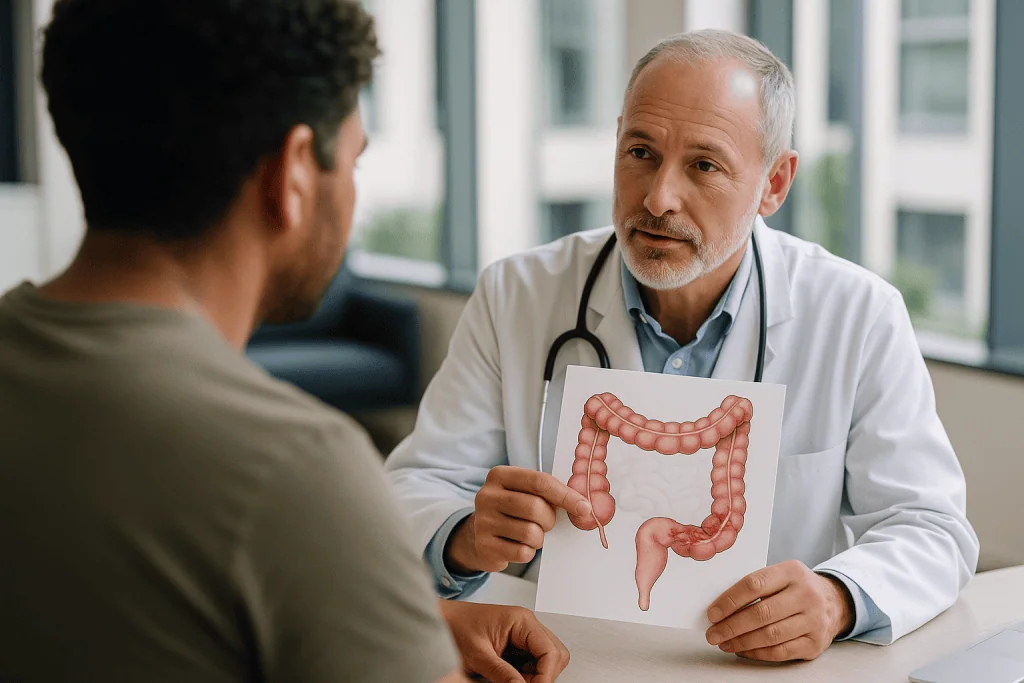
Two features distinguish ulcerative colitis from its cousin, Crohn’s disease. Inflammation stays in the large intestine, and it stays superficial, working upward in a continuous sheet from the rectum rather than skipping around or burrowing deep. That pattern is why removing the colon can end the intestinal disease in ulcerative colitis, a statement that is not true for Crohn’s, as Johns Hopkins Medicine and the NIH’s National Institute of Diabetes and Digestive and Kidney Diseases (NIDDK) both note.
Nobody knows precisely why the immune system misfires. Genetics, an altered gut microbiome and environmental triggers all appear to contribute; NIDDK lists these as likely factors without naming a single cause. What is clear is that the disease is not caused by something a person ate, and it is not an infection.
This mechanism explains the whole treatment toolbox. Aminosalicylates act on the lining itself to dampen local inflammation. Corticosteroids suppress the immune response broadly and fast. Immunomodulators dial down immune-cell proliferation. Biologics and small molecules block specific cytokines, immune-cell trafficking or intracellular signaling. Each class simply intercepts the same fire at a different point.
How doctors decide: extent, severity and what mild, moderate and severe really mean
Before anyone talks medicines, the gastroenterologist maps the disease. Extent is described in three tiers, using terms you will see on your colonoscopy report:
- Ulcerative proctitis: inflammation confined to the rectum, the last few inches of bowel.
- Left-sided colitis: reaching from the rectum up through the descending colon.
- Extensive colitis (sometimes called pancolitis): involving most or all of the colon.
Mayo Clinic uses this classification because it predicts both symptoms and treatment route. Proctitis can often be managed with medicine delivered directly into the rectum. Extensive disease generally needs oral or injected therapy that reaches the whole colon, and it carries a higher long-term colorectal cancer risk, which is why Mayo Clinic advises surveillance colonoscopy for people with disease beyond the rectum, typically beginning around eight years after diagnosis and repeated every one to two years depending on findings.
Severity is a separate axis. Clinicians judge it from how many stools per day, how much blood, whether there is fever or a racing heart, and blood markers such as hemoglobin and C-reactive protein. A stool test for calprotectin, a protein shed by inflamed bowel, adds an objective measure. Mild disease means a few loose stools with little blood and normal blood tests. Severe disease means many bloody stools daily, systemic illness and abnormal labs, and the NHS describes this scenario as one that usually needs hospital admission.
Putting the two axes together yields the treatment map. Mild left-sided disease and severe extensive disease are, in practical terms, different illnesses with different first moves. That is why comparing your regimen with another patient’s rarely helps.
First line treatment for ulcerative colitis: how aminosalicylates work
Aminosalicylates, often shortened to 5-ASAs, are anti-inflammatory compounds that act directly on the bowel lining rather than on the whole body. The NHS describes them as usually the first treatment option for mild to moderate ulcerative colitis, and Mayo Clinic lists the class in the same position. The generic names in this family include mesalamine, sulfasalazine, balsalazide and olsalazine.

Their mechanism is local. The drug reaches the colon (formulated to release there, or delivered as a suppository or enema) and reduces the production of inflammatory chemicals in the mucosa. Because so little enters the bloodstream, side effects are generally milder than with immune-suppressing drugs, though headache, nausea and, uncommonly, kidney effects are described by the NHS and Mayo Clinic. Sulfasalazine, the oldest member, has more side effects than the newer agents because of its sulfa component.
Route matters as much as molecule. For proctitis, a suppository puts the medicine exactly where the inflammation is. For left-sided disease, an enema or foam reaches farther. For extensive disease, an oral form covers the whole colon, and clinicians frequently combine oral and rectal delivery during a flare because the two together reach more lining than either alone. That combination is one of the least glamorous and most useful facts in the field.
Aminosalicylates serve both phases. The same class that induces remission in mild disease is commonly continued to maintain it. Response is judged over weeks, not days; Mayo Clinic frames improvement as gradual. If bleeding and urgency persist after an adequate trial, the team steps up rather than waits indefinitely.
One limit worth stating plainly: these drugs work for mild to moderate inflammation. They are not a treatment for a severe flare, and the evidence does not support them as maintenance after biologic therapy has become necessary.
Corticosteroids: built for inducing remission, not for keeping it
Corticosteroids are synthetic versions of cortisol, the body’s own anti-inflammatory hormone. Prednisone, hydrocortisone and budesonide are generic examples. They act broadly, switching off many immune pathways at once, which is exactly why they work quickly in a moderate to severe flare and exactly why they cannot be a long-term plan.
Both the NHS and Mayo Clinic are unambiguous: corticosteroids are for short-term use to bring a flare under control. Weeks, not months. Used longer, they raise the risk of bone thinning, high blood pressure, high blood sugar, cataracts, weight gain, mood changes, skin thinning and infection. Budesonide, formulated to act mostly in the gut with limited systemic absorption, causes fewer of these effects but is still not a maintenance drug.
A concept patients rarely hear explained is steroid dependence. If symptoms return every time the steroid is tapered, or if a second or third course is needed within a year, guidelines treat that pattern as a signal that the underlying therapy is inadequate and a steroid-sparing medicine, such as an immunomodulator, biologic or small molecule, should be introduced. Needing repeated steroids is a reason to change the plan, not a routine to repeat.
How steroids are given depends on severity. Mild to moderate flares that have not responded to aminosalicylates may be treated with oral or rectal forms. Severe flares, the kind with many bloody stools and systemic illness, are treated in hospital with intravenous corticosteroids, alongside fluids, blood tests, clot prevention and close monitoring, as the NHS describes. If the intravenous course is not working within a few days, the team considers rescue therapy with a biologic or a calcineurin inhibitor such as cyclosporine, or surgery.
Never stop a steroid abruptly on your own. Tapering is a medical decision, and the schedule belongs to the prescriber.
Biologics for ulcerative colitis and the immunomodulators that came before them
When aminosalicylates are not enough, or when steroids keep being needed, the conversation turns to medicines that adjust the immune system more precisely.
Immunomodulators such as azathioprine, mercaptopurine and, less often, methotrexate are older oral drugs that reduce the proliferation of immune cells. Their weakness is speed: Mayo Clinic notes they can take up to three months to reach full effect, which is why they are used for maintenance, not to rescue an acute flare, and are often started under steroid cover. They require regular blood tests for liver function and blood counts, and they raise the risk of infection and certain cancers, including skin cancer and lymphoma. The NHS and Mayo Clinic both flag these trade-offs.
Biologics are proteins, given by injection or infusion, that block a specific immune signal. Three families are used in ulcerative colitis:
- Anti-TNF agents (infliximab, adalimumab, golimumab) neutralize tumor necrosis factor, a key inflammatory cytokine.
- Anti-integrin therapy (vedolizumab) stops inflammatory white cells from leaving the bloodstream and entering the gut, a gut-selective mechanism.
- Anti-interleukin agents (ustekinumab, mirikizumab, and related drugs) block interleukin-12 and/or interleukin-23 signaling.
Each has a distinct side-effect profile, typically centered on infection risk and, for some, infusion or injection reactions. Because they suppress immunity, screening for tuberculosis and hepatitis B before starting is standard, and the CDC-recommended vaccines are reviewed beforehand, since some live vaccines cannot be given during treatment.
Which biologic, and whether to pair it with an immunomodulator to reduce antibody formation, depends on disease severity, other health conditions, prior drug exposure and patient preference. No guideline names a single best agent for everyone. A biologic is judged over a defined induction window, and if it fails the team can switch within or across families rather than accept ongoing inflammation.
Small-molecule medicines: JAK inhibitors and S1P modulators explained
The newest additions to the toolbox are oral small molecules, chemically simple drugs that enter cells, unlike biologics, which work outside them. Two classes are approved for moderate to severe ulcerative colitis.
Janus kinase (JAK) inhibitors such as tofacitinib and upadacitinib block enzymes inside immune cells that relay cytokine signals to the nucleus. Because several cytokines share these enzymes, one drug interrupts multiple inflammatory pathways at once. Mayo Clinic lists them among options for people who have not responded to other treatments. Their risks include infection (notably shingles), raised cholesterol and, in certain patient groups, blood clots and cardiovascular events, which is why prescribers weigh age, smoking history and clotting risk before recommending them.
Sphingosine-1-phosphate (S1P) receptor modulators such as ozanimod and etrasimod work differently: they trap a subset of lymphocytes in lymph nodes so fewer reach the colon. Before starting, clinicians check heart rhythm, because these drugs can slow the heart rate temporarily, and review eye and liver health.
What patients like about small molecules is practical: a pill, no infusion chair, no refrigeration, and no risk of the body developing antibodies against the drug. What clinicians weigh against that is a shorter track record than the older biologics and safety signals that make them unsuitable for some.
A theme runs through all the advanced therapies. The evidence base is strongest for people with moderate to severe disease, and guideline bodies describe these drugs as options within a hierarchy rather than as universal upgrades. The right choice is the one whose mechanism and risk profile fit the individual, chosen in a shared decision with the prescribing gastroenterologist. Marketing language about breakthroughs rarely survives contact with that conversation.
Ulcerative colitis treatment options compared at a glance
Seeing the classes side by side makes the induction-versus-maintenance logic visible. Timelines below are typical ranges described by Mayo Clinic and the NHS, not promises, and every row is a decision for the treating team.
| Class (generic examples) | How it works | Usual role | Typical time to judge response | Main trade-offs |
|---|---|---|---|---|
| Aminosalicylates (mesalamine, sulfasalazine) | Local anti-inflammatory action on the colon lining | Induction and maintenance in mild to moderate disease | Weeks | Headache, nausea; rare kidney effects |
| Corticosteroids (prednisone, budesonide) | Broad immune suppression | Induction only, short courses | Days | Bone loss, blood sugar, mood, infection with prolonged use |
| Immunomodulators (azathioprine, mercaptopurine) | Reduce immune-cell proliferation | Maintenance; steroid-sparing | Up to about 3 months | Blood-count and liver monitoring; infection and cancer risk |
| Anti-TNF biologics (infliximab, adalimumab) | Block tumor necrosis factor | Induction and maintenance, moderate to severe | Weeks | Infection; infusion or injection reactions |
| Anti-integrin biologic (vedolizumab) | Stops white cells entering the gut | Induction and maintenance | Weeks to a few months | Generally gut-selective; infection risk lower |
| Anti-interleukin biologics (ustekinumab, mirikizumab) | Block IL-12/23 signaling | Induction and maintenance | Weeks to a few months | Infection; injection reactions |
| JAK inhibitors (tofacitinib, upadacitinib) | Block intracellular cytokine signaling | Moderate to severe, often after other options | Weeks | Shingles, cholesterol, clot and cardiovascular signals |
| S1P modulators (ozanimod, etrasimod) | Trap lymphocytes in lymph nodes | Moderate to severe | Weeks | Heart-rate slowing at start; eye and liver checks |
| Colectomy | Removes the diseased organ | Medically refractory or emergency disease | Recovery over weeks to months | Major surgery; stoma or pouch adaptation |
Two patterns stand out. Corticosteroids are the only class with no maintenance role. And nearly every advanced therapy is judged in weeks, which means a plan that is not working can be changed before months of inflammation accumulate.
Who is usually offered which treatment, and who is usually asked to wait
Guidelines organize treatment as a ladder, but the rung a person starts on depends on how ill they are, not on a fixed order everyone must climb.
People with mild proctitis or left-sided disease are usually started on rectal, oral or combined aminosalicylates, and many are managed on this class alone for years. People with moderate disease that has not settled on aminosalicylates, or who need steroids more than occasionally, are candidates for a steroid-sparing agent: an immunomodulator, a biologic or a small molecule. People presenting with severe disease may skip the lower rungs entirely, receiving intravenous steroids in hospital and moving straight to a biologic if those fail. The NHS estimates that around one in five people with ulcerative colitis have severe symptoms that do not respond adequately to medicines, and surgery is discussed for this group.
Some people are asked to wait or to modify the plan. Anyone starting an immune-suppressing medicine is screened first for latent tuberculosis and hepatitis B and has vaccinations reviewed, because active infection must be treated before immunosuppression begins. Older adults and those with a history of blood clots or heart disease may be steered away from JAK inhibitors toward gut-selective options. People planning pregnancy have a specific conversation, since several ulcerative colitis medicines are considered compatible with pregnancy while methotrexate and JAK inhibitors are not, and uncontrolled disease itself carries pregnancy risks. Children and teenagers, who account for a meaningful share of new diagnoses since Cleveland Clinic notes most people are diagnosed between ages 15 and 30, are treated in pediatric gastroenterology with attention to growth.
What no guideline supports is indefinite waiting while a patient remains symptomatic. Persistent bleeding, ongoing urgency and repeated steroid courses are all signals to escalate. The waiting that does happen in good care is deliberate: giving a new medicine its fair induction window before declaring it a failure.
How to stop an ulcerative colitis flare up: what the first days and weeks usually look like
A flare rarely announces itself all at once. More often there is a day or two of looser stools, then a streak of blood, then the return of that unmistakable urgency. What happens next depends on preparation.
People who have a written flare plan from their gastroenterologist, and many now do, start with the agreed step: often intensifying aminosalicylate therapy, adding a rectal form, or calling the clinic for a stool calprotectin and blood tests. The NHS advises contacting your care team rather than waiting it out, partly because infections such as Clostridioides difficile can mimic or trigger a flare and need a stool test to rule out, and partly because a prompt steroid course, when needed, shortens the time spent unwell.
In the first week, the aim is stabilization: fewer stools, less blood, sleep uninterrupted by bathroom trips. Corticosteroids, if prescribed, typically begin working within days. Aminosalicylate intensification works more slowly, over weeks. Hydration matters throughout because diarrhea and bleeding together can lower blood pressure and hemoglobin.
Over the following two to four weeks, the team judges response. Symptoms settling is encouraging; a falling calprotectin or normalizing C-reactive protein is stronger evidence. Failure to improve on oral steroids within about two weeks is a recognized trigger to escalate, sometimes to hospital admission. Mayo Clinic describes severe flares as requiring hospitalization to treat dehydration and give intravenous therapy.
After the flare, the question that determines the next year is why it happened. Was maintenance therapy stopped or missed? Was a nonsteroidal anti-inflammatory painkiller such as ibuprofen taken, which Mayo Clinic notes can worsen symptoms? Was there an infection? Or is the current maintenance drug simply no longer enough? A flare on adequate maintenance is data, and it frequently prompts a change in the long-term plan rather than another steroid course.
Ulcerative colitis surgery options: when colectomy and the J-pouch enter the conversation
Because ulcerative colitis lives only in the colon and rectum, removing them removes the intestinal disease. That sentence explains why surgery occupies a different place here than in most chronic illnesses: it is not a last-ditch measure so much as a definitive one, chosen for specific reasons.
The NHS and Mayo Clinic list the common indications. Disease that has not responded to available medicines, or that can only be controlled with unacceptable side effects. A severe flare that fails intravenous rescue therapy. Emergencies such as toxic megacolon (dangerous dilation of the colon), perforation or uncontrolled bleeding. And precancerous change (dysplasia) or cancer found on surveillance colonoscopy.
The operation is a proctocolectomy: removal of the whole colon and rectum. What follows takes one of two forms. In an end ileostomy, the end of the small intestine is brought through the abdominal wall as a stoma, and stool collects in an external bag. In ileal pouch-anal anastomosis, usually called a J-pouch, the surgeon fashions a reservoir from the last part of the small intestine and connects it to the anus, preserving the normal route for stool. The J-pouch is typically built in two or three staged operations with a temporary ileostomy in between, and Mayo Clinic notes that pouch surgery is not suitable for everyone.
Life after each is different but manageable. Stoma nurses teach appliance care, and most people return to work, exercise and travel. With a pouch, stools are more frequent and looser than before illness, and pouchitis (inflammation of the pouch) is a recognized complication that usually responds to antibiotics, according to Mayo Clinic. Neither option is superior in the abstract; the choice weighs age, sphincter function, fertility plans and personal preference.
What surgery does not fix are the extraintestinal features of ulcerative colitis, such as joint, skin or liver involvement, which can persist. Your team will be clear about that in advance.
Diet, stress and daily life: can a person with ulcerative colitis live a normal life?
Yes, is the short and evidence-backed answer, with an honest qualifier: normal is achieved through good control of inflammation, not through white-knuckling symptoms. MedlinePlus and the NHS both describe ulcerative colitis as a lifelong condition in which most people have long stretches of remission between flares, and in remission daily life, work, sport, relationships and travel are all realistic.
Diet is where myth is thickest. No diet causes ulcerative colitis, and none is proven to induce remission on its own. What Mayo Clinic and the NHS do support is practical: during a flare, many people tolerate smaller, more frequent meals and temporarily limit high-fiber, very fatty or heavily spiced foods and lactose if it aggravates symptoms; in remission, a varied, balanced diet is encouraged rather than long-term restriction, which risks nutritional gaps. Keeping a food diary can identify personal triggers, but the list is individual, not universal.
Nutritional monitoring matters more than any special menu. Chronic blood loss causes iron deficiency, and some medicines or extensive disease can lower vitamin D, B12 or folate. Blood tests, not supplements chosen on a hunch, should guide replacement.
Stress does not cause the disease, but Mayo Clinic notes it can worsen symptoms and may trigger flares in some people. Regular exercise, sleep and whatever reliably lowers your stress are reasonable parts of a plan, alongside, never instead of, medication. Smoking is worth a specific word: unlike in Crohn’s disease, smoking is not associated with worse ulcerative colitis, but quitting is still advised because the cardiovascular and cancer harms dwarf any theoretical effect on the bowel.
Mental health deserves a seat at the table. Living with urgency and unpredictability is exhausting, and anxiety and depression are more common in inflammatory bowel disease. Asking for psychological support is part of treatment, not a detour from it.
What people often get wrong about how ulcerative colitis is treated
Myths about this disease cost people colon lining. Here are the ones clinicians correct most often, and what the evidence actually says.
Feeling well means I can stop the medicine. Symptom relief and healed mucosa are not the same thing, and maintenance therapy exists precisely because relapse rates rise when it stops. The NHS is explicit that most people need ongoing treatment to prevent flares. Any change should be a shared decision with the prescriber, never a solo experiment.
Steroids are the main treatment. They are the fastest, and the least suitable for the long haul. Needing them repeatedly is a signal to change the maintenance plan, not evidence that the plan is fine.
Biologics are a last resort for the sickest people. Guidelines position them for moderate to severe disease, which includes many people who are still working and functioning. Delaying effective therapy while inflammation continues is the riskier path.
Diet caused this, and diet can fix it. No food causes ulcerative colitis, and no diet has been shown to replace medication. Diet helps manage symptoms; it does not treat the immune process.
Surgery means a permanent bag and a failed life. Many people who have surgery receive a J-pouch, and those with a stoma commonly return to full activity. Surgery is frequently the route back to normal life, not the end of it.
It’s basically irritable bowel syndrome. IBS involves no inflammation, no bleeding and no colon damage; ulcerative colitis involves all three and is diagnosed by colonoscopy with biopsies, as MedlinePlus describes.
Probiotics or herbal remedies work as well as medicine. Evidence for most is limited or low quality. Mayo Clinic notes that some people find complementary approaches helpful for symptoms but that they have not been shown to treat the underlying inflammation, and some interact with prescribed drugs. Tell your team what you take.
Questions to ask your care team about ulcerative colitis treatment
A good consultation is a two-way exchange, and the questions you bring shape the plan you leave with. These are the ones experienced patients wish they had asked earlier.
- How much of my colon is involved, and how severe is the inflammation right now?
- Is this medicine intended to induce remission, maintain it, or both? What will change once I feel better?
- How long should I give this treatment before we decide whether it is working, and what will we measure: symptoms, blood tests, stool calprotectin or a repeat scope?
- What should I do at the first sign of a flare? Can we write a plan I can act on before I reach you?
- Which blood tests or screenings do I need before and during this medicine, and how often?
- Which vaccines should I have now, and are there any I should avoid once treatment begins?
- Which over-the-counter medicines could make my colitis worse?
- If I am thinking about pregnancy, how does that affect my options?
- When do I need surveillance colonoscopy for cancer risk, and how often?
- What are the signs that would mean this treatment has failed, and what would the next step be?
- Is surgery something we should discuss now, even if only to understand it?
- Who do I call between appointments, and how quickly can I expect a reply?
Bring a written list of every medicine and supplement you take, a rough log of symptoms over recent weeks and, if you have one, the colonoscopy report. Ask for a copy of the plan. Sharing decisions is not about second-guessing your team; it is how the plan survives the real world of missed doses, holidays and the bad week that arrives without warning.
When to call your doctor: red-flag signs during ulcerative colitis treatment
Most of the time, ulcerative colitis is managed in clinic at a measured pace. Some moments are different, and knowing them in advance is part of treatment.
Seek emergency care, or call emergency services, if you have severe abdominal pain with a swollen, tender belly; a high fever with a racing heart; heavy rectal bleeding, such as passing large clots or bleeding that will not slow; fainting, confusion or a feeling of being about to pass out; or vomiting that stops you keeping fluids down. The NHS and Mayo Clinic describe these as features of a severe flare or of complications such as toxic megacolon, perforation or serious dehydration, all of which need same-day hospital assessment.
Contact your care team promptly, within a day or so, if bloody stools are becoming more frequent, especially if you are waking at night to pass them; if a flare has not started to settle after the first steps of your agreed plan; if you develop a fever, cough, painful urination or other signs of infection while on an immune-suppressing medicine; if new joint pain, eye pain or redness, mouth ulcers or skin lesions appear; if you notice yellowing of the skin or eyes; or if you are losing weight without trying.
Call before changing anything yourself. Stopping a corticosteroid suddenly, doubling up on a medicine, or starting an over-the-counter anti-inflammatory painkiller can each make matters worse. Mayo Clinic specifically cautions against nonsteroidal anti-inflammatory drugs in people with ulcerative colitis.
Between visits, the practical rule is simple: any new symptom, any worsening of a known one, or any doubt about whether the plan is working is a reason to reach out. Gastroenterology teams would rather hear from you a week early than a week late.
Frequently asked questions
What is the first line treatment for ulcerative colitis?
For mild to moderate disease, aminosalicylates are usually the first treatment, according to the NHS and Mayo Clinic. They act directly on the colon lining with relatively few systemic side effects and can be given orally, rectally or both. Severe disease bypasses this step and is treated in hospital with intravenous corticosteroids. The starting point depends on extent and severity, and your gastroenterologist decides based on your colonoscopy and blood results.
How do I stop an ulcerative colitis flare up quickly?
Follow the flare plan agreed with your care team and contact them early rather than waiting. Typical steps include intensifying aminosalicylate therapy, adding a rectal form, testing stool for infection and inflammation, and a short corticosteroid course if needed. Avoid nonsteroidal anti-inflammatory painkillers, which Mayo Clinic notes can worsen symptoms, and stay hydrated. A flare that does not settle within the agreed timeframe needs escalation, sometimes in hospital.
Can a person with ulcerative colitis live a normal life?
Yes. The NHS and MedlinePlus describe ulcerative colitis as a lifelong condition in which most people have long periods of remission between flares. With effective maintenance treatment, work, exercise, travel, relationships and pregnancy are all realistic. The condition does require ongoing medication, regular monitoring and, for disease beyond the rectum, surveillance colonoscopy for cancer risk. Good control of inflammation, not symptom endurance, is what makes normal life possible.
What is it like to have ulcerative colitis day to day?
During a flare, the defining experiences are urgency, frequent loose stools with blood and mucus, cramping and fatigue, often disrupting sleep and planning. In remission, many people have few or no symptoms and live much as they did before diagnosis. The unpredictability is often the hardest part, and anxiety and depression are more common in inflammatory bowel disease. Psychological support is a legitimate part of treatment.
What should I do if I have just been diagnosed with ulcerative colitis?
Ask your gastroenterologist how much colon is involved and how severe the inflammation is, because those two facts steer treatment. Start the prescribed medicine and clarify which part is for inducing remission and which is for maintenance. Request a written flare plan, review vaccinations before any immune-suppressing therapy, and keep a simple symptom log. Learning the red-flag signs that need urgent care is as important as learning the medicine names.
How do biologics for ulcerative colitis work?
Biologics are injected or infused proteins that block a specific immune signal. Anti-TNF agents neutralize tumor necrosis factor, anti-integrin therapy stops inflammatory cells entering the gut, and anti-interleukin agents block IL-12/23 signaling. They are used for moderate to severe disease, for both induction and maintenance, and response is judged over weeks to a few months. Screening for tuberculosis and hepatitis B comes first. Choice of agent is individualized by the prescriber.
Why can't I stay on steroids if they work so well?
Corticosteroids suppress the immune system broadly, which brings fast relief but, used for months, causes bone thinning, high blood pressure, raised blood sugar, cataracts, mood changes and infection risk. The NHS and Mayo Clinic describe them as short-term induction treatment only. If symptoms return whenever the steroid is tapered, that pattern signals the maintenance therapy is inadequate and a steroid-sparing medicine should be added. Tapering schedules are set by the prescriber.
What are the ulcerative colitis surgery options?
The operation is a proctocolectomy, removing the colon and rectum, which ends the intestinal disease. Afterward, stool leaves the body either through an end ileostomy (a stoma with an external bag) or via an ileal pouch-anal anastomosis, the J-pouch, built from small intestine and connected to the anus, usually in staged operations. The NHS estimates about one in five people have severe disease that does not respond adequately to medicines, for whom surgery is discussed.
Does diet cause or treat ulcerative colitis?
Neither. No food causes ulcerative colitis, and no diet has been shown to replace medication in inducing or maintaining remission. During flares, many people tolerate smaller meals and temporarily limit high-fiber, fatty or spicy foods and lactose if it aggravates symptoms; in remission a varied balanced diet is encouraged. Blood tests should guide any iron, vitamin D or B12 replacement. Tell your team about any supplements, since some interact with prescribed medicines.
How often do I need a colonoscopy if I have ulcerative colitis?
Long-standing inflammation beyond the rectum raises colorectal cancer risk, so Mayo Clinic advises surveillance colonoscopy typically beginning about eight years after diagnosis, repeated every one to two years depending on the extent of disease and previous findings. People with disease limited to the rectum generally follow standard population screening. Your gastroenterologist sets the interval based on your history, including any coexisting liver condition, which can increase risk further.
References
- NHS: Ulcerative colitis: Treatment
- NIH NIDDK: Treatment for Ulcerative Colitis
- MedlinePlus: Ulcerative Colitis
- Cleveland Clinic: Ulcerative Colitis
This article is for general information only and is not a substitute for professional medical advice. Please consult a qualified doctor about your individual situation.

More from the Blog

Pain or Fever After ERCP: The Warning Signs That Need a Same-Day Call
Pain that builds rather than fades in the hours after ERCP, especially pain spreading to the back with nausea or vomiting, can signal pancreatitis…

Hepatitis A Warning Signs: When Worsening Jaundice or Confusion Needs Urgent Care
Most people with hepatitis A recover with rest and fluids, but seek urgent care the same day if jaundice keeps deepening after the first…

Eating and Drinking During Hepatitis A Recovery: Fluids, Nutrition and Alcohol Rules
During hepatitis A recovery, eat small, plain meals built around easily digested carbohydrates, lean protein and cooked vegetables, drink enough fluid to keep urine…

Celiac Disease in Children: How Diagnosis, Diet Teaching and Growth Checks Are Planned
Celiac disease in children is treated with a strict, lifelong gluten-free diet, planned and taught with a registered dietitian rather than with medicines. Diagnosis…

The Acid Reflux Diet: Foods That Trigger GERD and the Eating Habits That Calm It
An acid reflux diet is less a fixed menu than a set of habits: smaller meals, finishing dinner at least three hours before lying…

Before Hepatitis Treatment Starts: The Questions Worth Asking Your Liver Specialist
Before hepatitis treatment starts, ask your liver specialist which type of hepatitis you have, how much liver scarring is present, whether treatment is recommended…