

Hyperpigmentation: Types, Causes and the Treatment Ladder Dermatologists Use
Key Takeaways
- Pigment that sits in the epidermis fades with normal skin turnover in roughly one to twelve months, while pigment that has dropped into the dermis can persist for years and often looks gray or bluish rather than brown.
- In the United States, hydroquinone has been prescription-only since September 2020, and any product sold online claiming to contain it is unregulated and may include undeclared steroids or mercury.
- Visible light, not just ultraviolet, worsens melasma and post-inflammatory hyperpigmentation in medium to deep skin tones, which is why tinted sunscreens containing iron oxides are now recommended for those conditions.
- Triple-combination cream pairing hydroquinone, tretinoin and a mild corticosteroid has the strongest randomized-trial evidence of any topical regimen for melasma.
- Oral tranexamic acid has randomized trials showing melasma improvement but is off-label and carries a known blood-clot risk, so it is only ever a supervised prescriber decision.
- Most people with acne and darker skin develop post-inflammatory marks, so treating the acne itself prevents more dark spots than any brightening product can fade.
Hyperpigmentation is a patch or spot of skin that has become darker than the surrounding skin because pigment cells have produced or deposited extra melanin. The main types are post-inflammatory hyperpigmentation, melasma and sun-induced dark spots. Dermatologists treat it in steps: daily broad-spectrum sunscreen first, then over-the-counter brighteners, then prescription creams, and finally peels or lasers, with progress measured in months.
Every late summer, the same thing happens in dermatology waiting rooms: people arrive holding their phones, zoomed in on a cheek. The tan has faded, but the darker patch under it has not. As of September 2026, searches for hyperpigmentation are climbing again, pushed this time by viral videos promising to erase dark spots in a week with a single serum, by a swirl of claims about tranexamic acid, and by a fresh round of debate over whether tinted sunscreen is a marketing gimmick or a genuine tool.
Some of that noise contains real science. Much of it does not. The difference matters, because the wrong approach to a dark patch can leave it darker, and the right one takes patience most videos never mention.
This piece walks the same ladder dermatologists use, rung by rung, and says plainly how strong the evidence is on each step.
What is hyperpigmentation, and why does melanin behave this way?
Skin color comes from melanin, the brown-black pigment made by melanocytes, which are specialized cells sitting in the bottom layer of the epidermis, the skin’s outer sheet. Melanocytes are surprisingly few. Roughly one melanocyte serves about 36 neighboring keratinocytes, the ordinary skin cells that form the surface. Each melanocyte packages pigment into tiny parcels called melanosomes and hands them up to those neighbors like a delivery driver on a fixed route.
Hyperpigmentation simply means one region of that route has been overstocked. Either the melanocytes there have been prompted to make more pigment, or the pigment has spilled downward into the dermis, the deeper, structural layer of skin, where it gets trapped for a long time.
The distinction between those two events explains almost everything about treatment. Pigment that sits in the epidermis rides up to the surface as skin cells turn over, which takes about four weeks in young adults and longer with age. Pigment that has dropped into the dermis has no exit ramp. Immune cells slowly nibble at it, but that can take years.
The enzyme at the heart of pigment production is tyrosinase, the chemical switch that starts converting an amino acid into melanin. Most brightening ingredients, from over-the-counter serums to prescription creams, work by turning down tyrosinase or by interrupting the hand-off of melanosomes. None of them removes pigment that is already buried deep.
Number of melanocytes, by the way, is roughly the same across all skin tones. Darker skin has more active melanocytes producing larger, more widely dispersed melanosomes. That same efficiency is why darker skin is more prone to lingering marks after any injury, and why treatment choices need extra care in skin of color.
The main types of hyperpigmentation at a glance
The word covers several different conditions that happen to share a color. Sorting out which one you are looking at is the first thing a dermatologist does, often with a Wood’s lamp, a handheld ultraviolet light that makes epidermal pigment stand out more sharply than dermal pigment. The table below summarizes the types most people search for.

| Type | Typical look | Main trigger | Usual depth | Response to topical treatment |
|---|---|---|---|---|
| Post-inflammatory hyperpigmentation (PIH) | Flat brown, gray or purplish marks where a pimple, cut, rash or burn healed | Inflammation of any kind | Epidermal, dermal or both | Good when epidermal; slow when dermal |
| Melasma | Symmetric, blotchy patches on cheeks, forehead, upper lip | Hormones plus ultraviolet and visible light | Often mixed | Improves but tends to return |
| Solar lentigines (sun spots, age spots) | Well-defined round or oval spots on face, hands, shoulders | Cumulative sun exposure | Epidermal | Moderate; procedures often work better |
| Drug-induced pigmentation | Diffuse or patchy discoloration, sometimes blue-gray | Certain medicines, often with sun | Frequently dermal | Limited; depends on the medicine |
| Freckles (ephelides) | Small tan dots that darken in summer | Genetics plus sun | Epidermal | Fade with sun protection; not a disease |
A few rarer causes deserve a line. Some endocrine conditions, including adrenal insufficiency, can darken skin diffusely, especially in creases and scars. Certain metabolic disorders and heavy-metal exposure can too. Those are uncommon, and they usually come with other symptoms, but they are why a dermatologist asks about fatigue, weight change and medicines rather than only looking at the skin.
The practical takeaway: two people with brown patches on the cheek may need opposite plans. One may simply need sunscreen and time. The other may need a prescription and a warning to avoid the very laser a friend recommended.
What is hyperpigmentation caused by?
Melanocytes respond to signals, and three kinds of signal account for most dark patches: light, inflammation and hormones. Often two act together.
Ultraviolet light is the most familiar. UVB triggers DNA damage that prompts keratinocytes to release messengers telling melanocytes to make more pigment; a tan is that response spread evenly. Years of it produce uneven clumps of overactive melanocytes, which appear as sun spots. UVA, which passes through window glass, drives deeper pigment changes and oxidizes existing melanin so it darkens within minutes.
Visible light, the ordinary daylight we see, was overlooked for decades. Research over the past ten to fifteen years has shown that high-energy visible light, the blue-violet end of the spectrum, can stimulate pigment in medium and dark skin tones, and the effect lasts longer than the pigment provoked by UVA. This finding changed sunscreen advice for melasma, as a later section explains.
Inflammation is the second signal. Acne, eczema, insect bites, cuts, burns, waxing, harsh scrubs, even a too-strong chemical peel all release inflammatory chemicals that switch melanocytes on. In some people the inflammation also damages the boundary between epidermis and dermis, letting pigment leak downward.
Hormones are the third. Estrogen and progesterone appear to sensitize melanocytes, which is why melasma so often begins during pregnancy or after starting hormonal contraception. Thyroid disease is more common in people with melasma than in the general population, though the connection is not fully explained.
Medicines can contribute. Some antibiotics, antimalarials, chemotherapy agents, anti-seizure drugs and certain heart medicines can darken skin directly or make it more sun-sensitive. Never stop a medicine because of skin darkening; raise it with the prescriber, who can weigh alternatives.
Genetics sets the stage for all of this. Family history is a strong predictor of melasma, and people with medium to deep skin tones are more likely to develop PIH after any skin injury.
Post inflammatory hyperpigmentation: why a healed pimple leaves a mark
Ask anyone with acne what bothers them most and many will say the marks, not the spots. Post-inflammatory hyperpigmentation, usually shortened to PIH, is the flat discoloration left behind after inflammation has resolved. The pimple is gone; its shadow remains.
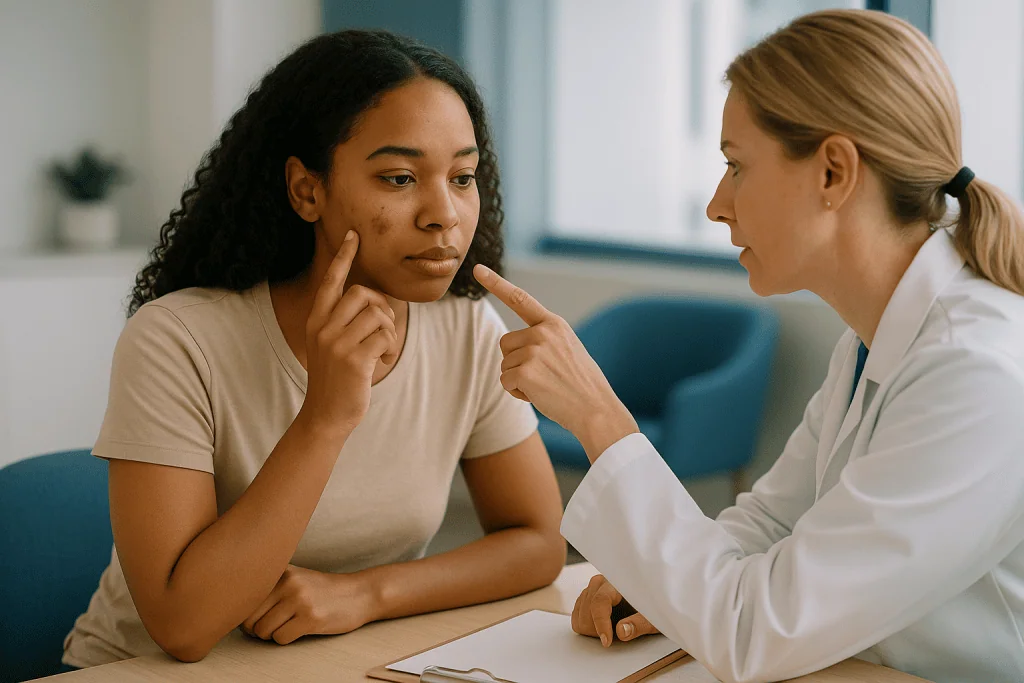
The mechanism is straightforward. Inflammatory chemicals released during a breakout, a rash or an injury act as direct stimulants to nearby melanocytes. Those cells respond by producing more melanin and delivering it to surrounding keratinocytes. If the inflammation was intense enough to disrupt the basement membrane, the thin sheet separating epidermis from dermis, pigment-laden cells drop through and become lodged in the deeper layer.
Color offers a rough clue to depth. Tan to dark brown marks usually indicate epidermal pigment. A gray, slate or bluish cast suggests dermal pigment, because light reflecting off deeper melanin looks cooler in tone.
PIH is far more common in people with darker skin. Studies of acne patients have found that most Black and Hispanic patients develop some PIH, compared with a minority of patients with very light skin. This is not a flaw in darker skin; it reflects melanocytes that are simply more responsive.
Two rules follow from the biology. First, treating the cause of inflammation is the single most powerful thing you can do. Controlling acne prevents new marks, which matters more than fading old ones. Second, anything that adds inflammation, from picking to aggressive scrubbing to sunburn, deepens the problem.
Epidermal PIH typically lightens over six to twelve months even without treatment, provided the skin is protected from sun. Dermal PIH can persist for years. That timeline is discouraging to hear but useful to know, because it sets realistic expectations before anyone spends money or patience on a product.
Melasma: the stubborn, hormone-sensitive one
Melasma looks different from PIH even at a glance. Instead of scattered marks that map old injuries, it forms symmetric, blotchy patches across the cheeks, forehead, bridge of the nose or upper lip. It is sometimes called the mask of pregnancy, though it also occurs in people who have never been pregnant and, less commonly, in men.
The condition is best understood as a light-sensitive disorder unmasked by hormones. Estrogen and progesterone make melanocytes more responsive; ultraviolet and visible light then push them into overdrive. Melasma frequently appears in the second or third trimester of pregnancy, after starting hormonal contraception or hormone therapy, or simply after a very sunny summer.
Under the microscope, melasma skin shows more than extra pigment. There is often increased blood vessel density, a degraded elastic fiber network from sun damage, and pigment scattered through both epidermis and dermis. That mixed-depth pattern is why melasma responds to treatment yet tends to return, particularly after sun exposure.
Melasma that appears in pregnancy often fades in the months after delivery, as hormone levels settle, though not always completely. Melasma linked to hormonal contraception may improve if the method is changed, but that is a decision to make with the prescribing clinician, not on the strength of a skin concern alone.
Heat may play a role too. Dermatologists have long observed that people who work near ovens or spend hours in saunas report flare-ups, and infrared radiation appears able to stimulate pigment. The evidence here is observational rather than from controlled trials, so it earns a cautious note rather than a rule.
Management is a long game. The goal is control, not a one-time fix: strict light protection year-round, topical treatment in cycles, and acceptance that maintenance is part of the plan.
Are dark spots from the sun the same as age spots?
Yes. Sun spots, liver spots, age spots and solar lentigines are one condition wearing several names. Lentigo (plural lentigines) is the medical term for a flat, sharply bordered spot of increased pigment; solar means the sun made it. The nickname liver spot is an old misnomer; the liver has nothing to do with them.
These dark spots cluster where skin has taken the most light over a lifetime: the backs of the hands, the face, the shoulders and upper back, the tops of the feet in people who wear sandals. They range from freckle-sized to a centimeter or more, are usually tan to dark brown, and do not fade in winter the way ordinary freckles do. Most people start noticing them after 40, though heavy sun exposure brings them earlier.
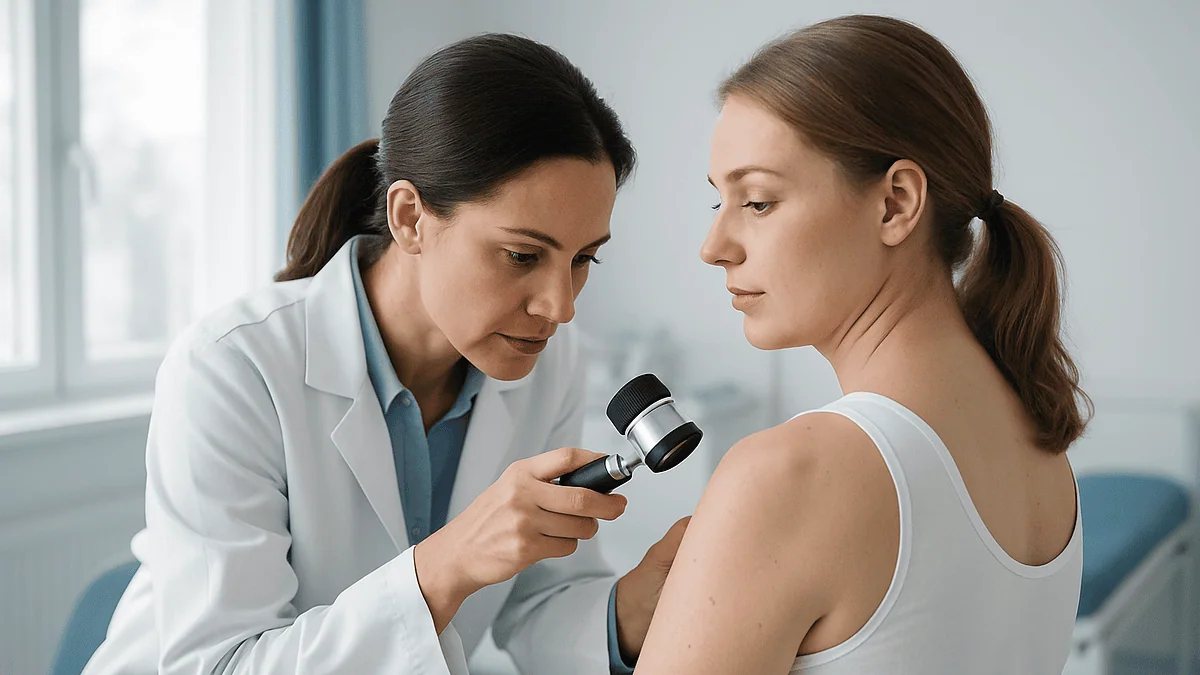
Solar lentigines are harmless. The reason they get medical attention is that a changing brown spot can occasionally be something else, including a melanoma. A dermatologist can usually tell the difference by examination, sometimes with a dermatoscope, a handheld magnifier with polarized light. Any spot that is changing in size, shape or color, has an irregular border, is more than one color, or looks different from its neighbors deserves a professional look rather than a brightening cream.
Because lentigine pigment sits in the epidermis, topical brighteners can help, but the effect is often modest. Procedures tend to do better: cryotherapy (brief freezing with liquid nitrogen), certain lasers and intense pulsed light target the concentrated pigment directly. In darker skin, those same procedures carry a real risk of PIH, so the choice of device and settings is a specialist decision.
Prevention is the same for every type on this page: sun protection now reduces the number of new spots later.
What changed recently
The biology of pigment has not changed, but the landscape around treating it has shifted in ways that explain some of the current confusion.
The biggest regulatory change in the United States came in September 2020, when hydroquinone, long the reference topical brightener, was removed from over-the-counter sale and became prescription-only. Products that once sat on drugstore shelves disappeared, and a wave of alternatives filled the gap. Harvard Health’s 2022 review of melasma treatments and Cleveland Clinic’s hyperpigmentation overview both now describe hydroquinone as a prescription medicine to be used under supervision, reflecting that shift.
Tranexamic acid, a medicine developed decades ago to reduce bleeding, has moved from a curiosity to a mainstream discussion point. Topical formulations are widely marketed as cosmetics. Oral use for melasma remains off-label, meaning the medicine is approved for other purposes and is being used for a condition outside that approval. Randomized trials over the past decade have reported meaningful lightening of melasma, but the drug carries a known risk of blood clots, and it is not for self-use. Whether it is appropriate is a decision for the treating clinician after a personal risk assessment.
Sunscreen advice has been rewritten. Once visible light was shown to worsen melasma and PIH in darker skin, tinted sunscreens containing iron oxides, mineral pigments that scatter visible light, moved from cosmetic afterthought to a genuine recommendation for those conditions.
Newer cosmetic tyrosinase inhibitors have arrived with small manufacturer-funded trials behind them. They are not medicines and are not regulated as such, and independent, long-term data remain thin.
Finally, the evidence base on post-inflammatory hyperpigmentation in skin of color, summarized in peer-reviewed reviews indexed on PubMed, has pushed dermatology toward gentler procedural settings and earlier treatment of underlying inflammation.
Does hyperpigmented skin go away on its own?
Often, yes, and the honest answer depends on depth and cause more than on any product. This is the question people most want answered before they open their wallets, so it deserves a straight reply.
Epidermal pigment leaves on the skin’s own schedule. Keratinocytes carrying excess melanin migrate upward and shed, a cycle of roughly four weeks in a young adult that stretches with age. A light tan-brown mark after a pimple on someone with fair to medium skin may be gone in two to three months. In deeper skin tones, where melanocytes deliver more pigment per injury, the same mark commonly takes six to twelve months.
Dermal pigment is a different story. Melanin lodged in the dermis is engulfed by scavenger cells called melanophages, which hold onto it for a long time. Fading is measured in years and may never be complete. A gray or bluish tinge to a mark is a hint that at least some pigment is dermal.
Melasma occupies a middle ground. Pregnancy-related melasma frequently improves within a year after delivery. Melasma driven by long-term sun exposure or ongoing hormonal factors tends to persist and to recur after each sunny season unless light exposure is controlled.
Solar lentigines do not resolve spontaneously. Once formed, they stay unless treated.
Two things reliably slow natural fading: continued sun exposure, which keeps melanocytes stimulated, and repeated inflammation at the same site. Two things reliably speed it: rigorous daily sun protection and gentle skincare that avoids irritation. Those two measures are free of side effects and are the reason every dermatologist puts them on the bottom rung of the ladder before anything else.
Rung one of the treatment ladder: sunscreen that blocks visible light too
Dermatologists agree on very little as unanimously as this: no treatment for hyperpigmentation works without daily sun protection, and many fail only because that step was skipped. Sunscreen is not the boring part before the real treatment. It is the treatment the others depend on.
The logic is simple. Every brightening approach reduces pigment production or removes existing pigment. Sunlight does the opposite, and it does so within minutes of exposure, all year, including through car windows and on cloudy days. Applying a brightener at night and walking unprotected into daylight is like bailing a boat while leaving the leak open.
Guidance from bodies including the NHS and the American Academy of Dermatology converges on a broad-spectrum product, meaning it covers both UVA and UVB, with SPF 30 or higher, applied generously to all exposed skin and reapplied every two hours outdoors or after swimming or sweating. Most people apply about a quarter to half the amount used in laboratory testing, which is why the number on the bottle overstates real-world protection.
For melasma and PIH in medium to deep skin tones, visible light matters, and ordinary chemical sunscreens do not block it. Tinted formulations containing iron oxides do. Randomized trials in melasma patients have shown that adding iron-oxide tinted sunscreen to a treatment regimen produces more lightening than untinted sunscreen alone. The evidence base is modest in size but consistent, and the intervention is low-risk, so it has become a standard recommendation for these two conditions.
Hats with a brim of about three inches, seeking shade between late morning and mid-afternoon, and UV-protective clothing add layers that no cream can match. None of this is glamorous. All of it is the difference between treatment that holds and treatment that slides backward each summer.
Rung two: over-the-counter brighteners and what they can realistically do
The second rung is where most people start, often before they have secured the first. Over-the-counter ingredients for hyperpigmentation fall into a few mechanistic families, and knowing the family helps set expectations.
Tyrosinase inhibitors slow the enzyme that starts melanin production. Azelaic acid, kojic acid, arbutin, licorice extract and vitamin C (ascorbic acid) all act here to varying degrees. Azelaic acid has the strongest evidence in this group, with randomized trials in both melasma and acne-related PIH; it also calms inflammation, which helps the underlying acne. Vitamin C is a reasonable antioxidant but is unstable in many formulations.
Transfer blockers interfere with the hand-off of pigment parcels from melanocytes to keratinocytes. Niacinamide, a form of vitamin B3, works this way and has small randomized trials showing modest lightening with good tolerability. Soy extracts act similarly.
Exfoliants speed the shedding of pigmented surface cells. Alpha-hydroxy acids such as glycolic and lactic acid, and over-the-counter retinoids like retinol and adapalene, fall here. They work but can irritate, and irritation in darker skin can trigger new PIH, so gentle introduction matters.
Topical tranexamic acid is sold as a cosmetic in many serums. Small trials suggest a benefit in melasma comparable to some established topicals, but formulations vary widely and long-term independent data are limited.
A realistic timeline for any of these is eight to twelve weeks before judging results, with photographs under the same lighting as the fairest test. Results are usually partial. Layering four or five actives at once increases irritation faster than it increases benefit; one or two well-chosen ingredients used consistently outperform a crowded shelf.
Products promising results in days, or containing unlisted ingredients, belong in the myths section rather than a skincare routine.
Rung three: prescription topicals dermatologists reach for
When over-the-counter measures plateau, or when melasma or PIH is extensive from the start, dermatologists move to prescription creams. These medicines are named here so readers recognize them; how they are used, in what strength and for how long is entirely the prescriber’s call.
Hydroquinone remains the reference topical. It inhibits tyrosinase and is toxic to overactive melanocytes, which is why it is more potent than cosmetic brighteners and why it is used in supervised cycles rather than indefinitely. The main concern with prolonged, unsupervised use is ochronosis, a paradoxical blue-black darkening that is difficult to reverse. Under a dermatologist’s direction, with breaks built in, that risk is low. Skin irritation is the more common side effect.
Triple-combination cream pairs hydroquinone with tretinoin, a prescription retinoid that speeds cell turnover, and a mild corticosteroid that reduces the irritation the other two cause. Randomized controlled trials in melasma show this combination outperforms any single ingredient alone. It is the best-supported topical regimen in the field.
Tretinoin on its own, and its relatives tazarotene and adapalene, help both melasma and PIH and have the added benefit of treating acne, which prevents new marks. Azelaic acid at prescription strength has trial evidence comparable to hydroquinone in some melasma studies, with a gentler safety profile, making it a common choice in pregnancy when other options are avoided.
Cysteamine cream, an antioxidant that inhibits pigment production, has several randomized trials in melasma showing benefit and is used in some countries as a hydroquinone alternative.
Every one of these agents can irritate, and irritation can worsen pigmentation, particularly in darker skin. Anyone using them who notices burning, peeling, new redness or darkening should tell the prescribing clinician rather than push through or stop abruptly.
Rung four: chemical peels, lasers and the skin-of-color caution
Procedures sit at the top of the ladder because they can do what creams cannot: physically remove or break up pigment. They also carry the highest risk of making things worse, which is why they come last and why the practitioner’s experience with your skin tone matters more than the brand of device.
Chemical peels apply an acid to remove controlled layers of skin, taking pigmented cells with them. Superficial peels using glycolic, salicylic or lactic acid are the workhorses for PIH and melasma and can be used safely across skin tones with careful technique. Medium-depth peels reach further but carry a much higher risk of PIH in darker skin and are used sparingly there.
Lasers and light devices work by targeting pigment with specific wavelengths. Q-switched and picosecond lasers deliver ultra-short pulses that shatter melanin; low-fluence settings have become the standard for melasma because higher energies frequently trigger rebound darkening. Intense pulsed light suits solar lentigines in lighter skin but is generally avoided in darker skin because it also heats the surrounding pigment. Fractional non-ablative lasers, which treat skin in a grid of microscopic columns, have a supporting role.
Microneedling, which creates tiny controlled punctures to stimulate remodeling and enhance topical absorption, has small trials in melasma, often combined with topical tranexamic acid, with encouraging but preliminary results.
Across every device, the pattern in the evidence is the same: procedures produce faster lightening than creams, but melasma in particular tends to return within months unless sun protection and maintenance topicals continue. Several trials show combination approaches, a procedure plus ongoing topical treatment, hold results longer than either alone.
The person operating the device should be a dermatologist or a clinician working under one, with demonstrated experience treating your skin type.
What the evidence actually says, graded honestly
Not every recommendation on this page rests on the same foundation. Here is the ladder again, this time with the evidence weighed.
Strong evidence from randomized controlled trials. Triple-combination cream for melasma tops the list; multiple trials show it beats its individual components. Hydroquinone alone, tretinoin alone and azelaic acid each have randomized data supporting benefit in melasma or PIH. Broad-spectrum sunscreen reducing melasma severity and preventing recurrence is supported by controlled studies. Oral tranexamic acid has several randomized trials showing lightening in melasma, though the trials are relatively short and the safety question around clotting means this evidence supports supervised use only.
Moderate evidence: smaller or fewer trials, generally consistent. Iron-oxide tinted sunscreen adding benefit over untinted sunscreen in melasma. Cysteamine cream. Low-fluence Q-switched laser for melasma. Superficial chemical peels for PIH and melasma. Niacinamide and topical vitamin C producing modest lightening.
Preliminary evidence: small, short or industry-funded studies. Topical tranexamic acid as a cosmetic. Newer proprietary tyrosinase inhibitors. Microneedling combinations. Many of these may prove useful; the data are simply not mature.
Observational data and expert opinion. Heat as a melasma trigger. The role of thyroid disease. Specific timelines for natural fading of PIH, which come from clinical experience and case series more than controlled follow-up.
Little or no supporting evidence. Lemon juice, apple cider vinegar, toothpaste, DIY acid mixtures and most of what circulates on social video. Some of these are actively harmful, causing irritant or phototoxic reactions that produce exactly the pigmentation they claim to remove.
One pattern cuts across every grade: almost no study follows patients beyond a year. Hyperpigmentation, especially melasma, is a chronic condition, and the field still lacks robust long-term data on what keeps skin clear over five or ten years.
Common myths about removing hyperpigmentation
Viral claims about dark spots share a structure: a dramatic before-and-after, a single ingredient, and a timeline of days. The evidence supports none of those elements, and a few popular ideas deserve direct correction.
Myth: dark spots can be erased in a week. Pigment leaves the epidermis on the skin’s own turnover cycle, about a month at best. Claims of week-long results usually reflect lighting changes, makeup or a temporary reduction in surface redness, not pigment loss.
Myth: lemon juice fades spots naturally. Citrus contains compounds that make skin react to sunlight, a phenomenon called phytophotodermatitis. The frequent result is a blister-like reaction followed by a darker mark than the one you started with.
Myth: people with darker skin do not need sunscreen. Melanin offers some protection against burning, but darker skin is more prone to PIH and melasma, both of which sunlight worsens. Sunscreen is arguably more important for pigment concerns in deeper skin tones, not less.
Myth: if a product tingles or peels, it is working. Irritation triggers inflammation, and inflammation triggers melanocytes. In medium to deep skin, an aggressive product can create new PIH while you wait for it to fade the old.
Myth: melasma is caused only by pregnancy, so it will vanish afterward. Hormones unmask melasma, but light sustains it. Some pregnancy melasma fades; much of it lingers without protection.
Myth: a laser will fix it permanently. Procedures remove pigment already present. They do not switch off the melanocytes that made it. Without maintenance, melasma in particular commonly returns.
Myth: skin-lightening creams bought online are the same as prescription ones. Unregulated products have repeatedly been found to contain undeclared corticosteroids or mercury. Those ingredients can cause thinning skin, acne-like eruptions and systemic harm. Prescription brighteners come from a clinician and a pharmacy, nowhere else.
When to see a doctor
Most hyperpigmentation is harmless, and plenty of it can be managed with sun protection and patience. Certain situations, though, call for a clinician rather than a cabinet of serums.
The most important reason is to be sure the spot is what you think it is. Any dark spot that is changing in size, shape or color, has an irregular or blurred border, contains more than one shade, is larger than about six millimeters (roughly a pencil eraser), bleeds, itches or looks different from every other spot nearby should be examined promptly. Melanoma can look like a dark spot, and in skin of color it more often appears on palms, soles and under nails, places sun-spot logic would not lead you to check.
Diffuse darkening across large areas, especially in skin folds, creases of the palms, gums or old scars, particularly with fatigue, weight loss, dizziness or nausea, can signal an endocrine or metabolic problem and needs medical evaluation rather than skincare.
Pigmentation that began after starting a new medicine should be reported to the prescriber. Do not stop the medicine on your own.
Melasma or PIH that has not improved after three months of consistent sun protection and an over-the-counter routine is a reasonable point to ask for a dermatology referral. So is any pigmentation that is affecting your confidence or mood; that is a legitimate reason for care.
Anyone already using a prescription brightener who develops burning, blistering, spreading redness, a new bluish or gray darkening, or spots that get darker rather than lighter should contact the prescribing clinician. Those signs can indicate irritation, allergy or, with prolonged hydroquinone use, early ochronosis, and the clinician needs to adjust the plan.
Every treatment decision on this page, from which cream to try to whether a laser is safe for your skin type, belongs with the clinician who has examined you.
Frequently asked questions
How do I remove hyperpigmentation?
You reduce it in steps rather than remove it in one move. Start with daily broad-spectrum sunscreen, SPF 30 or higher, every day of the year, tinted with iron oxides if you have melasma or darker skin. Add one or two evidence-backed over-the-counter brighteners such as azelaic acid or niacinamide, and give them twelve weeks. If progress stalls, a dermatologist can prescribe stronger topicals or perform peels or lasers suited to your skin tone.
What is the best treatment for hyperpigmentation?
There is no single best treatment because the types differ. For melasma, triple-combination cream under a dermatologist’s supervision has the strongest trial evidence. For post-inflammatory marks, treating the underlying inflammation plus sun protection and a retinoid or azelaic acid works well. For sun spots, procedures like cryotherapy or laser often outperform creams. Every option depends on strict daily sun protection to hold results.
Does hyperpigmented skin go away on its own?
Often, yes, if the pigment is in the outer skin layer and you protect it from sun. Marks after pimples typically fade within a few months in lighter skin and six to twelve months in darker skin. Pigment that has sunk into the dermis, which usually looks gray or bluish, can take years. Sun spots do not fade without treatment, and melasma tends to return each summer unless light exposure is controlled.
What is post inflammatory hyperpigmentation and how long does it last?
Post-inflammatory hyperpigmentation is the flat dark mark left after acne, a rash, a cut or a burn has healed, caused by inflammation switching on pigment cells. Superficial marks usually clear in several months with sun protection; deeper marks can persist for years. It is far more common in medium and deep skin tones. Preventing new inflammation, especially by controlling acne and avoiding picking, matters more than any fading product.
Why do dark spots on my face keep coming back?
Usually because the trigger is still active. Sunlight, including visible light through windows, restimulates pigment cells daily, and ongoing acne or irritation from harsh products creates fresh marks. Melasma in particular is a chronic, light-sensitive condition that returns after sunny periods without year-round protection and maintenance. If spots recur despite consistent sun protection, a dermatologist can check for hormonal, medication or inflammatory causes.
Is melasma the same as hyperpigmentation?
Melasma is one type of hyperpigmentation, not a synonym for it. Hyperpigmentation is the umbrella term for any patch darker than surrounding skin. Melasma specifically describes symmetric, blotchy patches on the cheeks, forehead or upper lip driven by hormones and light, most often in women of reproductive age. Other types include post-inflammatory marks and sun spots, and each responds differently to treatment.
Can hyperpigmentation be a sign of something serious?
Occasionally. A single dark spot that is changing, irregular, multicolored or different from its neighbors should be checked for skin cancer. Widespread darkening, especially in skin folds, palm creases or gums, together with fatigue, weight loss or dizziness, can indicate an endocrine or metabolic condition. Darkening that begins after a new medicine should be reported to the prescriber. Most hyperpigmentation is harmless, but these patterns need a clinician.
Do I need sunscreen for hyperpigmentation if I have dark skin?
Yes, and arguably more than someone with light skin. Melanin reduces sunburn but does not prevent pigment cells from responding to ultraviolet and visible light, and darker skin is more prone to melasma and post-inflammatory marks. A tinted mineral sunscreen with iron oxides blocks visible light that ordinary sunscreens miss, and many tinted options now blend well across deeper skin tones without a gray cast.
Is tranexamic acid safe for hyperpigmentation?
It depends on the form. Topical tranexamic acid serums are sold as cosmetics and have small trials suggesting modest benefit in melasma with few side effects. Oral tranexamic acid has stronger randomized-trial evidence but is off-label for melasma and carries a risk of blood clots, so it is only appropriate after a clinician reviews your personal history. Never take it without a prescription from a doctor who knows your risk factors.
Are lasers safe for hyperpigmentation in darker skin?
They can be, with the right device, conservative settings and an operator experienced in treating deeper skin tones. Low-fluence Q-switched and picosecond lasers and superficial chemical peels are commonly used; intense pulsed light and high-energy treatments are usually avoided because they can trigger new dark marks. Results for melasma tend to fade without ongoing sun protection and maintenance creams, so procedures work best as part of a longer plan.
References
- Cleveland Clinic: Hyperpigmentation
- MedlinePlus: Skin Pigmentation Disorders
- NHS: Sunscreen and sun safety
- NIH PubMed Central: Postinflammatory Hyperpigmentation: A Review of the Epidemiology, Clinical Features, and Treatment Options in Skin of Color
This article is for general information only and is not a substitute for professional medical advice. Please consult a qualified doctor about your individual situation.

More from the Blog

What Regrowth After Alopecia Areata Treatment Usually Looks Like: Fine, Pale Hairs First
Regrowth after alopecia areata treatment usually begins as a soft fuzz of fine, short hairs that are pale or white, appearing inside the patch…

Does Laser Hair Removal Hurt? Honest Answers Before a First Session
Yes, laser hair removal usually causes brief, tolerable discomfort, most people compare each pulse to a rubber band snapping against warm skin. Pain varies…

Face Taping and Face Yoga: Do the Viral Wrinkle Hacks Work?
Face yoga has weak but real evidence: one small 2018 study with no control group found slightly fuller cheeks and a modest drop in…

Back Acne and Body Acne: Why They Differ From Facial Acne and How They Are Treated
Back acne is the same disease as facial acne, driven by oil, clogged follicles, bacteria and inflammation, but it behaves differently because back skin…
Skin Barrier Repair: What a Damaged Barrier Looks Like and the Ingredients That Rebuild It
Skin barrier repair means restoring the outermost skin layer so it holds water in and keeps irritants out. A damaged barrier typically feels tight,…

LED Masks and Red Light Masks: What Home Devices Can Do, According to Trials
A red light mask is a home LED device that shines red and sometimes near-infrared or blue light onto the face. Small randomized trials…