

Styling Products, Oils and Dandruff Treatment: What Your Dermatologist Will Ask You to Change
Key Takeaways
- Dandruff depends on a lipid-loving scalp yeast called Malassezia, so applying oils directly to the scalp supplies the organism with more of what it feeds on.
- Medicated shampoos only work with contact time, and Mayo Clinic advises leaving them on the scalp for several minutes as the label directs before rinsing.
- The NHS suggests using an anti-dandruff shampoo regularly for about a month before deciding it has not worked and switching active ingredient.
- Washing less often tends to worsen dandruff because sebum and dead cells build up; for most adults the direction of improvement is more frequent washing.
- Selenium sulfide and coal tar can discolor light, gray or color-treated hair, which is one reason the choice of ingredient is personal rather than universal.
- Seborrheic dermatitis is a chronic, recurring condition, so a maintenance routine and a plan for flares matter more than any single product.
Dandruff is driven by a scalp yeast called Malassezia, excess oil and individual skin sensitivity, so a dermatologist usually asks you to stop applying oils and heavy, waxy styling products to the scalp, wash more often, and use a medicated shampoo with proper contact time for several weeks. Products are rarely the sole cause, but they often keep the flaking going.
The jar of coconut oil sits on the bathroom shelf next to a bottle of medicated shampoo, and the two have been quietly working against each other for months. The oil goes on because the scalp feels dry and tight. The shampoo goes on because the flakes keep landing on dark sweaters. Neither habit is unreasonable. Together, they explain why nothing has changed.
This is the most common scene a dermatologist walks into when a patient asks about hair products and dandruff. The question is almost never which single shampoo to buy. It is which routine is feeding the problem, which part of the routine is treating it, and in what order the pieces should be rearranged.
What follows is the conversation that usually happens in that appointment: what dandruff actually is, why oils and styling products matter more than most people expect, and what a realistic first few weeks of change look like.
Why hair products and dandruff keep showing up in the same conversation
Dandruff is not dirt, and it is not a sign of poor hygiene. It is a mild form of seborrheic dermatitis, a common inflammatory skin condition that affects oil-rich areas such as the scalp, eyebrows and the sides of the nose. Three things have to line up for flakes to appear: a yeast called Malassezia that lives on nearly every adult scalp, enough sebum (the skin’s natural oil) for that yeast to feed on, and a skin barrier that reacts to the by-products the yeast leaves behind.
Malassezia cannot make its own fats. It breaks down the triglycerides in sebum, consumes the saturated fatty acids it needs, and leaves unsaturated fatty acids such as oleic acid on the skin surface. In people who are susceptible, oleic acid irritates the outer skin layer, speeds up cell turnover and causes the skin to shed in visible clumps rather than invisible single cells. A review of seborrheic dermatitis and dandruff in the Journal of Clinical and Investigative Dermatology estimates that dandruff affects close to half of adults at some point after puberty, which is why it shows up so often in clinic.
Hair products enter the picture at every step. Oils add lipids the yeast can use. Waxes and pomades sit on the scalp and trap sebum against it. Dry shampoo, hairspray and leave-in conditioners build up over days and can irritate skin that is already inflamed. None of these cause the underlying susceptibility, but they can turn a scalp that would otherwise be quiet into one that flakes constantly.
That is the frame for everything a dermatologist will suggest: reduce what the yeast feeds on, calm the inflammation, and stop layering products that undo both.
How dandruff treatment actually works on the scalp
Medicated shampoos work through a small number of distinct mechanisms, and understanding them makes the dermatologist’s advice feel less arbitrary.
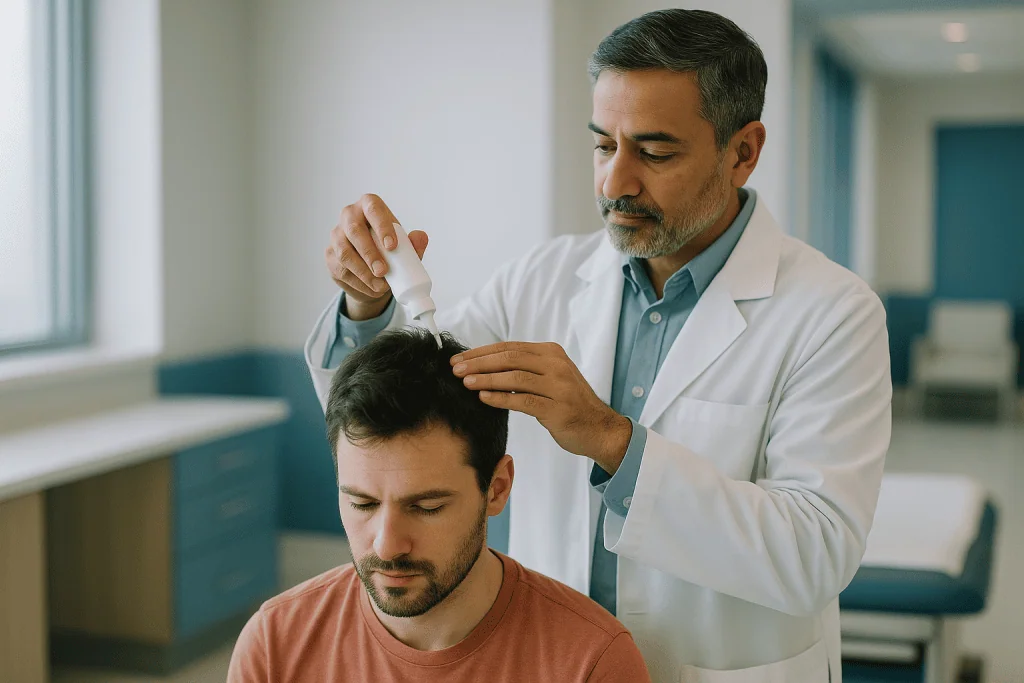
Antifungal ingredients such as ketoconazole, zinc pyrithione and selenium sulfide reduce the population of Malassezia on the scalp. With fewer yeast cells breaking down sebum, less oleic acid reaches the skin, and the irritation cycle slows. Zinc pyrithione and selenium sulfide also slow the rate at which skin cells are produced, which reduces visible shedding.
Keratolytic ingredients, a term that simply means scale-softening, include salicylic acid and coal tar. They loosen the clumps of dead cells so they wash away in smaller, less visible pieces. Coal tar also slows skin cell turnover. These ingredients do not address the yeast directly, which is why they are often paired with an antifungal rather than used alone.
Anti-inflammatory treatment, usually a topical corticosteroid prescribed by a clinician, calms the redness and itch when the scalp is actively inflamed. Steroids do nothing to the yeast and are generally used for short periods, so they are a tool for flares rather than a maintenance plan.
Each mechanism needs contact time. A medicated shampoo rinsed off in ten seconds has delivered very little active ingredient to the skin. Mayo Clinic advises leaving medicated shampoos on the scalp for several minutes, as the label directs, before rinsing, and the NHS suggests using an anti-dandruff shampoo for about a month before judging whether it has helped.
The practical consequence is that treatment is a routine, not a product. Which ingredient, how long it stays on, and how often it is used all matter at least as much as the name on the bottle.
Does hair oil cause dandruff, or just make it worse?
This is the question that comes up in almost every appointment, usually with some frustration, because oiling the scalp is a cherished tradition in many families and is widely marketed as a scalp treatment.
The honest answer from the evidence is that oil does not cause the underlying susceptibility to dandruff, but it can make existing dandruff noticeably worse and can keep a treated scalp from staying clear. Malassezia depends on lipids it cannot make itself, and the comprehensive review by Borda and Wikramanayake describes how the yeast thrives on fatty acids from sebum. Applying coconut, olive, castor or almond oil to the scalp supplies more of the same raw material. Several common oils are rich in the medium-chain and long-chain fatty acids the yeast can use.
Oil also does something subtler. It traps sebum and shed skin cells against the scalp, forming a layer that softens scale and makes it feel less dry, which is why people believe it is helping. Underneath that layer, the yeast population and the inflammation continue. When the oil is washed out, the flakes come back, and the cycle repeats.
Tea tree oil deserves a separate mention. It has laboratory antifungal activity, and a small number of clinical studies have reported modest improvement in dandruff with tea tree oil shampoo. The evidence is limited and the oil can cause contact allergy, so a dermatologist is unlikely to recommend it over established antifungal shampoos.
The usual request is simple: stop applying oils to the scalp while the dandruff is being treated. Oil applied only to the lengths and ends, away from the skin, is a different matter and is generally not a concern.
Which styling products trouble a dandruff-prone scalp?
Styling products are not all equal, and a dermatologist will usually ask what is being used, how much reaches the scalp, and how often it is washed out. The products that cause the most trouble share one of three features.

Occlusive products sit on the skin and seal it. Pomades, waxes, heavy creams, hair butters and petroleum-based edge products fall into this group. They trap sebum, heat and moisture, giving Malassezia a warm, lipid-rich environment. People who apply pomade close to the hairline often notice flaking and redness that follows the exact line of the product.
Build-up products accumulate over days. Dry shampoo is the clearest example: it absorbs oil temporarily but leaves starch or powder on the scalp with every use, and it is almost always used to delay washing, which is the opposite of what a flaking scalp needs. Hairspray, mousse and leave-in conditioners can form a film that holds scale in place and may irritate inflamed skin.
Irritant or allergenic products contain fragrance, preservatives or alcohols that bother sensitive skin. Seborrheic dermatitis weakens the skin barrier, and a barrier that is already compromised reacts to ingredients that a healthy scalp would tolerate. Mayo Clinic lists product sensitivity and infrequent washing among the common factors that worsen dandruff.
Products that are generally less of a problem include light, water-based gels applied to the hair rather than the scalp, and silicone-free serums used on the ends. The principle a dermatologist will repeat is distance: keep styling products on the hair, away from the skin, and wash them out before the next application rather than layering day on day.
Dry scalp vs dandruff: why the wrong label leads to the wrong product
A surprising amount of hair product spending is driven by a misdiagnosis that people make at home. The scalp feels tight and itchy, small flakes appear, and the conclusion is dryness. The response is oil, moisturizing shampoo, less frequent washing and skipping anything that might strip the skin. For true dry scalp this is sensible. For dandruff it is almost exactly backwards.
Genuinely dry scalp produces small, fine, white flakes, usually with dry skin elsewhere on the body, and tends to improve with gentle washing and humidity. It is more common in cold, low-humidity weather and in people with eczema-prone skin.
Dandruff flakes are typically larger, often yellowish or greasy rather than powdery, and sit on a scalp that is oily rather than parched. The itch comes from inflammation, not from lack of moisture. The NHS and Mayo Clinic both describe dandruff as a condition of oily, irritated skin, and the treatment direction is to reduce oil and yeast, not to add moisture.
The tightness that people interpret as dryness is often the feeling of inflamed skin and adherent scale. Oiling it brings short-lived comfort and longer-term worsening.
A dermatologist will usually settle this by looking at the scalp directly. Greasy scale with redness at the hairline, behind the ears, in the eyebrows or around the nose points firmly toward seborrheic dermatitis. Fine, dry scale with no redness, on someone with dry skin elsewhere, points the other way. Because the two conditions call for opposite product routines, getting this question answered is the single most useful thing an appointment delivers.
Medicated shampoo for dandruff: a comparison of what each ingredient does
Over-the-counter medicated shampoos fall into a handful of ingredient classes. The table below summarizes what each does and the practical notes a dermatologist tends to mention. This is a map for the conversation with your clinician, not a recommendation to pick one yourself; the right choice depends on hair type, scalp condition and what has already been tried.
| Ingredient class | Main mechanism | Practical notes often raised in clinic |
|---|---|---|
| Zinc pyrithione | Antifungal; slows skin cell turnover | Gentle enough for frequent use; common first choice |
| Selenium sulfide | Antifungal; slows cell turnover | Can discolor light, gray or chemically treated hair; strong scent |
| Ketoconazole | Antifungal (azole class) | Targets Malassezia directly; often used when others have not helped |
| Salicylic acid | Keratolytic (loosens scale) | Can leave scalp feeling dry; usually paired with an antifungal |
| Coal tar | Slows cell turnover; mild anti-inflammatory | Can stain light hair and increase sun sensitivity of the scalp |
Two patterns are worth knowing. First, Mayo Clinic notes that if a shampoo works for a while and then seems to lose effect, alternating between two different ingredient classes can help. Second, the NHS advises giving an anti-dandruff shampoo about a month of regular use before concluding it is not working, because the yeast population and the inflammation both take time to settle.
What matters least is the brand. What matters most is the active ingredient, the contact time, and whether the rest of the routine has stopped feeding the yeast.
How to use a dandruff shampoo so it has a chance to work
Most people who say a medicated shampoo failed them were using it in a way that gave it little chance. The dermatologist’s corrections are usually about technique rather than product.
Wet the hair, apply the shampoo directly to the scalp rather than the lengths, and massage it gently into the skin with fingertips. Then wait. Mayo Clinic advises leaving medicated shampoos on for several minutes before rinsing, following the product label, because the active ingredients need contact with skin to work. Rinsing immediately washes most of the ingredient down the drain.
Frequency depends on the ingredient and the scalp. For many people, using a medicated shampoo two or three times a week during the initial weeks, with a gentle non-medicated shampoo on other days, is a typical pattern described by Mayo Clinic, with the frequency reduced once the scalp is clear. People with very oily scalps may be asked to wash more often; people with textured or very dry hair may be asked to adapt the approach, which is covered later.
Conditioner can follow, but on the hair rather than the scalp. A heavy conditioner massaged into the roots partly undoes the shampoo’s work by leaving a film of lipids and emollients on the skin.
Patience is part of the method. The NHS suggests a month of regular use before judging a shampoo, and switching to a different active ingredient only if that trial has not helped. Hopping between five products in five weeks tells you nothing.
Fingernails are the last correction. Scratching feels productive but damages the barrier and invites infection. Fingertips, warm water and time do the job better.
Who is usually asked to change products, and who is asked to wait
Not everyone with a flaking scalp gets the same advice, and a good appointment sorts people into a few broad groups.
Adults with classic dandruff or mild seborrheic dermatitis are the main group asked to change their product routine straight away: stop scalp oils, reduce occlusive styling products, wash more often, and start a medicated shampoo. For most of this group the product changes alone make a visible difference, and the dermatologist’s role is to confirm the diagnosis and set realistic timelines.
People with chemically treated, color-treated, gray or very light hair are usually asked to be selective. Selenium sulfide and coal tar can discolor hair, and a dermatologist may steer toward zinc pyrithione or ketoconazole and discuss how to protect the color.
People with scalp conditions that resemble dandruff are often asked to wait on self-treatment until the diagnosis is clear. Scalp psoriasis, which produces thick, silvery, well-defined plaques, shares some treatments with dandruff but is a different disease. Fungal infection of the scalp (tinea capitis), more common in children, needs oral antifungal treatment rather than shampoo alone. Allergic contact dermatitis from a hair dye or product needs the trigger identified, not a medicated shampoo layered on top.
Infants with cradle cap, which is seborrheic dermatitis of the scalp in babies, are a separate case. The NHS describes it as harmless and usually self-limiting, managed with gentle washing and soft brushing, and parents are asked not to use adult medicated shampoos without advice.
Pregnant and breastfeeding patients are usually asked to review any treatment, including over-the-counter options, with their clinician first. Who falls into which group is a judgment for the treating team, which is why the examination matters.
What the first weeks of a new routine usually look like
The product changes a dermatologist requests are simple to list and surprisingly hard to live with, because the scalp often feels worse before it looks better.
In the first few days after stopping scalp oils and heavy styling products, many people notice that the scalp feels tighter and the flakes become more visible. This is not the dandruff worsening; it is the softening, masking layer of oil being removed. The scale that was always there is now obvious. A dermatologist will usually warn about this stage so it does not trigger a return to the oil.
Over the following one to two weeks of regular medicated shampooing with proper contact time, itch typically settles first, then redness, then the volume of flakes. Both the NHS and Mayo Clinic frame the first month as the realistic window for judging whether a routine is working, and describe switching active ingredients only after that trial.
By four weeks, most people with uncomplicated dandruff know whether the plan is on the right track. If it is, the dermatologist usually suggests tapering the medicated shampoo to a maintenance frequency, often once a week or so as Mayo Clinic describes, while keeping the product changes in place.
If the scalp is no better at four weeks despite consistent use, that is useful information rather than failure. It prompts a second look at the diagnosis, a change of ingredient class, or a short course of prescription treatment.
Relapse is normal. Seborrheic dermatitis is a chronic, recurring condition according to Mayo Clinic, and flares tend to follow stress, cold weather, illness or, very often, a quiet return of the old product habits.
Washing frequency, textured hair and the honest limits of the standard advice
Standard dandruff advice assumes a scalp that can be shampooed several times a week without consequence. For many people with coily, curly or tightly textured hair, that assumption does not hold. Frequent washing can leave the hair dry and fragile, protective styles make scalp access difficult, and the cultural and practical role of oils and butters is significant.
A dermatologist who understands this will not simply say “wash more.” The conversation usually turns to a few adaptations.
Medicated shampoo can be applied to the scalp only, with the lengths protected by a conditioner applied beforehand, so the active ingredient reaches the skin without stripping the hair. Contact time still matters, and sectioning the hair makes it possible to reach the scalp directly.
For people in braids, twists or other protective styles, a prescription solution or foam applied directly to the scalp between washes may be more practical than relying on shampoo alone. That is a decision for the prescribing clinician, who will weigh the scalp condition against the hair’s needs.
Oils and butters are usually moved rather than banned: applied to the hair shaft and ends for moisture, kept off the scalp while it is being treated. Occlusive edge products near the hairline are the ones most often asked to pause.
Washing frequency becomes a negotiation. Going from washing every two or three weeks to washing weekly, with a medicated product used at each wash, is a realistic middle ground that many clinicians suggest rather than a daily routine the patient will abandon.
The point of raising this is honesty. Advice that cannot be followed is not treatment, and the better appointments start by asking what the hair actually needs.
What people often get wrong about hair products and dandruff
Several beliefs come up so often that correcting them is half the appointment.
“My scalp is dry, so I need oil.” As covered above, dandruff is a condition of oily, inflamed skin, and oil supplies the yeast with more to feed on. The tight feeling is inflammation and adherent scale, not dehydration.
“Washing less often will let the scalp heal.” Mayo Clinic lists infrequent shampooing as a factor that worsens dandruff, because sebum and dead cells accumulate and the yeast population grows. For most adults, washing more often, not less, is the direction of improvement.
“Natural products are gentler on the scalp.” Plant oils, essential oils and botanical extracts are among the more common causes of contact allergy on the scalp. Natural is not a safety category, and a reactive scalp may tolerate a plain, fragrance-free medicated shampoo better than a botanical one.
“Dandruff is contagious or caused by poor hygiene.” Malassezia lives on almost everyone’s skin. Dandruff reflects how an individual’s skin reacts to it, not whether they are clean, and it cannot be passed to another person.
“If the shampoo stops working, it was never any good.” The NHS and Mayo Clinic both describe the need for ongoing maintenance and for alternating between active ingredients when one seems to lose effect. A shampoo that controlled the scalp for months and then faltered was working.
“Dandruff causes hair loss.” Dandruff itself does not destroy hair follicles. Persistent scratching and severe inflammation can cause some temporary shedding, and that improves as the scalp calms. Hair loss with scarring, bald patches or broken hairs points to a different diagnosis that needs examination.
When shampoo is not enough: what a prescription usually adds
A proportion of people do everything right with products and still have an inflamed, flaking scalp at the end of a month. At that point a dermatologist considers prescription treatment, and it helps to know what the options do rather than what they are called.
Topical corticosteroids, in solution, foam or shampoo form, reduce inflammation quickly. They calm redness and itch within days in many people, but they do not reduce the yeast, and prolonged use can thin the skin, so clinicians generally use them for short courses during flares and then step back to antifungal maintenance.
Prescription-strength antifungal preparations, including stronger ketoconazole or ciclopirox products, lower the Malassezia population more effectively than over-the-counter strengths for some people. These are often used as the long-term maintenance arm of a plan.
Topical calcineurin inhibitors, a class of non-steroid anti-inflammatory creams, are sometimes used on the face and hairline where steroids are less suitable. Their mechanism is to dampen the local immune response without the skin-thinning effect of steroids.
Oral antifungal medicines are reserved for severe or widespread seborrheic dermatitis, or when a true fungal infection of the scalp is diagnosed. They carry more systemic considerations and are a decision for the prescribing clinician.
Whatever is prescribed, the product changes stay. A steroid solution applied over a scalp that is still being oiled every evening is fighting its own patient. The prescribing clinician decides what, how and for how long, and the sensible question to bring to that conversation is not “which is strongest” but “what is this for, and what happens after it stops.”
Stress, weather, diet and the other things patients ask about
Once the product routine is settled, patients usually want to know what else they can change, and this is where honesty about the evidence matters.
Stress and fatigue are consistently listed by Mayo Clinic and the NHS as factors that can trigger or worsen seborrheic dermatitis flares. The mechanism is not fully understood and probably involves immune and hormonal effects on the skin, but the pattern of flares following exams, illness or difficult months is well recognized clinically.
Cold, dry weather is another recognized trigger. Winter flares are common and tend to ease in warmer months; some ultraviolet exposure appears to suppress Malassezia, which may partly explain the seasonal pattern, though deliberate sun exposure is not a recommended treatment because of skin cancer risk.
Diet is where claims outrun evidence. There is no good-quality trial showing that cutting sugar, dairy or gluten clears dandruff, and no supplement with convincing evidence of benefit. Very restrictive diets have their own risks. A clinician will usually say that a generally balanced diet is sensible for skin health and leave it there.
Hats, helmets and headscarves do not cause dandruff, but prolonged occlusion can trap sweat and sebum, and some people notice flares along the line where a helmet sits. Washing after sweaty exercise is more useful than giving up the hat.
Underlying conditions matter in a smaller group. Seborrheic dermatitis is more frequent and more severe in people with Parkinson’s disease, HIV and some other neurological or immune conditions, as MedlinePlus notes. Sudden, severe or unusually widespread seborrheic dermatitis in an adult is one reason a dermatologist may ask broader questions about health.
Questions to ask your care team about products and treatment
Appointments go better when the patient arrives with a short list. These are the questions that tend to produce the most useful answers for dandruff and product routines.
- Is this dandruff, seborrheic dermatitis, scalp psoriasis, or something else, and how can you tell from the examination?
- Which of my current products would you like me to stop, which can I keep on the hair but off the scalp, and which are fine as they are?
- Which active ingredient are you suggesting first, how long should I leave it on, and how many times a week during the first month?
- How will I know at four weeks whether it is working, and what is the next step if it is not?
- What should a maintenance routine look like once the scalp is clear, and how will I recognize an early flare?
- Given my hair type, color treatment or protective style, how should I adapt the washing plan so it is realistic?
- If a prescription is needed, what is it for, how long will I use it, and what happens when it stops?
- Are there any ingredients in my products that you suspect of causing contact allergy, and would patch testing help?
Bringing the actual products to the appointment, or photographs of the ingredient labels, saves a great deal of guesswork. Ingredient lists are far more useful to a dermatologist than brand names.
Writing down the answers matters too. The plan that comes out of a dandruff appointment is a sequence of changes over weeks, and the details, particularly contact time and frequency, are what people forget by the time they are standing in the shower.
Every one of these decisions sits with the treating team. The value of the questions is that they turn a product recommendation into a plan the patient understands and can follow.
When to call your doctor
Dandruff is almost always a nuisance rather than a danger, and most people manage it with product changes and an over-the-counter medicated shampoo. Some situations, though, call for a clinician’s eyes rather than another month of trial and error.
Contact your doctor or a dermatologist if a medicated shampoo used correctly for about a month, alongside the product changes described here, has not improved the scalp. The NHS gives this as the point at which to seek advice, because persistent scale may be a different condition.
Seek care sooner if any of the following appear:
- Thick, silvery, sharply bordered plaques, which suggest scalp psoriasis rather than dandruff.
- Patches of hair loss, broken hairs, or scaling with pus-filled bumps, which can indicate a fungal infection of the scalp or a bacterial infection that needs specific treatment.
- Weeping, crusting, swelling, warmth or severe pain, which point to infection of scratched skin.
- A rash that spreads beyond the usual oily areas, or that appeared suddenly after a new hair dye or product, which may be allergic contact dermatitis.
- Fever or feeling unwell alongside scalp symptoms.
- Severe or rapidly worsening seborrheic dermatitis in an adult with no obvious trigger, which a clinician may want to assess in the context of general health.
Parents should seek advice for a child with scaly patches and hair loss, since scalp fungal infection is more common in children and does not respond to shampoo alone.
If treatment has been prescribed, do not stop, start or change it without checking with the prescribing clinician, including over-the-counter products added on top. The treating team makes those calls, and they can only make them well if they know what is actually being applied to the scalp.
Frequently asked questions
What are the types of hair products that affect dandruff?
The product types that matter most are scalp oils, occlusive stylers and build-up products. Oils such as coconut, castor and olive feed the scalp yeast. Occlusive stylers such as pomades, waxes, butters and petroleum-based edge products trap sebum against the skin. Build-up products such as dry shampoo, hairspray and leave-in conditioners accumulate between washes. Light water-based gels used on the hair, away from the scalp, are generally less of a problem.
Can you define hair products and give examples of ones to pause during dandruff treatment?
Hair products are anything applied to the hair or scalp for cleansing, conditioning, styling or treatment. During dandruff treatment, dermatologists usually ask patients to pause products that reach the scalp and either add lipids or seal the skin: scalp oils, hair butters, heavy creams, pomades and waxes, and dry shampoo used to delay washing. Products applied to the lengths and ends only, such as a light serum, are generally allowed.
Does hair oil cause dandruff?
Hair oil does not cause the underlying susceptibility, but it can worsen dandruff and prevent a treated scalp from staying clear. Malassezia yeast cannot make its own fats and feeds on lipids, so oil applied to the scalp supplies more of them. Oil also softens scale and masks flakes temporarily, which is why it feels helpful. Oil kept on the hair shaft and ends, away from the skin, is generally not a concern.
How can I tell dry scalp vs dandruff at home?
Dry scalp usually produces small, fine, white flakes on skin that is not red, often in cold weather and alongside dry skin elsewhere. Dandruff flakes are typically larger, yellowish or greasy, and sit on an oily scalp that may be red and itchy, sometimes with scale in the eyebrows or beside the nose. Because the two call for opposite routines, a dermatologist’s examination is the reliable way to settle it.
Which medicated shampoo for dandruff should I ask about?
The main ingredient classes are zinc pyrithione, selenium sulfide, ketoconazole, salicylic acid and coal tar, each working differently. Zinc pyrithione and ketoconazole are antifungal; salicylic acid loosens scale; coal tar slows skin cell turnover. Selenium sulfide and coal tar can discolor light or treated hair. Mayo Clinic suggests alternating between two classes if one loses effect. Which to try first is a decision for your clinician based on your scalp and hair.
How long does dandruff treatment take to work?
The NHS advises using an anti-dandruff shampoo regularly for about a month before judging whether it has helped. Itch often settles within the first couple of weeks, with redness and flaking improving afterward. If there is no improvement at four weeks despite correct use and product changes, the usual next steps are a different active ingredient, a review of the diagnosis, or a prescription from the treating clinician.
Is dandruff treatment at home enough, or do I need a prescription?
For most people with mild dandruff, home treatment with product changes and an over-the-counter medicated shampoo used correctly is enough. A prescription is usually considered when a month of consistent treatment has not helped, when inflammation is severe, or when the diagnosis is uncertain. Prescription options include short courses of topical corticosteroids for flares and stronger antifungal preparations for maintenance, chosen by the prescribing clinician.
Can I keep using hair gel if I have dandruff?
Usually yes, with two conditions. Apply the gel to the hair rather than massaging it into the scalp, and wash it out before the next application rather than layering it day after day. Light, water-based gels are generally better tolerated than waxes, pomades or butters, which seal the scalp. If flaking and redness follow the exact line where a product sits, that product is the one to pause and discuss.
Does dandruff cause hair loss?
Dandruff itself does not destroy hair follicles. Persistent scratching and severe inflammation can cause some temporary shedding, which improves as the scalp calms with treatment. Hair loss in defined patches, broken hairs, scarring or pus-filled bumps points to a different diagnosis, such as a fungal infection of the scalp, and should be examined by a clinician rather than treated with dandruff shampoo alone.
Why does my dandruff come back after the shampoo worked?
Seborrheic dermatitis is a chronic, recurring condition, as Mayo Clinic describes, so flares after a clear period are expected rather than a sign of failure. Common triggers are stress, cold weather, illness and a return of scalp oils or heavy styling products. Most people need an ongoing maintenance routine, often a medicated shampoo used less frequently, and Mayo Clinic suggests alternating ingredients if one seems to lose effect.
References
This article is for general information only and is not a substitute for professional medical advice. Please consult a qualified doctor about your individual situation.

More from the Blog

Shaving and Folliculitis: Razor Habits Your Dermatologist Will Ask You to Change
Shaving with folliculitis is usually discouraged until the inflamed follicles settle, because each pass of the blade reopens irritated skin and can carry bacteria…

How Doctors Choose Between Antibiotic Cream and Tablets for Impetigo: Extent, Spread and Fever
Doctors usually treat impetigo with an antiseptic or antibiotic cream when the infection is small, confined to one area and the person is otherwise…

Basal Cell Carcinoma: Does It Spread, Is It Dangerous, and What Does It Look Like?
Basal cell carcinoma almost never spreads to distant organs; metastasis is considered extremely rare by major medical sources. Its real danger is local. Left…

Does Allergy Testing Help With Eczema? When Dermatologists Recommend It and What It Can Show
Allergy testing does not diagnose eczema, and it helps only in specific situations. Dermatologists usually suggest it when eczema stays severe despite good skin…

Can You Swim With Molluscum Contagiosum? Sports, Shared Towels and Ways to Limit Spread
In most cases, yes. Public health guidance does not require people with molluscum contagiosum to stay out of swimming pools, because the virus has…

Repairing the Skin Barrier After Contact Dermatitis: Moisturizers, Gloves and Gentle Cleansing
Repairing the skin barrier after contact dermatitis rests on three habits: removing or avoiding the trigger, applying a plain fragrance-free emollient generously and often,…