

Does Allergy Testing Help With Eczema? When Dermatologists Recommend It and What It Can Show
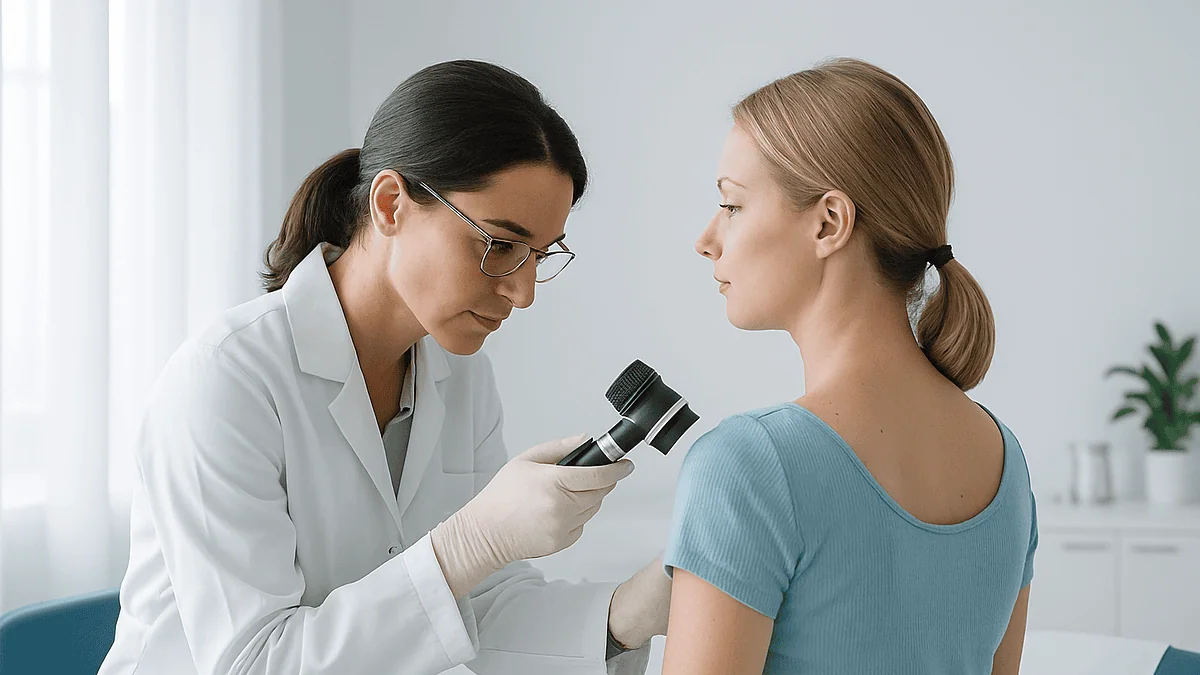
Key Takeaways
- Eczema is diagnosed by examining the skin and taking a history; no allergy test can confirm or rule it out.
- Patch tests detect delayed contact allergy and are read after about 48 hours and again around 72 to 96 hours, while prick tests show results within roughly 15 to 20 minutes.
- A positive prick or blood test shows sensitization, which in people with eczema frequently does not mean a true allergy.
- NIH NIAID guidance identifies infants with severe eczema as a higher-risk group for peanut allergy who may be evaluated before early peanut introduction.
- Removing foods from a child's diet on the basis of a test result alone can compromise nutrition and, in some children, allow a true allergy to develop.
- Most eczema triggers are irritants such as soap, heat, sweat and wool, which never appear on any allergy test but reliably worsen skin.
Allergy testing does not diagnose eczema, and it helps only in specific situations. Dermatologists usually suggest it when eczema stays severe despite good skin care, when a rash pattern points to a contact allergy, or when a child has an immediate reaction to a food. Patch tests identify contact allergens; skin prick and blood tests show sensitization, which is not the same as a true allergy. Results are interpreted with the clinical history by the treating team.
The bath is run, the pajamas are warm, and a two-year-old is scratching the backs of her knees raw again. Her mother has already swapped the laundry detergent twice, cut out strawberries, and read three contradictory forum threads before midnight. One question keeps surfacing: shouldn’t someone just test her for what she’s allergic to?
It is a fair question, and the answer is more interesting than yes or no. Allergy testing for eczema can be genuinely useful, but only when it is aimed at the right person, with the right test, for the right reason. Used loosely, it produces long lists of “positives” that send families down restrictive and sometimes harmful paths while the actual skin barrier problem goes untreated.
What follows is the honest version: how eczema really works, which tests exist, what each one can and cannot show, and how dermatologists and allergists decide when testing is worth doing.
Does allergy testing for eczema actually help? The honest answer
Sometimes, for some people, and never on its own. That is the position mainstream guidance has settled on, and it deserves a plain explanation rather than a hedge.
Eczema, in the everyday sense, means atopic dermatitis: a long-term, itchy, inflamed skin condition driven by a leaky skin barrier and an overactive immune response. Allergens can make it worse, but they do not cause it in the way pollen causes hay fever. Remove every allergen from a person’s life and the barrier defect remains. That is why the NHS and Mayo Clinic describe treatment as moisturizing, anti-inflammatory therapy and trigger avoidance, not allergen hunting.
Where testing earns its place is narrower. A dermatologist may recommend it when a rash sits in a pattern that suggests something touching the skin, such as eyelids, hands, or the waistband line, which raises the question of allergic contact dermatitis, a delayed skin reaction to a substance like nickel or a fragrance. Testing may also be raised for a young child whose moderate to severe eczema refuses to settle despite consistent, well-applied treatment, or for anyone who develops hives, lip swelling or vomiting within minutes to two hours of eating a specific food.
Outside those scenarios, evidence-based clinics tend to hold back. Broad “eczema allergy panels” ordered without a clinical question produce results that are hard to act on. A positive test to egg in a child who eats eggs happily is not a diagnosis; it is a distraction. The most useful framing is this: testing answers a specific question the clinician already has. If there is no question, there is usually no good test.
Is eczema an autoimmune disease? What is really going on in the skin
People often ask whether eczema is an autoimmune deficiency, and the honest answer is that it is neither autoimmune nor a deficiency. In autoimmune disease, the immune system attacks the body’s own tissue as if it were foreign. In eczema, the immune system is overreacting to the outside world through a skin barrier that lets too much in and too much out.

Picture the outer layer of skin as a brick wall. The bricks are flattened skin cells, and the mortar is a mix of fats and proteins that seals the gaps. In many people with eczema, that mortar is thin. The NHS notes that a family tendency toward eczema, asthma and hay fever, and variations in genes that build the barrier, sit at the root of the condition. Water escapes, so the skin dries and cracks. Irritants, microbes and allergens slip in, so immune cells in the skin sound an alarm.
The alarm is a particular kind, sometimes called type 2 inflammation, which is the same branch of immunity involved in allergic asthma and hay fever. It releases chemical signals that drive itch, and itch drives scratching, which damages the wall further. That itch-scratch loop is the engine of a flare, and it can run with no allergen in sight.
This matters for testing. If eczema were simply an allergy to a thing, finding the thing would be the whole job. Because it is a barrier and inflammation problem that allergens can aggravate, moisturizers and anti-inflammatory treatment come first, and testing is a targeted tool used afterward, when the pattern of flares suggests an external culprit.
Why no allergy test can diagnose eczema
A surprising number of people arrive at clinic asking for “the eczema test.” There isn’t one, and understanding why saves a lot of frustration.
Mayo Clinic is explicit that atopic dermatitis is diagnosed by examining the skin and reviewing the history. A clinician looks at where the rash sits, how it behaves over time, how dry the surrounding skin is, and whether there is a personal or family history of asthma, hay fever or eczema. In infants the rash favors the cheeks and outer limbs; in older children and adults it settles into the creases of elbows and knees, the neck, wrists and eyelids. No lab result adds to that picture in the ordinary case.
What allergy tests measure is different. They detect whether the immune system has made antibodies against a substance, or whether the skin reacts to a substance applied to it. Those are answers to “is this person sensitized to X?” not “does this person have eczema?” Many people with eczema have no positive results at all. Many people with dozens of positives have flawless skin.
Occasionally a skin biopsy, a small sample of skin examined under a microscope, is taken when the diagnosis is uncertain and another condition, such as psoriasis or a fungal infection, is possible. That is a diagnostic tool for the skin itself, not an allergy test.
The practical consequence is that testing should follow diagnosis, not replace it. Once a clinician is confident the condition is eczema, the next question is whether an identifiable trigger is worth chasing, and only then do the tests described below come into play.
Which allergy tests exist for eczema, and what does each one measure?
Three main tests appear in eczema care, and they answer three different questions. Confusing them is the single most common source of muddled results.

| Test | What it measures | Typical result timing | Most useful for | Main limitation |
|---|---|---|---|---|
| Patch test | Delayed skin reaction to substances placed on the back under patches | Read after about 48 hours and again around 72 to 96 hours | Suspected allergic contact dermatitis (nickel, fragrance, preservatives, rubber chemicals) | Does not detect food or airborne allergy; needs calm skin on the back |
| Skin prick test | Immediate reaction to a drop of allergen pricked into the skin | Read within about 15 to 20 minutes | Suspected immediate food or airborne allergy | Positive result shows sensitization, not necessarily true allergy |
| Specific IgE blood test | Level of allergy antibody (IgE) to specific substances in blood | Days, from a laboratory | Same as prick test when skin cannot be used or antihistamines cannot be stopped | Same false-positive problem; broad panels produce noise |
Timings above follow MedlinePlus and NHS descriptions of these procedures and vary between clinics.
Notice what the table implies. Patch testing looks for the slow, itchy, eczema-like reaction that appears a day or two after contact. Prick and blood tests look for the fast, hive-forming reaction of classic allergy. Eczema flares that track with a new hand cream point toward the first. A child who vomits after milk points toward the second. A clinician chooses the test that matches the story, which is why the story matters more than the menu.
Patch testing for eczema: what actually happens, step by step
Patch testing is the test most closely tied to eczema-like rashes, and it is also the one people know least about. It is slow by design.
On the first visit, a nurse or dermatologist cleans the upper back and applies small chambers, each containing a tiny amount of a suspected substance, held on with hypoallergenic tape. A standard series covers common culprits: metals such as nickel and cobalt, fragrance mixes, preservatives found in cosmetics and wet wipes, rubber accelerators in gloves, and ingredients from topical medicines. Clinicians can add a person’s own products when the history points to them.
The patches stay in place for about two days. During that time the back must stay dry, which means no showers over the area, no swimming and no heavy sweating, since moisture lifts the patches and ruins the reading. Most people describe the sensation as mild itching under one or two chambers, if anything.
At the second visit the patches come off and the skin is examined and often marked with ink. A final reading follows a day or two later, because contact reactions are delayed; some, such as reactions to certain metals or medicines, can appear even later, and a clinic may ask for another look around a week after application. A true positive looks like a small square of eczema: redness, swelling and sometimes tiny blisters that persist or strengthen between readings. A reaction that fades quickly is more likely irritation than allergy.
The result is a list of substances the skin reacts to, paired with practical advice on where those substances hide. A positive to a preservative, for example, is only useful once someone explains which shampoos, baby wipes and paints contain it. The NHS describes this counseling as part of the test itself.
Skin prick and blood tests: what they show, and the sensitization trap
Skin prick tests and specific IgE blood tests look for the same thing from two directions: whether the body has made IgE, the antibody responsible for immediate allergic reactions, against a particular substance.
In a prick test, a drop of allergen extract is placed on the forearm or back and the skin beneath is lightly scratched or pricked. If IgE for that substance is present on skin mast cells, histamine is released and a small raised bump, like a mosquito bite, appears within about 15 to 20 minutes, according to MedlinePlus. A saline drop acts as a negative control and a histamine drop as a positive control, so the clinician can judge whether the skin is responding normally. Antihistamines blunt the reaction and are usually paused beforehand on the clinician’s instructions.
A blood test measures the same antibodies in a laboratory and is preferred when the skin is too inflamed to test, when antihistamines cannot be stopped, or when a child cannot tolerate skin pricks. MedlinePlus notes results take days rather than minutes.
Here is the trap. Both tests detect sensitization, meaning the immune system has made IgE against a substance. They do not prove that eating or breathing that substance causes symptoms. People with eczema are especially prone to producing IgE against many things, partly because a leaky barrier exposes the immune system to proteins it would not otherwise meet. A child can test positive to wheat, egg and peanut while eating all three without incident.
Acting on sensitization alone, by removing foods, risks nutritional gaps and, in some children, losing a tolerance they already had. Allergists therefore read these results against the clinical history, and when the two disagree, they often arrange a supervised oral food challenge, in which the food is eaten in gradually increasing amounts under medical observation, to settle the question.
Eczema and food allergies: when dermatologists recommend testing a child
The overlap between eczema and food allergy is real, and it is also the area where the most harm has been done by well-meaning restriction. Both facts need holding at once.
Children with eczema are more likely than other children to have a food allergy, and the risk rises with eczema severity and early onset. The mechanism is thought to run partly through the skin: food proteins entering through a damaged barrier can sensitize the immune system before the gut has a chance to teach tolerance. This is why current NIH National Institute of Allergy and Infectious Diseases guidance treats infants with severe eczema as a higher-risk group for peanut allergy and recommends evaluation, which may include testing, before early introduction of peanut-containing foods.
Beyond that infant scenario, mainstream guidance points to testing for food allergy in a child with eczema in two situations. The first is a convincing immediate reaction: hives, swelling, vomiting, or breathing difficulty within minutes to about two hours of eating a specific food. The second is moderate to severe eczema in a young child that persists despite consistent, correctly applied treatment, where a clinician judges that a food trigger is plausible.
What guidance steers away from is testing every child with eczema for foods, and removing foods based on a positive result alone. The NIAID guidelines caution that elimination diets without confirmed allergy can compromise nutrition, and removing a tolerated food can, in some children, allow a true allergy to develop. Milk, egg, wheat, soy and peanut are staples, and a toddler’s growth depends on them.
The sensible pathway, then, is treat the skin well first, look for a clear reaction history, test when there is a question, and confirm ambiguous results with a supervised challenge before changing what a child eats.
Who is usually asked to wait, and who is usually offered allergy testing for eczema
Deciding who benefits from allergy testing for eczema is less about how much someone wants answers and more about whether a test can change what happens next.
Testing tends to be offered to adults or children whose rash sits in a contact pattern (eyelids, lips, hands, neck, or wherever a product or metal touches), to people whose eczema flares reliably after a specific exposure, to workers whose hand eczema worsens through the week and eases on days off, and to those whose eczema has stopped responding to treatment that previously worked, since a new contact allergy to an ingredient in a cream is a recognized cause. Young children with moderate to severe eczema that persists despite good treatment, or with an immediate food reaction, fall into the food-allergy pathway described above.
People are usually asked to wait, or gently told testing is not indicated, in several situations. Mild eczema that responds to moisturizer and short courses of prescribed anti-inflammatory treatment rarely needs testing, because the result would not alter care. Testing during a widespread flare is often postponed: inflamed skin produces unreliable readings, and patch tests need a clear back. Someone hoping for a broad panel “to see what comes up” is generally counseled that such panels generate false leads. Infants with mild, well-controlled eczema and no reaction history do not need routine food testing.
Timing matters too. Antihistamines are typically paused before prick testing, certain treatments applied to the back can suppress patch reactions, and recent sunburn on the test area can interfere. Clinicians work through these details so that the test, when done, is worth doing. Waiting is not a refusal; it is part of getting a readable answer.
What will an allergist do for eczema that a dermatologist doesn't?
People with eczema are often surprised to be sent to an allergist, then surprised again when the allergist spends most of the appointment talking rather than testing.
An allergist for eczema starts with the timeline: when flares happen, what preceded them, what the skin looked like, how quickly symptoms appeared after any suspected exposure. That last detail separates the two kinds of reaction. Hives or swelling within minutes to a couple of hours suggest an IgE-mediated allergy and steer toward prick or blood testing. An eczema flare a day or two after wearing a new necklace suggests contact allergy and steers toward patch testing. A flare with no consistent pattern suggests neither, and the allergist will say so.
If testing is warranted, the allergist selects specific allergens rather than a blanket panel, interprets the size of any reaction in context, and, for foods, decides whether a supervised oral food challenge is needed to confirm or rule out true allergy. Allergists also manage the conditions that travel with eczema, including asthma and hay fever, and can assess whether airborne triggers such as house dust mite are contributing.
What an allergist generally will not do is take over skin care. Moisturizing strategy, anti-inflammatory treatment and the management of infected eczema remain with the dermatologist or primary clinician, and good clinics coordinate rather than compete. For a child with both eczema and confirmed food allergy, the allergist may also arrange dietitian input so that any avoidance is nutritionally safe.
The value of the visit is often clarity. Leaving with two confirmed triggers and a list of things that were ruled out is far more useful than leaving with twenty maybes.
How do I figure out what's triggering my eczema without a test?
Most eczema triggers are never found by a test, because most are not allergies at all. Working out what triggers eczema usually starts with observation.
Irritants come first. Soaps, bubble baths, fragranced products, hot water, wool and synthetic fabrics, sweat, and rapid changes in temperature all strip or aggravate the barrier without involving the immune system’s allergy machinery, which is why they never show on an allergy test yet reliably worsen skin. The NHS lists these alongside stress, infections and hormonal shifts as common triggers. A simple experiment, switching to a fragrance-free wash and cotton clothing for a few weeks, often tells more than a laboratory report.
A flare diary helps. Note the date, where the rash appeared, what was new in the previous two days (products, clothing, foods, places, illness, stress), and how the weather was. Patterns emerge over a month that no single memory captures. Hand eczema that eases on days away from work, or a face flare after a new shampoo, is the kind of clue that makes a later patch test targeted rather than scattershot.
Airborne allergens deserve mention. House dust mite and pollen can aggravate eczema in some people, and prick or blood testing can confirm sensitization, though the evidence that avoidance measures alone improve eczema is modest; clinicians tend to frame them as one part of a wider plan.
Food is the area most likely to mislead. Adults with eczema rarely have a food trigger, and cutting out food groups without confirmed allergy carries real nutritional cost. If a food seems suspicious, the productive move is to record the reaction precisely and bring the record to a clinician, not to remove the food indefinitely on suspicion.
What the days and weeks after allergy testing usually look like
The appointment is only the first half of testing. What follows depends on which test was done and what it showed.
After a prick test, the small bumps settle within hours, and mild itch at the site is common. Results are discussed the same day, usually with a plan: continue eating a food that tested negative or is eaten without symptoms, avoid a food with a confirmed reaction, or book a supervised oral food challenge if the result is ambiguous. Blood test results arrive over the following days and are reviewed by phone or at a follow-up.
After patch testing, the back may itch for a few days where positives appeared, and a strong reaction can leave a temporary dark or light mark. The real work is the avoidance trial. If a preservative or fragrance ingredient tested positive, the person switches every product that contains it, which requires label reading and often a written list of alternative names, because the same chemical can appear under several. The NHS notes that contact dermatitis can take some weeks to clear after exposure stops, so an early lack of improvement is not proof the test was wrong.
Skin care continues throughout. Testing does not pause moisturizing or prescribed anti-inflammatory treatment, though a clinician may adjust what is applied to the back beforehand so readings stay accurate.
Over the following weeks the question is simple: is the pattern of flares changing? A hand eczema that improves once nickel-containing tools are covered, or a face that calms once a shampoo is swapped, confirms the result in real life. No change prompts a second look, either at whether avoidance is complete or at whether the trigger was ever the main driver. Either way, the decision about next steps sits with the treating team.
What people often get wrong about eczema and allergies
Some myths about allergy testing for eczema are harmless. Others cost children nutrition and adults years of unnecessary restriction. These are the ones worth correcting.
“A positive test means I’m allergic.” A positive prick or blood test means sensitized. Whether that translates into symptoms depends on the history, and in eczema false positives are frequent. Allergists confirm doubtful food results with supervised challenges for exactly this reason.
“If we find the allergen, the eczema will go away.” Removing a confirmed trigger can reduce flares, sometimes dramatically in contact allergy. It does not repair the barrier or switch off the underlying tendency, so moisturizing and treatment usually continue.
“Eczema is basically a food allergy.” In most adults there is no food trigger at all. In children the link is stronger but still applies to a minority, mainly those with early, severe disease.
“Hair, saliva or bioresonance tests can find my triggers.” These have no validated basis for allergy diagnosis and are not recommended by mainstream bodies. Results from them should not guide diet or treatment.
“Natural products can’t cause contact allergy.” Plant extracts, essential oils and fragrances of botanical origin are among the more common patch test positives. Natural describes the source, not the risk.
“Eczema is an autoimmune disease.” As covered earlier, it is an immune overreaction through a leaky barrier, which is a different mechanism with different treatment logic.
“Testing is always a good idea, just to know.” Untargeted testing produces lists of positives that clinicians then have to talk families out of acting on. Testing is a tool for answering a question, and it works best when there is one.
Questions to ask your care team before agreeing to allergy testing
A good testing decision is a conversation. Bringing a few sharp questions helps the clinician explain their reasoning and helps you judge whether a test will change anything.
Start with the purpose. Ask what specific question the test is meant to answer and what would change in the treatment plan if the result were positive, or negative. If the honest answer is “nothing,” that is useful to know before the appointment, not after.
Ask which test is proposed and why that one. A patch test and a prick test look for different reactions, and understanding which pattern the clinician suspects tells you a great deal about how they read your history. It is reasonable to ask which substances will be included and whether your own products can be added.
Ask about preparation. Which medicines or creams should be paused, for how long, and who decides? Never stop a prescribed treatment on your own; the clinician who prescribed it should agree to any pause.
Ask how results will be interpreted. For food tests in particular, ask whether a positive result would be confirmed by a supervised challenge before any food is removed, and whether a dietitian would be involved if avoidance is recommended.
Ask what happens if results are negative or unclear, so that a negative test does not feel like a dead end. Often it redirects attention to irritants, skin care technique or treatment adjustment, which may be exactly where the answer lies.
Finally, ask how the dermatology and allergy sides of care will communicate. Eczema lives between specialties, and the people who do best are usually those whose clinicians are talking to each other.
When to call your doctor
Most eczema care happens at home, and most allergy tests are uneventful. A few situations need prompt attention, and knowing them in advance removes guesswork during a bad night.
Seek emergency care immediately, including after any food test or food challenge, if there is swelling of the lips, tongue or throat, difficulty breathing or wheeze, a hoarse voice, widespread hives with dizziness or faintness, or repeated vomiting after a food. These can signal anaphylaxis, a severe whole-body allergic reaction that can progress quickly.
Contact your doctor the same day if eczema becomes weepy, develops yellow or honey-colored crusts, feels hot and painful, or is accompanied by fever, since these suggest bacterial infection. Clusters of small, painful, fluid-filled blisters or punched-out sores spreading across eczema, especially with a child who seems unwell, can indicate eczema herpeticum, a herpes virus infection of eczema that needs urgent treatment.
Call the clinic if eczema is spreading rapidly or failing to respond to a prescribed treatment that previously worked, if a patch test site becomes intensely blistered or painful, if a suspected food reaction has happened at home, or if itch is so severe that sleep is lost night after night. Persistent flares despite good skin care are a reason for review, not for tolerating more misery.
Do not change or stop prescribed medicines because of a test result you have read yourself or found online. Results are interpreted alongside your history, and every decision about testing, avoidance and treatment rests with the team looking after you.
Frequently asked questions
Does an allergy test help with eczema?
It helps in specific situations, not as a routine step. Testing is useful when a rash pattern suggests contact allergy, when a child has an immediate reaction to a food, or when moderate to severe eczema persists despite consistent treatment. It does not diagnose eczema and does not replace moisturizing and anti-inflammatory care. Broad panels ordered without a clinical question tend to produce false leads rather than useful answers.
Is eczema an autoimmune deficiency?
No. Eczema is neither autoimmune nor an immune deficiency. It results from a weakened skin barrier that lets moisture out and irritants in, combined with an immune system that overreacts to what gets through. Autoimmune diseases involve the immune system attacking the body’s own tissue, which is a different mechanism. The NHS describes eczema’s roots as a mix of inherited barrier tendencies and environmental triggers.
What will an allergist do for eczema?
An allergist takes a detailed timeline of flares and exposures, decides whether any pattern suggests immediate allergy or contact allergy, and selects targeted tests only if they would change management. For ambiguous food results, the allergist may arrange a supervised oral food challenge. Allergists also manage linked conditions such as asthma and hay fever, while skin care and anti-inflammatory treatment usually stay with the dermatologist or primary clinician.
How do I figure out what's triggering my eczema?
Start with a flare diary noting new products, fabrics, foods, weather, illness and stress in the two days before each flare, then review it after a month. Most triggers are irritants such as soap, heat, sweat and wool, which no allergy test detects. Bring any consistent pattern, especially a rash in a contact pattern or an immediate food reaction, to a clinician, who can decide whether targeted testing is warranted.
What is patch testing for eczema and does it hurt?
Patch testing places small chambers containing suspected contact allergens on the back for about two days, then examines the skin at removal and again a day or two later for delayed eczema-like reactions. It is not painful; most people notice mild itching under a chamber at most. The back must stay dry throughout. Results identify substances such as nickel, fragrances or preservatives that may be aggravating the skin.
Are eczema and food allergies always connected?
No. Children with early, severe eczema have a higher chance of food allergy, but most people with eczema, and the large majority of adults, have no food trigger. A positive food test in someone eating that food without symptoms usually reflects sensitization rather than allergy. Food should be removed only when a reaction history and, where needed, a supervised challenge confirm a true allergy.
Can an eczema allergy blood test tell me what to avoid?
Not on its own. A specific IgE blood test shows whether the immune system has made allergy antibodies against a substance, which MedlinePlus describes as sensitization. In eczema, sensitization without symptoms is common, so results must be read alongside the clinical history. Broad panels generate many positives that do not need avoidance. Clinicians use the test to confirm a suspicion, not to build an avoidance list.
Should I stop antihistamines or creams before allergy testing?
Only on the instruction of the clinician arranging the test. Antihistamines can blunt skin prick reactions, and some treatments applied to the back can suppress patch test readings, so clinics give specific preparation advice. Never stop a prescribed medicine on your own; the prescribing clinician should agree to any pause. Ask at booking what needs to change and for how long.
Will finding my allergen make my eczema go away?
Removing a confirmed trigger can reduce flares, sometimes substantially in allergic contact dermatitis, but it does not repair the skin barrier or switch off the underlying tendency to inflammation. Moisturizing and any prescribed anti-inflammatory treatment usually continue. The NHS notes contact dermatitis can take some weeks to settle after exposure stops, so improvement is gradual rather than immediate.
When does a child with eczema need allergy testing?
Mainstream guidance points to two main situations: a convincing immediate reaction to a food, such as hives or vomiting within about two hours, or moderate to severe eczema in a young child that persists despite consistent, correctly applied treatment. NIH NIAID guidance also identifies infants with severe eczema as higher risk for peanut allergy who may be evaluated before early introduction. Mild, controlled eczema does not need routine testing.
References
- NHS: Atopic eczema: Causes
- MedlinePlus: Allergy Skin Test
- MedlinePlus: Allergy Blood Test
- NHS: Contact dermatitis
This article is for general information only and is not a substitute for professional medical advice. Please consult a qualified doctor about your individual situation.

More from the Blog

Can You Swim With Molluscum Contagiosum? Sports, Shared Towels and Ways to Limit Spread
In most cases, yes. Public health guidance does not require people with molluscum contagiosum to stay out of swimming pools, because the virus has…
Repairing the Skin Barrier After Contact Dermatitis: Moisturizers, Gloves and Gentle Cleansing
Repairing the skin barrier after contact dermatitis rests on three habits: removing or avoiding the trigger, applying a plain fragrance-free emollient generously and often,…

Impetigo Myths Corrected: Why It Is Not a Sign of Poor Hygiene and Still Needs Treatment
Impetigo is a contagious skin infection that begins when common bacteria, usually Staphylococcus aureus or group A Streptococcus, enter skin through a scratch, insect…
Is It Irritant or Allergic Contact Dermatitis? How Dermatologists Tell the Two Apart
Irritant contact dermatitis is direct chemical or physical damage to the skin barrier and can affect anyone after enough exposure, often within minutes to…

How Medicated Dandruff Shampoos Are Meant to Be Used: Contact Time, Rotation and Rinsing
Medicated dandruff shampoo works best when it is applied to a wet scalp rather than the hair lengths, left in contact for the time…

When Folliculitis Needs a Doctor: Bumps That Spread, Recur or Turn Into Painful Boils
See a doctor for folliculitis when the bumps keep spreading after a few days of gentle self-care, keep coming back, grow into a painful…