

Is Cerebral Palsy Care Different for Teens and Adults? Rehabilitation Goals as Needs Change

Key Takeaways
- The brain injury behind cerebral palsy does not progress, so new pain, stiffness or walking decline in adults usually comes from wear on muscles, joints and bones, problems that are often modifiable.
- Spastic cerebral palsy accounts for roughly 80 percent of cases according to the CDC, which is why stretching, orthotics and tone management remain central to adult care.
- Mayo Clinic reports that some form of premature aging affects most people with cerebral palsy by their forties, so bone, joint and cardiovascular checks may be warranted earlier than for the general population.
- Transition to adult services works best when it starts in the early teens with a named coordinator and a portable written health summary, rather than at a birthday.
- Botulinum toxin injections for focal spasticity produce a temporary effect that fades over months, which is why the weeks immediately afterward are the most productive time for stretching and strengthening.
- Sudden loss of function, new hand numbness or bladder change, choking with fever, or a first seizure are red flags that should be assessed the same day, not at the next routine visit.
Yes. Cerebral palsy care for adults shifts away from the growth- and milestone-focused therapy of childhood toward protecting existing function, managing pain, spasticity and fatigue, and preventing secondary problems such as contractures, osteoarthritis and osteoporosis. The original brain injury does not progress, but the body changes with age, so rehabilitation goals are reset around work, independence and long-term health, with every decision made jointly with the treating team.
The last appointment at the children’s rehabilitation service ended with a handshake and a folder. For eighteen years, the physical therapist had known which of his ankles tightened first, which brace rubbed, and how his walking changed when he was tired. Now the folder said he had “transitioned.” No one had yet said to where.
That gap is where cerebral palsy care for adults often begins, not with a plan but with a question. Cerebral palsy is caused by a brain injury that does not spread, yet the body it lives in keeps changing: joints stiffen, muscles fatigue faster, pain that was rare at twelve becomes ordinary at thirty. The goals that made sense for a growing child do not transfer neatly to a person holding down a job, raising a family or living alone for the first time.
This article looks honestly at what changes, what rehabilitation can realistically aim for at each stage, and how the handoff from teenage to adult services is supposed to work.
Why cerebral palsy care for adults is built around different goals
Cerebral palsy, or CP, is a group of lifelong conditions affecting movement, posture and coordination, caused by damage to the developing brain before, during or shortly after birth. The National Institute of Neurological Disorders and Stroke describes it as non-progressive: the original injury does not worsen or spread. That single fact shapes adult care, because it means new problems in adulthood almost always come from the body, not the brain.
Pediatric care is organized around growth. A child’s bones lengthen, muscles have to keep pace, and therapy is timed to developmental windows, first steps, school, puberty. Appointments are frequent, parents carry the plan, and the aim is often to gain skills the child does not yet have.
Adult care flips the emphasis. The question is rarely “what new milestone can we reach?” and more often “how do we protect what works, reduce pain, and make daily life sustainable for the next forty years?” The Cleveland Clinic and Mayo Clinic both note that adults with CP face secondary conditions such as contractures (permanent shortening of a muscle or tendon that limits joint movement), osteoarthritis and chronic pain, alongside ordinary adult concerns like heart health and mood.
There is a practical difference too. Children’s services in most health systems end at a set age, while adult neurology and rehabilitation services were historically designed around conditions acquired later in life, such as stroke. Adults with CP can find themselves between systems. Good adult care is therefore partly clinical and partly logistical: someone has to coordinate orthopedics, neurology, physical therapy, primary care and, where relevant, speech and mental health support. When that coordination exists, the plan looks less like a therapy timetable and more like long-term maintenance of something complex and valuable.
Cerebral palsy in adults: what changes in the body over time
The brain injury is fixed. The musculoskeletal consequences are not. Spasticitymuscle tightness caused by faulty signaling between brain and muscle, is present in most people with CP; the CDC estimates spastic CP accounts for about 80 percent of cases. Over decades, tight muscles pull on joints, joints wear unevenly, and the wear shows up as pain, reduced range of motion and, sometimes, deformity.

Mayo Clinic lists the recognized adult complications: contractures, malnutrition where swallowing or self-feeding is difficult, mental health conditions, heart and lung disease, osteoarthritis and osteoporosis (thinning of bone that raises fracture risk). It also states that some form of premature aging affects most people with CP by their forties: the physical strain of moving with abnormal muscle tone can bring problems typically seen decades later in the general population.
Fatigue deserves its own mention. Walking with spasticity or an uneven gait uses considerably more energy than typical walking, so an adult who managed a full school day may find a workday plus commuting leaves nothing in reserve. Some adults report a gradual decline in walking ability during their thirties and forties; clinicians sometimes group this cluster of pain, fatigue and weakness as post-impairment syndrome, a descriptive label rather than a new diagnosis.
None of this is inevitable for every person. Severity varies enormously, from someone with mild one-sided involvement who runs marathons to someone who uses a powered wheelchair and a communication device. What the evidence supports is that changes are common enough to plan for, and that planning early, while function is stable, offers more options than reacting once a joint has already failed. That is the central argument for keeping regular follow-up into adulthood rather than returning only in crisis.
What actually happens at an adult rehabilitation assessment
An adult rehabilitation assessment is less a single test than a structured conversation followed by a physical examination. The clinician, usually a rehabilitation physician, neurologist or physical therapist, sometimes in a multidisciplinary clinic where several specialties share one visit, begins with how you actually spend your days: work, getting in and out of a car, stairs at home, how far you walk before pain or fatigue stops you.
The examination then measures what the conversation described. Range of motion at hips, knees and ankles is checked against the other side and against earlier records where they exist. Muscle tone is graded. Gait is observed, sometimes on video or in a formal gait laboratory that tracks joint angles and muscle activity. Many clinicians also record the Gross Motor Function Classification System level, a five-point scale (GMFCS I to V) describing how a person moves in everyday settings; it is stable across adulthood for most people and gives everyone a shared shorthand.
Beyond movement, a thorough assessment screens for the secondary problems Mayo Clinic and the NHS highlight: swallowing difficulty (dysphagia), constipation, bladder symptoms, sleep, mood, bone health and pain. Imaging is not routine but may be requested if a specific joint is suspected of structural damage.
The output is a set of goals, ideally written in the person’s own words, “stand long enough to cook dinner,” “reduce night-time leg spasms”, with a plan for who does what. The follow-up interval is set by risk rather than habit; someone stable may be seen yearly, someone with new decline more often. The assessment does not end with a diagnosis, because the diagnosis was made long ago. It ends with priorities.
Who is usually offered intensive rehabilitation or surgery, and who is asked to wait
Adult services generally reserve intensive blocks of rehabilitation, spasticity procedures or orthopedic surgery for people with a specific, measurable problem and a realistic goal. NICE guidance on cerebral palsy in adults and the NHS treatment pages frame the decision the same way: intervene where a change in function, pain or care needs justifies the risk and effort.
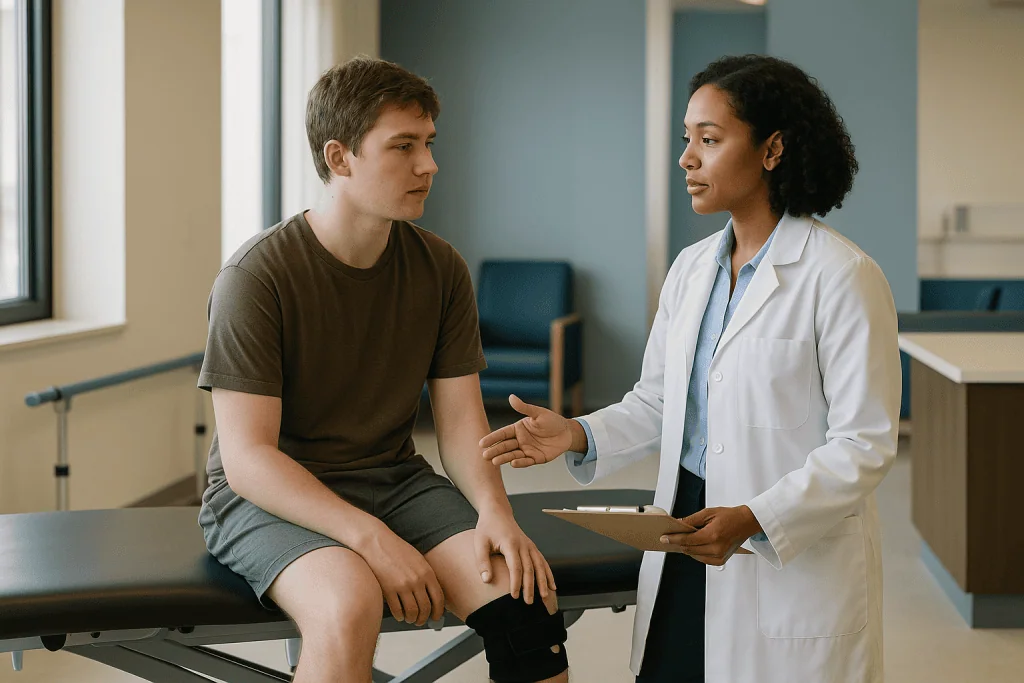
People commonly offered active intervention include those with new or worsening pain traced to a particular joint, those whose spasticity has begun to interfere with sleep, hygiene or transfers, and those who have lost a specific ability they had a year or two earlier, such as climbing stairs. Someone whose contracture is making shoes or braces impossible to wear may be referred to orthopedics; someone whose fatigue and falls are increasing may be offered a focused strength and balance program with an equipment review.
People usually asked to wait, or to continue maintenance therapy rather than escalate, include those who are stable and want “more therapy” without a specific target; those in whom an acute illness, injury or medication change might explain a temporary dip; and those for whom a surgical fix would address an X-ray finding rather than a lived problem. Surgery in adults is also weighed against slower healing, longer recovery and the effect of weeks of reduced mobility on already-fragile bone and muscle.
Waiting is not neglect. It is usually paired with a home program, orthotics (custom braces or splints that support a joint) and a review date. The decision, including whether any procedure is appropriate at all, rests with the treating team, who can weigh the individual’s anatomy, overall health and goals in a way no article can.
Rehabilitation goals from the teenage years to midlife: a comparison
Goals move with life stage. The table below summarizes typical priorities; individual plans vary widely with severity, described by GMFCS level, and with personal circumstances.
| Area | Teenage years | Young adulthood | Midlife and beyond |
|---|---|---|---|
| Main aim | Finish growth safely; keep gains; build self-management | Sustain function through work, study and relationships | Preserve mobility, control pain, prevent falls and fractures |
| Typical setting | Pediatric rehabilitation, school-based therapy | Primary care plus adult rehabilitation or neurology | Primary care, orthopedics, rehabilitation, sometimes geriatric input |
| Common new issues | Growth spurts outpacing muscle length; scoliosis and hip surveillance | Fatigue, early joint pain, reduced therapy contact, mood | Osteoarthritis, osteoporosis, walking decline, swallowing changes |
| Rehabilitation emphasis | Stretching, orthotics, strength, sport and independence skills | Energy conservation, workplace adaptation, maintenance exercise | Equipment review, bone health, cardiovascular fitness within limits |
| Who leads decisions | Young person increasingly, with parents | The adult, with chosen supporters | The adult, with advance planning for changing needs |
Two threads run through every column. The first is that spasticity and its consequences are managed, not eliminated; NHS treatment guidance is explicit that care aims to help people be as independent as possible rather than to remove the underlying condition. The second is that responsibility shifts steadily toward the person with CP. A fifteen-year-old who can explain their own brace schedule and why each medicine was prescribed is far better placed at twenty-five than one whose parents held every detail.
The columns are porous. Someone with severe involvement may need midlife-style bone and swallowing surveillance in their twenties; someone with mild hemiplegia may not meet joint pain until their fifties. Use the table as a map of what commonly comes up, then let the assessment described earlier decide which parts apply.
Cerebral palsy transition to adult care: how the handoff is supposed to work
Transition is the planned move from children’s to adult services, and NHS and NICE guidance treat it as a process that begins in the early teenage years rather than an event on an eighteenth birthday. The reasoning is simple: skills like booking appointments, describing symptoms and understanding one’s own medicines take years to learn, and services that stop abruptly are the point at which many young adults with CP lose follow-up altogether.
A well-run transition usually includes a named coordinator, a written health summary that travels with the young person (diagnosis, GMFCS level, past surgeries, current equipment, medicines by name and reason, allergies), and a gradual change in the room itself. Early on, parents speak and the teenager listens; by the end, the young person leads and parents contribute when asked. Clinicians may offer part of each visit alone with the teenager to build that habit.
The handoff also needs a receiving side. Primary care is the anchor in most systems, so making sure a family doctor knows the person, holds the summary and understands who to refer to is worth more than any single specialist appointment. Where a dedicated adult CP service exists, a joint visit with both pediatric and adult teams present smooths the change; where none exists, adult rehabilitation medicine or neurology usually takes the role.
Failure points are predictable: no adult provider identified before pediatric discharge, equipment funding that ends with the children’s service, and prescriptions that lapse because no one was told to continue them. Families who ask, a year or two before the cutoff, “who will look after these things next?” tend to avoid the cliff. The plan is set with the care team, but the question can be asked by anyone.
Managing spasticity and pain in adults: what the options actually are
Spasticity management in adults is layered, and the layers are chosen by how widespread the tightness is and what it is stopping the person from doing. The foundation is physical: stretching, positioning, strengthening the muscles that oppose the tight ones, and orthotics that hold a joint in a lengthened position. These carry the least risk and continue alongside anything else.
Where tightness is generalized, clinicians may consider oral muscle relaxants such as baclofen, which dampen overactive nerve signals reaching muscle. The trade-off is that they act on the whole body, so drowsiness and weakness can occur. Where tightness is focused in one or two muscle groups, a calf that pulls the foot down, a forearm that clenches the hand, botulinum toxin injections weaken those specific muscles; the NHS describes the effect as temporary, wearing off over months, so the decision to repeat is revisited each time.
For severe, widespread spasticity that oral medicines cannot control, an intrathecal baclofen pump delivers the medicine directly into the fluid around the spinal cord through an implanted device. Selective dorsal rhizotomy, an operation that cuts selected overactive sensory nerve roots in the spine, is described by Mayo Clinic mainly as a procedure for children, and adult candidates are few.
Pain is managed separately, because not all pain in CP is spasticity. Joint pain may need orthopedic assessment; nerve pain may respond to different medicine classes; hip or spine pain may relate to alignment or seating. Psychological approaches to living with persistent pain have a place too. Whether to start, adjust or stop any of these is a decision for the prescribing clinician, who weighs benefit against side effects in the individual, no article, and no one else’s experience, substitutes for that conversation.
Aging with cerebral palsy: fatigue, joints, bones and falls
Aging with cerebral palsy tends to bring three linked problems: energy, joints and bone. They reinforce one another. Walking with abnormal tone costs more energy, so activity drops; less activity weakens muscle and bone; weaker muscle makes joints less stable and falls more likely; a fall onto thin bone breaks it. Mayo Clinic lists osteoporosis and osteoarthritis among the recognized complications, and the aim of adult rehabilitation is essentially to interrupt that loop at as many points as possible.
Energy conservation is the first lever. A physical or occupational therapist can identify the daily tasks that cost most, often stairs, long transfers and carrying, and find equipment or route changes that spare effort for the things that matter. Choosing a wheelchair or scooter for long distances while continuing to walk at home is not decline; it is budgeting.
Bone health is the second. Reduced weight-bearing, some anticonvulsant medicines and low body weight all reduce bone density. Adults with CP may be offered bone density scanning earlier than the general population, along with a review of calcium and vitamin D intake and, where appropriate, medicines that slow bone loss. Those decisions belong to the treating clinician, guided by scan results and fracture history.
Cardiovascular fitness is the third and most overlooked. Because so much attention goes to muscles and joints, heart and lung health can be forgotten, yet Mayo Clinic names heart and lung disease as adult complications, largely through inactivity. Adapted aerobic exercise, hand cycling, swimming, seated circuits, counts. National physical activity guidance sets the same aims for adults with disabilities as for everyone else and asks for the format, not the goal, to be adapted.
Falls tie the three together, and a balance program or falls assessment is a reasonable request once falls become more than occasional.
Mental health, thinking and communication in adult life
Cerebral palsy is defined by movement, but the same early brain injury can affect thinking, vision, hearing, speech and seizure risk in some people. The CDC notes that many people with CP have co-occurring conditions, epilepsy among the more common. Many others have entirely typical intellect and are routinely underestimated because of how they move or speak; that mismatch is itself a source of stress in adult life.
Mental health deserves direct attention. Mayo Clinic lists mental health conditions such as depression among the complications of CP, and the reasons are not mysterious: chronic pain, fatigue, social isolation, employment barriers and the effort of navigating systems designed for other people. Screening for mood and anxiety should be part of routine adult follow-up, and the options, talking therapies, medicines where indicated, peer support, are the same as for anyone, chosen with the clinician.
Communication is a rehabilitation goal in its own right. Speech and language therapists work with adults on clarity, breath support and, where speech is limited, augmentative and alternative communication: devices or boards that let a person select words or symbols to be spoken aloud. Technology has changed quickly, and an adult who last had a communication assessment as a child may have options they have never been shown.
Swallowing, also assessed by speech therapists, matters for safety as well as nutrition. Dysphagia can worsen with age and raises the risk of food or drink entering the lungs. Coughing during meals, recurrent chest infections or unexplained weight loss are reasons to ask for a swallowing review rather than to assume they are simply part of the condition.
Cognition may also change with ordinary aging, and separating that from long-standing differences requires a baseline. Where none exists, establishing one in early adulthood is a quiet but useful investment.
What the weeks after a new rehabilitation plan or procedure usually look like
Timelines in adult CP care are typical ranges, not promises, and the treating team sets the specific plan. Broadly, three kinds of change have three kinds of aftermath.
After a new exercise or stretching program, the first fortnight often feels worse before it feels better: muscle soreness, tiredness and occasionally a brief rise in spasticity as the body adjusts. Therapists expect this and will have set a review point. Meaningful change in strength or endurance is usually measured over weeks to a few months, and the program is adjusted at each review rather than continued unchanged.
After botulinum toxin injections, the NHS describes the muscle-relaxing effect developing over the following days and lasting for a period of months before fading. The weeks immediately afterward are when stretching, splinting and strengthening the opposing muscles are most productive, because the target muscle is temporarily quieter. An injection without an accompanying therapy plan tends to disappoint.
After orthopedic surgery, tendon lengthening, hip or foot procedures, spinal surgery, recovery is measured in months. There is usually a period of casting or bracing with restricted weight-bearing, followed by a longer stretch of rehabilitation to relearn movement with the altered anatomy. Adults commonly recover more slowly than children, and temporary loss of independence in transfers or self-care should be planned for before the operation, not discovered afterward. Surgeons and therapists will give an individual timeline; it should be asked for explicitly.
Whatever the intervention, the weeks afterward are the time to keep a simple diary of pain, sleep, spasm frequency and what could and could not be done. It turns the next appointment from an impression into evidence, and it is the habit clinicians most often wish their adult patients had.
How to care for a person with cerebral palsy as they get older
How to care for a person with cerebral palsy changes as both the person and the caregiver age, and the honest starting point is autonomy: an adult with CP directs their own care wherever they are able, and support fills gaps rather than replacing decisions.
Practical priorities cluster around movement and skin. Regular changes of position, well-fitted seating and checking skin over bony areas guard against pressure injuries, which are a serious risk for anyone who sits or lies for long periods. Safe transfer technique, slide sheets, hoists or transfer boards rather than lifting, protects the caregiver’s back and the person’s shoulders, and a therapist can teach it at home with the actual furniture involved.
Nutrition and swallowing come next. Meals may need texture adjustment on the advice of a speech therapist, adequate fluids to prevent constipation and urinary infections, and attention to weight in either direction. Bowel and bladder routines, unglamorous as they are, prevent a large share of avoidable hospital visits.
Equipment ages too. Wheelchairs, braces, communication devices and bathroom aids should be reviewed periodically because bodies change shape and technology improves; a chair that fit at twenty may be causing pain at forty.
Caregivers, often parents now in their sixties or seventies, need their own plan. Respite arrangements, shared care with siblings or paid support, and a written record of routines, medicines and preferences protect the person with CP if the main caregiver becomes ill. Talking about this early, while it is hypothetical, is far kinder than deciding in an emergency department at midnight.
What people often get wrong about adult cerebral palsy
Several misunderstandings follow people with CP into adulthood and shape care for the worse.
The first is that cerebral palsy is a childhood condition. It is diagnosed in childhood, but the NHS and CDC are clear that it is lifelong, and most children with CP grow up to become adults with CP.
The second is that new problems mean the brain is deteriorating. It is not. NINDS describes CP as non-progressive at the level of the brain; walking decline, pain and fatigue in adulthood arise from wear on muscles, joints and bones. That distinction matters because it means the problems are often modifiable.
The third is that therapy only works in children. Intensive gain of new skills is more typical of childhood, but adults respond to strength training, gait work and equipment changes; the goals are different, not absent.
The fourth is that using a wheelchair means giving up. Choosing wheels for distance while walking at home preserves joints and energy for what matters most. Clinicians increasingly frame mobility aids as tools, not verdicts.
The fifth is that everyone with CP has an intellectual disability. Many do not, and assuming otherwise leads to adults being spoken over in their own appointments.
The sixth is that pain is simply part of CP and must be tolerated. Persistent pain has causes, joint damage, spasticity, poor seating, nerve compression, and most can be reduced. An adult who stopped mentioning pain because it was never addressed should raise it again.
The last is that CP explains every new symptom. A person with CP can also develop diabetes, thyroid disease or depression, and attributing everything to the existing condition, known as diagnostic overshadowing, delays ordinary care.
Questions to ask your care team
Adult appointments are shorter than pediatric ones and often with someone new, so arriving with questions changes what gets covered. These are the ones that tend to unlock useful conversations.
- Which of my current problems come from spasticity, which from joints, and which from something else entirely?
- What is my GMFCS level, and has my function changed compared with my last recorded assessment?
- Should I have a bone density scan, and if so, when?
- Are all of my medicines still needed, and what is each one for? (Ask, never stop anything on your own.)
- Would an equipment or seating review help my pain or fatigue?
- Is there a swallowing, bladder or bowel assessment I should have had by now?
- Who coordinates my care across specialties, and how do I reach them between visits?
- What signs should make me contact you urgently rather than wait for the next appointment?
- If surgery or an injection is being suggested, what is the specific goal, what happens if we wait, and what does recovery realistically require of me?
Two habits make these questions land. Bring a one-page summary of your history if the clinician is new; adult services rarely hold full pediatric records. And write down the answers, or ask permission to record them, because the follow-up interval may be a year and memory fades faster than function.
The questions are prompts, not a test the clinician must pass. A good team will welcome them, and the answers belong to the person asking.
When to call your doctor
Most adult CP care is planned, but some changes should not wait for the next scheduled visit. Seek urgent medical help for sudden loss of an ability you had days earlier, walking, standing, using a hand, since abrupt change is not how CP itself behaves and may signal a fracture, a spinal problem or an unrelated neurological event. New numbness, tingling, clumsiness in the hands or a change in bladder or bowel control can indicate compression of the spinal cord in the neck, which is recognized in adults with long-standing abnormal neck movement and needs prompt assessment.
Call the same day for a fall followed by pain that stops weight-bearing or a limb that looks misshapen; for a first seizure or a clear change in an existing seizure pattern; and for coughing or choking during meals paired with fever or breathlessness, which can mean food or fluid has reached the lungs.
Anyone with an intrathecal baclofen pump should treat a sudden sharp increase in spasticity, high fever, itching, confusion or a seizure as an emergency, because abrupt interruption of the medicine can be dangerous; the device team’s specific instructions take priority.
Contact your doctor promptly, though not necessarily as an emergency, for a new pressure area that does not fade within a couple of hours of relieving weight, unexplained weight loss, pain that has changed character or now wakes you at night, urinary symptoms with fever, or several days without a bowel movement together with abdominal swelling or vomiting.
Low mood that persists, loss of interest in things that mattered, or any thoughts of self-harm also warrant a call. Mental health is part of CP care, not separate from it. When in doubt, contact the team: they would far rather hear about a change early than treat its consequences late.
Frequently asked questions
Can cerebral palsy be reversed or go away in adulthood?
No. Cerebral palsy is lifelong because the early brain injury that causes it cannot be undone, as the NHS and NINDS both state. Treatment manages symptoms, protects function and prevents complications rather than removing the condition. Specific abilities can still improve in adulthood, through strength training, equipment changes, spasticity treatment or targeted surgery, but the underlying diagnosis remains, and expectations should be set with the treating team.
Does cerebral palsy get worse with age?
The brain injury does not worsen, but the body’s response to decades of abnormal muscle tone often does. Mayo Clinic lists contractures, osteoarthritis, osteoporosis and premature aging as recognized adult complications, and many adults notice increased pain, fatigue or walking difficulty in their thirties and forties. Because these changes come from muscles, joints and bones rather than the brain, they can frequently be slowed or eased with regular follow-up.
Can a person with cerebral palsy live a normal life?
Many adults with cerebral palsy work, study, have relationships and raise families, and the NHS notes that most children with the condition live into adult life. What “normal” looks like depends heavily on severity, access to equipment and support, and how well secondary problems such as pain and fatigue are managed. Independence is a realistic aim across a wide range of ability levels when care continues into adulthood.
What are the common side effects or complications of cerebral palsy in adults?
Mayo Clinic lists the main complications as contractures, malnutrition linked to swallowing or feeding difficulty, mental health conditions, heart and lung disease, osteoarthritis, osteoporosis and premature aging. Chronic pain and fatigue are also widely reported. Some adults have co-occurring epilepsy or sensory impairments from the original brain injury. Most of these can be screened for and managed, which is the case for ongoing adult follow-up.
What is an adult cerebral palsy clinic and do I need one?
An adult cerebral palsy clinic is a service where rehabilitation medicine, neurology, orthopedics, therapy and sometimes other specialties assess a person together, reducing the number of separate referrals. Not everyone needs one; many adults are well served by a primary care doctor who coordinates referrals to individual specialists. Where a combined service exists locally, it can be useful for people with several interacting problems or a recent change in function.
How do you care for a person with cerebral palsy at home?
Start by letting the person direct their own care wherever they can. Practical priorities include regular position changes and skin checks to prevent pressure injuries, safe transfer techniques taught by a therapist, attention to swallowing, fluids and bowel routines, and periodic review of wheelchairs, braces and other equipment. Caregivers also need a written record of routines and a backup plan in case they become unwell themselves.
Should adults with cerebral palsy keep doing physical therapy?
Usually yes, though the format changes. Intensive childhood blocks give way to maintenance programs focused on stretching, strength, balance and energy conservation, with periodic reassessment rather than weekly visits. The NHS describes physiotherapy as a core part of lifelong management. Adults who have stopped all exercise often benefit from a reassessment to set a realistic home program, ideally before pain or falls force the issue.
Is surgery ever offered for cerebral palsy in adults?
Yes, but selectively. Orthopedic procedures such as tendon lengthening, hip or foot surgery and spinal operations may be considered when a specific joint problem causes pain, blocks bracing or threatens function. Adults heal more slowly than children and recovery is measured in months, so surgeons weigh the benefit against that burden. The decision always rests with the treating team after assessment of the individual’s goals and anatomy.
Why does walking get harder when aging with cerebral palsy?
Walking with spasticity uses considerably more energy than typical walking, and over decades tight muscles wear joints unevenly. Mayo Clinic lists osteoarthritis, contractures and premature aging as adult complications, and together they produce the pain, fatigue and weakness some clinicians call post-impairment syndrome. Energy conservation, strength work, equipment changes and treating painful joints can each slow the decline, which is why regular adult follow-up matters.
When should cerebral palsy transition to adult care begin?
NHS and NICE guidance describe transition as a process that starts in the early teenage years, well before children’s services end. Planning that early gives time to build self-management skills, identify adult providers, prepare a portable health summary and shift the lead voice in appointments from parents to the young person. Families who begin asking about adult arrangements a year or two before the cutoff are far less likely to lose follow-up.
References
- NHS: Cerebral palsy: Treatment
- CDC: About Cerebral Palsy
- NIH NINDS: Cerebral Palsy
- Cleveland Clinic: Cerebral Palsy
This article is for general information only and is not a substitute for professional medical advice. Please consult a qualified doctor about your individual situation.

More from the Blog
How Neuroendoscopic Surgery Reaches Deep Brain Areas Through a Keyhole or the Nose
Neuroendoscopic surgery uses a thin, lighted tube with a camera to reach deep parts of the brain through a small skull opening or through…

Is Everyday Life With HSP Manageable? Stairs, Driving, Work and Pacing Strategies
For most people, daily life with HSP (hereditary spastic paraplegia) is manageable, though it usually needs adjusting over time. HSP causes gradually increasing stiffness…

Trigger Assessment Before Migraine Treatment: What Your Neurologist Wants Tracked
A migraine trigger assessment is a structured period, usually several weeks to a few months, of recording attacks alongside sleep, meals, stress, menstrual cycle,…

What to Ask Your Neurologist When an Autonomic Neuropathy Plan Involves Several Specialists
When several specialists share an autonomic neuropathy plan, ask your neurologist who coordinates the whole plan, which symptom each clinician owns, how test results…

Spinal Cord Disorder Follow-Up: Which Bladder, Bowel or Weakness Changes Need an Urgent Call
After a spinal cord disorder, call your care team the same day for any new loss of bladder or bowel control, difficulty passing urine,…

Fetal Surgery or Repair After Birth for Spina Bifida: What Does Each Pathway Involve?
Fetal surgery for spina bifida closes the spinal opening before birth, usually between about 19 and 26 weeks of pregnancy, through an incision in…