

Is Microdermabrasion Suitable for Your Skin? Sensitivity, Rosacea and Active Acne Considered
Key Takeaways
- Microdermabrasion works only in the epidermis, so it can polish texture and fade superficial marks but cannot reach pitted or raised scars that sit in the dermis.
- Active inflammatory acne with pustules is a reason to wait, because suction and abrasion can rupture spots and spread bacteria across the treated area.
- Rosacea skin reacts to heat, friction and irritation, which is why most clinicians steer people with rosacea toward vessel-targeted treatments rather than abrasion.
- Mayo Clinic advises against resurfacing procedures within a year of oral isotretinoin, and many practitioners apply similar caution to microdermabrasion.
- Cleveland Clinic describes post-treatment redness settling within hours to a day, with results fading as skin renews, which is why sessions are offered as a series.
- Spreading redness, pus, blisters, fever or any eye symptom after a crystal-based session are red flags that warrant same-day medical attention.
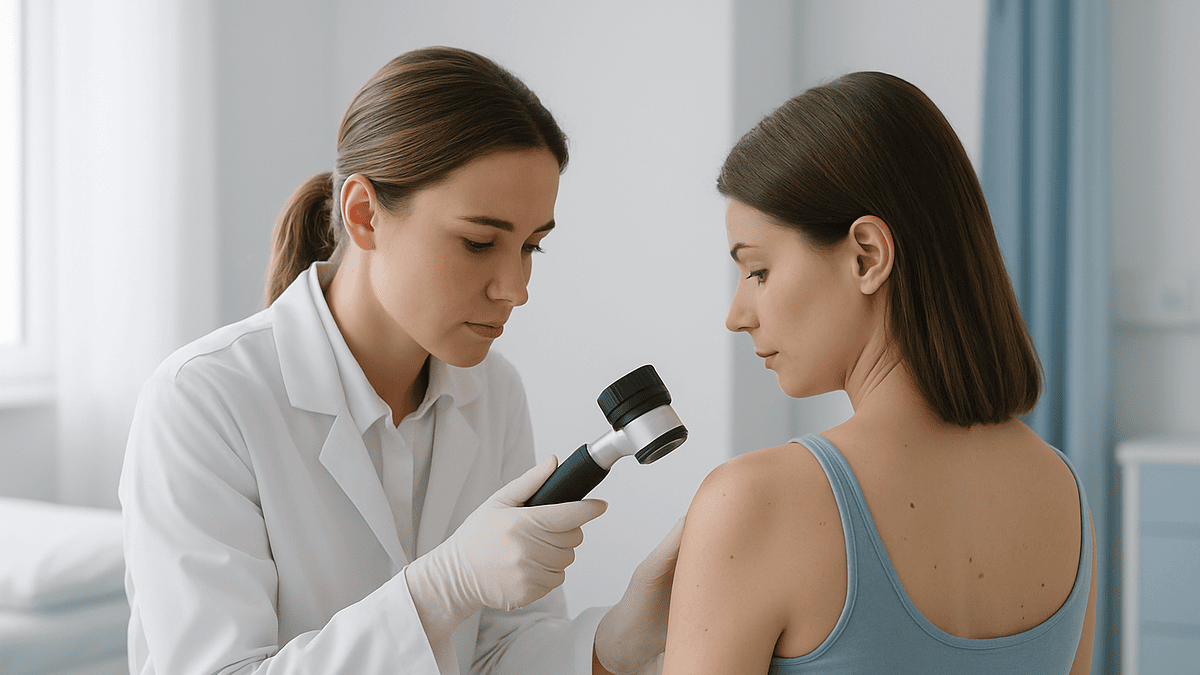
Microdermabrasion generally suits people with calm, intact skin and surface concerns such as dull texture, fine lines, mild sun damage or faint acne marks. It is usually not advised during active inflammatory acne, a rosacea flare, an open wound, infection or sunburn, and people with rosacea or very reactive skin are often steered toward gentler options. A clinician should assess your skin before any session.
The appointment card sits on the kitchen counter, next to a half-finished cup of coffee. A facial, booked weeks ago as a small treat, with a line at the bottom offering an add-on: microdermabrasion. Reading it, she touches her cheek, where the redness that comes and goes has decided to stay this week, and wonders whether the thing meant to make her skin look better might make it look worse.
That hesitation is the right instinct. Microdermabrasion candidates are not defined by age or skin type but by what the skin is doing on the day, and the same treatment that brightens one face can inflame another. Sensitivity, rosacea and active acne each change the answer in specific ways.
What follows is the conversation a dermatologist would have with you before switching the machine on: how the treatment works, who it suits, who is asked to wait, what recovery involves, and which questions are worth asking out loud.
What microdermabrasion actually does to your skin
Picture the outermost layer of your skin as a thin, dry shingle roof. That layer, the stratum corneum, is made of flattened dead cells that flake off on their own; microdermabrasion simply hurries the process. A handheld device either sprays fine crystals across the face and vacuums them back up, or glides a diamond-coated tip over the skin while gentle suction lifts away loosened cells. Either way, the depth is shallow. The device works within the epidermis, the skin’s living outer layer, and does not reach the dermis beneath, where collagen and blood vessels live.
That shallowness is the whole point, and it explains both the appeal and the limits. Because no living tissue is deliberately wounded, most people go straight back to their day; Cleveland Clinic describes a session lasting roughly 30 to 40 minutes with little or no recovery time. Compare that with dermabrasion, a surgical procedure in which a rotating instrument sands down into the dermis under anesthesia, which Mayo Clinic notes can leave skin raw for days and pink for months. The two share a name and almost nothing else.
What does the treatment change? Immediately, the surface feels smoother because the roughest cells are gone. Light reflects more evenly, so skin looks brighter for a few days. Fine surface lines soften slightly as the skin swells a little. Whether repeated sessions build meaningful new collagen is less settled; small studies have measured thickening of the epidermis and modest dermal changes, but the effect is subtle and temporary compared with deeper resurfacing. Think of microdermabrasion as skin polishing, not skin rebuilding. Once you hold that picture, the question of who makes a good candidate almost answers itself.
Who are the best microdermabrasion candidates?
The people who tend to do well share a profile: their skin is intact, calm and healthy, and their concern lives on the surface. Cleveland Clinic lists the classic reasons people seek the treatment: dull or uneven texture, fine lines, mild sun damage, age spots and light patches of discoloration, enlarged-looking pores, and shallow marks left by past acne. These are epidermal problems, and a treatment that works in the epidermis has a fair chance of helping with them.

Good microdermabrasion candidates also tend to have realistic goals. If the aim is a fresher look before an event or a smoother base for skincare and makeup, the treatment is well matched. If the aim is erasing deep wrinkles or pitted scars, it is mismatched from the start, and no number of sessions changes that.
Skin behavior matters as much as skin complaints. Someone whose skin recovers quickly from minor irritation, who does not flush for hours after a hot shower, and who has no history of dark or pale marks after cuts and pimples is a more comfortable fit than someone whose skin reacts to everything. A clinician will usually ask about all of this before the device is ever switched on.
Age is not a gatekeeper in itself. Adults across a wide range receive the treatment, though older skin that is very thin or fragile may be approached more gently. Nor is skin type a barrier by default; oily, dry and combination skin can all be suitable, provided there is no active flare of any condition. The honest summary is that candidacy is less about who you are and more about what your skin is doing on the day, which is why the next question, who should hold off, deserves equal attention.
Who should avoid microdermabrasion, and who is usually asked to wait
Two groups sit on the far side of the line. The first should generally avoid the treatment altogether while a condition is present; the second is simply asked to wait until the skin has settled or a medicine has cleared.
Anyone with a break in the skin barrier falls in the first group. That includes open wounds, a fresh sunburn, an active cold sore, impetigo or any other skin infection, and a flaring rash such as eczema or psoriasis on the face. Passing an abrasive over infected or inflamed skin risks spreading the problem, deepening it, or delaying healing. The same caution applies to warts and to any new or changing mole or spot that has not been examined; undiagnosed lesions should be seen by a clinician, not exfoliated.
The waiting group is larger. People in the middle of an inflammatory acne breakout, with red bumps and pus-filled spots, are typically asked to come back once the acne is calmer. People with rosacea are asked to wait until a flare has passed, and many are steered to gentler options entirely. Those who have recently taken oral isotretinoin, a prescription retinoid used for severe acne that thins skin and slows healing, are routinely asked to wait; Mayo Clinic advises against resurfacing procedures within a year of the medicine, and many clinicians apply a similar period of caution to microdermabrasion. Recent radiation to the face, a recent laser or chemical peel, a tendency to form thick raised keloid scars, and conditions that impair healing are further reasons to pause or decline.
None of this is a permanent verdict. Skin changes, treatments end, flares settle. The right time is a judgment the treating clinician makes with you, ideally after looking at your skin in person rather than at a booking form.
Can sensitive skin handle microdermabrasion?
‘Sensitive’ is a word people use for very different skins. Some mean skin that stings with certain products but looks normal. Others mean skin that turns blotchy in wind, itches under wool and burns with mild cleansers. The first group often tolerates a light, low-suction session; the second needs a careful conversation first.
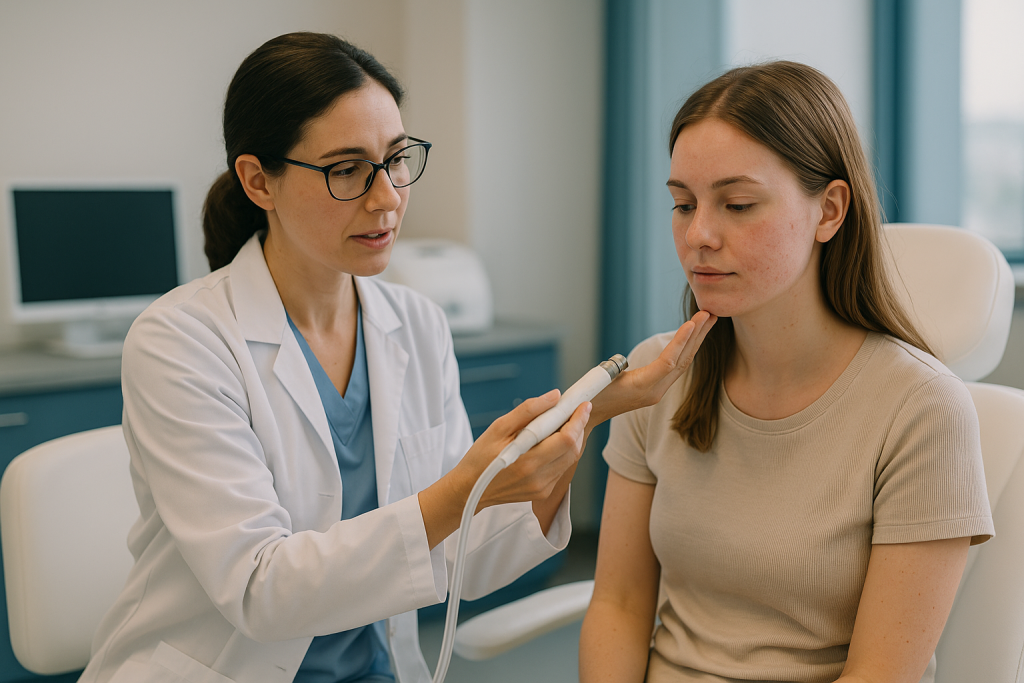
Sensitivity usually reflects a less effective skin barrier, the mix of lipids and cells in the stratum corneum that holds water in and irritants out. Microdermabrasion thins that barrier for a short time by design. For resilient skin, the trade is fine: the barrier rebuilds within days. For already weakened skin, the same trade can mean prolonged redness, stinging, tightness and a flare of whatever tends to flare.
Several practical adjustments lower the risk. Clinicians can reduce suction and crystal flow, use fewer passes, avoid the thinnest areas around the eyes and nostrils, and skip the treatment altogether when the skin is already irritated. A small test patch on the jawline or behind the ear before a full-face session gives a preview of how the skin responds. Pausing exfoliating acids and scrubs in the days before treatment, on your clinician’s advice, also helps, since stacking exfoliants is a common way to turn sensitive skin into inflamed skin.
Just as useful is recognizing when sensitivity is really an undiagnosed condition. Persistent facial redness with visible vessels may be rosacea. Itchy, flaking patches may be seborrheic dermatitis or eczema. Contact reactions to skincare can mimic all of these. If your skin has been reactive for months, a diagnosis matters more than a facial, because each of those conditions changes what is safe to do next.
Microdermabrasion for rosacea: why most clinicians say wait or choose something gentler
Rosacea is a long-term inflammatory condition that causes flushing, persistent redness across the cheeks, nose, chin and forehead, visible small blood vessels and, in some people, acne-like bumps. The NHS notes that common triggers include heat, sunlight, wind, alcohol, spicy food, stress and certain skincare, and that the skin of people with rosacea is often easily irritated. Nearly everything on that list has something in common with what happens during a microdermabrasion session: mechanical friction, suction pulling on dilated vessels, and a temporary loss of barrier.
That is why rosacea sits so consistently on the caution lists. Abrasion does not shrink the enlarged vessels that cause the redness; it works in the layer above them. What it can do is trigger the vascular reaction that people with rosacea spend their lives trying to avoid. A flare after treatment may last far longer than the day or two of pinkness a person with resilient skin would expect.
This does not mean every person with a rosacea diagnosis is excluded forever. Someone whose rosacea is mild, well controlled on treatment and free of bumps may be judged suitable for a very light session, avoiding the most reactive areas. That decision belongs to a dermatologist or the clinician managing the rosacea, not to a booking desk, and it should follow an honest discussion about what the treatment can realistically offer.
For redness and visible vessels, other approaches have a stronger evidence base. Mayo Clinic describes prescription creams and gels that constrict vessels or reduce inflammation, oral medicines for the bumps, and light or laser-based treatments aimed directly at the vessels. Consistent sun protection and gentle, fragrance-free skincare remain the foundation. A person with rosacea who wants smoother texture is often better served by asking about these options than by pressing for a facial that works against the grain of the condition.
Active acne: why timing matters more than technique
Acne comes in stages, and they do not all respond the same way to exfoliation. Comedones, the small blackheads and whiteheads formed when a pore is blocked with oil and dead cells, are surface problems. Inflamed pimples, pustules (pus-filled spots) and deeper nodules involve bacteria, swelling and sometimes rupture of the follicle wall beneath the skin. Microdermabrasion may help loosen the first kind and is a poor idea for the second.
The reasoning is straightforward. Suction and abrasion over an inflamed, pus-filled spot can burst it, pushing contents sideways into surrounding tissue, spreading bacteria across the treated area and raising the odds of a mark or scar. Inflamed skin is also more prone to post-inflammatory hyperpigmentation, the dark stain that lingers after a spot heals, and to prolonged redness. Most clinicians therefore ask people with active inflammatory acne to wait until the breakout is under control.
Getting acne under control is a medical task, not a cosmetic one. The NHS describes a stepwise approach: over-the-counter washes and gels for mild acne, prescription topical retinoids or antibiotics for moderate acne, combination treatments, and oral options, including isotretinoin for severe cases, under specialist care. Improvement is slow; the NHS notes that many acne treatments take several weeks before any change is visible. Whether and when a facial fits around that plan is a question for the prescribing clinician, partly because some acne medicines make skin more fragile.
Once acne is quiet, microdermabrasion’s role is modest and specific: smoothing rough texture, helping with surface congestion and faint marks. It will not stop new spots forming, because it does nothing to the hormonal and bacterial drivers of acne. People who understand that going in are far less likely to feel let down coming out.
Microdermabrasion for acne scars: what it can reach and what it cannot
Acne leaves several kinds of marks, and the word ‘scar’ is used loosely for all of them. Sorting them is the single most useful thing a person can do before booking.
Flat discoloration is not a true scar. Red or brown marks left after spots heal are pigment or lingering blood-vessel changes in the epidermis and upper dermis, and they fade on their own over months. Microdermabrasion can speed the fading of superficial brown marks by turning over pigmented cells faster, though results are gradual and vary between people.
Shallow, soft, rolling depressions with gentle edges sit at the border. Some smoothing is possible over a series of sessions, mainly because the surrounding skin becomes smoother and the light catches the edges less sharply. The depression itself is not filled.
Deep marks are out of reach. Ice-pick scars (narrow, deep pits), boxcar scars (wider depressions with sharp walls) and raised hypertrophic or keloid scars all involve the dermis. A treatment that works in the epidermis cannot remodel them. Mayo Clinic notes that deeper acne scarring is more often addressed with surgical dermabrasion, laser resurfacing, chemical peels of medium or deep strength, microneedling, fillers or minor surgical procedures, each with its own recovery and risk profile.
Two cautions attach to scar treatment. First, active acne must be controlled before any scar work; treating scars while new ones form is a losing race. Second, people who scar heavily or form keloids need specialist assessment before any resurfacing, however light, because trauma can occasionally provoke the very scars the treatment aims to improve. A dermatologist can map which scars you have and which tools match them; a facial menu cannot.
Darker skin tones and the risk of pigment change
Melanin, the pigment that gives skin its color, is produced by cells in the lower epidermis that react to injury and inflammation. In deeply pigmented skin those cells respond more vigorously, which is why a healed scratch or spot can leave a dark patch for months. Any procedure that irritates the skin carries this risk, and cosmetic resurfacing is no exception.
Microdermabrasion is generally considered one of the safer resurfacing options for darker skin precisely because it is so superficial. Cleveland Clinic lists it as suitable across skin tones, in contrast with deeper treatments; Mayo Clinic cautions that surgical dermabrasion may cause lasting pigment changes in people with darker skin. The gap between the two procedures is large, but ‘generally safer’ is not ‘risk-free’. Aggressive settings, repeated passes, or treatment over inflamed skin can still provoke post-inflammatory hyperpigmentation, and less commonly a loss of pigment leaving pale patches.
Sensible precautions follow. Conservative settings at the first session, a test area, and strict avoidance of treatment during any breakout or irritation all lower the odds. Rigorous daily sun protection afterward is not optional; ultraviolet light drives the pigment cells that have just been disturbed. People with a personal history of dark marks after minor injuries, or with melasma, a patchy brown discoloration often linked to hormones and sun, should raise this specifically, since melasma can darken after some treatments.
A related point is often skipped. Skin tone is a poor proxy for how skin behaves, and a clinician who assesses your history of healing and pigment change learns more than one who assigns a category from across the room. Ask how the practitioner adjusts technique for your skin, and be wary of anyone who says there is nothing to adjust.
Medicines and skin treatments that change your candidacy
A surprising share of candidacy questions are really medication questions, and the answer usually comes from the person who prescribed the medicine rather than the person operating the device.
Topical retinoids, vitamin A derivatives used for acne and photoaging, speed up skin cell turnover and make the surface more fragile. Many clinicians prefer that they be paused for a period before and after microdermabrasion to reduce irritation. Whether that applies to you, and for how long, is a decision for the prescribing clinician; do not stop a prescribed treatment on your own.
Oral isotretinoin is a stronger version of the same principle. It reduces oil production and thins the skin for months, and for decades the standard advice was to avoid resurfacing for many months after finishing a course. Mayo Clinic’s guidance on dermabrasion reflects this, advising caution within a year. More recent expert reviews suggest superficial procedures may be safer sooner than once thought, but practice varies, and the conservative approach still prevails in many settings. Tell the practitioner if you have taken it at any point.
Other medicines matter less but deserve a mention. Long-term topical steroid use on the face thins skin. Some antibiotics and acne treatments increase sun sensitivity, which compounds the sun sensitivity that follows exfoliation. Blood-thinning medicines rarely cause problems with such a shallow treatment, but suction can bruise more easily.
Recent procedures count too. A chemical peel, laser session, waxing, threading or injectable treatment in the preceding days changes what the skin can tolerate. Bring a full list of what you use on your skin and what you take by mouth, including supplements, and let the clinician judge the timing.
Microdermabrasion candidates at a glance: a summary table
Candidacy questions tend to arrive one at a time, in the mirror at odd hours. Laid side by side, a pattern emerges: the treatment suits calm skin with surface concerns, and is paused or set aside whenever the skin is inflamed, broken, fragile from medicines, or carrying problems that live deeper than the epidermis. The table below summarizes the positions most clinicians take. It is a map, not a verdict; the person examining your skin decides where you fall.
| Skin situation | Usual position | What typically happens instead or first |
|---|---|---|
| Dull texture, fine lines, mild sun damage on healthy skin | Usually suitable | A series of light sessions with daily sun protection |
| Blackheads and whiteheads without inflammation | Often suitable | Alongside a medical acne plan from a clinician |
| Active inflamed acne with pustules or nodules | Usually asked to wait | Acne treated medically until calm |
| Rosacea that is flaring or has bumps | Usually not suitable | Rosacea-specific treatments and trigger management |
| Rosacea that is mild and well controlled | Individual decision | Very light session, or gentler alternatives |
| Highly reactive sensitive skin | Individual decision | Test patch, reduced settings, fewer passes |
| Deep pitted or raised acne scars | Not the right tool | Referral for deeper resurfacing or procedures |
| Oral isotretinoin taken recently | Usually asked to wait | Timing set by the prescribing clinician |
| Open wound, cold sore, infection or sunburn | Avoid until healed | Treat the problem, then reassess |
| Darker skin tone, otherwise healthy | Usually suitable with care | Conservative settings and strict sun protection |
Two things the table cannot capture. Skin changes week to week, so a ‘wait’ today may be a ‘suitable’ in a couple of months once acne has settled or a medicine has cleared. And ‘individual decision’ is not a polite way of saying no; it means the answer depends on an examination, a test patch and an honest talk about goals. If your situation sits in one of those rows, that conversation is the next step.
Microdermabrasion side effects and what the following days and weeks look like
Immediately after a session the face is usually pink, as if lightly windburned, and feels tight or slightly tender. Cleveland Clinic describes redness and mild swelling that typically settles within hours to a day, with some people noticing dryness or light flaking over the following days as the newly exposed cells adjust. Makeup can often go on the same or next day, although many practitioners suggest waiting until any tenderness has passed.
The first week is about protection. Freshly exfoliated skin burns more easily, so broad-spectrum sunscreen, a hat and shade are the daily routine, not a suggestion. Gentle cleansers and a bland moisturizer help the barrier recover. Exfoliating acids, scrubs, retinoids and fragranced products are usually held back until the skin feels normal, on your clinician’s advice where a prescription is involved. Heat can prolong redness, so hot showers, saunas and hard workouts are commonly deferred for a day or two.
Results follow a predictable arc. The brightness is most visible in the first days, then fades as the skin renews itself. This is why the treatment is typically offered as a series; Cleveland Clinic describes several sessions spaced weeks apart, with maintenance sessions afterward for those who want to sustain the effect. How many sessions, and how far apart, depends on the skin and the goal, and no reputable practitioner can promise a fixed result.
Side effects are usually mild and short-lived: redness, dryness, tightness, tiny pinpoint bleeding spots in fragile areas, occasional bruising from suction, and temporary sensitivity to sun. Less common problems include prolonged redness, a flare of acne or rosacea, cold sore reactivation in people prone to them, and pigment change, particularly if the skin was inflamed or the settings aggressive. Eye irritation from stray crystals is a known hazard with crystal systems, which is why protective eyewear is standard.
What people often get wrong about microdermabrasion
The first misunderstanding is about depth. People assume that if a light session helps a little, a harder one will help a lot, and they ask for more suction or more passes. In practice, pushing a superficial treatment deeper mostly adds redness, pinpoint bleeding and pigment risk without reaching the dermal problems they hoped to fix. Depth is the job of other procedures.
The second is the confusion of names. Microdermabrasion and dermabrasion sound like siblings; they are distant cousins. Mayo Clinic describes dermabrasion as a surgical procedure requiring anesthesia and weeks of healing. Anyone who reads about dermabrasion recovery and expects the same from a lunchtime facial, or the reverse, will be startled.
Third, redness. Because the skin looks brighter afterward, people with rosacea sometimes hope repeated sessions will calm the flushing. The mechanism runs the other way: abrasion and suction irritate the vessels responsible, and the redness is more likely to worsen than fade.
Fourth, acne. Microdermabrasion does not stop spots forming. It can help clear surface congestion once acne is controlled, but the hormonal and bacterial engine underneath keeps running. Managing that engine is medical work, described in guidance such as the NHS acne treatment pathway.
Fifth, pores. Pores look smaller when debris is removed and the surrounding skin is smooth; their actual size is set by genetics and oil-gland activity and does not shrink permanently.
Sixth, home devices. Consumer kits use far less suction and gentler abrasives than clinical machines, which makes them safer but also weaker. They are not equivalent, and using one aggressively to compensate is a reliable way to irritate skin.
Last, the fear that stopping makes skin worse. It does not. Skin simply returns to its usual renewal rhythm, and the extra polish fades. Nothing is lost except the temporary glow.
Questions to ask your care team before you book
A good consultation feels like a conversation about your skin rather than a walkthrough of a menu. Arrive with questions and notice how they are answered.
Start with assessment. Ask who will examine your skin before treatment, and whether that person has clinical training in dermatology or works under the supervision of someone who does. Ask what they see when they look at your skin, and which of your concerns the treatment is actually likely to reach. A candid practitioner will tell you which are out of scope.
Move to your history. Tell them about any diagnosis of rosacea, eczema, psoriasis or acne, any tendency to cold sores, any history of dark or pale marks after injury, and every medicine and skincare product you use. Then ask directly: given all that, is this the right treatment for me, or is there something better matched?
Ask about technique. Which system is used, crystal or diamond tip? How are settings adjusted for sensitive or darker skin? Will a test patch be done? What areas will be avoided? How is the device cleaned between clients, and are single-use tips or crystals used?
Ask about the plan. How many sessions do they anticipate, how far apart, and what would make them recommend stopping? What aftercare do they provide in writing? Who do you contact if something goes wrong, and how quickly will they respond?
Finally, ask what they would do if your skin reacted badly. The answer reveals more than any brochure. A practitioner who talks readily about complications, referral pathways and when to involve a doctor is demonstrating the kind of caution you want in the room. One who dismisses the question has already answered it.
When to call your doctor
Most people finish a session with pink, tight skin that settles within a day or two, and nothing more needs doing than sunscreen and patience. A small number develop problems that need medical attention, and knowing the signs in advance takes the guesswork out of an anxious evening.
Contact a doctor promptly if redness spreads beyond the treated area or becomes more intense after the first day rather than less; if pain increases instead of fading; if you notice pus, yellow crusting, weeping or blisters; or if you develop a fever or feel unwell. These can indicate a skin infection, which is more likely if the treatment was performed over broken skin or with poorly cleaned equipment.
Seek same-day advice if a cluster of painful blisters appears around the mouth or nose, especially if you are prone to cold sores; herpes reactivation after resurfacing can spread across freshly exfoliated skin and needs early treatment. Any eye pain, gritty sensation, redness or change in vision after a crystal-based session should be assessed the same day, since stray particles can scratch the cornea.
Seek emergency care if you develop swelling of the lips, tongue or throat, wheezing or difficulty breathing, or widespread hives; although rare, allergic reactions to products applied during treatment can be serious.
Book a routine appointment if redness has not settled after about a week, if new dark or pale patches appear where the skin was treated, if acne or rosacea flares markedly, or if a spot or mole that was treated looks different than before. Daily photographs help a clinician judge the trajectory.
Whatever the concern, the practitioner who performed the treatment and your own doctor should both know. The decision about further sessions, or about switching to a different approach altogether, rests with them, informed by how your skin has actually behaved.
Frequently asked questions
Who are the best candidates for microdermabrasion?
The best candidates have calm, intact skin and concerns that live on the surface: dull or uneven texture, fine lines, mild sun damage, light discoloration or faint marks from past acne. Cleveland Clinic lists these as the typical reasons for treatment. Realistic goals matter as much as skin type, and a clinician should examine your skin and history before agreeing that the treatment is a good match.
Who should avoid microdermabrasion?
People with open wounds, an active cold sore, a skin infection, sunburn, or a flaring rash such as eczema or psoriasis on the face should avoid it until healed. Those with active inflammatory acne, a rosacea flare, recent oral isotretinoin, recent laser or peel treatment, or a tendency to keloid scars are usually asked to wait or choose something else. Any unexamined changing mole should be seen by a doctor first.
Do dermatologists recommend microdermabrasion?
Dermatologists generally regard microdermabrasion as a low-risk option for mild, surface-level concerns in healthy skin, not as a treatment for medical conditions. Cleveland Clinic and Mayo Clinic describe it as useful for texture, fine lines and light discoloration, with limited effect on deeper problems. Whether one would recommend it for you depends on an examination, your history and your goals, so ask the clinician managing your skin rather than assuming.
How much does microdermabrasion usually cost?
Cost varies widely with location, practitioner qualifications, the equipment used and whether sessions are booked singly or as a course, and this magazine does not publish price figures. Ask any provider for a written quote that lists what is included, how many sessions they anticipate and what aftercare is provided. Be cautious of anyone selling a large package before examining your skin, since candidacy should be decided first.
Is microdermabrasion for rosacea ever a good idea?
Rarely, and only with a clinician’s agreement. Rosacea skin is easily irritated by heat, friction and suction, and abrasion does not treat the enlarged vessels that cause redness. Someone with mild, well-controlled rosacea and no bumps may be judged suitable for a very light session, but many are steered toward prescription creams, oral medicines or vessel-targeted light treatments, which Mayo Clinic describes as the usual approaches.
Does microdermabrasion for acne scars actually work?
It depends entirely on the type of mark. Flat brown discoloration left after spots can fade faster with a series of sessions, and shallow rolling depressions may look smoother as the surrounding skin evens out. Deep ice-pick, boxcar or raised scars involve the dermis and are out of reach; Mayo Clinic notes these are usually addressed with deeper resurfacing or minor procedures. A dermatologist can map which scars you have.
What are the most common microdermabrasion side effects?
Redness, tightness, dryness and mild swelling are the most common, and Cleveland Clinic describes them settling within hours to a day. Some people notice light flaking, pinpoint bleeding in fragile areas, bruising from suction, or increased sun sensitivity for a few days. Less common effects include prolonged redness, acne or rosacea flares, cold sore reactivation and pigment change, particularly if skin was inflamed or settings were aggressive.
Can I have microdermabrasion with active acne?
Most clinicians ask people with inflamed, pus-filled spots to wait until the breakout is under control. Suction and abrasion can burst pimples, spread bacteria and increase the chance of dark marks or scarring. Blackheads and whiteheads without inflammation are a different matter and may be treated alongside a medical acne plan. Getting acne calm is a job for your prescribing clinician, following stepwise guidance such as the NHS pathway.
How soon after isotretinoin can I have microdermabrasion?
Many clinicians follow a conservative approach and ask people to wait after finishing oral isotretinoin; Mayo Clinic advises against resurfacing procedures within a year of the medicine. Some newer expert reviews suggest superficial treatments may be safe sooner, but practice varies. The timing decision belongs to the clinician who prescribed the medicine, who knows your skin, your treatment history and how your healing has been.
Are at-home microdermabrasion devices as effective as professional treatment?
No. Consumer devices use much weaker suction and gentler abrasives than clinical machines, which makes them safer for unsupervised use but also less powerful. They are not equivalent, and using one aggressively or too often to compensate is a common route to irritation, especially for sensitive or rosacea-prone skin. If you have any skin condition, ask a clinician before using one at all.
References
This article is for general information only and is not a substitute for professional medical advice. Please consult a qualified doctor about your individual situation.

More from the Blog

Plexr Recovery Day by Day: The Grid of Crusts, Swelling and When Makeup Can Return
Plexr recovery usually follows a predictable arc: a grid of tiny brown carbon crusts forms within hours, swelling peaks around the second or third…

How to Choose Among Non-Surgical Cosmetic Procedures: Matching Concern to Treatment
Choosing among non-surgical cosmetic procedures starts with naming the specific concern rather than the treatment. Lines that appear with expression usually point toward botulinum…

Preparing for Cryoablation: Fasting, Blood Thinner Adjustments and the Anesthesia Review
Preparing for cryoablation usually involves three steps set by your treating team: fasting for a defined window before sedation or anesthesia, a planned review…

Laser, Injections or Minor Surgery for Scars: Comparing the Main Treatment Routes
No single scar treatment suits every scar. Lasers reshape scar texture, color and surface by delivering controlled heat or light; corticosteroid injections soften and…

After a Suture Suspension Lift: Why Chewing, Massage and Face-Down Sleep Are Limited
After a suture suspension (thread) lift, chewing hard foods, facial massage and face-down sleep are usually limited for roughly the first one to two…

Reconstruction After Burns: How Contractures Form and Why Repairs Are Often Staged
Reconstructive surgery after burns is a planned series of operations that release tight scar tissue (contractures), replace it with grafted or moved skin, and…