

Is PRP for Hair Loss Suited to Diffuse Thinning? Who Tends to Respond and Who Needs More
Key Takeaways
- Diffuse thinning is a description, not a diagnosis; pattern hair loss, telogen effluvium, iron deficiency and thyroid disease all produce it and only one of them is what PRP is designed to address.
- PRP works, if it works, by delivering platelet growth factors to miniaturized but still-living follicles; it cannot create new follicles or revive ones that have permanently stopped cycling.
- Published trials of PRP for pattern hair loss are small and use different preparation systems and schedules, so mainstream sources grade the evidence low to moderate rather than established.
- People who tend to respond have early pattern loss with visible miniaturization on scalp examination; those with scarring alopecia, an undiagnosed cause or advanced smooth baldness are usually asked to wait or redirected.
- Telogen effluvium typically starts two to three months after a trigger and often resolves within six to nine months on its own, so PRP given during that window may take credit for recovery that was already coming.
- Because each scalp hair spends roughly two to six years in its growth phase, any hair treatment, PRP included, is realistically judged at three to six months or later with standardized photographs, not by daily mirror checks.
PRP for diffuse hair thinning can be a reasonable option when the thinning is early pattern hair loss with living, miniaturized follicles still present. It is not a fit for every cause: shedding from illness, iron deficiency, thyroid disease or scarring conditions needs a different plan. Evidence comes from small trials with mixed protocols, so results vary, and a dermatologist should confirm the diagnosis before any injections begin.
The part in her hair had been widening for about two years before Maya said anything out loud. There was no bald spot to point at, no receding corner, just a scalp that showed through a little more under the bathroom light each spring. Her ponytail felt thinner between her fingers. A friend mentioned platelet injections, a cousin swore by a shampoo, and an online forum had an opinion for every hour of the day.
That gradual, all-over kind of loss is the situation where people most often ask whether PRP for diffuse hair thinning makes sense. It is also the situation where the honest answer is the most nuanced, because “diffuse” is a description, not a diagnosis, and the cause underneath decides almost everything.
This explainer walks through what platelet-rich plasma actually does in the scalp, who tends to see a response in the published studies, who is usually told to sort out something else first, and what the weeks after a session realistically look like.
Why diffuse thinning is a different question from a receding hairline
A receding hairline or a widening crown announces itself. Diffuse thinning whispers. Hair density drops across a broad area, often the top of the scalp, while the frontal hairline stays more or less where it was. Women describe a wider parting or a ponytail that needs one more twist of the elastic. Men notice the scalp showing through under overhead light before anyone else does.
The trouble is that several very different processes produce that same picture. Androgenetic alopecia, the inherited pattern hair loss that affects both sexes, thins hair gradually as follicles shrink over years. Telogen effluvium, a temporary shedding phase triggered by illness, surgery, childbirth, stress or a medicine change, also looks diffuse but behaves completely differently and often resolves on its own within months, according to Cleveland Clinic. Iron deficiency, thyroid disorders and some autoimmune conditions can thin hair all over too. Mayo Clinic lists heredity, hormonal shifts, medical conditions, medications and stressful events among the main causes of hair loss, and notes that most people shed 50 to 100 hairs a day without it being noticeable (Mayo Clinic).
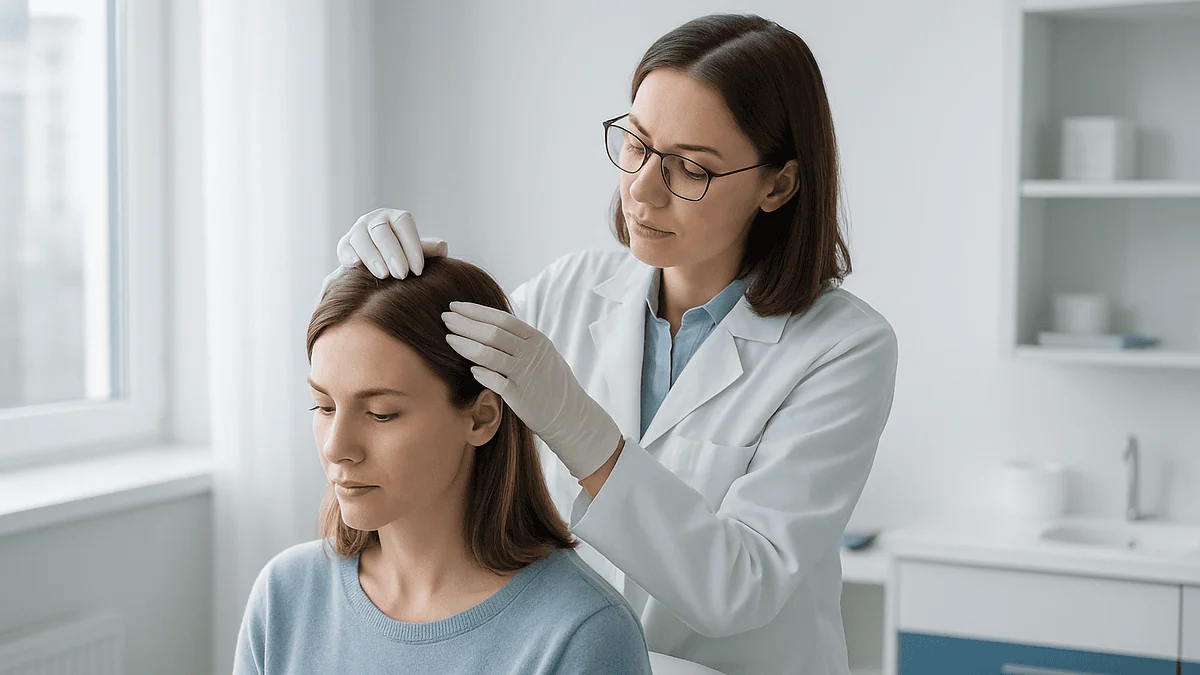
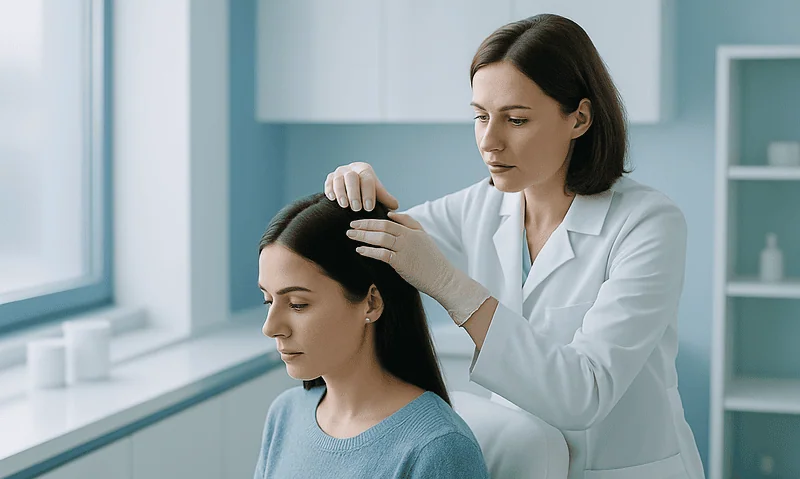
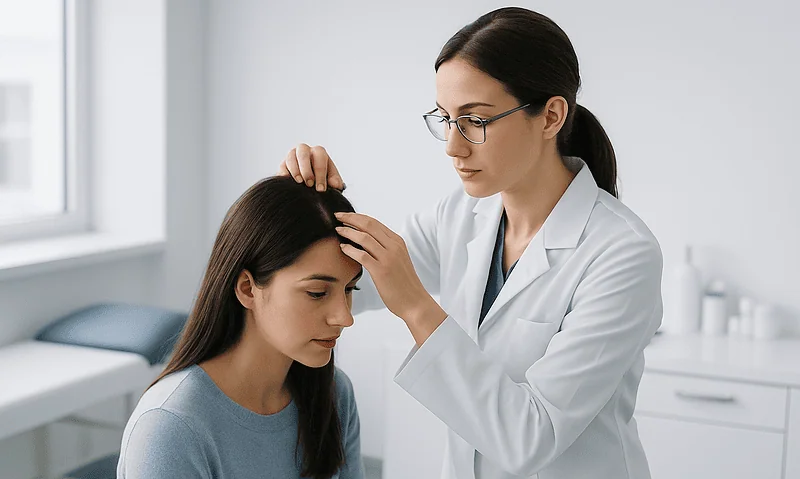
Why does this matter for a treatment discussion? Because platelet-rich plasma is designed to coax weakened but living follicles into producing thicker hair. It does nothing for a follicle that is simply resting and about to restart on its own, and it cannot correct a missing nutrient or an overactive immune response. The single most useful thing anyone with diffuse thinning can do before booking an injection is to find out which of these processes is actually happening. A trained clinician can often distinguish them with a history, a scalp examination under magnification and, when indicated, blood tests or a small scalp biopsy.
How PRP for hair loss actually works, step by step
Platelet-rich plasma is a portion of your own blood that has been concentrated so it holds more platelets than usual. Platelets are the tiny cell fragments that clot a cut, and they carry growth factors, signaling proteins that tell nearby cells to repair, grow blood vessels and divide. The idea behind PRP for hair is that delivering a concentrated dose of these signals to the skin around miniaturized follicles may prolong the growth phase and thicken the hair shaft, as Cleveland Clinic describes.
In practice, a session has three parts. A small amount of blood is drawn from your arm, much like a routine lab test. The tube is spun in a centrifuge, which separates red cells from the platelet-rich layer. That layer is drawn into a syringe and injected in small amounts across the thinning area of the scalp, usually after a numbing cream or a cooling device has taken some of the sting out. Most sessions take under an hour from arrival to leaving.
What happens afterward is slower and less visible. The follicles that respond do so over a hair cycle, and each scalp hair spends roughly two to six years in its growth phase before resting and falling out (MedlinePlus). Any thickening therefore emerges over months, not days, and it appears as gradually improved density rather than sudden new growth.
Two things PRP does not do deserve equal billing. It does not create new follicles where none exist, so a smooth, long-bald area will not sprout hair. And because it uses your own blood without added medicine, it carries no drug effect on hormones; whatever it achieves comes from local signaling in the skin. Understanding both limits sets expectations at the right height before the first needle.
Does PRP work for thinning hair? What the evidence honestly shows
The most accurate short answer is: probably, for some people, modestly, and the studies are not as strong as the marketing. That sentence is worth unpacking rather than rounding off in either direction.
Published trials of PRP in androgenetic alopecia are mostly small, often involving a few dozen participants, and many use a split-scalp design in which one half of the head is injected and the other half receives saline. Several of these trials have measured higher hair counts and thicker shafts on the treated side after a few months. Those are real, measurable signals. The problem is what sits around them: different preparation systems, different platelet concentrations, different session spacing and different ways of measuring success, which makes pooling the results difficult and leaves the overall quality of evidence low to moderate.
Mayo Clinic mentions platelet-rich plasma among approaches used for hair loss while emphasizing that established options include topical and oral medicines and, for suitable candidates, surgical transplantation (Mayo Clinic). The NHS notes that most hair loss treatments are not available through public funding and that evidence for many is limited (NHS). Neither source describes PRP as a first-line, proven therapy.
So where does that leave someone deciding? Think of PRP as an adjunct with a plausible mechanism and encouraging but inconsistent data, not as a standalone answer. People who do best in studies tend to have early, non-scarring pattern loss and are often using it alongside an established medicine. Anyone quoting a precise success percentage is either citing one small study or inventing a number. A trustworthy clinician will tell you the evidence is promising and incomplete in the same breath.
PRP for diffuse hair thinning: who tends to respond
Response patterns in the published literature and in clinical experience point in a fairly consistent direction, even if no one can predict an individual outcome.
The clearest common thread is the presence of miniaturized follicles. Miniaturization is the process in pattern hair loss where a follicle shrinks over successive cycles and produces progressively finer, shorter, paler hairs before eventually stopping. Under a dermatoscope, a handheld magnifier used for skin and scalp examination, a clinician can see a mix of thick terminal hairs and fine vellus-like hairs in the same area. That mix is the signature of a scalp that still has something to work with. PRP aims to push those shrinking follicles back toward producing fuller hair, so the more of them present, the more room for improvement.
Timing matters as much as anatomy. People in the early stages of pattern thinning, when the scalp shows through but coverage is still substantial, tend to report more visible change than those with long-standing, advanced loss. In the latter group many follicles have already gone quiet permanently and no growth signal will restart them.
A few other patterns recur. Younger and midlife adults with otherwise healthy scalps, no active inflammation and no scarring tend to be the participants in trials that report positive results. Those already using a topical or oral medicine for pattern loss often continue it, and the combination is what studies frequently measure rather than PRP alone. People with realistic goals, wanting thicker coverage rather than a return to teenage density, describe the process more favorably, which is a matter of expectation rather than biology but shapes the experience just as much.
None of this constitutes a guarantee. It is a description of who tends to be in the responding group when researchers look back.
Who is usually asked to wait, and why the diagnosis comes first
Being asked to hold off on PRP is not a brush-off. It usually means the clinician has spotted a reason the injections would be wasted, unsafe or premature.
The first group is anyone whose diffuse thinning has not been diagnosed. If no one has examined the scalp and considered blood tests for iron stores, thyroid function and, where relevant, hormone levels, treating the symptom before the cause is backwards. Cleveland Clinic notes that telogen effluvium typically begins two to three months after a trigger and often resolves within six to nine months once the trigger is addressed (Cleveland Clinic). A person mid-shed from a recent illness may recover fully with time alone, and any PRP given during that window would be credited for growth that was coming anyway.
The second group has scarring alopecia. In conditions such as lichen planopilaris or frontal fibrosing alopecia, inflammation destroys the follicle and replaces it with scar tissue. Injecting growth factors into a scar cannot rebuild the structure, and delaying anti-inflammatory treatment while trying PRP risks further permanent loss.
Medical circumstances form a third group. Low platelet counts, blood-clotting disorders, active scalp infection, uncontrolled diabetes, certain cancers and blood-thinning medicines all change the risk picture. Because PRP depends on a person’s own platelets, conditions or medicines that affect platelet function can blunt whatever benefit it might offer. Pregnancy and breastfeeding usually mean waiting simply because safety data are lacking.
Finally, people with advanced pattern loss and smooth, shiny scalp over wide areas are often steered toward other conversations, including whether a surgical transplant is realistic, because the raw material PRP needs is no longer there. In every case the decision sits with the treating team, who can weigh these factors against what they see on the scalp.
Telogen effluvium versus pattern thinning: why the cause changes the answer
These two conditions are the most common reasons a scalp looks uniformly thinner, and mixing them up is the most frequent error in the PRP conversation.
Telogen effluvium is a shedding disorder. Something shocks the body, whether a high fever, an operation, childbirth, rapid weight loss, a bereavement or starting or stopping certain medicines, and a larger-than-usual share of follicles shift into the resting phase at once. Weeks later those hairs fall out together. Handfuls in the shower, a clogged drain and hair on every pillow are the classic complaints. The scalp itself is healthy, the follicles are intact, and as the cause settles the hairs regrow over the following months. Cleveland Clinic describes this as generally temporary and reversible (Cleveland Clinic).
Pattern hair loss is a miniaturization disorder. Shedding may be no heavier than normal, but each new hair grows back finer than the one before. The parting widens, the crown thins, and in women the frontal hairline usually holds. It is progressive without treatment and driven by genetics and androgen sensitivity, as Mayo Clinic outlines (Mayo Clinic).
Here is the practical consequence. PRP is being studied as a treatment for pattern loss, where follicles need a sustained push toward thicker growth. It is not a treatment for telogen effluvium, where the follicles need time and the removal of the trigger. Complicating matters, the two frequently coexist: a stressful year can unmask pattern thinning that was quietly progressing underneath. Only a careful history, a look at the scalp under magnification and sometimes a gentle hair-pull test can separate them. Skipping that step is how people end up paying for injections that could never have addressed what was actually going on.
Can diffuse thinning be reversed? What "reversed" realistically means
People searching this question usually want a yes or no. The truthful answer is “it depends on the cause, and on what you mean by reversed.”
When diffuse thinning comes from telogen effluvium, iron deficiency or an untreated thyroid problem, density frequently returns once the underlying issue is corrected. Cleveland Clinic and Mayo Clinic both describe this kind of hair loss as commonly temporary. Recovery still follows the biology of the hair cycle, so a visibly fuller head of hair typically takes many months to appear even after the cause is fixed, and short new hairs along the hairline are often the first encouraging sign.
When the thinning is pattern hair loss, “reversed” needs a more modest definition. Follicles that have miniaturized but are still cycling can often be pushed to produce thicker, longer hairs again with treatment. Mayo Clinic notes that topical minoxidil, a medicine that appears to extend the growth phase and enlarge follicles, usually needs at least six months of use before its effect can be judged (Mayo Clinic). Follicles that have stopped cycling entirely do not restart with any current non-surgical method. So the realistic goal is to thicken what remains and slow further loss, which in early pattern thinning can produce a meaningful visual difference without ever restoring the density of a decade earlier.
Where does PRP sit in this? Firmly in the second category. It is a candidate tool for thickening surviving follicles in pattern loss, with evidence that is encouraging but limited. It is not a way to reverse thinning caused by something PRP cannot touch, and it does not resurrect follicles that are already gone. Anyone whose thinning has a correctable medical cause should have that addressed first; that alone may deliver more change than any injection.
PRP for female pattern hair loss: what is different for women
Diffuse thinning is the dominant presentation of pattern loss in women, which is why so many of the people asking about PRP are women in their thirties to sixties. The condition is common: Cleveland Clinic and Mayo Clinic both describe female pattern hair loss as one of the leading causes of hair thinning in women, typically showing as a widening part and reduced volume over the crown while the hairline stays intact.
Several features make the female picture distinct. Women have fewer established medicine options than men, because the oral medicine most often used in male pattern loss, finasteride, an inhibitor of the enzyme that converts testosterone into a more potent androgen, is generally not prescribed to women who could become pregnant. That narrows the toolkit and helps explain why PRP has attracted particular interest in this group.
Women are also more likely to have overlapping causes. Iron deficiency, thyroid disease, post-partum shedding and the hormonal transition of menopause all thin hair diffusely and frequently coexist with genetic pattern loss. Mayo Clinic advises evaluation for these contributors as part of any hair-loss workup (Mayo Clinic). Untangling them changes the plan: a woman whose ferritin is low will be steered toward correcting that before or alongside anything else.
The PRP studies that include women report broadly similar patterns to those in men: thickening of existing hairs in early to moderate loss, less change in advanced loss, and considerable variation between individuals. Some small trials have enrolled only women and found increased hair density on treated areas, but sample sizes are modest and protocols differ, so the evidence grade remains low to moderate.
Practically, a woman considering PRP is well served by a dermatology assessment that examines the scalp, rules out inflammatory and scarring conditions and reviews blood work, then discusses PRP as one option among several rather than the automatic next step.
How many PRP sessions for hair, and what the following weeks look like
Session counts and spacing vary between clinics and between the studies they cite, which is itself a sign of how young the evidence base is. Cleveland Clinic describes PRP for hair loss as commonly given as a short series of treatments spaced weeks apart, followed by maintenance sessions at longer intervals if the person responds (Cleveland Clinic). Published trials most often use an initial series of a few monthly sessions before assessing hair counts. Your care team will set a plan based on their protocol and your scalp, and it is reasonable to ask what evidence supports the schedule they propose.
The day of a session is usually undramatic. Expect some scalp tenderness, a tight or bruised feeling and mild swelling at injection sites for a day or two. Small pinpoint bruises are common and fade. Many clinicians suggest avoiding vigorous exercise, saunas and harsh hair products for a day and leaving the scalp unwashed until the next morning, though instructions differ and yours take precedence.
The first weeks bring a common surprise: a temporary increase in shedding. Because treatment can nudge resting follicles to release old hairs and begin new growth, some people notice more hair in the brush for a few weeks. This is usually a sign of cycling rather than harm, but it should be mentioned to the team if it feels heavy or prolonged.
Visible change, if it comes, arrives slowly. Given a growth phase measured in years and a hair growing roughly a centimeter a month, most people are advised to judge results around the three to six month mark, and studies typically measure outcomes at six months or later. Photographs taken under the same light at each visit are more reliable than daily mirror checks, which magnify every fluctuation.
PRP vs PRF for hair, and why "not all PRP is the same"
Two acronyms now compete for attention, and the difference is worth one plain paragraph. PRP, platelet-rich plasma, is prepared with an anticoagulant so the sample stays liquid, then spun to concentrate platelets. PRF, platelet-rich fibrin, is spun without anticoagulant, so it begins to clot and forms a soft fibrin matrix that traps platelets and white cells and is said to release growth factors more slowly. Some clinics describe PRF as a second-generation product. Comparative studies in hair loss are few, small and short, and no mainstream guideline currently favors one over the other. Anyone claiming PRF is proven superior for hair is ahead of the evidence.
The more important variable is hidden in the phrase “not all PRP is the same.” Preparation systems differ in how many times they spin, at what speed, how much blood they start with and how concentrated the final product is. Some remove most white blood cells; others keep them. Some clinics activate the platelets with an added agent before injection; others rely on the scalp to do it. These choices change what is actually injected, and they are one reason trial results are hard to compare. A study reporting improved hair counts with one system says little about a different preparation in a different clinic.
What should a patient do with this? Ask. A clinician offering PRP should be able to describe their preparation method, the approximate platelet concentration they aim for and which published protocol, if any, theirs resembles. Vague answers are informative in their own way. The point is not to become an expert in centrifugation but to recognize that “PRP” on a menu describes a family of procedures rather than a single standardized treatment, and that the person performing it should know which member of the family they are using.
Where PRP for diffuse hair thinning sits among the alternatives
PRP rarely stands alone in a well-constructed plan. Seeing it alongside the established options clarifies what it can and cannot add. The table summarizes mainstream approaches described by Mayo Clinic and the NHS; it is a map, not a menu, and choices belong with your prescribing clinician.
| Approach | How it is thought to work | Evidence grade | Typical timeline to judge |
|---|---|---|---|
| Topical minoxidil | Extends the growth phase and enlarges miniaturized follicles | Established, first-line for pattern loss | At least six months (Mayo Clinic) |
| Oral finasteride (men) | Blocks conversion of testosterone to a more potent androgen | Established for male pattern loss | Several months to a year |
| Platelet-rich plasma | Growth factors from your own platelets signal follicles to thicken | Low to moderate; small trials, mixed protocols | Three to six months or more |
| Low-level laser devices | Light energy proposed to stimulate follicle activity | Limited; some small positive trials | Months of regular use |
| Hair transplant surgery | Moves follicles from a stable donor area to thinning zones | Established for suitable candidates | Full growth over about a year |
| Treating an underlying cause | Corrects iron, thyroid or trigger-related shedding | Established when a cause is found | Months, following the hair cycle |
Two observations follow. First, PRP is the only entry whose evidence is still described as emerging by mainstream sources, which is why many dermatologists position it as an add-on to a proven medicine rather than a replacement. Second, for diffuse thinning specifically, transplant surgery is often a poor fit because the donor area at the back may itself be thinning and there is no clear bald zone to fill; this is one reason non-surgical options, PRP among them, dominate the conversation in this group (Mayo Clinic; NHS).
What people often get wrong about PRP for hair
A handful of misunderstandings show up in almost every consultation. Correcting them saves money, disappointment and sometimes follicles.
“It’s natural, so it can’t hurt to try.” PRP uses your own blood, which does make serious reactions rare, but it still involves needles in the scalp with the usual small risks of pain, bruising, infection and, uncommonly, injury to small nerves or vessels, as Cleveland Clinic notes (Cleveland Clinic). The bigger harm is opportunity cost: months spent on PRP for a scarring condition that needed anti-inflammatory treatment can mean permanent loss.
“More shedding after a session means it’s failing.” A short-lived increase in shedding during the first weeks is a recognized phenomenon as follicles cycle. It is worth reporting, but it is not in itself a sign of harm.
“PRP grows new hair.” It does not create follicles. What it may do is thicken hairs from follicles that were shrinking. The distinction determines who can benefit.
“One round is a fair test.” Given a hair cycle measured in years, judging any hair treatment before several months have passed is judging it before it has had a chance to act. Equally, continuing indefinitely without measurable change is not sensible either; a plan should include a point at which results are assessed with photographs or hair counts.
“If a celebrity’s hair improved, the product they used will work for me.” Celebrity routines are anecdotes, often paired with professional styling, lighting and sometimes undisclosed medical treatment. They tell you nothing about your scalp.
“Diffuse thinning is always hormonal.” It is frequently nutritional, thyroid-related or a delayed reaction to a stressful event. Assuming a cause skips the step that decides whether PRP is even relevant.
Questions to ask your care team before agreeing to PRP
Good questions do two jobs: they get you information and they reveal how the clinic thinks. Bring these to the consultation and notice which ones get thoughtful answers.
- What is my actual diagnosis? Have you looked at my scalp under magnification, and is there any sign of inflammation or scarring that would change the plan?
- Which blood tests, if any, do you recommend before treatment, and how will the results affect whether PRP is appropriate for me?
- Based on how much miniaturization you see, where would you place my chances of a visible response: early loss with plenty of surviving follicles, or later loss with fewer?
- Which preparation system do you use, roughly what platelet concentration does it produce, and does your protocol resemble any published trial?
- How many sessions do you propose initially, how far apart, and what will we measure to decide whether to continue?
- Should I be using an established medicine such as a topical or oral option alongside PRP, and if I already am, should anything change? (Any decision on medicines rests with the prescriber.)
- What side effects do your patients most commonly report, and which symptoms should prompt me to contact you?
- If I do not respond after the agreed assessment point, what would you suggest next?
- Are there reasons in my medical history, including medicines I take, that make PRP less suitable or less likely to work?
Notice that none of these questions is about promises. A clinician who answers with ranges, uncertainties and a clear plan for measuring change is behaving in line with the evidence. One who answers with guarantees is not. Mayo Clinic and the NHS both frame hair-loss treatment as a process of matching option to diagnosis and monitoring over time, and your questions should hold the consultation to that standard (NHS).
When to call your doctor
Most PRP sessions produce nothing more than a sore scalp for a day or two, and most diffuse thinning is slow and medically harmless. Certain signs, though, should move you from watchful waiting to a phone call.
After a PRP session, contact the treating team promptly if you notice spreading redness, warmth or swelling at injection sites, pus or crusting, fever, or pain that intensifies after the first two days rather than fading. These can signal infection, which is uncommon but needs prompt attention. Severe or persistent headache, numbness or tingling that does not settle, or bleeding that does not stop with gentle pressure also warrant a same-day call. Any allergic-type reaction, such as hives, facial swelling or difficulty breathing, is an emergency and needs urgent care regardless of the cause.
Separate from the procedure, some features of hair loss itself should prompt a medical review rather than a cosmetic one. Mayo Clinic advises seeing a doctor for sudden or patchy loss, loss accompanied by itching, burning, pain or scaling of the scalp, and hair loss alongside other symptoms such as fatigue, weight change, irregular periods or new facial hair, which can point to thyroid, nutritional or hormonal conditions (Mayo Clinic). Shedding that begins shortly after starting a new medicine deserves a conversation with the prescriber; do not stop the medicine on your own. Smooth, shiny patches where the skin looks scarred, or loss that is progressing quickly over weeks, should be assessed by a dermatologist without delay, because scarring conditions are treatable early and permanent late.
Hair loss also takes an emotional toll that is easy to minimize. If thinning is affecting your mood, sleep or willingness to see people, say so at the appointment. That is a legitimate part of the clinical picture, and your team can help.
Frequently asked questions
Does PRP work for thinning hair, or is it hype?
PRP has shown modest increases in hair count and thickness in several small trials of early pattern hair loss, but the studies use different protocols and the overall evidence is graded low to moderate. It is neither pure hype nor a proven fix. Most dermatologists position it as a possible add-on to established medicines for people with living, miniaturized follicles, and they judge results over months rather than weeks.
Can diffuse thinning be reversed?
It depends on the cause. Thinning from telogen effluvium, iron deficiency or thyroid disease frequently recovers once the underlying problem is corrected, following the months-long rhythm of the hair cycle. Pattern hair loss can be slowed and surviving follicles can often be thickened with treatment, but follicles that have stopped cycling do not regrow with any current non-surgical method. A scalp examination and blood tests identify which situation applies.
Is PRP for female pattern hair loss different from PRP for men?
The procedure is the same, and studies that include women report broadly similar patterns: thickening of existing hair in early to moderate loss and less change in advanced loss. What differs is context. Women have fewer established medicine options, and iron deficiency, thyroid disease, post-partum shedding and menopause more often overlap with pattern loss, so a thorough workup before PRP matters even more for women.
How many PRP sessions for hair are usually needed?
Protocols vary between clinics and studies, which reflects how young the evidence is. Cleveland Clinic describes a short initial series spaced weeks apart, followed by less frequent maintenance sessions if there is a response. Published trials most often use a few monthly sessions before measuring hair counts. Your care team should explain the schedule they propose, what evidence supports it and when results will be formally assessed.
PRP vs PRF for hair: is one better?
No mainstream guideline currently favors either. PRP is spun with an anticoagulant and stays liquid; PRF is spun without one and forms a fibrin matrix that may release growth factors more slowly. Comparative studies in hair loss are few, small and short. The preparation method, platelet concentration and session plan matter more than the acronym, so ask your clinician to describe exactly what they inject.
Is PRP worth it for hair thinning?
Worth is personal, but the evidence supports a cautious view: PRP may offer modest thickening for people with early pattern loss and living follicles, particularly alongside an established medicine, and offers little to those with advanced loss or an untreated underlying cause. A fair test involves an agreed number of sessions, standardized photographs and a decision point. Enter it as an experiment with a plan, not a guaranteed result.
How much do three sessions of PRP cost?
This article does not give price figures, because costs vary widely and are not a measure of quality or effectiveness. PRP for hair loss is usually considered cosmetic and, as the NHS notes, most hair-loss treatments are not publicly funded. Rather than comparing prices alone, ask what preparation system is used, what the schedule is based on and how results will be measured before you commit to any series.
Does it matter what a celebrity used for hair loss?
Not for your decision. A celebrity’s appearance reflects professional styling, lighting, extensions or fibers and sometimes undisclosed medical treatment, none of which is visible in an interview. Anecdotes cannot tell you your diagnosis or predict your response. The useful evidence for any hair treatment comes from controlled trials and from a clinician who has examined your scalp, not from a routine attributed to someone with a different scalp and a different cause.
Why did I shed more hair after my first PRP session?
A temporary increase in shedding during the first few weeks after PRP is a recognized phenomenon. Treatment can nudge follicles that were resting to release their old hairs and begin a new growth phase, which shows up as more hair in the brush before any thickening is visible. It usually settles within weeks. Mention it to your care team, especially if it feels heavy or lasts longer than expected.
Should I stop my minoxidil or other hair medicine when I start PRP?
Do not change any prescribed or recommended medicine without speaking to the clinician who manages it. Many studies of PRP enrolled people who continued their existing topical or oral treatment, and the combination is often what the results reflect. Mayo Clinic notes that topical minoxidil needs at least six months before its effect can be judged, so stopping it abruptly could undo progress and muddy any assessment of PRP itself.
References
This article is for general information only and is not a substitute for professional medical advice. Please consult a qualified doctor about your individual situation.

More from the Blog

Hair Transplant for Women Recovery: Gentle Washing, Sprays and the Shedding Phase Week by Week
Recovery after a hair transplant for women usually follows a predictable arc: swelling and small crusts in the first week, gentle washing and saline…
After a Hair Operation: Normal Swelling vs Signs of Infection Your Clinic Wants to Hear About
After a hair operation, soft, painless swelling of the forehead and around the eyes in the first week is usually part of normal healing.…
Sapphire Hair Transplant Step by Step: Extraction, Channel Opening and Graft Placement
A sapphire hair transplant is a follicular unit extraction (FUE) procedure in which the recipient incisions are opened with a blade made of synthetic…
Hair Transplants 10 and 20 Years Later: How Results Age, Honestly
Transplanted hair usually survives for decades because it comes from a donor zone whose follicles resist hormone-driven pattern loss. Ten and twenty years on,…
What Happens During PRP for Hair Loss: From the Blood Draw to the Scalp Injections
During PRP for hair loss, a clinician draws a small tube of your own blood, spins it in a centrifuge to separate a platelet-rich…
How Surgeons Assess Keloid Risk and Scar Tendency Before an Afro Hair Transplant
Before an afro hair transplant, surgeons assess keloid risk by asking about personal and family scar history, examining existing scars anywhere on the body,…