

Preparing for Scalp Micropigmentation: Skin Type Review, Tanning, Alcohol and What to Pause
Key Takeaways
- Scalp micropigmentation is cosmetic tattooing of pigment into the upper dermis; it creates the look of shaved follicles and does nothing to slow hair loss or grow hair.
- The Fitzpatrick scale, keloid history and any active scalp condition shape pigment dilution, needle depth and whether a practitioner will proceed at all.
- A tan distorts color matching and fades while the pigment does not, so practitioners ask for several sun-free weeks before and between sessions, with SPF 30 reapplied every two hours afterward as the CDC advises.
- Alcohol widens skin blood vessels and blunts platelet clumping, which increases oozing and pushes fresh pigment out, so a 24 to 48 hour pause before a session is the common request.
- High-dose vitamin E and fish oil supplements can increase bleeding and are usually paused a week ahead, but prescribed anticoagulants, antiplatelets, immune suppressants and oral retinoids must never be stopped without the prescriber.
- Noticeable lightening in the first week is the expected settling of new pigment, which is why most protocols stage the work across two to four sessions a few weeks apart.
Scalp micropigmentation preparation usually starts with a skin type review covering tone, scarring tendency and any active scalp condition, followed by a few weeks without sun exposure or tanning, no alcohol for a day or two before the session, and a pause on blood-thinning supplements, exfoliating scalp products and harsh treatments. Prescribed medicines should only be paused on the advice of the clinician who prescribes them.
The consultation is booked, the barber appointment is set, and then the questions start arriving at odd hours. There is a beach weekend before the first session. A friend’s wedding sits two days before it, with an open bar. The bathroom shelf holds a fish oil bottle, a topical hair loss solution and a scalp scrub that promises a lot. Which of these matter, and which are noise?
Scalp micropigmentation preparation is less dramatic than most online checklists suggest, but the parts that matter really do matter. The procedure places pigment into living skin, and living skin behaves differently when it is tanned, inflamed, dehydrated or bleeding more freely than usual. Getting the skin into a quiet, predictable state before the needle arrives is most of the job.
This explainer walks through what practitioners look at during a skin review, why they ask about sun and alcohol, what is reasonable to pause and what should never be stopped without a prescriber’s say-so. It also covers the first weeks afterward, because a good plan for the day before is only half a plan.
What scalp micropigmentation actually is, and what happens in the chair
Scalp micropigmentation, often shortened to SMP, is a form of cosmetic tattooing in which a technician deposits thousands of tiny dots of pigment into the upper layer of the dermis, the living layer of skin beneath the surface, so that the scalp looks like it carries closely shaved hair follicles. It does not grow hair, treat the cause of hair loss or change the skin’s biology. The visual effect comes from density and contrast: closely packed dots in a shade matched to the person’s natural hair and skin read as stubble from a normal viewing distance.
In practice the session looks a lot like a fine-detail tattoo appointment. The technician maps a hairline, selects a pigment dilution, then works across the scalp with a fine needle, placing each dot at a shallow, consistent depth. Most protocols spread the work over two to four sessions a few weeks apart, so that each layer can settle before the next is judged against it. The spacing between sessions is a matter of practitioner protocol rather than a figure fixed by any clinical guideline, and it varies with skin, scar tissue and how much pigment the body sheds in the early weeks.
Because it is tattooing, the general risks of tattooing apply. Mayo Clinic lists skin infection, allergic reactions to pigment, raised scar tissue including keloids, small inflammatory lumps called granulomas, and transmission of bloodborne infection if equipment is not sterile. Those risks are the real reason preparation exists. Calm, intact, well hydrated skin that bleeds less takes pigment more evenly and heals with fewer surprises. Almost every pre-session instruction, from skipping the sunbed to skipping the second glass of wine, traces back to that single aim.
Who scalp micropigmentation is usually for, and who is usually asked to wait
Most people who ask about SMP have androgenetic alopecia, the common inherited pattern of thinning that the NHS describes as male and female pattern hair loss. The technique suits a shaved or very closely cropped look, where a receded hairline or crown can be visually filled in, and it is also used to soften the look of scars, including the linear scar left by strip-harvest hair transplant surgery. People with diffuse thinning who keep their hair longer sometimes choose a lighter version aimed at reducing the contrast between scalp and hair.

Some people are usually asked to wait, and the reasons are about healing rather than eligibility in any judgmental sense. An active flare of psoriasis, eczema or folliculitis on the scalp means inflamed skin that will not hold pigment predictably and may spread infection. A fresh sunburn, peeling skin or a recent chemical peel or laser treatment on the scalp falls into the same category. Alopecia areata, an autoimmune condition where patches of hair fall out and often regrow, is tricky because the pattern can shift; practitioners typically prefer a period of stability before they draw a permanent design around a moving target.
Medical history matters too. A tendency toward keloids, which Cleveland Clinic describes as thick raised scars that grow beyond the original wound and are more common in people with darker skin, raises the risk of the dots healing as bumps. Conditions that slow healing or impair infection control, and medicines that suppress the immune system or thin the blood, need a conversation with the prescribing clinician first. Pregnancy and breastfeeding are generally treated as reasons to postpone because safety data for pigments in those situations is lacking. In every case the final call belongs to the treating team, not to a checklist.
Why a skin type review comes first in scalp micropigmentation preparation
A good SMP consultation spends more time on skin than on hairlines. The reference most practitioners use is the Fitzpatrick scale, a six-step classification of how skin responds to sunlight, running from type I, which burns and never tans, to type VI, which rarely burns. The scale is a proxy for how much melanin the skin carries, and melanin changes how a grey-black pigment reads once it is under the surface. The same dilution that looks like natural stubble on a pale scalp can look harsh or blue-tinged on a deeper one, so pigment is mixed to the person, not from a standard pot.
Scarring tendency comes next. Beyond keloids, darker skin types are more prone to post-inflammatory hyperpigmentation, the term for a patch of skin that darkens after any injury or inflammation. On the scalp this can show up as a shadow around treated areas that is nothing to do with the pigment itself. A technician who knows about it will adjust depth and needle pressure and will be far more cautious about overworking a single patch in one session.
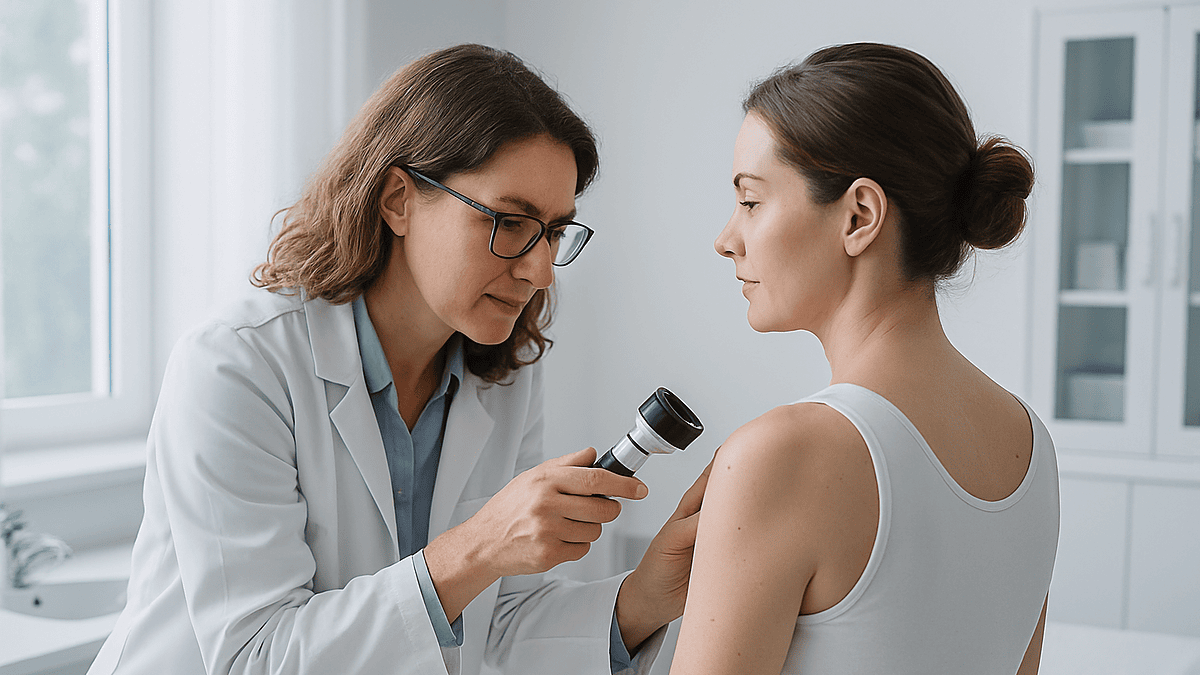
Then there is the skin’s current state. Oily scalps shed pigment faster in the early weeks; dry, flaky scalps can lift dots away with the flakes. Old scars accept pigment differently from untouched skin and may need a lighter hand and more sessions. Moles, cysts and anything that looks unusual should be seen by a doctor before any pigment goes nearby, because a tattoo over a changing skin lesion can hide it from future examination. Many practitioners also offer a small patch test of pigment behind the ear or at the nape. Mayo Clinic notes that allergic reactions to tattoo pigments are possible, and a test spot is a low-cost way to learn that before the whole scalp is involved.
Tanning before scalp micropigmentation: why the sun changes the result
Tanning is the preparation rule people most often argue with, usually because the session follows a holiday. The problem is not vanity; it is that a tan is temporary inflammation with a temporary color. Pigment matched to a tanned scalp will look too dark once the tan fades, which it will, and the hairline drawn against bronzed skin may look heavier than intended in winter. Freshly sun-exposed skin is also more fragile and more likely to peel, and peeling skin takes a share of newly placed pigment with it.

Sunburn is a harder stop. Burned skin is damaged skin, and most technicians will not work on it at all. A scalp that has peeled recently is in the middle of rebuilding its outer layer, which means uneven pigment uptake across the head. Practitioners commonly ask for a stretch of several weeks without deliberate sun exposure before the first session, and the same caution applies between sessions, since the result is judged against the settled color of the earlier layers.
Indoor tanning does not sidestep any of this. The CDC states plainly that there is no safe way to tan, indoors or out, and that tanning beds expose skin to the same ultraviolet radiation that damages skin cells. Self-tanning lotions are a gentler issue but still a real one, because they stain the outer skin and distort the color reading used for pigment matching.
For day-to-day life before the session, the CDC’s general advice is a sensible template: seek shade, wear a wide-brimmed hat, and use a broad-spectrum sunscreen of SPF 30 or higher, reapplied at least every two hours and after sweating. After SMP, sun protection stops being a preparation step and becomes part of long-term maintenance, because ultraviolet light is one of the main forces that lightens pigment over the years.
Alcohol before SMP: what it does to bleeding, swelling and pigment
A drink the night before to calm the nerves sounds harmless, and for a dinner reservation it would be. For a procedure that places pigment into the skin, alcohol works against the result in three ways, all of them mechanical rather than moral. It widens blood vessels in the skin, so the scalp bleeds and weeps more at each needle entry. It dampens the clumping of platelets, the cell fragments that plug small wounds, so that oozing lasts longer. And it dehydrates, leaving skin slightly less plump and more prone to irritation.
Extra bleeding matters because fluid leaving the skin carries pigment with it. A dot that should sit crisp and dark can heal lighter, larger or softer at the edges, and the technician has to work harder to see what has actually been placed. Swelling adds a second layer of distortion, since a puffy scalp changes the geometry of a hairline for the hours in which it is being drawn. None of this ruins a session outright, but it reduces how much of the day’s work survives into the healed result.
Most practitioner protocols ask for no alcohol for roughly 24 to 48 hours before a session, and often a similar window after it, while the dots are still open. There is no clinical trial that has defined the ideal gap for SMP specifically; the request rests on the well understood physiology of alcohol and bleeding and on practitioner experience. Strong coffee and energy drinks are a milder version of the same concern, and many technicians suggest keeping caffeine modest on the morning of the appointment.
If drinking is something you find hard to pause even briefly, that is worth mentioning at the consultation and, separately, to a doctor. It is a health question in its own right, and a frank conversation beats an unexpected result.
What to pause before scalp micropigmentation: supplements, topicals and skin treatments
The pause list splits into things you can reasonably stop on your own and things you must not touch without the prescriber. On the first side sit over-the-counter supplements with a blood-thinning effect. The NIH Office of Dietary Supplements notes that high doses of vitamin E can increase the risk of bleeding, particularly in people already taking anticoagulant medicines, and the same office describes similar cautions for fish oil products. Practitioner pre-treatment lists commonly also mention ginkgo, garlic and ginseng supplements. Pausing these for about a week before a session is a frequent request, and it is reasonable to run even that past your pharmacist or doctor if you have a medical condition.
Scalp products are the second category. Exfoliating scrubs, acid-based or retinoid-based treatments and medicated dandruff shampoos all change the surface of the skin. Hair dye applied to the scalp can irritate it and alter the color the technician is matching against. Most protocols ask for these to stop several days before the appointment, replaced by a plain, gentle shampoo and, for dry scalps, a simple fragrance-free moisturizer in the preceding days so the skin is supple on the day.
Topical minoxidil, a vasodilator applied to the scalp to support hair growth, deserves a specific mention. Many practitioners ask for applications to be paused for a few days around each session so the skin is product-free and less reddened, and because a vasodilator applied directly to the treatment area can add to bleeding. Whether and how to pause it is a decision for the clinician who recommended it, not the technician.
The third category is non-negotiable. Prescribed anticoagulants and antiplatelet medicines, immune-suppressing drugs, and oral retinoids used for severe acne all affect bleeding or skin healing, and stopping any of them for a cosmetic appointment can carry real medical risk. Tell the practitioner what you take, then let your prescriber decide whether anything changes.
SMP pre treatment instructions in one place: a week-by-week table
Checklists from different practitioners vary in detail, but when you line them up against the physiology they share a shape. The table below groups the common instructions by timing and by the reason behind each one. Treat it as a map of what to ask about rather than a substitute for the written instructions you receive, which take priority if they differ.
| Timing | Commonly paused or avoided | Why it matters |
|---|---|---|
| Several weeks before | Sunbathing, tanning beds, self-tanner on the scalp; chemical peels, laser or microneedling on the scalp | Tan distorts color matching and fades later; damaged or peeling skin holds pigment unevenly |
| About a week before | Blood-thinning supplements such as high-dose vitamin E or fish oil (check with pharmacist or doctor); hair dye; exfoliating or acid-based scalp products | Less bleeding means crisper dots; surface irritation changes pigment uptake |
| A few days before | Topical scalp medicines, only if the prescriber agrees; harsh medicated shampoos | Clean, calm, product-free skin on the day |
| 24 to 48 hours before | Alcohol; heavy caffeine; strenuous workouts that leave the scalp sweaty and flushed | Vasodilation and platelet effects increase oozing and swelling |
| Morning of | Gels, waxes, dry shampoo; skipping breakfast; late arrival | Product residue interferes with the needle; low blood sugar makes a long session harder |
| Never without the prescriber | Prescribed anticoagulants, antiplatelets, immune-suppressing drugs, oral retinoids | Stopping these can carry serious medical risk; the decision belongs to the prescribing clinician |
Two things stand out. Almost everything on the list is about reducing bleeding or keeping the skin’s surface stable, so if an instruction does not fit one of those two aims it is worth asking why. And the only items that carry genuine medical weight are prescribed medicines, which is exactly why they are the one row no practitioner should be deciding alone.
The day of your session: hair length, washing, comfort and what to bring
The morning routine is simpler than the fortnight before it. Wash the scalp with a mild shampoo, rinse thoroughly and leave it bare: no gel, no wax, no dry shampoo and no fresh moisturizer, since residue interferes with the needle and with how the technician reads the skin. Eat a proper meal and drink water, because sessions can run for several hours and a dip in blood sugar makes sitting still harder.
Hair length is agreed beforehand and depends on the goal. For a shaved-look design, most practitioners ask for the head to be clipped very short, often on the morning of or the day before, so that the existing follicles are visible and the new dots can be matched to them in size and spacing. For density work under longer hair, the hair is usually kept at its normal length and parted as the technician works. Shaving to the skin with a razor immediately before is often discouraged because it leaves micro-abrasions and a stripe of freshly exposed, slightly irritated skin.
Comfort is a common question, and honest answers vary. Many people describe the sensation as a repetitive scratching or pricking that is tolerable without anything extra; areas over bone, such as the temples and the crown, tend to feel sharper. Some practitioners offer a topical numbing cream, which is a decision to raise in advance rather than on the day, particularly if you have had reactions to anesthetics before.
Bring a few things: reference photos of hairlines you like and dislike, a written list of every medicine and supplement you take, and a soft hat that does not rub, for the walk out. Wear clothing that will not matter if a little pigment or saline ends up on the collar. Plan a quiet evening afterward, with no gym, no bar and no pool.
Scalp micropigmentation aftercare: what the first days and weeks usually look like
The first thing most people notice in the mirror is that the dots look darker, larger and more defined than expected, and the scalp is pink. That is the normal appearance of fresh pigment sitting under a thin layer of inflamed skin. Over the following days microscopic scabs form over each entry point and the redness settles. The second thing people notice, often around the end of the first week, is that the result has lightened considerably. This is also normal, and it is the reason multiple sessions exist.
Washing is the most searched question of the recovery period. Common practitioner protocols ask for the scalp to stay dry for the first few days, often around four to five, and then to be rinsed gently with lukewarm water and a mild, fragrance-free wash, without scrubbing or picking. The exact number of days is set by your practitioner’s protocol rather than by any clinical guideline; Mayo Clinic’s general tattoo aftercare advice to keep the area clean, avoid soaking it and avoid picking at scabs applies throughout.
Sweating sits in the same window. Heavy exercise, saunas, steam rooms and swimming are typically paused for about a week to ten days, because sweat and chlorinated or salt water both irritate open skin and can draw out pigment before it has settled. Light activity that does not leave the scalp dripping is usually fine sooner, but a sweaty workout five days in is still earlier than most protocols allow.
From roughly the second week, moisturizing with a simple, unscented product helps the surface shed evenly, and sun protection begins in earnest. By the time the next session arrives, the technician can see what has held, what has faded and where the design needs weight. That cycle, placed and settled and judged, repeats until both of you agree the look is complete.
How does SMP look after 5 years? Longevity, fading and touch-ups
Pigment placed in the dermis is permanent in the sense that it does not wash out, but it is not static. From the first month onward the immune system treats the particles as foreign material and slowly carries fragments away, while ultraviolet light breaks down pigment molecules at the surface. The practical result is a gradual lightening and softening of each dot over years. Mayo Clinic describes the same process in ordinary tattoos, which is why most people with SMP expect to return for a refreshing session at some point rather than treating the first course as the end of the story.
What the scalp looks like at five years depends on several things that are decided at the start. Pigment placed too deep spreads under the skin and can take on a blue or green cast; pigment placed too shallow sheds early. Carbon-based black pigments diluted to the right shade tend to lighten toward grey rather than shift color, which is one reason technicians spend so long on dilution. Skin type matters here too, since oily scalps and sun-exposed scalps fade faster.
The honest caveat is that there is no large long-term registry for SMP outcomes. What exists is practitioner experience and small case series, so statements about how a given result will age are informed estimates, not guarantees. Touch-up timing is commonly described in years rather than months, but the interval is individual.
Two other changes happen whether or not the pigment does. Natural hair loss usually continues, so a hairline that matched the surrounding hair at the start may need adjusting as the real hair recedes further. And a shaved-look design requires regular shaving to stay convincing; as hair greys, the contrast between dots and real stubble can also shift. Planning for maintenance is part of preparing well, not a sign that something went wrong.
What people often get wrong about preparing for scalp micropigmentation
The most common misunderstanding is that SMP does something to the hair. It does not. It is an illusion of density created by pigment, and nothing about the preparation or the procedure slows hair loss or encourages growth. Anyone promised otherwise should ask for the evidence, because none exists.
A second myth is that a tan helps. People assume a darker scalp will blend better with dark pigment. In practice the tan fades and the pigment does not, leaving a hairline that looks heavier than it did on the day. The sensible move is to arrive with skin at its usual, untanned color and to protect it afterward.
Third, the pre-session drink. One or two drinks do not disqualify anyone, but they do measurably increase bleeding and swelling, and that costs pigment retention. It is a trade most people would decline if it were explained in those terms.
Fourth, and most important, is the belief that blood-thinning medicines must be stopped before any procedure involving needles. For prescribed anticoagulants and antiplatelet drugs the opposite caution applies: stopping them without medical advice can carry serious risk, and the decision is never the technician’s to make. Over-the-counter supplements with similar effects are a different category and are usually paused with a pharmacist’s or doctor’s agreement.
Fifth, fading in the first week is read as failure. It is the expected settling of fresh pigment and the reason sessions are staged. Sixth, people assume everyone must shave to the skin; those having density work under longer hair generally do not. Finally, there is the idea that the result is finished forever after the last session. Pigment ages, hair recedes and skin changes, and a realistic plan includes periodic refreshing and lifelong sun protection.
Risks and alternatives: how SMP compares with other approaches to hair loss
Neutral risk language matters here, because SMP is marketed heavily. The procedure shares the risk profile of tattooing described by Mayo Clinic: skin infection if aftercare or hygiene lapses, allergic reaction to pigment components, granulomas, keloids in people prone to them, and rare but documented swelling or burning at tattooed skin during MRI scans, which is worth mentioning to radiology staff for the rest of your life. Specific to SMP are pigment migration that blurs dots into patches, a hairline drawn too low or too straight that looks artificial as the face ages, and color shift toward blue or green with poorly chosen or over-deep pigment. Correction is possible, usually with laser, but it is slow and not always complete.
Alternatives sit in different categories and are not direct substitutes. Medicines for pattern hair loss, which the NHS lists as the topical vasodilator minoxidil and, for men, the oral 5-alpha reductase inhibitor finasteride, aim to slow loss and may encourage some regrowth over months of continued use; they act on the hair cycle, require ongoing use, and are prescribed and monitored by a clinician who weighs their side effects for each person. Hair transplant surgery moves living follicles from the back of the head to thinning areas and produces real hair, with surgical risks, scarring and a recovery period of its own. Wigs, hairpieces and fiber concealers are reversible and carry no medical risk. Low-level light devices are sold widely, and the evidence base for them remains limited and mixed.
Some people combine approaches, for example SMP to soften a transplant scar, or medicines to hold existing hair while SMP fills the contrast. None of these choices is right for everyone, and the comparison that matters is the one made with a clinician who has examined your scalp and knows your history.
Questions to ask your care team before you book a session
A consultation is a two-way interview, and the quality of the answers tells you a great deal. These questions are not a test of the practitioner so much as a way of making sure the preparation plan fits you rather than a generic template.
- How will you assess my skin type and scarring tendency, and what will you do differently if I am prone to keloids or dark marks after inflammation?
- Will you do a patch test for pigment allergy, and how long before the first session?
- Which of my supplements, scalp products and over-the-counter medicines do you want paused, for how long, and which should I check with my doctor or pharmacist first?
- I take a prescribed medicine that affects bleeding or healing. Will you contact my prescriber, or should I, before anything is changed?
- How long before the session do you want me to avoid sun and tanning, and how long before and after do you ask for no alcohol?
- What hair length do you want on the day, and should I clip it or will you?
- How many sessions do you expect for my scalp, how far apart, and what fading do you anticipate between them?
- What is your written aftercare protocol for washing, sweating, swimming and sun, and when can I return to my usual routine?
- What pigments do you use, how do you choose the dilution for my skin tone, and how have your results on similar skin types looked after several years?
- How do you sterilize equipment, and are needles single-use and opened in front of me?
- What signs after a session would you want me to report, and who do I contact out of hours?
- If I am unhappy with the shape or shade, what are the options for adjusting or removing it?
Write the answers down. A practitioner who welcomes these questions and gives specific, unhurried replies is already showing you how the sessions themselves are likely to go.
When to call your doctor after scalp micropigmentation
A pink, tender scalp with tiny scabs for a few days is the expected course after a session. The signs below are not, and they warrant a call to a doctor rather than a message to the technician.
Infection is the most common serious complication of any tattooing, and it tends to declare itself after the first day or two rather than immediately. Watch for redness that spreads outward or deepens instead of settling, skin that feels hot or increasingly painful, swelling that grows, yellow or green discharge, or a fever and chills. Swollen, tender glands in the neck or behind the ears alongside these signs point the same way. Treated early, skin infections are usually straightforward; left alone they can scar the scalp and distort the result.
Allergic reaction to pigment can appear within days or, less often, weeks later, as intense itching, a raised rash, or small bumps across the treated area. Any swelling of the face or lips, difficulty breathing or feeling faint is a medical emergency and needs urgent care immediately, not a routine appointment.
Over the following months, firm lumps under the skin, a raised thickened scar that extends beyond the treated dots, or a patch that darkens, bleeds or changes shape should all be examined. The last of these is especially important because a tattoo can make a changing mole harder to notice.
Finally, if you were asked to pause a medicine or supplement and you develop unexpected bruising, bleeding that will not stop, chest pain, breathlessness or sudden weakness on one side, treat it as an emergency. And if you are unsure whether something is normal, that uncertainty is itself a good reason to ring. The treating team would far rather hear from you early.
Frequently asked questions
How many days after SMP can I wash my hair?
Most practitioner protocols ask you to keep the scalp dry for the first few days, commonly around four to five, then rinse gently with lukewarm water and a mild, fragrance-free wash without scrubbing. The precise number of days comes from your practitioner’s written aftercare rather than any clinical guideline. Mayo Clinic’s general tattoo advice to keep the area clean, avoid soaking it and never pick at scabs applies for the first two weeks.
Does SMP fade after a few days?
Yes, and it is expected. Fresh pigment looks darker and larger because it sits under thin, inflamed skin; as the surface heals and sheds its outermost layer, the dots lighten and shrink noticeably within the first one to two weeks. This settling is the reason the work is spread across several sessions. Fading that continues well beyond that period, or patches that vanish entirely, are worth raising with your practitioner.
Can I sweat 5 days after SMP?
Light activity that leaves the scalp dry is usually acceptable within the first week, but a workout that produces heavy sweating at day five is earlier than most practitioner protocols allow. Sweat, saunas, steam rooms and swimming are commonly paused for about a week to ten days because moisture and salt irritate open skin and can draw out unsettled pigment. Follow your own aftercare sheet, which takes priority over general ranges.
How does SMP look after 5 years?
Typically lighter and softer than at the end of the first course, because the immune system gradually clears pigment particles and ultraviolet light breaks them down, the same process Mayo Clinic describes for ordinary tattoos. Well placed, correctly diluted carbon-based pigment tends to fade toward grey rather than shift color; pigment placed too deep can blur or take on a blue cast. Most people plan a refreshing session at some point, and natural hair loss usually continues alongside.
What to avoid before SMP: is there a single list?
The common pre-session list covers sun exposure and tanning for several weeks, blood-thinning supplements such as high-dose vitamin E and fish oil for about a week with a pharmacist’s or doctor’s agreement, hair dye and exfoliating scalp products for several days, and alcohol and heavy caffeine for 24 to 48 hours. Prescribed medicines are the exception: they are never paused for a cosmetic session without the prescribing clinician’s decision.
Is scalp micropigmentation painful?
Most people describe it as a repetitive pricking or scratching that is uncomfortable rather than severe, with bonier areas such as the temples and crown feeling sharper. Pain tolerance varies widely, and sessions can last several hours, which adds fatigue. Some practitioners offer a topical numbing cream; raise this at the consultation, especially if you have reacted to anesthetics before, so any decision is made in advance rather than on the day.
Can I have SMP if I have a tan?
Most practitioners will ask you to wait until the tan has faded, and will not work on sunburned or peeling skin at all. Pigment matched to tanned skin looks too dark once the tan goes, and recently sun-exposed skin takes pigment unevenly. The CDC states there is no safe tan, indoors or out. Arriving with your usual, untanned skin color gives the technician a stable baseline for dilution and hairline design.
Should I stop blood thinners before SMP?
Not on your own, and not on a technician’s instruction. Prescribed anticoagulants and antiplatelet medicines are taken for reasons that can be life-threatening if interrupted, and only the clinician who prescribes them can judge whether any change is safe for a cosmetic procedure. Tell the practitioner what you take, ask them to document it, and let your prescriber make the decision. Over-the-counter supplements with blood-thinning effects are a separate, lower-stakes conversation.
Is SMP fading after a week normal, or has it failed?
Fading after a week is normal. The darkest, crispest appearance is on the day itself, and a noticeable lightening over the following week reflects healing skin shedding its surface layer and the body settling the pigment. The second and later sessions exist to build density on top of what has held. If whole areas disappear or the fading continues for many weeks, your practitioner should assess depth, skin type and aftercare.
Do I need to shave my head before scalp micropigmentation?
It depends on the design. For a shaved-look result most practitioners ask for very short clippers on or just before the day so existing follicles are visible for matching, but they usually discourage a razor shave to the skin immediately beforehand because it leaves micro-abrasions. For density work under longer hair, the hair is generally kept at its normal length and parted during the session. Agree the length at the consultation.
References
This article is for general information only and is not a substitute for professional medical advice. Please consult a qualified doctor about your individual situation.

More from the Blog
How an Afro Hair Transplant Is Performed: Curved Punches, Curl-Aware Extraction and Placement
An afro hair transplant uses the same follicular unit extraction or strip principles as any hair transplant, adapted to hair that curves beneath the…
Crown Hair Transplant: Why the Vertex Is the Hardest Zone to Restore
A crown hair transplant is considered the most technically demanding restoration because hair at the vertex grows in a spiral whorl that requires a…
What Donor Assessment Before Hair Transplant Repair Reveals: Remaining Capacity and the Plan
Donor area assessment before hair transplant repair is a structured examination of the scalp, beard and sometimes body hair that remains available after earlier…
3,000-Graft Hair Transplants: What That Session Actually Covers
A 3,000-graft session is a large hair transplant, delivering roughly 6,000 to 7,500 individual hairs, since each graft contains one to four. It can…

FUE vs FUT: Scars, Yield and Recovery: the Neutral Comparison
FUE removes follicles one at a time, leaving tiny dot scars and a quicker donor-area recovery; FUT removes a thin strip of scalp, leaving…
What to Ask Before Aesthetic Scalp Surgery: Photos, Hairline Goals and What the Plan Covers
Before hairline lowering surgery, also called forehead reduction, ask how far your hairline can realistically move given your scalp laxity, where the incision will…