

Joint Hypermobility: When Being Bendy Is a Problem

Key Takeaways
- Generalized joint hypermobility affects roughly 10 to 20 percent of people and is a trait, not a disease, unless it causes pain, instability or injuries.
- The Beighton score counts nine specific movements, with thresholds of 6 for children, 5 for adults under 50 and 4 for adults over 50, and it is a screen rather than a diagnosis.
- In 2017 the old label "joint hypermobility syndrome" was replaced by hypermobility spectrum disorder, and hypermobile Ehlers-Danlos syndrome received stricter criteria and remains the only EDS type without a genetic test.
- Strengthening and proprioception exercises have the best treatment evidence, from small randomized trials, while stretching to end of range tends to worsen symptoms.
- Hypermobility is more common among autistic people and people with ADHD in observational studies, but it is not a form of autism and neither condition diagnoses the other.
- A hot, swollen joint, a dislocation that will not reduce, or sudden severe chest or abdominal pain in someone with suspected vascular EDS needs same-day or emergency care.
Joint hypermobility means one or more joints move beyond the usual range, and for most people it causes no trouble at all. It becomes a problem when the extra movement arrives with pain, frequent sprains or dislocations, fatigue, or injuries that keep returning. Doctors then consider hypermobility spectrum disorder or hypermobile Ehlers-Danlos syndrome, conditions managed mainly with targeted exercise and physical therapy rather than medication.
Watch a group of teenagers for ten minutes and one of them will do it: fold a thumb flat against the forearm, pop an elbow past straight, then look up and ask, “Is that bad?” As of September 2026, that question is being asked at enormous volume. Short videos inviting viewers to “test yourself for Ehlers-Danlos” with a thumb bend or a palms-to-floor stretch have pushed searches for joint hypermobility to their highest level in years, and clinics report people arriving with a self-scored checklist already filled in.
The attention is not misplaced, only misdirected. Bendy joints are common, often harmless and occasionally the visible edge of a condition that deserves real care. The trick is telling those situations apart, and a thirty-second video cannot do that.
This explainer sets out what the medical evidence actually shows: how doctors measure flexibility, where the line between a party trick and a diagnosis sits, why the names changed in 2017, and what helps when hypermobility starts to hurt.
What changed recently: new names, stricter criteria and a viral self-test
The biggest shift came in 2017, and its effects are still working through clinics. An international group of experts rewrote the classification of the Ehlers-Danlos syndromes, a family of inherited conditions that affect connective tissue, the collagen-rich material that holds joints, skin and blood vessels together. Thirteen types are now recognized, and twelve of them can be confirmed with a genetic test. The exception is the most common: hypermobile Ehlers-Danlos syndrome, usually shortened to hEDS, which still has no identified gene and is diagnosed on clinical criteria alone.
Those criteria were made deliberately stricter. At the same time, the old label “joint hypermobility syndrome” was retired and a new umbrella term, hypermobility spectrum disorder (HSD), was introduced for people whose loose joints cause symptoms but who do not meet the full hEDS checklist. The NHS and MedlinePlus pages on these conditions reflect this structure: hEDS at one end, HSD across the middle, and plain, symptom-free flexibility at the other.
What is new in 2026 is not a treatment or a test but the volume of self-diagnosis. The viral claim circulating on social platforms, that touching your thumb to your forearm means you have Ehlers-Danlos, mixes up one screening movement with a diagnosis that requires a history, an examination and the exclusion of other causes. A second strand of attention comes from a growing body of observational research, published mostly since 2020, reporting that hypermobility is more common among autistic people and people with ADHD. That work is genuine and interesting, but it describes an association, not a shared identity, a point we return to below.
What is joint hypermobility, and is being bendy actually a problem?
Joint hypermobility simply means a joint moves further than most people’s do. Elbows and knees that bend slightly backwards, thumbs that reach the wrist, a spine that folds until the palms rest flat on the floor: these are the classic signs. When several joints behave this way, clinicians call it generalized joint hypermobility. When it involves one or two joints, perhaps a shoulder or a kneecap, it is called localized.
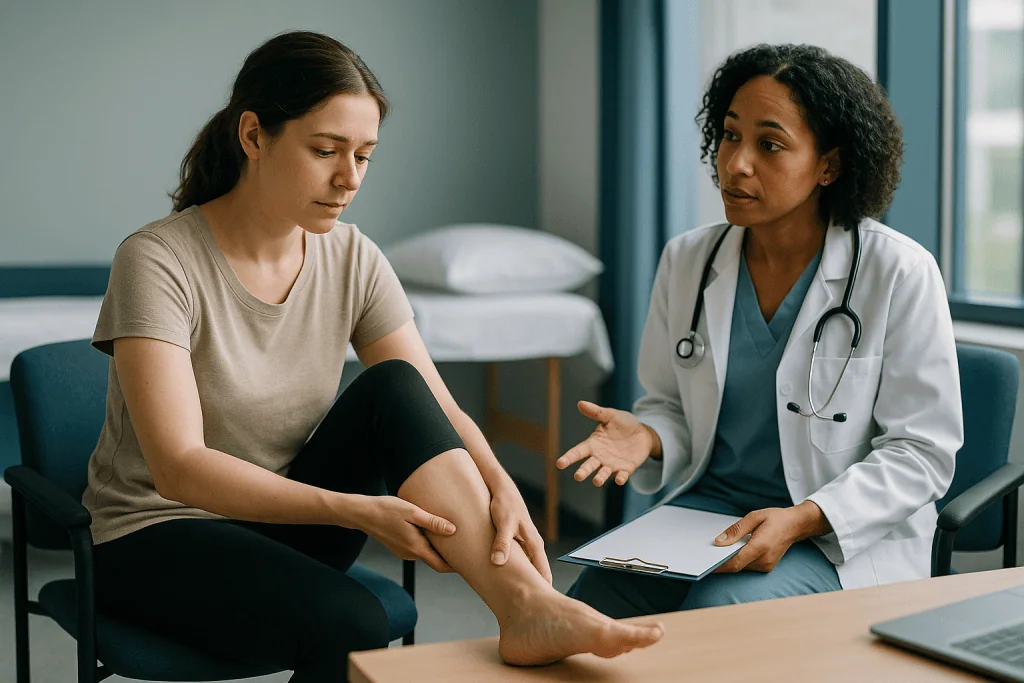
By itself, this is a trait, not a disease, in the same way that being tall or having a low resting heart rate is a trait. Depending on the population studied, somewhere between one in ten and one in five people have generalized joint hypermobility, and most of them never see a doctor about it. Gymnasts, dancers and musicians are often over-represented because the extra range is an advantage in their craft.
So when does bendy become a problem? Mainstream guidance from the NHS and Cleveland Clinic draws the line at consequences rather than range. Hypermobility matters when it brings pain in or around the joints, frequent sprains or strains, joints that slip partly or fully out of place (subluxations and dislocations), poor balance or clumsiness, or persistent fatigue. Skin that bruises easily or stretches more than usual, and a family history of similar problems, push the picture further toward a connective tissue condition.
The honest answer to “is it a problem?” is therefore: usually no, sometimes yes, and the deciding factor is how your body copes with the extra movement, not how far it can go.
How can I tell if I'm hypermobile? The Beighton score test explained
The standard screening tool is the Beighton score, a nine-point count of specific movements that has been used in research since the 1970s. A clinician checks five things, four of them on both sides of the body:
- Can the little finger bend back past 90 degrees? (one point per hand)
- Can the thumb be pushed down to touch the forearm? (one point per hand)
- Does the elbow extend more than 10 degrees beyond straight? (one point per arm)
- Does the knee extend more than 10 degrees beyond straight? (one point per leg)
- With knees straight, can the palms rest flat on the floor? (one point)
The 2017 criteria set age-adjusted thresholds: a score of 6 or more suggests generalized hypermobility in children, 5 or more in adults up to age 50, and 4 or more after 50, because joints naturally stiffen over the decades. For people whose joints have tightened after injury or surgery, a short five-question history about past flexibility can be used alongside the physical count.
Two caveats matter. First, the Beighton score is a screen, not a diagnosis. It measures nine joints and ignores shoulders, hips, ankles and jaw, so someone with troublesome shoulder instability can score zero. Second, filming yourself and ticking boxes is not the same as examination by someone trained to judge angles and to notice, for instance, that an elbow is hyperextending because of a previous fracture rather than loose ligaments.
If you want a realistic self-check, it is this: do you score high on these movements and have symptoms that affect daily life? If both are true, that is worth a conversation with a clinician. If the score is high and nothing hurts, you are flexible, and that is all.
What does joint hypermobility feel like from the inside?
People who live with symptomatic hypermobility describe a fairly consistent set of sensations, and recognizing them helps separate a stiff week at the desk from something more structural.
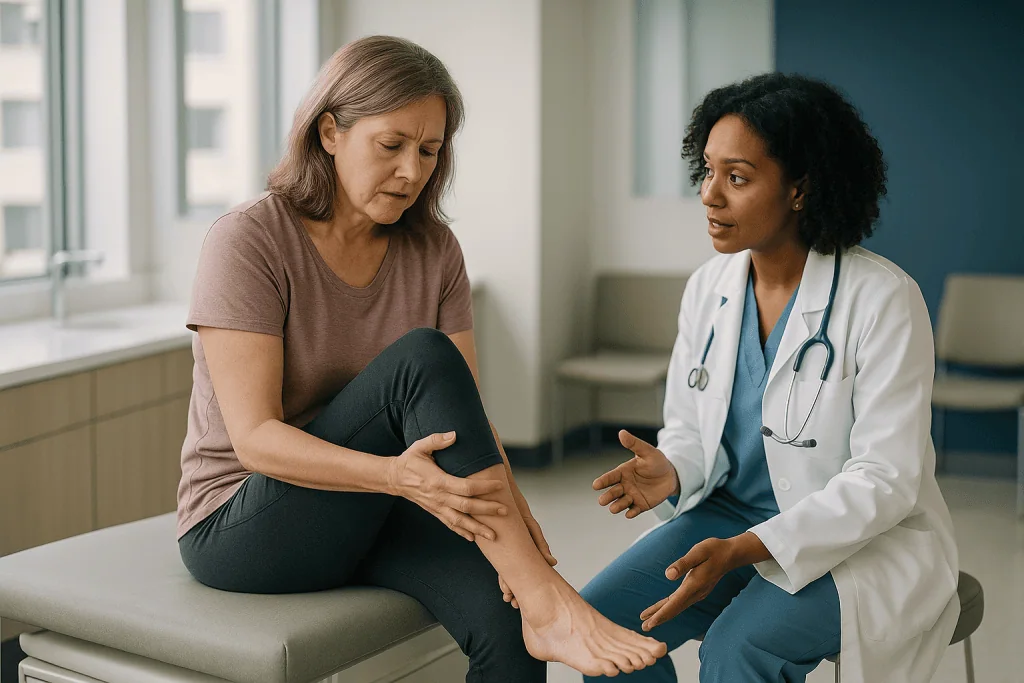
The most common is a deep, aching joint pain that builds through the day and is worse after activity or prolonged standing. Unlike inflammatory arthritis, it rarely comes with warm, swollen joints or a long period of morning stiffness. Knees, ankles, hips, shoulders and the small joints of the hands are typical sites. Many people also notice that joints “give” or click, that a shoulder slides forward when they reach behind them, or that a kneecap shifts sideways on stairs.
Clumsiness is reported surprisingly often. The likely explanation is reduced proprioception, the body’s sense of where its limbs are in space. Stretchy ligaments send weaker position signals to the brain, so hypermobile people tend to bump into door frames, roll ankles and misjudge steps more than their peers. Fatigue is another frequent complaint, partly because muscles work harder to stabilize joints that ligaments are not holding firmly.
There is a paradox that confuses many: hypermobile people often feel stiff. When joints are unstable, the surrounding muscles guard and tighten, so the sensation is one of tension even though the underlying joint is loose. Stretching for relief can feel wonderful and then make things worse, a pattern worth mentioning to a physical therapist.
Children may show it differently: late walking, a reluctance to run, frequent “growing pains” at night, or flat feet that roll inward. Teachers sometimes notice poor handwriting endurance because the thumb and finger joints tire quickly.
Hypermobility spectrum disorder vs hypermobile Ehlers-Danlos syndrome: what's the difference?
Since 2017 clinicians sort symptomatic hypermobility into two main categories, and the distinction causes more anxiety than it should. Both are managed in essentially the same way, and both are real diagnoses. The difference lies in how many body systems are involved and how strictly a checklist is met.
| Feature | Flexible but symptom-free | Hypermobility spectrum disorder (HSD) | Hypermobile Ehlers-Danlos syndrome (hEDS) |
|---|---|---|---|
| Joint range | Increased | Increased, generalized or localized | Increased, generalized (Beighton threshold met) |
| Pain, instability or injuries | No | Yes | Yes |
| Skin and tissue signs (soft stretchy skin, unusual scars, hernias, prolapse) | No | Few or none | Several required by criteria |
| Family history | Variable | Variable | Often present; counts toward diagnosis |
| Genetic test | Not needed | None available | None available; clinical diagnosis |
| Core management | None needed | Exercise, physical therapy, pacing | Exercise, physical therapy, pacing, monitoring of other systems |
The hEDS criteria require generalized joint hypermobility plus evidence of a wider connective tissue disorder, such as a combination of skin findings, certain heart valve or aortic root features on an echocardiogram, hernias, or a close relative who meets the criteria, and the exclusion of other conditions. HSD is diagnosed when hypermobility causes symptoms but that fuller picture is absent.
Importantly, a diagnosis of HSD rather than hEDS does not mean symptoms are milder or less deserving of treatment. Research summarized by the NHS and Cleveland Clinic treats the two as neighbors on one spectrum. Where the label matters most is in ruling out the rarer, genetically confirmed EDS types, particularly vascular EDS, which carries risks to blood vessels and needs specialist follow-up.
Why are some joints so loose? Collagen, ligaments and muscle control
A joint’s stability comes from three layers working together: the shape of the bones, the ligaments and joint capsule that tie them together, and the muscles that fire to hold everything in line. Hypermobility usually arises from the middle layer.
Ligaments are made largely of collagen, a protein that forms strong, rope-like fibers. Small inherited variations in how collagen is built or cross-linked can make those ropes a little more elastic. In the twelve genetically defined types of Ehlers-Danlos syndrome, researchers have pinned the change to specific genes, several of them coding for collagen itself or the enzymes that process it. In hEDS and HSD, no single gene has been found; the current scientific view is that many small genetic contributions combine, which is why the trait often runs in families without a clear pattern.
Hormones play a role too. Relaxin and estrogen loosen ligaments, which is one reason hypermobility is reported more often in women and why symptoms can shift around pregnancy and the menstrual cycle. Age works the other way: collagen stiffens over decades, so most people lose range as they get older, and some hypermobile people find their joints settle in midlife.
The muscle layer is where treatment gets its leverage. Ligaments cannot be tightened by exercise, but the muscles around a joint can be trained to react faster and hold more firmly, and the brain can be retrained to sense joint position more accurately. This is the mechanism behind the strong emphasis on strengthening in every mainstream guideline: if the passive restraints are stretchy, the active ones have to do more of the job.
Who is most likely to have hypermobile joints?
Flexibility is not evenly distributed. Several patterns show up consistently across population studies, and they help explain why one person’s elbow hyperextends while their sibling’s does not.
Age is the strongest factor. Children are naturally more flexible, and the proportion with generalized hypermobility falls steadily from early childhood into adulthood. This is why the Beighton thresholds are higher for children and why many children who are “double-jointed” at eight are unremarkable by eighteen. Symptoms, however, do not always follow the same curve, and some adults develop pain precisely as their joints begin to stiffen and their muscles lose conditioning.
Sex matters: women are more likely than men to be hypermobile at every age, and hormonal influences on ligament laxity are the probable explanation. Ancestry also plays a role, with studies reporting higher rates of generalized hypermobility in people of South Asian, African and Middle Eastern descent than in people of Northern European descent, though the research base here is uneven.
Family history is a strong clue. Both HSD and hEDS cluster in families, and asking whether a parent or sibling was “bendy,” had frequent dislocations, or was told they had “loose ligaments” is a routine part of assessment. A handful of other inherited connective tissue conditions, including Marfan syndrome and osteogenesis imperfecta, also feature hypermobility, which is why a clinician will look at height, arm span, eyes, heart and bone history rather than joints alone.
Finally, certain pursuits select for flexibility. Ballet, gymnastics, swimming and some musical instruments reward range of motion, and people with naturally loose joints gravitate to them. That can be a strength, provided the strength training keeps pace with the stretching.
Is hypermobility a form of autism? What research on hypermobility and autism shows
No. Hypermobility is a musculoskeletal trait; autism is a neurodevelopmental condition defined by differences in social communication, sensory processing and patterns of behavior. One cannot be a “form” of the other. What the research does show is an association: hypermobility appears more often among autistic people, and among people with ADHD, than in the general population.
The evidence comes from observational studies, which compare groups at a point in time and cannot prove cause and effect. Several of these studies, including work published in the early 2020s in peer-reviewed psychiatry and rheumatology journals indexed on PubMed, report that generalized joint hypermobility is roughly twice as common in neurodivergent adults as in comparison groups, and that autistic people with hypermobility report more pain, dizziness and digestive symptoms than those without. The quality of this evidence is modest: samples are often self-selected, hypermobility is sometimes self-reported, and the studies vary in how they define both conditions.
Why might the two overlap? Hypotheses under investigation include shared effects of connective tissue on the autonomic nervous system (the automatic control of heart rate, blood pressure and digestion), overlapping genetic influences, and differences in proprioception that could affect both motor coordination and sensory experience. None of these is established.
What this means in practice is simple. If you are autistic or have ADHD and also have joint pain, instability or unexplained fatigue, it is reasonable to ask a clinician to assess your joints, because the symptoms are treatable and may otherwise be attributed to something else. The reverse is not true: a high Beighton score does not indicate autism, and nobody should read a diagnosis of one into the presence of the other.
Beyond the joints: fatigue, dizziness, gut symptoms and anxiety
People with HSD or hEDS frequently describe symptoms far from their knees and shoulders, and these are now recognized in mainstream summaries from the NHS, Mayo Clinic and Cleveland Clinic. The connective tissue affected in these conditions is not confined to ligaments; it also supports blood vessels, the gut wall, the bladder and the skin.
Dizziness on standing is one of the most common complaints. Some people meet criteria for postural orthostatic tachycardia syndrome (POTS), in which the heart rate rises abnormally when moving from lying to standing, producing lightheadedness, palpitations and fatigue. The proposed link is that stretchier blood vessel walls allow blood to pool in the legs, though this remains a hypothesis supported mainly by observational data.
Digestive symptoms, including bloating, constipation, reflux and a diagnosis of irritable bowel syndrome, are reported more often than in the general population. Bladder symptoms and, in women, pelvic organ prolapse also appear more frequently. Easy bruising, slow-healing wounds and skin that feels unusually soft or stretches more than expected round out the picture.
Anxiety deserves careful handling. Studies have found higher rates of anxiety disorders among people with joint hypermobility, and a biological link through the autonomic nervous system has been proposed. This does not mean the pain is “in the head” or that anxiety causes loose joints. It means two conditions can coexist, each deserving its own treatment, and that living with unpredictable pain and dislocations is itself a reasonable cause of worry.
Not everyone with hypermobility experiences any of this. Mentioning these symptoms to a clinician matters because it changes how the whole condition is assessed, and because several of them, POTS especially, have their own evidence-based management.
What the evidence actually says, graded by strength
Hypermobility research is active but still young, and it helps to know which claims rest on firm ground.
Strong consensus, limited trial data: diagnosis. The Beighton score and the 2017 criteria are expert consensus tools. They were designed by specialists reviewing the literature, not validated against a gold-standard biological test, because none exists for hEDS or HSD. They are the best available framework, and clinicians worldwide use them, but they are a product of expert opinion.
Moderate evidence: exercise and physical therapy. Several small randomized controlled trials and systematic reviews have tested strengthening, proprioception and stability programs in children and adults with symptomatic hypermobility. Most report reductions in pain and improvements in function and joint stability. The trials are small, follow-up is short, and programs vary, so the overall quality is graded low to moderate. Even so, this is the strongest treatment evidence in the field, and every major guideline builds on it.
Observational only: links to autism, ADHD, anxiety, POTS and gut disorders. The associations are reported repeatedly and are probably real, but the study designs cannot establish cause, and selection bias is a recurring concern.
Weak or absent: most other interventions. Supplements marketed for “collagen support,” specific diets, and many braces and taping techniques have little or no controlled evidence in hypermobility. Pain medicines have not been tested specifically in this group; their use follows general chronic pain guidance.
Well established: the rare, genetically confirmed EDS types. For vascular, classical and kyphoscoliotic EDS, gene findings and natural history studies are robust, which is why ruling these out matters.
The takeaway is that the diagnostic labels are agreed, the treatment principle of strengthening is reasonably supported, and nearly everything else should be held with appropriate uncertainty.
How is joint hypermobility treated? Exercise, physical therapy and pacing
There is no medicine that tightens ligaments, and there is no surgery that reliably fixes generalized laxity. Treatment therefore aims to help the body manage the extra range, and the central tool is a physical therapy program built around three goals.
The first is strength, particularly in the muscles that stabilize joints rather than the ones that move them: the rotator cuff at the shoulder, the gluteal muscles at the hip, the deep core around the spine, the quadriceps and hamstrings around the knee. Progressive resistance work, done through a controlled range rather than at the extremes of flexibility, is the backbone of every mainstream program.
The second is proprioception, retraining the nervous system to sense joint position. Balance exercises, single-leg stands, and movements performed with eyes closed or on unstable surfaces all count. The third is motor control: learning not to “hang” on ligaments while standing (locking the knees backward, for example) and finding neutral joint positions that muscles can hold.
Pacing matters as much as the exercises themselves. A boom-and-bust cycle, where a good day leads to overdoing it and a flare, is common. Therapists typically start well below what the person feels capable of and build gradually, because muscles in hypermobile people fatigue quickly and flares can set progress back by weeks.
Low-impact aerobic activity is encouraged for general fitness and fatigue: swimming, cycling, walking and Pilates are frequent recommendations. High-impact or extreme-range sports are not forbidden, but they warrant good conditioning first. Children benefit from the same principles, and the NHS specifically notes that most children with hypermobility do not need to avoid sport.
Progress is slow by design. Many people notice fewer injuries and better stamina within a few months, but the program is a long-term habit rather than a course.
Pain relief, braces and everyday habits: what helps and what to be careful with
Exercise is the foundation, but most people also want to know what to do on a bad day. Here the evidence is thinner, so the guidance is practical rather than proven.
Over-the-counter pain relievers such as acetaminophen or anti-inflammatory tablets are commonly used for flares. They have not been studied specifically in hypermobility, and they carry their own risks with regular use, so anyone needing them more than occasionally should discuss it with a clinician or pharmacist rather than settling into a daily habit. Stronger prescription options, including opioids, are generally discouraged for long-term joint pain under current chronic pain guidance; any decision about them belongs to the prescribing doctor.
Heat often soothes the muscle tension that accompanies unstable joints; cold can help after an acute sprain. Neither has strong trial evidence but both are low-risk.
Braces, supports and kinesiology tape divide opinion. They can be genuinely useful for a specific unstable joint during a demanding activity, or during the early weeks of rehabilitation, and ring splints are popular for finger joints that collapse during writing. The caution, echoed by physical therapists, is that long-term reliance on external support can let the stabilizing muscles weaken further. Supports work best as a bridge, not a destination.
Footwear with good arch support helps people whose feet roll inward, and ergonomic adjustments at work or school, such as pen grips, supportive chairs and regular movement breaks, address the small repetitive loads that add up.
Sleep and general conditioning deserve mention because fatigue amplifies pain. A consistent sleep schedule and gradual aerobic fitness are among the few measures with reasonable evidence in chronic pain more broadly.
One habit to avoid: stretching to the end of range for relief. It feels good because it eases muscle guarding, but it reinforces the laxity you are trying to manage.
Common myths about joint hypermobility, corrected
The current wave of online attention has produced some durable misunderstandings. These are the ones clinicians hear most often.
Myth: If my thumb touches my forearm, I have Ehlers-Danlos syndrome. That movement earns one point on a nine-point screening score. A diagnosis of hEDS requires meeting the full Beighton threshold plus additional features in skin, tissue or family history, and the exclusion of other conditions. Most people who can do the thumb trick are simply flexible.
Myth: Hypermobility is rare. Generalized joint hypermobility affects roughly 10 to 20 percent of the population depending on age and ancestry. The symptomatic conditions are less common, but “rare” describes the genetically confirmed EDS types, not flexibility itself.
Myth: Stretching more will help. Hypermobile joints are already at or beyond normal range. Strengthening, not stretching, is what the trials support.
Myth: Being bendy means you will develop early arthritis. Some studies suggest a modestly higher rate of osteoarthritis in certain hypermobile joints, but the evidence is inconsistent and many hypermobile people never develop it. The relationship is far from inevitable.
Myth: Hypermobility is a form of autism. The two are associated in observational research, not the same thing, and neither diagnoses the other.
Myth: There is a blood test for hEDS. There is not. Genetic testing can confirm or exclude the twelve other EDS types and some similar conditions, which is why it is sometimes ordered, but hEDS and HSD remain clinical diagnoses.
Myth: Children will always grow out of it. Range of motion typically decreases with age, but symptoms do not reliably disappear, and early strengthening habits make a real difference.
Myth: It is all in your head. The 2017 classification and every mainstream medical source recognize HSD and hEDS as physical conditions with physical mechanisms. Coexisting anxiety is common and treatable; it does not explain away the joints.
When to see a doctor about hypermobility: red flags and sensible triggers
Most flexible people never need an appointment. These are the situations where one is worthwhile, and a smaller set where it is urgent.
Book a routine visit if joint pain is interfering with work, school, sleep or exercise for more than a few weeks; if a joint has dislocated or partially slipped more than once; if sprains, strains or falls keep recurring; if a child is unusually clumsy, tires quickly or avoids physical play; or if you have hypermobility alongside persistent dizziness on standing, unexplained fatigue, or digestive and bladder symptoms. A primary care clinician can perform the Beighton assessment, take a family history, and refer to physical therapy, rheumatology or genetics as appropriate.
Seek care promptly, the same day, if a joint dislocates and will not go back, if a joint is hot, red and swollen (which may indicate infection or inflammatory arthritis rather than hypermobility), or if numbness, weakness or color change develops in a limb after an injury.
Call emergency services for sudden severe chest, abdominal or back pain, fainting, coughing up or vomiting blood, or sudden severe headache, particularly if you or a close relative have been told you may have vascular Ehlers-Danlos syndrome or an unexplained aneurysm or arterial rupture. These are rare, but the vascular type of EDS can affect arteries and internal organs, and it needs specialist assessment rather than self-management.
Also see a doctor before starting any new medicine for pain, including over-the-counter products taken regularly, and never stop or change a prescribed medicine on the strength of something you have read, here or anywhere else. The person who knows your history and examination findings is the one who should guide those decisions.
If a diagnosis of HSD or hEDS is made, ask what follow-up is suggested. For hEDS, this may include a one-time echocardiogram and periodic review; for HSD, it is usually a physical therapy plan with a clear route back if things change.
Frequently asked questions
Is joint hypermobility a problem?
Usually not. Most people with hypermobile joints have no symptoms and need no treatment. It becomes a problem when the extra range leads to pain, frequent sprains, joints slipping out of place, clumsiness or fatigue. At that point doctors consider hypermobility spectrum disorder or hypermobile Ehlers-Danlos syndrome, both of which respond to structured strengthening and physical therapy.
How can I tell if I'm hypermobile?
A clinician uses the Beighton score, which checks whether your little fingers bend back past 90 degrees, your thumbs reach your forearms, your elbows and knees extend beyond straight, and your palms reach the floor with straight knees. Scoring at or above the age threshold suggests generalized hypermobility. Self-testing from a video is a rough guide only; angles are hard to judge without training.
What does joint hypermobility feel like?
People describe a deep ache in joints that worsens through the day, joints that click or feel as if they give way, frequent ankle rolls or bumps into furniture, and a tired, heavy feeling in muscles that are working to stabilize loose joints. Many also feel stiff, because muscles tighten to guard unstable joints, even though the underlying problem is excess movement.
Is hypermobility a form of autism?
No. Hypermobility is a joint trait and autism is a neurodevelopmental condition, so one cannot be a form of the other. Observational studies do find hypermobility about twice as common among autistic people and people with ADHD, and researchers are exploring shared influences on the nervous system and connective tissue. The link is an association, not a shared diagnosis.
What is the Beighton score test and what score counts as hypermobile?
The Beighton score is a nine-point screening count of five movements: little finger, thumb, elbow and knee on each side, plus palms to floor. Under the 2017 criteria, 6 or more suggests generalized hypermobility in children, 5 or more in adults up to 50, and 4 or more after 50. It identifies flexibility; it does not by itself diagnose any condition.
What is hypermobility spectrum disorder?
Hypermobility spectrum disorder, or HSD, is the term introduced in 2017 for people whose hypermobile joints cause symptoms such as pain, instability or recurrent injury but who do not meet the full criteria for hypermobile Ehlers-Danlos syndrome. It replaced the older label “joint hypermobility syndrome.” HSD is a genuine diagnosis, managed with the same exercise-based approach, and it is not a milder or lesser version of hEDS.
How is hypermobile Ehlers-Danlos syndrome diagnosed if there is no genetic test?
Hypermobile Ehlers-Danlos syndrome is diagnosed clinically. A clinician confirms generalized joint hypermobility using the Beighton score, then looks for additional features such as soft stretchy skin, unusual scarring, hernias, certain heart findings or a close relative with the condition, and rules out other connective tissue disorders. Genetic testing may be used to exclude the other twelve EDS types, which do have known genes.
Does joint hypermobility get better or worse with age?
Range of motion usually decreases with age because collagen stiffens, so many children who are very flexible become less so as adults. Symptoms do not follow the same neat path: some people improve, others develop pain in midlife as muscle conditioning drops. Keeping stabilizing muscles strong is the most reliable way to influence the long-term course.
Can I do yoga or sport if I'm hypermobile?
Yes, with adjustments. Most people with hypermobility are encouraged to stay active, and the NHS notes that children generally should not avoid sport. The caution is to prioritize strength and control over range: work within a controlled range rather than at the extremes, favor low-impact conditioning, and in yoga avoid sinking into end-range poses. A physical therapist can tailor this.
Is hypermobility genetic, and will my children have it?
Hypermobility clearly runs in families, and the genetically defined types of Ehlers-Danlos syndrome follow known inheritance patterns. For hypermobile EDS and HSD, no single gene has been identified; many small inherited influences are thought to combine. A child of a hypermobile parent is more likely to be flexible, but whether that flexibility ever causes symptoms varies widely even within one family.
References
- NHS: Joint hypermobility syndrome
- NHS: Ehlers-Danlos syndromes
- MedlinePlus Genetics: Ehlers-Danlos syndrome
- MedlinePlus Medical Encyclopedia: Hypermobile joints
This article is for general information only and is not a substitute for professional medical advice. Please consult a qualified doctor about your individual situation.

More from the Blog

Plates, Screws, Rods and Pins: What Internal Fixation Actually Does for a Healing Fracture
Plates, screws, rods and pins are internal fixation devices that hold the pieces of a broken bone in the correct position and keep them…

Knee Injections Compared: Cortisone, Hyaluronic Acid and PRP
The three main knee injections for osteoarthritis are cortisone (a corticosteroid), hyaluronic acid (gel) and platelet-rich plasma (PRP). Cortisone has the strongest evidence for…

How Long a Slipped Disc Takes to Heal, and Whether It Heals on Its Own
Most slipped (herniated) discs settle without surgery. Mainstream guidance says pain typically eases within about six weeks, and roughly nine in ten people improve…

Hand Arthritis: Osteoarthritis vs Rheumatoid, and What Protects Grip
Hand arthritis is joint damage or inflammation in the fingers, thumb or wrist. Osteoarthritis wears down cartilage, usually at the fingertip joints and thumb…

Local, Regional or General? Anesthesia Options for Finger and Toe Surgery Explained
Most finger and toe operations can be done under local anesthesia, usually a digital block that numbs only the affected digit while you stay…

Who May Be a Candidate for Proximal Fibular Osteotomy When Inner-Knee Arthritis Is Mild?
Proximal fibular osteotomy is usually considered for adults whose knee osteoarthritis is confined mainly to the inner (medial) compartment, who have mild to moderate…