

Laser Liposuction Recovery: Compression Garment Days, Walking Early and Returning to Work

Key Takeaways
- Laser liposuction heats fat with a thin fiber before suction, but mainstream guidance describes the same weeks of swelling, bruising and compression as for other liposuction techniques.
- Swelling usually peaks in the first week, often making the treated area look larger than before surgery, and the NHS notes it can take up to six months to fully settle.
- Compression garments are typically worn for several weeks, with fit mattering more than tightness because over-tight garments can cause creases and pressure injuries.
- Gentle walking from the first day lowers the risk of deep vein thrombosis, a recognized complication of surgery and immobility, while strenuous exercise usually waits four to six weeks.
- Desk-based work is often possible within one to two weeks, while heavy physical jobs generally fall into the same four-to-six-week window as exercise.
- Early lumps and firmness in the abdomen are usually normal fibrosis and fluid, and genuine contour irregularities can only be judged after several months of settling.
Laser liposuction recovery typically involves wearing a compression garment for several weeks, walking gently from the first day to lower clot risk, and returning to a desk job within about one to two weeks, with physical work and exercise usually waiting four to six weeks. Swelling generally peaks in the first days, then settles gradually over weeks to months. Your surgical team sets your personal timeline.
The garment arrives folded in a plastic sleeve, looking like a wetsuit that has shrunk in the wash. She holds it up in the pre-op room and asks the question almost everyone asks: how many days do I really have to wear this thing? Her second question comes a beat later. Can I be back at my desk by Monday?
Those two worries, plus a quieter one about whether the swelling will ever go down, sit at the heart of laser liposuction recovery. The procedure itself takes an hour or two. The recovery is where the result is actually made or muddled, and it is also where most of the confident advice online falls apart on contact with evidence.
This explainer walks through what happens under the skin after a laser fiber has done its work, why surgeons are so insistent about early walking, how long compression usually lasts, and how to think about returning to work without setting yourself back.
What is laser liposuction, and how is it different from standard liposuction?
Laser liposuction, also called laser-assisted liposuction or laser lipolysis, is a body contouring procedure in which a thin laser fiber is passed under the skin to heat and liquefy fat before it is suctioned out. Lipolysis simply means the breakdown of fat cells.
Standard liposuction relies on a hollow tube called a cannula, moved back and forth to loosen fat mechanically while a vacuum removes it. The laser version adds a heating step first, which its proponents say makes the fat easier to remove and may encourage mild tightening of the overlying skin through heat-induced collagen contraction. Mayo Clinic notes that liposuction is not a weight-loss method and does not treat cellulite or loose skin on its own, and the same applies to the laser-assisted variety.
Both methods usually begin with tumescent fluid, a large volume of dilute salt water containing a local anesthetic and a blood-vessel-constricting medicine, injected into the treatment area. This fluid numbs the tissue, shrinks bleeding vessels and makes the fat easier to work with. Much of it drains out over the following day or two, which is why early recovery involves leaking pinkish fluid from the small incisions.
What the evidence does not support is the idea that laser liposuction is inherently gentler or has a dramatically shorter recovery. Mainstream surgical guidance from the NHS and Mayo Clinic describes essentially the same recovery expectations for all forms of liposuction: bruising, swelling and numbness for weeks, a compression garment, and a gradual return to activity. Any added benefit from the laser, particularly on skin tightening, is described in the medical literature as modest and variable rather than guaranteed.
What actually happens under the skin during laser liposuction recovery
Picture the treated area the day after surgery as a sponge that has been squeezed, heated and partly emptied. The fat layer now contains thousands of tiny tunnels where the cannula passed, small pockets of leftover tumescent fluid, and disrupted blood and lymph vessels. The body treats this as an injury and responds accordingly.

Within hours, inflammation arrives. Blood vessels become leaky, fluid floods the space, and the area swells and feels warm and tender. This is not a complication; it is the first stage of healing. Over the following days, immune cells clear damaged fat and debris, and the lymphatic system, the network of vessels that drains excess fluid from tissues, slowly begins to carry the extra fluid away. Because liposuction disrupts many of those lymph channels, drainage is sluggish at first, and gravity pulls fluid downward. Someone who had their abdomen treated may notice swelling in the pubic area or upper thighs, which surprises many patients but is expected.
The laser adds a heat component. Heated tissue tends to form more internal scar, or fibrosis, which can feel like firm ropes or lumps under the skin for several weeks. As collagen remodels over months, most of this firmness softens. Nerve endings bruised or stretched during the procedure produce numbness, tingling or occasional sharp zings, which Mayo Clinic describes as usually temporary.
Every recovery instruction, from compression to walking to avoiding heavy lifting, is really a way of helping this process along: limiting how much fluid accumulates, encouraging lymphatic drainage, and letting the skin settle evenly onto its new contour. Understanding that makes the rules feel less arbitrary.
Who is usually a candidate, and who is usually asked to wait
Surgeons generally consider laser liposuction for adults who are at or near a stable weight and who have specific pockets of fat that have not responded to diet and exercise. Mayo Clinic and the NHS both stress that good skin elasticity matters, because the skin has to shrink back over a smaller volume. Someone with firm, elastic skin tends to see a smoother result than someone whose skin has already lost stretch.
People are commonly asked to wait, or are steered toward other options, in several situations:
- Those still actively losing or gaining weight, since results shift with body weight.
- Anyone with poorly controlled diabetes, heart disease, or a bleeding or clotting disorder, because these raise the risk of wound problems, infection and blood clots.
- People taking blood-thinning medicines, who need a plan agreed with the prescribing clinician before any elective surgery.
- Smokers, whom many surgeons ask to stop for a period before and after surgery because nicotine narrows blood vessels and slows healing.
- Those expecting the procedure to fix loose skin, cellulite or general weight, which the NHS explicitly notes it does not do.
Recovery expectations also depend on the volume removed and the number of areas treated. Larger-volume procedures may be done under general anesthesia and can involve an overnight stay, while small areas are often done under local anesthesia with sedation. The NHS notes that recovery is longer and risks are higher when large amounts of fat are removed in one session.
None of this is a checklist for self-selection. The decision to proceed, and the choice between laser-assisted and other techniques, rests with the surgical team after a full assessment.
Laser liposuction recovery: what the first 72 hours look like
The first three days are about fluid, fatigue and getting the basics right. Expect the small incisions to leak a watery, pink-tinged fluid, mostly leftover tumescent solution mixed with a little blood. MedlinePlus describes this drainage as normal in the early period, and absorbent pads inside the garment usually manage it. Some surgeons leave small drains in place for a day or two; others rely on open incisions.
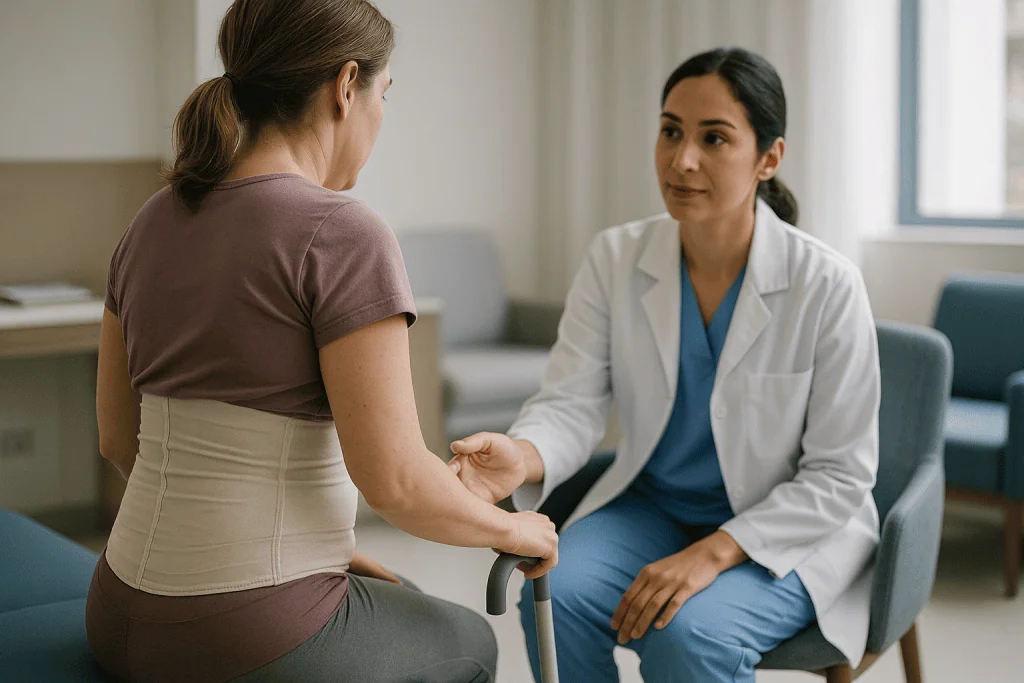
Pain is usually described as a deep, bruised ache rather than sharp cutting pain. The local anesthetic in the tumescent fluid often keeps the area numb for the first several hours, and discomfort tends to rise as it wears off on day one, then plateau. Your team will prescribe or recommend pain relief; follow their plan rather than improvising.
Movement matters from the first evening. Short, slow walks around the room every hour or two while awake help circulation and lymphatic flow and lower the risk of clots in the legs. Standing up will feel stiff, and bending at the waist may pull on an abdominal treatment area, so rise slowly and use your arms.
Fatigue can be more pronounced than people expect. Anesthesia, fluid shifts and the body’s inflammatory response together produce a washed-out feeling that lifts over the first week. Light meals, plenty of water and rest between walks are the sensible pattern.
Bruising typically appears over the first two to three days and can look alarming, spreading well beyond the treated zone as blood tracks along tissue planes. Mayo Clinic notes bruising and swelling can last for weeks. A photo on day three is often the low point visually, which is worth knowing in advance.
When is swelling the worst after liposuction?
Swelling usually builds over the first two to three days, peaks somewhere in the first week, then begins a long, uneven decline. That shape, a quick climb and a slow fade, catches people off guard because they expect to look smaller immediately. Instead, the treated area often measures larger in the first week than it did before surgery.
The reasons are mechanical. Inflammatory fluid pours in quickly, while the damaged lymphatic vessels that would normally drain it work at reduced capacity. Gravity redistributes fluid downward, so an abdomen treated in the morning can produce a puffy lower belly or groin by evening. Standing or sitting for long periods worsens this; lying down and gentle walking help.
The decline is not a straight line. Many patients notice swelling worse at the end of the day, after a long car ride, after salty meals or in hot weather, then better in the morning. Mayo Clinic describes swelling that settles over several weeks, with the final contour becoming apparent over several months. The NHS states plainly that it can take up to six months for the treated area to settle fully.
Laser-assisted procedures add a wrinkle. The heat can produce firm, swollen-feeling areas of fibrosis that persist longer than soft fluid swelling. These are not the same as fluid and do not respond to compression in the same way; they soften with time and, in some cases, gentle massage recommended by the surgeon.
What is not normal is swelling that is one-sided and rapidly increasing, tense and shiny, or accompanied by fever, spreading redness or calf pain. Those patterns are covered in the red-flag section below and warrant a same-day call.
Compression garment after liposuction: how many days, and why it matters
The compression garment is a fitted elastic wrap or bodysuit designed to apply steady, even pressure over the treated area. The NHS advises that a compression garment is usually worn for several weeks after liposuction, and Mayo Clinic describes wearing tight compression garments for a period after surgery to help control swelling. Many surgical protocols describe roughly the first one to two weeks nearly around the clock, followed by several more weeks of daytime wear, but the precise schedule varies by surgeon, area and technique.
Compression does three jobs. It limits the space available for fluid to accumulate, which reduces swelling. It supports the loosened skin so it settles more evenly onto the new contour, reducing the risk of waves and dips. And it provides a sense of support that makes moving around less uncomfortable in the first days.
Fit matters more than tightness. A garment that is too tight can cause pressure marks, numbness or skin creases that themselves become contour irregularities, and can restrict breathing or digestion when worn over the abdomen. A garment that is too loose does little. Many teams switch patients to a second, smaller garment after the first couple of weeks as swelling drops.
Practical points people ask about:
- Removing the garment briefly to shower is usually permitted once the surgeon says incisions can get wet; ask when.
- Rolled or bunched edges create pressure lines; smooth the fabric each time it is put on.
- Foam or padding inserts are sometimes used to even out pressure; use them only as instructed.
- Stopping compression early because it is hot or itchy is a common reason for prolonged swelling.
When in doubt about how long to continue, the answer comes from your surgical team, not a forum.
Why walking on day one matters more than resting
Of all the recovery instructions, the request to walk the same day is the one grounded in the most serious evidence. Surgery, anesthesia and reduced movement together raise the risk of deep vein thrombosis, a blood clot forming in a deep vein, usually in the leg. If part of that clot breaks free and travels to the lungs, it causes a pulmonary embolism, which can be life-threatening. The CDC identifies recent surgery and prolonged immobility as major risk factors for these clots.
Walking works because calf muscles act as a pump. Each step squeezes the deep veins and pushes blood back toward the heart, preventing the sluggish pooling that lets clots form. Lying still for hours does the opposite. This is why nurses coax people out of bed within hours of many operations, and why liposuction is no exception.
Early walking also helps the treated area directly. Gentle movement encourages lymphatic drainage, which relies on muscle contraction rather than a central pump, so fluid clears faster. It reduces stiffness and helps digestion, which can slow after anesthesia and with some pain medicines.
The goal in the first week is frequency, not distance or pace. A slow lap of the house every hour or two while awake, gradually lengthening to short outdoor walks by the end of the first week, is the pattern most surgical teams describe. What to avoid is the opposite extreme: brisk exercise, jogging or anything that raises heart rate and blood pressure sharply, which can increase bleeding and swelling in the first weeks. The NHS advises waiting around four to six weeks before returning to strenuous exercise.
Anyone who cannot walk, has a history of clots, or has a long journey planned soon after surgery should raise this with their team, who may add other clot-prevention measures.
Return to work after liposuction: desk jobs versus physical jobs
The honest answer to when you can return to work is: it depends on what the work is. The NHS suggests people can typically return to work about one to two weeks after liposuction, and Mayo Clinic notes that many return to work within a few days to two weeks depending on the extent of the procedure. Those ranges assume a job that does not involve heavy lifting or long periods on your feet.
A desk-based role after a small, single-area laser procedure under local anesthesia may be manageable within a few days, provided the person can get up and walk regularly, wear the garment under clothing, and tolerate sitting. Sitting for long stretches worsens swelling in abdominal and thigh areas, so a plan to stand and move every 30 to 60 minutes helps. Working from home for the first week, where possible, allows garment changes and rest.
Physically demanding jobs are different. Lifting, bending, prolonged standing, driving for hours or working in heat all increase swelling and strain healing tissue. Most surgical guidance places heavy physical activity in the same four-to-six-week window as strenuous exercise. A phased return, with lighter duties first, is worth negotiating before surgery rather than after.
Three practical considerations often decide the real date:
- Whether you still need prescription pain medicine, which can impair concentration and driving.
- Whether the garment is visible or manageable under work clothing.
- How much bruising is on show, especially for treated arms or neck.
Surgeons routinely provide a sick note or fitness-for-work letter and adjust the estimate at the first follow-up visit. Returning early and then needing a second period off usually costs more time than a slightly longer initial break.
Laser lipo recovery time week by week: a realistic timeline
Timelines are ranges, not promises, and they shift with the number of areas treated, the volume removed, the anesthesia used and individual healing. The table summarizes what mainstream surgical guidance from the NHS, Mayo Clinic and MedlinePlus describes as typical.
| Period | What is common | Typical activity level |
|---|---|---|
| Days 1–3 | Fluid leakage from incisions, rising swelling, bruising appears, deep ache, fatigue | Frequent short walks indoors, rest, garment worn continuously |
| Days 4–7 | Swelling near its peak, bruising spreads and darkens, numbness and tingling | Longer gentle walks, light household tasks, desk work possible for some |
| Weeks 2–3 | Bruising fades to yellow, swelling begins to decline, firmness and lumps may be felt | Return to sedentary work for most, still no lifting or strenuous exercise |
| Weeks 4–6 | Marked reduction in swelling, garment often reduced to daytime, incisions healed | Gradual return to exercise and physical work if cleared by the surgeon |
| Months 2–6 | Residual swelling and firmness soften, skin settles, contour becomes clearer | Normal activity; final assessment of result typically toward the end of this window |
Two things stand out. First, the visual result lags the physical recovery by months. Someone fully back to the gym at week six may still not be seeing their final shape, which the NHS places at up to six months. Second, the middle weeks, when the drama of bruising is gone but firmness and uneven swelling remain, are often the most psychologically difficult. Knowing this is a normal stage, not a failure, helps.
Laser-assisted procedures do not shorten this timeline in any way that mainstream guidance recognizes. The claim of a dramatically faster recovery is marketing language rather than evidence.
What are some tips for a faster recovery after liposuction?
Faster is the wrong target; smoother and safer is the right one. Still, several habits are consistently supported by surgical guidance because they reduce swelling, lower complication risk and let the tissue heal evenly.
Wear the garment as instructed, for the full period. This is the single most common instruction patients abandon early, and prolonged swelling is the usual consequence.
Walk often and gently, as described above, for circulation and lymphatic drainage. Frequency beats intensity in the first month.
Do not smoke or use nicotine in any form. Nicotine constricts blood vessels and reduces oxygen delivery to healing tissue, which raises the risk of wound problems and skin damage. Many surgeons require a nicotine-free period before and after surgery.
Stay well hydrated and eat normally, with adequate protein. Severe salt restriction is not required, but very salty meals can visibly worsen end-of-day swelling for some people.
Follow the medicine plan from your prescribing clinician exactly. Some over-the-counter pain relievers and supplements affect bleeding and are typically paused around surgery; do not start, stop or substitute anything without asking.
Keep incisions clean and dry as directed, and watch them at each garment change.
Sleep with the treated area supported and, for abdominal work, slightly elevated with pillows under the knees to reduce pull on the skin.
Avoid heat exposure such as hot tubs, saunas and sunbathing on the treated area for the period your team specifies, since heat increases swelling and can darken bruises into lasting pigmentation.
Attend every follow-up visit. Small problems such as a fluid pocket or a tight garment edge are easy to fix early and harder later.
Nothing on this list is a shortcut. Each item removes an obstacle so the body’s own repair can run on schedule.
How to smooth out the stomach after liposuction
Lumps, ridges and firm patches in the abdomen after liposuction are among the most common worries in the first two months, and most of them are part of normal healing rather than a permanent result. Understanding which is which prevents a lot of anxiety.
Early irregularity usually comes from three sources. Uneven fluid distribution creates soft, shifting puffiness. Fibrosis, the internal scar forming along cannula tunnels and in laser-heated tissue, produces firm, rope-like or nodular areas. And bruised, thickened skin can feel stiff and look dimpled. All three tend to soften over weeks to months as the lymphatic system recovers and collagen remodels. Mayo Clinic notes that contour irregularities can occur and that skin may appear bumpy or wavy, sometimes permanently, particularly when skin elasticity is poor or fat removal was uneven.
What surgeons commonly recommend, and what the evidence supports, is patience plus compression. A well-fitted garment encourages the skin to settle evenly. Some teams also suggest gentle self-massage or manual lymphatic drainage, a light massage technique that encourages lymph flow, once incisions have closed. Evidence that massage changes the final result is limited; it may help fluid swelling and comfort, and it is generally considered safe when a surgeon approves the timing and technique. Aggressive deep massage in the early weeks can cause bruising and more inflammation, so it is best avoided unless specifically instructed.
Firm lumps that persist beyond several months, a persistent soft fluid pocket called a seroma, or a clear step or dent in the contour are different matters. These are assessed by the surgeon, who may drain fluid or, after the tissue has fully settled, discuss whether any revision is reasonable. The NHS notes that further procedures are sometimes needed to correct irregularities. That conversation belongs at the six-month mark, not week three.
Pain relief, medicines and what to avoid while you heal
Discomfort after laser liposuction is real but usually manageable, and the pattern is predictable: worst in the first two to three days, easing steadily through the first week, then a lingering tenderness and sensitivity to touch that fades over weeks. Your surgical team will give a specific plan; the role of this section is to explain the reasoning, not to replace that plan.
Simple pain relievers are often the mainstay. Some over-the-counter anti-inflammatory medicines affect platelet function and can increase bruising and bleeding, which is why many surgeons ask patients to avoid a particular class before and for a period after surgery, while permitting another. Which is which for you is a decision for the prescribing clinician, who knows your other medicines and health history.
Short courses of stronger prescription pain medicine are sometimes used in the first days after larger procedures. These can cause constipation, drowsiness and impaired judgment, so driving and work decisions should account for them. If the plan includes them, the aim is the shortest effective period, stepping down as soon as comfort allows, under the clinician’s direction.
Antibiotics are sometimes prescribed to reduce infection risk; if they are, completing the course as directed matters.
Things commonly asked to be avoided in the early weeks:
- Alcohol, which widens blood vessels, worsens swelling and interacts with pain medicines.
- Nicotine in any form, for the healing reasons already described.
- Supplements that affect bleeding, such as certain herbal products, unless cleared by the team.
- Soaking in baths, pools or hot tubs until incisions are fully closed, because of infection risk.
Persistent or worsening pain after the first week, rather than steady improvement, is a signal to call rather than to increase pain relief on your own.
What people often get wrong about laser liposuction recovery
The laser makes recovery quick and easy. This is the most persistent myth. Mainstream guidance describes the same weeks of swelling, bruising and compression for laser-assisted procedures as for other liposuction techniques. Heat may add firmness that lasts longer, not shorter. The laser can change how fat is loosened; it does not change how the body heals.
I should look smaller straight away. In fact, most people look larger for the first week because of swelling. The NHS notes it can take up to six months for the area to fully settle. Judging results early leads to unnecessary distress and, sometimes, unnecessary requests for revision.
More compression is better. Excessively tight garments cause pressure marks, skin folds that heal into creases, numbness and, over the abdomen, breathing and digestive discomfort. Even, well-fitted pressure is the goal.
Rest is the safest thing to do. Prolonged bed rest raises the risk of blood clots, which the CDC lists among the serious complications of surgery and immobility. Gentle, frequent walking is protective. Strenuous exercise, on the other hand, really should wait.
Lumps mean the surgeon did a poor job. Early firmness and unevenness are overwhelmingly normal healing changes. Genuine permanent irregularity exists, but it cannot be judged until swelling and fibrosis have resolved, typically several months on.
Fat cells come back somewhere else. Removed fat cells do not regrow, but remaining fat cells anywhere in the body enlarge with weight gain. Mayo Clinic describes liposuction results as lasting when weight remains stable and shifting when it does not.
Skin will tighten dramatically. Any tightening from laser heat is modest and depends heavily on existing skin quality. People with significant loose skin are usually counseled that liposuction of any type will not address it.
Each of these misunderstandings tends to produce a decision, stopping compression, resting too much, panicking at week three, that makes recovery harder rather than easier.
Questions to ask your care team before and after the procedure
Recovery goes more smoothly when the plan is explicit. These questions are worth asking at the consultation and again at the first follow-up, and writing the answers down.
- Which anesthesia will be used, and will I go home the same day?
- How many areas will be treated, and roughly how much fluid and fat volume is planned? Larger volumes mean longer recovery.
- How long should I wear the compression garment around the clock, and when does it change to daytime only?
- Will I have drains, and how are they managed at home?
- What drainage from the incisions is normal, and for how many days?
- How often should I walk in the first week, and what activities are off limits, for how long?
- When can I shower, and when can I soak in a bath or pool?
- Which pain relievers should I use, which should I avoid, and for how long?
- Should any of my regular medicines or supplements be paused, and who coordinates that with my other prescribers?
- When can I drive, return to my specific job, and resume exercise?
- Do you recommend massage or lymphatic drainage, and if so, when and how?
- What signs should prompt me to call the same day, and what number do I call out of hours?
- When will you assess the final result, and what is the policy if the contour is uneven?
- What are the specific risks of the laser component, including burns and skin changes, for my skin type?
The last question deserves emphasis. Laser-assisted techniques carry a small risk of thermal injury to the skin, which standard liposuction does not, and people with darker skin tones may have a higher risk of lasting pigment changes after any heat injury. A frank conversation about these risks, and the alternatives including non-laser liposuction or no surgery, is part of informed consent.
Decisions on technique, timing and aftercare rest with the treating team, who can adjust the plan as your recovery unfolds.
When to call your doctor: red-flag signs during laser liposuction recovery
Most recovery worries turn out to be normal healing, but a small number of problems need attention within hours rather than at the next scheduled visit. Surgical teams would far rather take a call about something minor than miss something serious. Contact your team the same day, or seek emergency care where indicated, if you notice any of the following.
- Pain, swelling, warmth or redness in one calf or thigh, especially if one leg is noticeably larger than the other. These can indicate a deep vein thrombosis.
- Sudden shortness of breath, chest pain, rapid heartbeat, coughing up blood or lightheadedness. These may signal a pulmonary embolism and require emergency services immediately.
- Fever, chills, or spreading redness, heat or foul-smelling discharge around an incision, which suggest infection.
- Bleeding that soaks through dressings repeatedly, or drainage that turns bright red and heavy after having slowed.
- A rapidly enlarging, tense or very painful swelling in the treated area, which can indicate a collection of blood or fluid.
- Skin that becomes dark, dusky, blistered or numb in a patch, possibly a sign of a burn or compromised blood supply.
- Persistent vomiting, inability to keep fluids down, or very little urine, which can indicate dehydration or fluid imbalance after larger-volume procedures.
- Severe or worsening abdominal pain after abdominal liposuction, which is rare but can indicate injury to deeper structures and needs urgent assessment.
- Confusion, extreme drowsiness or fainting.
The NHS and Mayo Clinic both describe infection, fluid accumulation, skin damage, contour irregularities, and, rarely, blood clots and internal injury among the recognized complications of liposuction. Early recognition is what keeps these manageable.
Keep the out-of-hours contact number your team gives you somewhere visible, and tell whoever is staying with you in the first days what to watch for. If you are unsure whether something is serious, that uncertainty is itself a reason to call.
Frequently asked questions
What is laser liposuction?
Laser liposuction is a body contouring procedure in which a thin laser fiber is inserted under the skin to heat and liquefy fat before it is removed by suction through a small tube. It is sometimes called laser lipolysis or laser-assisted liposuction. Like all liposuction, it removes localized fat rather than treating overall weight, and Mayo Clinic notes it does not remove cellulite or loose skin. The heat may modestly tighten skin, though this effect is variable.
When is swelling the worst after liposuction?
Swelling typically builds over the first two to three days and peaks within the first week, then declines slowly and unevenly over weeks to months. Many people notice it worse at the end of the day, after long sitting, salty meals or heat. The NHS notes the area can take up to six months to fully settle. Rapidly increasing, one-sided or tense swelling, or swelling with fever or calf pain, is not typical and warrants a same-day call.
How long do you wear a compression garment after liposuction?
A compression garment is usually worn for several weeks after liposuction, according to NHS guidance, with many surgical protocols describing near-continuous wear in the first weeks followed by daytime wear for several more. The exact schedule depends on the area treated, the volume removed and the surgeon’s preference. A well-fitted garment controls swelling and helps skin settle evenly; one that is too tight can cause creases and pressure marks. Follow your team’s specific instructions.
What is the typical laser lipo recovery time before returning to work?
Many people return to desk-based work within about one to two weeks, and sometimes within a few days after small procedures under local anesthesia, according to NHS and Mayo Clinic guidance. Physically demanding jobs involving lifting, bending or long standing generally wait four to six weeks, similar to strenuous exercise. The realistic date depends on pain medicine use, garment management and how many areas were treated, and your surgeon can adjust it at follow-up.
How soon should I start walking after laser liposuction?
Gentle walking usually begins the same day, with short, slow laps around the room every hour or two while awake. Movement keeps blood flowing in the deep leg veins and lowers the risk of blood clots, which the CDC identifies as a serious risk after surgery and immobility. Walking also encourages lymphatic drainage, helping swelling clear. Brisk exercise, running and heavy lifting are a different matter and typically wait several weeks.
What are some tips for a faster recovery after liposuction?
The most useful habits are wearing the compression garment for the full prescribed period, walking gently and often, avoiding nicotine entirely, staying hydrated, following the medicine plan exactly, keeping incisions clean, avoiding heat such as saunas and hot tubs, and attending every follow-up. None of these speeds healing beyond its natural pace; each removes an obstacle so swelling drains and skin settles evenly. Stopping compression early is the most common self-inflicted setback.
How do I smooth out my stomach after liposuction?
Early lumps and firm patches are usually normal fluid and internal scar tissue, and most soften over weeks to months with consistent compression and time. Some surgeons recommend gentle massage or manual lymphatic drainage once incisions have closed, which may help fluid swelling and comfort, though evidence that it changes the final result is limited. Aggressive early massage can cause more inflammation. Persistent irregularity is assessed by the surgeon after several months of settling.
Does laser liposuction tighten skin?
The heat from laser-assisted liposuction may cause some collagen contraction and modest skin tightening, but the effect is variable and depends heavily on existing skin elasticity. Mainstream guidance from Mayo Clinic and the NHS states that liposuction does not treat loose skin, and people with significant skin laxity are usually counseled that a different approach would be needed. Any tightening claim should be treated as a possible bonus rather than an expected outcome.
When can I exercise again after laser liposuction?
Light walking starts on day one, but strenuous exercise, running, weightlifting and contact sports typically wait around four to six weeks according to NHS guidance, and only when the surgeon confirms healing is on track. Vigorous activity earlier raises heart rate and blood pressure, which can increase bleeding and swelling in the treated area. Most teams suggest resuming gradually, starting with low-impact activity, rather than returning to full intensity all at once.
What are the warning signs of a problem after liposuction?
Call your surgical team the same day for fever, spreading redness or discharge at an incision, heavy or renewed bleeding, a rapidly enlarging tense swelling, or a patch of skin that turns dark, blistered or numb. Seek emergency care immediately for calf pain and swelling in one leg, sudden shortness of breath, chest pain or coughing up blood, which can indicate a blood clot. Uncertainty about whether something is serious is itself a reason to call.
References
- Liposuction – NHS
- Liposuction – MedlinePlus Medical Encyclopedia
- About Venous Thromboembolism (Blood Clots) – CDC
This article is for general information only and is not a substitute for professional medical advice. Please consult a qualified doctor about your individual situation.

More from the Blog
What Pectoral Augmentation Results Look Like Over Time: Realistic Expectations for Men
Pectoral augmentation results change for months after surgery. In the first week the chest usually looks swollen, high and tight; over 6 to 12…

What Are the Risks of Aesthetic Genital Surgery? Infection, Wound Healing and Sensation
Aesthetic genital surgery carries the general risks of any operation, including bleeding, infection and reactions to anesthesia, plus risks specific to this area: wound…
How Arm Liposuction Is Performed: Incision Points, Cannula Passes and Time Under Anesthesia
Arm liposuction removes fat from the upper arm through two or three small skin openings, usually near the elbow crease and the back fold…

How BBL and Lipofilling Is Performed: Liposuction, Fat Purification and Careful Transfer
A BBL lipofilling procedure reshapes the buttocks with a person's own fat in three stages. Liposuction removes fat from areas such as the abdomen,…

Mommy Makeover vs Staged Surgeries: Is One Combined Operation the Safer Choice for You?
Neither path is automatically safer. A mommy makeover combines abdominal and breast procedures under one anesthetic, which means a single recovery but a longer…
When Do Arm Liposuction Results Show? Swelling, Sleeve Time and the Final Arm Contour
Arm liposuction results appear in stages rather than all at once. Bruising and the heaviest swelling usually ease over the first few weeks, a…