

Living With Bruxism: Caffeine, Sleep Quality and Habits That Support Your Night Guard
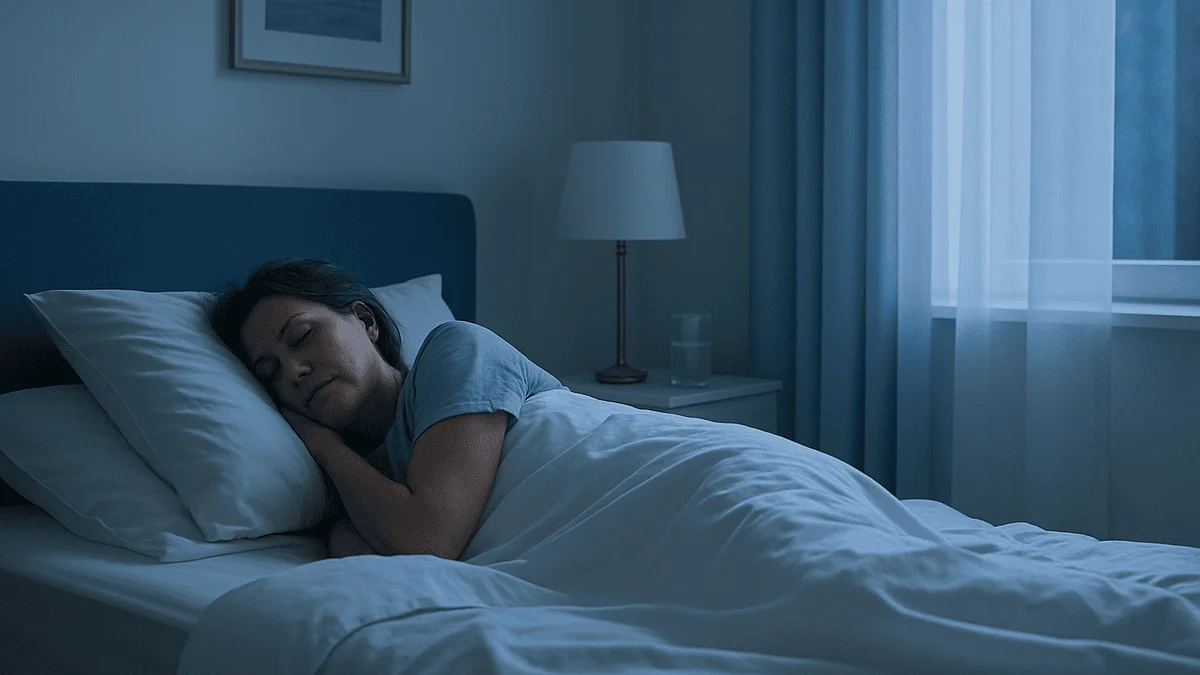
Key Takeaways
- A night guard protects teeth from wear but does not stop the grinding itself, according to both Mayo Clinic and the NHS.
- The NHS links heavy caffeine intake, around six or more cups of tea or coffee a day, with bruxism, and timing late in the day matters as much as quantity.
- Alcohol before bed fragments the second half of sleep and worsens snoring, nudging two grinding triggers at once.
- Mayo Clinic classifies sleep bruxism as a sleep-related movement disorder and notes it is more common in people with snoring and obstructive sleep apnea.
- Clenching is nearly silent, so the absence of a reported grinding noise does not mean the jaw is not working hard overnight.
- Childhood bruxism usually resolves by adulthood, per Mayo Clinic, so monitoring rather than an appliance is the usual approach for young children.
Bruxism lifestyle changes work alongside a night guard, not instead of it. Evidence from major health bodies points to reducing caffeine, alcohol and nicotine (especially in the evening), protecting regular sleep, managing stress, and treating snoring or sleep apnea where present. A guard shields teeth from wear but does not stop the grinding itself; your dentist or doctor decides the overall plan.
The clue is usually small. A partner mentions a sound in the night, something between a creak and a squeak. Or a dentist pauses over a molar, runs a fingertip along a flattened edge, and asks a question you did not expect: “Do you clench or grind?” Most people say no, because they have never been awake to notice.
Then comes the night guard, a fitted piece of acrylic or softer plastic that sits over the teeth while you sleep. It arrives with a case and a rinse-it-in-the-morning instruction, and often very little else. What people actually want to know is what they can do during the day so that the guard has less work to do at night.
That is where bruxism lifestyle changes come in. The evidence is honest rather than dramatic: caffeine, alcohol, nicotine, poor sleep and stress are all associated with grinding, and each one is at least partly within reach. This article walks through what is known, what is guessed, and what your care team may add.
What is sleep bruxism, and how is it different from daytime clenching?
Bruxism is the medical term for grinding, gnashing or clenching the teeth. Clinicians split it into two forms. Awake bruxism is the daytime habit of pressing the teeth together, often during concentration or frustration, usually without any grinding sound. Sleep bruxism happens while you are asleep and is classified by the Mayo Clinic as a sleep-related movement disorder, the same broad family as restless legs.
The distinction matters because the two behave differently. Awake clenching is something you can catch and interrupt once you know to look for it. Sleep bruxism is not under conscious control, which is why willpower alone rarely changes it and why a night guard exists in the first place.
What actually happens during a sleep bruxism episode is a burst of rhythmic activity in the jaw-closing muscles, mainly the masseter (the thick muscle you feel at the angle of the jaw) and the temporalis (the fan-shaped muscle at the temple). These bursts tend to cluster around brief arousals, the micro-awakenings that punctuate everyone’s sleep. Mayo Clinic notes that people with sleep bruxism are more likely to have other sleep disorders, including snoring and obstructive sleep apnea, a condition in which the airway repeatedly narrows or closes during sleep.
Think of it as the jaw being a very sensitive readout of how settled the brain is overnight. Anything that fragments sleep, from a late espresso to an untreated airway problem, gives the jaw more opportunities to fire. That single idea explains most of the lifestyle advice that follows.
A dentist usually spots the pattern first, through tooth wear, chipped edges or a scalloped tongue, and a doctor becomes involved when sleep quality, headaches or breathing are part of the picture.
How bad is bruxism? What the evidence actually says about the risks
It is a fair question, and the honest answer is that bruxism sits on a wide spectrum. For many people, especially children, it is mild and fades on its own. Mayo Clinic notes that grinding is common in young children and usually stops by adulthood. At the other end, years of forceful nightly grinding can leave a clear trail of damage.
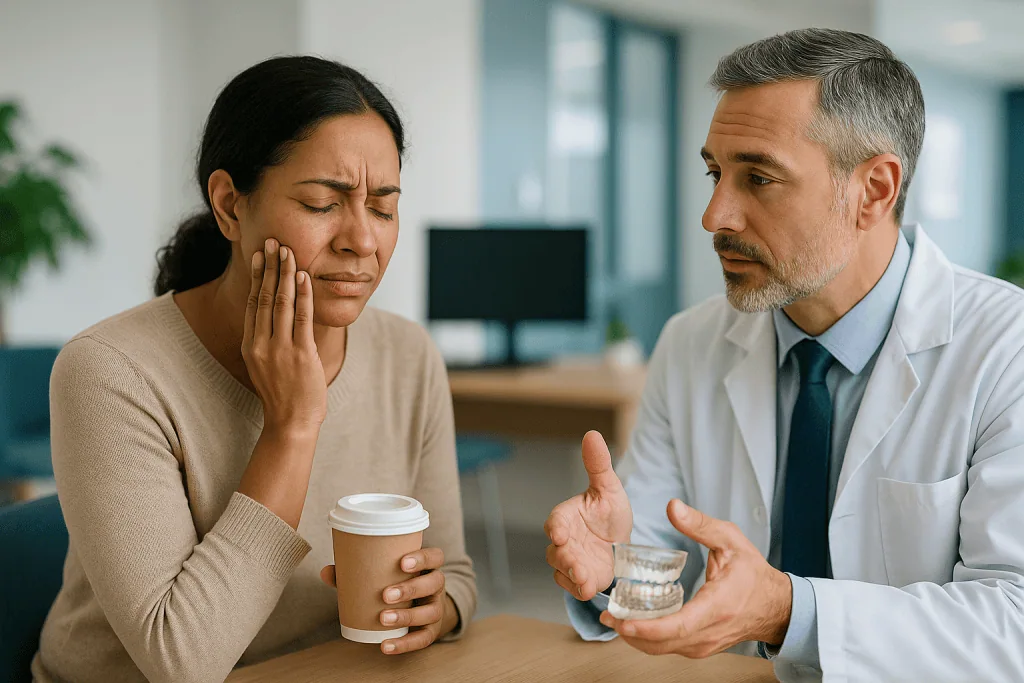
The complications listed by Mayo Clinic and the NHS fall into four groups. First, the teeth themselves: enamel wears flat, edges chip, and fillings, crowns or bridges can crack under forces they were never designed for. Second, the jaw joint: the temporomandibular joint (TMJ), the hinge just in front of each ear, can become painful or clicky, and jaw muscles can feel tight or tired on waking. Third, the head: tension-type headaches, often felt at the temples, are a recognized consequence of overnight muscle work. Fourth, sleep itself, since grinding can disturb both your rest and a partner’s.
What the evidence does not support is the idea that every grinder is heading toward severe damage. Progression depends on force, frequency, how long it has gone on, and whether teeth are protected. A dentist can gauge this from wear patterns at routine checkups, which the NHS recommends as the normal way bruxism is monitored.
The realistic goal is not to eliminate every episode, which is rarely achievable, but to limit harm: protect the teeth, reduce the triggers that make episodes more frequent, and treat any underlying condition such as sleep apnea. Framed that way, “how bad is it” becomes “what is my jaw telling me about my sleep,” which is a far more useful question to bring to your care team.
What sounds do people make when they grind their teeth?
Partners describe it in strikingly similar ways: a squeak like a shoe on a gym floor, a grating or crunching sound, sometimes a rhythmic tapping or clicking. Mayo Clinic lists grinding “loud enough to wake up your sleep partner” as one of the signs that brings people to a clinic, and it is often the only reason an adult ever learns they do it.
The sound comes from enamel sliding sideways across enamel under heavy force, which is why it can be surprisingly loud for such a small movement. Clenching, by contrast, is almost silent. The teeth press together without sliding, so a person who clenches rather than grinds may have just as much jaw fatigue and just as much tooth wear without anyone ever hearing a thing. Living alone, or having a partner who sleeps deeply, means a lot of bruxism goes unnoticed for years.
Two practical points follow. If someone has told you about a sound, mention it to your dentist even if you feel nothing in the morning; the report is genuinely useful diagnostic information. And if you sleep alone and wonder, a dentist can look for the physical evidence: flattened cusps, tiny fractures at the edges of front teeth, indentations along the sides of the tongue, or wear on an existing guard.
Some people try recording themselves overnight with a phone app. That can be interesting, but it is not a diagnosis, and a recording cannot distinguish grinding from snoring, swallowing or a creaking bed. Where sleep quality is in question, a doctor may suggest a formal sleep study, which measures jaw muscle activity alongside breathing and brain waves and is the only way to confirm sleep bruxism objectively.
Does caffeine cause teeth grinding? What caffeine and teeth grinding have in common
Caffeine is the lifestyle factor people ask about most, and the evidence is clearer than for almost any other. Both Mayo Clinic and the NHS list caffeinated drinks among the substances associated with bruxism. The NHS is specific, noting that drinking lots of caffeine, in the region of six or more cups of tea or coffee a day, is linked with grinding.
The mechanism is not mysterious. Caffeine blocks adenosine, the chemical that builds up through the day and signals sleepiness. That is exactly what makes it useful in the morning and unhelpful at night. It lightens sleep, increases the number of brief arousals, and the jaw muscles fire around those arousals. More arousals, more grinding opportunities.
A few points are worth stating plainly, because the popular advice tends to overshoot:
- Caffeine is not the cause of bruxism. It is a modifier. Many heavy coffee drinkers never grind and many grinders drink none.
- Timing matters as much as quantity. Caffeine’s stimulating effect lasts for hours, so an afternoon cup can still be working at bedtime.
- Caffeine hides in places people forget: energy drinks, cola, green and black tea, chocolate, some painkillers and pre-workout supplements.
For most healthy adults, Mayo Clinic describes an intake of up to about four cups of brewed coffee a day as generally safe, but “safe” and “good for sleep” are different questions. A sensible experiment, if your dentist has flagged grinding, is to move your last caffeinated drink earlier by a couple of hours and hold that for several weeks, then notice whether morning jaw tightness or guard wear changes. There is no guarantee it will, and if you take regular medication, check with your prescriber before making large changes, since caffeine interacts with some medicines.
How sleep quality, alcohol and nicotine feed the grinding cycle
If caffeine is the daytime story, alcohol and nicotine are the evening one, and both appear on the Mayo Clinic and NHS lists of substances associated with bruxism.
Alcohol is the more counterintuitive. A drink before bed feels like it helps sleep, and it does shorten the time to fall asleep. The problem comes later. As alcohol is metabolized during the night, sleep becomes lighter and more fragmented in the second half, exactly the conditions under which grinding episodes cluster. Alcohol also relaxes the muscles of the throat, which worsens snoring and sleep apnea, and untreated apnea is itself one of the strongest associations with sleep bruxism. So a nightcap can nudge two triggers at once.
Nicotine is a stimulant, whether it arrives through cigarettes, vapes or pouches. Smoking is specifically named by the NHS as a lifestyle factor linked to grinding. Evening nicotine lightens sleep in much the same way caffeine does, and nicotine withdrawal overnight can add its own restlessness.
Underneath all of this sits the plain matter of getting enough sleep. The CDC advises that most adults need at least seven hours a night. Short sleep does not simply shorten the window for grinding; it deepens sleep pressure, which changes the architecture of the night and can increase arousals when you do sleep. Irregular schedules, weekend catch-up and screen-lit bedrooms all chip away at that.
The practical translation is unglamorous but well supported: a consistent bedtime and wake time, a cool dark room, no alcohol in the last few hours before bed, and no nicotine in the evening. None of this is a treatment for bruxism in itself. It is the foundation that lets other treatments, including a night guard, do their job against a calmer background. If snoring, gasping or unrefreshing sleep are part of your nights, that is a conversation for your doctor, not a lifestyle tweak.
Does stress cause teeth grinding? Stress, anxiety and bruxism lifestyle changes that help
Stress is the explanation most people reach for, and it is not wrong, just incomplete. The NHS describes bruxism as “often related to stress and anxiety,” and Mayo Clinic lists anger, frustration and tension among the triggers, alongside personality traits such as being highly competitive or hyperactive. What the evidence does not show is a simple one-to-one relationship; plenty of calm people grind, and plenty of stressed people do not.
A useful way to hold it: stress raises baseline muscle tone and increases nighttime arousals, so it lowers the threshold at which grinding happens. That is why a stressful fortnight can show up as morning jaw ache in someone who is otherwise fine.
Awake clenching is the part most responsive to behavior change. Mayo Clinic describes behavior therapy that teaches people to notice and release the jaw, and many dentists offer a simple version: several times a day, check whether your teeth are touching. At rest they should be slightly apart, lips closed, tongue relaxed. The rest position is sometimes summarized as “lips together, teeth apart.” Sticky notes on a monitor or a phone reminder can prompt the check until it becomes automatic.
For sleep bruxism, the route is indirect. Whatever genuinely lowers your stress load during the day tends to settle the night: regular physical activity earlier in the day, a wind-down routine that ends screen use before bed, breathing or relaxation practice, and talking therapy where anxiety is persistent. Mayo Clinic also mentions biofeedback, a technique using sensors to help people become aware of and reduce jaw muscle activity, though access varies and evidence for long-term benefit is still limited.
None of these should be sold as a fix. They are reasonable, low-risk bruxism lifestyle changes that many clinicians suggest, and they carry benefits well beyond the jaw.
How does a night guard for teeth grinding actually work?
A night guard, also called an occlusal splint or bite splint, is a removable appliance worn over the upper or lower teeth during sleep. The word occlusal simply refers to the biting surfaces of the teeth. Guards come in soft, hard and dual-layer versions, and in custom-made forms fitted from a dental impression as well as over-the-counter versions shaped at home in hot water.
Here is the part that surprises people: a guard does not stop grinding. Both Mayo Clinic and the NHS are explicit that splints protect teeth from wear but do not necessarily reduce the grinding itself. Its jobs are more modest and more reliable:
- It puts a sacrificial layer between upper and lower teeth, so the appliance wears instead of enamel.
- It spreads force across the whole arch rather than concentrating it on a few contact points.
- It slightly separates the jaws, which changes the resting length of the jaw muscles and may ease morning tightness for some people.
- It protects restorations such as crowns, veneers and implants, which cannot repair themselves the way bone can.
Custom guards are usually recommended by dentists because a poor fit can shift teeth over time or, in some designs, worsen jaw joint discomfort. Cleveland Clinic and the NHS both point people toward a dentist-fitted appliance rather than a generic one, particularly where jaw pain is already present. That is a fit-and-safety point, not a comment on any brand.
Care is straightforward: rinse and brush the guard with a toothbrush each morning, let it dry fully before it goes in a ventilated case, and keep it away from heat, which distorts plastic. Bring it to every dental checkup so the wear pattern can be read; a guard that is grooved or cracked within months is itself evidence of how hard the jaw is working, and useful information for your dentist.
Who a night guard is usually for, and who is usually asked to wait
The decision to prescribe a guard rests with your dentist, but the reasoning tends to follow a recognizable pattern.
A guard is commonly suggested when there is visible tooth wear or chipping, when fillings or crowns keep fracturing, when a partner reports regular grinding, or when morning jaw fatigue and temple headaches point to heavy overnight muscle work. It is also frequently recommended to protect expensive dental work in someone known to grind, since a cracked veneer is far harder to fix than a worn splint.
Several groups are usually asked to wait, or to take a different route first:
- Children. Mayo Clinic notes that childhood bruxism usually resolves on its own, and growing jaws and erupting teeth make fixed appliances impractical. Monitoring is the norm.
- People with active dental disease. Decay, gum infection or a loose tooth generally needs treating before an appliance is made, so the guard fits stable teeth.
- People with untreated sleep apnea. A standard guard does nothing for breathing and, in some cases, can worsen airway position. A doctor may want the apnea assessed first; sometimes a different appliance that advances the lower jaw is chosen instead.
- People with acute jaw joint locking or severe TMJ pain, where a specialist assessment comes before any splint design.
- Anyone whose grinding is a suspected side effect of a medicine, where the prescriber is consulted first.
None of these are exclusions so much as sequencing. The aim is that the guard addresses the right problem, on a mouth ready to receive it. If you are told to wait, it is reasonable to ask what the team is looking for in the meantime and when the question will be revisited.
Bruxism lifestyle changes at a glance: what the evidence supports
Lifestyle advice for grinding tends to arrive as a long undifferentiated list. It helps to sort it by how strong the evidence is and what each change is actually doing. The table below draws on the risk factors and self-care measures described by Mayo Clinic, the NHS and Cleveland Clinic. “Association” means the factor is consistently linked with bruxism; it does not prove that changing it will stop your grinding.
| Change | What it targets | Evidence level | Practical note |
|---|---|---|---|
| Limit caffeine, especially after midday | Sleep arousals | Consistent association (Mayo, NHS) | Includes tea, cola, energy drinks, chocolate |
| Avoid alcohol in the hours before bed | Fragmented second-half sleep, snoring | Consistent association (Mayo, NHS) | Also lowers apnea risk overnight |
| Stop smoking or evening nicotine | Stimulant effect, lighter sleep | Consistent association (NHS) | Support to quit is available through your doctor |
| Regular sleep schedule, seven or more hours | Sleep pressure and arousals | General sleep guidance (CDC) | Same wake time on weekends helps most |
| Daytime jaw awareness | Awake clenching | Recommended behavior therapy (Mayo) | “Lips together, teeth apart” check |
| Stress management, relaxation, talking therapy | Muscle tone, arousals | Recommended (Mayo, NHS) | Indirect effect on sleep bruxism |
| Avoid chewing gum and non-food chewing | Habit reinforcement, muscle fatigue | Recommended self-care (Mayo) | Pen caps, nails, ice |
| Treat snoring or sleep apnea | Airway-driven arousals | Strong association (Mayo) | Needs medical assessment, not self-care |
Two observations from the table. First, most rows point at the same target, sleep stability, which is why the advice feels repetitive but is not redundant. Second, the single most powerful item, treating sleep apnea, is the one you cannot do alone. If your nights involve snoring, gasping or waking unrefreshed, that belongs at the top of the list for your doctor.
What the first weeks with a night guard usually look like
The first night is often the hardest. The guard feels enormous, saliva increases, and some people take it out half-asleep without remembering. This is normal, and dentists generally advise persistence: wear it for short periods in the evening while reading, then progress to full nights. Most people adapt over the first days to weeks, though the pace varies and your dentist will tell you what to expect for the specific design you have been given.
Morning sensations in the early period can include a slight sense that the teeth do not meet quite as before; this should settle within minutes of removing the guard. If it persists, or if a tooth feels newly sore under pressure, that is a fit issue for the dentist rather than something to push through.
Around the same time, many people begin the lifestyle experiments described above: an earlier caffeine cutoff, alcohol-free weeknights, a fixed wake time. It is worth changing one thing at a time, and giving each change several weeks before judging it, because sleep patterns and stress levels fluctuate week to week and a single good or bad night proves nothing.
A typical follow-up sequence, described in general terms by the NHS and Cleveland Clinic, looks like this:
- An early review to check fit, comfort and any pressure points, with adjustments made to the appliance.
- Inspection of the guard at routine dental checkups, reading wear marks as a record of grinding intensity.
- Replacement when the material thins, cracks or no longer fits, on a schedule set by the dentist.
- Referral to a doctor or sleep specialist if snoring, daytime sleepiness or persistent headaches accompany the grinding.
What you should not expect is a tidy end point. Bruxism tends to wax and wane with life circumstances. The guard, the habits and the checkups form an ongoing arrangement rather than a course of treatment with a finish line.
How to stop severe bruxism: what your care team may add beyond a guard
When grinding is forceful, frequent and causing damage or pain despite a well-fitting guard and sensible habits, a dentist or doctor may consider additional options. It is worth understanding the categories, while recognizing that every decision here sits with the treating team and depends on your individual situation.
Treating the underlying driver comes first. Mayo Clinic notes that bruxism can be linked to medical conditions including gastroesophageal reflux, sleep apnea, and neurological conditions such as Parkinson’s disease, and can occur as a side effect of some medicines, notably certain antidepressants. Where a medicine is suspected, the prescriber may review it; you should never adjust or stop a prescription on your own, since the risks of doing so can outweigh the grinding.
Dental correction is sometimes discussed when tooth wear has changed how the teeth meet or when heavily damaged teeth need rebuilding with crowns or onlays. Mayo Clinic frames this as a way to repair damage and protect teeth rather than a way to stop grinding.
Medicines have a limited role. Mayo Clinic mentions muscle relaxants taken briefly before bed, medicines addressing anxiety where that is the driver, and botulinum toxin injections into the jaw-closing muscles, which work by temporarily weakening the muscle so it cannot generate the same force. Evidence for injections in severe cases is still developing and the effect is temporary, so this is a specialist conversation with clear discussion of benefits, side effects and the need for repeat treatment.
Behavioral approaches, including biofeedback and cognitive behavioral therapy for anxiety, are also listed by Mayo Clinic. Their strength is safety; their weakness is that evidence for lasting change in sleep bruxism specifically remains modest.
“Severe” is a clinical judgment based on damage, pain and impact on sleep, not on how loud the grinding is. If you feel your case is severe, say so plainly and ask what the next step in assessment would be.
What people often get wrong about bruxism
Because bruxism is common and mostly invisible, a lot of confident folk wisdom has grown around it. Several beliefs are worth correcting with what the evidence actually shows.
“A night guard will stop me grinding.” It will not, and both Mayo Clinic and the NHS say so directly. It protects teeth. If you expected it to end the habit, you may abandon it when the grinding continues, which is the wrong lesson.
“Grinding is always caused by stress.” Stress is one contributor among several. Sleep apnea, medicines, caffeine, alcohol, reflux and genetics all appear on the recognized risk-factor lists. Blaming stress alone can delay finding a treatable cause such as a breathing problem.
“My teeth don’t hurt, so it can’t be bad.” Enamel wear is painless until it is advanced. Fractured fillings and worn cusps are usually found by a dentist, not felt by the patient.
“Children who grind need treatment.” Mayo Clinic notes childhood bruxism commonly resolves by adolescence. Monitoring is the usual approach; appliances are rarely appropriate in growing mouths.
“A soft over-the-counter guard is the same as a dentist-fitted one.” A poor fit can shift teeth or aggravate the jaw joint, and some soft materials can encourage chewing. Cleveland Clinic and the NHS both steer people toward dentist-fitted appliances.
“Cutting out coffee entirely is necessary.” The association is with heavy intake and late timing. Moderate morning caffeine is compatible with good sleep for most adults, according to Mayo Clinic’s general guidance.
“Bruxism ruins your jaw joint.” It can contribute to TMJ disorders, but many grinders never develop joint problems, and many people with TMJ pain do not grind. The relationship is real but not inevitable.
The thread running through these is the same: bruxism is a signal to investigate, not a sentence, and the most useful response is to bring accurate information to a clinician rather than manage it on assumptions.
Questions to ask your care team
Appointments for grinding are often short and focused on the appliance. A few prepared questions can turn that into a broader conversation about sleep and habits. You will not need all of them; choose the ones that fit your situation.
- What evidence of grinding do you see in my mouth, and how advanced is it compared with a typical patient of my age?
- Is my grinding mainly awake, asleep, or both, and how would we tell the difference?
- Which type of guard are you recommending, why that design, and how will we know whether the fit is right?
- How should I clean and store it, and what signs mean it needs adjusting or replacing?
- How often should you inspect the guard, and what will its wear pattern tell you?
- I snore, or wake unrefreshed, or my partner has noticed pauses in my breathing. Should I be assessed for sleep apnea before or alongside the guard?
- Could any of my current medicines be contributing? Who should I talk to about that?
- Do I have reflux, and could it be relevant?
- Which lifestyle changes would you prioritize for me: caffeine timing, alcohol, sleep schedule, or something else?
- Is there any sign of jaw joint involvement, and if so, what would you want me to avoid?
- If the guard and habit changes are not enough after a reasonable trial, what would the next step in assessment or treatment be?
- Are there any dental treatments I am planning that we should sequence around the grinding?
It also helps to bring information rather than just questions: a note of what your partner hears, when in the night, how you feel on waking, your usual caffeine and alcohol pattern, and your average sleep hours. Clinicians make better decisions with that picture than with a worn appliance alone.
When to call your doctor
Most bruxism is managed at routine dental checkups, and most lifestyle experiments are safe to try on your own. Some situations, though, deserve a prompt call to your dentist or doctor rather than waiting for the next scheduled visit.
Contact your dentist soon if a tooth cracks, chips or becomes newly sensitive to pressure or temperature; if a filling or crown breaks or feels loose; if your guard develops holes or cracks or no longer fits; or if wearing the guard causes new tooth pain rather than easing jaw tightness.
Contact your doctor if you or a partner notice loud snoring with pauses in breathing, gasping or choking during sleep, or if you have persistent daytime sleepiness despite adequate hours in bed. These can indicate sleep apnea, which is strongly associated with grinding and carries its own health risks that go beyond the teeth.
Seek urgent same-day care for these red-flag signs:
- The jaw locks open or shut and will not move normally.
- Sudden severe jaw or facial pain, especially with swelling, fever or difficulty swallowing, which can point to infection.
- Jaw pain that spreads to the chest, arm or neck, comes on with exertion, or is accompanied by breathlessness, sweating or nausea; jaw pain can occasionally be a symptom of a heart problem and should be treated as an emergency.
- A new, severe headache unlike any you have had before, or headache with weakness, vision change or confusion.
- Grinding that begins suddenly in an adult alongside other new neurological changes, such as tremor or changes in movement.
None of this is a checklist for diagnosing yourself. It is a guide to when the question has moved beyond habits and appliances and needs a clinician’s assessment. Whatever you observe, describe it plainly and let your care team decide the next step.
Frequently asked questions
What is sleep bruxism?
Sleep bruxism is grinding or clenching of the teeth that happens during sleep, without conscious control. Mayo Clinic classifies it as a sleep-related movement disorder. Episodes involve bursts of activity in the jaw-closing muscles, usually clustered around brief arousals from sleep. It is distinct from awake bruxism, the daytime habit of clenching during concentration or stress, which people can learn to notice and interrupt.
How to stop grinding teeth at night?
There is no single method that reliably stops sleep grinding, so the aim is to protect the teeth and reduce triggers. A dentist-fitted night guard shields enamel and restorations. Lifestyle steps supported by Mayo Clinic and the NHS include limiting caffeine, alcohol and nicotine, especially in the evening, keeping a regular sleep schedule, managing stress, and having snoring or suspected sleep apnea assessed by a doctor. Your care team tailors the combination.
How to stop severe bruxism?
Severe bruxism, meaning grinding that damages teeth or causes pain despite a guard and sensible habits, needs clinical assessment. A dentist or doctor may look for underlying drivers such as sleep apnea, reflux or a medicine side effect, repair damaged teeth, and in selected cases discuss options Mayo Clinic lists, including behavioral therapy, muscle relaxants or botulinum toxin injections. Those decisions rest with the treating team based on your situation.
How bad is bruxism, really?
It ranges widely. Many people, particularly children, have mild grinding that fades on its own. Long-standing forceful grinding can wear enamel, crack fillings and crowns, strain the jaw joint and contribute to tension headaches, according to Mayo Clinic and the NHS. Severity depends on force, frequency, duration and whether teeth are protected, and a dentist judges it from wear patterns rather than from how loud the grinding sounds.
What sounds do people make when they grind their teeth?
Partners most often describe a squeak, grate, crunch or rhythmic tapping, produced by enamel sliding across enamel under heavy force. Mayo Clinic notes it can be loud enough to wake a sleep partner. Clenching, by contrast, is almost silent because the teeth press together without sliding, so someone can have significant bruxism and tooth wear without ever making a sound anyone hears.
Is there a link between caffeine and teeth grinding?
Yes, an association is recognized by both Mayo Clinic and the NHS, which specifically mentions heavy intake of around six or more cups of tea or coffee a day. Caffeine blocks the sleep-promoting chemical adenosine, lightens sleep and increases brief arousals, which is when grinding episodes tend to occur. It is a modifier rather than the cause; reducing quantity and moving your last drink earlier are reasonable experiments.
Does stress cause teeth grinding?
Stress and anxiety are among the most consistently reported contributors; the NHS describes bruxism as often related to them. Stress raises muscle tone and increases nighttime arousals, lowering the threshold for grinding. It is not the only factor, though. Sleep apnea, caffeine, alcohol, some medicines and genetics also appear on recognized risk lists, so stress management is one part of a plan rather than the whole answer.
Does a night guard for teeth grinding stop the habit?
No. Mayo Clinic and the NHS both state that guards protect teeth from wear but do not necessarily stop the grinding. A guard acts as a sacrificial layer, spreads force across the arch and protects crowns and fillings. It is best understood as damage control that works alongside lifestyle changes and treatment of any underlying condition, not as a way to end the behavior.
Should children wear a night guard for grinding?
Usually not. Mayo Clinic notes that grinding is common in young children and typically stops by adulthood. Growing jaws and erupting teeth make fixed appliances impractical, so dentists generally monitor children at routine checkups and reassess if wear becomes significant or persists into the teenage years. Any decision about a child’s appliance is made by the dentist based on the individual child.
Can sleep apnea cause bruxism?
The two are strongly associated. Mayo Clinic notes that people with sleep bruxism are more likely to have other sleep disorders, including snoring and obstructive sleep apnea, a condition in which the airway repeatedly narrows during sleep. The repeated arousals caused by disrupted breathing appear to trigger jaw muscle activity. If you snore loudly, gasp at night or wake unrefreshed, ask your doctor about assessment before relying on a guard alone.
References
- NHS: Teeth grinding (bruxism)
- Cleveland Clinic: Teeth grinding (bruxism)
- MedlinePlus: Bruxism
- CDC: About sleep
This article is for general information only and is not a substitute for professional medical advice. Please consult a qualified doctor about your individual situation.

More from the Blog

What Halitosis Treatment Can Change and How Quickly Breath Usually Improves
Halitosis treatment can usually change the source of the odor rather than mask it: bacterial coating on the tongue, gum disease, dry mouth, or…
What Bruxism Treatment Can and Cannot Do: Protecting Teeth vs Stopping the Grinding
Bruxism treatment results depend on which goal you mean. Custom night guards and dental repairs reliably protect teeth from further wear, but current evidence…

Who Benefits From Oral Health Therapy? Early Gum Changes, Braces and Dry Mouth
Oral health therapy usually suits people whose main need is prevention and early treatment rather than complex dentistry: those with bleeding or swollen gums…

Preparing for an Orofacial Pain Appointment: Records, Imaging and a Pain Diary
To prepare for an orofacial pain appointment, gather your past dental and medical records, any existing X-rays or scans, and a current list of…
Replacing an Old Dental Filling: Cracks, Leaks and What Happens if Decay Returns
Old dental fillings are not replaced on a schedule; they are replaced when there is a clear problem, most often decay creeping in beneath…
Daily Life With a Removable Appliance: Wear Schedule, Cleaning and Storing It Safely
A removable appliance stays healthiest when you rinse it every time it comes out, brush it daily with a soft brush and mild soap…