

Living With One Kidney After Cancer Surgery: How Function Is Monitored Over Time
Key Takeaways
- After nephrectomy the remaining kidney enlarges and each filtering unit does more work, so total function ends up lower than with two kidneys but well above half, according to NIDDK.
- The three core kidney checks after cancer surgery are blood pressure, eGFR, and urine albumin, and NIDDK advises all three at least once a year for anyone with a solitary kidney.
- An eGFR below 60 after a radical nephrectomy often reflects less tissue rather than diseased tissue; a stable trend without urine protein is read very differently from a falling one.
- Non-steroidal anti-inflammatory painkillers reduce blood flow inside the kidney by blocking prostaglandins, which is why NIDDK recommends discussing them with a clinician before use with one kidney.
- Cancer surveillance scans often use iodine contrast, so a kidney blood test drawn shortly before imaging, not after, lets the radiology team plan safely.
- Most people with one healthy kidney need no special diet, per NIDDK; the meaningful changes are reduced sodium for blood pressure and avoiding very high-protein regimens or unreviewed supplements.
After a kidney is removed for cancer, the remaining kidney usually adapts to take over most of the filtering work, and most people go on to live full, active lives with one kidney. Long-term care generally combines cancer surveillance scans with regular kidney checks: blood pressure, a blood test that estimates filtration rate (eGFR), and urine testing for protein, at intervals set by the treating team, typically at least once a year.
The discharge folder is thicker than the novel she brought to the hospital. Somewhere inside it is a line that reads “solitary kidney,” and it stops her more than the word “carcinoma” did. The tumor is out. The pathology report is reassuring. And yet the question that follows her to the car is quieter and stranger: how does anyone know whether the kidney that’s left is coping?
Living with one kidney after cancer surgery is common, and it is also oddly under-explained. Surgeons talk about margins and lymph nodes. Oncologists talk about scan schedules. The kidney itself, the organ now doing a two-person job alone, often gets a single sentence: “It should be fine.”
Usually it is. But “fine” has a measurable shape, and understanding what your team is tracking, and why the numbers may look different from before, turns a vague reassurance into something you can actually follow.
What actually happens to your body with one kidney after nephrectomy
A nephrectomy is the surgical removal of a kidney, either the whole organ (radical) or the tumor plus a rim of surrounding tissue (partial). The morning after a radical nephrectomy, your body has lost roughly half of its filtering units, called nephrons, the microscopic loops that clean blood and make urine. What happens next is one of the more remarkable adaptations in human physiology.
The remaining kidney does not grow new nephrons. Instead, according to the National Institute of Diabetes and Digestive and Kidney Diseases (NIDDK), it enlarges and each existing nephron filters more blood than it did before. Clinicians call this compensatory hypertrophy, and the increased workload per nephron is called hyperfiltration. The adaptation begins within days and continues over the following months, which is why early blood tests often look worse than the numbers you will settle at later.
It helps to remember that a kidney is not just a filter. It releases renin, a hormone that helps regulate blood pressure; it produces erythropoietin, which signals bone marrow to make red blood cells; it activates vitamin D for bone health; and it fine-tunes salt, potassium, and water balance. One healthy kidney can handle all of these jobs. Monitoring exists because the margin for error is smaller: there is no backup organ if the solitary kidney is injured by high blood pressure, dehydration, a medication, or a second tumor.
The overall picture, per NIDDK, is that most people with a single kidney live normal, healthy lives. The check-ups are not a sign that something is expected to go wrong. They are how your team catches the small, slow changes that a person cannot feel.
Radical vs partial nephrectomy: why the operation type shapes your monitoring
Two people can both say “I had kidney cancer surgery” and be in quite different situations. The distinction that matters most for long-term kidney health is how much tissue was removed.
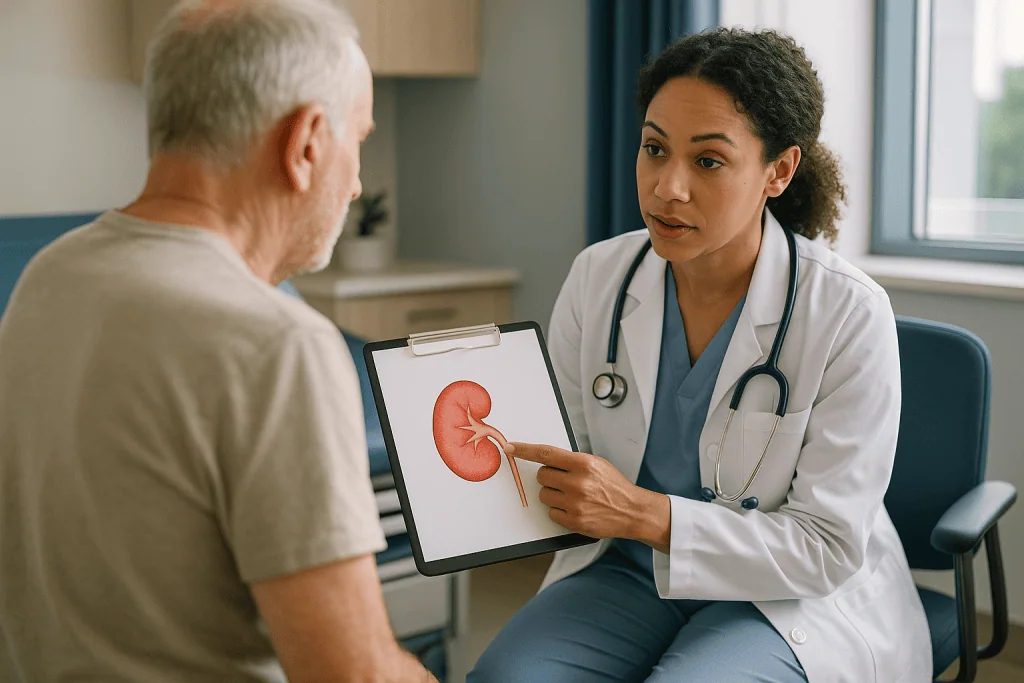
In a radical nephrectomy, the entire kidney is taken out, often with the surrounding fatty tissue and sometimes the adrenal gland or nearby lymph nodes. In a partial nephrectomy, the surgeon removes the tumor and a margin of healthy tissue while leaving the rest of that kidney in place. The NHS notes that partial surgery is generally considered when the tumor is small and its position allows it, precisely because preserving nephrons protects future kidney function.
Why does this change your follow-up? After a radical operation, the remaining kidney carries the full load, so the focus is on how well that single organ compensates and on protecting it from harm. After a partial operation, you technically still have two kidneys, though one is smaller and has a healed scar. Early monitoring after partial surgery pays extra attention to the operated kidney itself, because complications such as bleeding from the cut surface or a urine leak can occur in the first weeks, according to Mayo Clinic’s overview of nephrectomy risks.
Over the longer term, both groups have blood and urine tests and both have cancer surveillance imaging. Those with a radical nephrectomy tend to see a bigger drop in estimated filtration rate; those with a partial nephrectomy often keep more function but need imaging that can distinguish a surgical scar from anything new. Your surgeon’s operation note, not a general article, determines which path you are on, and it is worth asking which type you had if no one has said so plainly.
Kidney function tests after nephrectomy: what each number means
Most of kidney monitoring is unglamorous: a blood draw, a urine sample, and a cuff on your arm. Each test answers a different question, and knowing which is which makes the results letter far less cryptic.
| Test | What it measures | Why it matters with one kidney |
|---|---|---|
| Serum creatinine | A waste product from muscle that healthy kidneys clear from blood | Rises when filtering falls; also affected by muscle mass and hydration |
| eGFR (estimated glomerular filtration rate) | An estimate of how much blood the kidneys filter per minute, calculated from creatinine, age, and sex | The main long-term tracking number; the trend matters more than any single value |
| Urine albumin-to-creatinine ratio | Protein leaking into urine | An early warning that filtering units are under strain, often before eGFR changes |
| Urinalysis | Blood, protein, glucose, and signs of infection in urine | Picks up infection or bleeding that a solitary kidney cannot afford to have ignored |
| Blood pressure | Force of blood against artery walls | High pressure damages the remaining kidney; the kidney also helps set pressure |
| Electrolytes (potassium, sodium, bicarbonate) | Mineral and acid balance | Shifts can signal declining function or medication effects |
| Imaging (ultrasound or CT) | Structure of the remaining kidney and cancer surveillance | Checks for new growths, blockage, or scarring |
MedlinePlus describes eGFR as the standard way to gauge kidney function, with values of 60 or above generally considered in the normal range and persistently lower values prompting further evaluation. NIDDK advises that people with a solitary kidney have blood pressure, eGFR, and urine albumin checked at least once a year. Your team may test more often early on, then spread appointments out once the numbers plateau.
Who needs closer kidney monitoring after cancer surgery, and who follows the standard schedule
Not everyone with one kidney is followed the same way, and that is deliberate rather than inconsistent. The intensity of monitoring reflects how much reserve your remaining kidney had to begin with and what else is asking it to work harder.

People who usually follow a standard schedule, meaning yearly checks once early results are stable, tend to have normal filtration before surgery, no diabetes, controlled or absent high blood pressure, and a partial nephrectomy or a radical one at a younger age. For them, the annual checks NIDDK recommends are typically enough.
People who are often asked to come back sooner and more frequently include those with:
- Reduced eGFR before surgery, since the remaining kidney starts with less capacity to spare
- Diabetes or long-standing high blood pressure, both of which damage small kidney vessels over years
- A radical nephrectomy in later life, when compensatory growth is more limited
- Protein already detectable in the urine
- An inherited syndrome, such as von Hippel-Lindau disease, that raises the chance of tumors developing in the remaining kidney and calls for more frequent imaging
- A history of kidney stones, recurrent urinary infections, or a single kidney that has structural narrowing
The “asked to wait” idea applies here too, though in reverse. Someone recovering from a complicated operation may be asked to wait before resuming strenuous activity, before having contrast-enhanced scans, or before certain medicines are reintroduced, until blood tests confirm the kidney has settled. None of this is a judgment about how well you are doing; it is arithmetic about reserve. Ask your team which group you fall into and what would move you from one to the other.
The first days and weeks: what living with one kidney after cancer looks like early on
The early recovery is mostly about the operation, not the kidney. Mayo Clinic describes a hospital stay of a few days for most people after nephrectomy, shorter with laparoscopic or robotic techniques and longer after open surgery through a larger incision. Expect pain at the wound sites, a urinary catheter for a short period, and a strong push from nurses to walk the corridor sooner than feels reasonable. Walking reduces clot risk and helps the bowel wake up.
Behind the scenes, your creatinine is being checked daily. It typically rises in the first day or two because the remaining kidney has not yet adjusted, then drifts down toward a new baseline over subsequent weeks and months as compensation kicks in. A higher-than-usual first result is expected; a result that keeps climbing is what prompts attention.
Once home, the NHS advises that returning to normal activities generally takes several weeks and that strenuous exertion and heavy lifting are avoided until the surgical team says otherwise. Fatigue is common and disproportionate to how small the scars look. Appetite returns gradually.
Around the time stitches or glue have healed, most people have a first follow-up appointment. This visit usually covers three things at once: how the wounds and pain are settling, the final pathology report describing the tumor’s type, grade, and whether margins were clear, and the first out-of-hospital kidney blood test. It is also when the surveillance plan is usually laid out. Bring a notebook. The details of scan timing and lab intervals are easy to lose in the relief of hearing “the margins were clear.”
By the end of this period, the question shifts from “Am I healing?” to “What is my new normal?”, and that is a question the numbers answer better than sensation does.
Why a lower eGFR after surgery is often expected, and when it isn't
The result that unsettles people most is an eGFR that has dropped into a range labeled “chronic kidney disease.” Understanding how the number is built takes much of the sting out of it.
eGFR is not measured directly; it is estimated from your blood creatinine along with your age and sex, as MedlinePlus explains. Losing a kidney means less total filtering surface, so creatinine sits a little higher and the estimate lands lower. A person with two healthy kidneys might have an eGFR well above 90; the same person after a radical nephrectomy may settle somewhere lower, sometimes below the threshold of 60 that MedlinePlus lists as the cutoff for possible kidney disease.
Here is the nuance clinicians hold in mind: a lower eGFR caused purely by having less kidney tissue is different from a lower eGFR caused by disease damaging the tissue you have. The label is the same; the implication is not. What your team watches is the trajectory. A number that reaches a plateau and stays there for years is reassuring. A number that declines steadily, or a urine test that starts showing protein, suggests the remaining kidney is under strain and warrants closer attention.
Creatinine also has quirks. It rises with more muscle mass, after a large meat meal, or when you are dehydrated, and falls in people with low muscle mass. A single unexpected reading is often repeated before anyone draws conclusions. Some teams add cystatin C, another blood marker that is less influenced by muscle, when creatinine results seem inconsistent with the clinical picture.
The practical takeaway: ask what your pre-surgery eGFR was, what it has settled at, and what trend would concern your team. Those three data points frame every future result.
Blood pressure: the quiet number that matters most with a single kidney
If you only remember one thing from this article, make it this: after kidney cancer surgery, blood pressure is as much a kidney test as any blood draw.
The relationship runs both ways. Kidneys help set blood pressure by controlling salt and water balance and by releasing renin, a hormone that tightens blood vessels when the kidney senses low flow. When a single kidney is hyperfiltering, the pressure inside its tiny filtering units is already higher than normal. Add high blood pressure in the arteries and those units are squeezed from both directions, which over years can scar them. NIDDK lists high blood pressure as one of the changes people with a solitary kidney are more likely to develop, alongside protein in the urine and reduced filtration.
The American Heart Association classifies a reading under 120/80 as normal, with readings from 130/80 upward falling into hypertension categories. Your team may set a personal target based on your age, other conditions, and how your kidney is performing; that decision is theirs, not a generic chart’s.
Home monitoring makes clinic readings far more meaningful. Sit quietly for a few minutes, feet flat, arm supported at heart level, cuff on bare skin, and take two readings a minute apart at the same times each day. Bring the log to appointments.
When medicine is needed, clinicians often consider classes such as ACE inhibitors or angiotensin receptor blockers, which lower pressure within the kidney’s filtering units as well as in the arteries and can reduce protein leakage. Any decision to start, adjust, or stop a blood pressure medicine belongs to the prescribing clinician, who will weigh your kidney numbers and potassium levels before choosing.
Cancer follow-up and kidney follow-up: two timetables at one appointment
People are often surprised to learn they are effectively enrolled in two surveillance programs that happen to share a waiting room. One asks whether the cancer has returned; the other asks whether the remaining kidney is thriving. They use different tools and, if no one coordinates them, can quietly work against each other.
Cancer surveillance relies on imaging. The NHS describes regular follow-up appointments after kidney cancer treatment, with scan frequency set according to the tumor’s stage and grade; higher-risk tumors are generally imaged more often and for longer. A CT of the chest and abdomen is the usual workhorse because the lungs, the surgical bed, and the opposite kidney are the places clinicians most want to see. Some teams use ultrasound or MRI between CTs to reduce radiation exposure.
Kidney surveillance relies on the blood pressure cuff, blood tests, and urine tests described earlier. It continues for life, whereas cancer imaging typically becomes less frequent over the years if scans remain clear.
The point of friction is contrast dye. Many CT scans use iodine-based contrast, which in people with reduced kidney function can occasionally cause a temporary dip in filtration. This does not mean people with one kidney cannot have contrast scans; it means the radiology team checks a recent eGFR first, may adjust the protocol, and may encourage good hydration around the scan. A kidney test drawn a few days before imaging, rather than a few days after, keeps that decision informed.
The practical fix is simple. Ask whether your oncology and kidney results are reviewed together, and whether one clinician holds the overall plan. Many people find that a primary care doctor, kept in the loop with copies of every result, becomes the thread that ties the two timetables into one.
Single kidney precautions: painkillers, scans, and contrast dye
The precautions worth taking with a solitary kidney are fewer than most people fear and more specific than “be careful.”
Painkillers come first because they are the most common everyday exposure. Non-steroidal anti-inflammatory drugs, a class that includes several familiar over-the-counter pain and fever relievers, work by blocking prostaglandins, chemical messengers that, among other jobs, keep the small arteries feeding the kidney’s filters open. In a well-hydrated person with two kidneys, an occasional tablet rarely matters. In someone with one kidney who is also dehydrated, unwell, or taking blood pressure medicines, the same drug can transiently reduce kidney blood flow. NIDDK advises people with a solitary kidney to talk with their healthcare professional before using these medicines. Ask your team which pain relief options they prefer for you, and mention your single kidney to any dentist, pharmacist, or urgent care clinician you see.
Illness with vomiting or diarrhea deserves a plan rather than improvisation. Fluid loss lowers kidney blood flow, and some routine medicines become harder for a stressed kidney to handle. Ask your team in advance whether any of your regular prescriptions should be reviewed during a dehydrating illness, and when to seek help.
Scans with iodine-based contrast and some MRI contrast agents are assessed case by case, as described in the previous section. Never skip a recommended scan out of worry about the kidney; the imaging team already accounts for it.
Supplements and herbal products are the blind spot. Some, including high-protein powders, creatine, certain “detox” preparations, and high-dose vitamin or mineral products, can raise creatinine, stress filtration, or interact with medicines. Run every new product past your clinician or pharmacist first. A wallet card or phone lock-screen note reading “single kidney” is a small, sensible habit for emergencies.
What foods should I avoid with one kidney after cancer surgery?
The honest answer disappoints people who want a list: for most people with a single kidney and normal function, NIDDK states that no special diet is required. What changes is emphasis, not permission.
Salt moves up the priority list because of blood pressure. Most dietary sodium comes not from the shaker but from processed and restaurant food: cured meats, canned soups, ready meals, bread, cheese, sauces, and snack foods. Cooking more from scratch and reading labels does more than banning any single item. The American Heart Association’s blood pressure guidance treats sodium reduction as one of the core lifestyle measures.
Protein deserves moderation rather than restriction. Very high-protein eating patterns and protein supplements ask the filtering units to work harder, and in a kidney that is already hyperfiltering, that extra load is worth avoiding. Ordinary portions of fish, poultry, eggs, legumes, and dairy are appropriate for most people. If your eGFR has fallen into a range that concerns your team, a renal dietitian may fine-tune protein, potassium, or phosphorus intake, but that is an individualized decision based on your labs, not a default rule for everyone with one kidney.
Hydration should be steady and sensible. Pale yellow urine is a reasonable everyday guide; forcing large volumes offers no proven benefit and is not recommended unless your team says otherwise, for example if you form stones.
Alcohol in moderation is not forbidden, but heavy drinking raises blood pressure and dehydrates. Grapefruit and certain herbal teas can interact with medicines, so mention them if you take regular prescriptions.
The pattern that consistently supports kidney and heart health is the same one that supports recovery from cancer treatment: vegetables, fruit, whole grains, legumes, nuts, olive oil, modest animal protein, and little ultra-processed food.
Exercise, contact sports, and protecting the kidney you have
The instinct after losing an organ is to wrap the survivor in cotton wool. For the kidney, the evidence points the other way: regular physical activity lowers blood pressure, improves blood sugar control, helps weight management, and eases the fatigue that lingers after cancer surgery. All of these protect the remaining kidney.
Once the surgical team clears you, usually after the several-week healing window the NHS describes, aerobic activity such as brisk walking, cycling, swimming, or dancing can be built up gradually. Resistance training is also appropriate once the abdominal wall has healed; start with lighter loads and controlled movements, and increase slowly. There is no kidney-specific reason to avoid sweating, breathlessness, or a raised heart rate during exercise. Drink to thirst, more in heat.
Contact and collision sports are the one area with a genuine question. The kidneys sit toward the back of the abdomen under the lower ribs, reasonably well protected, and traumatic kidney injury in sport is uncommon. But uncommon is not never, and an injury to a solitary kidney has no backup. NIDDK advises that people with one kidney discuss participation in contact sports with their healthcare professional and consider protective padding. Decisions vary with the sport, the level of play, the person’s age, and personal values; a clinician who knows your situation is the right person to weigh them with you.
Two less obvious protections matter more than sports gear. Keeping weight in a healthy range reduces the metabolic strain on the kidney, and not smoking, or stopping if you do, matters twice over: smoking narrows the small vessels that feed kidney tissue and is a known risk factor for kidney cancer itself, as the NHS notes. If you need support to quit, ask your team; it is one of the most kidney-protective steps available.
What people often get wrong about living with one kidney after cancer
Misunderstandings cluster around the same few ideas, and each one has a factual correction worth hearing.
“I now have half my kidney function.” Not quite. Compensatory hypertrophy means the remaining kidney filters more than it did before surgery. Total function is lower than with two kidneys but higher than half, and the exact level varies from person to person, which is why your own eGFR trend matters more than any generic figure.
“An eGFR in the kidney disease range means I am heading for dialysis.” A lower eGFR after nephrectomy often reflects less tissue rather than diseased tissue. A stable number, with no protein in the urine and controlled blood pressure, is a very different picture from a falling one. Your team reads the trend, not the label.
“I need to drink huge amounts of water to flush the kidney.” Steady hydration is sensible; forcing large volumes has no demonstrated benefit for a healthy solitary kidney.
“I can never take a painkiller again.” The concern about anti-inflammatory drugs is real but situational: dehydration, illness, and certain blood pressure medicines raise the risk. The right approach is a conversation with your clinician about which options suit you, not blanket avoidance of all pain relief.
“Special renal diets are mandatory.” NIDDK is clear that most people with one healthy kidney need no special diet. Dietary changes come in if lab results show strain.
“The cancer will inevitably return in the other kidney.” A second tumor in the remaining kidney is uncommon and is precisely why surveillance imaging includes that kidney. Surveillance is a safety net, not a prediction.
“Yearly checks are only for people who feel unwell.” Early kidney strain produces no symptoms. The tests exist because you will feel fine either way.
Questions to ask your care team
A follow-up appointment is short and the relief of good news is distracting, so it helps to arrive with questions written down. These are the ones that tend to change how people understand their own situation.
- Did I have a radical or partial nephrectomy, and what did the final pathology show about type, grade, and margins?
- What was my eGFR before surgery, what has it settled at now, and what trend would concern you?
- Is there protein in my urine, and will you be checking a urine albumin-to-creatinine ratio routinely?
- What blood pressure target are you aiming for in my case, and should I be monitoring at home?
- How often will I have cancer surveillance scans, for how many years, and will they use contrast?
- Who is coordinating my oncology results and my kidney results, and does my primary care doctor receive copies?
- Which everyday pain relievers do you prefer I use, and which should I avoid?
- If I get a vomiting or diarrheal illness, should any of my regular medicines be reviewed, and when should I call?
- Are there activities, sports, or supplements you would want me to discuss before starting?
- Is there anything in my family history or pathology that suggests a genetic syndrome needing different follow-up?
Two questions are easy to forget. First, ask how you will receive results between appointments, and what “no news” means in your team’s system; some services call only if something needs action, others send every result, and knowing which avoids weeks of unnecessary worry. Second, ask what would make your team change the monitoring plan, in either direction. Knowing the thresholds that would trigger closer follow-up, or allow it to relax, turns each results letter from a verdict into a data point on a curve you understand.
When to call your doctor
Most of life with a solitary kidney passes without urgency. The situations below are the exceptions, when contacting your team promptly, or seeking emergency care, matters because a single kidney has no reserve to absorb a problem that goes unaddressed.
Seek emergency care or call your team the same day if you notice:
- Little or no urine over a period of hours despite drinking, particularly during or after a vomiting or diarrheal illness
- Visible blood in the urine, or urine that is dark brown or cola-colored
- Fever with pain in the flank or back on the side of your remaining kidney, which can signal a kidney infection
- Sudden swelling of the legs, ankles, or around the eyes, or rapid unexplained weight gain over a few days, which can indicate fluid retention
- New shortness of breath, chest pain, or a very high home blood pressure reading with headache, vision changes, or confusion
- Severe, unrelenting flank pain, especially with nausea, which may suggest a stone or a blockage
- A blow to the abdomen or back followed by pain or blood in the urine
In the weeks after surgery specifically, Mayo Clinic’s guidance on nephrectomy recovery flags redness, warmth, or discharge from wounds, worsening rather than improving pain, fever, and calf pain or swelling as reasons to contact the surgical team without delay.
Contact your team within a few days, rather than urgently, for persistent fatigue that is getting worse rather than better, unexplained itching, loss of appetite with a metallic taste, muscle cramps, or a home blood pressure log that is steadily drifting upward. These can be early signs that kidney function or blood pressure needs review.
When unsure, call. A nurse triage line would far rather hear about a false alarm than miss an early problem in a person who has one kidney to protect.
Frequently asked questions
What are the potential health effects of living with only one kidney?
For most people, very few day to day. NIDDK notes that people with a solitary kidney are somewhat more likely to develop high blood pressure, protein in the urine, and a gradual reduction in filtration rate over the years, which is why annual monitoring is recommended. Serious kidney failure is uncommon when blood pressure is controlled and the kidney is protected from injury, dehydration, and harmful medicines.
What foods should I avoid after a partial nephrectomy?
Usually none in particular. If the remaining kidney tissue functions normally, NIDDK states that no special diet is needed. The sensible shifts are lower sodium to protect blood pressure, moderate rather than very high protein intake, steady hydration, and limited alcohol. If your eGFR has fallen or protein appears in your urine, a renal dietitian may individualize potassium, phosphorus, or protein based on your lab results.
What precautions should I take if I have a single kidney?
Focus on a few specifics: check with your clinician before using anti-inflammatory painkillers, keep well hydrated during illness and heat, review supplements and herbal products with a pharmacist, tell every clinician and dentist you have one kidney, and attend yearly blood pressure, eGFR, and urine checks. NIDDK also advises discussing contact sports and protective gear with your healthcare professional rather than avoiding activity altogether.
Are there specific foods to avoid with one kidney to protect blood pressure?
The main target is sodium, most of which comes from processed foods rather than table salt: cured meats, canned soups, ready meals, salty snacks, cheese, and many sauces. The American Heart Association lists sodium reduction among core lifestyle measures for blood pressure. Cooking from scratch, reading labels, and favoring vegetables, fruit, whole grains, and legumes does more than eliminating any single item.
How often are kidney function tests after nephrectomy repeated?
Frequency depends on your starting function and other conditions. Blood tests are checked daily in hospital, then repeated at early follow-up visits until the eGFR reaches a plateau. After that, NIDDK recommends that people with a solitary kidney have blood pressure, eGFR, and urine albumin checked at least once a year, with more frequent testing if results are changing or if diabetes or high blood pressure is present.
Can you live a normal lifespan with one kidney after nephrectomy?
NIDDK states that most people with a single kidney live normal, healthy lives, and no individual lifespan can be predicted from having one kidney alone. The factors that shape long-term outlook are the cancer’s stage and grade, blood pressure control, diabetes, smoking, and how stable kidney function remains over time. Your treating team can discuss what your own pathology and lab trends suggest.
What does it mean when kidney cancer is described as advanced or at the end stage?
Advanced or end-stage kidney cancer means the disease has spread beyond the kidney to other organs and is no longer considered removable by surgery. Care then focuses on controlling growth with systemic treatments where appropriate and on managing symptoms such as pain, fatigue, and appetite loss through palliative and supportive care. The NHS describes these options in its kidney cancer treatment guidance; the plan is always individualized by the treating team.
Why did my eGFR drop into the kidney disease range after surgery when I feel fine?
Because eGFR is estimated from blood creatinine, and with less kidney tissue creatinine sits slightly higher, the estimate lands lower. MedlinePlus lists 60 as the threshold below which kidney disease is considered, but after a radical nephrectomy a stable value near or below that line often reflects less tissue rather than damaged tissue. Your team interprets the number alongside urine protein, blood pressure, and the trend over time.
Can the remaining kidney develop cancer too?
It can, though this is uncommon. The risk is higher in people with inherited syndromes such as von Hippel-Lindau disease or with certain tumor types, which is one reason surveillance imaging includes the remaining kidney. Regular scans are a safety net rather than a prediction, and the NHS describes follow-up appointments after kidney cancer treatment as routine practice. Tell your team about any family history of kidney tumors.
Is pregnancy possible and safe with one kidney after cancer surgery?
Many people with a single kidney have healthy pregnancies, but planning matters. Pregnancy increases kidney workload and blood pressure risk, so clinicians typically want stable kidney function, controlled blood pressure, and an appropriate interval after cancer treatment before conception. Some cancer medicines are unsafe in pregnancy. Discuss timing with your oncology team and an obstetrician early so monitoring can be arranged throughout.
References
- NIDDK (NIH): Solitary Kidney
- MedlinePlus: Glomerular Filtration Rate (GFR) Test
- MedlinePlus: Creatinine Test
- NHS: Kidney cancer – Treatment
This article is for general information only and is not a substitute for professional medical advice. Please consult a qualified doctor about your individual situation.

More from the Blog

Molecular and Genetic Testing Before Targeted Therapy: How Tumor Markers Match the Drug
Molecular testing before targeted therapy examines a tumor sample for specific biomarkers, such as gene mutations, gene fusions, extra gene copies or abnormal proteins,…

CyberKnife vs Standard Radiation Therapy: Sessions, Precision and Who Suits Which
CyberKnife is a brand name for a robotic form of stereotactic radiosurgery, which delivers a small number of high-precision radiation treatments, typically one to…
Eating After Esophageal Cancer Surgery: Small Meals, Reflux Habits and a New Routine
Eating after esophageal cancer surgery usually means small, frequent meals instead of three large ones, chewing slowly, sitting upright during and after eating, and…

How a Stomach Cancer Tumor Board Decides Between Surgery First and Chemotherapy First
A stomach cancer tumor board is a scheduled meeting where surgeons, medical and radiation oncologists, radiologists, pathologists and nurse specialists review one patient's scans,…

Reading Your Radiation Therapy Plan: Fractions, Fields and Questions Worth Asking
A radiation therapy plan lists how many sessions (fractions) you will have, the areas being treated (fields), and the nearby structures the team is…

Endometrial Cancer in Women Who Want Children: When Fertility-Sparing Care Is Discussed
Fertility-sparing treatment for endometrial cancer is a closely monitored alternative to hysterectomy that oncologists discuss only in a narrow situation: a low-grade endometrioid tumor…