

Managing Pain After Gallbladder Removal: Shoulder-Tip Ache, Incisions and Safe Relief
Key Takeaways
- Shoulder-tip pain after keyhole gallbladder surgery is referred pain from carbon dioxide irritating the diaphragm, and the NHS notes it usually passes within a few days.
- The NHS puts typical recovery at about two weeks for laparoscopic surgery and six to eight weeks for open surgery, so which type you had sets your timeline.
- The navel incision is usually the sorest because the gallbladder is extracted through it and it passes through slow-healing midline fibrous tissue.
- Persistent symptoms after surgery, termed postcholecystectomy syndrome, affect roughly ten to fifteen percent of people by commonly cited estimates and usually have an identifiable cause.
- Pain years after removal is more often a new bile-duct stone, reflux, or a bowel disorder than a surgical error, and it warrants a blood test and scan rather than acceptance.
- Jaundice, fever, worsening pain, or persistent vomiting after gallbladder removal are red flags that need same-day assessment, while shoulder ache alone does not.
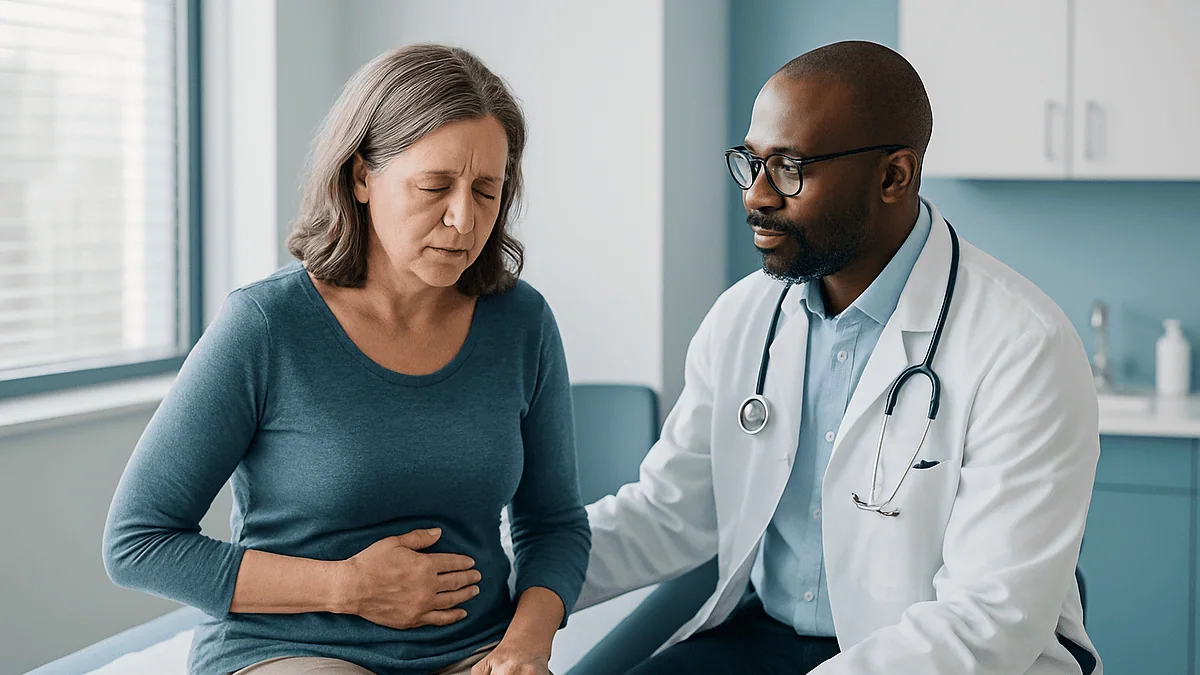
Pain after gallbladder removal is usually expected and temporary: soreness at the small incisions, a sharp shoulder-tip ache from the gas used during keyhole surgery, and mild cramping as digestion adjusts. Most people feel markedly better within about two weeks of laparoscopic surgery. Pain that worsens, persists beyond a few weeks, or comes with fever, jaundice, or vomiting should be reviewed by your surgical team.
Two days home from keyhole surgery, a patient rang the ward not about her belly, which she had been warned about, but about her right shoulder. Nothing had happened to it. No one had touched it. Yet every deep breath sent a bright, stabbing ache under the collarbone. Was something wrong with the operation? Had they missed a stone?
Almost everyone who has this operation collects a similar surprise. Pain after gallbladder removal rarely arrives where people expect it. The incisions, which look alarming on day one, tend to fade into the background quickly. The shoulder, the diaphragm, the trapped air and the gut’s new plumbing make more noise, and a small group of people go on to have discomfort that outlasts any reasonable healing window.
This explainer separates the ordinary from the concerning, describes what is actually happening in the body, and sets out how relief is usually approached, without pretending that any single timeline fits every person.
Why does pain after gallbladder removal happen at all?
The gallbladder is a small pear-shaped sac tucked beneath the liver that stores bile, the greenish fluid the liver makes to help digest fat. Cholecystectomy is the medical name for removing it, and most are done laparoscopically, through several small cuts, using a camera and long instruments rather than one large incision.
Pain afterwards comes from three separate sources, and it helps to keep them apart in your mind.
The first is the surgical wounds themselves: skin, the fibrous sheath beneath it, and the muscle layers that were passed through. This pain is sharpest when you cough, laugh, or sit up, because those movements tug on the healing tissue.
The second is referred pain. During keyhole surgery the abdomen is inflated with carbon dioxide so the surgeon can see. Some of that gas lingers and irritates the diaphragm, the dome-shaped breathing muscle. The diaphragm shares its nerve supply, the phrenic nerve, with the skin over the shoulder, so the brain misreads the signal as a shoulder problem. This is the classic shoulder-tip ache, and it explains why the pain often worsens when lying flat and eases when upright.
The third is visceral: the liver bed where the gallbladder used to sit is raw, the bile ducts have been handled, and the gut has been briefly slowed by anesthesia. That produces a dull, deep ache and bloating rather than a sharp pain.
Understanding which of the three you are feeling matters, because they resolve on different schedules. According to the NHS, the shoulder discomfort typically passes within a few days, while incision tenderness lingers longer and settles gradually over the first couple of weeks. A fourth, less common source, persistent symptoms from the bile ducts or gut, is covered later in this article.
What actually happens during gallbladder removal
Knowing the steps makes the aftermath less mysterious. Under general anesthesia, the surgeon makes a small cut near the navel and introduces a port, a hollow tube through which the camera and instruments pass. Carbon dioxide is pumped in to lift the abdominal wall away from the organs, creating a working space roughly the size of a small tent. Two or three further ports are placed high on the right side of the abdomen, which is why most people have three or four small scars.
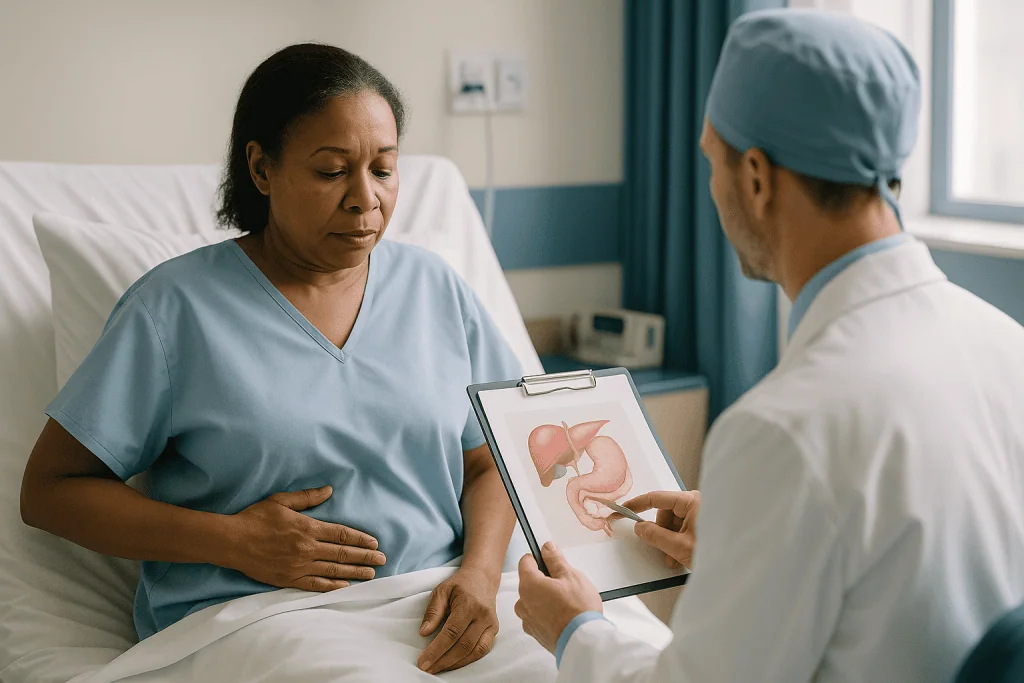
The gallbladder is lifted, and the surgeon identifies two structures that must be sealed before anything is cut: the cystic duct, the narrow tube that drains bile from the gallbladder into the main bile duct, and the cystic artery, its blood supply. Small clips close both. The gallbladder is then peeled off the liver surface and pulled out through one of the ports, usually the one at the navel, which is why that incision is often the sorest.
Before closing, the gas is released as fully as possible, but a little always remains trapped under the diaphragm. The skin cuts are closed with dissolvable stitches, glue, or small strips.
The Mayo Clinic notes the operation itself usually takes one to two hours. In a minority of cases the surgeon cannot see the anatomy safely, often because of scarring or severe inflammation, and converts to an open operation through a single larger incision under the right ribs. That decision is made for safety, not as a failure, but it does change recovery. The NHS describes typical recovery as around two weeks for keyhole surgery and six to eight weeks for open surgery, which is why the type of procedure you had is the first thing to check when judging whether your pain is on track.
Shoulder pain after gallbladder surgery: why the gas hurts and how long it lasts
Of all the questions ward nurses field after this operation, the shoulder is the most frequent. The mechanism is worth stating plainly because it is genuinely reassuring: the pain is not in your shoulder joint, and nothing was damaged there.
Carbon dioxide left in the abdomen collects at the highest point, which, once you stand or sit up, is directly beneath the right diaphragm. The gas irritates the thin lining of the diaphragm. The phrenic nerve, which supplies that lining, arises from the same segments of the spinal cord as the nerves supplying the skin over the top of the shoulder. The brain, receiving a signal from an unfamiliar internal source, attributes it to the surface it knows better. Neurologists call this referred pain, the same phenomenon that makes a heart attack ache in the left arm.
A few practical features follow from the mechanism. The pain is often worse on the right, worse with deep breaths, and worse after lying flat and then rising, because the gas shifts. It is not relieved by rubbing the shoulder. It is often eased by gentle walking, which encourages the body to absorb the gas into the bloodstream and exhale it through the lungs, and by changing position.
The NHS advises that this shoulder discomfort is usually short-lived, passing within a few days, and that walking around helps disperse the gas. Most people find it is the first of the three pains to disappear entirely.
What it should not do is intensify over the days, spread down the arm, or come with breathlessness, chest tightness, or a fever. Those features point away from trapped gas and toward something the surgical team needs to hear about, and they appear in the red-flag list at the end of this article.
Incision pain: what is normal in the first days
Fresh incisions are tender because every layer that was cut, from skin to muscle sheath, is inflamed as part of healing. Inflammation is not a complication; it is the body delivering blood, immune cells, and repair materials to the site. The redness and mild swelling within a finger’s width of the cut are expected.
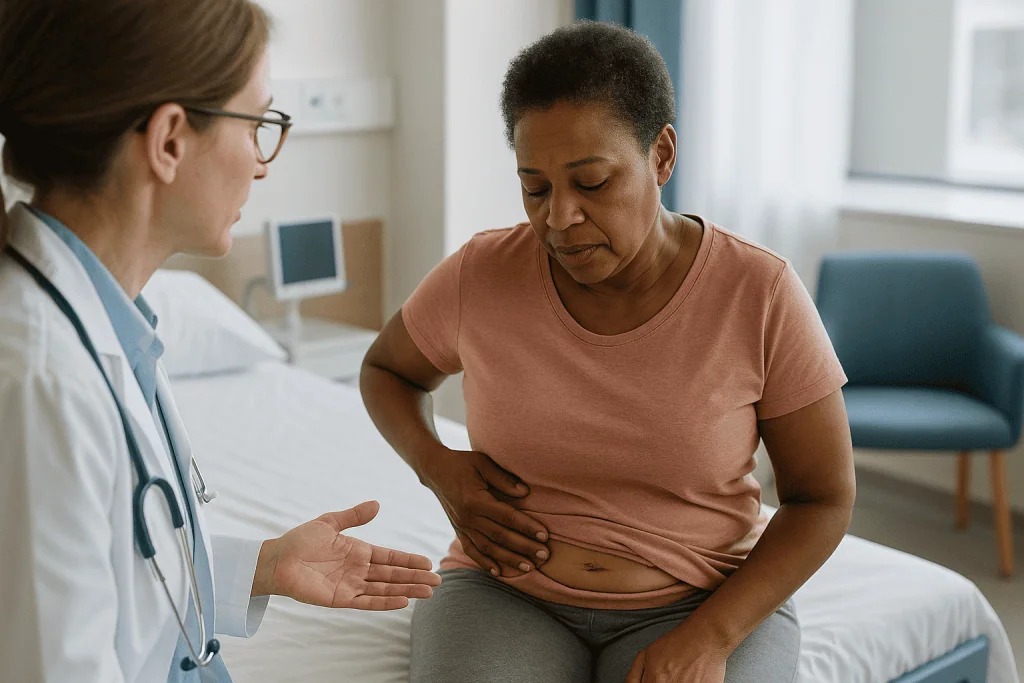
The navel incision usually hurts most. It is the largest, it carries the port through which the gallbladder was extracted, and the tissue around the umbilicus has less padding. Coughing, laughing, and getting out of bed pull on it directly. A simple technique, splinting, means pressing a folded towel or small pillow firmly against the abdomen during a cough or sneeze. It supports the healing layers and takes the edge off the jolt.
Bruising around the ports is common and can look dramatic, spreading in yellow and purple patches over the first week. The Cleveland Clinic and NHS both describe this as expected, resolving on its own. Some people notice a small firm lump beneath a scar for several weeks; this is usually healing tissue rather than a problem, though your team should confirm it at follow-up if it grows or becomes painful.
Wound care instructions vary between surgeons, so follow the sheet you were given. In general, dressings can be removed after a day or two, showering is permitted once the wounds are sealed, and soaking in a bath is delayed until the skin is fully closed. Dissolvable stitches disappear over one to two weeks; glue flakes off.
Warning features at an incision are increasing redness spreading outward, warmth, thick or foul-smelling discharge, a wound edge that opens, or a fever. Those signal infection, which is uncommon but treatable when caught early, and warrant a same-day call rather than waiting for a scheduled check.
Who is usually offered gallbladder removal, and who is asked to wait
Surgery is generally recommended when gallstones are causing symptoms: repeated attacks of biliary colic, the intense right-sided or upper-abdominal pain that follows a fatty meal, or complications such as cholecystitis (inflammation of the gallbladder), pancreatitis (inflammation of the pancreas triggered by a stone blocking its duct), or jaundice from a stone lodged in the main bile duct. The Mayo Clinic lists these as the principal reasons for the operation, along with gallbladder polyps of concern and, less often, inflammation without stones.
People whose stones were found incidentally on a scan and who have never had symptoms are usually not offered surgery. The NHS advises that asymptomatic gallstones are commonly left alone, because many never cause trouble and the operation carries its own small risks.
Timing also matters. In acute cholecystitis, many surgical teams now favor operating during the same admission rather than waiting several weeks, but this depends on how unwell the person is, how long symptoms have been present, and local practice. Someone who is very frail, has severe heart or lung disease, or has uncontrolled clotting problems may be advised to postpone, to have the gallbladder drained through the skin as a temporary measure, or to manage with diet and medicines while the risks are weighed.
Pregnancy does not rule surgery out, but teams usually prefer the middle trimester when it is needed. Cirrhosis, previous upper-abdominal operations, and severe obesity can make keyhole surgery technically harder and raise the chance of conversion to an open approach, which changes the pain picture described in this article.
Why does this section belong in a piece about pain? Because how much and how long you hurt afterward depends heavily on why and how urgently you were operated on. An inflamed, thick-walled gallbladder removed during an acute attack leaves a rawer liver bed than a quiet one removed electively.
How long does pain last after gallbladder removal? A typical timeline
No two recoveries match, but the pattern is consistent enough to sketch. The ranges below are drawn from NHS and Mayo Clinic patient guidance for uncomplicated laparoscopic surgery; open surgery runs roughly three to four times longer at every stage.
| Stage | What commonly hurts | What usually helps |
|---|---|---|
| Day 0 to 2 | Incisions sharp with movement; shoulder-tip ache; bloating; throat soreness from the breathing tube | Prescribed pain relief on schedule, short walks every few hours, splinting for coughs |
| Day 3 to 7 | Shoulder pain fading; incisions tender but improving; bruising appearing; bowels sluggish | Gradual return to light activity, fluids and fiber, upright rest positions |
| Week 2 | Twinges at the navel with lifting or twisting; occasional cramping after meals | Most people return to desk work and driving once they can brake sharply without pain |
| Weeks 3 to 6 | Mostly pain-free; scars itchy or numb; loose stools in some | Return to heavier lifting as advised by the team |
| Beyond 6 weeks | Ongoing pain is not typical and merits review | Assessment for other causes, described below |
The NHS states that most people can return to normal activities in about two weeks after keyhole surgery, and six to eight weeks after open surgery. Driving is usually permitted once you can perform an emergency stop comfortably and are no longer taking sedating medication, which your team and insurer may specify.
The trajectory matters more than any single day. Pain that is a little worse on day two than day one is ordinary. Pain that is clearly worse on day five than day three, or that returns after having gone, is the pattern that should prompt a call.
Why do I still have pain 3 weeks after gallbladder surgery?
This is the point at which many people start to worry, and the honest answer is that three weeks sits in a gray zone: late for ordinary surgical pain, but early for the healing of deeper tissues to be complete.
Several benign explanations are common. The navel incision passes through the linea alba, the tough midline band where the abdominal muscles meet, and this fibrous tissue heals slowly. A pulling sensation when twisting, lifting, or sitting up from lying can persist for several weeks. Nerve fibers cut at the skin regrow unevenly, producing patches of numbness, tingling, or a brief electric twinge when the scar is touched, which fade over months. Some people have a low-grade ache at the liver bed that responds to the gut’s activity after meals.
Bowel habit is another frequent culprit. Constipation from reduced activity and opioid-containing pain relief in the first week can leave cramping that is mistaken for surgical pain. Conversely, some people develop looser, more urgent stools once bile flows steadily into the intestine rather than being stored, and the cramping that accompanies this can be misattributed to the wounds.
Less common, and more important, are problems that need imaging or blood tests. A retained stone in the common bile duct can cause episodes of pain resembling the original attacks, sometimes with jaundice or pale stools. A collection of bile or fluid near the liver, called a biloma, produces persistent deep right-sided pain, sometimes with fever. A small hernia at the navel port can present as a bulge that aches with straining.
The distinction cannot be made from a symptom list alone. If pain at three weeks is improving, even slowly, and you have no fever, jaundice, or vomiting, it is usually reasonable to raise it at your planned follow-up. If it is static or worsening, or if you feel unwell, contact the team now rather than waiting.
Postcholecystectomy syndrome: gallbladder pain without a gallbladder
Postcholecystectomy syndrome is the umbrella term for abdominal symptoms that persist or appear after the gallbladder is removed. It is a description, not a single disease, and that distinction shapes how it is investigated.
According to the StatPearls review published through the NIH’s National Library of Medicine, estimates of how many people experience it vary widely between studies, with a commonly cited range of roughly ten to fifteen percent, and most cases are traced to a specific cause once looked for. Symptoms typically include upper-abdominal pain, bloating, nausea, and altered bowel habit, sometimes mimicking the original gallstone attacks closely enough that people ask whether the surgeon removed the right organ.
The causes fall into two groups. Biliary causes involve the ducts that remain: a stone left behind or newly formed in the common bile duct, a stricture (narrowing) from scarring or a clip placed close to the duct, a bile leak from the cystic duct stump, or a remnant of gallbladder tissue that continues to form stones. Sphincter of Oddi dysfunction, in which the muscular valve where the bile duct enters the intestine fails to relax properly, is a debated and less common biliary cause.
Non-biliary causes are actually more frequent. Irritable bowel syndrome, acid reflux, peptic ulcer disease, pancreatitis, and functional dyspepsia (indigestion without a structural cause) can all produce pain that was previously blamed on the gallbladder. Sometimes the stones were an innocent bystander all along.
Investigation usually starts with blood tests for liver and pancreatic enzymes and an ultrasound, moving to specialized imaging of the bile ducts or endoscopy if the first tests point that way. Treatment depends entirely on what is found: a duct stone may be removed endoscopically, a stricture dilated, reflux or bowel disorders managed on their own merits. The syndrome label is a starting point for a search, never a final answer.
Is phantom gallbladder pain real? Pain months or years after removal
People use the phrase “phantom gallbladder pain” for pain in the exact spot of their old attacks, long after the organ is gone. It is not a medical diagnosis, but the experience is common enough to deserve a straight explanation.
First, what it is not. Unlike phantom limb pain, there is little evidence that the nervous system “remembers” the gallbladder in a way that generates pain on its own years later. The organ was small, deep, and shared its nerve supply with neighboring structures, so pain in that region almost always has a current source.
The sources are the same ones listed under postcholecystectomy syndrome, with a shift in likelihood over time. In the first months, retained duct stones and bile leaks dominate. Over years, newly formed stones in the bile duct, strictures that tighten slowly, and unrelated gut conditions become the leading explanations. The StatPearls review notes that symptoms can emerge anywhere from days to years after the operation, and that later onset points more often toward duct stones or non-biliary disease than toward a surgical complication.
A practical way to think about it: episodic, severe, upper-right pain lasting hours, particularly with dark urine, pale stools, or yellowing of the eyes, resembles a bile-duct problem and needs prompt assessment. Grumbling daily discomfort tied to meals, bloating, and changed bowel habit resembles a functional gut disorder or reflux and warrants a routine appointment. Both deserve evaluation; the urgency differs.
Is it “normal” to have this pain years later? It is not rare, but it should not be accepted as an inevitable consequence of the surgery. The right response to gallbladder-region pain without a gallbladder is the same as it would have been before: a clinician’s assessment and, usually, a blood test and a scan.
Safe relief: how pain medicines are usually approached after surgery
Pain relief after gallbladder removal follows the same stepwise logic used across surgery, and the details are set by the team that knows your kidneys, liver, stomach history, and other medicines. What follows describes mechanisms and typical patterns, not instructions.
Most teams build on a simple, regularly taken analgesic such as acetaminophen (paracetamol), which acts centrally on pain signaling and has little effect on bleeding or the stomach lining. Taken on a schedule rather than waiting for pain to peak, it reduces the swings that make the first days miserable.
Non-steroidal anti-inflammatory drugs, a class that reduces the prostaglandins driving inflammation at the wounds, are often added when there is no reason to avoid them. Reasons to avoid them include kidney impairment, a history of stomach ulcers or bleeding, certain heart conditions, and some blood thinners. Your surgeon or pharmacist will have decided this before discharge, which is why substituting a different over-the-counter product without asking is unwise.
Opioids, medicines that act on receptors in the brain and spinal cord to blunt pain perception, are usually reserved for the first few days for breakthrough pain. They slow the gut, which is why constipation is such a common complaint, and they can cause drowsiness and nausea. Current surgical guidance from bodies such as the Mayo Clinic and NHS emphasizes the smallest supply for the shortest time, with a plan for stopping.
Three principles are worth holding onto. Take what was prescribed as it was prescribed, and ask before adding anything, including herbal products. Report side effects rather than pushing through them; nausea, dizziness, itching, and constipation all have solutions. And if the prescribed plan is not controlling the pain, that is information the team needs, not a sign you should tolerate it or double up. Escalating pain despite adequate relief is one of the clearest signals that something other than routine healing is going on.
Relief without medicines: movement, heat, positioning and breathing
Some of the most effective measures after this operation cost nothing and carry almost no risk, and they address the mechanisms described earlier rather than just masking the signal.
Walking is the single most useful. It shifts trapped carbon dioxide so the bloodstream can absorb it, it stimulates the bowel to move again, and it reduces the risk of blood clots in the legs, which is raised after any operation. The NHS advises gentle walking as soon as you feel able, building gradually, rather than bed rest. Short, frequent walks around the house on day one beat a single long outing on day three.
Position matters for the shoulder-tip ache. Because the gas rises, lying flat can concentrate it under the diaphragm; propping the upper body on pillows, or lying on the left side so the gas moves away from the right diaphragm, eases it for many people. Sitting forward slightly, with a pillow across the abdomen, also takes tension off the navel incision.
Warmth over the shoulder or upper abdomen, from a covered heat pad or a warm shower, relaxes the muscles that tense around the pain. Keep heat away from fresh wounds and off bare skin.
Breathing exercises serve two purposes. Slow, deep breaths expand the lower lungs, which tend to be under-used after anesthesia and abdominal pain, lowering the risk of chest infection. They also stretch the diaphragm and help move gas. A practical version: breathe in slowly through the nose for a count of four, hold briefly, exhale through the mouth, repeat five times each waking hour on the first two days.
Splinting during coughs and sneezes protects the wounds. Loose waistbands avoid pressure on the navel. Hydration and fiber soften stools so that straining does not stress the incisions. None of these replaces medication when it is needed, but together they reduce how much is needed.
Eating after gallbladder removal: cramps, bloating and loose stools
Without a gallbladder, bile no longer waits in storage for a fatty meal; it trickles steadily from the liver into the small intestine. For most people this makes little difference. For some, a larger fatty meal arrives without the concentrated bile that would previously have been released to meet it, leaving fat less well digested and producing cramping, bloating, urgency, or loose stools an hour or two later.
The Cleveland Clinic and Mayo Clinic both describe these digestive changes as common in the early weeks and usually improving as the intestine adapts. They are a frequent, and frequently unrecognized, source of abdominal pain in the second and third weeks, when people assume every twinge is surgical.
A sensible approach is to eat smaller meals more often for the first few weeks, spread fat across the day rather than concentrating it in one sitting, and reintroduce richer foods gradually while noticing what your gut tolerates. High-fiber foods can help firm stools, though a sudden jump in fiber can itself cause gas. Plenty of fluids counteracts constipation from reduced activity and analgesics.
There is no strong evidence that a strict long-term low-fat diet is necessary after gallbladder removal, and the NHS advises that most people can return to a normal, balanced diet. A persistently restrictive diet risks missing out on essential fats and vitamins without clear benefit.
Diarrhea that continues beyond a few months affects a minority. In some, bile reaching the large bowel in greater quantity irritates it, a condition called bile acid diarrhea, which can be diagnosed and managed by a gastroenterologist. Weight loss, blood in the stool, or night-time diarrhea are not explained by gallbladder removal and always merit a separate look. Digestive pain after the operation is real and common; it is also the type most likely to settle with time and adjustment.
What people often get wrong about pain after gallbladder removal
Recovery is easier when a few persistent misunderstandings are cleared away.
“Shoulder pain means something went wrong.” It almost never does. Referred pain from gas irritating the diaphragm is the expected result of laparoscopic surgery, not a complication, and it fades within days.
“Keyhole surgery means no real pain.” Smaller scars do not mean nothing happened inside. The liver bed was operated on, the bowel was handled, and the abdominal wall was stretched by gas. A few days of genuine discomfort is normal and does not reflect on the quality of the surgery.
“Rest is the best medicine.” Bed rest prolongs bloating, constipation, and stiffness and raises clot risk. Guidance from the NHS and Mayo Clinic favors early, gentle movement with gradual increases.
“Waiting for pain to get bad before taking relief saves medication.” Pain is easier to hold down than to bring down. Scheduled dosing of the basic analgesic in the first days, as prescribed, usually means less total medication.
“Any pain years later must be the surgeon’s fault.” Late pain in the gallbladder region is more often a new duct stone, reflux, or a bowel disorder than a surgical error. Blame is less useful than a scan.
“You must eat low-fat forever.” Most people return to an ordinary balanced diet within weeks. Long-term restriction is rarely necessary.
“If the pain is the same as before surgery, the operation failed.” Sometimes the gallstones were never the cause of the original pain. The StatPearls review on postcholecystectomy syndrome emphasizes that non-biliary conditions account for a substantial share of persistent symptoms. The right response is investigation, not regret.
“Pain must be endured silently.” Reporting pain that is not controlled, or that changes character, is how complications are caught early. Your team would far rather hear from you.
Questions to ask your care team about pain relief and recovery
The best moment to ask is before discharge, while the person in front of you knows exactly what was done. A short list prevents the 2 a.m. uncertainty that sends people to search engines.
- Was my operation completed by keyhole, or was it converted to open? How does that change my expected recovery time?
- Which medicines should I take on a schedule and which only when needed? What should I avoid alongside them, including over-the-counter and herbal products?
- What is the plan for stopping the stronger pain relief, and what should I do if pain is not controlled?
- How much shoulder pain is expected, and for how long?
- What should my wounds look like at one week, and what changes should prompt a call?
- When can I shower, bathe, drive, lift, return to work, and exercise?
- Were there any findings during surgery, such as a difficult anatomy, a spilled stone, or a drain, that I should know about?
- Do I need a follow-up appointment, and what tests, if any, are planned?
- Which symptoms mean I should come to the emergency department rather than wait for a clinic call?
- Whom do I phone, and at what hours, if I am worried?
Write the answers down or ask for them on paper. Pain, fatigue, and the after-effects of anesthesia make verbal instructions hard to retain in the first days.
For pain that persists beyond the expected window, a different set of questions applies at follow-up: What do you think is causing it? Which tests would help distinguish a bile-duct cause from a gut cause? Is a referral to gastroenterology appropriate? And what should I watch for while we wait for results? Every decision about investigation and treatment rests with the team looking after you; well-framed questions simply help them help you faster.
When to call your doctor: red-flag signs after gallbladder removal
Most pain after gallbladder removal is ordinary healing. A small number of complications need to be recognized quickly, and the features below are the ones surgical teams ask patients to report without delay. The NHS lists bile leak, bleeding, infection, injury to the bile duct, and blood clots among the recognized risks; all are uncommon, and all are more straightforward to treat when caught early.
Seek urgent, same-day medical attention if you notice:
- Pain that is worsening rather than improving after the first two or three days, or severe pain not eased by your prescribed relief
- Fever, shaking chills, or feeling generally very unwell
- Yellowing of the skin or the whites of the eyes, dark urine, or pale, clay-colored stools, which can indicate bile not draining properly
- Persistent vomiting, or inability to keep fluids down
- A swollen, tense, or rapidly enlarging abdomen
- Redness spreading from an incision, thick or foul-smelling discharge, or a wound that opens
- Bleeding from a wound that does not stop with gentle pressure
- A painful, swollen, or red calf, which may signal a blood clot
Call emergency services immediately for:
- Chest pain, breathlessness, or coughing up blood, which can indicate a clot that has traveled to the lungs
- Collapse, confusion, or a racing heartbeat with cold, clammy skin
- Vomiting blood or passing black, tarry stools
Shoulder pain alone, without any of the features above, is expected and does not need emergency care. Neither does bruising, mild wound tenderness, or a day or two of loose stools. When you are unsure, err on the side of contacting the team; a five-minute phone conversation is a small price for peace of mind, and the people who operated on you would rather assess ten worried patients than miss one complication.
Nothing in this article replaces the specific instructions you were given at discharge, which take precedence because they reflect what actually happened in your operation.
Frequently asked questions
Is it normal to experience gallbladder pain years after having the gallbladder removed?
It is not rare, but it should not be treated as an inevitable consequence of the operation. Pain in the old gallbladder region years later usually has a current cause: a newly formed stone in the common bile duct, a slowly tightening stricture, acid reflux, or a bowel disorder such as irritable bowel syndrome. Episodic severe pain with jaundice or dark urine needs prompt assessment; grumbling meal-related discomfort deserves a routine appointment. Either way, a clinician’s evaluation, blood tests, and a scan are the right next step.
Why do I still have pain 3 weeks after gallbladder surgery?
Three weeks is late for ordinary wound pain but early for deep tissue healing to be complete. Common benign causes include the slow-healing midline tissue at the navel incision, regrowing skin nerves that twinge or tingle, constipation or loose stools, and cramping as digestion adapts. Less common causes such as a retained duct stone, a bile collection, or a small port-site hernia need tests. If the pain is slowly improving with no fever, jaundice, or vomiting, raise it at follow-up; if it is static or worsening, contact your team now.
Is phantom gallbladder pain a common symptom after gallbladder removal?
The phrase is popular but not a medical diagnosis, and there is little evidence the nervous system generates pain from a missing gallbladder in the way it can from a missing limb. Pain in that region after surgery almost always has a present-day source, either in the remaining bile ducts or in neighboring organs such as the stomach, pancreas, or bowel. The sensation is real and common enough to have a name, but it deserves investigation rather than being dismissed as a ghost of the old organ.
Why am I having gallbladder pain without a gallbladder?
Because the structures around the gallbladder remain and can produce identical pain. The common bile duct can hold or form stones, the cystic duct stump can leak, scarring can narrow a duct, and the muscular valve where bile enters the intestine can malfunction. Conditions such as reflux, ulcers, pancreatitis, and irritable bowel syndrome also cause upper-abdominal pain and may have been the true cause all along. Clinicians group these under postcholecystectomy syndrome and use blood tests and imaging to identify which applies.
How long does shoulder pain after gallbladder surgery last?
For most people, a few days. The ache comes from leftover carbon dioxide irritating the diaphragm, whose nerve supply overlaps with the shoulder, and the NHS advises it usually passes within a few days as the body absorbs the gas. Gentle walking, propping yourself upright, and slow deep breathing speed this along. Shoulder pain that intensifies over days, spreads down the arm, or comes with breathlessness, chest tightness, or fever is not typical gas pain and should be reported promptly.
What is postcholecystectomy syndrome and how is it treated?
It is an umbrella term for abdominal pain, bloating, nausea, or altered bowel habit that persists or appears after gallbladder removal, reported in roughly ten to fifteen percent of people in commonly cited estimates. It is a description rather than a single disease. Investigation begins with liver and pancreatic blood tests and an ultrasound, progressing to specialized duct imaging or endoscopy if indicated. Treatment depends on the cause found: a duct stone may be removed endoscopically, a stricture widened, and reflux or bowel disorders managed on their own terms.
How long does pain last after gallbladder removal overall?
For uncomplicated keyhole surgery, the NHS describes most people returning to normal activities in around two weeks, with shoulder pain resolving in days and incision tenderness fading over one to two weeks. Twinges with lifting or twisting can persist a few weeks longer, and scars may itch or feel numb for months. Open surgery roughly triples these timelines, at six to eight weeks. Pain that is clearly worsening, or that continues unchanged beyond about six weeks, is not typical and should be assessed.
What can I take for pain after gallbladder surgery?
Only what your surgical team prescribed or approved, taken as directed. Most plans start with a regularly scheduled simple analgesic, add an anti-inflammatory when there is no medical reason to avoid one, and reserve stronger medicines for breakthrough pain in the first few days. Adding over-the-counter or herbal products without checking can duplicate ingredients or interact with other medicines. If the prescribed plan is not controlling your pain, tell the team; uncontrolled pain is information they need, not something to tolerate.
Can trapped gas cause abdominal pain after gallbladder removal, and what helps?
Yes, on two fronts. Leftover carbon dioxide from the operation causes bloating and the shoulder-tip ache, and a bowel slowed by anesthesia and pain relief produces intestinal gas and cramping. Walking is the most effective remedy for both, helping the body absorb the surgical gas and restarting bowel movement. Propping upright, lying on the left side, warmth, slow deep breathing, and adequate fluids and fiber all help. A tense, rapidly swelling abdomen with vomiting is different and needs urgent assessment.
Do I need a low-fat diet forever after gallbladder removal?
Usually not. Without a gallbladder, bile flows steadily rather than being released in a concentrated burst, so a large fatty meal may cause cramping or loose stools in the first weeks. Smaller, more frequent meals with fat spread across the day help while the intestine adapts. The NHS advises most people can return to a normal balanced diet, and there is no strong evidence that long-term restriction is needed. Diarrhea lasting months, weight loss, or blood in the stool should be evaluated separately.
References
- NHS: Gallbladder removal: Recovery
- MedlinePlus: Gallbladder removal – laparoscopic
- NIH National Library of Medicine (StatPearls): Postcholecystectomy Syndrome
- Cleveland Clinic: Gallbladder Removal (Cholecystectomy)
This article is for general information only and is not a substitute for professional medical advice. Please consult a qualified doctor about your individual situation.

More from the Blog

Probiotics Benefits: Which Strains Have Evidence for Which Problems
Probiotics benefits are strain-specific and condition-specific, not general. The strongest evidence, from randomized trials, supports certain strains such as Saccharomyces boulardii and Lacticaseibacillus (formerly…

Why You Need an Escort After Endoscopy or Colonoscopy and How Companions Can Help
You need an escort after colonoscopy or endoscopy sedation because the medicines used slow reaction time, blur judgment and cloud memory for hours after…

The Fatty Liver Diet: What to Eat to Reverse Early Liver Fat, According to Studies
A fatty liver diet is a Mediterranean-style eating pattern built around vegetables, legumes, whole grains, fish, nuts and olive oil, with sugary drinks, refined…

After Barrett’s Ablation: Throat Discomfort, Diet Steps and When Eating Feels Normal Again
Recovery after Barrett's ablation usually means a sore throat and chest discomfort for a few days, a diet that moves from cool liquids to…

Akkermansia: The ‘Next-Generation Probiotic’: What Human Data Show
Akkermansia muciniphila is a mucus-dwelling gut bacterium that is less abundant in people with obesity and type 2 diabetes. In mice it improves metabolism;…

Painkillers, Aspirin and Blood Thinners With a Peptic Ulcer: What Your Doctor Reviews
With a peptic ulcer, doctors usually review every pain reliever and blood thinner you take. NSAIDs such as ibuprofen and naproxen strip the stomach's…