

Manual Therapy and Prehab: The Hands-On Side of Physiotherapy

Key Takeaways
- Manual therapy's benefits are real but modest and mostly short-term: a 2019 BMJ review of 47 trials found spinal manipulation performed about as well as exercise therapy for chronic low back pain, not better.
- The pop during joint manipulation is gas bubble formation in joint fluid, and studies show pain relief occurs whether or not the joint audibly cracks.
- Manual therapy plus exercise consistently outperforms either alone in neck pain trials, which is why passive-only treatment plans are a red flag.
- Research links better pre-surgery quadriceps strength before ACL reconstruction to better knee function two years later: the core argument for prehab.
- Mild soreness for 24–48 hours affects roughly a third to half of patients after spinal manual therapy and doesn't predict a worse outcome.
- New groin numbness, bladder or bowel changes, or weakness in both legs alongside back pain is an emergency, go to a doctor, not a therapy appointment.
Manual therapy is a set of hands-on techniques, joint mobilization, manipulation, and soft-tissue work, that physical therapists use to ease pain and improve movement, usually alongside exercise. Evidence shows modest, mostly short-term benefits for conditions like low back and neck pain. Prehab means building strength and mobility before surgery, which may help some patients recover function sooner.
Watch a physical therapist work on a stiff shoulder and you’ll notice something odd: very little of it looks dramatic. No cracking montage, no heroics. Just slow, deliberate pressure: a thumb tracing the edge of a shoulder blade, a palm gliding the joint a few millimeters at a time while the patient breathes and reports back. It looks almost boring. Then the patient lifts their arm past the point where it stopped hurting last week.
That quiet, skilled use of the hands has a formal name, a real evidence base, and a surprising number of misconceptions attached to it. People confuse it with massage. They confuse it with chiropractic care. Some dismiss it as placebo; others expect it to “put things back in place,” which, spoiler, is not how bodies work.
This guide sorts the science from the folklore, and explains why the hands-on side of physiotherapy increasingly starts before an injury or surgery, not after.
What is manual therapy, exactly?
Manual therapy is the umbrella term for skilled, hands-on techniques a clinician uses to assess and treat muscles, joints, and connective tissue. In physiotherapy, that toolbox typically includes graded joint mobilization (slow, rhythmic gliding of a joint through part of its range), joint manipulation (a quick, small-amplitude thrust, sometimes accompanied by a pop), soft-tissue mobilization, muscle energy techniques where you contract gently against the therapist’s resistance, and nerve-gliding movements for irritated nerves.
Two things distinguish it from a pleasant rubdown. First, it starts with assessment: the therapist is feeling for how a specific joint moves compared with the same joint on your other side, where your muscles guard, and which direction of movement reproduces your pain. The hands are diagnostic instruments before they’re treatment tools. Second, it’s almost never the whole plan. Professional guidelines, including those reflected in NHS descriptions of physiotherapy, consistently frame manual therapy as an adjunct to movement and exercise, not a replacement for them.
A useful way to think about it: manual therapy opens a window. It can reduce pain and stiffness for hours or days, which is exactly the window in which strengthening and retraining movement patterns work best. The hands buy you access; the exercise builds the lasting change. Clinics that skip the second half tend to produce patients who feel great for 48 hours and then come back, indefinitely.
Is manual therapy the same as massage?
No, though they overlap enough that the confusion is understandable. Massage therapy manipulates soft tissue, primarily muscle, mainly for relaxation, stress relief, and general symptom relief. Mayo Clinic notes that massage can help with muscle tension, stress-related discomfort, and some pain conditions, and it’s a legitimate part of many people’s wellness routines.
Manual therapy is broader and more targeted. Yes, it includes soft-tissue techniques that can feel like deep massage. But it also includes joint-specific work, mobilizing a stiff facet joint in your neck, gliding a shoulder joint in a precise direction, restoring the small accessory movements a joint needs before it can move well in big ways. A massage therapist works on tissue; a physical therapist using manual techniques works on a movement problem, with the tissue as one entry point.
The other difference is what comes attached. Manual therapy in a physiotherapy setting arrives with a clinical examination, a working diagnosis, outcome measures, and a home exercise program. Sessions are typically shorter and more focused: five to fifteen minutes of hands-on work targeting one or two specific structures, rather than a full-body hour.
Neither is “better”: they answer different questions. If you want general relief and relaxation, massage is designed for exactly that. If you have a specific injury, a movement restriction, or pain that follows a pattern, a physical therapy assessment that may include manual techniques is the more precise tool.
Is manual therapy the same as chiropractic?
They share techniques but come from different professions with different training, scope, and philosophy. Chiropractors are best known for spinal manipulation: Cleveland Clinic describes the chiropractic adjustment as a controlled, sudden force applied to a joint, often producing that characteristic pop. Physical therapists with advanced training perform very similar thrust manipulations, along with gentler graded mobilizations.
The historical philosophies diverge more than the hand skills do. Traditional chiropractic theory emphasized spinal alignment as central to health; modern, evidence-oriented chiropractors have largely moved toward a musculoskeletal pain-management model, and many now incorporate exercise. Physiotherapy grew out of rehabilitation medicine, so its center of gravity has always been restoring function through movement, with hands-on work as a supporting act.
Practical differences you’ll notice as a patient:
- Structure of care: Physical therapy plans typically run a defined number of weeks with a discharge goal and a home program. Some chiropractic models involve open-ended maintenance visits, worth asking about upfront, whoever you see.
- Scope: Physical therapists treat the whole movement system, including post-surgical rehab, balance, and sports return-to-play; chiropractic care centers on the spine and joints.
- The manipulation itself: In skilled hands, a thrust technique is a thrust technique. The evidence for spinal manipulation doesn’t depend much on which profession delivers it.
The honest summary: the overlap is real, the tribal rivalry is mostly historical, and the more useful question is whether any clinician, of either profession, pairs hands-on care with active rehabilitation and a clear endpoint.
What's the difference between manual therapy and physical therapy?
Manual therapy is a subset of physical therapy, one drawer in a much larger cabinet. Physical therapy (physiotherapy, in most of the world) is the whole profession: assessment, therapeutic exercise, movement retraining, education, balance and gait work, post-surgical rehabilitation, and, yes, hands-on techniques. The NHS describes physiotherapy’s three core approaches as education and advice, movement and exercise, and manual therapy, in roughly that order of emphasis.
So when a clinic advertises “manual physical therapy,” it usually signals a treatment style where hands-on techniques play a prominent role, often delivered by therapists with additional certification in orthopedic manual therapy. It doesn’t mean exercise disappears; in well-run care, it can’t.
Why does the distinction matter to you? Because the research is fairly consistent on one point: manual therapy tends to perform best as a combination player. Studies of neck pain, for example, have repeatedly found that mobilization or manipulation plus exercise outperforms either alone. Hands-on treatment changes how you feel today; exercise changes what your body can tolerate next month.
A reasonable expectation for a typical outpatient visit: some minutes of assessment and hands-on work, followed by supervised exercise and a revised home program. If every session is entirely passive, you lie down, someone works on you, you leave, you’re getting massage-adjacent care with a physical therapy label, and it’s fair to ask your therapist how the plan progresses toward you not needing them.
The main manual therapy techniques, compared
Therapists choose techniques the way a cook chooses knives, by the job, not by loyalty. Here’s what you’re most likely to encounter, what it feels like from the table, and what it’s actually for.
| Technique | What it feels like | Typical goal |
|---|---|---|
| Soft-tissue mobilization | Slow, sustained kneading or pressure on muscle | Reduce muscle guarding; short-term pain relief |
| Graded joint mobilization | Rhythmic, gentle gliding of a joint, no pop | Restore joint motion; ease stiffness |
| Joint manipulation (thrust) | A quick, small push at end-range; often a pop | Short-term pain relief and improved movement |
| Muscle energy techniques | You push gently against the therapist’s resistance, then relax | Gain range using your own muscle contractions |
| Neural mobilization | Guided limb movements that “floss” a nerve through its path | Calm nerve sensitivity in conditions like sciatica |
| Manual traction | A sustained, gentle pull along the spine or limb | Temporarily unload compressed or irritated joints |
About that pop: it isn’t bone grinding or anything “going back in.” Imaging research suggests the sound comes from a gas bubble forming in the joint’s lubricating fluid as surfaces separate: a phenomenon called cavitation. Interestingly, studies have found the pain-relief effect of manipulation doesn’t depend on whether the joint audibly pops, which tells you the sound is a byproduct, not the therapy.
Does manual therapy actually work?
Yes, with honest caveats: the benefits are real but generally modest, strongest in the short term, and biggest when hands-on care is paired with exercise.
Take chronic low back pain, the most-studied territory. A 2019 systematic review in the BMJ pooling 47 randomized trials with over 9,000 participants found that spinal manipulative therapy produced improvements in pain and function similar to other recommended treatments like exercise therapy, better than sham or no treatment, but not a breakthrough beyond standard conservative care. Translation: it belongs on the menu of reasonable options, not on a pedestal above them.
For neck pain, trials suggest mobilization and manipulation combined with exercise beat either alone. For shoulder stiffness, knee osteoarthritis, and tension-type headache, evidence supports manual techniques as useful add-ons, again with mostly short-to-medium-term effects. Where the evidence gets thin is around grander claims: that manual therapy corrects alignment, cures chronic disease, or produces lasting change without any active rehabilitation. Those claims aren’t supported.
Two more honest points. First, some of manual therapy’s benefit likely comes from context, expectation, therapeutic touch, reassurance. Researchers debate how much, but even skeptics agree the measured pain relief is real to the person feeling it. Second, individual responses vary widely; some people respond dramatically to a technique that does little for the next patient. A good therapist treats the first two or three sessions as an experiment with a clear metric: is your pain, motion, or function measurably better? If not, the plan should change.
How does hands-on treatment relieve pain? (Not the way you think)
For decades, patients were told their pelvis was “out,” their spine “misaligned,” their tissue full of adhesions being physically broken apart. Modern research has quietly retired most of that. Bones don’t slip out of place from sitting badly, and a therapist’s thumbs, however strong, don’t remodel dense connective tissue in a ten-minute session.
What actually seems to happen is mostly neurological, and it’s more interesting:
- Gate control: Skilled touch and joint movement flood the nervous system with non-painful sensory input, which can dampen pain signals at the spinal cord level: the same reason you instinctively rub a banged elbow.
- Descending inhibition: Hands-on treatment appears to trigger the brain’s own pain-modulating systems, temporarily turning down sensitivity.
- Reduced muscle guarding: Pain makes muscles brace protectively; easing that guarding restores motion and breaks a stiffness-pain loop.
- Confidence and context: Feeling a joint move without pain, under a professional’s hands, recalibrates the brain’s threat assessment. Fear of movement is one of the strongest predictors of chronic pain, and manual therapy can chip away at it.
This reframing matters practically. If the mechanism is “calming a sensitized system” rather than “fixing a structural fault,” then manual therapy’s job is to create a low-pain window, and your job is to move, load, and strengthen inside it. It also means you don’t need to fear that skipping a session will let something “slip back out.” Nothing was out.
What is prehab, and why do surgeons keep recommending it?
Prehab, short for prehabilitation, flips the usual rehab timeline. Instead of starting physical therapy after surgery or after an injury flattens you, you build strength, mobility, and cardiovascular fitness beforehand. The logic is blunt: surgery and immobilization drain your physical reserves, and you can’t withdraw from an empty account. The stronger you go in, the higher your floor when you come out.
The concept took hold in orthopedics, knee and hip replacement, ACL reconstruction, and has spread into other kinds of major surgery, where programs often combine exercise with nutrition guidance and psychological preparation.
What does the evidence say? Honestly: promising but uneven. Studies of prehab before joint replacement suggest patients who train beforehand tend to regain function somewhat faster in the early weeks after surgery, and some research points to shorter hospital stays. Effects on long-term outcomes a year later are less clear, most people eventually reach similar endpoints. For ACL reconstruction, the case is stronger: research has linked better pre-surgical quadriceps strength and knee function to better function two years after surgery, which is why many sports medicine protocols now delay surgery until the knee is calm, mobile, and strong.
The most defensible claim isn’t “prehab guarantees a better result.” It’s that entering surgery deconditioned predicts a harder recovery, prehab is low-risk, and the weeks on a surgical waiting list are usable training time rather than dead time. That’s a bet worth making.
What does a prehab program actually involve?
Less mystique than the name suggests. A typical prehab block runs four to eight weeks before a planned surgery and stands on four legs.
Strength work comes first, targeting the muscles the operation will temporarily sideline. Before a knee replacement, that means quadriceps, hamstrings, and hip muscles, often trained two or three times weekly. Crucially, the other leg gets trained too, since it will carry extra load during early recovery, and research on “cross-education” suggests training one limb even preserves some strength in the immobilized one.
Range of motion is the second leg. A knee that bends to 120 degrees before surgery has a head start over one arriving at 90. Manual therapy often earns its keep here, loosening a stiff joint enough to make stretching and strengthening tolerable.
Cardiovascular conditioningwalking, cycling, pool work, supports healing and helps counter the fatigue of the post-surgical weeks. Even 20 to 30 minutes most days moves the needle.
Rehearsal is the underrated fourth leg: practicing with the walker or crutches you’ll use, learning the exercises you’ll do on day one after surgery, planning how you’ll manage stairs and bathing. Patients who’ve rehearsed recovery tend to be less anxious and more adherent, and anxiety itself is associated with worse pain after surgery.
If surgery isn’t on your horizon, the same principle applies to sport: strengthening known weak links before the season is prehab too, and it’s a large part of how professional teams try to reduce preventable injuries.
Who tends to benefit most from manual therapy?
Not everyone with pain needs hands-on treatment, and the research sketches a rough profile of who gains the most.
Stiffness-dominant problems respond best. A frozen-ish shoulder, a neck that won’t turn for checking blind spots, an ankle still tight months after a sprain, a knee struggling to regain bend after surgery: these are manual therapy’s home turf, because the primary obstacle is restricted joint or tissue motion that gentle, repeated loading can improve.
Recent-onset pain often responds faster than long-standing pain. Someone whose back “locked up” last week frequently gets meaningful short-term relief from mobilization or manipulation. Pain that has persisted for years usually involves a sensitized nervous system, where hands-on care still helps but plays a smaller role next to graded exercise, sleep, stress management, and pacing.
People stuck at a rehab plateau. When pain or stiffness is blocking the exercises that would drive recovery, a few sessions of targeted manual work can unlock progress: the window-opening role again.
Who benefits least? People seeking a permanent passive fix. If the plan is weekly hands-on sessions forever with no strengthening component and no discharge goal, the evidence isn’t on that model’s side, whatever the treatment table costs. And some conditions, inflammatory arthritis flares, fractures, acute nerve compression with worsening weakness, need medical management first, hands second, if at all. A trustworthy therapist screens for exactly these and refers out when the picture doesn’t fit.
What happens at your first manual therapy session?
Expect more conversation and observation than treatment, at least at the start. A thorough first visit usually runs 45 to 60 minutes and follows a predictable arc.
The interview comes first: how the problem started, what makes it better or worse, your health history, medications, sleep, activity level, and, importantly, screening questions designed to catch the rare cases where pain signals something beyond muscles and joints. Answer these honestly; they exist for your safety.
Then the movement exam. You’ll bend, reach, squat, or turn while the therapist watches range, quality, and pain response. After that comes the hands-on assessment: pressing along the spine or limb, gliding individual joints, comparing sides. This palpation is where manual therapists earn their reputation: a skilled one can often identify the offending segment within a level or two.
Treatment on day one is usually conservative: gentler mobilizations rather than thrust techniques, a first exercise or two, and a plan. Reasonable questions to ask before you leave:
- What’s your working diagnosis, and how confident are you?
- How will we measure progress, and by when should I feel a difference?
- What’s my role between sessions?
- Roughly how many visits do you anticipate?
Practical notes: wear clothing that exposes the area being treated (shorts for knees and hips, a tank top for shoulders and neck), and expect to give explicit consent before any hands-on technique: a standard you should insist on everywhere.
Is manual therapy safe? Side effects and who should be cautious
For most people, manual therapy is a low-risk treatment, but low-risk isn’t no-risk, and honest clinics say so.
The common side effects are mild and short-lived: soreness, stiffness, or fatigue in the treated area for 24 to 48 hours, similar to how you feel after a new workout. Studies suggest roughly a third to half of patients experience some transient reaction after spinal manual therapy; it typically resolves within a day or two and doesn’t predict a worse outcome.
Serious complications are rare and cluster around high-velocity neck manipulation, which has been discussed in connection with cervical artery injury. The absolute risk appears very small, and researchers still debate how much is causation versus people with an artery problem already in progress seeking care for neck pain. Even so, many therapists prefer gentler mobilization for the neck, and you are always entitled to ask for non-thrust techniques. A good clinician will accommodate that without argument.
Certain situations call for extra caution or a medical work-up first: osteoporosis or long-term steroid use (fragile bone), fracture or suspected fracture, active cancer with bone involvement, inflammatory arthritis flares, bleeding disorders or blood-thinning medication, recent surgery near the treatment area, pregnancy (technique modifications, not exclusion), and any progressive neurological signs like spreading numbness or weakness.
None of these automatically rules out physical therapy, most simply change which techniques are appropriate. What they do rule out is skipping the screening conversation. If a provider starts thrust manipulation before taking a proper history, leave.
When should you see a doctor instead of booking hands-on treatment?
Most aches and stiffness are safe to take straight to a physical therapist, and in many regions you can do so without a referral. But some symptoms deserve a medical evaluation first, because they can signal problems that hands-on treatment can’t address and might delay.
See a doctor promptly, before pursuing manual therapy, if you have any of the following alongside your pain:
- Numbness or tingling in the groin or inner thighs, new difficulty controlling bladder or bowels, or new weakness in both legs: these need emergency assessment
- Pain after significant trauma, such as a fall or car accident, especially if you’re over 50 or have osteoporosis
- Fever, chills, or feeling generally unwell together with spine or joint pain
- Unexplained weight loss, night sweats, or a history of cancer with new bone pain
- A joint that is hot, swollen, and red, or that you suddenly cannot bear weight on
- Pain that is severe at night, doesn’t ease in any position, or steadily worsens over weeks
- Progressive weakness: a foot that slaps, a grip that keeps dropping things
Mayo Clinic’s guidance on joint pain echoes this pattern: sudden swelling, deformity, inability to use the joint, or intense pain warrant urgent care rather than a therapy booking. MedlinePlus offers similar red-flag lists for back pain.
To keep perspective: these scenarios are the minority. The overwhelming share of back, neck, and joint pain is mechanical and benign. The list above isn’t a reason for anxiety: it’s the short checklist that lets you pursue conservative care for everything else with confidence.
How to get the most out of manual therapy (hint: it isn't passive)
Here’s the opinion this article has been building toward: manual therapy works best when you refuse to treat it as something done to you.
The pattern in the research is hard to miss. Hands-on techniques reliably produce short-term relief; exercise produces slower but more durable gains; combined, they outperform either alone for many spine and joint problems. So the highest-value move is embarrassingly simple, use the low-pain window after each session. If your neck turns 15 degrees further on the treatment table, practice that new range the same day. If your back eases after mobilization, that afternoon’s walk does more for you than the same walk on a painful day.
A few more evidence-flavored habits:
- Do the home program. Adherence to prescribed exercise is one of the strongest predictors of physical therapy outcomes, and it’s the variable entirely in your hands.
- Track something concrete. Degrees of motion, pain during a specific task, stairs climbed without stopping. Feelings drift; numbers don’t.
- Expect a trajectory, not a miracle. Meaningful change within two to four weeks is a fair benchmark for most musculoskeletal problems. Flat progress by then is a signal to revisit the plan, not to double down.
- Aim for graduation. The endpoint of good care is you managing your own body, knowing which movements calm your flare-ups and which strength work keeps them rare.
The therapist’s hands open the door. Whether you walk through it is, rather wonderfully, up to you.
Manual therapy and prehab together: the case for starting early
The two halves of this article meet in one underused idea: hands-on care and structured exercise are most powerful before the crisis, not after it.
Consider the typical timeline of a knee replacement. Months of worsening stiffness, a shrinking walking radius, quadriceps quietly wasting from disuse, then surgery, then rehab trying to rebuild everything at once while managing surgical pain. Now run the alternative: during the waiting period, manual therapy works on the joint’s remaining motion and the guarded muscles around it, while a progressive program strengthens both legs and keeps the heart conditioned. The surgery happens to a stronger, more mobile, less fearful patient. The early evidence on faster short-term functional recovery after joint replacement prehab reflects exactly this logic.
The same thinking applies without any surgery on the calendar. An ankle that never regained full motion after last year’s sprain is a known risk factor for the next sprain. A shoulder that pinches at the top of every overhead press is asking for attention before it becomes a months-long problem. Addressing these quietly, a short course of mobilization, a targeted strength block, is unglamorous, and it’s precisely what sports medicine teams spend their off-seasons doing.
None of this requires living at a clinic. It requires a shift in when you seek help: at the first persistent restriction rather than the tenth week of pain. Physiotherapy’s hands-on tools are good at easing problems. They’re even better, the evidence increasingly suggests, at getting ahead of them.
Frequently asked questions
Is manual therapy the same as massage?
No. Massage primarily works soft tissue for relaxation and general relief, while manual therapy is a broader clinical toolkit that also includes joint mobilization, manipulation, muscle energy techniques, and nerve gliding, all guided by a movement assessment. Manual therapy sessions are typically shorter and targeted at a specific diagnosis, and they come paired with exercise. Some techniques feel similar under the hands, but the assessment, goals, and follow-up plan are quite different.
Is manual therapy the same as chiropractic?
No, though they overlap. Chiropractors and physical therapists both perform spinal manipulation, and in skilled hands the technique itself is similar. The professions differ in training, scope, and structure of care: physiotherapy centers on exercise and functional rehabilitation with a planned discharge, while chiropractic care traditionally centers on the spine, sometimes with ongoing maintenance visits. Evidence for manipulation doesn’t depend on which profession delivers it, what matters is whether it’s paired with active rehab.
What is the difference between manual therapy and physical therapy?
Manual therapy is one part of physical therapy, not a separate discipline. Physical therapy encompasses assessment, exercise prescription, movement retraining, education, and post-surgical rehab; manual therapy refers specifically to the hands-on techniques within that toolkit, such as joint mobilization and soft-tissue work. A clinic advertising manual physical therapy simply emphasizes hands-on treatment, good care still combines it with a progressive exercise program and measurable goals.
Does manual therapy actually work?
Yes, within honest limits. Systematic reviews show manual therapy reduces pain and improves function for conditions like low back pain, neck pain, and knee osteoarthritis, but the effects are modest, strongest in the short term, and comparable to other recommended conservative treatments. It works best combined with exercise, which produces the more durable changes. Claims that it permanently realigns the spine or cures disease aren’t supported by evidence.
What does the popping sound during joint manipulation mean?
It’s gas bubble formation in the joint’s lubricating fluid: a harmless phenomenon called cavitation, captured in imaging studies when joint surfaces briefly separate. Nothing is snapping back into place, and no bone is grinding. Notably, research has found that manipulation relieves pain about equally whether or not a pop occurs, so the sound is a byproduct of the technique rather than proof it worked.
How many manual therapy sessions should I need?
For most musculoskeletal problems, you should notice measurable change within two to four weeks, often four to six sessions. Full plans commonly run six to twelve visits depending on the condition, with hands-on work tapering as exercise takes over. If nothing has improved by the fourth session, ask your therapist to reassess the plan. Be cautious of open-ended schedules with no progress measures and no discharge goal.
Is it normal to feel sore after manual therapy?
Yes, and it’s common. Roughly a third to half of patients report mild soreness, stiffness, or fatigue in the treated area for 24 to 48 hours, much like after a new workout, and it doesn’t predict a worse outcome. Gentle movement, hydration, and warmth usually help. Contact your therapist if soreness is severe, lasts beyond two or three days, or comes with new symptoms like numbness, weakness, or dizziness.
What is prehab and does it really help before surgery?
Prehab means building strength, mobility, and fitness before a planned surgery so you start recovery from a higher baseline. Evidence is promising but mixed: studies of joint replacement suggest prehab may speed early functional recovery and shorten hospital stays, though long-term outcomes often even out. The case is stronger before ACL reconstruction, where better pre-surgical knee strength is linked to better function years later. It’s low-risk, so most clinicians consider it time well spent.
Can manual therapy fix a herniated disc?
No hands-on technique pushes a herniated disc back into place: that’s a myth. What manual therapy can do is ease the pain, muscle guarding, and stiffness that accompany a disc problem while your body’s natural healing proceeds; many herniations shrink on their own over months. Most disc-related pain improves with conservative care. Worsening leg weakness, or any change in bladder or bowel control, requires urgent medical evaluation rather than therapy.
Do I need a doctor's referral to get manual therapy?
Often not. Many US states allow direct access to physical therapists, and self-referral to physiotherapy is available in much of the UK, though insurance plans and regional rules vary, so check before booking. A referral becomes important when red flags are present, pain after trauma, fever with joint pain, unexplained weight loss, or progressive numbness or weakness, because those warrant medical evaluation before any hands-on treatment begins.
References
This article is for general information only and is not a substitute for professional medical advice. Please consult a qualified doctor about your individual situation.

More from the Blog

Preparing for Amputee Rehabilitation Before a Planned Amputation: Health, Home and Equipment
Preparing for amputation rehabilitation before a planned operation means using the waiting weeks to steady blood sugar and blood pressure, stop smoking, build upper-body…
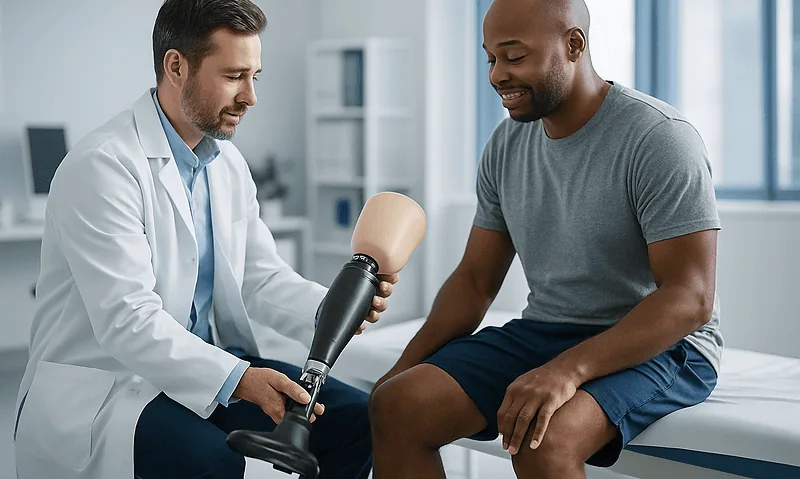
How a Prosthetic Limb Is Designed and Fitted: Casting, Gait Analysis and Adjustments
The prosthetic fitting process usually begins once the surgical wound has healed and swelling has settled. A prosthetist captures the shape of the residual…

How Do You Get Used to a Prosthesis? Wearing Schedules, Skin Checks and Early Training
Getting used to a prosthetic leg is gradual and supervised. Most rehabilitation programs begin with short wearing sessions of an hour or two, a…

Walking, Cycling, Massage, Chiropractic: What Helps Sciatica
Yes, walking is generally good for sciatica. Gentle, regular movement keeps the spine and hips mobile, eases muscle guarding, and is recommended by national…

The First Neurological Rehabilitation Assessment: What the Team Measures and Why It Sets Goals
A neurological rehabilitation assessment is the structured first evaluation a rehabilitation team makes after a stroke, brain or spinal cord injury, or a progressive…

What a Neurological Rehabilitation Program Includes: Movement, Speech, Swallowing and Thinking
A neurological rehabilitation program is coordinated therapy for people whose brain, spinal cord or nerves have been injured by stroke, trauma, multiple sclerosis, Parkinson's…