

Orthosomnia: When Sleep Tracking Becomes the Thing Keeping You Awake
Key Takeaways
- Orthosomnia was named in a 2017 case series and is a clinical observation, not a diagnosis listed in the ICSD or DSM-5; the underlying condition it feeds is insomnia disorder.
- Consumer trackers estimate sleep from movement and heart rate, and validation studies consistently show they struggle to detect wake and agree only modestly with laboratory sleep staging.
- Experiments in healthy volunteers show that being told you slept badly worsens next-day fatigue and attention even when the information is false, which is how a wrong score produces a bad day.
- Chronic insomnia is defined as sleep difficulty at least three nights a week for three months with daytime consequences; the diagnosis rests on your experience and function, not on a device.
- Cognitive behavioral therapy for insomnia is the guideline-recommended first-line treatment, with randomized-trial benefits that persist after treatment ends, and every one of its components works against monitoring and effort.
- Snoring with breathing pauses, falling asleep while driving, or acting out dreams are red flags that need a clinician promptly, regardless of what any app reports.
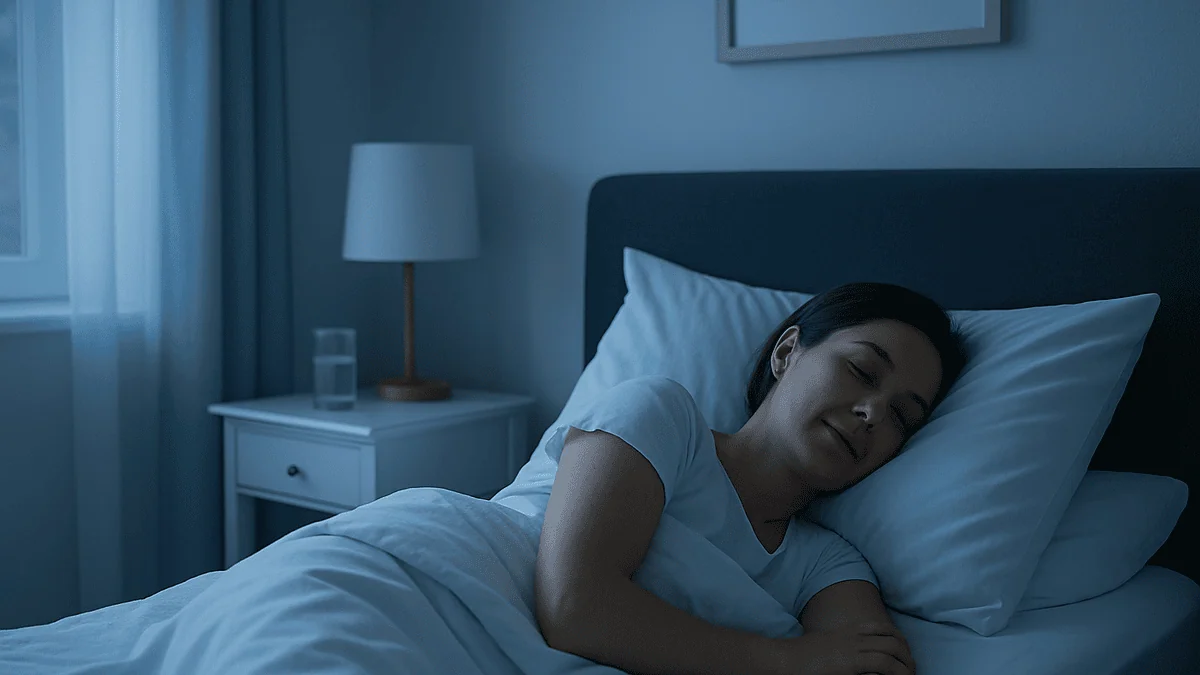
Orthosomnia is an informal term for a preoccupation with achieving perfect sleep data from a wearable or app, to the point that worry about the numbers itself disrupts sleep. It is not a formal diagnosis. Sleep specialists describe it in people whose insomnia symptoms worsen while chasing a sleep score, and the usual approach is to reduce reliance on the device and address the insomnia with evidence-based care such as cognitive behavioral therapy for insomnia.
The couple in the sleep clinic waiting room are not arguing about snoring. They are arguing about a number. His ring says he slept six hours and eleven minutes with “low” deep sleep; she slept seven hours forty and scored an 84. He feels wrecked. She feels fine. Neither of them trusts how they actually feel, because the app has already told them how the night went.
Scenes like this are why orthosomnia, a word coined in a 2017 case series in a peer-reviewed sleep journal, has climbed back into search trends. As of early 2026, sleep scores have moved from the wrists of athletes to the pillows and phones of ordinary households, and the social media trend of “sleepmaxxing” (optimizing every variable of the night) has turned bedtime into a performance review. Sleep physicians say patients increasingly arrive with screenshots instead of symptoms.
This explainer looks at what the evidence shows about sleep trackers, why the data can become the problem, and how to step back without giving up on better sleep.
What is orthosomnia, and is it a real diagnosis?
Orthosomnia is a portmanteau: “ortho” meaning straight or correct, and “somnia” meaning sleep. The word was introduced in 2017 by Kelly Glazer Baron and colleagues in the Journal of Clinical Sleep Medicine, who described patients whose pursuit of ideal sleep data from consumer wearables appeared to be feeding their insomnia rather than easing it. The authors were deliberate about the parallel with orthorexia, the unhealthy fixation on eating “correctly.”
It is worth being precise about what the term is and is not. Orthosomnia is not listed in the International Classification of Sleep Disorders or the DSM-5. No diagnostic criteria exist, no prevalence figures are agreed upon, and no one can be “tested” for it. It is a clinical observation with a memorable name, useful because it points at a specific pattern: a person checks a sleep score, feels distressed by what it shows, and then spends the next night trying harder to sleep, which is the one strategy almost guaranteed to fail.
Underneath the label sits a condition that is very real and very well studied: insomnia disorder. Insomnia is diagnosed when someone has trouble falling asleep, staying asleep, or waking too early at least three nights a week, with daytime consequences, and when the problem has lasted three months or longer it is called chronic insomnia. The tracker does not create a new disease. What it can do is add a potent new source of the worry, monitoring and effort that sleep science has long recognized as the engine of chronic insomnia.
So the honest answer is layered. Orthosomnia is real in the sense that clinicians see it. It is not real in the sense of being a disorder you would find in a medical coding manual. Both statements matter for how you respond to it.
What changed recently: why orthosomnia is trending now
The term is nearly a decade old, so the renewed attention needs explaining. Three threads have braided together.
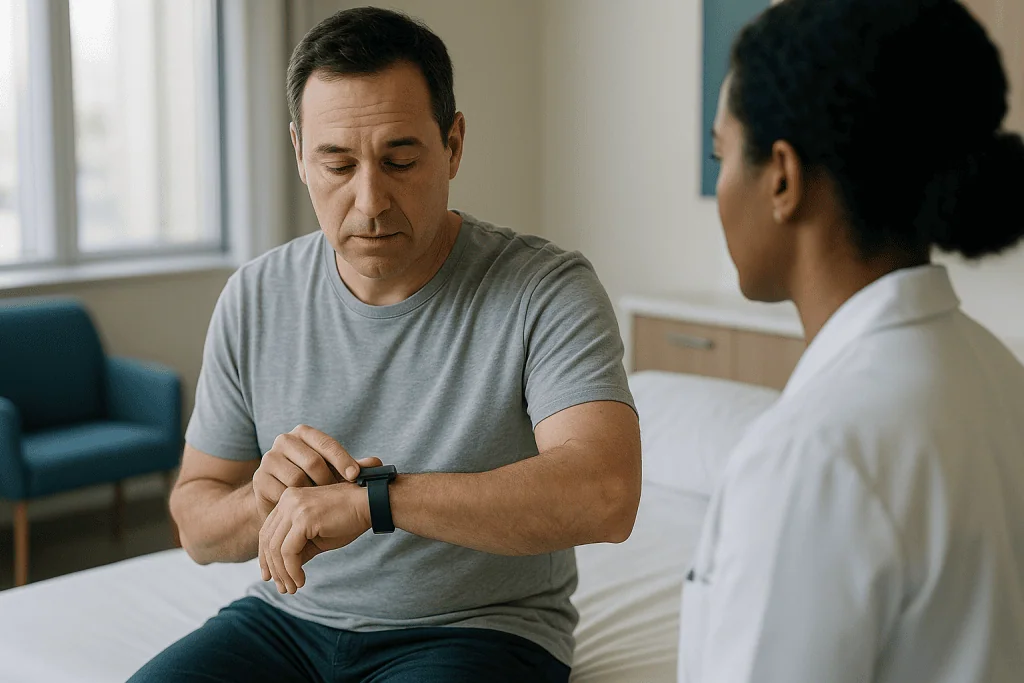
First, the hardware changed. The 2017 case series described patients using wrist-worn fitness bands that mostly measured movement. Today’s rings, watches and bedside devices add heart rate, heart-rate variability, skin temperature and blood oxygen estimates, and they package the result as a single nightly score, often with a verdict word such as “poor” or “optimal.” A verdict is far easier to fixate on than a graph.
Second, the culture changed. Sleep has become the wellness frontier, and short-form video has filled with elaborate routines, mouth tape, magnesium rituals and “readiness” comparisons. Public-health messaging has also sharpened: the CDC continues to advise that adults need at least 7 hours of sleep per night, and that figure has become a target people chase to the minute rather than a population-level guide.
Third, the clinical picture changed. Sleep physicians increasingly report that patients open consultations by handing over a phone. A 2024 review of consumer sleep technology in the sleep-medicine literature, indexed on PubMed, noted that validation of staging accuracy still lags behind the confidence with which devices present it. The gap between what a device claims and what it can prove is exactly where orthosomnia grows.
None of this is a scandal, and trackers remain useful for many people. The change is one of scale and tone. When a technology moves from a niche of self-experimenters to a mass product that grades a basic biological function every morning, it is reasonable to ask what happens to the people who were already anxious about sleep. That question, not any single trial or approval, is what put the word back in the search bar.
How does sleep tracking turn into sleep tracker anxiety?
Sleep is one of the few bodily functions that resists direct effort. You cannot make yourself fall asleep the way you can make yourself walk faster. Sleep arrives when two systems line up: sleep pressure, the drive that builds the longer you have been awake, and your circadian rhythm, the roughly 24-hour internal clock that times alertness and drowsiness. A third system, arousal, can override both. Any state of vigilance, including vigilance about sleep itself, keeps the brain in a mode that is incompatible with drifting off.
Sleep researchers call the sustained version of this state hyperarousal: a measurable elevation in heart rate, cortisol and brain activity across the 24-hour day that is a hallmark of chronic insomnia. The leading behavioral model of insomnia, sometimes called the 3P model, describes how a predisposition (say, a tendency to worry), a precipitating event (a stressful month) and perpetuating behaviors (lying in bed longer, monitoring, trying harder) turn a few bad nights into a lasting disorder. The perpetuating behaviors are the part that treatment targets, because they are the part a person can change.
A sleep score plugs directly into that third P. Checking the number on waking is a form of monitoring. Feeling alarmed by it raises arousal. Planning the next night around improving it adds effort. The device also delivers its judgment at the worst possible moment, in the first groggy minutes after waking, when most people’s mood is already at its daily low and a “62” lands like a verdict on the whole day.
Then expectation does the rest. People who are told they slept badly tend to report more fatigue and perform worse on attention tasks than people told they slept well, even when the information is false. The score shapes the day, the day confirms the score, and the loop closes.
Are sleep trackers accurate? What the devices really measure
Consumer sleep trackers do not measure sleep. They estimate it. The gold standard for measuring sleep is polysomnography, an overnight laboratory study that records brain waves, eye movements, muscle tone, breathing and heart rhythm. Sleep stages are defined by brain-wave patterns, and no wrist or finger device records brain waves.

What a wearable records is movement (through an accelerometer) and, in newer models, heart rate, heart-rate variability and sometimes skin temperature or oxygen saturation. Software then infers from stillness and a slowing pulse that you are probably asleep, and from subtler patterns that you are probably in light, deep or REM sleep. REM, or rapid eye movement sleep, is the stage in which most vivid dreaming occurs. Deep sleep, or slow-wave sleep, is the stage most associated with physical restoration.
Validation studies comparing wearables with polysomnography show a consistent pattern. Devices are reasonably good at estimating total sleep time in healthy sleepers who sleep soundly, because a still body with a slow pulse usually is asleep. They are much weaker at detecting wakefulness during the night, because a person lying quietly awake looks, to an accelerometer, almost identical to a person asleep. That weakness matters most for exactly the people most likely to worry: those with insomnia, who often lie motionless and awake for long stretches and whose devices may then report sleep that did not happen, or, in other cases, flag restless sleep as wake.
Sleep staging is the least reliable layer. Agreement with laboratory scoring for individual stages is modest and varies by device, by night and by person. A “low deep sleep” reading can reflect a quirk of the algorithm, a loose strap, a night of lying still while awake, or an actual change in sleep. The device cannot tell you which, and neither can you.
Sleep tracker versus sleep study: a side-by-side summary
The table below compares what a typical consumer wearable, a clinical actigraph and overnight polysomnography can tell you. Actigraphy is a research-grade wrist movement monitor that clinicians use to estimate sleep patterns over one to two weeks at home; it shares the same basic limitation as consumer devices but is used alongside a sleep diary and interpreted by a specialist.
| Question | Consumer tracker | Clinical actigraphy | Polysomnography (lab sleep study) |
|---|---|---|---|
| How is sleep detected? | Movement, heart rate, algorithm | Movement, validated algorithm, plus diary | Brain waves, eye movement, muscle tone |
| Total sleep time | Fair in sound sleepers; less reliable in insomnia | Fair; interpreted with diary | Reference standard |
| Wake during the night | Often under- or over-counted | Limited | Accurate |
| Sleep stages | Modest agreement; varies by device | Not measured | Reference standard |
| Breathing pauses (sleep apnea) | Some devices flag possible signs; not diagnostic | Not measured | Diagnostic |
| Night-to-night patterns over weeks | Useful for trends | Useful; this is its main role | Usually one or two nights only |
| Regulatory status | Mostly wellness products, not medical devices | Medical device | Medical test |
Two points stand out. The lab study wins on accuracy but captures only a night or two in an unfamiliar bed, which is why clinicians rarely order it for straightforward insomnia and reserve it for suspected apnea, movement disorders or unusual nighttime behaviors. The wearable loses on accuracy but can show patterns across months, which is genuinely useful if you read it as a weather trend rather than a daily verdict.
The practical lesson for anyone worried about orthosomnia is that the single-night number is the least trustworthy thing a tracker produces, and also the thing most people check first.
Is sleep tracking making your insomnia worse? Signs to notice
Plenty of people wear a tracker for years, glance at it occasionally and sleep fine. The pattern that concerns sleep clinicians is more specific, and it tends to announce itself in behavior rather than in the data.
Consider whether any of these describe your mornings and nights:
- You check your sleep score before you have formed an opinion about how you feel, and the score then decides your mood.
- You feel rested until the app tells you that you shouldn’t, or exhausted but reassured because the number was good.
- You stay in bed after waking to “bank” more sleep time for the device, even though you are not sleepy.
- You have cancelled plans, skipped exercise or avoided evening social contact to protect the score.
- You lie awake calculating what tonight’s number will be, or how early you must fall asleep to reach a target.
- Your sleep worsened, or your worry about sleep grew, in the months after you started tracking.
- You have argued with a partner, trainer or clinician who suggested the device might be wrong.
None of these is a diagnostic test, and ticking two boxes does not make you a patient. The common thread is that the device has become the authority on your night, displacing the two sources clinicians actually rely on: how long you believe you slept and how you function during the day.
A useful experiment, suggested in the original 2017 case reports, is simple: take the device off for two weeks and keep a paper sleep diary instead. Note roughly when you went to bed, when you think you fell asleep, how often you woke, when you got up and how you felt at midday. If your subjective sleep and daytime energy improve while the data goes dark, the tracker was part of the problem. If nothing changes, your insomnia deserves attention on its own terms, and you have lost nothing but a fortnight of graphs.
What the evidence actually says, graded honestly
Evidence-first means being clear about which claims rest on what. Here is the ladder, from firmest to weakest.
Strong (randomized trials and systematic reviews): Cognitive behavioral therapy for insomnia, or CBT-I, a structured short program that changes the thoughts and habits maintaining insomnia, improves sleep onset, nighttime wakefulness and sleep quality in chronic insomnia, with benefits that persist after treatment ends. Major guidelines, including those summarized by Mayo Clinic and the NHS, recommend it as first-line care, ahead of medicine. This is the most relevant body of evidence for orthosomnia because it treats the perpetuating behaviors that trackers amplify.
Strong (laboratory validation studies): Consumer sleep devices overestimate sleep and underperform in detecting wake, particularly in people with fragmented sleep, and their sleep-stage output agrees only modestly with polysomnography. Dozens of head-to-head comparisons published since 2017 agree on the direction of these errors, even as device accuracy gradually improves.
Moderate (experimental psychology): Sham feedback studies show that telling healthy people they slept poorly worsens their reported fatigue and measured attention the next day, regardless of how they actually slept. These are small, short studies in volunteers, but they are randomized and consistent, and they supply the mechanism by which a wrong score can produce a bad day.
Weak (case reports and expert opinion): The claim that trackers cause or worsen insomnia in a defined group of people rests mainly on the 2017 case series and on clinical observation since. There are no randomized trials assigning insomnia patients to track or not track, and no reliable prevalence estimate. It is plausible, biologically coherent and widely reported, but it remains an expert judgment, not a proven effect.
Read together, the picture is coherent. The intervention that treats insomnia is well supported. The limits of the devices are well documented. The link between the two is a strong clinical hunch awaiting its trial.
Orthosomnia, insomnia and sleep apnea: how the three overlap
The worry that a tracker provokes is not always misplaced, and separating the three most common situations keeps the discussion honest.
In the first situation, the sleep is adequate and the problem is the preoccupation. The person functions well, feels broadly alert, and would never have thought of themselves as a poor sleeper before the device told them so. The low “deep sleep” reading is probably an artifact, the fatigue is probably expectation, and the most helpful move is to stop measuring. This is orthosomnia in its purest form.
In the second situation, the person genuinely has insomnia, and the tracker is one of several perpetuating factors alongside irregular schedules, long stretches awake in bed and worry. Here the device is a symptom amplifier. Removing it helps, but the insomnia needs treatment in its own right, and CBT-I is the evidence-based route.
In the third situation, the tracker has noticed something real that the person has not. Loud snoring, breathing pauses observed by a partner, repeated nighttime awakenings with a dry mouth or headache, and overwhelming daytime sleepiness point toward obstructive sleep apnea, a condition in which the airway narrows or closes repeatedly during sleep. Some wearables now display blood oxygen estimates or flag “possible breathing disturbances.” These features are not diagnostic, and both false alarms and missed cases occur, but a persistent flag combined with symptoms is a reasonable prompt to seek evaluation. Untreated apnea is associated with high blood pressure, heart rhythm problems and stroke, which is why the American Heart Association counts healthy sleep among its essentials for cardiovascular health.
The distinction matters because the right response differs completely: take the device off, treat the insomnia, or get a proper sleep study. A clinician can usually tell which situation applies from a conversation and a two-week sleep diary, long before any laboratory test is needed.
Common myths about orthosomnia and sleep scores
Viral sleep content is confident, visual and often wrong in ways that feed the very anxiety this article describes. Several claims deserve a correction.
Myth: Your tracker knows how much deep sleep you got. It estimates. Deep sleep is defined by slow brain waves that no wrist or ring sensor can see. Night-to-night swings in the “deep” figure are often algorithmic noise rather than physiology.
Myth: Everyone needs exactly eight hours, and less means damage. The CDC’s guidance for adults is at least 7 hours, and normal adult sleep need ranges roughly from 7 to 9 hours, with some variation between individuals. One short night is not harmful, and the body partly compensates on following nights. Chronic short sleep over months and years is what the health evidence concerns.
Myth: Waking during the night means something is wrong. Brief awakenings at the end of each sleep cycle, every 90 minutes or so, are normal and usually forgotten. Older adults wake more, and this is part of normal aging, not a defect to be optimized away.
Myth: If you feel tired, the sleep score explains why. Fatigue has many causes: iron deficiency, thyroid disease, depression, medicines, dehydration, overtraining and plain overwork among them. A low score offers an explanation that feels scientific while possibly pointing away from the real one.
Myth: A perfect routine guarantees a perfect night. Elaborate “sleepmaxxing” protocols can help by encouraging regular timing and a dark, cool bedroom, both supported by evidence. They harm when they turn bedtime into a checklist that must be completed flawlessly, because the effort itself raises arousal.
Myth: Orthosomnia means you must throw the device away. Many people can keep tracking once they change their relationship with the data. The goal is to stop treating a single night’s estimate as truth, not necessarily to abandon measurement.
How to stop obsessing over sleep: a practical reset
If the signs above felt familiar, the first steps are behavioral, inexpensive and borrowed directly from the components of CBT-I that have the strongest trial support.
Start with a data holiday. Remove the device or disable sleep tracking for at least two weeks and keep a brief paper diary instead. Write down estimates, not precise times; the point is to notice patterns, not to replace one measurement with another. Clinicians use exactly this kind of diary to assess insomnia, and it has the advantage of recording what you actually experienced.
Next, anchor your wake time. Getting up at the same time every day, including weekends, is the single most effective lever for stabilizing the circadian clock. Let bedtime follow your sleepiness rather than a target. If you are not sleepy, stay up a little. Trying to sleep early to improve a number is effort, and effort is the enemy.
Then protect the bed for sleep. If you have been awake for what feels like 20 minutes or more, get up, go somewhere dim and do something quiet until you feel drowsy. This technique, called stimulus control, retrains the brain to associate the bed with sleep rather than with frustrated wakefulness. It feels counterintuitive and it is among the best-supported behavioral tools in sleep medicine.
Finally, change the question you ask each morning. Instead of “what was my score?”, ask “how do I feel at midday?” Daytime function is what insomnia diagnosis actually rests on, and it is the measurement you can always trust.
Expect the first week to feel uncomfortable. People who have outsourced their judgment of sleep to a device often describe a kind of withdrawal, with urges to check and uncertainty about whether they slept at all. That discomfort is usually a sign the reset is addressing the right thing.
How to use a sleep tracker without letting it keep you awake
Many people like their devices and have good reasons to keep them: training load, shift-work schedules, menopause symptoms, or simple curiosity. Keeping a tracker is compatible with good sleep if the way you use it changes.
Look at weeks, never at nights. A seven-day or thirty-day average of total sleep time is where consumer devices are most useful, because the random errors of individual nights partly cancel out. A single night’s reading, and especially a single night’s stage breakdown, is the least reliable output and the most emotionally loaded. If the app allows it, turn off the daily score notification and the morning summary.
Check the data later in the day, not on waking. By mid-morning you already know how you feel, and the number becomes one more piece of information rather than the verdict that shapes your mood before you have brushed your teeth.
Treat stage data as entertainment. Deep and REM estimates vary substantially between devices worn on the same person on the same night. A feature that cannot agree with its competitors should not be allowed to decide whether you had a good night.
Use the trend to spot real patterns, then act on habits rather than on the score. If the thirty-day average shows you consistently sleep less on nights after late workouts or alcohol, that is useful, and the response is a schedule change, not a push for a higher number tomorrow.
Finally, decide in advance what the device is for. Someone recovering from insomnia may do best with no tracking until sleep has been stable for a few months. Someone whose device repeatedly flags irregular breathing has a different reason to pay attention and a reason to speak with a clinician. Purpose first, measurement second.
Why cognitive behavioral therapy for insomnia matters here
Cognitive behavioral therapy for insomnia, usually shortened to CBT-I, is a short structured program, typically four to eight sessions, that targets the habits and beliefs maintaining chronic insomnia. It is the treatment that major guidelines place first, and it is the natural antidote to orthosomnia because every one of its components works against monitoring and effort.
The behavioral core has two parts. Sleep scheduling, sometimes called sleep restriction, temporarily matches the time you spend in bed to the time you actually sleep, which builds sleep pressure and consolidates fragmented nights. Stimulus control, described above, breaks the association between bed and wakefulness. The cognitive component addresses catastrophic beliefs, such as the conviction that a bad night will wreck the next day or that a particular number of hours is non-negotiable. A sleep score that arrives each morning is, in effect, a daily dose of exactly the beliefs CBT-I sets out to loosen.
The evidence base is robust. Randomized trials and systematic reviews show improvements in time to fall asleep, time awake during the night and overall sleep quality, with gains that are maintained months and years later, unlike the effects of sleeping pills, which stop when the medicine does. CBT-I has been shown to work when delivered in person, in groups, by telehealth and through structured digital programs, which has widened access in places where trained therapists are scarce.
It is also safe for people who have sleep apnea, chronic pain or depression alongside insomnia, and it is frequently combined with treatment for those conditions. The main cost is effort in the first weeks, when sleep scheduling can increase daytime sleepiness temporarily.
For anyone whose tracker has turned sleep into a project, CBT-I offers the opposite project: learning to stop trying. Ask a primary care clinician about a referral; many health systems now offer it directly.
What a sleep clinician actually looks at (and why it is not your app)
Patients are sometimes surprised, even disappointed, when a sleep specialist shows little interest in months of tracker data. The reason is not snobbery about consumer technology. It is that insomnia is defined by experience and function, and the assessment tools reflect that.
The consultation usually begins with a history: when the problem started, what was happening in life at the time, what the nights look like now, what the person does when awake in bed, and how the days feel. Standardized questionnaires such as the Insomnia Severity Index capture how much the problem bothers the person, which predicts outcome better than any objective number.
Then comes the diary. A one- to two-week sleep diary, filled in each morning with approximate times, remains the central tool for assessing insomnia and for planning CBT-I. Its apparent imprecision is a feature: it records the sleep the person believes they got, and that belief is what drives the daytime distress.
If the clinician suspects something beyond insomnia, the tools change. Clinical actigraphy may be used to confirm circadian patterns in shift workers or in people whose body clock seems shifted very late or early. A home sleep apnea test, a simplified overnight recording of breathing and oxygen, or full laboratory polysomnography is ordered when apnea, limb movements or unusual nighttime behaviors are suspected. These tests answer questions that no wearable can.
Tracker data is not useless in this setting. Clinicians may glance at it for gross patterns such as very irregular bedtimes or a trend toward shorter sleep across months. What they will not do is treat a stage breakdown or a single night’s score as evidence, and a good clinician will say so gently. If your device has become the thing you trust most about your sleep, that conversation is often the start of recovery.
Who is most prone to orthosomnia?
No study has measured who develops a troubled relationship with sleep data, so what follows is clinical pattern recognition rather than epidemiology. Still, the patterns are consistent enough to be useful.
People with a history of anxiety or perfectionism are most often described. The same traits that make someone a diligent employee or a careful athlete, a drive to measure, improve and control, work against a function that responds to letting go. Existing insomnia is the other major factor; a device cannot create hyperarousal, but it gives an already vigilant brain something new to be vigilant about.
Athletes and people in high-performance work are a recognizable group. Recovery scores and readiness metrics are marketed as training tools, and a low reading can produce a day of guilt and self-doubt that the actual night did not warrant. Several sports-medicine commentaries have warned that athletes should not alter training solely on the basis of consumer sleep data.
Teenagers deserve particular care. Adolescents naturally shift to later sleep and wake times, need 8 to 10 hours, and are often chronically short of sleep because of early school starts. A tracker that labels normal teenage sleep as failing, combined with social comparison, can add anxiety to a group already under pressure. Parents who want to help a teenager sleep more will usually gain more from protecting a consistent wake time and keeping screens out of the bedroom than from any score.
People in midlife, especially women around menopause, are another group. Hot flashes and night sweats fragment sleep, and a device will faithfully report that fragmentation, sometimes alarmingly. The symptoms are real and treatable, and the right conversation is with a clinician about menopause care, not with the app.
What unites these groups is a mismatch between a real need for sleep and a tool that promises control it cannot deliver.
When to see a doctor about sleep tracking anxiety or poor sleep
Most people who recognize themselves in this article can improve matters with the behavioral reset described above. Some situations call for professional help, and a few call for it promptly.
Make an appointment with a primary care clinician if any of these apply:
- Trouble falling or staying asleep at least three nights a week for three months or more, with daytime effects such as fatigue, poor concentration or low mood.
- Worry about sleep that occupies much of your day, or that has led you to avoid work, exercise or social plans.
- Fatigue that does not improve even when your sleep diary suggests adequate hours, since this may point to another medical cause such as anemia, thyroid disease or depression.
- Reliance on alcohol or on any sleep aid, prescription or over the counter, to get through the night. Never stop or change a prescribed medicine on your own; discuss any concerns with the clinician who prescribed it.
- A tracker that repeatedly flags irregular breathing or low oxygen, especially alongside snoring or morning headaches.
Seek care without delay for these red-flag signs:
- Loud snoring with witnessed pauses in breathing, gasping or choking during sleep.
- Falling asleep while driving, or near-misses on the road due to sleepiness.
- Sudden loss of muscle tone with strong emotion, or vivid hallucinations when falling asleep or waking, which can indicate narcolepsy.
- Acting out dreams, violent movements or injuring yourself or a bed partner during sleep.
- Thoughts of self-harm or hopelessness linked to exhaustion or sleeplessness. Contact emergency services or a crisis line immediately.
Bring a two-week sleep diary rather than your app if you can. Any decision about further testing, referral for CBT-I, or medicine belongs to the clinician who examines you and knows your history. The aim of this article is to help you arrive at that conversation with the right questions, not to replace it.
Frequently asked questions
What is orthosomnia in simple terms?
Orthosomnia is an informal name for becoming so preoccupied with getting perfect sleep data from a wearable or app that the worry itself disrupts your sleep. The word combines “ortho” (correct) and “somnia” (sleep) and was coined in 2017 by sleep researchers describing patients whose insomnia worsened as they chased a sleep score. It is not an official diagnosis, but the insomnia underneath it is well recognized and treatable.
Are sleep trackers accurate enough to trust?
For long-term trends in total sleep time among sound sleepers, reasonably so. For single nights, wake detection and sleep stages, no. Trackers infer sleep from movement and heart rate rather than measuring brain activity, so a person lying still but awake often registers as asleep. Stage estimates such as deep and REM sleep agree only modestly with laboratory sleep studies and vary between devices worn by the same person on the same night.
Can sleep tracker anxiety actually cause insomnia?
It can contribute to maintaining it. Insomnia is perpetuated by worry, monitoring and effort to sleep, and a daily sleep score supplies all three. There are no randomized trials proving that trackers cause insomnia, so the link rests on case reports and expert opinion. The mechanism is biologically plausible, and many people notice their sleep and mood improve within two weeks of stopping tracking.
Is sleep tracking making my insomnia worse if I check it every morning?
Possibly, if the number decides how you feel before you have formed your own opinion. Clinicians look for signs such as staying in bed to improve the score, cancelling plans to protect it, or feeling tired only after the app says you should. A two-week break from tracking, with a simple paper sleep diary instead, is the most practical way to find out whether the device is part of your problem.
How do I stop obsessing over sleep and my sleep score?
Take the device off for at least two weeks, fix a consistent wake time every day including weekends, go to bed only when sleepy, and get up for a quiet activity if you lie awake for what feels like 20 minutes. Judge your night by how you feel at midday rather than by any number. These steps come directly from cognitive behavioral therapy for insomnia, the best-supported treatment for chronic sleep problems.
What does a low deep sleep reading on my tracker mean?
Usually very little on its own. Deep sleep is defined by slow brain waves that no wrist or ring sensor can record, so the figure is an algorithmic guess from movement and heart rate. Night-to-night swings often reflect a loose strap, time spent lying still while awake, or the algorithm itself. Only a laboratory sleep study measures deep sleep directly, and clinicians rarely need that information to treat insomnia.
How much sleep do adults actually need?
The CDC advises that adults aged 18 and over need at least 7 hours per night, and typical adult need falls roughly between 7 and 9 hours, with normal variation between individuals. Teenagers need about 8 to 10 hours. A single short night is not harmful and the body partly compensates afterward; the health concerns in the evidence relate to chronically short sleep sustained over months and years.
Should I ignore it if my tracker flags irregular breathing or low oxygen?
Not entirely. These features are not diagnostic and produce both false alarms and missed cases, but a persistent flag combined with loud snoring, witnessed breathing pauses, morning headaches or heavy daytime sleepiness is a reasonable prompt to see a clinician. Obstructive sleep apnea is diagnosed with a home sleep apnea test or a laboratory sleep study, and untreated apnea is linked to high blood pressure and heart problems.
What is CBT-I and how is it different from sleeping pills?
Cognitive behavioral therapy for insomnia is a short structured program, usually four to eight sessions, that changes the habits and beliefs maintaining insomnia through sleep scheduling, stimulus control and cognitive techniques. Randomized trials show benefits that last after treatment ends, whereas the effects of sleep medicines stop when the medicine does. Guidelines recommend CBT-I first; any decision about medicine belongs to your prescribing clinician.
Can I keep using my sleep tracker if I have had orthosomnia?
Many people can, once their relationship with the data changes. Look at weekly or monthly averages rather than single nights, turn off morning score notifications, check the data later in the day, and treat sleep-stage estimates as entertainment rather than evidence. Someone recovering from insomnia may do better with no tracking until sleep has been stable for a few months. Decide what the device is for before deciding whether to wear it.
References
This article is for general information only and is not a substitute for professional medical advice. Please consult a qualified doctor about your individual situation.

More from the Blog
Social Jet Lag: Why Weekend Lie-Ins Feel Like Time-Zone Travel to Your Body
Social jet lag is the mismatch between the sleep schedule your body clock prefers and the one your weekday alarm imposes, measured as the…
How Long Can You Go Without Sleep? Deprivation, Hour by Hour
Most people can stay awake for one to two days before microsleeps, memory lapses, and mood changes set in; by 72 hours, hallucinations and…
Blue Light and Sleep: How Much Screens Really Matter, According to the Research
Blue light from screens can delay melatonin release and shift the body clock, but the effect of typical evening phone use is modest. Laboratory…

Mattress Firmness and Back Pain: What the Evidence Says About Medium-Firm
The best-studied answer is medium-firm. In a randomized trial of 313 adults with chronic low back pain, people given a medium-firm mattress reported less…
Sleep Restriction Therapy: The Counterintuitive Insomnia Treatment That Works
Sleep restriction therapy is a structured part of cognitive behavioral therapy for insomnia that temporarily limits time in bed to roughly the hours a…
Sleep Positions Explained: Back, Side or Stomach: What Each Does to Breathing, Spine and Reflux
No single sleep position is best for everyone. Side sleeping suits most adults: it keeps the upper airway more open, reduces snoring and, on…