

Pain After Breast Augmentation: Tightness, Muscle Ache and Safe Ways to Stay Comfortable
Key Takeaways
- Breast augmentation pain usually peaks on day two or three, after local anesthetic wears off and inflammation reaches its height, and then eases unevenly over the following weeks.
- Tightness and a deep muscle ache are strongest when the implant sits under the pectoralis major, because that muscle is being held in a stretched position it has never occupied.
- Brief electric zaps between roughly weeks two and eight are small sensory nerves reconnecting, while sensation changes at the nipple can take months to settle and are occasionally lasting.
- NHS guidance describes one to two weeks off desk work, about a week without driving, and several weeks without strenuous exercise or heavy lifting, with timing confirmed by your surgeon.
- A breast that suddenly becomes much larger, tense and painful on one side, or any fever and spreading redness, is a same-day call rather than a wait-and-see situation.
- Breast implant illness describes real, reported symptoms whose cause has not been established; persistent whole-body symptoms need a full medical evaluation before implants are assumed responsible.
Pain after breast augmentation is usually a tight, heavy, muscle-ache sensation across the chest that peaks in the first two to three days and eases over the following weeks, especially when the implant sits under the chest muscle. Comfort comes from a supportive bra, gentle walking, sleeping propped up and the pain plan your surgical team prescribes. Sudden one-sided swelling, fever or spreading redness needs a same-day call.
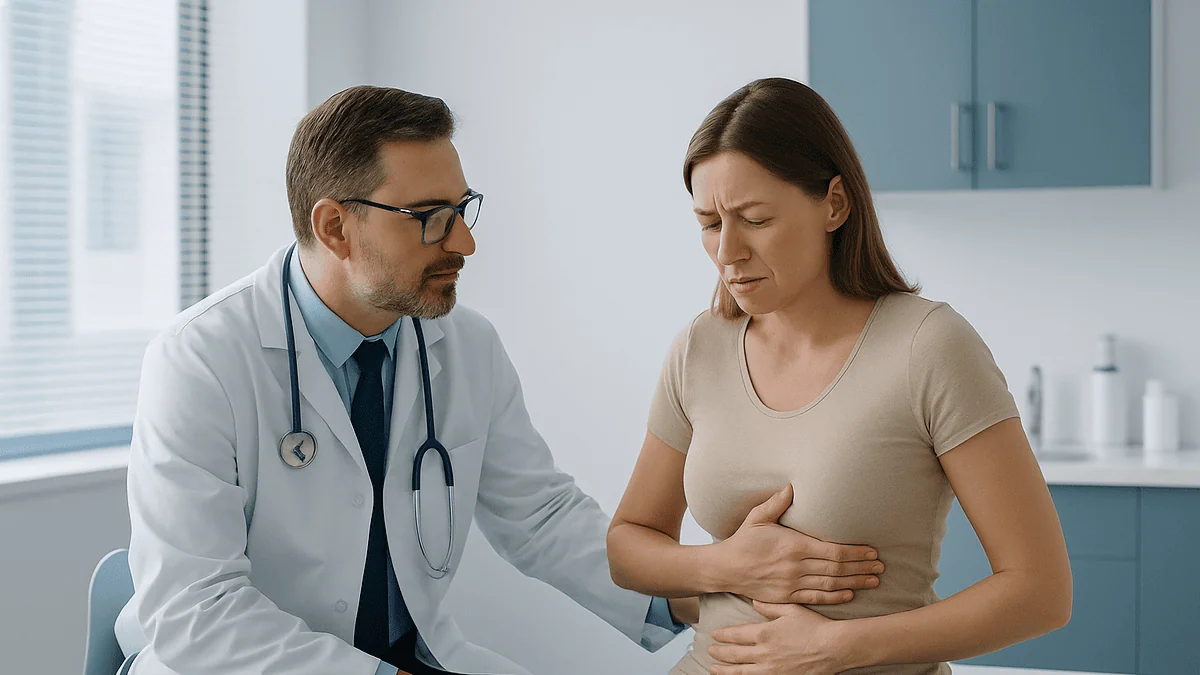
It is the second morning. You reach for a coffee mug on the top shelf and stop halfway, not because something hurts sharply, but because your chest feels as if someone has wrapped it in a belt and pulled one notch too tight. That sensation, more squeeze than stab, is the thing most people are not expecting, and it is the most common description of breast augmentation pain after surgery.
The internet does not help much here. One forum post describes a week of agony, the next says it was a breeze, and neither tells you what is actually happening under the skin. Tightness, a dull ache when you lift your arms, a nipple that feels oddly far away: each has a mechanical explanation.
This article walks through those mechanisms, the usual timeline described by mainstream medical sources, the comfort measures that have real logic behind them, and the small number of signs that mean you should stop reading and pick up the phone.
What actually happens during breast augmentation, and why it shapes the pain
Breast augmentation is a surgical procedure in which an implant, a soft silicone shell filled with silicone gel or sterile saline, is placed to increase breast size or restore volume. The operation itself is usually short, often around one to two hours under general anesthesia, according to Mayo Clinic and NHS descriptions. What matters most for how you feel afterward is not the length of the operation but where the surgeon makes the pocket.
There are two main placements. In a subglandular placement the implant sits on top of the pectoralis major, the large fan-shaped chest muscle, and underneath the breast tissue. In a submuscular or dual-plane placement, part or all of the implant sits beneath that muscle, which has to be partly lifted and stretched to make room.
That difference explains a lot of the variation in recovery stories. A pocket under the muscle means the muscle has been separated from the ribs along its lower edge and now rests over a new object. Muscles respond to that kind of stretch the way a calf responds to an unfamiliar hill: they tighten, protest and gradually relax. Cleveland Clinic notes that submuscular placement tends to involve more postoperative soreness, while subglandular placement can mean a quicker early recovery.
The incision site is a second variable. Most incisions are made in the fold under the breast, around the edge of the areola or in the armpit. Each cuts through skin and a limited number of small sensory nerves, which is why the skin near the scar often feels numb or oversensitive for a while.
None of this is unique to one surgeon or one technique. It is simply tissue responding to being moved, and knowing that helps the early days feel less alarming.
Why breast augmentation pain after surgery feels like tightness and muscle ache
Patients rarely describe the early discomfort as a wound hurting. They describe pressure. The reason is that three things are happening at once in a small space.

First, the skin and breast envelope have been stretched over a new volume. Skin is elastic but not instantly so; it accommodates over days and weeks, and until then it reports that stretch to the brain as tightness. Second, if the implant sits under the muscle, the pectoralis major is being held in a lengthened position it has never occupied. Any movement that uses that muscle, pushing a door, lifting a toddler, pulling yourself up in bed, produces the deep ache that people compare to the day after an unusually hard upper-body workout. Third, swelling. Surgery triggers an inflammatory response in which fluid moves into the tissues; Mayo Clinic describes soreness and swelling as likely for a few weeks, with bruising possible.
Swelling often makes the breasts sit high and feel firm at first. Surgeons sometimes call the settling that follows the drop, and it is one reason the early appearance is not the final one.
Timing follows a familiar pattern. The peak of inflammation tends to fall on the second or third day, which is why many people say day two was worse than day one, when the anesthetic and local numbing medicines were still wearing off. After that, the curve generally bends downward, though it is a jagged line rather than a smooth one; a good day can be followed by a stiffer one after you did a bit too much.
Tightness, in other words, is a sign of tissue adapting, not a sign that something has gone wrong. The job in the first weeks is to support that adaptation rather than fight it.
Breast augmentation recovery timeline: what the first days and weeks usually look like
Every surgical team gives its own schedule, and that schedule overrides anything written here. The broad shape below is drawn from NHS and Mayo Clinic patient guidance and is a typical range, not a promise.
Days 1 to 3. Grogginess from anesthesia, chest tightness, a sensation of heaviness, and swelling that may make the breasts look larger and higher than planned. Most people are up and walking the same day. Drains, if used, are usually checked at the first visit.
Days 4 to 7. The sharpest discomfort usually starts to ease. Bruising may appear as the blood tracks downward with gravity. Arm movement is stiff but improving. NHS guidance suggests avoiding driving for about a week, partly because the chest muscles are needed to steer and brake in an emergency and partly because of any sedating medicines.
Weeks 2 to 3. NHS guidance describes most people returning to desk-based work after one to two weeks. Tightness becomes intermittent rather than constant. Odd nerve sensations, covered later in this article, often start now.
Weeks 4 to 6. Swelling has reduced substantially. The NHS advises avoiding strenuous exercise and heavy lifting for several weeks and expects a return to most normal activities around the six-week mark, subject to your surgeon’s review. Scars are still pink and raised; they mature over many months.
Months 2 to 6. The implants settle, residual firmness softens, and sensation continues to normalize. A support bra is often advised for an extended period; the NHS mentions wearing a sports bra day and night for up to three months in some protocols.
If your experience is slower than this, that alone is not alarming. Age, implant size, placement and your own healing all shift the curve.
Sharp pain after breast augmentation: what usually explains it
A dull ache is expected; a sudden sharp pain makes people worry. Most of the time it has an ordinary explanation, and the pattern of the pain is the clue.

Brief, stabbing jolts that last a second or two, come without warning and then vanish are almost always nerve related. Small sensory nerves that were cut, stretched or bruised during surgery send erratic signals as they recover. People describe them as electric zaps or a hot needle, and they tend to show up from the second week onward, exactly when healing is underway. They are uncomfortable and startling, but they are a sign of nerves reconnecting rather than a sign of damage.
Sharp pain on movement, especially when reaching, pushing or twisting, usually points to the chest muscle. A submuscular implant means the pectoralis major contracts against resistance every time you use your arm with force. That produces a pulling, sometimes sharp sensation along the lower or inner border of the breast, which eases as the muscle lengthens and settles over the weeks.
Sharp pain centered on the incision line is often the skin edges and sutures being tugged by swelling or by a bra seam. Checking that the bra band sits below the incision rather than across it solves more of this than people expect.
The kind of sharp pain that deserves a call is different in character: it is persistent rather than fleeting, it worsens hour by hour instead of easing with rest, it affects one side much more than the other, and it travels with new swelling, warmth or a change in breast shape. Mayo Clinic lists bleeding into the pocket (hematoma) and infection among the complications that can present this way. The section on red flags later in this article spells out the full list.
Nerve pain after breast augmentation and nipple pain: zingers, numbness and burning
The breast is supplied by small nerves that branch from between the ribs and travel outward toward the nipple and skin. Any augmentation disturbs some of them. Nerve pain after breast augmentation therefore comes in three recognizable forms.
Numbness is the most common. A patch of skin near the incision, or the nipple itself, may feel as if it is wrapped in cotton. Mayo Clinic lists changes in nipple and breast sensation among the expected risks, and notes that these changes can be temporary or, in a minority, lasting. Sensation typically returns gradually, with months rather than days as the realistic unit, and often arrives unevenly, so one side may wake up before the other.
Hypersensitivity is the awkward opposite. As nerves regrow they can misfire, so the light brush of a shirt feels like sandpaper. Nipple pain after breast augmentation is frequently this kind: an exaggerated response to normal touch rather than injury. Many people find a soft, seamless bra or a thin cotton pad over the nipple takes the edge off while the nerve calms down. Some surgeons suggest gentle desensitization, stroking the area with progressively rougher fabrics for short periods, though the evidence for this is practical experience rather than trial data.
Zingers are the brief shocks described in the previous section. They tend to cluster between weeks two and eight and then thin out.
Why the nipple specifically? The nerve that supplies most nipple sensation runs along the outer side of the breast. Larger implants and certain pockets stretch it more. This is worth raising before surgery if nipple sensation matters to you, because the surgeon can discuss how implant size and incision choice may affect that risk. Decisions about any medicine aimed at nerve pain sit with your prescribing clinician.
How much pain is normal after breast augmentation? A side-by-side guide
People ask for a number on a scale, but pain scales mainly help your team track your own trend rather than compare you with anyone else. The more useful question is whether the pattern matches ordinary healing. The table below summarizes typical features drawn from NHS, Mayo Clinic and Cleveland Clinic patient information. It is a guide for conversation, not a tool for self-diagnosis.
| Feature | Usually part of normal healing | Worth a call to your team |
|---|---|---|
| Character | Tightness, heaviness, muscle ache, brief nerve zaps | Constant, escalating, throbbing pain |
| Symmetry | Both sides similar, one slightly more | One breast suddenly much larger, firmer or more painful |
| Direction over time | Peaks days 2 to 3, then eases unevenly | Improving, then clearly worsening |
| Skin | Bruising that moves downward, mild warmth | Spreading redness, heat, streaking, pus or an opening wound |
| Whole body | Fatigue, low appetite for a few days | Fever, chills, feeling unwell |
| Elsewhere | Shoulder and upper-back stiffness from posture | Calf pain or swelling, chest pain, breathlessness |
Two patterns in the right-hand column deserve emphasis. A breast that becomes abruptly larger, tense and painful in the first days can indicate bleeding into the pocket, which Mayo Clinic lists as a recognized complication that sometimes needs a return to theater. Calf pain, chest pain or sudden breathlessness after any operation raises the question of a blood clot, which MedlinePlus describes as a risk after surgery and immobility. Neither is common. Both are time-sensitive.
If your symptoms sit in the left-hand column and are trending the right way, you are very likely watching tissue heal. If anything sits on the right, let the team decide; that is what the follow-up phone number is for.
Safe ways to stay comfortable without medicine
The non-drug measures below are not alternatives to your prescribed plan. They are the scaffolding around it, and most of them work because they reduce swelling, protect the incision or keep the chest muscle from being provoked.
Support. A soft, front-fastening surgical or sports bra holds the implants steady so each step does not tug on healing tissue. Mayo Clinic notes that a compression bandage or sports bra is usually worn for support and positioning. Check that seams and underwires, if any, do not sit on the incision.
Position. Sleeping on your back with the upper body raised on pillows or a wedge helps fluid drain and keeps you off your chest. Many people find a pillow under each arm stops them rolling. Side and stomach sleeping typically wait for the surgeon’s go-ahead.
Cold. A wrapped cold pack over the upper chest, never directly on numb skin and never on the incision, can dull early soreness. Numb skin cannot warn you about cold injury, so short sessions with a cloth barrier are the sensible approach.
Movement. Walking from day one keeps blood moving in the legs, which lowers clot risk, and helps with the stiff-shouldered posture people adopt when guarding their chest. Short, frequent walks beat one long one.
Arm use. Gentle, pain-free range-of-motion exercises are often encouraged early to prevent stiffness, while lifting, pushing and pulling are limited. Your team will say when and how far.
The small stuff. Loose, button-front clothing you can put on without raising your arms; slip-on shoes; items you use daily moved from high shelves to counter height; a water bottle within reach. Hydration and fiber also matter, because some pain medicines slow the bowel and straining pulls on the chest.
Pain medicine after breast augmentation: how the main classes work
Your prescribing clinician decides which medicines you take, how much and for how long. What follows explains how the common classes work so the plan makes sense, not so you can adjust it yourself.
Local anesthetic during surgery. Many surgeons infiltrate the pocket or perform a nerve block, which numbs the area for a number of hours. This is why the first evening is often better than the second morning.
Acetaminophen (paracetamol). Acts centrally to reduce pain signaling and is frequently the backbone of a post-surgical plan because it is well tolerated. It is also hidden inside some combination products, which is why teams ask you to list everything you take.
Nonsteroidal anti-inflammatory drugs. This class reduces the inflammatory chemicals that drive swelling and soreness. Some surgeons avoid them in the first days because of a theoretical effect on bleeding, while others use them routinely; follow your own team’s instruction rather than a general rule.
Opioids. Reserved by most teams for short-term, breakthrough pain in the first days. They work on receptors in the brain and spinal cord, and their side effects, drowsiness, nausea and constipation, are the reason the aim is usually the shortest effective course. Driving is not safe while taking them.
Muscle relaxants. Sometimes prescribed when the implant is under the muscle and spasm is a major part of the discomfort. They cause drowsiness and are typically short-term.
Medicines for nerve pain. If zingers or burning persist, a clinician may consider classes that calm nerve signaling, but these are a specialist decision based on how the pain behaves.
Two practical points: take medicines on the schedule given rather than waiting for pain to climb, and tell the team if the plan is not controlling the pain. Unmanaged pain is itself useful information about healing.
Who usually has breast augmentation, and who is asked to wait
Augmentation is an elective operation, which means the question of timing is as important as the question of suitability. Teams generally assess both.
People who proceed are typically adults who are physically well, at a stable weight, not currently pregnant or breastfeeding, and who have a clear and realistic picture of what the operation can and cannot change. Mayo Clinic and the NHS both stress that implants are not lifetime devices and will probably need revision or replacement at some point, so the decision includes a willingness to have further surgery down the line. Cleveland Clinic adds that candidates should understand that augmentation increases size and projection but does not lift a breast that has dropped; that is a different operation, a breast lift, sometimes combined with augmentation.
People are usually asked to wait, or to have a longer conversation, in several situations:
- Active smoking or nicotine use, because nicotine narrows blood vessels and impairs wound healing; many surgeons require a nicotine-free period before and after surgery.
- Uncontrolled diabetes, bleeding disorders or conditions that suppress the immune system, which raise infection and healing risks.
- Pregnancy, breastfeeding or plans to become pregnant soon, since breast volume changes substantially.
- Recent significant weight change, because breast shape will shift as weight settles.
- An active breast condition that needs investigation first.
- Unresolved expectations, or a decision being driven mainly by someone else.
Age is handled differently by regulators in different countries, so the surgeon will explain the rules that apply where you are being treated. In every case the final call rests with the treating team, who weigh your history against the risks of the operation and anesthesia.
None of these is a judgment. They are the ordinary gatekeeping that makes a comfortable recovery more likely.
What do breast implants feel like to touch, and what is an encapsulated implant?
Two questions that come up constantly, and both connect to pain.
In the early weeks, implants feel firm and sit high because of swelling and a stretched, tight envelope. As swelling settles, silicone gel implants generally feel softer and closer to natural breast tissue, while saline implants can feel slightly firmer and, in thinner patients, may show rippling at the edges; Mayo Clinic’s comparison of the two types describes these differences. How natural the result feels depends on how much of your own tissue covers the implant and whether it sits beneath the muscle.
The body always forms a thin layer of scar tissue around any implant. That is expected and harmless. An encapsulated implant, in everyday language, is one where that scar layer, called the capsule, has thickened and tightened: the medical term is capsular contracture. Mayo Clinic, the NHS and Cleveland Clinic all list it among the recognized complications.
Contracture is usually described in grades. In the milder grades the breast feels a little firmer than expected but looks normal. In the more advanced grades the breast becomes hard, may look rounder or sit higher, and can be painful. It can appear months or years after surgery, which is why a new change in firmness long after recovery is worth mentioning to your surgeon rather than dismissing.
Why it happens is not fully understood. Low-grade bacterial contamination of the implant surface, blood collecting around the implant and individual scarring tendency are all under study. Prevention measures vary between surgeons and the evidence base is still developing, so this is an area where it is fair to say the science is incomplete.
Treatment, when needed, is a surgical decision for your team, and the options range from observation to removal of the capsule with or without a new implant.
Is breast implant illness real? What the evidence currently shows
Breast implant illness is the name some people with implants use for a cluster of symptoms, including fatigue, joint and muscle pain, difficulty concentrating, rashes and sleep problems. It is not currently a recognized diagnosis with agreed criteria, and that needs saying plainly rather than being sidestepped.
Here is what mainstream sources actually say. Mayo Clinic acknowledges that some people report these symptoms after implant surgery and that researchers have not established whether implants cause them. The NHS notes that some people report symptoms they associate with their implants and advises discussing concerns with the surgeon. Regulators in several countries now require patient information to mention these reported symptoms. Some studies report that symptoms improve in a proportion of people after implant removal, but these studies are mostly small, lack control groups, and cannot separate a true biological effect from the relief of acting on a worry. Other research has not found a consistent link.
What does that mean for someone recovering right now? Early fatigue, achiness and low mood are expected after any general anesthetic and surgery, and they resolve as healing progresses; they are not evidence of breast implant illness. Persistent, unexplained, whole-body symptoms months later deserve a proper medical evaluation, because the differential includes thyroid disease, autoimmune conditions, anemia, sleep disorders and depression, all of which have their own treatments. Removing implants on the assumption that they are the cause can mean an unrelated condition goes unaddressed.
The honest position is this: the symptoms people describe are real to them, the cause is uncertain, and the right first step is a thorough assessment with your doctor rather than a decision made on the strength of online testimony in either direction. Explantation, the surgical removal of implants, remains an option your team can discuss if other explanations have been excluded.
What people often get wrong about pain after breast augmentation
Myth: no pain means the implant is not under the muscle. Pain tolerance, nerve anatomy, local anesthetic and implant size vary widely. Two people with identical operations can describe very different recoveries. Your experience does not confirm or contradict your surgeon’s notes.
Myth: the second day being worse means something has gone wrong. It usually means the local anesthetic has worn off and inflammation is at its peak. A tick upward on day two or three, followed by a gradual decline, is the common pattern described in surgical patient guidance.
Myth: the implants should look right straight away. Swelling pushes them high and makes them look large and tight. Settling over weeks to months is expected, and early asymmetry often evens out. Judging the result in week one is like judging a cake while it is still in the oven.
Myth: numb skin is permanent. Most sensation changes improve over months. Some do not, and Mayo Clinic is clear that lasting change is possible, but the first weeks tell you little about the final outcome.
Myth: if it hurts, stop moving. Gentle walking and pain-free arm movement reduce stiffness and lower clot risk. The restriction is on force and strain, not on all movement.
Myth: more pain medicine is always the answer. Escalating pain that is not responding is information for your team, who may want to examine you rather than simply prescribe more.
Myth: a firm breast years later is just how implants feel. New firmness, hardness or distortion long after recovery can be capsular contracture or, rarely, something else that needs imaging. It warrants a review, not a shrug.
Myth: a support bra is optional once the incision has healed. Support protects settling tissue and may be recommended well beyond wound healing; the duration is your surgeon’s call.
Questions to ask your care team before and after breast augmentation
Good questions turn a leaflet into a plan that fits you. These are the ones that most directly affect comfort.
- Will the implant sit above or below the muscle, and how does that change the recovery you expect for me?
- Which incision will you use, and what effect might it have on nipple sensation?
- What is the pain plan, in what order will the medicines be used, and who do I contact if it is not working?
- Are anti-inflammatory medicines part of the plan, or do you want me to avoid them in the early days?
- Which of my regular medicines and supplements should pause before surgery, and when do they restart?
- Will I have drains, and how are they managed at home?
- What bra should I wear, for how many hours a day, and for how long?
- How should I sleep, and when can I return to side sleeping?
- What arm movements are allowed in week one, and when does lifting become acceptable?
- When can I drive, shower, bathe, swim and return to work in my particular job?
- How should I care for the incision, and when can I use scar treatments if I choose to?
- What exactly do you want me to call about, and what number do I use at night or on weekends?
- What is the follow-up schedule, and how will the implants be monitored over the years?
- If I want to breastfeed in the future, how might this surgery affect that?
Write the answers down or ask for them in writing. In the first days after an anesthetic, memory for detail is unreliable, and the person who drives you home is a useful second set of ears. If any instruction from this article differs from what your team tells you, theirs wins.
When to call your doctor: red-flag signs after breast augmentation
Most recoveries are uneventful. The point of this section is not to frighten but to make sure the uncommon problems are caught early, when they are easiest to manage. Contact your surgical team the same day, or use emergency services where indicated, if you notice any of the following.
- One breast becoming suddenly much larger, tighter or more painful than the other, especially in the first few days; this can indicate bleeding around the implant.
- Fever, chills or feeling generally unwell.
- Redness that spreads outward from the incision, increasing warmth, pus, a foul smell, or an incision that opens or gapes.
- Pain that was improving and is now clearly worsening, or pain that is not controlled by the prescribed plan.
- A change in breast shape, an implant that feels as if it has shifted, or skin that looks dusky, pale or blistered over the implant.
- Nipple or skin that becomes dark, cold or markedly discolored.
- Heavy or persistent bleeding from the incision or drain site.
- Pain, swelling, warmth or tenderness in one calf, which can signal a deep vein thrombosis.
- Sudden chest pain, breathlessness, coughing up blood or feeling faint: treat this as an emergency and call emergency services, because it can indicate a clot that has traveled to the lungs.
- Any allergic reaction to medicines, such as rash, swelling of the face or lips, or difficulty breathing.
Months or years later, a new change in firmness, shape, size or pain in one breast, or a swelling in the armpit, also warrants a review. Mayo Clinic and the NHS both describe late complications, including capsular contracture, implant rupture and a rare lymphoma associated with certain textured implants, that are assessed with examination and imaging.
If you are unsure whether something counts, call anyway. Teams would rather hear from twenty people with normal bruising than miss one with an early infection, and the decision about what to do next always sits with them.
Frequently asked questions
How long does breast augmentation pain after surgery usually last?
The sharpest discomfort usually lasts a few days and the tight, heavy feeling fades over a few weeks, with Mayo Clinic describing soreness and swelling as likely for a few weeks. Intermittent nerve sensations can continue for a couple of months, and full settling of firmness and feel can take several months. Your surgeon’s assessment of your own healing is the only timeline that applies to you.
What causes sharp pain after breast augmentation?
Sharp, fleeting jolts are most often recovering sensory nerves sending erratic signals, while sharp pain on reaching or pushing usually comes from the chest muscle contracting over a submuscular implant. Both tend to ease over weeks. Sharp pain that is constant, steadily worsening, one-sided, or paired with new swelling, redness or fever needs a same-day call to your surgical team.
Is nerve pain after breast augmentation permanent?
Usually not. Numbness, oversensitivity and electric zaps reflect nerves that were stretched or cut during surgery and are regrowing, and most improve over months. Mayo Clinic notes that changes in nipple or breast sensation can occasionally be lasting, so the early weeks do not predict the final outcome. Persistent or severe nerve pain should be discussed with your surgeon, who can assess it and advise on options.
Why do I have nipple pain after breast augmentation when the incision is elsewhere?
The nerve that supplies most nipple sensation travels across the outer breast and is stretched by any implant, regardless of where the incision sits. As it recovers it can misfire, so normal touch feels painful or burning. A soft seamless bra or a thin cotton pad over the nipple often helps while sensation normalizes. Mention it to your team if it is severe or not improving.
What is the typical breast augmentation recovery timeline for returning to work and exercise?
NHS guidance describes returning to desk-based work after about one to two weeks, avoiding driving for around a week, and avoiding strenuous exercise and heavy lifting for several weeks, with most activities resuming around six weeks. Physically demanding jobs often need longer. These are typical ranges, and your surgeon will adjust them to your implant placement, your job and how your healing is progressing.
What do breast implants feel like to touch once healed?
Silicone gel implants generally feel soft and fairly close to natural breast tissue once swelling settles, while saline implants can feel somewhat firmer and may ripple at the edges in slimmer patients, according to Mayo Clinic’s comparison. How natural they feel depends on how much of your own tissue covers them and whether they sit under the muscle. Early firmness and high position are expected and change over months.
What is an encapsulated breast implant and does it hurt?
An encapsulated implant is one where the normal scar layer around it, the capsule, has thickened and tightened, a complication called capsular contracture. Mild grades cause slight firmness without pain, while advanced grades can make the breast hard, distorted and painful. It can appear months or years after surgery. Any new firmness or shape change should be reviewed by your surgeon, who decides whether treatment is needed.
Is breast implant illness real?
The symptoms people describe, such as fatigue, joint pain and brain fog, are real, but a causal link to implants has not been established, and it is not a recognized diagnosis with agreed criteria. Mayo Clinic and the NHS acknowledge the reports and recommend discussing concerns with your doctor. Persistent whole-body symptoms deserve a full evaluation for other treatable causes before any decision about implant removal.
What should I wear to breast augmentation surgery and in the days after?
Loose, front-opening clothing you can put on without raising your arms, such as a zip-up hoodie or button-front shirt, plus slip-on shoes and no jewelry, makes the day of surgery and the first week easier. Most teams fit a soft surgical or sports bra before you go home. Leave contact lenses, makeup and nail polish off if your team asks, since these can interfere with monitoring during anesthesia.
When should I call my doctor about pain after breast augmentation?
Call the same day if one breast suddenly becomes much larger, tighter or more painful, if you develop fever or chills, if redness spreads from the incision, if pain worsens rather than improves, or if the wound opens or leaks pus. Call emergency services for sudden chest pain, breathlessness or coughing up blood, and contact your team for calf pain or swelling, which can signal a clot.
References
- NHS: Breast enlargement (breast implants)
- MedlinePlus: Breast augmentation
- MedlinePlus: Deep vein thrombosis
This article is for general information only and is not a substitute for professional medical advice. Please consult a qualified doctor about your individual situation.

More from the Blog

Recovering From Accessory Breast Treatment: Arm Movement, Garments and Return to Work
Recovery after accessory breast removal usually means a few days of underarm soreness and swelling, gentle arm movement from the first day, a compression…

Warning Signs After Breast Reconstruction: Redness, Swelling and Flap Changes to Report Fast
After breast reconstruction, report spreading redness, new warmth, swelling that grows rather than settles, pain that worsens after day three, cloudy or foul-smelling drainage,…

Which Breast Lift (Mastopexy) Technique Suits You? Crescent, Donut, Lollipop and Anchor
Breast lift techniques are named for their incision shapes. A crescent lift removes a sliver of skin above the areola, a donut lift circles…
Liposuction Alone or Gland Excision? How Gynecomastia Surgery Is Matched to Tissue Type
Liposuction removes fatty tissue, while surgical excision removes the firmer glandular disc behind the nipple, so surgeons choose based on what the chest actually…
Breast Imaging Around Fat Transfer: Why Scans Are Taken First and Reviewed Later
A mammogram after fat transfer is usually arranged so radiologists can compare the new images with a baseline scan taken before surgery. Grafted fat…

Gynecomastia Surgery Prep: Smoking, Supplements and the Tests Booked Beforehand
Preparing for gynecomastia surgery usually means stopping all nicotine for the period your surgeon sets, giving the team a complete list of medicines and…