

Skincare After Microneedling: What to Use, What to Pause and When Retinoids Can Return
Key Takeaways
- The visible redness after microneedling typically resolves within two to three days according to NIH-indexed dermatology literature, so worsening redness after day two is a reason to call, not to add products.
- Micro-channels increase absorption for a short window, which is why clinicians apply only plain, fragrance-free hydrators and ask you to keep retinoids, acids and vitamin C off the skin for the first days.
- Cleansing usually resumes the morning after treatment with lukewarm water and a non-foaming, fragrance-free cleanser applied by fingertips only.
- Retinoids speed cell turnover and are usually paused until redness and tightness have gone, often around five to seven days, with the prescribing clinician setting the actual interval.
- The CDC recommends broad-spectrum SPF 15 or higher reapplied every two hours; after microneedling, sun protection is the single most important step against post-inflammatory hyperpigmentation.
- Sessions are typically spaced three to six weeks apart because collagen remodeling continues long after the surface looks healed, and texture changes usually need several treatments to show.
After microneedling, keep the routine deliberately plain: a gentle, fragrance-free cleanser once the first day has passed, a simple hydrating moisturizer, and a broad-spectrum sunscreen every morning. Pause retinoids, exfoliating acids, vitamin C serums, makeup and active ingredients until redness and tenderness settle, typically a few days to a week, and restart retinoids only when your treating clinician confirms the skin barrier has recovered.
The treatment room is quiet, your face feels like it spent an afternoon at the beach without a hat, and the practitioner is handing you a tube of something bland and unlabeled. You nod, half listening, already wondering whether tonight’s retinoid is allowed and whether the vitamin C you spent months finding will sting. Skincare after microneedling is one of those topics where the shelf at home suddenly looks like a hazard map.
The honest answer is less complicated than the internet makes it. Microneedling works by making thousands of tiny, controlled punctures that the skin then repairs. For a few days, that repairing skin behaves like a healing wound, not a canvas for actives.
This explainer walks through what the skin is doing hour by hour, which products are usually fine from the start, which ones are usually paused, and when retinoids can reasonably return. Every timeframe here is a typical range from mainstream medical sources, and the final call always belongs to the clinician who treated you.
What actually happens to your skin during microneedling?
Microneedling, sometimes called collagen induction therapy, uses a roller or a motorized pen tipped with fine needles to create controlled micro-injuries in the skin. Each puncture is tiny, but a single session makes thousands of them. A dermatology review published through the National Institutes of Health describes needle lengths in the range of roughly 0.5 to 3 millimeters, with shallower depths for texture and product absorption and deeper settings for scars.
The point of the injury is the repair. When the needle passes through the epidermis, the thin outer layer of skin, and into the upper dermis, the deeper layer that holds collagen and elastin, the body treats each channel as a small wound. Platelets gather, growth factors are released, and over the following weeks fibroblasts (the cells that manufacture collagen) lay down new fibers. The same review notes that the epidermis is left largely intact between punctures, which is why healing is faster than after ablative lasers that remove the surface entirely.
Two consequences matter for aftercare. First, those micro-channels stay partly open for a short window, so anything applied to the skin in the first hours reaches deeper than usual. That is useful for a plain hyaluronic acid serum and risky for a fragranced cream or a retinoid. Second, the skin barrier, the lipid-rich outer layer that keeps water in and irritants out, is temporarily weakened. Dryness, tightness and sensitivity are the barrier asking for time, not for more products.
Think of the first week less as skincare and more as wound care with nicer packaging. The routine that respects that idea is almost always the one that heals cleanly.
How soon after microneedling can you do skincare?
Most people can return to a gentle routine within about a day, but the first 24 hours are different from everything that follows. Cleveland Clinic describes the immediate aftermath as skin that looks and feels like a mild sunburn: red, warm, slightly swollen, sometimes with pinpoint bleeding or tiny scabs at the needle sites. In that window the micro-channels are still closing, and the goal is simply to keep the surface clean and calm.
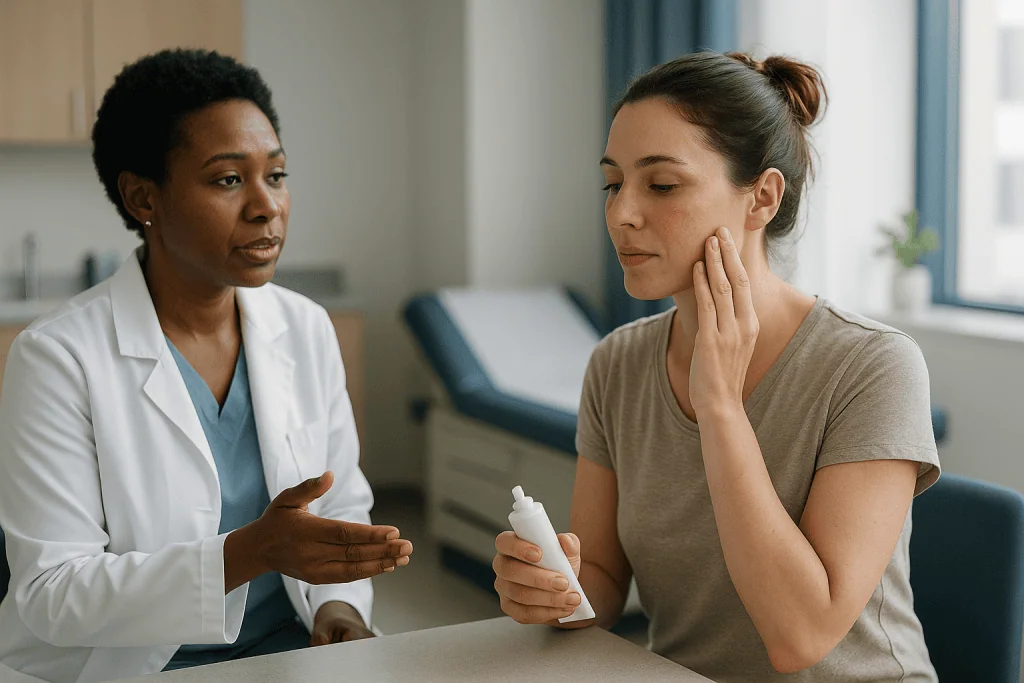
In the treatment room, practitioners typically apply a soothing serum or balm chosen for the procedure, often a plain hyaluronic acid product with no fragrance or preservatives that might irritate open channels. If you were given one to take home, that is usually the only product intended for the first evening. Many clinicians ask patients to leave the skin alone until the next morning, including skipping cleanser, so that nothing is rubbed into channels that have not yet sealed.
From the following morning, a simple routine usually resumes: a lukewarm rinse with a gentle, non-foaming cleanser, a bland moisturizer, and sunscreen before stepping outside. A dermatology review in the NIH library reports that the visible redness, called erythema, generally settles within two to three days. During that period the skin is still unusually permeable, so the ingredient list matters more than it ever does on an ordinary Tuesday.
One practical note: aftercare instructions vary with needle depth, the area treated and whether anything was applied through the channels. A deep session for acne scars is a bigger wound than a shallow pass for texture, and your practitioner’s written sheet should override any general timeline, including this one.
Skincare after microneedling: a day-by-day aftercare routine
A clear microneedling aftercare routine takes the guesswork out of the week, and the pattern is remarkably consistent across medical sources. The table below summarizes what the skin is usually doing and what tends to be allowed or paused, drawn from Cleveland Clinic patient guidance and the NIH-indexed dermatology literature. Your clinician’s instructions take precedence over any row.
| Stage | What skin is usually doing | Usually fine | Usually paused |
|---|---|---|---|
| First 24 hours | Red, warm, tight; channels closing | Practitioner-applied serum or balm; clean hands; clean pillowcase | Cleanser, makeup, actives, sweat-heavy exercise |
| Days 1–3 | Redness fading; dryness and mild flaking | Gentle cleanser, bland moisturizer, broad-spectrum sunscreen | Retinoids, acids, vitamin C, scrubs, fragrance, heat |
| Days 4–7 | Pink settling; barrier rebuilding | Mineral makeup if skin is intact; richer moisturizer | Retinoids and exfoliants unless cleared by clinician |
| Week 2 onward | Surface healed; collagen remodeling continues for weeks | Gradual return of actives as tolerated | Nothing specific; next session typically 3–6 weeks later |
Two patterns are worth noticing. Sunscreen is the only product that appears in every row after the first day, because the thinned, healing surface is more vulnerable to ultraviolet damage and to the darkening called post-inflammatory hyperpigmentation. And retinoids sit in the paused column for the longest, not because they are harmful in general but because they speed cell turnover in skin that is already working hard to repair.
The interval between sessions in the final row comes from the NIH-indexed review, which describes treatments spaced roughly three to six weeks apart to allow the collagen response to mature. That interval is a clinical decision, not a fixed rule.
Skincare after microneedling: what is the best thing to put on your skin?
People ask this expecting a hero ingredient, and the evidence-based answer is almost disappointingly modest: water-binding, barrier-supporting and boring. The skin after microneedling needs hydration and protection, and most of the products that deliver those two things have been in dermatology for decades.
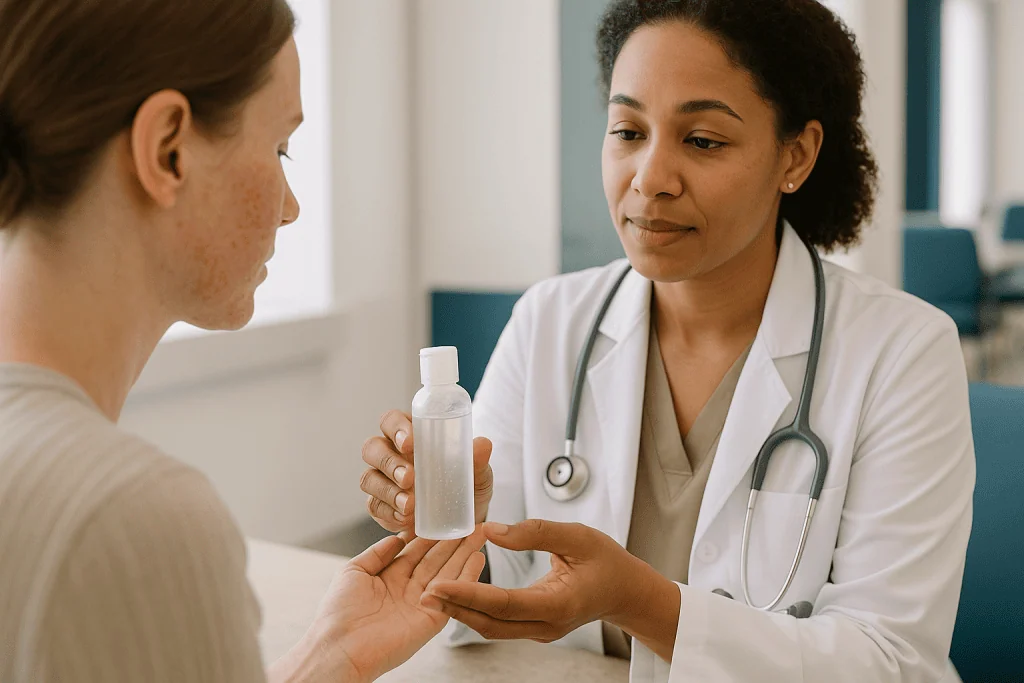
Hyaluronic acid is the most common choice in treatment rooms because it is a molecule the skin already makes, it holds many times its weight in water, and in its plain form it carries little irritation risk. Glycerin does a similar job at lower cost and is the quiet backbone of many moisturizers. Both pull water into the outer skin layers and relieve the tight, parched feeling that peaks on days one to three.
Once the surface has closed, usually by the second or third day according to the NIH-indexed review, ceramides become useful. These are lipids that form part of the mortar between skin cells, and replacing them helps the barrier rebuild. A moisturizer that lists ceramides, cholesterol or fatty acids and nothing fragranced is a reasonable description of what most clinicians mean by a bland cream.
Panthenol, a form of vitamin B5, and simple petrolatum-based ointments are also widely used for their soothing and occlusive effects, particularly over any small scabs. Occlusive means it sits on the surface and slows water loss rather than soaking in.
What the evidence does not support is the idea that any serum applied after microneedling produces dramatically better results than another. Clinical interest in applying specific products through the channels exists, and the NIH-indexed literature discusses it, but no over-the-counter cosmetic has shown a reliable advantage that would justify choosing it over a gentle, fragrance-free option. If your practitioner recommends a particular post-procedure product, ask what it contains and why; the answer should be about tolerance and simplicity, not about miracles.
What to avoid after microneedling: what not to put on your face
The list of what to avoid after microneedling is longer than the list of what to use, and the logic behind every item is the same: the skin barrier is open and inflamed, so anything that irritates, exfoliates or sensitizes intact skin will do more of it now.
- Retinoids and retinol. These accelerate cell turnover and are a well-known cause of stinging and peeling even on healthy skin, as Harvard Health notes in its overview of how they work. On freshly needled skin they can prolong redness and flaking.
- Exfoliating acids. Glycolic, lactic, salicylic and mandelic acids dissolve the bonds between dead surface cells. Right after a procedure, the surface you would be dissolving is the one trying to heal.
- Vitamin C serums. Ascorbic acid is formulated at a low pH to stay stable, and that acidity is the usual cause of burning on compromised skin. Gentler vitamin C derivatives are less acidic but are still often paused for a few days.
- Physical scrubs, brushes and cleansing devices. Friction on a healing surface is a straightforward irritation risk.
- Fragrance and essential oils. Both are common contact allergens, and open channels increase exposure.
- Alcohol-heavy toners and benzoyl peroxide. Each is drying on intact skin and more so on a weakened barrier.
- Makeup in the first day or so. Cleveland Clinic lists makeup among the things to hold off on initially, mainly for hygiene and to avoid rubbing products into unsealed channels.
The environment counts too. Hot showers, saunas, steam rooms and vigorous exercise all dilate blood vessels and increase sweating, which can worsen redness and introduce bacteria. Pools and open water carry their own infection risk while the surface is not fully closed.
If a product makes you unsure, the test is simple: would you put it on a sunburn? If not, wait.
How long after microneedling can you wash your face?
Washing feels urgent when the skin is tight and shiny with serum, which is exactly why the question comes up so often. The usual guidance is to leave the skin undisturbed for the rest of the treatment day and to begin cleansing the following morning, roughly 12 to 24 hours after the procedure. That window gives the micro-channels time to seal so that tap water, cleanser and your fingertips are not carrying anything into the dermis. Individual practitioners vary, and some advise a plain lukewarm rinse sooner if a lot of product was applied, so your written instructions govern.
When you do start, technique matters more than product. Use lukewarm water rather than hot, because heat dilates blood vessels and adds to the redness. Choose a non-foaming, fragrance-free cleanser; foaming agents strip lipids the barrier is trying to rebuild. Apply with clean fingertips, never a cloth, brush or device, and rinse without rubbing. Pat dry with a fresh towel. Cleansing once in the morning and once in the evening is plenty during the first week.
Hygiene around the face deserves a mention because it is where real-world infections begin. A clean pillowcase for the first few nights, washed hands before touching the face, and a pause on sharing towels are small, evidence-sensible habits. Mayo Clinic’s general wound-care principles apply: keep the area clean, avoid picking at any small scabs, and let them fall away on their own.
By the time the pinkness fades, usually within a few days according to the NIH-indexed dermatology review, cleansing can return to normal frequency, though the gentle cleanser is worth keeping until actives are reintroduced. Flaking that appears around days two to four is expected and should be moisturized, not scrubbed.
When to use retinol after microneedling: when can retinoids return?
Retinoids are the family of vitamin A-derived molecules that includes prescription tretinoin and adapalene and the gentler over-the-counter retinol. Harvard Health describes their mechanism simply: they bind to receptors in skin cells, speed up the turnover of the epidermis, and over months stimulate collagen production. Those same actions make them the wrong partner for skin in the first days after microneedling, when turnover is already running high and the barrier is thinned.
Most practitioners ask patients to stop retinoids for several days before the procedure and to keep them paused afterward until two things are true: visible redness has gone and the skin no longer feels tight or stings when moisturizer is applied. For many people that is around five to seven days, consistent with Cleveland Clinic’s description of recovery taking a few days to a week, though people with sensitive skin or deeper treatments often wait longer. A prescriber may advise a different interval, and that advice takes precedence.
The return itself is a gradual process. A common clinical approach is to restart at a lower frequency than before, perhaps every third night, with a plain moisturizer applied first or afterward as a buffer, and to build back to the previous routine over one to two weeks as tolerance allows. If stinging, peeling or new redness appears, the usual advice is to stop again and give the skin more time rather than push through.
Two points deserve clarity. First, this article describes typical timelines, not a schedule for you; the person who prescribed the retinoid decides when it resumes. Second, pausing a prescription retinoid for a week around a cosmetic procedure is a decision to make with that prescriber, not alone, particularly if it is treating acne or another skin condition rather than fine lines.
Why sunscreen matters more than any serum in the first weeks
If this article had one opinion, it would be this: the product that most protects the result of microneedling is sunscreen, and it is the one most people apply least carefully. Microneedling thins the surface temporarily and triggers inflammation, and inflamed skin exposed to ultraviolet light is the classic setup for post-inflammatory hyperpigmentation, the brown or gray patches that can take months to fade and are more common in deeper skin tones.
The CDC’s sun safety guidance recommends a broad-spectrum sunscreen with SPF 15 or higher for everyday use, reapplied at least every two hours and after sweating or swimming. After a skin procedure, many clinicians advise a higher factor and treat the two-hour reapplication rule as non-negotiable rather than aspirational. Broad spectrum means the product filters both UVA, which penetrates deeper and drives pigmentation and aging, and UVB, which causes burning.
Mineral filters, zinc oxide and titanium dioxide, are often preferred in the first days because they sit on the surface and are less likely to sting than some chemical filters on compromised skin. That preference is about comfort and tolerability; both types work when applied generously and reapplied. A quantity close to a teaspoon for the face and neck is a useful mental image, because most people apply far less than the amount used in testing.
Sunscreen is not a substitute for shade. The CDC also lists wide-brimmed hats, UV-blocking sunglasses and avoiding the midday hours as part of the same strategy, and in the first week after microneedling those low-effort measures carry unusual weight. Direct sun on the first day is best avoided entirely.
Keep the habit going. Collagen remodeling continues for weeks after the surface looks healed, and MedlinePlus notes that ultraviolet exposure is the main environmental driver of skin aging, the very thing most people had microneedling to address.
Makeup, exercise, swimming and heat: what the first week usually looks like
Daily life does not pause for a procedure, so it helps to know how the common questions usually resolve. These are typical patterns from Cleveland Clinic guidance and clinical practice; your own instructions may be stricter after deeper treatment.
Makeup. Cleveland Clinic lists makeup among the things to avoid in the immediate recovery period. The practical reasons are hygiene, since brushes and sponges carry bacteria, and friction, since applying and removing makeup rubs a healing surface. Most people can return to light makeup once the skin surface is intact, often after a day or two, with mineral powders tolerated earlier than liquid foundations. Clean brushes before that first use.
Exercise. Sweat is salty and acidic, and vigorous exercise flushes the face with blood. Both can intensify redness and stinging, and sweat dripping into unsealed channels is an infection pathway. A rest day on the day of treatment is common advice, with a return to gentle activity the next day and harder workouts once redness has faded.
Heat. Saunas, steam rooms, hot yoga and very hot showers all dilate vessels and prolong flushing. Lukewarm is the temperature of the week.
Swimming. Chlorinated pools irritate, and lakes, rivers and seawater carry microorganisms. Waiting until the surface has fully closed, typically several days, is the cautious norm.
Shaving and hair removal. Treated areas are best left alone until flaking has finished; waxing and depilatory creams should wait longer.
Expect the week to run roughly like this: a sunburn-like first day, fading redness with tightness and flaking through day three, a pink-but-comfortable face by the end of the week, and skin that looks ordinary by week two while collagen keeps rebuilding underneath. Any departure from that arc, especially worsening after day two, is a reason to call, not to add products.
Who microneedling is usually for, and who is usually asked to wait
Microneedling is most often used for acne scars, fine lines, enlarged pores, uneven texture and some forms of stretch marks and surgical scars, and the NIH-indexed dermatology review describes a growing list of uses including hair loss and pigmentation disorders. Cleveland Clinic frames it as a procedure for people with generally healthy skin who want modest improvement in texture and scarring and who are willing to attend several sessions, since a single treatment rarely delivers the full effect.
The same sources describe situations where clinicians usually advise waiting or choosing something else. Active acne lesions, cold sores or any skin infection in the treatment area are typical reasons to postpone, because needling can spread infection across the face. A history of keloid or hypertrophic scarring, which means scars that grow beyond or above the original wound, raises the risk that the controlled injury heals badly. Eczema, psoriasis or rosacea flares in the treated zone are usually settled first.
People taking isotretinoin, an oral retinoid used for severe acne, are generally asked to wait for a period after finishing it because the skin’s healing capacity is altered; the prescribing clinician sets that interval. Anticoagulant medicines and bleeding disorders increase bruising and pinpoint bleeding and need a conversation with the prescriber beforehand, never a decision to pause medicine for a cosmetic treatment. Pregnancy and breastfeeding are commonly listed as reasons to defer, mainly because safety data are limited rather than because harm has been shown.
Skin tone is not a barrier. Unlike some lasers, microneedling does not target pigment, which is one reason it is widely used across all Fitzpatrick skin types, though rigorous sun protection afterward is especially important where post-inflammatory hyperpigmentation is more likely.
A pre-treatment consultation that covers medical history, current medicines and expectations is the mechanism that sorts the first group from the second, and it belongs with the treating team.
What people often get wrong about skincare after microneedling
Aftercare advice travels fast online and loses its evidence on the way. These are the misunderstandings that come up most, with what the medical sources actually support.
Myth: the channels are open, so this is the moment to push in your most powerful actives. Increased absorption is real, which is exactly why it is a reason for caution rather than ambition. Clinicians use the window for bland hydration. Retinoids, acids and high-strength vitamin C reaching deeper tissue is a recipe for irritation, not enhanced results.
Myth: more redness means it is working harder. Redness is inflammation. Some is expected and useful; prolonged or worsening redness signals irritation or infection, and the NIH-indexed review describes the typical course as resolving within a few days.
Myth: you can skip sunscreen if you stay indoors. UVA passes through window glass, and the CDC’s guidance treats daily protection as the baseline. Indoor time reduces exposure but does not remove it.
Myth: results show in the mirror by the weekend. The immediate glow is swelling and hydration. Collagen remodeling unfolds over weeks, and Cleveland Clinic notes that several sessions are usually needed before texture changes become visible. Anyone promising transformation after one treatment is selling, not explaining.
Myth: a cosmetic product applied after microneedling will do what a medicine does. Clinical studies have explored applying specific agents through micro-channels, but those are controlled medical settings. No over-the-counter cream has shown that kind of benefit, and the safest assumption for home use is that simpler is better.
Myth: flaking means you should exfoliate. Flaking is the old surface lifting away as new skin forms. Moisturize over it and let it shed; scrubbing reopens a surface that just closed.
The shared thread is impatience. The procedure itself takes under an hour; the result is made in the quiet weeks that follow.
Risks, side effects and the alternatives worth knowing about
Microneedling has a reasonable safety record when performed by trained practitioners with sterile, single-use needle cartridges, and the NIH-indexed review lists its complications as uncommon. Knowing them helps you recognize when aftercare is going well and when it is not.
Expected effects include redness, mild swelling, pinpoint bleeding, dryness, flaking and temporary sensitivity, all of which usually resolve within days. Less common effects described in the medical literature include bruising, acne-like breakouts, small milia (tiny white cysts), and post-inflammatory hyperpigmentation, especially after sun exposure or in deeper skin tones. Infection is rare but possible, particularly when hygiene after the procedure is poor or when the skin was not intact to begin with. Allergic reactions have been reported when products were applied through fresh channels, which is another argument for keeping the first days plain. Scarring is rare and more likely in people with a keloid tendency or when needling is too deep or too frequent.
Home rollers deserve a frank word. Devices sold for personal use typically have very short needles and, used carefully, create far shallower injury than clinical treatment. The risks lie in reusing needles that are no longer sterile, pressing harder to chase results, and applying products that were never meant to penetrate the skin. Clinical microneedling and home rolling are different procedures with different risk profiles.
Alternatives for the same concerns exist and are not inferior by default. Topical retinoids remain the best-studied over-the-counter and prescription option for fine lines, as Harvard Health describes, though they take months. Chemical peels, fractional lasers and radiofrequency devices address texture and scarring through different mechanisms, each with its own downtime and suitability by skin tone. Filler-based approaches to deep scars are a separate category entirely.
Which route fits you is a judgment about your skin, your history and your tolerance for downtime, and it sits with the treating clinician rather than with a general article.
Questions to ask your care team before and after microneedling
A good consultation is a conversation, and the most useful questions are specific enough to get specific answers. Bring these, and write down what you hear.
- What needle depth will you use for my concern, and how does that change my recovery time and aftercare?
- Are you applying anything through the channels during the treatment? What is in it, and why that product?
- Should I pause my retinoid, acid or vitamin C before the session, and for how long? If a medicine was prescribed, should I speak with that prescriber first?
- What exactly should I put on my skin tonight, and when do I start cleansing?
- Which of my current products are fine from day one, which should wait, and what is the sign that my skin is ready for each to return?
- When can I reintroduce my retinoid, and how would you suggest building it back up?
- What sunscreen approach do you recommend for the first week, and for how long should I be stricter than usual?
- How will my skin look on days one, three and seven, and what would make you want to see me sooner?
- What are the signs of infection or an allergic reaction I should watch for, and how do I reach you after hours?
- How many sessions do you anticipate, how far apart, and what would make you stop or change course?
- Given my skin tone and history, what is my risk of post-inflammatory hyperpigmentation, and what reduces it?
- What are the alternatives for my concern, and why do you think microneedling suits me better, or not?
Pay attention to how the answers sound. Clear, cautious, individualized responses that reference your skin type and medicines are what you want. Guarantees, pressure to book a package, and vague reassurance about any product being safe through fresh channels are reasons to pause and ask again.
Written aftercare instructions should be standard. If you are not given a sheet, ask for one, and ask whom to contact if something looks wrong.
When to call your doctor after microneedling
The ordinary course after microneedling is reassuringly predictable: redness and tenderness that peak on the first day and fade steadily over the next two to three, followed by dryness and flaking that moisturizer handles. Deviation from that arc is the signal to seek care. Contact the practitioner who treated you, or a doctor, if you notice any of the following.
- Redness, swelling or pain that worsens after the second day instead of improving.
- Heat, spreading redness, yellow or green discharge, pus-filled bumps or crusting that thickens rather than flaking away, which are the usual signs of bacterial infection.
- Clusters of small painful blisters, particularly around the mouth, which can indicate a cold sore (herpes simplex) outbreak triggered by the procedure and spread across treated skin.
- Fever, chills or feeling generally unwell, which suggest infection has gone beyond the surface.
- Intense itching, hives or a rash extending beyond the treated area, which may indicate an allergic reaction to something applied to the skin.
- Any swelling of the lips, tongue or throat, or difficulty breathing. This is a medical emergency; call emergency services immediately.
- Dark patches developing over the treated area in the weeks afterward, which may be post-inflammatory hyperpigmentation and is easier to manage early.
- Raised, thickening or widening scars at any point after healing.
Infection after microneedling is uncommon, but when it happens the window for simple treatment is short, and no product in your bathroom is a substitute for assessment. Do not apply additional creams, antiseptics or home remedies to a face that is getting worse; they cloud the picture and can add irritation.
For ongoing conditions, the same rule applies. If you have a prescription retinoid, acne medicine or anticoagulant, decisions about pausing or restarting belong with the clinician who prescribed it, and a cosmetic practitioner’s advice should be coordinated with that prescriber rather than replace it.
Frequently asked questions
What is the best thing to put on skin after microneedling?
A plain, fragrance-free hydrator such as hyaluronic acid or a glycerin-based moisturizer, plus broad-spectrum sunscreen from the next morning. These support the skin barrier without irritating open micro-channels. Once the surface has closed, usually within a few days, a ceramide-containing moisturizer helps rebuild the barrier. No cosmetic serum has shown a reliable advantage over a gentle, simple option, so follow the product your practitioner applied or recommended.
How soon after microneedling can you do skincare?
A gentle routine usually resumes the morning after treatment, roughly 12 to 24 hours later, with a mild cleanser, a bland moisturizer and sunscreen. The first evening is typically left alone apart from the practitioner’s soothing product. Active ingredients wait longer: exfoliants and vitamin C until redness settles, and retinoids until the skin feels fully comfortable, with your clinician confirming the timing.
What should you not put on your face after microneedling?
Avoid retinoids and retinol, exfoliating acids, vitamin C serums, physical scrubs, fragranced products, essential oils, alcohol-heavy toners, benzoyl peroxide and makeup during the first days. Each either irritates, exfoliates or sensitizes a barrier that is already weakened. The simple test is whether you would apply it to a sunburn. Heat, sweat-heavy exercise and swimming are also usually paused until the surface has fully closed.
What to avoid after microneedling besides skincare products?
Direct sun, saunas, steam rooms, hot showers and intense exercise all dilate blood vessels and prolong redness, and sweat can carry bacteria into unsealed channels. Pools and open water add infection risk until the skin has closed. Touching or picking at the face, shaving the treated area and sharing towels are also best avoided in the first week. Your practitioner’s written instructions should guide the specifics.
When to use retinol after microneedling?
Retinol and prescription retinoids are usually reintroduced once redness has gone and the skin no longer stings or feels tight, often around five to seven days for shallow treatments and longer for deeper ones or sensitive skin. Many clinicians suggest restarting at a lower frequency and building back gradually. The prescribing clinician decides the timing for any prescription retinoid, so check before resuming.
How long after microneedling can you wash your face?
Most practitioners advise waiting until the following morning, about 12 to 24 hours, so the micro-channels can seal before water and cleanser touch the skin. Then use lukewarm water, a non-foaming fragrance-free cleanser and clean fingertips, patting dry with a fresh towel. Avoid cloths, brushes and devices during the first week. Your treatment sheet may give a different interval, and that takes precedence.
Can I use vitamin C after microneedling?
Not in the first days. Ascorbic acid serums are acidic by design and commonly sting or burn on a compromised barrier. Gentler vitamin C derivatives are less acidic but are usually paused as well until redness and tightness have resolved. Most people can reintroduce vitamin C after the exfoliant pause ends, typically several days to a week, starting with a lower concentration and checking tolerance.
Is it normal for skin to peel after microneedling?
Yes, light flaking or peeling around days two to four is common and reflects the old surface lifting as new skin forms beneath it. The right response is moisturizer, not exfoliation; scrubbing reopens a surface that has just closed. Heavy peeling with raw patches, thick crusts or discharge is not typical and should prompt a call to the practitioner who treated you.
What does a good microneedling aftercare routine look like for the first week?
Day one: leave the skin alone apart from the practitioner’s soothing product. Days one to three: gentle cleanser, bland moisturizer and broad-spectrum sunscreen, nothing else. Days four to seven: continue the same, adding a ceramide moisturizer and mineral makeup if the surface is intact. Week two: gradually reintroduce actives, retinoids last, as your clinician advises. Sunscreen every morning throughout.
How many microneedling sessions are needed and how far apart?
Published dermatology literature indexed by the NIH describes sessions typically spaced three to six weeks apart so the collagen response can mature between treatments, and Cleveland Clinic notes that several sessions are usually needed before texture or scar improvement becomes visible. The exact number depends on the concern, needle depth and how your skin responds, and is a decision for your treating clinician rather than a fixed rule.
References
- Cleveland Clinic: Microneedling
- NIH / PubMed Central: Microneedling: Advances and widening horizons
- CDC: Sun Safety
- MedlinePlus: Skin Aging
This article is for general information only and is not a substitute for professional medical advice. Please consult a qualified doctor about your individual situation.

More from the Blog
Dermal Filler Aftercare: Exercise, Heat and Pressure Rules for the First Two Days
For the first two days after dermal filler, most clinicians advise skipping strenuous exercise, saunas, hot showers, steam rooms and direct sun, and avoiding…

After Mole Removal: Normal Healing vs Redness, Oozing or Fever That Needs a Call
After mole removal, a narrow rim of pink skin, mild swelling, small amounts of clear or pink fluid and itching are usually part of…

Which Injuries Need Microsurgery? Nerve Repairs, Reattachment and Free Tissue Transfer
Microsurgery treats injuries and defects too small or delicate for standard surgical tools: severed or damaged peripheral nerves, amputated fingers, hands or other body…
What an RF Microneedling Session Involves: Numbing, Needle Depth and the Heat You Feel
An RF microneedling procedure begins with a topical numbing cream left on for 30 to 60 minutes. A handpiece then pushes insulated needles a…

RF Microneedling Downtime: Redness, Grid Marks and When You Can Wear Makeup Again
RF microneedling downtime is usually short. Redness and mild swelling typically peak in the first 24 hours and fade over one to three days,…

The Best Age for a Facelift: Why Anatomy Matters More Than Birthdays
There is no single best age for a facelift. Most patients are in their 40s through 60s, but surgeons evaluate anatomy, skin laxity, jowls,…