

Sleeping Too Much: When Long Sleep Is a Symptom Rather Than a Luxury
Key Takeaways
- Research studies label nine or more hours as long sleep, and sleep medicine treats a regular need for ten or more hours with persistent daytime drowsiness as possible hypersomnia.
- About two percent of adults are natural long sleepers who need ten to twelve hours and feel well; for them long sleep is a trait, not a symptom.
- Roughly 15 percent of people with depression sleep too much rather than too little, and seasonal depression is especially associated with oversleeping.
- Studies linking long sleep to heart disease, diabetes and mortality are observational and most likely reflect undiagnosed illness causing long sleep rather than long sleep causing illness.
- Idiopathic hypersomnia is diagnosed only after other causes are excluded, using an overnight sleep study followed by a daytime nap test, and the first medicine specifically approved for it arrived in 2021.
- An Epworth Sleepiness Scale score above ten signals excessive daytime sleepiness and is a useful first screening step before any sleep study.
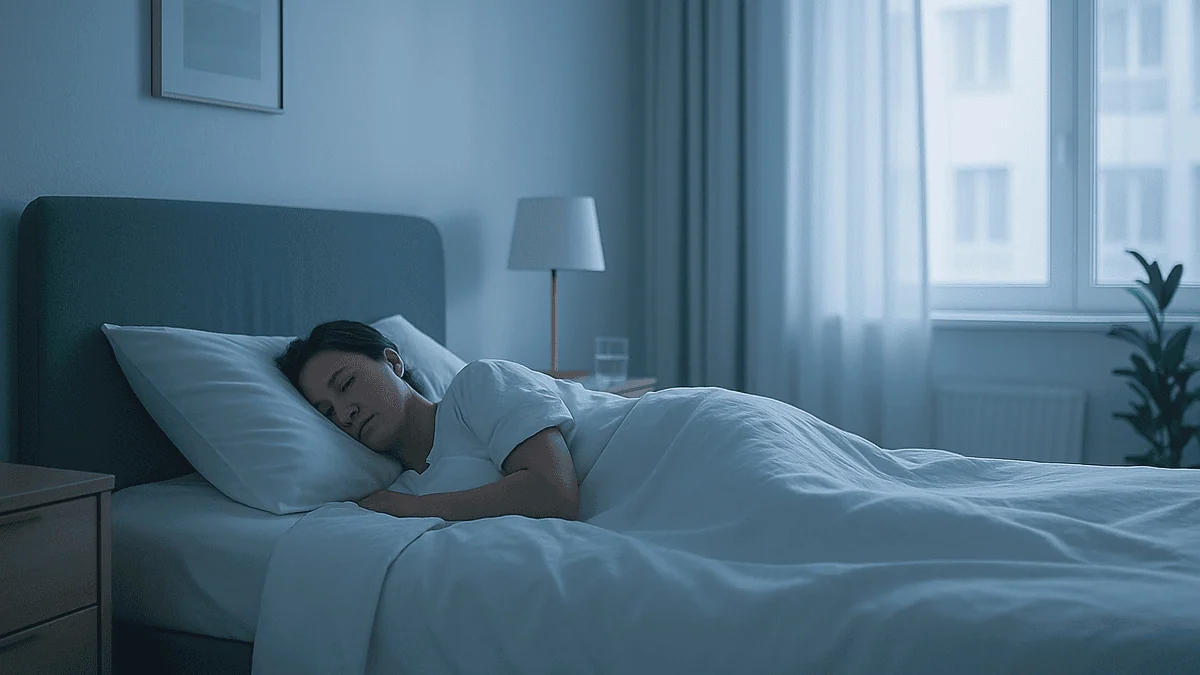
Sleeping too much is usually defined as regularly needing more than nine hours a night and still feeling unrefreshed. It can be a normal trait in a small minority of adults, but a new or persistent need for long sleep is often a symptom of depression, sleep apnea, medication effects, thyroid or other medical illness, or a rare disorder such as idiopathic hypersomnia. A doctor can help sort out the cause.
The clip that keeps surfacing on phones this spring shows a twenty-something taping her mouth shut, strapping on a weighted eye mask and announcing she now sleeps eleven hours a night as a form of self-care. The trend has a name, sleepmaxxing, and it has pushed a quieter question to the top of search results: is sleeping too much actually good for you, or is it a sign something is wrong? As of early 2026, searches for oversleeping and hypersomnia have climbed alongside the trend.
Sleep clinicians have mixed feelings about the moment. On one hand, a culture that finally treats rest as worth protecting is overdue. On the other, the message that more is always better glosses over something they see every week: adults who sleep ten, eleven or twelve hours and wake up feeling as if they have not slept at all.
That gap between hours in bed and feeling restored is the real story, and it deserves a more honest telling than a viral video can give.
How much sleep is too much for an adult?
The honest answer begins with a range, not a number. Mayo Clinic and the CDC both put adult needs at seven hours or more per night, with most healthy adults settling between seven and nine. Research studies usually label nine or more hours as long sleep, and sleep medicine treats a regular need for ten or more hours, especially when daytime drowsiness persists, as a possible sign of hypersomnia. Hypersomnia simply means excessive sleepiness or excessive sleep, either at night or during the day.
Two caveats matter here. The first is age. Teenagers genuinely need eight to ten hours, and a sixteen-year-old sleeping until noon on a Saturday is usually repaying a weekday debt rather than showing illness. The second is individual variation. Johns Hopkins notes that roughly two percent of adults are natural long sleepers who need ten to twelve hours to function and feel fine when they get it. For them, long sleep is a trait, like shoe size.
The distinction clinicians care about is not the clock but the quality of the waking hours. A person who sleeps ten hours and wakes refreshed, alert through the afternoon and clear-headed at work is almost certainly fine. A person who sleeps ten hours, naps for two more, fights to stay awake in meetings and still feels foggy has a problem worth investigating, even if a wellness video told them they were doing everything right.
So when readers ask how much sleep is too much, the most useful reframing is this: too much is the amount that still leaves you tired. That is the version of the question a doctor will want to explore.
What changed recently to put oversleeping in the spotlight
Three developments explain the current attention, and only one of them is a social media trend.

The first is a guideline shift. In June 2022 the American Heart Association rebuilt its cardiovascular health checklist into Life’s Essential 8 and, for the first time, added sleep duration as a core metric alongside blood pressure, cholesterol and physical activity. Its scoring gives full marks for seven to nine hours and marks down both short sleep and sleep of ten hours or more. That was the first time a major cardiology body formally treated long sleep as a less-than-ideal signal rather than a harmless extra.
The second is institutional messaging. The CDC’s updated sleep pages continue to emphasize seven or more hours for adults while stressing that sleep that does not leave you refreshed, regardless of length, deserves medical attention. Johns Hopkins and Cleveland Clinic have both published consumer explainers in the past few years that frame oversleeping as a symptom to decode, listing depression, sleep apnea, thyroid disease and medication side effects among the usual suspects.
The third is cultural. Sleepmaxxing content has turned extreme sleep duration into a performance metric, complete with wearable screenshots. Some of that is harmless. The concern raised by sleep specialists is that a person who already sleeps eleven hours and wakes unrefreshed may read the trend as reassurance and delay a conversation with a doctor.
Put together, these changes mean the medical establishment and the internet now agree that sleep matters, while disagreeing sharply on whether more is always better. The evidence, as the next sections show, sides with the clinicians.
Why am I sleeping so much? The common causes worth ruling out first
Most people who search why am I sleeping so much do not have a rare disorder. They have one of a handful of ordinary explanations, and the first job is to work through them in order of likelihood.
Sleep debt sits at the top. Five nights of six hours followed by an eleven-hour weekend crash is not oversleeping; it is repayment. The body does this reliably and the fix is boringly simple.
Depression comes next. Johns Hopkins estimates that about 15 percent of people with depression sleep excessively rather than too little, and the pattern is especially common in younger adults and in the seasonal form of depression that arrives with shorter days.
Medications are an underappreciated third. Sedating antihistamines, some antidepressants, antipsychotics, anti-seizure medicines, muscle relaxants and opioid pain relievers can all stretch sleep and blunt morning alertness. Alcohol does the same in a sneakier way: it knocks you out, fragments the second half of the night, and leaves you sleeping longer to compensate.
Then come medical illnesses. An underactive thyroid slows metabolism and deepens fatigue. Iron-deficiency anemia, poorly controlled diabetes, heart failure, kidney disease and recovery from infections such as influenza or mononucleosis all raise sleep need. Long-haul recovery after viral illness can keep people in bed for weeks.
Finally, sleep disorders themselves: obstructive sleep apnea, in which the airway repeatedly collapses during sleep, is the classic cause of long but unrefreshing nights. Narcolepsy and idiopathic hypersomnia are rarer and get their own sections below.
The pattern to notice is that nearly every item on this list is treatable or manageable once identified. That is the strongest argument against shrugging off a long-sleep habit.
Sleeping too much all of a sudden: what a change in your pattern usually means
A lifelong nine-hour sleeper is one story. A lifelong seven-hour sleeper who has needed ten since February is another, and clinicians pay closer attention to the second.

Sudden change narrows the search. New medicines, or a dose change, are the first thing a doctor will ask about, because the timing often lines up exactly. Second is mood: sleeping too much all of a sudden, together with loss of interest, low energy and appetite changes, is one of the more recognizable presentations of a depressive episode, and it can arrive without the person feeling obviously sad.
Infection is third. The deep fatigue and extra sleep that follow influenza, COVID-19 or glandular fever are part of the body’s recovery response, and for most people they fade over two to six weeks. Fatigue that keeps deepening beyond that window, or that comes with fever, night sweats, unexplained weight loss or swollen glands, moves the question from recovery to evaluation.
Fourth is a shift in sleep quality rather than quantity. Weight gain, a new sleeping position, or a partner’s report of fresh snoring and gasping can mark the onset of sleep apnea, which makes sleep less efficient and pushes total time upward.
Hormonal transitions belong on the list too. Pregnancy raises sleep need in the first trimester, and perimenopause can fragment nights so badly that people compensate with longer time in bed.
Less common but important: a new sleep increase accompanied by headache that is worst in the morning, confusion, personality change, weakness or vision problems is a neurological red flag and belongs in urgent care rather than a sleep diary.
The practical takeaway is that abruptness is information. Note when the change started and what else changed around the same time; that timeline is often the most valuable thing you bring to an appointment.
Oversleeping and depression: which one comes first?
The relationship between oversleeping and depression runs in both directions, and that is exactly what makes it hard to untangle at home.
Depression changes sleep architecture. People with depressive illness tend to enter dreaming (REM) sleep earlier in the night and spend more time in lighter stages, so the sleep they get restores less. The body’s response is to seek more of it. Bed also becomes a refuge: when getting up feels pointless, sleeping becomes a way of not being awake, and the hours stretch.
The arrow also points the other way. Observational studies, which follow groups over time rather than assigning treatments, find that both short and long sleepers are more likely to develop depressive symptoms later, even after accounting for mood at the start. Long sleep seems to disrupt the daily rhythm of light exposure, activity and social contact that protects mood. Fewer waking hours mean less daylight, less movement and more isolation, each of which is independently linked to lower mood.
This loop matters for treatment because addressing either side can help the other. Behavioral approaches that anchor the wake time, bring in morning light and schedule activity are standard components of depression care, and they are the same tools used for hypersomnia. Some antidepressant medicines are themselves sedating, which is one reason the prescribing clinician, not the patient, should weigh any change.
One pattern deserves special mention. Seasonal affective disorder, a form of depression that recurs in autumn and winter, is particularly associated with oversleeping, carbohydrate craving and weight gain. If your long-sleep months line up with the dark months, that is worth telling your doctor; it changes the questions they will ask.
What the evidence does not support is the idea that oversleeping is simply laziness dressed up as illness. The physiology is real, and so is the help available.
What is idiopathic hypersomnia (IH)?
Idiopathic hypersomnia is a rare neurological sleep disorder in which a person is excessively sleepy during the day despite getting plenty of sleep at night; idiopathic means the cause is unknown. It typically begins in the teens or twenties and is often mistaken for depression, laziness or poor sleep habits for years before diagnosis.
Several features set it apart from ordinary tiredness. Nights are long, frequently eleven hours or more, yet unrefreshing. Naps are long too, often over an hour, and do not restore alertness the way they do in narcolepsy. The most distinctive symptom is severe sleep inertia, sometimes called sleep drunkenness: the first 30 to 60 minutes after waking bring confusion, slurred speech, clumsiness and a near-irresistible pull back to sleep. Multiple alarms, a partner physically waking the person and automatic behaviors like answering the phone with no memory of it are common stories in clinic.
Diagnosis requires excluding everything else first: sleep deprivation, apnea, medications, thyroid disease and mood disorders. A sleep specialist then arranges an overnight sleep study, called polysomnography, which records brain waves, breathing and movement, followed the next day by a multiple sleep latency test, which measures how quickly a person falls asleep during five scheduled naps. Falling asleep in eight minutes or less on average, without the early REM episodes seen in narcolepsy, supports the diagnosis. Alternatively, recording more than eleven hours of sleep in a 24-hour period can meet criteria.
Management combines behavioral strategies, such as fixed wake times and planned naps, with wake-promoting medicines prescribed and adjusted by a sleep specialist. The first medicine specifically approved for idiopathic hypersomnia in adults arrived in the United States in 2021, a landmark for a condition that had long borrowed treatments from narcolepsy. What works, and whether medicine is appropriate at all, is a decision that belongs to the treating clinician.
Sleep apnea, narcolepsy and the other disorders that masquerade as laziness
Obstructive sleep apnea is the heavyweight here, both in prevalence and in how often it hides behind long sleep. During sleep the muscles of the throat relax enough that the airway narrows or closes, breathing pauses, oxygen dips, and the brain briefly rouses to reopen the airway. This can happen dozens of times an hour without the sleeper ever remembering it. The result is ten hours in bed that feel like five. Loud snoring, witnessed pauses in breathing, gasping, a dry mouth or morning headache, high blood pressure and a neck size that has crept up over the years are the clues. Weight raises risk but is not required; plenty of slim people have apnea.
Narcolepsy is rarer and different in texture. Sleepiness comes in irresistible waves, naps are short and refreshing, and some people experience cataplexy, a sudden loss of muscle tone triggered by laughter or surprise. Vivid dream-like hallucinations while falling asleep and brief paralysis on waking round out the picture. Total nightly sleep is often normal; the problem is staying awake during the day.
Circadian rhythm disorders deserve a mention because they are so often mislabeled. In delayed sleep phase disorder, the body clock runs late: natural sleep onset might be 3 a.m. and natural waking 11 a.m. Forced onto a 7 a.m. schedule, the person is chronically short of sleep and appears to oversleep whenever given the chance. Restless legs syndrome and periodic limb movements fragment sleep in a way the sleeper rarely notices but a bed partner often does.
Each of these is identifiable with the right history and, where needed, an overnight study. None of them responds to willpower, which is why a sleepy person who keeps being told to try harder is being set up to fail.
Sleep debt, depression and hypersomnia at a glance
Patterns matter more than any single symptom, and seeing the common causes side by side makes the differences clearer. The table below summarizes how the most frequent explanations for long sleep tend to present. It is a guide to the conversation you might have with a doctor, not a tool for diagnosing yourself.
| Cause | Nightly sleep | How you feel on waking | Distinctive clues | Typical first step |
|---|---|---|---|---|
| Sleep debt (catch-up) | Long on days off, short on workdays | Refreshed after the catch-up night | Weekday alarm, weekend lie-in, improves with regular schedule | Consistent sleep and wake times for two weeks |
| Depression | Often long, sometimes fragmented | Low energy, little motivation to rise | Low mood or loss of interest, appetite change, seasonal pattern | Talk with a primary care or mental health clinician |
| Obstructive sleep apnea | Long but unrefreshing | Dry mouth, morning headache, still tired | Loud snoring, witnessed breathing pauses, gasping | Overnight sleep study |
| Medication or alcohol effect | Longer since a new medicine or heavier drinking | Groggy, slow to clear | Timing matches a prescription change or evening alcohol | Medication review with the prescriber |
| Idiopathic hypersomnia | Very long, often 11 hours or more | Severe sleep inertia, confusion | Long unrefreshing naps, onset in teens or twenties | Referral to a sleep specialist for testing |
| Natural long sleeper | Consistently 9–10 hours since childhood | Alert and well all day | No daytime sleepiness, no other symptoms | No action needed |
Two observations stand out. First, how you feel after sleep separates the benign from the concerning far better than the raw hours do. Second, nearly every row has a concrete first step, and most of those steps are modest: a schedule change, a conversation, a questionnaire, one night in a sleep laboratory. That is reassuring for anyone who has been quietly worrying.
What the evidence actually says about long sleep and your health
Headlines about oversleeping tend to sound alarming: higher risk of heart disease, diabetes, stroke, even earlier death. The findings are real, but the strength of the evidence behind them deserves a careful grade.
Nearly all of it is observational. Large cohort studies that follow tens of thousands of adults for years consistently find a U-shaped curve, in which people sleeping fewer than six hours and those sleeping nine or more both have higher rates of cardiovascular events, type 2 diabetes and overall mortality than those in the seven-to-eight-hour middle. Pooled analyses put the increase for long sleepers at roughly 20 to 30 percent for mortality, with similar magnitudes for heart disease and stroke. Johns Hopkins also lists obesity, headaches and depression among the conditions linked to oversleeping.
What this evidence cannot do is prove that long sleep causes any of it. The leading alternative explanation is reverse causation: early, undiagnosed illness such as heart failure, depression, inflammation or sleep apnea makes people sleep longer, and later shows up as the disease the study records. Most researchers now regard long sleep as a marker of poor health more than a driver of it. The long-sleep groups in these studies are also more likely to be older, less physically active and in lower-income jobs, all of which affect risk independently.
There are no randomized trials that assign healthy people to sleep ten hours for years and measure outcomes, and there never will be. The highest-quality human data we have therefore sits in the middle of the evidence hierarchy: strong enough to justify asking why someone sleeps so long, not strong enough to tell a well, alert ten-hour sleeper to set an earlier alarm.
The AHA’s decision to score ten-plus hours lower in Life’s Essential 8 reflects this reasoning: it treats long sleep as a prompt to look deeper, not as a hazard in itself.
Why does sleeping too much leave me groggy and headachy?
Anyone who has slept until eleven on a Sunday knows the paradox: more sleep, worse morning. Two mechanisms explain most of it.
The first is sleep inertia, the period of reduced alertness and slowed thinking that follows waking. For most people it lasts 15 to 30 minutes and is worse when an alarm interrupts deep, slow-wave sleep. A long lie-in increases the chance of waking from a deep stage late in the morning, because the sleep cycles that run roughly every 90 minutes keep repeating. Hypersomnia disorders amplify this dramatically, which is why sleep drunkenness is such a telling symptom.
The second is the body clock. Sleeping several hours past your usual wake time shifts the internal rhythm later, much like flying two time zones west. Hunger, alertness and body temperature all lag, and the mismatch between clock time and body time produces the fog, mild nausea and heavy limbs people describe. Sleep scientists call the weekday-to-weekend swing social jet lag, and it is measurable in people who shift their schedule by two hours or more.
Headaches have their own contributors. Oversleeping often means skipping the morning coffee, and in regular caffeine users withdrawal headache can begin within 12 to 24 hours of the last cup. Long sleep also tends to follow late nights with alcohol, which dehydrates. Sleep apnea produces a distinctive dull morning headache from overnight dips in oxygen and rises in carbon dioxide. For people with migraine, both too little and too much sleep are well-documented triggers, which is why neurologists emphasize a regular schedule above all.
None of this means a single lie-in is dangerous. It does mean that a consistent wake time, even on weekends, is one of the cheapest and best-supported ways to feel better in the morning.
How do doctors evaluate sleeping too much?
The workup for long sleep is methodical and far less dramatic than people fear. It usually starts with a conversation about timeline, mood, medicines and alcohol, followed by two simple requests.
The first is a sleep diary: two weeks of bedtimes, wake times, naps, caffeine and how refreshed you felt. The second is often a short questionnaire such as the Epworth Sleepiness Scale, which asks how likely you are to doze in eight everyday situations, from watching television to sitting in traffic. A score above ten signals excessive daytime sleepiness. Both tools help distinguish someone who sleeps long and feels fine from someone who is sleepy no matter what.
Blood tests come next when the picture suggests a medical cause: thyroid function, a full blood count for anemia, iron studies, blood sugar, kidney and liver function, and sometimes vitamin D or B12. Screening for depression is routine and should not feel like an accusation; it is part of being thorough.
If a sleep disorder is suspected, the doctor may order actigraphy, in which a watch-like device tracks movement for one to two weeks to estimate actual sleep time at home. Where apnea or hypersomnia is on the table, the next step is polysomnography, the overnight study described earlier, sometimes followed by the multiple sleep latency test the next day. Home sleep apnea tests, which measure breathing and oxygen with a simpler kit, are increasingly used when apnea is the leading suspicion.
Referral to a sleep medicine specialist typically happens when the primary care evaluation does not explain the symptoms, when a hypersomnia disorder seems likely, or when sleepiness is severe enough to affect driving or work. Bringing your diary, a list of every medicine and supplement, and a bed partner’s observations to that first appointment will shorten the path considerably.
Common myths about sleeping too much
The sleepmaxxing conversation has recycled several claims that do not survive contact with the evidence.
Myth: more sleep is always healthier. The observational data show a U-shaped relationship, with both short and very long sleep linked to worse outcomes. For someone who already sleeps seven to nine hours and feels alert, adding two more offers no demonstrated benefit and may shift the body clock later.
Myth: you can bank sleep in advance. A modest amount of extra sleep before a known short night can soften the next day’s dip, and this has been shown in small controlled studies. What you cannot do is stockpile weeks of surplus. The benefit is short-lived and does not carry forward.
Myth: oversleeping is just laziness. Depression, sleep apnea, thyroid disease and hypersomnia disorders all produce long, unrefreshing sleep through measurable physiological changes. Telling a person with untreated apnea to show more discipline is like telling someone with a fever to think cooler thoughts.
Myth: if you need an alarm, you are not getting enough sleep. Many healthy people use alarms because their natural rhythm runs later than their work schedule, not because they are sleep-deprived. The better test is whether you feel alert through the day without caffeine propping you up.
Myth: wearables can diagnose hypersomnia. Consumer trackers estimate sleep from movement and heart rate, and they can be helpful for spotting patterns. They cannot measure brain waves or breathing events and are not a substitute for a sleep study. An impressive-looking eleven-hour tracker screenshot tells you nothing about sleep quality.
Myth: a long nap fixes a bad night. For most people a 20-minute nap restores alertness; a two-hour nap often deepens sleep inertia and pushes bedtime later. In hypersomnia, long naps are a symptom, not a remedy.
What helps: evidence-based habits for people who sleep long
While the cause is being sorted out, a few behavioral steps have decent support and carry essentially no risk. None of them replaces medical evaluation, and none should be used to postpone it.
Anchor the wake time. The single most consistently supported sleep habit is getting up at the same time every day, including weekends, within about an hour. It stabilizes the body clock and shrinks social jet lag. Bedtime can flex; the alarm should not.
Get morning light early. Fifteen to thirty minutes of outdoor light within an hour of waking is the strongest signal the body clock receives. It advances the rhythm, sharpens morning alertness and is a core component of treatment for seasonal depression and delayed sleep phase. A bright window is a fair substitute when the weather refuses to cooperate.
Move during the day. Regular physical activity improves sleep quality in randomized trials and lifts mood. Timing matters less than people think; what matters is doing it most days.
Watch the evening chemistry. Alcohol within three hours of bed fragments the second half of the night and lengthens total time in bed to compensate. Caffeine has a half-life of roughly five hours, so an afternoon coffee is still partly active at midnight.
Keep naps short and early. A 20-minute nap before 3 p.m. restores alertness without borrowing from the night. If you find you cannot keep naps that short, note it; it is useful diagnostic information.
For insomnia-type problems, where the issue is lying awake rather than sleeping long, cognitive behavioral therapy for insomnia (CBT-I) is the first-line treatment in every major guideline, ahead of medicines, and it is delivered by trained therapists and validated digital programs. Ask your doctor about access rather than searching for a quick fix.
When to see a doctor about sleeping too much
Sleeping long is not an emergency, but certain patterns should move the conversation from someday to soon.
Make an appointment with your primary care clinician if you regularly sleep more than nine hours and still feel unrefreshed; if your sleep need has increased noticeably over weeks or months without an obvious reason; if you snore loudly, wake gasping or have been told you stop breathing in your sleep; if long sleep comes with low mood, loss of interest, hopelessness or changes in appetite; or if you have started a new medicine and your sleep has changed since. Daytime sleepiness that affects driving, operating machinery or your safety at work deserves prompt attention regardless of cause.
Seek urgent or emergency care if increased sleepiness or difficulty staying awake arrives together with any of the following: severe or worsening headache, especially one worst on waking; confusion, disorientation or new personality change; weakness, numbness, trouble speaking or problems with vision or balance; fever with a stiff neck; a recent head injury; or sleepiness so profound that the person is hard to rouse. These combinations can signal neurological or infectious conditions that cannot wait for a routine appointment.
For anyone with thoughts of self-harm alongside oversleeping and low mood, contact emergency services or a crisis line immediately; in the United States, 988 connects to the Suicide and Crisis Lifeline.
If you are already taking a prescribed medicine that you suspect is making you sleep more, do not stop or adjust it on your own. Some medicines carry withdrawal effects, and others are treating a condition that matters more than the drowsiness. Bring the concern to the prescriber, who can weigh alternatives and timing. Every treatment decision in this area, from a medication review to a sleep study to a hypersomnia prescription, belongs with the clinician who knows your full history.
Frequently asked questions
Is sleeping 10 hours a day too much?
For most adults, yes, ten hours regularly exceeds the seven-to-nine-hour range that major health bodies recommend, but the key question is how you feel. If you sleep ten hours, wake refreshed and stay alert all day, you may simply be a natural long sleeper. If you still feel tired or need naps, the extra hours are a signal worth discussing with a doctor.
Why am I sleeping so much all of a sudden?
A sudden increase in sleep most often follows a new medicine, the start of a depressive episode, recovery from an infection, heavier alcohol use or the onset of sleep apnea. Hormonal changes in early pregnancy or perimenopause can also do it. Note when the change began and what else shifted at the same time, then bring that timeline to your clinician.
What is the relationship between depression and oversleeping?
The relationship runs both ways. Depression alters sleep architecture so that sleep restores less and the body seeks more, and bed can become a refuge from the day. Long sleep in turn reduces daylight, activity and social contact, which worsens mood. About 15 percent of people with depression oversleep, particularly younger adults and those with seasonal depression.
What is idiopathic hypersomnia (IH)?
Idiopathic hypersomnia is a rare neurological disorder causing severe daytime sleepiness despite long nights of sleep, with no identifiable cause. People typically sleep eleven hours or more, take long unrefreshing naps and experience intense grogginess and confusion on waking. It usually begins in the teens or twenties and is diagnosed by a sleep specialist after excluding other causes.
How much sleep is too much for a teenager?
Teenagers need eight to ten hours, more than adults, and a long weekend lie-in usually reflects weekday sleep debt and a naturally later body clock rather than a problem. Sleep that routinely exceeds ten hours, or any amount that still leaves a teen drowsy in class, irritable or withdrawn, is worth raising with a pediatrician, since depression and sleep disorders can both begin in adolescence.
Why do I wake up at 2am and can't go back to sleep?
Waking in the early hours is common and usually reflects a lighter sleep stage colliding with stress, alcohol wearing off, a full bladder, hot flashes or a bedroom that is too warm. Persistent early waking with low mood can be a feature of depression, and sleep apnea often causes brief awakenings. If it happens most nights for more than a few weeks, a doctor can help identify the cause.
How to treat insomnia if I also sleep too long on weekends?
The pattern of weekday insomnia and weekend oversleeping usually points to an irregular schedule and a body clock running late. Cognitive behavioral therapy for insomnia, which is first-line in every major guideline, focuses on fixing a consistent wake time, limiting time in bed and getting morning light. A doctor can refer you to a therapist or a validated digital program.
Can sleeping too much cause weight gain or diabetes?
Observational studies link long sleep to obesity and type 2 diabetes, but they cannot show that sleep causes either. The more likely explanation is that early illness, low activity and conditions like sleep apnea both lengthen sleep and raise metabolic risk. Long sleep is best treated as a prompt to check for these underlying factors rather than as a direct cause.
Does sleep apnea make you sleep longer?
Often, yes. In obstructive sleep apnea the airway repeatedly narrows during sleep, causing brief awakenings the sleeper does not remember. The result is sleep that is long but inefficient, so people spend more time in bed and still wake tired, sometimes with a dry mouth or morning headache. Loud snoring and witnessed breathing pauses are the clues that should prompt a sleep study.
Is oversleeping dangerous?
An occasional long night is not dangerous. Persistent long sleep is associated in observational studies with higher rates of heart disease, diabetes and mortality, but the evidence suggests it is mostly a marker of underlying conditions rather than a cause. The practical risk is missing a treatable problem such as depression, thyroid disease or sleep apnea, which is why ongoing oversleeping deserves a medical conversation.
References
This article is for general information only and is not a substitute for professional medical advice. Please consult a qualified doctor about your individual situation.

More from the Blog
Cognitive Shuffling: The Fall-Asleep Trick Backed by a Small Study
Cognitive shuffling is a bedtime technique in which you picture a random series of unrelated, emotionally neutral objects, often by working through the letters…
The Military Sleep Method and 4-7-8 Breathing: Do the Viral Fall-Asleep Techniques Work?
The military sleep method and 4-7-8 breathing are relaxation routines that combine muscle release, slow breathing and calming imagery. They are low-risk and can…
The Best Temperature for Sleep: Why a Cooler Room Deepens Sleep
For most healthy adults the best temperature for sleep is roughly 60 to 67°F (about 15.5 to 19.5°C), with some guidance settling around 64…
How to Sleep Better: The 12 Evidence-Backed Habits, Ranked by How Much They Actually Help
To sleep better, keep the same wake time every day, get outdoor light within an hour of waking, use the bed only for sleep,…

Caffeine Half-Life: Why a 3 pm Coffee Is Still in Your Blood at Midnight
Caffeine half life is the time your body needs to clear half of a dose, about five hours in a typical healthy adult, with…
Sleep Score: What the Number Means and How Seriously to Take It
A sleep score is a proprietary estimate, usually on a 0-to-100 scale, that blends how long you slept, how restless you were, and sleep…