

Spinal Cord Injury Rehabilitation: Mobility, Bladder and Bowel Routines and Breathing Care

Key Takeaways
- Rehabilitation usually begins within days of the spine being stabilized, starting at the bedside with positioning, breathing exercises and bladder and bowel schedules before formal therapy sessions.
- Mayo Clinic reports that when neurological recovery occurs it most often begins between one week and six months after injury, with small gains possible for up to one to two years.
- The nerves that drive the diaphragm arise from C3 to C5, which is why cervical injuries carry the highest risk of breathing problems and why cough training is a core part of care.
- Autonomic dysreflexia, a dangerous blood pressure surge triggered by a full bladder, bowel or skin irritation, mainly affects injuries at T6 and above and is treated first by sitting up and removing the trigger.
- A bowel program works by pairing a fixed daily or alternate-day time, an upright position and a meal-triggered gut reflex, replacing the sensory signal the injury has removed.
- No comparative evidence supports naming a single best rehabilitation center; the features that matter are a specialized team, high therapy hours, structured bladder, bowel, skin and respiratory programs, and lifelong follow-up.
A spinal cord injury rehabilitation program is a coordinated, multidisciplinary plan that begins soon after the spine is stabilized and teaches a person to move, transfer, breathe, and manage bladder and bowel function with whatever nerve supply remains. Physical and occupational therapy, respiratory care, timed bladder and bowel routines, skin protection, and psychological support run together, with goals set and adjusted by the treating team.
The first thing many people notice on a rehabilitation unit is the clock. Not the one on the wall, but the one taped to the bedside table: turn at two, catheter at four, sit up for lunch, tilt table at three. After the noise and speed of intensive care, a spinal cord injury rehabilitation program can feel almost slow. That slowness is deliberate. The body is learning a new set of rules, and the schedule is the teacher.
A parent waits in the corridor with a notebook full of questions. How long will this take? Will she walk? Why does the nurse keep asking about her bowels? Who decides when she goes home? The honest answers rarely arrive in one conversation. They emerge over weeks, as therapists measure what the spinal cord still transmits and the team builds routines around it.
This explainer walks through that process: what a program actually does, how mobility, bladder, bowel and breathing care fit together, what the evidence says about timelines, and which warning signs mean a call to the team today rather than tomorrow.
What does a spinal cord injury rehabilitation program actually involve?
Strip away the equipment and a rehabilitation program is a structured way of answering one question: what can this person’s nervous system still do, and how can daily life be rebuilt around it? The spinal cord is the bundle of nerve fibers running inside the vertebral column that carries messages between the brain and the body. When it is damaged, the messages below the injury are weakened, scrambled or lost. Rehabilitation cannot repair those fibers, but it can retrain the parts of the system that still work and substitute equipment, technique and routine for the parts that do not.
According to the NIH’s National Institute of Neurological Disorders and Stroke, rehabilitation typically begins once the spine has been surgically or medically stabilized and the person is breathing safely, sometimes within days of the injury. A core team usually includes a physiatrist (a doctor specializing in rehabilitation medicine), physical therapists who work on strength and movement, occupational therapists who focus on daily tasks such as dressing and eating, rehabilitation nurses who manage skin, bladder and bowel care, respiratory therapists, a psychologist or counselor, a dietitian, and a social worker or case manager who plans the discharge.
Each discipline measures, then intervenes, then measures again. Physical therapy might start with sitting balance at the edge of the bed before anything resembling exercise. Nursing may spend the first week working out how often the bladder needs to be emptied. Respiratory staff check how strongly the person can cough. None of this is glamorous, and that is the point: the routines built in the first weeks are the ones that prevent the complications that send people back to hospital later.
Goals are written down, shared with the person and family, and reviewed in team meetings. A good program treats the injured person as the lead decision-maker, because the routines only survive if they make sense at home.
How the level and completeness of the injury shape everything
Two people can arrive on the same unit with “spinal cord injury” written on their charts and leave with entirely different lives. The differences come down to two variables: where along the cord the damage sits, and how much signal still gets through.
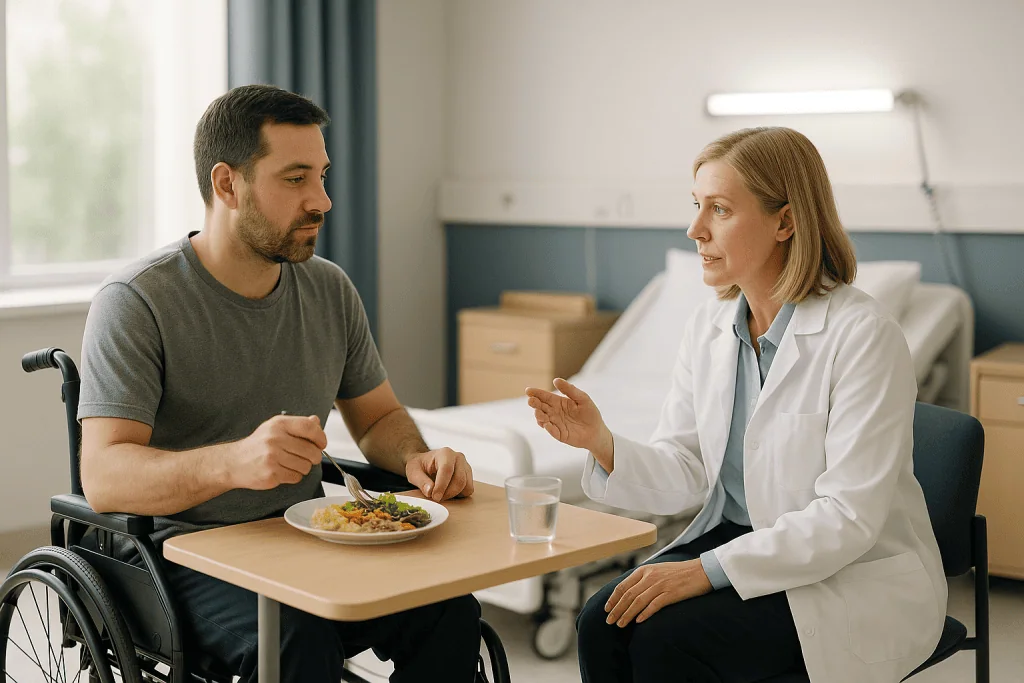
Level is described by the vertebra nearest the injury. The cervical (neck) segments are labeled C1 to C8, thoracic (chest) T1 to T12, lumbar (lower back) L1 to L5, followed by the sacral segments. Damage in the neck affects arms, trunk and legs, which clinicians call tetraplegia (older texts say quadriplegia). Damage in the chest or below spares the arms and affects the trunk and legs, called paraplegia. Mayo Clinic notes that the nerves controlling the diaphragm arise from C3 to C5, which is why very high injuries can affect breathing itself.
Completeness describes how much sensation and movement survive below the injury. A complete injury means no sensory or motor function is preserved in the lowest sacral segments; an incomplete injury means some signal still travels through. Clinicians grade this with the American Spinal Injury Association Impairment Scale, usually shortened to the ASIA scale, a standardized examination of strength and sensation from A (complete) to E (normal). The grade recorded in the first days can shift as swelling settles, so teams often repeat the exam.
The immediate aftermath is complicated by spinal shock, a temporary state in which reflexes below the injury go silent, described by Cleveland Clinic and Johns Hopkins as lasting days to weeks. During this window the bladder does not contract and the bowel is sluggish, which is one reason bladder and bowel routines are set up early and revisited once reflexes return. Level and completeness do not dictate a person’s future in every detail, but they set the starting point from which realistic goals are drawn.
Who is a rehabilitation program usually for, and who is asked to wait?
Nearly everyone with a new spinal cord injury is a candidate for rehabilitation in some form. The question is rarely whether, but when, where and how intensively.
Inpatient rehabilitation, where a person lives on a specialized unit and receives several hours of therapy a day, is generally offered to people who are medically stable, can tolerate sitting up and participating, and have goals that need daily specialist input: learning transfers, establishing bladder and bowel routines, being weaned from a ventilator, or fitting and training with a wheelchair. Family members are often invited to learn alongside, because much of the care travels home with them.
Some people are asked to wait, and the reasons are medical rather than judgments about potential. A spine that has not yet been stabilized cannot safely bear the loads of sitting and transferring. Uncontrolled infection, unstable blood pressure, a fresh pressure injury on the sitting surface, or an unresolved chest problem may mean therapy continues at the bedside in a lower-intensity form until the body can cope with more. Mayo Clinic describes this early phase as focused on preventing complications while the person’s condition settles.
Others move to outpatient or home-based programs sooner, particularly people with lower or incomplete injuries who are already walking with aids and mainly need strengthening, gait training and equipment advice. Older adults with additional heart or lung conditions may need a slower ramp.
The decision about setting and timing rests with the treating team, weighing spinal stability, medical fitness, the person’s goals and the support available at home. If you are told to wait, ask what specifically needs to change before the next step, so the pause has a purpose rather than feeling like a stall.
Spinal cord injury rehab timeline: what the first days and weeks usually look like
The early timeline follows the body’s own sequence of settling. In the first days after injury, care is dominated by protecting the spine, supporting breathing and blood pressure, and preventing the complications that thrive on immobility. Johns Hopkins describes the acute phase as centered on stabilizing the spine, sometimes with surgery, and monitoring for swelling and bleeding within the cord. Mayo Clinic notes that a corticosteroid, a class of medicine that reduces inflammation, was historically given in the first hours, though its use is now debated and decided case by case by the acute team.
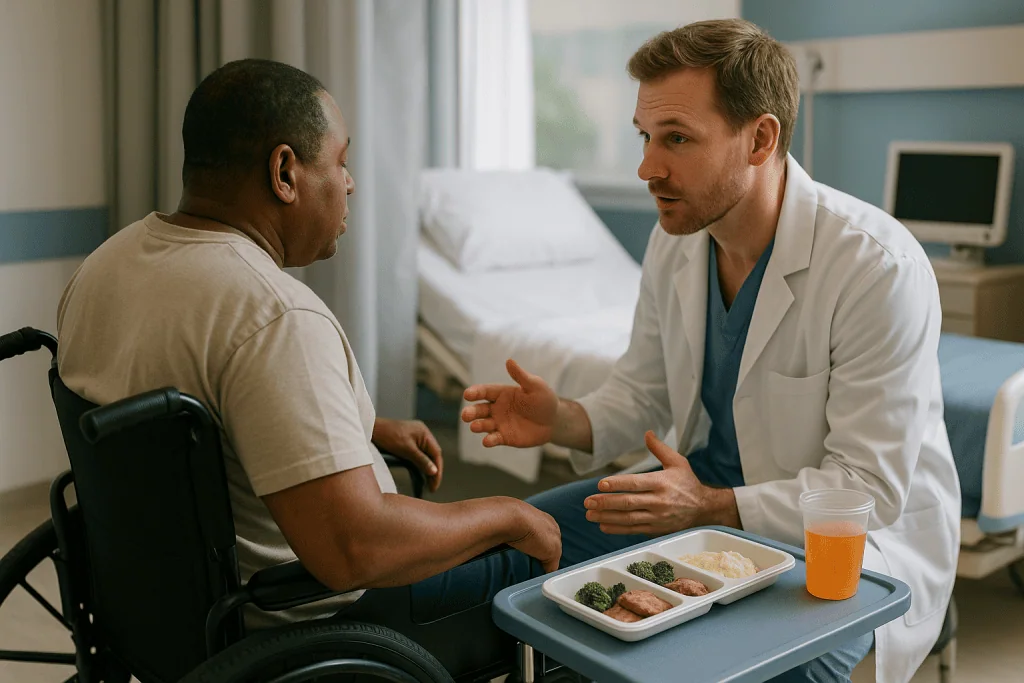
Once the spine is secured, therapists arrive at the bedside. Early sessions look modest: passive range-of-motion exercises to keep joints supple, breathing exercises, sitting with support for a few minutes, learning to shift weight in bed. Nurses begin a bladder emptying schedule and start a bowel routine at a fixed time each day. Blood-thinning medicines and compression devices are commonly used because Mayo Clinic lists deep vein thrombosis, a clot in the deep veins of the leg, as a frequent early risk.
Over the following weeks on an inpatient unit, the pace lifts. Tilt tables and gradual sitting help the cardiovascular system relearn how to hold blood pressure upright. Transfers from bed to chair are rehearsed until they become automatic. Wheelchair seating is measured and adjusted. Family training sessions begin, and a home assessment may be arranged.
Neurological change, where it happens, tends to unfold on a slower clock than the therapy schedule. Mayo Clinic reports that when recovery of function occurs, it usually starts between one week and six months after injury, with some people noticing small improvements for up to one to two years. The rehabilitation program is built to exploit any return while never depending on it.
How long is rehab after spinal cord injury?
Ask three clinicians and you may hear three answers, because the honest one is that the duration depends on the injury, the person’s medical stability, the goals set, and what happens at home afterward. There is no fixed course.
Inpatient stays are generally longer for high cervical injuries, especially where ventilator weaning or complex equipment is involved, and shorter for lower or incomplete injuries. Programs typically continue as outpatient therapy for months after discharge, then shift to periodic reviews for life. Complications such as urinary infections or pressure injuries can pause progress and extend the overall course, which is why so much early effort goes into preventing them.
The neurological timeline described by Mayo Clinic, with most functional return starting within the first six months and small gains possible for up to one to two years, gives a rough shape to the intensive phase of rehabilitation. Therapists concentrate effort in the window when change is most likely, but the World Health Organization emphasizes that people with spinal cord injury need long-term access to rehabilitation and assistive technology, not just an initial episode. Equipment wears out, bodies age, jobs change, and routines that worked at 30 may need revisiting at 50.
A more useful framing than “how long” is “what needs to be true before each transition.” Before leaving inpatient care: safe transfers or a trained caregiver, a bladder and bowel routine that works, skin intact, breathing stable, equipment delivered. Before scaling back outpatient therapy: goals met or plateaued, a home exercise plan in place, and a plan for who to call when problems arise. Your team should be able to state these conditions plainly, and you are entitled to ask.
Mobility training: from bed to chair to whatever comes next
Mobility in a rehabilitation program means far more than walking. It means being able to move your own body from one place to another safely, and the first place is the edge of the bed.
Physical therapists start with the trunk. Without the abdominal and back muscles that many injuries silence, sitting upright is a balance act performed by the shoulders and arms. Early sessions build tolerance for sitting, then progress to transfers, the technique of moving between bed, wheelchair, toilet, shower bench and car. Transfers are broken down into components: hand placement, a forward lean, a controlled swing. A transfer board or a ceiling hoist may be introduced depending on arm strength.
Wheelchair skills follow. Propulsion technique matters for protecting the shoulders, which now do the work of legs; MedlinePlus and Mayo Clinic both list shoulder pain and overuse injuries among the long-term issues for wheelchair users. Therapists teach efficient pushing, pressure relief by tilting or lifting, curb negotiation and recovering from a tip. Seating is measured precisely because a poorly fitted cushion is one of the fastest routes to a pressure injury.
For people with incomplete injuries who retain some leg movement, gait training may begin with body-weight support on a treadmill, parallel bars, braces called orthoses that stabilize the ankle or knee, and walking aids. Robotic exoskeletons, wearable powered frames that move the legs, are used in some programs; the evidence, as summarized by NINDS, supports them as therapy tools in research and clinical settings, not as proven substitutes for a wheelchair in everyday life.
Occupational therapists work in parallel on the tasks that mobility serves: dressing, bathing, cooking, driving with hand controls, and returning to work or study. Progress is measured against the person’s own goals, not against a walking-or-nothing benchmark.
What changes by injury level: a summary table
Injury level is not destiny, and incomplete injuries blur every line in this table. Still, people often want a map of what the team is likely to concentrate on. The patterns below reflect the anatomy summarized by Mayo Clinic, NINDS and Johns Hopkins.
| Approximate level | What is commonly affected | Typical rehabilitation focus |
|---|---|---|
| C1–C4 | Neck, arms, trunk, legs; diaphragm may be weakened or paralyzed | Ventilator support or weaning, assisted coughing, power wheelchair with head or chin controls, caregiver training, environmental controls |
| C5–C8 | Hands and parts of the arms; trunk and legs | Shoulder and elbow strengthening, adapted grips and splints, transfers with equipment, bladder self-management with adaptive tools |
| T1–T6 | Trunk and legs; blood pressure regulation often unstable | Sitting balance, independent transfers, manual wheelchair skills, autonomic dysreflexia education, breathing and cough training |
| T7–T12 | Lower trunk and legs | Advanced wheelchair skills, standing frames, independent bladder and bowel routines, return-to-work planning |
| L1–S5 | Hips, legs, bladder and bowel nerves | Gait training with orthoses or aids, fall prevention, bladder and bowel programs tailored to a low-tone (flaccid) pattern |
Two threads run through every row. Bladder and bowel care appears at every level because the nerves controlling them leave the cord at the bottom, so almost any injury interrupts them. Breathing care appears more prominently the higher the injury, because the diaphragm is supplied from C3 to C5 and the muscles that power a strong cough sit in the chest and abdominal wall.
Use the table as a starting vocabulary for conversations with the team, not as a prediction. Your own examination findings will always matter more than the row you appear to fit.
Bladder management after spinal cord injury: why the schedule matters so much
Few topics get more attention from rehabilitation nurses, and for good reason. The bladder after spinal cord injury is called a neurogenic bladder, meaning the nerve signals that normally tell you it is full and coordinate emptying are disrupted. Cleveland Clinic describes two broad patterns: an overactive bladder that squeezes unpredictably and may leak, and an underactive one that fills without emptying. Some injuries cause the bladder and the sphincter, the ring of muscle that holds urine in, to contract at the same time, pushing urine back toward the kidneys.
That last point is why the routine is not only about convenience. Left unmanaged, high pressures and residual urine raise the risk of urinary tract infections, kidney stones and long-term kidney damage; Mayo Clinic and MedlinePlus both list urinary problems among the most common complications of spinal cord injury. The program’s job is to keep pressures low and the bladder empty on a predictable rhythm.
The most widely taught method is intermittent catheterization: passing a thin tube into the bladder at scheduled intervals to drain it, then removing the tube. Nurses teach hand technique, hygiene and how to fit the schedule around fluid intake so the bladder does not overfill between sessions. People whose hand function does not allow this may use an indwelling catheter that stays in place, or a suprapubic catheter that enters through a small opening in the lower abdomen. Each option carries trade-offs in infection risk, independence and lifestyle that the team weighs with the person.
Medicines are sometimes part of the plan. Anticholinergic drugs, a class that relaxes the bladder muscle, may be used to reduce unwanted contractions; injections of botulinum toxin into the bladder wall are another option for overactivity. Whether, when and how any of these are used is a decision for the prescribing clinician, informed by urodynamic testing that measures bladder pressures. Periodic kidney imaging is a standard part of long-term follow-up.
Bowel program after spinal cord injury: building a routine the body will follow
People are often surprised by how much of the first weeks revolves around the bowel. The reason is practical. A neurogenic bowel, one whose nerve control has been disrupted, does not signal fullness reliably and may not empty on its own. Without a plan, the result is either constipation with the risk of impaction, or unpredictable accidents that keep people housebound. A bowel program replaces the lost signal with a schedule the body learns to anticipate.
MedlinePlus describes the core principles of bowel retraining: a fixed time each day or every other day, ideally within half an hour of a meal to make use of the gastrocolic reflex, the natural wave of gut movement that follows eating; a consistent position, sitting upright on a toilet or commode where possible so gravity helps; and adequate fluid and fiber. The program usually begins in the first week after injury and is refined as spinal shock resolves and the bowel’s own reflexes return.
Technique depends on the injury pattern. With injuries above the sacral segments, the reflex arc that empties the rectum often remains intact, so a gentle finger stimulation of the rectal wall or a suppository can trigger emptying. With injuries at the very bottom of the cord, the bowel is low-tone and does not reflexively empty, so manual removal of stool becomes the standard method. Nurses teach whichever approach fits, along with skin care and how to recognize when the routine is drifting.
Stool softeners, bulk-forming agents and stimulant laxatives are medicine classes commonly woven into a program to keep stool at a manageable consistency; the choice, combination and timing sit with the prescribing team, and adjustments are made gradually over weeks rather than daily. Diet is reviewed by a dietitian, since both too little and too much fiber can derail a schedule. A reliable bowel routine is, for many people, the single change that most restores confidence to leave the house.
Spinal cord injury breathing exercises and respiratory care
Breathing seems automatic until the muscles that drive it lose their nerve supply. The diaphragm, the dome-shaped muscle under the lungs, is powered by nerves from C3 to C5. The intercostal muscles between the ribs and the abdominal wall, which together produce a forceful cough, are supplied from the thoracic segments. Mayo Clinic notes that injuries above C4 may require mechanical ventilation, while injuries lower in the neck and chest can leave breathing intact but the cough weak.
A weak cough is more dangerous than it sounds. Secretions that cannot be cleared pool in the lungs, and NINDS identifies pneumonia and other respiratory complications as leading causes of illness and death after spinal cord injury, particularly in the first year and in people with cervical injuries. Respiratory care in a rehabilitation program is therefore preventive first.
Respiratory therapists measure how much air a person can move in and out, often with a handheld device called a spirometer, and how strong a cough they can generate. From there they teach breathing exercises: deep inspirations held for a few seconds to expand the lower lungs, breath stacking (taking several small breaths without exhaling to build up volume), and incentive spirometry, in which the person practices slow, full inhalations against a visual target. Inspiratory muscle training uses a resistance device to strengthen the diaphragm over weeks.
For people who cannot cough effectively, assisted cough techniques become part of daily care. A caregiver applies a firm upward push beneath the ribcage timed with the person’s exhalation, or a mechanical insufflation-exsufflation device delivers a breath in and then pulls it rapidly out to mimic a cough. Abdominal binders, elastic wraps worn around the belly, support the abdominal contents so the diaphragm has a stable base when sitting.
People on ventilators may follow a structured weaning plan, reducing support in steps as the diaphragm strengthens. Progress is judged by measurements rather than by feel, and the pace is set by the team.
Complications the program watches for: blood pressure, skin, spasticity and pain
Several problems can arrive quietly and escalate fast, which is why rehabilitation teams spend so much time on education. Four deserve particular attention.
Autonomic dysreflexia is a sudden surge in blood pressure triggered by an irritating stimulus below the injury, most often a full bladder or bowel, a pressure injury or tight clothing. Cleveland Clinic and Mayo Clinic describe it as mainly affecting people with injuries at T6 or above. Warning signs include a pounding headache, flushing and sweating above the injury, and a slow pulse. The taught response is to sit upright, loosen clothing, and find and remove the trigger, while seeking urgent help if the pressure does not settle. Its opposite, orthostatic hypotension, a drop in blood pressure on sitting up that causes dizziness, is common early and managed with gradual positioning, compression garments and sometimes medicines chosen by the team.
Pressure injuries develop where bone presses skin against a surface without the shifting that sensation normally prompts. Mayo Clinic lists them among the most frequent complications. Programs teach regular position changes in bed and weight shifts in the chair, daily skin inspection with a mirror, and how to spot early redness that does not fade.
Spasticity, involuntary muscle tightness and spasms caused by disrupted signaling below the injury, can interfere with positioning and sleep but sometimes helps with standing or transfers. Stretching, positioning and splints come first; medicine classes that reduce muscle tone, and targeted injections, are options the prescribing clinician may consider.
Neuropathic pain, burning or electric sensations arising from damaged nerves, affects many people. Approaches range from physical modalities and psychological strategies to medicine classes originally developed for seizures or depression that alter nerve signaling. Decisions about any of these rest with the treating team, and none should be started, stopped or adjusted without them.
Mind, mood, relationships and sexuality: the parts of rehab that are easy to skip
A rehabilitation unit measures range of motion in degrees and bladder volumes in milliliters, but the losses that keep people awake at night are harder to chart. Grief for a former body, anger at the circumstances of the injury, fear about money and dependence, and worry about how a partner will see you are normal responses, not weaknesses. Mayo Clinic lists depression as a recognized complication of spinal cord injury and recommends that psychological support be part of care from the start.
Programs usually include a psychologist or counselor who meets the person and family early, sometimes before they feel ready. The aim is not to force conversations but to normalize them and to watch for signs that ordinary distress is tipping into depression or anxiety that needs treatment. Peer mentors, people living well with their own injuries, are woven into many programs and often answer the questions nobody wants to ask a clinician.
Sexuality belongs in the curriculum, not the footnotes. Spinal cord injury frequently alters sensation, arousal and, in men, erection and ejaculation; Mayo Clinic notes that fertility can be affected in men while it is generally preserved in women, though pregnancy needs specialist planning. Rehabilitation teams can discuss what has changed, what adaptations exist, and when to involve a urologist or gynecologist. Bladder and bowel routines are often timed around intimacy for exactly this reason.
Families are learners too. A partner who has never given a catheter or performed an assisted cough may be expected to do both, and training sessions run alongside the person’s own. Social workers help with housing adaptations, benefits, employment rights and transport. The World Health Organization stresses that removing environmental and social barriers matters as much to long-term wellbeing as the medical care itself. A program that ignores this half of the job has done half the job.
What people often get wrong about spinal cord injury rehabilitation
Some misunderstandings are so common that correcting them is part of the program.
“Rehab is about learning to walk again.” Walking is one goal among many, and for many injuries not the most life-changing one. Independence in transfers, a reliable bladder and bowel routine, and protected skin and lungs are what keep people out of hospital and in their own homes. Programs measure success against the person’s own goals, not a single benchmark.
“If nothing has come back by now, nothing will.” Mayo Clinic’s summary is more nuanced: when recovery of function occurs, it most often begins within the first six months, but small improvements can continue for up to one to two years. Equally, rehabilitation is not a waiting room for return; its value stands regardless.
“There must be a best rehabilitation center in the world, and I should get there.” No ranking of centers is supported by the kind of comparative evidence that would justify the label. What the evidence and guidelines do support are features you can ask about anywhere: a specialized spinal cord injury team, high therapy hours, structured bladder, bowel, skin and respiratory programs, family training, peer support and long-term follow-up. Distance from home, which affects family involvement and continuity, is itself a clinical factor.
“Stem cells or an exoskeleton will fix this.” NINDS describes both as active areas of research. Neither is an established treatment that restores cord function, and no unproven therapy should displace a proven routine.
“Once I’m home, rehab is over.” WHO frames spinal cord injury as a condition requiring lifelong access to rehabilitation and assistive technology. Shoulders age, equipment fails, weight shifts, and routines need periodic review.
“Bladder infections are just part of the deal.” Frequent infections usually signal a routine that needs adjusting, and repeated infections raise the risk of kidney damage. They warrant a conversation, not resignation.
Questions to ask your care team during a spinal cord injury rehabilitation program
The most useful questions are specific enough that the answer changes what you do. Consider bringing a few of these to team meetings, and ask for the answers in writing when they involve routines you will carry home.
- What is my injury level and ASIA grade today, and how does that compare with the first examination?
- Which of my goals is the team prioritizing this week, and what would tell us it is time to move to the next one?
- What has to be true before I can leave inpatient care, and who is checking each item?
- Which bladder method are you recommending for me, why that one, and what would prompt a change?
- How often should my kidneys be imaged and my bladder pressures measured over the coming years?
- What does my bowel program look like in detail: timing, position, technique, and what to do if it fails for two days?
- How strong is my cough on measurement, and what exercises or devices should I use daily to protect my lungs?
- Am I at risk of autonomic dysreflexia, and can you walk my family through the response step by step?
- How often should I shift weight in my chair and turn in bed, and how do I check my skin?
- For each medicine I am taking, what is it for, how will we know it is working, and who adjusts it?
- Who is my point of contact after discharge, and how quickly can I reach them about a new problem?
- Which home modifications and equipment are essential before discharge, and which can wait?
- Can I meet a peer mentor with a similar injury?
- What support is available for my partner or family, including their own training and respite?
Answers will change over time, which is a sign the program is responding to you rather than following a script. Keep the notebook; the early answers become a useful record when reviews come around later.
When to call your doctor: red-flag signs after spinal cord injury
Because sensation below the injury is altered, many problems announce themselves indirectly. The signs below are drawn from complications described by Mayo Clinic, Cleveland Clinic and NINDS. They are prompts to contact your team promptly, not tools for diagnosing yourself.
Seek emergency care immediately for a sudden pounding headache with flushing or sweating above the injury and a slow or irregular pulse, particularly if your injury is at T6 or above, as this may be autonomic dysreflexia; for new shortness of breath, a fast breathing rate, blue-tinged lips or a cough you cannot clear; for chest pain; for sudden swelling, warmth or pain in one leg or arm, which can indicate a blood clot; or for new weakness, numbness or loss of function above your usual level.
Call your team the same day for fever, chills, cloudy or foul-smelling urine, blood in the urine, or leaking between catheterizations that is new for you; for no bowel movement beyond your usual schedule despite your routine, abdominal bloating, vomiting or unexpected accidents; for any area of skin over a bony point that is red and does not fade within a short time after pressure is relieved, is broken, blistered or draining; for a marked increase in spasms, which often signals an underlying irritant such as infection or a skin problem; and for persistent dizziness or fainting on sitting up.
Raise at your next appointment new or worsening shoulder pain, changes in mood or sleep that last more than a couple of weeks, difficulty with transfers that used to be easy, or equipment that no longer fits.
If in doubt, call. Teams would rather hear about a false alarm than treat a preventable complication a week late. Every decision about investigation and treatment remains with the clinicians who know your injury.
Frequently asked questions
What are the typical rehabilitation programs for spinal cord injury?
Most programs combine physical therapy for strength, balance and transfers, occupational therapy for daily tasks, rehabilitation nursing for bladder, bowel and skin routines, respiratory therapy for breathing and cough, and psychological and social support. Care usually starts as inpatient rehabilitation once the spine is stable, continues as outpatient therapy for months, and then shifts to lifelong periodic review. The mix and intensity are tailored to injury level, completeness and the person’s own goals.
How long is rehab after spinal cord injury?
There is no fixed duration; it depends on injury level, completeness, medical stability and goals. Higher cervical injuries and ventilator weaning generally mean longer inpatient stays than lower or incomplete injuries. Mayo Clinic notes that neurological recovery, where it happens, most often begins within six months, with small gains possible for up to two years, so intensive therapy is concentrated in that window. Follow-up and adjustments to equipment and routines continue for life.
What are the current management guidelines for spinal cord injuries?
Mainstream guidance from bodies summarized by NINDS, WHO and major medical centers emphasizes early spinal stabilization, prevention of complications such as clots, pneumonia and pressure injuries, and prompt multidisciplinary rehabilitation with structured bladder, bowel, skin and respiratory programs. Guidelines also stress long-term follow-up, including regular kidney monitoring, and access to assistive technology. Specific medicines and surgical choices are individualized by the treating team rather than fixed by protocol.
What are the best spinal cord injury rehabilitation centers in the world?
No comparative evidence supports ranking centers, so the label is marketing rather than medicine. What guidelines do support are program features you can ask about anywhere: a dedicated spinal cord injury team, high daily therapy hours, structured bladder, bowel, skin and respiratory programs, family training, peer mentoring and lifelong follow-up. Proximity to home also matters clinically, because family involvement and continuity of care affect long-term outcomes.
What does a spinal cord injury rehab timeline look like in the first month?
The first days focus on stabilizing the spine, supporting breathing and blood pressure, and preventing clots and skin damage. Therapy then begins at the bedside with range-of-motion exercises, breathing practice and short periods of supported sitting, while nurses set up bladder and bowel schedules. Over the following weeks, sitting tolerance, transfers and wheelchair skills build, and family training starts. Spinal shock, a temporary loss of reflexes, resolves during this period and routines are adjusted accordingly.
How is bladder management handled after spinal cord injury?
Most programs teach intermittent catheterization, draining the bladder with a thin tube at scheduled intervals to keep pressures low and prevent infection and kidney damage. People without sufficient hand function may use an indwelling or suprapubic catheter. Medicines that relax the bladder muscle or targeted injections are sometimes added, but only after urodynamic testing and at the prescribing clinician’s discretion. Regular kidney imaging is part of lifelong follow-up.
What is a bowel program after spinal cord injury and why is it needed?
A bowel program is a scheduled routine that replaces the lost nerve signal for emptying. It pairs a fixed time each day or alternate day, usually after a meal to use the gut’s natural reflex, with an upright position and a technique suited to the injury, such as reflex stimulation or manual removal. Fluids, fiber and medicine classes like stool softeners may be adjusted by the team. Without it, constipation, impaction and unpredictable accidents are common.
Which spinal cord injury breathing exercises are commonly taught?
Respiratory therapists commonly teach deep-breathing with a brief hold, breath stacking to build lung volume, incentive spirometry using a device with a visual target, and inspiratory muscle training against resistance. For people with a weak cough, assisted cough techniques by a caregiver or a mechanical insufflation-exsufflation device help clear secretions. Abdominal binders may support the diaphragm when sitting. The program is guided by measured lung volumes and cough strength, not by feel.
What is autonomic dysreflexia and how is it prevented?
Autonomic dysreflexia is a sudden, dangerous rise in blood pressure triggered by an irritant below the injury, most often a full bladder or bowel, a pressure injury or tight clothing. It mainly affects people with injuries at T6 or above. Prevention rests on reliable bladder and bowel routines and skin care. If symptoms such as a pounding headache and flushing occur, sit upright, loosen clothing, remove the trigger and seek urgent help if it does not settle.
Can a spinal cord injury rehabilitation program restore walking?
It depends on how much signal still passes through the injury. People with incomplete injuries and preserved leg movement may regain walking with braces or aids through gait training, while those with complete injuries generally do not. Mayo Clinic notes that recovery, when it occurs, mostly begins within six months. Rehabilitation goals are broader than walking and include transfers, bladder, bowel, skin and breathing care, all of which shape independence regardless of walking status.
References
- NIH National Institute of Neurological Disorders and Stroke: Spinal Cord Injury
- MedlinePlus: Spinal Cord Injuries
- World Health Organization: Spinal cord injury fact sheet
- Cleveland Clinic: Neurogenic Bladder
This article is for general information only and is not a substitute for professional medical advice. Please consult a qualified doctor about your individual situation.

More from the Blog

Who May Benefit From Bobath Treatment? Cerebral Palsy, Stroke and Brain Injury Explained
Bobath therapy, also called neurodevelopmental treatment, is a hands-on physiotherapy approach used for cerebral palsy, stroke and acquired brain injury. It may suit people…

Physical Therapy Program Milestones: How Therapists Progress You From Pain Relief to Strength
Physical therapy program milestones are the checkpoints a therapist uses to move you through rehabilitation in stages: first calming pain and swelling, then restoring…

Your First Pulmonary Rehabilitation Assessment: Inhalers, Walking Tests and What to Wear
A first pulmonary rehabilitation appointment is an assessment, not a workout. A physiotherapist or respiratory therapist reviews your diagnosis, medicines and inhaler technique, asks…

Vestibular Rehabilitation: Retraining Balance After Dizziness
Vestibular rehabilitation therapy is an exercise-based program that retrains the brain to compensate for inner-ear balance problems. Guided by a specially trained physical therapist,…

Who May Need to Avoid Manual Therapy? Osteoporosis, Blood Thinners and Recent Surgery
People with osteoporosis, those taking blood thinners and anyone recovering from recent surgery are the groups most often asked to avoid or modify manual…

Feeling Dizzier After Vestibular Rehabilitation Exercises? Why It Happens and When to Call
Feeling dizzier after vestibular exercises is usually expected rather than a sign of harm. The exercises deliberately provoke mild symptoms so the brain can…