

Sun Protection With Vitiligo: Why Depigmented Skin Burns Faster and How to Care for It Daily
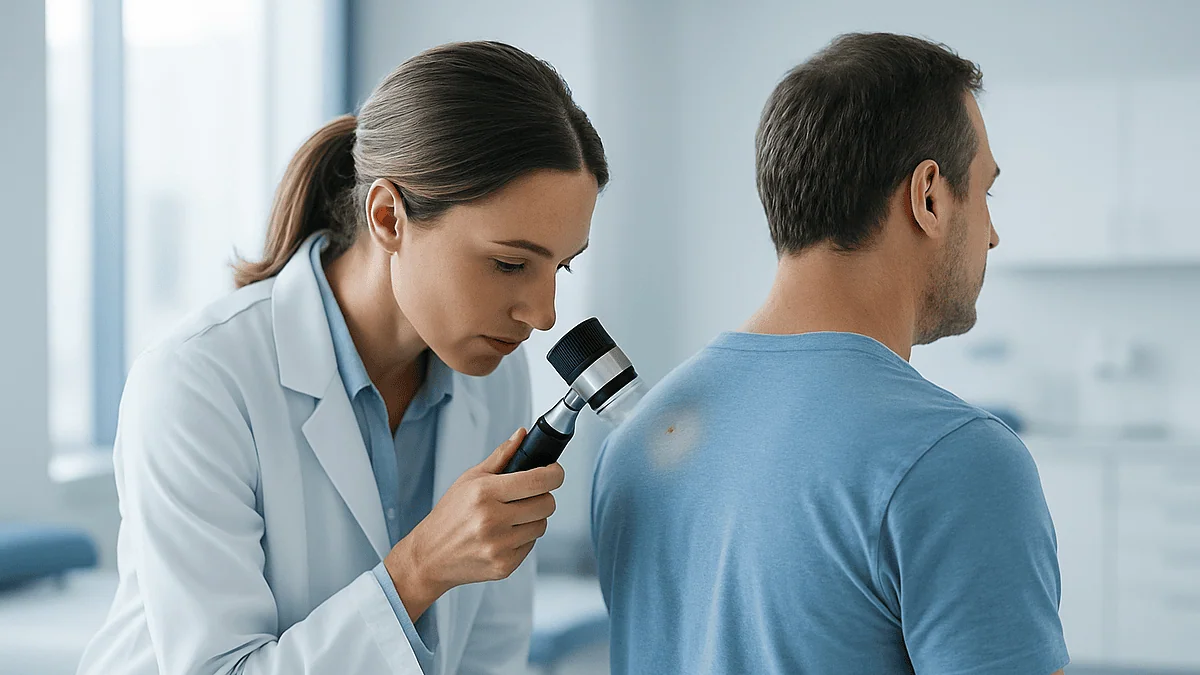
Key Takeaways
- Vitiligo patches burn faster because they lack melanocytes, so they have no melanin to absorb UV and cannot tan to build protection after exposure.
- Mayo Clinic and the NHS both list sunburn among possible triggers for new or spreading vitiligo, so protecting the patch edges matters beyond comfort.
- The evidence supports a broad-spectrum, water-resistant sunscreen of SPF 30 or higher reapplied about every two hours outdoors, not any specific brand.
- Phototherapy uses a calibrated UVB dose two to three times a week under supervision; natural sunlight lacks the wavelength control, dosing and monitoring that make it a treatment.
- Self-tanners and camouflage creams color depigmented skin but provide little or no UV protection, so sunscreen still goes on top.
- The NIH Office of Dietary Supplements lists oily fish, fortified foods and supplements as vitamin D sources, so protecting patches does not have to mean running low.
People with vitiligo sunburn faster because depigmented patches have lost melanocytes, the cells that make melanin, the pigment that absorbs ultraviolet light before it reaches deeper skin. Without that natural filter, damage can begin within minutes. Daily care means a broad-spectrum sunscreen of SPF 30 or higher reapplied about every two hours outdoors, plus shade, protective clothing and a wide-brimmed hat, with any treatment decisions left to a dermatologist.
Twenty minutes. That was how long a father stood at the edge of a community pool before his daughter pointed at his shoulder and asked why the white part had turned pink. The rest of his arm looked exactly as it had that morning. The pale patch he had lived with for two years was already tight, warm and beginning to sting.
Anyone learning about sun protection with vitiligo runs into the same puzzle. The rest of the body seems to follow the old rules; the patches follow a different clock. What burned in an afternoon before now burns in a quarter of an hour, and it burns unevenly, in the exact shapes the condition has drawn on the skin.
This explainer walks through why that happens, what the evidence actually supports about sunlight and vitiligo, and how to build a protective routine you can keep up every day without turning summer into something to dread.
Why does depigmented skin burn faster in vitiligo?
Skin color comes from melanin, a brown-black pigment produced by melanocytes, specialized cells scattered along the bottom layer of the epidermis. In vitiligo those cells are lost or stop working in defined areas. The result is a patch that has no working pigment factory, so it cannot darken in response to light and cannot shield itself.
Melanin does two protective jobs. It absorbs ultraviolet (UV) energy before it reaches the DNA of skin cells below, and it scatters a share of that energy away. Think of it as a set of tiny umbrellas parked above each cell nucleus. Normally pigmented skin, whatever its baseline shade, can also make more melanin after exposure, which is what tanning is. A vitiligo patch has neither the umbrellas nor the ability to build new ones.
That is why the same dose of sunlight produces two different outcomes on one arm. According to the NHS, the affected areas are more vulnerable to sunburn and long-term sun damage than the surrounding skin, and the difference is most visible in people whose unaffected skin is medium or deep in tone, because the protection gap between patch and surrounding skin is widest.
One point worth stating plainly: vitiligo is not a disease of pale people. Mayo Clinic notes it affects people of all skin types. What changes is how obvious the contrast becomes and how much extra sensitivity the patches carry relative to the person’s own baseline. Someone with deep brown skin may have grown up rarely burning; a new patch can burn in a way that feels alarming precisely because the rest of the body never taught them to expect it.
What actually happens when UV light hits a vitiligo patch
Sunlight reaching the ground contains two types of ultraviolet that matter for skin. UVB is shorter-wavelength and is the main driver of sunburn; it acts mostly in the top layer. UVA is longer-wavelength, penetrates deeper, passes through window glass and light cloud, and contributes to aging changes and to some forms of DNA damage. Both reach depigmented skin without the melanin filter.
Within minutes of strong exposure, UV energy begins forming chemical links in the DNA of skin cells. Cells detect the damage, trigger inflammation, and blood vessels widen. That widening is the redness and heat of a burn, usually peaking many hours after the exposure ended, which is why a patch that looks merely pink at the pool can be angry red by bedtime. In deeper skin tones, redness may be less visible; heat, tightness and later peeling are more reliable signs.
There is a second, vitiligo-specific concern. Mayo Clinic lists a triggering event such as sunburn among the factors thought to set off or extend vitiligo in people who are predisposed. The NHS similarly describes damage to the skin, including severe sunburn, as a possible trigger. Clinicians call the appearance of new patches at a site of skin injury the Koebner phenomenon. The evidence does not allow anyone to say that a single burn will spread the condition, and many burns lead to nothing new. It does mean that protecting the border between patch and pigmented skin is about more than comfort.
Finally, repeated unprotected exposure does what it does to any skin: it accumulates. Fine lines, rough texture and precancerous changes are dose-dependent, and the patches receive a larger effective dose every time.
Is sunlight good for vitiligo? The honest answer
This question comes up constantly, and the confusion is understandable, because ultraviolet light is used as a treatment for vitiligo. The distinction that matters is between controlled, measured, medically supervised light and the uncontrolled light of a summer afternoon.
Phototherapy, meaning treatment with a specific wavelength of light delivered by a calibrated machine, is a mainstream option for widespread vitiligo. The NHS describes narrowband UVB phototherapy as a possible treatment when patches are extensive, delivered in a clinic setting. Mayo Clinic explains that it is often given two to three times a week, that visible change may take one to three months, and that the full effect may take six months or longer. The dose is chosen for the individual, increased gradually, and monitored for burning.
Natural sunlight is none of those things. Its intensity swings with the hour, season, altitude and cloud cover, and it delivers UVA and UVB together in proportions nobody is measuring at the beach. The very thing that might, in a controlled setting, nudge dormant melanocytes at a patch edge to become active can, in an uncontrolled setting, burn the patch, tan the surrounding skin and widen the visible contrast.
So the honest answer is layered. Light has a genuine place in vitiligo care, but as a prescribed therapy with a defined wavelength and dose, not as an instruction to go and sit outside. If you are curious whether phototherapy suits you, that is a conversation for a dermatologist. For everyday life, the guideline position from the NHS and Mayo Clinic is consistent: protect the patches from the sun.
Sun protection with vitiligo: building a daily routine you can keep
The most useful routine is the one that survives a busy Tuesday, not the one that looks best on paper. Dermatologists tend to frame sun protection with vitiligo as a habit stack rather than a single product, and the CDC’s general sun-safety guidance gives the framework.
Start with the morning. Apply a broad-spectrum sunscreen of SPF 30 or higher to every patch that will see daylight, plus the face, neck, ears and backs of the hands. Mayo Clinic advises people with vitiligo to use a broad-spectrum, water-resistant product with SPF 30 or higher and to reapply about every two hours, and more often after swimming or sweating. Most people apply far too little; the goal is a visible, even layer that takes a moment to rub in.
Then check conditions. The CDC notes UV rays are strongest between about 10 a.m. and 4 p.m. and can be strong on cool or cloudy days. A UV index reading on a weather app tells you in seconds whether today is a hat-and-shade day.
Reapply in the middle of the day. A small bottle in a bag, car or desk drawer removes the excuse. Lips deserve their own protective balm, since lip vitiligo is common and lips burn readily.
Layer physical protection on top, covered in the next sections. In the evening, a gentle fragrance-free moisturizer helps the skin barrier, which in a patch that has been in the sun all day is doing more work than usual.
None of this is a treatment for vitiligo itself. It is a way of stopping the patches from accruing damage while you and your care team decide what, if anything, to do about the pigment.
Which sunscreen for vitiligo works best?
There is no sunscreen made for vitiligo, and no brand has been shown in trials to do better on depigmented skin. What the evidence supports is a set of properties. The table below summarizes the choices people most often ask about.
| Feature | What it means | Why it matters for vitiligo |
|---|---|---|
| Broad-spectrum | Filters both UVA and UVB | Patches have no melanin against either; UVA also passes through glass |
| SPF 30 or higher | Filters roughly 97% of UVB in lab testing, per Mayo Clinic | Higher numbers add small gains; correct amount and reapplication matter more |
| Water-resistant | Keeps stated protection for a labeled time while wet | Sweat and swimming strip protection from exposed patches quickly |
| Mineral (zinc or titanium) | Reflects and absorbs UV at the surface | Often gentler on sensitive skin; may leave a visible cast that can be tinted |
| Chemical filters | Absorb UV and release it as heat | Blend invisibly; some people find them irritating on treated patches |
| Tinted formulas | Contain iron oxides and pigment | Can soften the visual contrast while protecting |
Mineral versus chemical is largely a matter of tolerance and preference; both types meet regulatory standards for protection when used as directed. People applying prescribed topical medicines to their patches often find a mineral product less likely to sting, but this varies, and your dermatologist may suggest the order in which to apply treatment and sunscreen.
The Mayo Clinic figure of about 97% UVB filtration for SPF 30 assumes a full, even layer. In real life most people apply a third to a half of the tested amount, which lowers the effective protection considerably. Choosing a texture you genuinely like enough to use generously is, in practice, the most evidence-aligned decision you can make.
Shade, clothing and timing: the layers sunscreen cannot replace
Sunscreen is the layer people remember and the layer that fails most often, because it wears off, gets missed and rarely goes on thick enough. The CDC’s guidance puts physical barriers on equal footing, and for vitiligo they have a particular advantage: fabric does not need reapplying.
Clothing comes first. A tightly woven long-sleeved shirt shields a forearm patch far more reliably than any cream. Garments labeled with an ultraviolet protection factor (UPF) have been tested for how much UV passes through; the CDC notes that UPF-rated clothing offers more protection than ordinary fabric, and that a wet or stretched shirt lets more light through. Darker and denser weaves block more than thin pale cotton.
Hats matter more than most people think, because facial and scalp vitiligo sit exactly where sun hits from above. The CDC recommends a wide brim that shades the face, ears and back of the neck, rather than a baseball cap, which leaves the ears and neck exposed. Sunglasses that block UVA and UVB protect the delicate eyelid skin, another common vitiligo site.
Shade is a strategy, not a retreat. Trees, umbrellas and awnings cut direct UV substantially, though reflected light from sand, water, concrete and snow still reaches the skin, so shade is best combined with the other layers rather than trusted alone.
Timing ties it together. The CDC identifies late morning through mid-afternoon as the peak window. Moving the dog walk, the run or the garden hour to earlier or later in the day is the single change that reduces exposure most for the least effort. On days the UV index is high, the patches simply get less unfiltered daylight.
Vitiligo sunburn: what the following days usually look like
Even careful people get caught out: a longer walk than planned, a car window, a missed patch behind the knee. Knowing the typical course helps you judge what is ordinary and what is not.
Redness and heat usually build over the first several hours after exposure and peak somewhere around the first day. On a depigmented patch the edges are often sharply demarcated, following the exact outline of the vitiligo, which can look dramatic. Tightness, tenderness and a feeling of warmth are expected. Mild swelling around a burned patch is also common.
Over the next two to three days the burn settles. Small burns fade without peeling; more significant ones peel as the damaged top layer sheds. The NHS advises cooling the skin, staying hydrated, using a gentle moisturizer and keeping the area out of further sun until healed. Over-the-counter pain relief is something to discuss with a pharmacist or clinician if needed, particularly if you take other medicines.
Two things are specific to vitiligo. First, the burned patch will not tan afterward, so it will not develop the temporary protective darkening ordinary skin gets; it remains as vulnerable the next week as it was before. Second, because sunburn is a recognized possible trigger, the weeks after a significant burn are a reasonable time to watch the edges of the patch and any surrounding skin for change and to mention it at your next appointment.
Blistering, a large burned area, fever, chills, dizziness or a burn that looks infected fall outside the ordinary course and are covered in the section on when to call your doctor.
Do you have to choose between sun protection and vitamin D?
This is the trade-off people worry about most, and it deserves a straight answer rather than reassurance.
Skin makes vitamin D when UVB reaches it, and it does so in pigmented and depigmented skin alike. The NIH Office of Dietary Supplements notes that roughly 5–30 minutes of midday sun exposure to the face, arms, hands and legs, daily or at least twice a week, without sunscreen, usually produces adequate vitamin D in most people, with the amount varying by season, latitude, skin tone, age and cloud cover. Consistent, thorough sunscreen use does reduce production in the covered areas, which is where the tension comes from.
For someone with vitiligo, the calculation shifts. The patches burn in a fraction of that window and do not adapt. Deliberately leaving them uncovered to make vitamin D is a poor bargain: the damage arrives quickly and the vitamin D can be obtained other ways.
The NIH ODS lists dietary sources including oily fish, egg yolks, fortified milk and cereals, and notes that supplements are widely used to meet needs when sun exposure is limited. Whether you need a supplement, and what form, is a question for your clinician, who can check a blood level if there is concern. Some people with vitiligo have other autoimmune conditions, including thyroid disease, that make a wider review sensible.
The practical takeaway: protect the patches, get vitamin D from food and, if advised, a supplement, and let incidental light on well-pigmented skin do what it does. The evidence does not support sunbathing depigmented skin as a vitamin D strategy.
Who needs the strictest sun protection, and who is usually asked to wait
Everyone with vitiligo benefits from protecting the patches, but some situations raise the stakes, and some people are asked to pause or adjust before certain treatments.
Children are one group. Vitiligo often begins before age 30, per Mayo Clinic, and childhood is when a large share of lifetime UV exposure happens. Building the hat-and-sunscreen habit early, framed as routine rather than as something wrong with the child, pays off for decades. Sunscreen suitable for a child’s age should be chosen with a pediatrician or pharmacist.
People with facial, hand or lip vitiligo face constant exposure in the highest-dose areas and need year-round rather than seasonal protection. So do people whose work or sport keeps them outdoors.
Anyone using phototherapy is usually asked to avoid extra sun on treatment days and to be careful between sessions, because natural light adds an unmeasured dose on top of the calibrated one and raises the risk of burning. Your phototherapy team will give specific instructions; follow theirs over any general article.
Some prescribed medicines, including certain antibiotics, acne treatments and diuretics, increase photosensitivity, meaning skin burns more readily than usual. Combined with depigmented patches, the effect can be pronounced. Ask the prescriber or pharmacist whether any regular medicine carries this warning.
People considering surgical repigmentation, such as grafting, are typically asked to have stable disease and to keep both donor and recipient sites protected during healing. And anyone with a recent significant sunburn on a patch is generally asked to let it heal fully before starting or resuming light-based treatment. These are examples of typical practice; the specific plan always sits with the treating team.
How does sun protection fit alongside vitiligo treatment?
Sun protection does not restore pigment, and vitiligo treatments do not remove the need for sun protection. The two run in parallel, and understanding what each treatment does helps make sense of the advice you may be given.
Topical corticosteroids are anti-inflammatory creams that may be used on limited patches, especially early. Mayo Clinic notes they can take several months to show an effect and are used for defined periods because prolonged use thins skin. Thinner skin is more sun-sensitive, another reason to keep treated areas covered.
Topical calcineurin inhibitors work by calming the immune activity in the skin that is attacking melanocytes. They are often chosen for the face and neck. Mayo Clinic mentions them as an option alongside steroids; some labels advise limiting sun exposure during use, which your dermatologist will discuss.
Topical JAK inhibitors are a newer class that block signaling chemicals involved in the immune attack on pigment cells. A cream in this class is approved for nonsegmental vitiligo in some countries. As with any newer medicine, long-term data are still accumulating, and suitability is a decision for the prescriber.
Phototherapy, described earlier, uses a controlled UVB dose to encourage repigmentation, most often starting from hair follicles within a patch. Mayo Clinic’s timeline of one to three months for first change and six months or longer for full effect is typical.
Depigmentation therapy, which lightens remaining pigmented skin to reduce contrast in very extensive vitiligo, removes melanin deliberately, so lifelong strict sun protection becomes essential afterward.
None of these should be started, stopped or altered based on an article. What every option shares is that protecting the skin from uncontrolled sun supports whatever plan you and your care team choose.
Tanning, camouflage and the contrast problem
Vitiligo is defined by contrast, and sunlight is the fastest way to increase it. When pigmented skin tans and patches cannot, the difference between them grows, which is the opposite of what most people want. Protecting the whole body, not only the patches, keeps that gap from widening across a summer.
Tanning beds deserve a specific mention. They deliver concentrated UVA and often UVB in a dose no one is calibrating to your skin; they burn depigmented areas, darken the rest and add cumulative damage. The NHS advises against sunbeds in general, and there is no evidence-based role for them in vitiligo.
Camouflage is a different matter entirely, and it is legitimate. Mayo Clinic lists self-tanning products, cosmetic camouflage creams and, for some people, micropigmentation as ways to reduce the visible difference. Self-tanners work by reacting with the top layer of dead skin cells to produce a temporary brown tint, and because the reaction does not depend on melanocytes, it colors patches. Crucially, that color provides little or no UV protection; the skin underneath is exactly as vulnerable, so sunscreen still goes on top.
Waterproof camouflage creams, some available through dermatology clinics or in regular cosmetics ranges, can match skin tone closely. Applying them well takes practice and may be taught by a nurse or a trained volunteer.
Whether to camouflage at all is a personal choice, not a medical necessity. Plenty of people with vitiligo choose to do nothing to the appearance of their skin and focus purely on protection. Either path is compatible with good care; what matters is that the decision is yours and is informed.
What to avoid when you have vitiligo
Most of the useful avoidance list is about protecting the skin from injury and from unproven interventions, rather than about diet or lifestyle rules that have never been shown to matter.
Avoid burning. This is the first item because it is the one with the clearest link: Mayo Clinic and the NHS both list sunburn among possible triggers for new or spreading patches, and the patches themselves burn quickly.
Avoid tanning beds, for the reasons in the previous section.
Avoid unnecessary skin trauma where you can. Friction, cuts, burns and repeated pressure have been linked to new patches through the Koebner phenomenon. That does not mean living in fear of a scratch; it means being thoughtful about things like harsh scrubbing, tight straps rubbing the same spot daily, or aggressive hair removal on affected areas.
Avoid unproven remedies sold with strong promises. Vitiligo attracts a large market of creams, drinks and protocols that claim to restore pigment. Where treatments have evidence, they appear in mainstream guidance; where they do not, buying them costs money and sometimes delays real care. Anything applied to the skin that causes irritation is also a form of trauma.
Avoid assuming the patches are stable because they have been quiet. Vitiligo can be stable for years and then change; keep periodic follow-up.
What you do not need to avoid, based on current evidence: specific foods, dairy, citrus, or daily activities. The NHS and Mayo Clinic do not identify any dietary trigger. Restrictive eating in the name of vitiligo has no support and can cause its own problems. If a claim sounds like a rule you have never heard from a dermatologist, ask before adopting it.
What people often get wrong about sun and vitiligo
The myths here are persistent partly because each contains a grain of something true. Correcting them is worth a few minutes.
“Sun will help my patches repigment.” Controlled phototherapy can; uncontrolled sunlight mostly burns the patch and tans everything around it. The wavelength, dose and monitoring are the treatment. Sunlight lacks all three.
“I have dark skin, so I don’t need sunscreen.” Baseline melanin protects pigmented skin to a degree, but a vitiligo patch has none regardless of the color around it. The patches in deeply pigmented skin are as exposed as those in fair skin.
“Sunscreen causes vitiligo” or “sunscreen spreads it.” There is no evidence for either. Vitiligo is an autoimmune process; sunscreen sits on the surface. Irritation from a particular product is possible, in which case switching formula, not abandoning protection, is the answer.
“A high SPF means I can stay out all day.” SPF measures protection against UVB at a full, even application. It says nothing about time, wears off and is usually under-applied. Mayo Clinic’s advice to reapply about every two hours applies at any SPF.
“Self-tanner protects my patches.” The color is cosmetic and offers little or no UV protection. Sunscreen still goes on top.
“Vitiligo means high skin cancer risk, so I should panic.” The evidence is mixed, and some studies suggest people with vitiligo do not have a higher rate of skin cancer than the general population. That is not a license to skip protection, since the patches still take more damage per exposure; it is a reason to be steady rather than frightened.
“Once I’ve treated it, I’m done with sunscreen.” Repigmented skin may remain more sensitive, and untreated patches remain unprotected. The habit is lifelong.
Questions to ask your care team about sun protection and vitiligo
Appointments are short, and it is easy to leave with the pigment questions answered and the daily-life questions still hanging. Bringing a few written prompts helps. These are the ones dermatologists most often say they wish patients asked.
- Given where my patches are, which areas need protection year-round rather than only in summer?
- Is there a type of sunscreen, mineral or chemical, that you would suggest given my skin and any treatment I am using, and in what order should I apply them?
- Do any of my regular medicines increase sun sensitivity?
- If I am having phototherapy, what exactly should I do about natural sun on treatment days and in between?
- Should I have my vitamin D level checked, and how would you prefer I maintain it?
- What changes at the edge of a patch, or in surrounding skin, would you want to hear about between appointments?
- If I get a significant sunburn on a patch, does that change my treatment plan or timing?
- Are camouflage products or a camouflage service something you would recommend, and who teaches application?
- How often would you like to see me, given that my vitiligo has been stable or changing?
- Is there anything in my history, such as thyroid disease or another autoimmune condition, that alters how we approach sun protection or monitoring?
Write the answers down or ask whether the clinic can include them in your after-visit summary. If the answers change how you feel about a prescribed treatment, say so at the appointment rather than adjusting on your own; your team can only account for what it knows.
When to call your doctor
Most sun exposure on vitiligo patches ends in nothing worse than a few uncomfortable days. Some situations need a same-day call or, in a few cases, urgent care.
Contact your doctor or an urgent care service promptly if a sunburn on any part of the body causes blistering over a large area, fever or chills, dizziness, headache, nausea, confusion or a fast heartbeat. These can indicate heat illness or a severe burn that needs assessment. The NHS also advises seeking help if the skin is very swollen or if a young child or baby has been burned.
Call if a burn appears infected: spreading redness beyond the original area, increasing pain after the first day or two, pus, warmth that worsens rather than settles, or red streaks tracking away from the site.
Arrange a routine but timely appointment if, in the weeks after a burn or at any time, you notice new patches appearing, existing patches enlarging quickly, or a change in the border between pigmented and depigmented skin. This does not necessarily mean the treatment plan changes, but your dermatologist will want to know.
See a clinician about any spot on any skin, pigmented or not, that is new, changing in size, shape or color, bleeding, crusting or failing to heal. Vitiligo does not remove the ordinary need to check skin for cancer, and depigmented areas make some changes easier to see and others easier to miss.
Finally, if a prescribed cream causes stinging, rash or worsening redness on a patch, or if sunscreen seems to be irritating treated skin, call rather than stopping or swapping medicines on your own. Every decision about starting, pausing or changing a treatment belongs with the team that prescribed it.
Frequently asked questions
What is the best sun protection for vitiligo?
The best protection is a combination rather than a single product: a broad-spectrum, water-resistant sunscreen of SPF 30 or higher applied generously and reapplied about every two hours, plus tightly woven or UPF-rated clothing, a wide-brimmed hat, sunglasses and shade during the late-morning to mid-afternoon peak. Mineral and chemical sunscreens both meet regulatory standards; choose the texture you will actually use in a full layer. No brand has been shown to work better on depigmented skin.
Is sunlight good for vitiligo?
Uncontrolled sunlight is not a treatment for vitiligo. It burns depigmented patches quickly, tans the surrounding skin and increases contrast, and sunburn is listed by Mayo Clinic and the NHS as a possible trigger for new patches. Controlled narrowband UVB phototherapy, delivered by a calibrated machine at a measured dose under supervision, is a recognized treatment, but its wavelength control and dosing are exactly what natural sun lacks. Ask a dermatologist whether phototherapy suits you.
What is the newest treatment for vitiligo?
The newest class of prescribed medicine for vitiligo is the topical JAK inhibitor, which blocks immune signaling chemicals involved in the attack on pigment cells; a cream in this class is approved for nonsegmental vitiligo in some countries. Long-term data are still accumulating. Established options remain topical corticosteroids, topical calcineurin inhibitors, narrowband UVB phototherapy and, for stable disease, surgical grafting. Whether any of these fits your situation is a decision for the prescribing dermatologist.
What should you avoid when you have vitiligo?
Avoid sunburn, tanning beds, unnecessary skin trauma such as harsh scrubbing or repeated friction on patches, and unproven remedies sold with strong promises. Sunburn and skin injury are linked to new patches through what clinicians call the Koebner phenomenon. Current evidence from the NHS and Mayo Clinic does not identify any food that triggers vitiligo, so restrictive diets in its name lack support. Keep periodic follow-up even when patches have been stable for years.
Can sunscreen for vitiligo cause new patches or make it spread?
There is no evidence that sunscreen causes or spreads vitiligo. The condition is an autoimmune process affecting pigment cells, while sunscreen acts on the skin surface. A particular formula can irritate sensitive or treated skin, in which case switching to a different product, often a fragrance-free mineral one, is the sensible step rather than abandoning protection. Unprotected sunburn, by contrast, is a recognized possible trigger for new patches.
Does a vitiligo sunburn look different from a normal sunburn?
Often, yes. Because depigmented patches burn faster than surrounding skin, the redness and heat frequently follow the exact outline of the vitiligo, with sharply defined edges, while nearby pigmented skin may look untouched. In deeper skin tones redness can be subtle, so warmth, tightness and later peeling are more reliable signs. The burned patch also will not tan afterward, so it stays as vulnerable the following week as it was before.
Do people with vitiligo have a higher skin cancer risk?
The evidence is mixed. Some studies suggest people with vitiligo do not have a higher rate of skin cancer than the general population, and the reasons are still debated. That finding is not a reason to skip protection, because depigmented patches still take more UV damage per exposure and lack the ability to adapt. The practical approach is steady daily protection and the same skin checks anyone should have for new or changing spots.
How do I get enough vitamin D if I protect my vitiligo patches from the sun?
Mainly through food and, if your clinician advises it, a supplement. The NIH Office of Dietary Supplements lists oily fish, egg yolks and fortified milk and cereals as dietary sources and notes supplements are widely used when sun exposure is limited. Deliberately leaving patches uncovered to make vitamin D is a poor trade, since they burn within minutes. Ask your doctor whether checking a blood level makes sense for you.
Do self-tanners or camouflage creams protect vitiligo patches from the sun?
No, or only minimally. Self-tanners react with dead cells in the top layer of skin to create a temporary brown tint that does not depend on melanocytes, so they color patches, but the tint offers little or no UV protection. Camouflage creams are cosmetic as well. Both are legitimate ways to reduce visible contrast if you want them, but sunscreen still needs to go on top and be reapplied through the day.
Should I stop my vitiligo cream if it stings in the sun?
Do not stop or change a prescribed treatment on your own. Stinging, rash or worsening redness on a treated patch is worth a call to the prescribing dermatologist, who may adjust how, when or in what order you apply the medicine and sunscreen, or suggest a gentler sunscreen formula. Some topical medicines and certain oral drugs increase sun sensitivity, so mention every product you use so the team can account for it.
References
This article is for general information only and is not a substitute for professional medical advice. Please consult a qualified doctor about your individual situation.

More from the Blog

Benzoyl Peroxide: How It Works, the Concentration Question and the Bleaching Problem
Benzoyl peroxide is an over-the-counter acne treatment that releases oxygen into the pore, killing acne bacteria without breeding resistance and loosening the plugs that…
Does Seborrheic Dermatitis Cause Hair Loss?
Seborrheic dermatitis does not usually destroy hair follicles, so it is not a classic cause of permanent hair loss. It can, however, trigger temporary…

Why Dandruff Treatment Takes Time to Work and Why Stopping Early Brings the Flakes Back
Dandruff treatment usually takes several weeks to show a clear difference, because medicated shampoos slow the yeast and skin-cell buildup that create flakes rather…

When Hives Come With Lip, Tongue or Throat Swelling: Why It Is Treated as Urgent
Hives with lip swelling mean the reaction has moved from the skin surface into deeper tissue, a process called angioedema. Most episodes settle on…

Is Laser Hair Removal Permanent? What Permanent Reduction Really Means
Laser hair removal is not fully permanent for most people. It delivers long-term hair reduction: after a full course, typically four to six sessions,…
Acne Care During Pregnancy and Breastfeeding: How Dermatologists Adjust the Plan Safely
Acne treatment during pregnancy is usually adjusted rather than abandoned. Dermatologists typically pause oral isotretinoin, topical retinoids, tetracycline antibiotics and hormonal or antiandrogen medicines,…