Vitiligo Treatment
Vitiligo is a skin pigmentation disorder that causes white patches due to loss of melanin. Treatment aims to slow progression, restore color, and improve quality of life.
Quick answer
Vitiligo is a long-term skin condition in which the immune system damages melanocytes, the cells that produce pigment, leaving sharply defined white patches on the skin. Treatment combines topical medicines, narrowband ultraviolet B phototherapy and, for stable patches, grafting procedures to slow spread and encourage repigmentation. Response is gradual, varies by body area, and usually requires several months of consistent therapy.
Vitiligo: What It Is and How It Is Treated
Vitiligo is a long-term skin condition in which patches of skin lose their pigment and become white or noticeably lighter than the surrounding skin. It develops when melanocytes: the cells that produce melanin, the pigment responsible for the colour of skin, hair and eyes, are damaged or lost. Treatment aims to slow or stop the spread of pigment loss, encourage colour to return where the skin can still respond, and protect the affected areas from sun damage. Vitiligo is not contagious. It is not caused by poor hygiene or infection, and it can appear at any age, in any skin tone, anywhere on the body.
A note on spelling: if you arrived here after searching for vertilio or vitilitigate, those are common misspellings of the same word. The correct medical term is vitiligo, and everything on this page applies regardless of how you found it. The questions people bring to a dermatologist are usually the same: will the patches spread, can the colour come back, is this linked to another health problem, and which treatments are actually worth the time they take.
The honest answer to most of those questions is that vitiligo behaves differently from person to person. Some people develop a few patches that stay unchanged for years. Others experience periods of rapid spread followed by long stretches of calm. Some areas of the body respond well to treatment; others rarely do. A good treatment plan does not promise a specific result. It identifies what kind of vitiligo you have, whether it is active or stable, and which therapies fit that picture, then it measures progress honestly and adjusts.
At Acibadem, vitiligo care follows that logic. Dermatologists assess the pattern and activity of the disease, look for related conditions when the history suggests them, and build a plan that may combine topical medication, phototherapy, procedural treatment, skin protection and long-term follow-up. For patients whose previous care has been fragmented: a cream from one doctor, a few light sessions somewhere else, no baseline photographs to compare against: a structured evaluation is often the most useful first step.
What is vitiligo?
Vitiligo is an acquired pigment disorder in which the body’s immune system is believed to target and destroy melanocytes, leaving sharply defined, milky-white patches where the skin can no longer produce melanin. It is classified as a chronic condition, meaning it tends to persist over time with alternating periods of activity and stability rather than resolving on its own. Vitiligo often begins before the age of thirty, although it can start in childhood or later adulthood. It can affect the skin anywhere on the body, the hair on the scalp, eyebrows, eyelashes or beard, and, less commonly, areas such as the lips or the inside of the mouth. In many people it is associated with other immune-mediated conditions, most often thyroid disease, which is why a careful medical history is part of every proper assessment.
How does vitiligo start?
Vitiligo usually starts as one or a few small, pale patches that gradually lose all of their colour and develop a sharp, well-defined border. Common first locations include the hands, the face, the skin around the mouth and eyes, the elbows, knees and feet, and skin folds such as the armpits and groin. Some people notice mild itching in an area before a new patch appears, particularly when the disease is active, though vitiligo itself is usually not painful.
New patches sometimes follow an identifiable event. Severe sunburn, a cut or graze, persistent friction from clothing, contact with certain industrial chemicals, or a period of significant illness or stress can precede the first lesions in susceptible people. The tendency for patches to appear at sites of skin injury has a name, the Koebner phenomenon, and it is one reason dermatologists advise people with vitiligo to protect their skin from trauma and irritation. Premature whitening of hair within a patch, or on the scalp, eyebrows or beard, can also be an early feature.
What are the first signs of vitiligo?
The first sign of vitiligo is usually a small area of skin that looks lighter than the skin around it and slowly turns milky white, with an edge that becomes crisper over weeks or months. The patch does not scale, does not hurt, and does not change texture: the skin feels normal, it simply lacks colour. In lighter skin tones the earliest patches can be hard to see in ordinary light and may only become obvious after sun exposure tans the surrounding skin.
White spots on skin are one of the most common reasons people seek a dermatology opinion, but not every light patch is vitiligo. Spots on skin that are white can also be caused by a superficial fungal infection called pityriasis versicolor, by post-inflammatory hypopigmentation left behind after eczema, psoriasis or other rashes, by a stable birthmark known as naevus depigmentosus, or by chemical leukoderma after contact with certain phenol-containing substances. These conditions look similar at a glance but require different management, which is why accurate diagnosis comes before any treatment decision.
Features that make vitiligo more likely include:
- Patches that are truly white rather than slightly pale, with sharply defined borders
- Symmetrical involvement of both sides of the body, especially hands, face, elbows and knees
- Whitening of hair growing within an affected patch
- Patches appearing at sites of previous injury, friction or sunburn
- A personal or family history of vitiligo or autoimmune disease, particularly thyroid disorders
Vitiligo Causes
Vitiligo causes are not fully understood, but research points to a combination of immune, genetic and environmental factors acting together rather than a single trigger. What is well established is what does not cause it: vitiligo is not an infection, it cannot be passed on by touch, and it is not the result of diet, hygiene or anything the patient did wrong. Understanding the mechanisms matters practically, because different treatments target different parts of the process, some calm immune activity, others stimulate the pigment cells that remain.
What is the main cause of vitiligo?
The main cause of vitiligo is believed to be an autoimmune process, in which the body’s own immune system mistakenly identifies melanocytes as a threat and destroys them. This explanation fits the most common form of the disease and is supported by its frequent association with other autoimmune conditions such as thyroid disease, and by the fact that medications which modify immune signalling in the skin can help pigment return. Additional mechanisms are thought to contribute: oxidative stress within melanocytes may make them more vulnerable to immune attack, and in segmental vitiligo, the form confined to one region of the body, factors involving local nerve pathways have been proposed. In practice, most cases probably involve a genetic susceptibility combined with an immune response and, in some people, an identifiable trigger such as sunburn or skin trauma.
Is vitiligo genetic?
Vitiligo has a genetic component, but it is not inherited in a simple, predictable way. Having a parent or sibling with vitiligo increases the likelihood of developing it, and researchers have identified many genes associated with the condition, most of them involved in immune function or melanocyte biology. However, most children of a person with vitiligo never develop it, and many people with vitiligo have no affected relatives at all. Genes appear to set the level of susceptibility; whether the disease actually appears depends on other factors that are not fully mapped. A family history is therefore useful information for the dermatologist, not a prediction for your children.
Can white people get vitiligo?
Yes, vitiligo occurs across all ethnic backgrounds and skin tones. The condition itself does not favour any population; what differs is visibility. On deeply pigmented skin the contrast between affected and unaffected areas is stark and often distressing, while on very fair skin patches can go unnoticed for a long time, sometimes only revealed when the surrounding skin tans in summer or under a special ultraviolet examination light in the clinic. This difference in visibility affects how early people seek help and how much cosmetic impact the disease has, but the underlying biology and the treatment options are the same.
Alongside these underlying mechanisms, certain triggers are repeatedly reported before new patches appear: severe sunburn, cuts and friction, exposure to specific chemicals, and periods of major physical or emotional stress. Triggers do not cause vitiligo in someone without the underlying susceptibility, but avoiding them where possible is a sensible part of long-term management.
Types of Vitiligo
Vitiligo is not a single uniform disease, and the type you have shapes both the prognosis and the treatment plan. The main clinical patterns are:
- Non-segmental (generalised) vitiligothe most common form. Patches typically appear symmetrically on both sides of the body and may progress in episodes over time. Most treatment evidence relates to this type.
- Segmental vitiligoaffects one area or one side of the body, often following a band-like distribution. It tends to start younger, spread for a limited period and then stabilise, which makes it a frequent candidate for surgical repigmentation once stable.
- Focal vitiligoa small number of patches confined to a limited area, which may remain limited or later evolve into a more generalised pattern.
- Acrofacial vitiligoinvolves the face, hands and feet. The fingertips and toes are among the most treatment-resistant sites on the body.
- Mucosal vitiligoaffects the lips or genital skin, either alone or as part of a wider pattern. These sites need particularly careful treatment selection.
- Universal vitiligoa rare, very extensive form in which most of the body surface has lost pigment. Here the treatment conversation may differ fundamentally from that for limited disease.
Beyond type, the single most important distinction the dermatologist makes is between active vitiligo, new patches appearing or existing patches enlarging, and stable vitiligo, where nothing has changed for a prolonged period. Active disease usually needs immune-calming treatment first; stable disease opens the door to options, such as grafting, that would fail if the disease were still spreading.
Who May Need Vitiligo Assessment and Treatment
People seek vitiligo treatment for different reasons at different stages. Some have just noticed a first white patch and want to know what it is. Others have lived with vitiligo for years and want better control, a realistic repigmentation attempt, or simply a second opinion after treatments that went nowhere. Assessment is particularly worthwhile when vitiligo is spreading, when it affects highly visible areas such as the face and hands, when it involves sensitive sites such as the eyelids, lips or genitals, or when the emotional weight of the condition is affecting daily life.
The typical picture is one or more well-defined white or lighter patches, on the face, hands, arms, feet, knees, elbows, around the mouth or eyes, in body folds, or at sites of previous injury or friction. Some patients notice premature whitening of scalp hair, eyebrows, eyelashes or beard. Itching sometimes precedes new patches during active phases. Because depigmented skin has lost the protection melanin provides, affected areas burn quickly in the sun, and repeated sunburn is both uncomfortable and unhelpful for the disease.
How is vitiligo diagnosed?
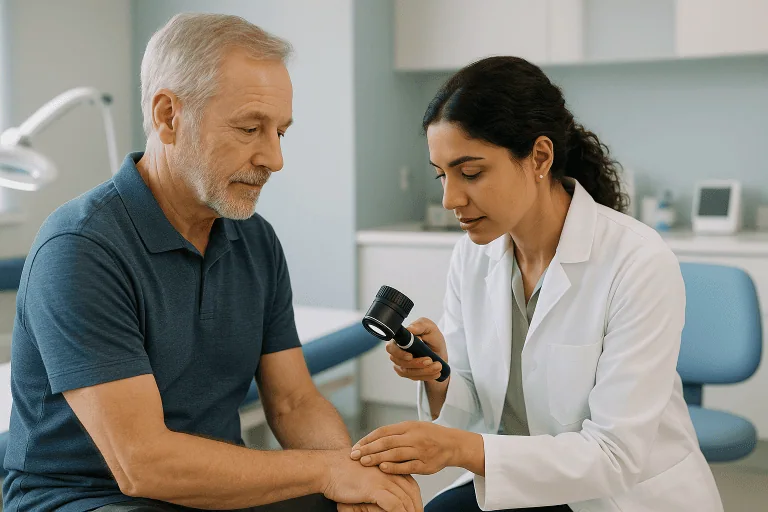
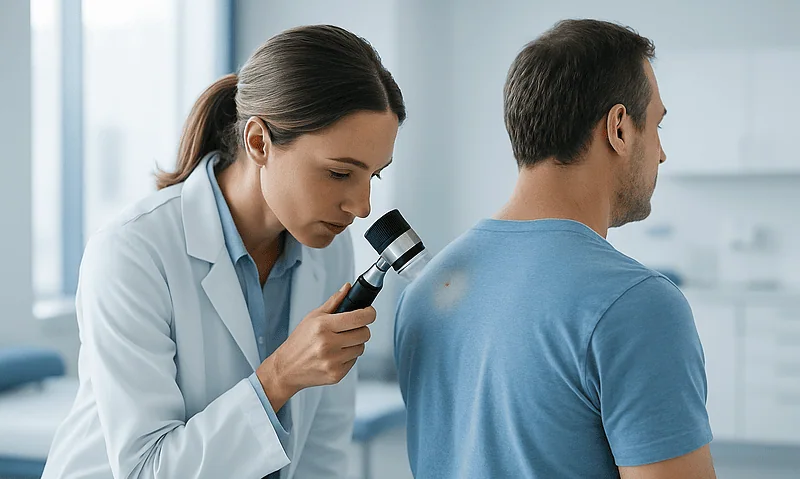
Vitiligo is diagnosed primarily through a detailed history and skin examination by a dermatologist. You will be asked when the patches first appeared, whether and how fast they are spreading, whether there is a family history of vitiligo or autoimmune disease, and whether anything preceded the onset, sunburn, injury, chemical exposure, significant stress or a skin inflammation. The dermatologist may examine your skin under a special ultraviolet examination light, which makes depigmented areas stand out clearly, especially in lighter skin tones where patches can be subtle. Clinical photography is often used to record a baseline, because judging change from memory months later is unreliable. Dermoscopic evaluation can help assess pigment around hair follicles and early signs of repigmentation. Occasionally, pigment loss appears in a ring around a mole, a halo naevus, and the dermatologist will examine any such moles carefully, since unusual pigment changes around a mole occasionally warrant assessment to exclude melanoma.
Blood tests are not needed for everyone. They are recommended when the picture suggests an associated autoimmune condition, most commonly thyroid disease, for example if there is fatigue, weight change, hair loss, palpitations, menstrual changes, a strong family history of autoimmune disease or very widespread vitiligo. Rarely, if the diagnosis remains uncertain after examination, a small skin biopsy may be taken to distinguish vitiligo from conditions that mimic it.
How Vitiligo Treatment Is Performed
Vitiligo treatment is rarely a single intervention. It is a personalised strategy that usually combines therapies working in different ways: reducing inflammation and immune activity in the skin, stimulating remaining melanocytes to produce pigment again, protecting depigmented skin from the sun, and helping you manage the visible effects while medical treatment takes effect. A typical care pathway looks like this:
- Step 1: Confirm the diagnosis and map the extent and pattern of pigment loss, with baseline photographs.
- Step 2: Determine activity: is the disease spreading or stable? This decides the immediate priority.
- Step 3: Start appropriate therapy: topical treatment, phototherapy, or both; systemic options in selected rapidly spreading cases.
- Step 4: Review at planned intervals, comparing photographs and adjusting doses or methods based on measured response.
- Step 5: Consider procedural repigmentation only for patches that have proven stable and resistant to medical therapy.
- Step 6: Maintain: long-term sun protection, skin care and follow-up to catch new activity early.
Initial Assessment and Preparation
Treatment begins with a dermatologist-led consultation. The first task is confirming the diagnosis and mapping the pigment loss: the size, location and pattern of the patches, signs of active spread, and a review of everything already tried. High-quality clinical images create the baseline against which future progress is judged. In selected patients, digital skin analysis or dermoscopy adds information about follicular pigment, inflammation and early repigmentation that the naked eye misses.
Preparation also means reviewing your broader medical picture: current medications, allergies, pregnancy status, past skin cancers, photosensitivity, immune conditions and family history. If phototherapy is on the table, the dermatologist assesses your skin type, sun sensitivity and any medications that could increase light sensitivity. If surgical repigmentation is being considered, the stability of the disease is examined critically, because procedures generally fail, and waste healthy donor skin, when vitiligo is still spreading.
From the outset, consistent sun protection matters. Sunburn deepens the contrast between pigmented and depigmented skin and can trigger new patches in susceptible people. Gentle skin care matters for the same reason: friction, irritation and injury can seed new lesions through the Koebner phenomenon. Neither of these measures treats vitiligo on its own, but ignoring them can undermine everything else.
Medical and Topical Treatment
Topical medications are the usual starting point for limited vitiligo and a component of most combined plans. Topical corticosteroids reduce inflammation and immune activity in the skin; they are typically used for defined periods, particularly on the body and limbs, with monitoring to avoid side effects such as skin thinning or visible small blood vessels. For sensitive areas, the face, eyelids, neck and skin folds, non-steroid anti-inflammatory creams from the calcineurin inhibitor family are commonly preferred, because they can be used without the same risk of steroid-related thinning.
Newer targeted topical therapies that act on the immune signalling pathways involved in vitiligo may be appropriate for selected patients, depending on availability, local regulations and the dermatologist’s assessment of suitability. They are not right for every case, and like all vitiligo treatments they take months rather than weeks to show what they can do. Whatever is prescribed, the dermatologist should explain the expected timeline, exactly how to apply it, the possible side effects and how progress will be measured, because inconsistent application makes it impossible to know whether a treatment failed or was simply never given a fair trial.
For rapidly progressive vitiligo, short courses of systemic medication are sometimes used to help slow disease activity while other treatments are established. Because systemic medicines affect the whole body, this decision is individualised, based on the pace of spread, the extent of disease, your medical history and a frank discussion of risks and benefits with your treating doctor.
Phototherapy and Targeted Light Treatment
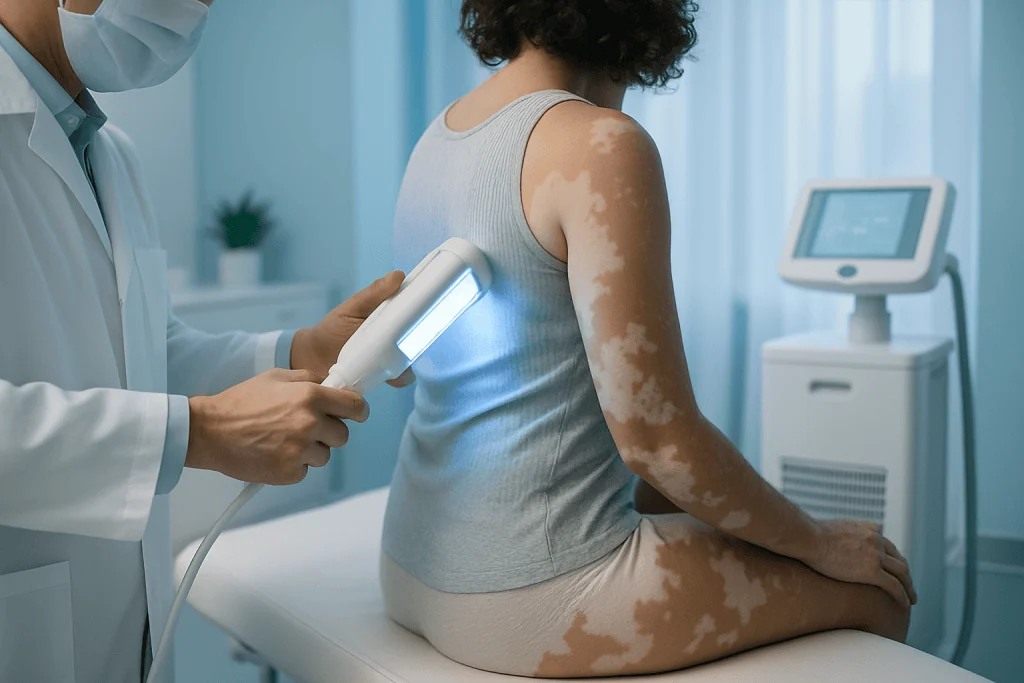
Phototherapy is one of the most established treatments for widespread or actively spreading vitiligo. Narrowband ultraviolet B treatment delivers a controlled wavelength of light that helps calm disease activity and stimulate melanocytes, supporting repigmentation. It is performed in repeated sessions over several months. Each session is brief; what matters is consistency and correct dosing, which the dermatologist adjusts gradually according to your skin type, response and any redness or irritation.
For smaller or localised patches, targeted light treatment focuses therapeutic light on the affected area while sparing the surrounding skin. This suits defined patches on the face, neck or specific body sites. The number of sessions varies from person to person, and response is assessed over time with examination and photographs. The earliest encouraging sign is often small islands of pigment appearing around hair follicles within a patch, or colour creeping inward from the edges.
The technology used in vitiligo care exists to support precision, not to impress. Controlled phototherapy units deliver measured doses. Targeted light systems confine treatment to defined patches. Digital imaging documents pigment changes too subtle to judge day by day. Ultraviolet examination lights reveal depigmentation invisible under room lighting. Each tool is only as useful as the specialist interpreting it and adjusting the plan accordingly.
Surgical and Procedural Repigmentation Options
Procedural treatment is reserved for stable vitiligo that has not responded adequately to medical therapy. The best candidates have localised patches that have neither expanded nor been joined by new patches for a defined period, confirmed by the dermatologist. Surgery is not a first step, and it is generally unsuitable for active or widespread disease, operating on unstable vitiligo risks losing the graft and triggering new lesions at the donor site.
Techniques include skin grafting, blister grafting and cellular transplantation methods in which pigment-producing cells are harvested from normally pigmented skin and transferred to the depigmented area. These procedures demand careful patient selection, meticulous technique and honest counselling beforehand. They are most often considered for stable segmental vitiligo or for individual long-standing patches that have resisted everything else. Afterwards, the treated area must be protected while it heals, and follow-up may include light therapy to encourage the transplanted cells to produce pigment. Where vitiligo forms part of a wider picture of skin damage, options discussed under reconstruction after skin disease may also be relevant.
Not all areas respond equally. Regions with hair follicles hold reservoirs of melanocytes and tend to repigment better; fingertips, toes, lips and skin over bony prominences are more challenging. The dermatologist should explain the expected recovery, the possible need for repeat sessions, and the risks, colour mismatch, scarring, infection, incomplete repigmentation and recurrence, before you decide.
Depigmentation for Very Extensive Vitiligo
When vitiligo has removed pigment from most of the body and repigmentation is no longer realistic, some patients and dermatologists discuss the opposite approach: medically removing the remaining pigment so that the skin tone becomes uniform. Depigmentation therapy is a serious, essentially irreversible decision that commits the patient to lifelong rigorous sun protection, and it is only considered after extensive counselling in carefully selected cases of very widespread disease. It is not a shortcut, and it is not appropriate for limited vitiligo.
Did Michael Jackson have vitiligo?
Yes. Michael Jackson stated publicly in 1993 that he had vitiligo, and the medical findings reported after his death in 2009 confirmed the diagnosis. His visibly changing skin tone made him the most famous example of the condition, and his case brought public attention to depigmentation therapy: the approach described above for very extensive vitiligo. For many patients, his story is a reminder of two things: vitiligo can progress to involve large areas of the body, and the choices people make in response to it are medical decisions that deserve specialist guidance rather than public speculation.
Camouflage, Sun Protection and Supportive Care
Cosmetic camouflage deserves more respect than it usually gets. Medical-grade camouflage products, self-tanning preparations and practical make-up guidance can reduce the visible contrast of patches immediately, which matters while medical treatments spend months doing their slower work. Camouflage does not alter the disease, but for many people it changes how manageable daily life feels, at work, at school, in photographs.
Sun protection is a medical measure, not a cosmetic one. Depigmented skin lacks melanin’s natural defence and burns quickly; sunburn worsens contrast, causes avoidable discomfort and can provoke new patches. Broad-spectrum sunscreen, protective clothing and sensible sun habits protect the skin while treatment proceeds. Emotional wellbeing is the third pillar: vitiligo’s visibility can affect confidence, relationships and mood, and psychological support is a legitimate part of comprehensive care rather than an afterthought.
Typical Duration and Recovery Process
How long treatment takes depends on the method and the extent of disease. A consultation and diagnostic assessment can usually be completed in one visit. Topical medications generally need several months of consistent use before a full response can be judged. Phototherapy runs as repeated sessions over weeks to months. Procedural treatments are performed in a planned session, with healing over days to weeks and pigment developing over the months that follow.
Recovery from non-surgical treatment is usually minimal: normal daily activities continue, though mild redness, dryness or irritation can occur with topical therapy or phototherapy. After a procedural treatment, expect dressings, some activity restrictions, wound care and strict sun protection while the skin heals, followed by scheduled reviews to assess how repigmentation develops.
Because a full course of vitiligo therapy runs over months, a realistic plan addresses continuity from the start. The dermatologist establishes the diagnosis, initiates treatment and sets the overall strategy, with documentation and written recommendations prepared so that ongoing phototherapy or monitoring can continue without interruption between visits. Continuity is what keeps long-term treatment coherent rather than fragmented.
What Treatment Can and Cannot Achieve
Setting expectations correctly at the start is part of good medicine. Vitiligo treatment can often slow or stop active spread, return pigment to responsive areas, especially the face and neck, and reduce the practical and emotional burden of the condition. It cannot switch off the underlying tendency, and it cannot make every patch respond. The two questions patients ask most deserve direct answers.
Can you be cured from vitiligo?
No: there is currently no cure for vitiligo. Treatment manages the condition: it can calm disease activity, restore pigment in areas that still hold melanocyte reserves, and maintain those gains with ongoing care, but the underlying susceptibility remains even when the skin looks fully repigmented. This is why maintenance therapy and periodic follow-up are often recommended after a good response, and why any clinic promising permanent, complete results should be treated with caution. Framing vitiligo as a chronic condition to be controlled, like many other long-term diseases, leads to better decisions than chasing a definitive fix that does not yet exist.
How to prevent vitiligo from spreading?
No method reliably prevents spread in every person, but several measures genuinely reduce the risk. Medical treatment of active disease, topical anti-inflammatory therapy, phototherapy and, in selected rapid cases, short systemic courses, is the most effective way to slow or stop progression. Alongside treatment, protecting the skin matters: avoid sunburn with consistent sun protection, minimise friction and repeated trauma to the skin, and be careful with harsh chemicals, because new patches tend to appear at sites of injury. Consistency is the quiet factor behind most successes; irregular treatment makes it impossible to tell what is working. Unverified remedies, aggressive scrubs and untested products, by contrast, add irritation without benefit.
Benefits of Vitiligo Treatment
The benefits of treatment vary by patient, but a structured plan can improve medical control, appearance and day-to-day confidence.
| Benefit | What It Means for You |
|---|---|
| Slowing disease progression | Treatment may help reduce the appearance of new patches or enlargement of existing patches, especially when vitiligo is active. |
| Repigmentation of selected areas | Colour may gradually return in responsive areas, often beginning around hair follicles or from the edges of patches. |
| More precise treatment planning | Diagnosis, imaging and follow-up help determine which therapies are appropriate and whether they are working. |
| Protection of vulnerable skin | Sun protection and skin care reduce the risk of sunburn, irritation and contrast between affected and unaffected skin. |
| Improved quality of life | Medical control, cosmetic guidance and supportive care can help patients feel more comfortable in social and professional settings. |
Vitiligo Treatment and Recovery Timeline
Improvement in vitiligo is gradual, and the timeline depends on the treatment method, the activity of the disease and the body area involved. The table below describes a typical course; your own plan may differ.
| Time Period | What Patients Can Expect |
|---|---|
| Day 1 | The dermatologist confirms the diagnosis, evaluates disease activity, discusses treatment options and may begin topical therapy or plan phototherapy or procedures. |
| First Week | Skin care, sun protection and prescribed medications begin. If phototherapy is selected, early sessions start with carefully controlled dosing. |
| First Month | The main goal is tolerance and consistency. Some patients notice less inflammation or no further spread, but visible repigmentation is usually still limited. |
| Three to Six Months | Repigmentation may become more noticeable in responsive areas, particularly the face and neck. The plan is adjusted based on documented progress. |
| Longer Term | Maintenance therapy, periodic follow-up and ongoing sun protection support results and monitor for recurrence or new activity. |
Factors That Influence Outcomes
Outcomes in vitiligo are shaped by identifiable factors, and understanding them prevents both false hope and unnecessary pessimism. The most important is disease activity. Active vitiligo, where patches are spreading, usually needs its inflammation controlled before repigmentation can realistically be expected. Stable vitiligo, by contrast, may be suitable for procedural options if medical therapy has not achieved enough.
Location matters just as much. Patches on the face and neck commonly respond better than those on the hands, feet, lips and fingertips. Hair-bearing areas hold melanocyte reservoirs in their follicles and therefore have more repigmentation potential; long-standing patches whose hairs have turned white have lost that reservoir and tend to resist treatment. Segmental vitiligo behaves differently from generalised non-segmental disease and often calls for a different strategy, less responsive to phototherapy in the long run, but a strong candidate for grafting once stable.
Consistency is the factor most within your control. Phototherapy only works as a sustained course, and topical medications only work when applied exactly as prescribed. Irregular use does not just slow progress; it destroys the information the dermatologist needs to judge whether a therapy deserves more time or should be replaced. Patients who cannot attend frequent sessions should raise this at the first visit so the plan is built around what can realistically be sustained, particularly when phototherapy is part of it.
Personal factors round out the picture: skin type, age, associated autoimmune conditions, previous treatments, sun exposure habits, skin trauma and general lifestyle. Children may respond well to certain therapies, but choices must be age-appropriate and carefully monitored. Pregnant or breastfeeding patients need specific consideration. Patients with a history of skin cancer or significant photosensitivity may need modified plans that limit or exclude light-based treatment.
Finally, it helps to define success honestly. A good result is not only complete repigmentation. For many patients, success means the spread has stopped, the most visible areas have improved, the contrast is softer, sunburns no longer happen, and the condition feels managed rather than unpredictable. Vitiligo is a chronic disease with periods of stability and activity; long-term follow-up exists to catch changes early and adapt, not because treatment has failed.
Why Acting Early Matters
Early evaluation matters because vitiligo tends to be more responsive when disease activity is recognised and managed before extensive pigment loss occurs. If new patches are appearing quickly, timely treatment may slow progression and protect areas that still contain functioning melanocytes. Once patches have been present for a long time, especially in areas with few hair follicles, repigmentation becomes harder to achieve.
Delay carries avoidable costs. Depigmented skin burns easily, and repeated sunburn adds discomfort, deepens contrast and may provoke further skin changes. People spend months on inappropriate creams, unverified remedies or harsh products that irritate the skin and confuse the clinical picture. Associated autoimmune conditions, particularly thyroid disease, can go unrecognised if symptoms are never evaluated. And the emotional weight of an unexplained, visibly changing skin condition tends to grow with uncertainty.
Acting early does not mean rushing into aggressive treatment. It means obtaining an accurate diagnosis, establishing whether the disease is active or stable, and choosing a plan grounded in evidence and your individual risk. For some, the right first step is topical medication and disciplined sun protection. For others, phototherapy or more intensive management is justified. A timely dermatology assessment protects you from both undertreatment and overtreatment.
Vitiligo Care at Acibadem
Vitiligo care at Acibadem is dermatologist-led and built around the individual rather than a standard protocol. A person with a few stable facial patches needs a different plan from a child with new lesions, an adult with rapidly spreading generalised vitiligo, or a patient weighing surgical repigmentation for one long-standing resistant patch. Plans may combine topical therapy, phototherapy, targeted light treatment, procedural options, sun protection guidance and structured follow-up, in whatever proportion the clinical picture actually calls for.
When the history or examination suggests an associated condition, such as thyroid disease or another autoimmune disorder, consultation with the relevant specialists can be coordinated within the same institution. This multidisciplinary access matters when vitiligo is part of a broader health picture, or when treatment decisions, systemic medication, phototherapy in a patient with photosensitivity, require careful risk assessment across specialties.
The dermatology teams work with controlled phototherapy systems, targeted light devices for defined patches, and skin imaging that documents pigment changes too gradual to judge by eye. These tools support a specialist-led process of measurement and adjustment; they are means, not the message. Equally practical is continuity planning: because vitiligo treatment extends over months, the dermatologist explains which parts of care are completed in clinic and which continue between visits, with written recommendations, medication instructions and skin care guidance provided so that follow-up remains consistent.
Patients also get a balanced conversation. Vitiligo treatment can improve control and appearance in many cases, but response varies by person, by body area and by disease stage. A responsible physician explains what is likely, what is uncertain, what will take months, and which areas may never fully respond. That honesty is what allows a patient to make decisions based on medical reality rather than marketing.
Living With Vitiligo
Between clinic visits, the daily work of managing vitiligo is unglamorous and effective: consistent broad-spectrum sun protection, gentle skin care that avoids friction and irritation, applying prescribed treatments exactly as directed, and photographing patches periodically so that change, in either direction, is documented rather than guessed. None of this replaces medical treatment; all of it makes medical treatment work better.
Whichever clinic you attend, a first dermatology consultation is more productive when you bring the raw material: photographs of the affected areas taken over time, a list of every treatment already tried and for how long, previous test results, your current medications, and any family history of vitiligo or autoimmune disease. Clear questions help too, is my vitiligo active or stable, which of my patches are realistically treatable, what will we measure and when will we know if the plan is working.
Vitiligo is a chronic condition, but it is not an unmanaged one. The tools available today, anti-inflammatory topicals, controlled phototherapy, targeted light, grafting for stable patches, camouflage and structured follow-up, give most patients meaningful options that did not exist a generation ago. Understanding what is vitiligo, what drives it and what treatment can honestly deliver is the foundation; everything after that is a plan, applied patiently, and adjusted by evidence.
Preparation
- A dermatologist evaluates the pattern, extent, and activity of vitiligo and may request blood tests to check for associated autoimmune conditions. Patients should share all medications, previous treatments, sun sensitivity, and pregnancy status. Avoid unnecessary sun exposure before light-based therapy sessions unless advised by the doctor.
Aftercare
- Follow the dermatologist’s treatment plan consistently, as repigmentation is gradual and often requires repeated sessions. Use broad-spectrum sunscreen daily and protect depigmented areas from sunburn. Report irritation, burns, rapid spreading, or emotional distress so treatment can be adjusted.
Frequently Asked Questions
What affects the cost of vitiligo treatment?
The cost depends on the extent of vitiligo, whether it is stable or spreading, the treatment option selected, medication needs, follow-up visits, and whether light-based or surgical procedures are recommended. Hospital accreditation, dermatologist expertise, and international patient services can also affect the final quote.
How can I get a personalised quote for vitiligo treatment in Turkey?
A personalised quote usually requires a dermatologist to review your medical history, photos of the affected areas, previous treatments, and any relevant test results. Acibadem International can arrange a free consultation pathway to help estimate the appropriate plan and package inclusions.
Is vitiligo treatment usually a single procedure or an ongoing plan?
Vitiligo care is often an ongoing treatment plan rather than a single visit. Some patients use topical medicines, while others may need phototherapy, laser treatment, monitoring, or maintenance care. The specialist will explain what can be started in Turkey and what may need continuation after you return home.
Does a package include travel and accommodation?
Package content varies by hospital and treatment plan. It may include consultation, selected tests, treatment planning, interpreter support, and care coordination, while flights, accommodation, and some medications may be separate unless specifically included in the quote.
Are surgical options for vitiligo more expensive than medical treatment?
Surgical options can involve additional planning, procedure time, equipment, and aftercare, so they may affect the total cost differently from creams or light-based treatments. They are only considered for suitable patients with stable disease after specialist assessment.
Medically reviewed by the Acıbadem International Medical Board August 31, 2026
See our medical review board →
Update history
- PublishedJune 8, 2026
- Medical review approvedAugust 31, 2026
- Last content updateSeptember 8, 2026
Trusted care for international patients
From the Acibadem Blog

Is Your Vitiligo Active or Stable? How the Answer Shapes the Treatment Plan
Active vitiligo means patches are still appearing, spreading, or changing, which tells the dermatologist the immune process is ongoing; stable vitiligo means the pattern…
How Narrowband UVB Phototherapy Works for Vitiligo: Sessions, Timing and Care Between Visits
Narrowband UVB phototherapy for vitiligo exposes depigmented patches to a narrow band of ultraviolet B light, usually two to three times a week in…
Sun Protection With Vitiligo: Why Depigmented Skin Burns Faster and How to Care for It Daily
People with vitiligo sunburn faster because depigmented patches have lost melanocytes, the cells that make melanin, the pigment that absorbs ultraviolet light before it…

What Vitiligo Repigmentation Really Looks Like: Why Color Returns Slowly and Unevenly
Vitiligo repigmentation usually appears as small brown dots around hair follicles and a slow creep of color inward from patch edges. With treatment, first…