

Supporting a Loved One Through Leukemia Treatment: A Companion’s Practical Guide
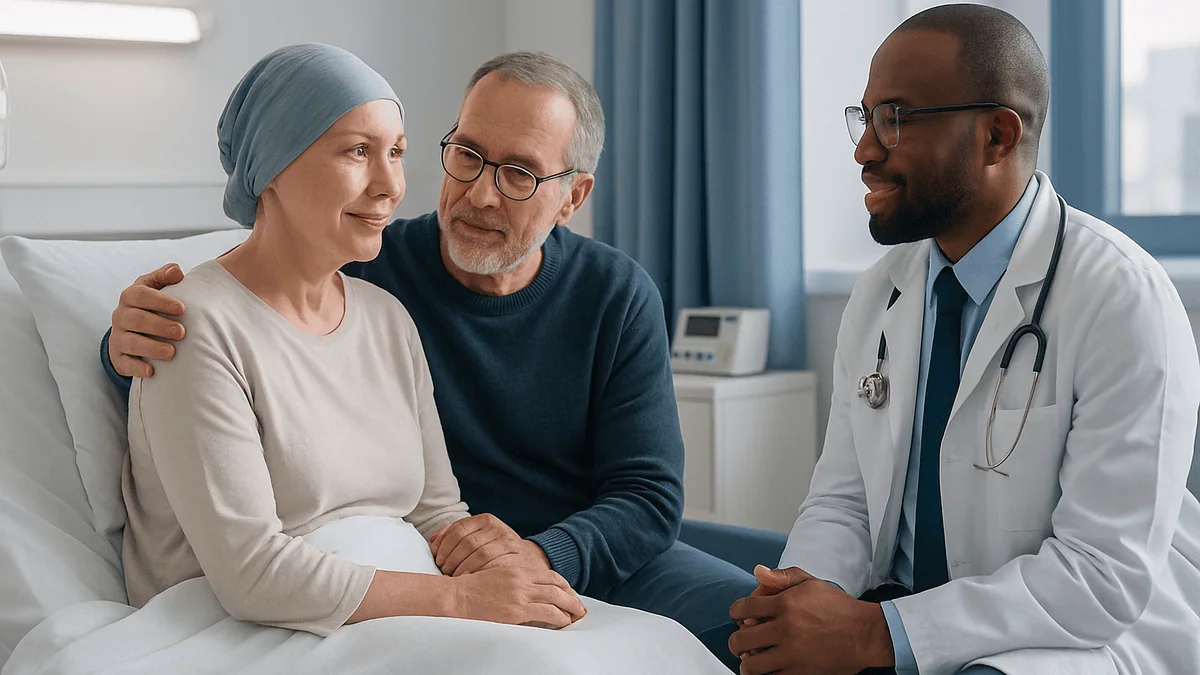
Key Takeaways
- A temperature of 38°C (100.4°F) or higher during leukemia treatment is treated as an emergency by care teams, because infections can escalate within hours when white cell counts are low.
- Induction chemotherapy for acute leukemia typically means several weeks in hospital, while chronic lymphocytic leukemia is often monitored on watch and wait without any immediate treatment.
- Recovery after a stem cell transplant commonly takes many months and sometimes a year or more, and most transplant units require a named caregiver before proceeding.
- No good evidence links emotional stress to leukemia; recognized risk factors include prior chemotherapy or radiation, benzene exposure, smoking, certain genetic syndromes and older age.
- Published survival statistics blend different leukemia types, ages and treatment eras, so a question to the treating team about the specific subtype is far more informative than any average.
- A specific offer such as "I'll handle Thursday school pickups" is accepted far more often than "let me know if you need anything," because it removes the work of delegating from an exhausted person.
The most useful way to support someone with leukemia is to take on concrete, repeatable tasks: rides to the clinic, meals that suit a changed appetite, infection precautions at home, and note-taking at appointments. Ask what would help this week rather than offering open-ended help, respect their energy limits, and keep the fever and bleeding warning signs handy. Every treatment decision stays with their care team.
The call usually comes on an ordinary afternoon. A friend’s voice is steady but a half-beat slower than normal, and the word hangs in the air: leukemia. You say the right things, hang up, and then stand in the kitchen with no idea what to do next.
That gap between wanting to help and knowing how is where most companions get stuck. Searching for how to support someone with leukemia turns up lists of warm gestures, but leukemia is a blood cancer treated in phases, with long hospital stays, weeks of dangerously low blood counts, and a calendar that changes week to week. Useful support has to fit that rhythm.
This guide walks through what treatment actually involves, which tasks genuinely lighten the load, how to speak without tiptoeing, and which warning signs mean a phone call to the care team now, not in the morning. None of it replaces the treating team. All of it is meant to make you a steadier presence beside the person you love.
What leukemia treatment actually involves, in plain language
Leukemia is a cancer of the blood-forming cells in the bone marrow, the spongy tissue inside bones where blood cells are made. Abnormal white cells multiply and crowd out the healthy red cells, platelets and infection-fighting cells the body needs, which is why fatigue, bruising and infections are often the first clues, according to MedlinePlus.
The word covers several distinct diseases. Acute leukemias (acute lymphoblastic and acute myeloid) progress quickly and usually need treatment soon after diagnosis. Chronic leukemias (chronic lymphocytic and chronic myeloid) tend to move slowly and may be monitored or controlled with ongoing medicine for years. The type, and the genetic features of the cancer cells, drive almost every decision the team makes.
Treatment commonly includes one or more of the following, as outlined by the Mayo Clinic:
- Chemotherapy: medicines that kill rapidly dividing cells, given in cycles through a vein, by mouth or occasionally into the spinal fluid.
- Targeted therapy: medicines aimed at specific abnormalities inside the cancer cells, often taken daily for a long time in chronic leukemias.
- Immunotherapy: treatments that help the immune system recognize and attack leukemia cells.
- Radiation: focused X-rays used in selected situations, including preparation for transplant.
- Stem cell transplant: high-dose treatment followed by an infusion of healthy blood-forming cells, from the patient or a donor.
For a companion, the practical takeaway is that “treatment” is not one event. It is a sequence of phases, each with its own hospital stays, side effects and quiet stretches. Knowing which phase your person is in tells you what kind of help will land.
How to support someone with leukemia in the first weeks after diagnosis
The first weeks are a blur of bone marrow tests, scans, consent forms and a vocabulary nobody asked to learn. Your job is not to fix any of it. It is to reduce friction.
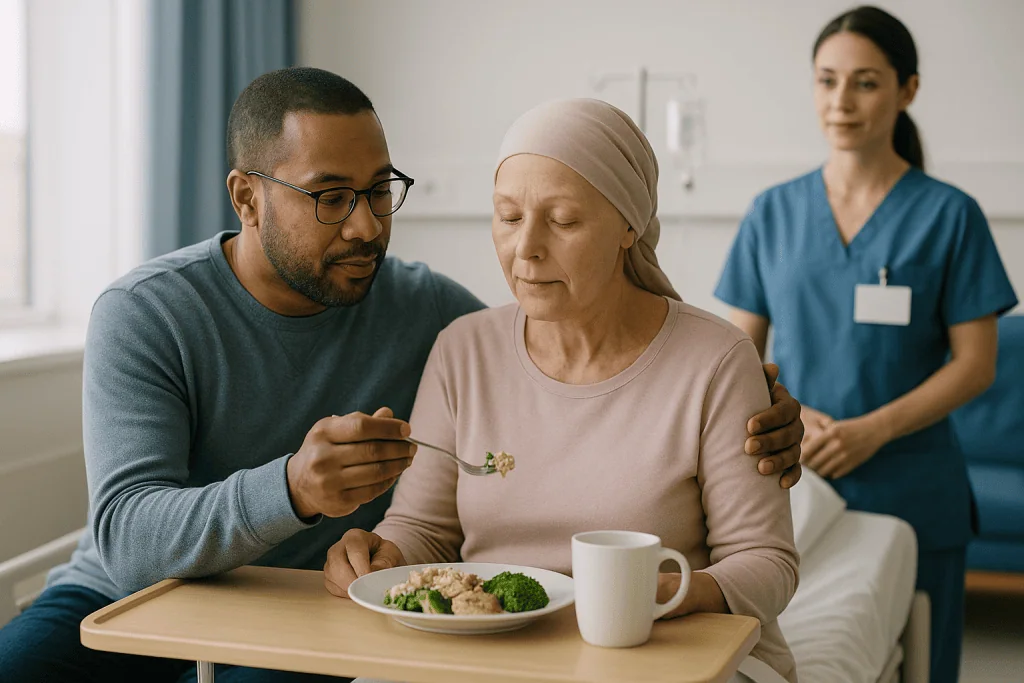
Start by asking one specific question: “What would make this week easier?” Open offers like “let me know if you need anything” push the work of delegating onto someone who is exhausted. A named task, whether that is picking up the kids on Thursdays or being the person who handles the group chat, is a gift they can accept without effort.
Offer to come to appointments as a second set of ears. New diagnoses come with a flood of information, and the Mayo Clinic specifically suggests bringing someone to help remember what was said. Write down the leukemia type, the name of the treatment plan and the care team’s phone number for after-hours calls. Keep it in a shared note on both your phones.
Resist the urge to research cures, miracle diets or distant clinics on their behalf. The internet is full of confident claims, and the person facing the diagnosis needs fewer competing voices, not more. If they want information, help them find it from their own team or from mainstream sources.
Watch for the quieter needs: a phone charger that reaches the hospital bed, a soft blanket, headphones, a laminated card listing who is allowed to visit. Small comforts matter when a person is about to spend weeks in a room where nothing belongs to them.
Who is treated right away, and who is usually asked to wait
Not everyone with leukemia starts intensive treatment immediately, and this surprises many families.
Acute leukemias generally cannot wait. Because the abnormal cells multiply fast, treatment usually begins within days of diagnosis, and the first phase, called induction, is typically given in hospital over several weeks, according to the NHS. The goal of induction is remission: a state where leukemia cells can no longer be found in the blood or marrow by standard tests. Further phases then aim to keep it that way.
Chronic lymphocytic leukemia is often the opposite. Many people are placed on “watch and wait,” with regular blood tests and clinic visits but no active treatment until the disease causes symptoms or blood counts fall. The Cleveland Clinic notes that this monitoring approach is standard for slow-growing leukemias. Waiting can feel unbearable to a loved one, but starting treatment earlier has not been shown to help in this setting, and it exposes the person to side effects without benefit.
Fitness also shapes the plan. Intensive chemotherapy is demanding on the heart, kidneys and liver, so older adults or people with other serious conditions may be offered gentler, lower-intensity regimens or targeted medicines instead. This is not “giving up.” It is matching the treatment to the body that has to carry it.
If the plan surprises you, ask the team to explain the reasoning. Companions who understand why a decision was made are far better at supporting it on the hard days. The decision itself always sits with the treating team and the patient.
Infection precautions when blood counts are low
Here is the part of leukemia care that companions most often underestimate. Chemotherapy and the disease itself can drive the neutrophil count, the main type of infection-fighting white cell, very low. This state is called neutropenia, and during it a minor cold can become a serious illness within hours.
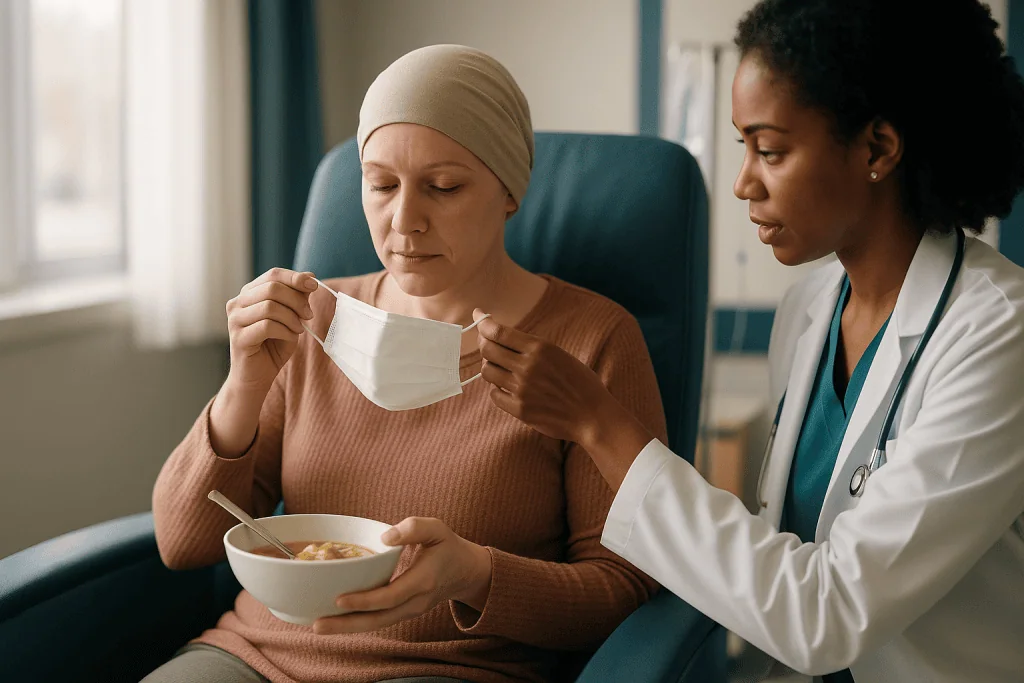
The NHS explains that people in this phase are often kept in hospital or asked to follow strict precautions at home precisely because infections can escalate quickly. Your role at home is to lower the odds.
- Wash hands on arrival and before touching food, every time, no exceptions for family.
- Stay away if you have a cough, sore throat, fever, stomach upset or a new rash. Call instead.
- Keep up to date with your own vaccinations, including flu, as advised by your own clinician; a protected household protects the patient.
- Handle raw meat, eggs and unwashed produce carefully, and ask the team about any food restrictions they want followed.
- Skip fresh flowers and soil in the bedroom, and keep pets’ litter trays and cages someone else’s job.
Learn the fever rule before you need it. The NHS advises that a temperature of 38°C (100.4°F) or higher during treatment should be reported immediately. Many teams treat it as an emergency. Keep a working thermometer, the after-hours number and a packed hospital bag by the door.
One more thing: neutropenia often brings no obvious signs. A person can look fine and still be vulnerable. Follow the precautions on the good days, not just the rough ones.
Practical help that actually helps: a companion's task list
Good intentions evaporate without structure. The table below matches common treatment phases with support that fits them, drawn from how leukemia care is described by MedlinePlus and the Mayo Clinic.
| Phase | What is usually happening | Help that fits |
|---|---|---|
| Diagnosis | Tests, consultations, decisions | Attend appointments, keep a shared notebook, handle logistics |
| Induction (hospital) | Intensive chemotherapy, low counts, isolation | Short healthy visits, laundry runs, home and pet care, updates to others |
| Recovery between cycles | Fatigue, nausea, infection risk at home | Meals, rides, pharmacy pickups, strict hygiene, quiet company |
| Watch and wait | Monitoring, anxiety, normal life | Reminders for blood tests, listening, keeping routines ordinary |
| Transplant | Long stay, weeks to months of recovery | Caregiver schedule, clean home prep, medication timing support |
A few habits make the list work. Set up a rota so one person is not carrying every shift; a simple shared calendar is enough. Cook in freezer-friendly portions and label them, because appetite and taste change on treatment and a meal that tasted fine last week may not this week. Offer rides for the days after chemotherapy, when driving is often unwise.
Take over the unglamorous administration: insurance calls, prescription refills with the pharmacy, parking permits, employer paperwork. These tasks eat the hours a patient should be spending resting.
Finally, keep a single page of essentials in the kitchen: leukemia type, treatment stage, current medicines by name, allergies, care team phone numbers. If an emergency happens on someone else’s shift, that page is what the paramedic will ask for.
What the following days and weeks usually look like
Timelines vary enormously by leukemia type, treatment and the individual, so treat what follows as typical shapes, not a schedule.
For acute leukemia, the NHS describes induction as a hospital-based phase lasting several weeks, during which blood counts fall sharply before the marrow recovers. Expect fatigue that no nap fixes, mouth soreness, nausea, hair loss and days when conversation is too much. Counts usually climb back over the following weeks, and energy returns slowly behind them. Further consolidation cycles then follow, each with a similar dip and recovery, often spread across months.
Targeted therapies for chronic leukemias follow a gentler arc. Many are daily tablets taken long term, with side effects that are usually milder but persistent: tiredness, fluid retention, digestive upset. The challenge here is endurance rather than crisis. Your person may look well and feel worn down, which is a lonely combination.
Emotionally, the first weeks after diagnosis are often the most turbulent, then settle into a routine punctuated by scan and blood-test anxiety. The Mayo Clinic notes that learning about the specific leukemia, keeping close relationships active and finding someone to talk to all help with coping. Those three things are exactly where a companion earns their keep.
Plan your own stamina for the long version. Leukemia treatment is measured in months and sometimes years, not weeks. The friends who are still showing up in month six are rarer and more valuable than the crowd at week one.
Caring for a leukemia patient at home after a stem cell transplant
A stem cell transplant is the most demanding treatment in leukemia care, and it almost always requires a committed caregiver. Understanding why helps you prepare.
The procedure replaces damaged bone marrow with healthy blood-forming cells, either collected earlier from the patient or donated by another person, after high-dose chemotherapy or radiation clears the existing marrow, as the NHS explains. The hospital stay is typically several weeks because the immune system is wiped out and rebuilt almost from scratch.
Going home does not mean going back to normal. The NHS notes that full recovery can take many months and sometimes a year or more, with a prolonged period of infection risk, strict medication routines and frequent clinic visits. Donor transplants carry an extra risk called graft-versus-host disease, where the new immune cells attack the patient’s own tissues; it can show up as rashes, diarrhea, mouth soreness or liver problems and needs prompt reporting.
Practical preparation before discharge:
- Deep clean the home, replace old air filters and move pets’ care elsewhere for the period the team advises.
- Set up a medication system with the pharmacist so every tablet has a time and a tick box; timing matters and the team decides doses.
- Arrange a rota of healthy, vaccinated helpers so no single caregiver burns out.
- Stock a thermometer, a written symptom log and the 24-hour contact number.
Most transplant units require a named caregiver before they will proceed. If that is you, ask for the unit’s caregiver education session. The things that worry you now, like what counts as a dangerous rash, are the things it is designed to answer.
What to say to someone with leukemia, and what to skip
People freeze around serious illness because they fear saying the wrong thing. The honest answer is that silence hurts more than clumsiness. Show up, and let your words be simple.
Phrases that tend to land well: “I’m here, and I’m not going anywhere.” “I don’t know what to say, but I wanted you to know I’m thinking about you.” “Would you like company or quiet today?” The last one hands control back to the person who has lost control of almost everything else.
Phrases to retire: “Everything happens for a reason.” “Stay positive, attitude is everything.” “My cousin had that and he was fine,” or its grim twin. Comparisons and forced cheer both tell the patient that their real feelings are unwelcome. Positivity has not been shown to change leukemia outcomes, and insisting on it adds a burden of performance to someone already carrying enough.
Listening is a skill, not a default. Ask open questions, then wait. Tolerate pauses. If they want to talk about fear or death, let them; changing the subject to protect yourself leaves them alone with it. If they want to talk about football, the neighbors or a terrible television show, that is also a kind of medicine. The Mayo Clinic points out that keeping relationships normal is part of coping, and normal includes gossip.
Follow their lead on how much they want others to know. Some people want the diagnosis shared widely so they do not have to repeat it; others want privacy. Ask directly, and become the gatekeeper they choose.
Is leukemia common in older adults, and can stress cause it?
Two questions come up in almost every family, and both deserve straight answers.
Age first. Leukemia is often thought of as a childhood disease, and acute lymphoblastic leukemia is indeed the most common cancer in children. But most leukemia overall is diagnosed in adults, and the risk of acute myeloid leukemia and chronic lymphocytic leukemia rises with age, according to the Mayo Clinic. An older adult’s diagnosis is not unusual, and it does change the conversation: treatment intensity is weighed against heart, kidney and overall fitness, and lower-intensity options are often appropriate. If you are caring for a parent or grandparent, expect the team to talk openly about goals, quality of life and what the person wants their months to look like.
Now stress. There is no good evidence that emotional stress causes leukemia, including acute myeloid leukemia. The recognized risk factors listed by the Mayo Clinic are previous chemotherapy or radiation for another cancer, exposure to high levels of radiation or to the industrial chemical benzene, smoking, certain inherited syndromes such as Down syndrome, some pre-existing blood disorders, and advancing age. Many people have none of these; the cancer arises from acquired changes in blood cell DNA, and why those happen to one person and not another is usually unknown.
This matters because patients and families often blame a divorce, a job loss or a hard year. That guilt is unearned. Stress absolutely affects how someone copes with treatment, which is a reason to tend to it, but it did not cause the disease. Say so, clearly, if your person starts searching for a reason in their own life.
What survival rates really tell you, and what they cannot
Sooner or later someone in the family searches “average survival rate for blood cancer” and lands on a number. Before you read it, understand what you are looking at.
Published survival statistics are averages across large groups of people, usually diagnosed years ago, combining different leukemia types, ages, genetic subtypes and treatment eras into one figure. As the Cleveland Clinic stresses, outlook depends heavily on the specific type of leukemia, the person’s age and health, and how the cancer responds to treatment. An “average” that blends a slow-growing chronic leukemia in a fit 60-year-old with an aggressive acute leukemia in a frail 85-year-old describes nobody.
Two more reasons to be careful. First, treatments have changed quickly, especially targeted and immune therapies, so figures based on people treated a decade ago may not reflect what current treatment offers. Second, statistics measure populations; they cannot say what will happen to one person, and neither can anyone else.
The more useful question is one for the care team: “Given this type, these genetic results and this treatment plan, what should we realistically expect, and what would change that picture?” Oncologists are used to being asked, and most will give a careful, honest answer that is far more relevant than any website figure.
If your person does not want to know numbers, protect that choice. Some people cope by reading everything; others by reading nothing. Both are legitimate, and companions should not force either way.
Leukemia support groups and charities: how to find real help
Nobody should do this alone, and the good news is that an entire infrastructure exists for leukemia patients and their families. You just need to know how to reach it.
Start inside the hospital. Most cancer centers employ oncology social workers, patient navigators or specialist nurses whose job is to connect families with services: transport schemes, financial counseling, help with employment paperwork, counseling, and local or online peer groups. Ask for them by role on the first or second visit. They are often the single most underused resource in cancer care.
National blood cancer charities offer helplines staffed by specialist nurses, free written guides for specific leukemia types, online forums, and in some cases programs that match patients with trained peers who have been through the same treatment. The hospital social worker can point you to the ones active in your area, and most can be found with a search for “blood cancer charity” plus your country.
Caregivers need their own groups, not just the patient’s. Hearing another spouse describe the strange loneliness of a transplant ward is more comforting than any amount of reassurance from people who have not been there. Many hospitals run caregiver sessions; many charities run them online, which suits a caregiver who cannot leave the house.
Practical rules for choosing: prefer organizations that cite mainstream medical sources, employ clinical staff, and never sell a product or promote an unproven therapy. If a group pushes a supplement, a diet or a distant clinic as a treatment, walk away. The Mayo Clinic lists talking to others with cancer among its core coping suggestions; the right group makes that happen safely.
What people often get wrong about supporting someone with leukemia
Myth: You should always visit in person. Reality: during neutropenia, the kindest visit is sometimes a video call. If you have the slightest sniffle, staying away is the loving choice. Ask the patient or caregiver what the current rules are before you drive over.
Myth: A special diet, juice cleanse or supplement can fight the leukemia. Reality: no diet or supplement has been shown to treat leukemia, and some supplements interact with chemotherapy or increase bleeding risk when platelets are low. The team may also have specific food-safety rules during low counts. Bring questions to them, not products to the bedside.
Myth: Watch and wait means the doctors have given up. Reality: for slow-growing chronic leukemias, monitoring is standard, evidence-based care, as the Cleveland Clinic describes. Treating earlier does not improve outcomes in that setting.
Myth: Looking well means feeling well. Reality: fatigue after chemotherapy is deep and does not show on the face. Do not measure how someone is doing by whether they managed to put on a clean shirt.
Myth: Positivity is treatment. Reality: mindset does not shrink leukemia cells. It can make the experience more bearable, and that is worth something, but telling a frightened person to be positive is asking them to hide from you.
Myth: The hard part ends when treatment ends. Reality: the months after active treatment, especially after transplant, bring ongoing infection risk, follow-up visits, fear of relapse and a strange grief for the life that was interrupted. Support that fades at the last chemo cycle leaves people when they need it most.
Leukemia caregiver tips: looking after yourself so you can keep going
There is a reason flight attendants tell you to fit your own oxygen mask first. Caregiver exhaustion is real, common, and dangerous for the patient, because a worn-out caregiver misses the fever, forgets the medicine time or snaps at the person they are trying to protect.
Sleep is not optional. If nights are broken by hospital calls or bathroom trips, build a rota so someone else covers at least two nights a week. Eat actual meals, not the patient’s leftovers eaten standing up. Keep one activity that is yours, whether a run, a church service or a Tuesday coffee with a friend who does not ask about blood counts.
Name what you are feeling. Fear, resentment, guilt about resentment, and grief that arrives before anything has been lost are all normal in long illness. Saying them out loud to a counselor, a chaplain or a caregiver group takes some of the charge out of them. The hospital social worker can usually refer you to free counseling; ask.
Watch for your own warning signs: trouble sleeping even when you can, losing interest in things you enjoyed, irritability, headaches, drinking more than usual, or a flat sense that nothing matters. These are signals to get help for yourself, through your own doctor, and they are not a betrayal of the patient.
Finally, let others in. Caregivers often decline help because explaining the task feels harder than doing it. Write the explanation once, on a shared document, and hand it over. The friend who wanted to help in week one will still help in month five if you give them a job to do.
Questions to ask the care team as a companion
You are allowed to ask questions, with the patient’s permission, and the answers make you a more useful caregiver. Write them down beforehand; appointments move fast. Suggestions, in roughly the order they come up:
- What type and subtype of leukemia is this, and what do the genetic test results mean for the plan?
- Which phase of treatment are we in now, and what is the next one likely to involve?
- Roughly how long will this hospital stay last, and what would shorten or extend it?
- When will blood counts be lowest, and what precautions do you want followed at home during that window?
- What is your fever threshold, and which number do we call at 2 a.m.?
- Which symptoms are expected and which should worry us?
- Are there food, pet, gardening or travel restrictions right now?
- What vaccinations should household members have, and when?
- Which medicines must be taken at exact times, and who do we call if a dose is missed? (The team sets the plan; your job is timing and reminders.)
- Is a stem cell transplant likely to be part of this plan, and if so, what will you need from a caregiver?
- Who is the social worker, navigator or specialist nurse we can contact between visits?
- What should we realistically expect over the next few months, and what would change that picture?
Keep the answers in your shared notebook with the date and who said what. The Mayo Clinic recommends preparing a question list before visits and bringing a companion to help absorb the answers, which is exactly the role you are stepping into. Do not be shy about asking a question twice. Oncology teams would rather repeat themselves than have a family guess.
When to call your doctor: red-flag signs during leukemia treatment
Every leukemia team gives patients a direct line for urgent problems. As a companion, know it by heart and use it without apology. The signs below mean a call now, day or night, not a wait until morning. They are drawn from guidance published by the NHS and the Cleveland Clinic.
- A temperature of 38°C (100.4°F) or higher, or feeling feverish, shivery or unusually cold and clammy, even without a reading.
- Any sign of infection: a new cough, sore throat, burning on passing urine, redness or pus around a central line, or diarrhea that will not settle.
- Unusual bleeding: nosebleeds that do not stop, bleeding gums, blood in urine or stool, or a spreading rash of tiny red or purple dots, which can signal very low platelets.
- Sudden severe headache, confusion, drowsiness, slurred speech or weakness on one side.
- Shortness of breath, chest pain, or a racing heartbeat at rest.
- Vomiting that prevents keeping down medicines or fluids, or no urine for many hours.
- After transplant: a new rash, persistent diarrhea, yellowing of the skin or eyes, or severe mouth pain.
Infections in a person with low white cells can become life-threatening within hours, which is why teams treat fever as an emergency rather than something to monitor. If the care line is unreachable and the person looks seriously unwell, call emergency services and say the words “leukemia” and “chemotherapy” early.
For everything less dramatic, from a sore mouth to worsening fatigue, use the non-urgent route the team gave you. Reporting early almost always makes problems easier to manage. The treating team decides what happens next; your part is to notice, and to pick up the phone.
Frequently asked questions
How do I support someone with leukemia if I live far away?
Take on tasks that do not need you in the room: coordinating the meal and ride rota, managing the group update message, handling insurance or employer paperwork by phone, and scheduling regular video calls at times the patient chooses. Distance also makes you an ideal night-time listener for the primary caregiver, who often has nobody to vent to.
What is the average survival rate for people with blood cancer?
There is no single meaningful figure, because published averages combine very different diseases, ages and treatment eras. Outlook depends on the specific leukemia type, its genetic features, the person’s age and health, and how the cancer responds to treatment. The care team can give a realistic picture for an individual case, which is far more useful than a general statistic.
What are some charities that support people with leukemia?
National blood cancer charities typically offer nurse-staffed helplines, free guides for each leukemia type, online forums and peer matching, while hospital social workers and patient navigators connect families with local transport, financial and counseling services. Ask the hospital team which organizations are active in your area, and favor those that cite mainstream medical evidence and sell nothing.
Can stress cause acute myeloid leukemia?
No reliable evidence shows that emotional stress causes acute myeloid leukemia. Recognized risk factors include previous chemotherapy or radiation, high radiation or benzene exposure, smoking, some inherited syndromes and certain pre-existing blood disorders, and most cases arise from DNA changes with no identifiable cause. Stress does affect coping, which is a reason to support it, not a cause of the disease.
Is leukemia common in older adults?
Yes. Although acute lymphoblastic leukemia is the most common childhood cancer, most leukemia is diagnosed in adults, and acute myeloid leukemia and chronic lymphocytic leukemia become more common with advancing age. For older patients, treatment intensity is weighed against overall fitness, and lower-intensity regimens or targeted medicines are often chosen by the care team.
What should I say to someone with leukemia?
Keep it simple and honest: “I’m here,” “I don’t know what to say, but I’m thinking of you,” or “Do you want company or quiet today?” Avoid comparisons to other people’s cancers, instructions to stay positive, and explanations about why it happened. Listening without steering the conversation matters more than finding the perfect phrase.
Can I visit a friend in hospital during leukemia chemotherapy?
Often yes, but check first. During neutropenia, when infection-fighting cells are very low, wards restrict visitor numbers and exclude anyone with a cough, cold, fever, stomach upset or recent exposure to infection. Wash your hands on arrival, keep visits short, and offer a video call instead whenever you are unsure about your own health.
What are leukemia caregiver tips for avoiding burnout?
Build a rota so you are not the only person on every shift, protect your sleep with at least two covered nights a week, eat real meals, and keep one activity that belongs to you. Watch for your own red flags such as persistent insomnia, irritability or losing interest in things, and ask the hospital social worker about free caregiver counseling and support groups.
What does caring for a leukemia patient at home after transplant involve?
Expect a prolonged period of infection precautions, exact-time medication routines set by the team, frequent clinic visits and close symptom watching for fever, rashes, diarrhea or jaundice, which can signal infection or graft-versus-host disease. Prepare by deep cleaning the home, arranging pet care elsewhere, organizing a rota of healthy helpers and attending the transplant unit’s caregiver session.
Are there leukemia support groups for family members, not just patients?
Yes. Many cancer centers run caregiver sessions, and blood cancer charities offer online and in-person groups specifically for partners, parents and adult children. Hearing from others who have sat through a transplant ward or a watch-and-wait year is often more steadying than general reassurance. Ask the oncology social worker or specialist nurse for referrals.
References
- MedlinePlus: Leukemia
- NHS: Acute myeloid leukaemia, treatment
- NHS: Stem cell and bone marrow transplants
- Cleveland Clinic: Leukemia
This article is for general information only and is not a substitute for professional medical advice. Please consult a qualified doctor about your individual situation.
Add us as a Preferred Source to see more of our trusted health content across Google Search, AI Overviews and Discover.

More from the Blog
Which Scans Stage Prostate Cancer, and How the Results Guide Treatment Choices
Prostate cancer staging scans usually include a multiparametric MRI of the prostate to see whether cancer has grown beyond the gland, plus, for higher-risk…
Stage 4 Mouth Cancer: What the Stage Means, How It Is Treated and What Shapes the Outlook
Stage 4 mouth cancer means the tumor has grown deeply into nearby bone, muscle or skin (stage 4A or 4B), has spread extensively to…
What a Bladder Cancer Tumor Board Weighs Before Recommending Surgery or Immunotherapy
A bladder cancer tumor board is a scheduled meeting where urologists, medical and radiation oncologists, pathologists and radiologists review one person's case together. Before…

Questions Worth Asking Your Surgeon and Oncologist Before Colon Cancer Treatment
Before colon cancer surgery, ask what stage the cancer is, exactly which section of bowel will be removed, whether the operation will be keyhole…
Stage 3 Lung Cancer Survival Rates: How Stages 1 to 3 Compare by Age, Treatment and Cancer Type
Stage 3 lung cancer survival rate figures are group averages, not predictions. In the SEER registry, people whose lung cancer had spread to nearby…
Which Biomarker Tests Are Run on a Lung Cancer Biopsy, and How Do They Steer Treatment?
A lung cancer biopsy is usually tested for a panel of biomarkers: gene changes such as EGFR, ALK, ROS1, KRAS, BRAF, MET, RET, NTRK…