

Surveillance or Chemotherapy After Testicular Cancer Surgery: How the Choice Is Made
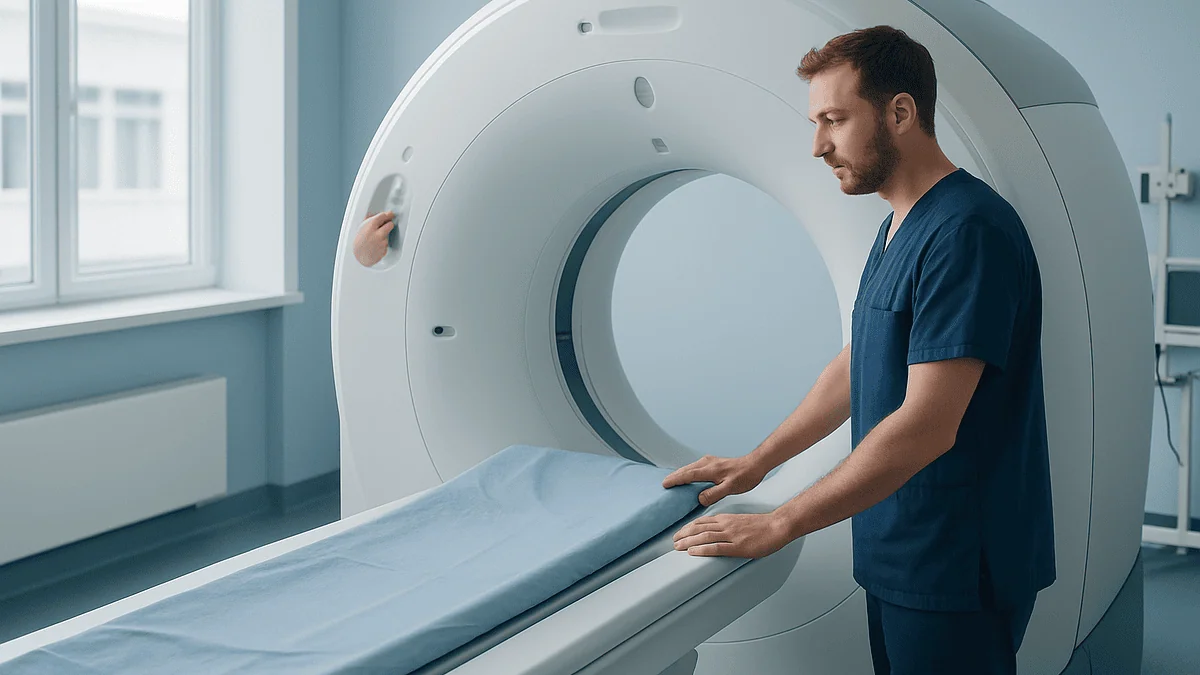
Key Takeaways
- Surveillance is offered only after staging shows stage I disease with tumor markers that have normalized; it is a planned program of tests, not a pause in care.
- Roughly 15 to 20 percent of stage I seminomas and about 30 percent of stage I nonseminomas relapse on surveillance, according to the National Cancer Institute, which means most people never need treatment beyond surgery.
- Lymphovascular invasion on the pathology report is the single strongest predictor of relapse in stage I nonseminoma, raising the risk to roughly half.
- Tumor markers have known half-lives (AFP about five to seven days, hCG about 24 to 36 hours); markers that fail to fall on that timeline change the plan entirely.
- Platinum chemotherapy lowers relapse risk sharply but carries long-term risks to hearing, kidneys, nerves, lungs, heart and second-cancer rates that matter for young survivors.
- One healthy testicle normally produces enough testosterone and sperm; sperm banking is still discussed before any chemotherapy because treatment can reduce counts.
After an orchiectomy for stage I testicular cancer, teams choose between active surveillance and adjuvant chemotherapy by weighing the tumor type (seminoma or nonseminoma), its size, whether cancer cells had entered small blood or lymph vessels, post-surgery tumor marker levels, and the person's ability to keep strict follow-up appointments. Surveillance avoids treatment that many people never need; chemotherapy lowers relapse risk at the price of side effects. The decision rests with the treating team.
The stitches have barely settled when the second conversation begins. A week or two after surgery, a man in his late twenties sits across from his oncologist holding a pathology report he has read six times on his phone. The cancer is out. Then comes the question he did not expect: do nothing but watch, or take chemotherapy he might never have needed?
That fork in the road, surveillance after orchiectomy versus a short course of adjuvant treatment, is one of the most carefully studied decisions in cancer medicine, and one of the least understood by the people who have to make it. It feels like choosing between doing too little and doing too much.
In reality the choice follows a logic that can be laid out plainly: what the tumor looked like under the microscope, what the blood tests did after surgery, and what kind of follow-up a person can realistically live with. This article walks through that logic, including the parts that are still genuinely uncertain.
What does surveillance after orchiectomy actually mean?
Orchiectomy is the operation to remove a testicle, done through a small cut in the groin rather than the scrotum so that the tumor and its blood supply come out together. For most testicular germ cell tumors, this single operation is both the diagnostic step and the main treatment, because the pathologist cannot confirm the exact cancer type until the whole testicle is examined.
Surveillance, sometimes called active surveillance or active monitoring, means that no further cancer treatment is given after the operation. Instead, a person agrees to a planned program of blood tests, imaging scans and clinic visits designed to catch any return of the disease while it is still small and treatable. The word “active” matters. This is not a shrug and a wait-and-see; it is a schedule with dates, tests and a clear plan for what happens if something changes.
The idea rests on a simple observation that the National Cancer Institute’s treatment summary describes in detail: a large share of people with stage I disease are already free of cancer after surgery alone, and those who relapse can usually be identified early through tumor markers and scans. Giving everyone chemotherapy would mean treating many people who would never have relapsed, exposing them to side effects for no benefit.
Stage I, in plain terms, means the cancer appears confined to the testicle, with no spread visible on a CT scan of the abdomen, pelvis and chest, and with blood tumor markers that fall to normal after surgery. That staging is the gate through which anyone being offered surveillance has already passed. If scans show enlarged lymph nodes or markers stay high, the conversation is different, and surveillance is not usually on the table.
Why the pathology report drives everything
Few documents carry as much weight in this decision as the pathology report, so it is worth decoding. The pathologist examines the removed testicle and answers several questions that the oncologist will later weigh.
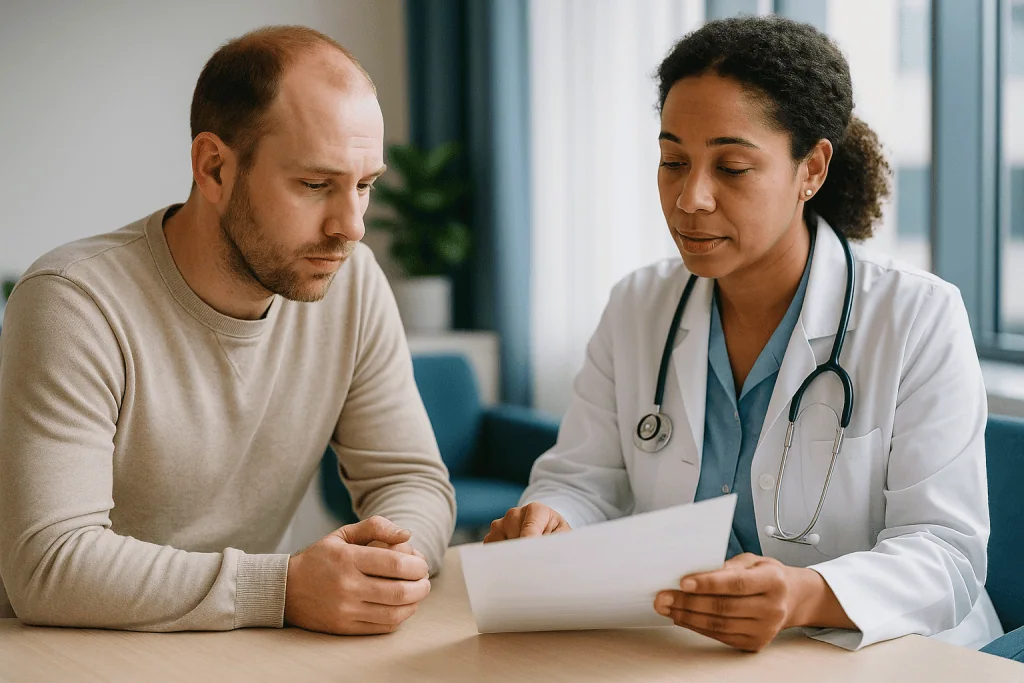
First, what type of tumor is it? Germ cell tumors, which make up the great majority of testicular cancers according to the NHS, split into two families: seminoma and nonseminoma. Mixed tumors with any nonseminoma component are treated as nonseminoma.
Second, how large is it? For seminoma, tumor size has been examined as a predictor of relapse, with larger tumors carrying higher risk, though the NCI summary notes the evidence on exact size cut-offs is inconsistent across studies.
Third, has the tumor invaded nearby structures? Invasion of the rete testis (the network of tiny channels where sperm leave the testicle) has been studied in seminoma. Invasion of the spermatic cord or scrotum raises the stage.
Fourth, and most important for nonseminoma, is there lymphovascular invasion? This means cancer cells were seen inside small blood vessels or lymphatic channels within the testicle. It is a sign that cells had already started traveling, even if scans show nothing, and the NCI notes it is the strongest single predictor of relapse in stage I nonseminoma.
Fifth, what proportion of the tumor is embryonal carcinoma? This fast-growing nonseminoma subtype is also linked to higher relapse risk when it dominates.
A person reading their report will see these items listed with words like “present” or “absent.” Those words, more than any scan, shape whether the team leans toward watching or treating.
Seminoma or nonseminoma: why the tumor type changes the conversation
The two families of germ cell tumor behave differently enough that they are discussed almost as separate conditions when it comes to post-surgery planning.
Seminoma tends to grow more slowly, is more likely to be diagnosed at stage I, and, when it does relapse, usually does so in the lymph nodes at the back of the abdomen. It is also unusually sensitive to both radiation and platinum-based chemotherapy, which is why historically people with stage I seminoma were routinely given radiotherapy to those nodes. That practice has largely given way to surveillance or short-course chemotherapy, as the NCI summary describes, because the risk of relapse on surveillance is low and later treatment remains effective for those who need it.
Nonseminoma grows faster and relapses sooner. The NCI reports that roughly a third of people with stage I nonseminoma on surveillance will relapse, compared with roughly 15 to 20 percent for stage I seminoma. Nonseminoma also offers a third option that seminoma generally does not: retroperitoneal lymph node dissection, an operation to remove the abdominal lymph nodes where the cancer most often spreads. That surgery is both a staging tool and a treatment, though it carries its own risks, including effects on ejaculation if nerves are disturbed.
Tumor markers also differ. Seminoma does not produce alpha-fetoprotein (AFP), a protein some tumors release into the blood, so a raised AFP means a nonseminoma component is present regardless of what the microscope shows. Nonseminomas may raise AFP, human chorionic gonadotropin (hCG) or both, giving the team a sensitive early-warning system during follow-up.
Put simply: the seminoma conversation is often about whether treatment is needed at all; the nonseminoma conversation is often about which of several reasonable strategies fits the individual.
Active surveillance for testicular cancer: what actually happens
Picture the first year. A person who has chosen surveillance will typically visit the oncology clinic every few months. At each visit, blood is drawn for tumor markers: AFP, hCG and lactate dehydrogenase (LDH), an enzyme that rises with rapidly dividing cells. A physical examination checks the remaining testicle, the abdomen and the lymph nodes above the collarbone.
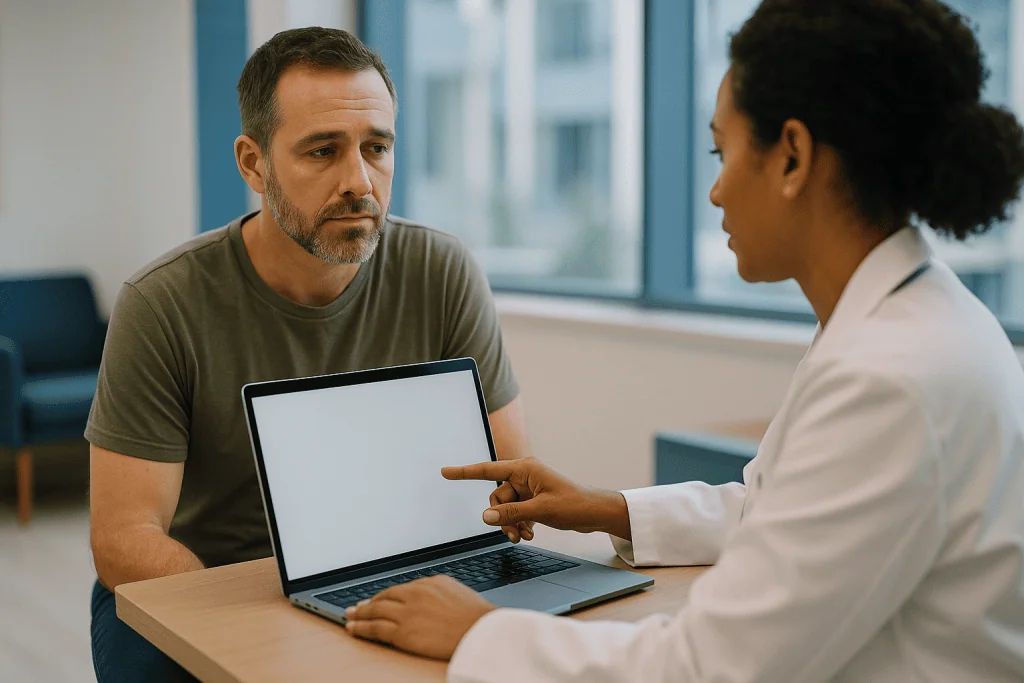
Imaging is layered on top. CT scans of the abdomen and pelvis look for enlarged lymph nodes along the large blood vessels at the back of the abdomen, the usual first site of spread. Chest imaging, often a plain X-ray, checks the lungs. The exact timing of scans varies between guidelines and institutions, and many programs deliberately front-load them because, as the NCI summary notes, most relapses occur within the first two years after surgery, with later relapses being uncommon and more typical of seminoma.
Visits thin out in later years. Blood tests may continue even after scans stop, since marker rises can precede visible disease. The whole program commonly runs for about five years, though some protocols extend follow-up because rare late relapses do occur.
What surveillance is not: it is not a test of nerve, and it is not a sign that the team is less concerned. Oncologists choose it precisely because the data support it. The person being monitored has one job that is harder than it sounds: show up. A relapse caught at a scheduled visit is usually small-volume disease. A relapse found after missed appointments can be bulkier and demand more intensive treatment. That is why the ability to attend reliably sits alongside tumor features as a genuine medical factor in the decision.
Who is usually offered surveillance after orchiectomy, and who is usually steered toward treatment
Guidelines in Europe and North America broadly agree on the shape of the answer, even if they differ in emphasis.
Surveillance is most readily offered when a tumor is confirmed stage I, tumor markers have normalized after surgery, and the risk features are favorable: a seminoma without large size or rete testis invasion, or a nonseminoma without lymphovascular invasion. Many guideline bodies now regard surveillance as a reasonable default for all stage I seminoma, regardless of risk features, because relapse rates are modest and relapse is highly treatable.
Surveillance also suits a person who can commit to the schedule, lives within reach of a center that can perform the scans and interpret markers, and is emotionally comfortable with the knowledge that relapse is possible and will be looked for.
Adjuvant treatment tends to be discussed more actively when nonseminoma shows lymphovascular invasion, when embryonal carcinoma dominates, or when follow-up is unlikely to be reliable. Some people simply prefer to act rather than wait, and most guidelines treat that preference as legitimate once the trade-offs have been explained.
There is a third group for whom neither option is quite right: people whose markers do not fall as expected after surgery. Each marker has a known half-life, the time for its blood level to drop by half. The NCI gives AFP a half-life of about five to seven days and hCG about 24 to 36 hours. A marker that plateaus or rises on that timeline suggests cancer remains somewhere, and these people are generally treated as having more advanced disease rather than being offered surveillance.
None of this is a formula applied by a computer. The treating team weighs the features together, and the person’s own values are part of the weighing.
Stage 1 seminoma surveillance: what the risk numbers really say
Numbers in this area are often quoted with more confidence than the underlying evidence supports, so it helps to be specific about what is known.
According to the NCI treatment summary, roughly 15 to 20 percent of people with stage I seminoma on surveillance will experience a relapse, almost always in the retroperitoneal lymph nodes. The flip side is the number that matters most to someone making the choice: around four out of five will never need any treatment beyond the operation they have already had.
Two tumor features have been studied as ways to predict who falls into which group: tumor size above a certain threshold and invasion of the rete testis. Early studies suggested these doubled or tripled relapse risk. Later analyses, summarized by the NCI, have been less consistent, and no risk model for seminoma is strong enough that guidelines insist on treating one group and watching another. This is a case where the honest answer is that risk stratification for seminoma is useful but imperfect.
For those who do relapse, the usual pattern is small-volume lymph node disease picked up on a scheduled scan, treated with radiotherapy or chemotherapy at that point. The NCI summary states that this delayed-treatment approach has not been shown to compromise long-term outcomes compared with treating everyone up front, which is the central justification for surveillance.
The alternative, a short course of carboplatin (a platinum-based chemotherapy drug), lowers the relapse rate substantially but does not eliminate it, and every person receiving it accepts side effects, including the small but real long-term risks associated with platinum drugs, discussed below. Radiotherapy, once standard, has fallen out of favor partly because of second-cancer concerns.
Stage 1 nonseminoma: lymphovascular invasion and the relapse question
If seminoma surveillance is a conversation about modest risk, nonseminoma is a conversation about a sharper split.
The NCI summary reports that about 30 percent of people with stage I nonseminoma relapse on surveillance overall. When the pathology report shows lymphovascular invasion, the relapse risk rises to roughly half; when it is absent, the risk falls to well under a quarter. That single microscopic finding is the hinge on which most guideline recommendations turn.
For the lower-risk group, surveillance is widely recommended as the preferred approach. The majority will never relapse, and those who do are usually detected early through marker rises or scans. Relapses in nonseminoma tend to happen fast, typically within the first year, which is why follow-up in this group is more intense early on.
For the higher-risk group, three paths are discussed. Surveillance remains an option for someone who understands that relapse is roughly a coin flip and would rather treat only if it happens. A short course of cisplatin-based combination chemotherapy, most commonly the regimen that pairs bleomycin, etoposide and cisplatin, reduces relapse risk to a low single-digit range according to the NCI summary. Retroperitoneal lymph node dissection, more common in North American practice than in Europe, offers a surgical alternative that avoids chemotherapy for most people but is a major operation with its own recovery and risks.
Here the evidence points to a genuine equivalence in long-term outcome between strategies, with the differences lying in who gets treated, when, and with what side effects. That is exactly the kind of decision where the person’s own priorities deserve a seat at the table, and where a good team will present all three options rather than one.
How adjuvant chemotherapy works, and what it asks of the body
Adjuvant means “given after the main treatment to lower the chance of return.” In testicular cancer the main treatment is the operation, and adjuvant chemotherapy aims at cancer cells too few to see on any scan.
Platinum-based drugs such as cisplatin and carboplatin work by damaging the DNA of dividing cells. Germ cell tumors are unusually poor at repairing this damage, which is why these cancers respond so well to platinum compared with many other solid tumors. Etoposide interferes with an enzyme cells need to untangle DNA during division. Bleomycin breaks DNA strands directly. Together they attack rapidly dividing cells from several angles.
Healthy fast-dividing cells are caught in the crossfire, which explains the familiar short-term effects: nausea, fatigue, hair thinning, mouth soreness and a temporary drop in blood counts that raises infection risk. The NHS describes these as common and usually temporary.
Longer-term concerns are specific to the drugs. Cisplatin can affect hearing, the kidneys and the nerves in hands and feet. Bleomycin can scar lung tissue, which is why lung function is checked and why some people are advised about oxygen exposure during later anesthesia or scuba diving. The NCI summary also notes that survivors treated with platinum chemotherapy have higher long-term rates of cardiovascular disease and second cancers than those treated with surgery alone, an important part of the surveillance argument for young people who may live another sixty years.
Courses given in the adjuvant setting are shorter than those used for advanced disease, which keeps cumulative exposure lower. Decisions about which regimen, how it is scheduled and how side effects are managed belong entirely to the prescribing oncologist, who will tailor them to the individual’s kidney function, lung function and overall health.
Surveillance versus chemotherapy: a side-by-side comparison
Laid side by side, the two paths trade one kind of burden for another. The table summarizes the factors most teams discuss, drawing on the NCI and NHS summaries cited at the end.
| Factor | Active surveillance | Adjuvant chemotherapy |
|---|---|---|
| Who receives treatment beyond surgery | Only those who relapse | Everyone, including those who would never have relapsed |
| Approximate relapse risk, stage I seminoma | About 15–20 percent | Substantially lower; relapse still possible |
| Approximate relapse risk, stage I nonseminoma | About 30 percent overall; roughly half with lymphovascular invasion | Low single digits in reported series |
| Short-term side effects | None from treatment; anxiety and scan-related inconvenience | Nausea, fatigue, hair loss, infection risk |
| Long-term risks | Cumulative CT radiation exposure; treatment is more intensive if relapse occurs | Hearing, kidney, nerve and lung effects; higher cardiovascular and second-cancer risk |
| Follow-up intensity | Frequent visits and scans, especially in the first two years | Still requires follow-up, usually less intensive imaging |
| Fertility considerations | Unaffected beyond the surgery itself | Sperm banking usually discussed before starting |
| Reversibility | Can switch to treatment at any point | Cannot be undone once given |
One row deserves emphasis. The cumulative radiation from repeated CT scans is a real consideration for someone in their twenties, and it is part of why some surveillance protocols are moving toward fewer scans or MRI alternatives, an area the NCI summary flags as evolving rather than settled.
The other thing the table cannot show is temperament. Some people find the waiting corrosive and would rather absorb the side effects to close the chapter. Others find the idea of unnecessary chemotherapy harder to accept than scheduled scans. Both reactions are reasonable, and a good team will ask which one sounds like you.
What happens after orchiectomy: the first weeks and months
Whatever the eventual plan, the first stretch after surgery follows a fairly predictable rhythm.
The operation itself is usually done as a day case or with a single overnight stay, through a cut in the groin. The NHS notes that most people can return to light activity within a week or two, with heavier lifting and sport held back for several weeks while the wound heals. Bruising and swelling in the groin and scrotum are expected and settle gradually. A prosthetic testicle, if wanted, can be placed at the time of surgery or later.
Within about a week, the pathology report arrives. This is often the most anxious interval, because until the report is final the team cannot say with certainty whether the tumor is seminoma or nonseminoma, or whether lymphovascular invasion was present.
Blood tumor markers are repeated after surgery and tracked against their expected half-lives. If they were raised before the operation, they should fall steadily; the pattern of that fall is itself a staging tool. Staging CT scans of the chest, abdomen and pelvis are completed if not already done.
Somewhere between two and six weeks after surgery, the oncology consultation brings these threads together. This is the meeting where surveillance, chemotherapy or, for nonseminoma, lymph node surgery is laid out. People are usually encouraged to bring a partner or friend, because the volume of information is large.
If surveillance is chosen, the first scheduled follow-up visit is often set within the next two to three months. If chemotherapy is chosen, there is typically a short window first for sperm banking, baseline hearing and kidney tests, and lung function testing if bleomycin is planned. Either way, the first few months are busier than people expect, and then the pace eases.
Testicular cancer follow up schedule: which tests, how often, for how long
People on surveillance often want a printed calendar, and most centers provide one. The details vary, so what follows describes the shape rather than a universal timetable.
Tumor marker blood tests form the backbone. They are cheap in effort, quick to repeat and sensitive, especially for nonseminoma. Visits in the first year are frequent, often every two to three months, then spread out in years two and three, and become annual or near-annual in years four and five. For nonseminoma, visits are typically more frequent early because, as the NCI notes, most relapses occur within the first year.
CT scanning is scheduled less often than blood tests because each scan carries a radiation dose. Many programs concentrate scans in the first two years and reduce them sharply afterward. Chest imaging, often a plain X-ray, checks the lungs, the second most common site of nonseminoma spread.
The length of follow-up is a point of genuine variation. Five years is a common endpoint for intensive follow-up, after which the risk of relapse becomes very low. Seminoma can occasionally relapse later than nonseminoma, so some protocols keep lighter-touch follow-up going beyond five years. The treating team will set the endpoint based on the tumor type and the person’s risk features.
Follow-up also includes checks that have nothing to do with relapse: the remaining testicle is examined, because a small proportion of people develop a second primary tumor on the other side, and testosterone may be measured if symptoms suggest low levels.
The most common reason surveillance programs run into trouble is not medical. It is life: a move, a new job, a lost appointment letter. Telling the team about changes in circumstances is as much a part of surveillance as the blood tests.
Does having a testicle removed affect testosterone and fertility?
Two worries sit underneath almost every conversation about testicular cancer, and both deserve plain answers.
Testosterone first. The NHS and Mayo Clinic both state that a single healthy testicle normally produces enough testosterone to maintain sex drive, erections, muscle mass, bone density and energy. The remaining testicle often increases its output to compensate. Low testosterone does occur in a minority, particularly in people whose remaining testicle was already underperforming or who later receive chemotherapy, which can affect the hormone-producing cells. If symptoms such as persistent fatigue, low mood, reduced libido or hot flushes develop, a blood test can check levels, and hormone replacement is a decision for the treating physician.
Fertility is more nuanced. Sperm production from one testicle is usually sufficient for natural conception, but men with testicular cancer have higher rates of reduced sperm quality even before any treatment, for reasons that are not fully understood. Chemotherapy temporarily and sometimes permanently reduces sperm counts. The NHS advises that sperm banking be discussed before chemotherapy begins, and many centers offer it before orchiectomy as well, in case the pathology steers toward treatment. Surveillance alone does not affect fertility beyond the operation.
Having one testicle is not a disability in any legal or functional sense. It does not limit physical activity, sexual function or the ability to father children for most people. A silicone prosthesis is available for anyone who wants the scrotum to look and feel as it did, and the NHS notes it can be placed during the original operation or later.
The honest caveat: individual variation is real, and anyone who notices changes in energy, mood or sexual function should raise them rather than assume they are inevitable.
What people often get wrong about surveillance and chemotherapy
Several misunderstandings surface again and again, and each one can push a decision in the wrong direction.
“Surveillance means they are not sure the cancer is gone.” The opposite is closer to the truth. Surveillance is offered when staging shows no evidence of remaining disease. It exists because most people in that situation are already free of cancer and would gain nothing from treatment.
“If I choose surveillance and relapse, I have lost my chance.” The NCI summary is explicit that relapse detected on a surveillance program is treated with the same intent as the original disease, and long-term outcomes have not been shown to differ from treating everyone up front. What changes is the intensity of treatment needed at the time, which is why keeping appointments matters.
“Chemotherapy guarantees it will not come back.” Adjuvant chemotherapy lowers relapse risk substantially but does not reduce it to zero. Follow-up is still needed afterward.
“A few scans a year are harmless.” CT scans carry a meaningful radiation dose, and for someone in their twenties the cumulative exposure over years of surveillance is a real consideration that teams actively try to minimize.
“Losing a testicle means low testosterone.” As discussed above, one healthy testicle usually suffices. Low testosterone is a possibility to watch for, not an expectation.
“The decision is purely medical.” For many stage I situations, the evidence supports more than one reasonable path. Preferences about side effects, waiting, travel to appointments and future fertility are legitimate inputs, and guidelines say so.
Clearing these up does not make the choice easy. It does make it honest.
Questions to ask your care team
A consultation moves quickly, and the questions that matter most often arrive on the drive home. Writing a short list beforehand helps. The ones below are drawn from what people most often wish they had asked.
About the tumor itself: Was it seminoma, nonseminoma or mixed? Was lymphovascular invasion present? How large was it, and did it invade the rete testis or spermatic cord? Have my tumor markers returned to normal, and on the timeline you expected?
About the options: Given my specific features, what relapse risk would you estimate on surveillance, and how confident are you in that estimate? What would adjuvant chemotherapy reduce that to? For nonseminoma, is lymph node surgery an option here, and what would it involve?
About surveillance in practice: How often would I have blood tests and scans in the first year, and how would that change over time? How many CT scans in total might I expect, and is MRI an option at this center? What is the plan if a marker rises or a scan shows something uncertain?
About treatment in practice: Which drugs would be used and why? What are the short-term side effects, and which long-term effects do you watch for? Should I bank sperm first, and how quickly can that be arranged?
About life: Is there anything I should avoid during surveillance or after chemotherapy? Who do I call if I have a worrying symptom between visits? Is there a specialist nurse or counselor I can speak to about the anxiety of waiting?
A good team welcomes these questions. If any answer is unclear, asking for it in writing or requesting a second conversation is entirely reasonable.
When to call your doctor
Both surveillance and chemotherapy depend on people speaking up between scheduled visits, and most teams would far rather hear about a symptom that turns out to be nothing than miss one that mattered.
During surveillance, contact the team promptly for: a new lump, swelling or heaviness in the remaining testicle; persistent back or flank pain that does not have an obvious cause, since enlarged abdominal lymph nodes can press on structures there; a new cough, breathlessness or coughing up blood; a swelling in the neck or above the collarbone; unexplained weight loss or night sweats; or breast tenderness or enlargement, which can be a sign of hCG production by a relapsing tumor. None of these symptoms confirms relapse, and most have ordinary explanations, but each warrants a check sooner than the next planned visit.
During or soon after chemotherapy, some signs need same-day attention because they can indicate infection while blood counts are low: a temperature above the threshold your team has given you, shaking chills, feeling suddenly very unwell, persistent vomiting that prevents drinking, or signs of bleeding. Breathlessness or a dry cough after bleomycin should be reported quickly. New numbness, tingling, ringing in the ears or hearing change should also be mentioned, as they may influence how later cycles are planned.
After surgery, in the first weeks: a wound that becomes increasingly red, hot or discharging; rapidly enlarging scrotal swelling; or fever.
Seek emergency care for chest pain, severe sudden breathlessness, or a swollen, painful calf, which can signal a blood clot, a recognized risk after cancer surgery and during chemotherapy.
Every team provides a contact number for exactly these situations. Using it is part of the plan, not a departure from it.
Frequently asked questions
Does having a testicle removed affect testosterone?
Usually not in a noticeable way. The NHS and Mayo Clinic note that one healthy testicle typically produces enough testosterone for normal sex drive, energy, muscle and bone health, often increasing output to compensate. A minority develop low levels, more often after chemotherapy or if the remaining testicle was already underperforming. Symptoms such as persistent fatigue, low mood or reduced libido can be checked with a blood test, and any treatment is a decision for the treating physician.
Is having one testicle a disability?
No. Living with one testicle does not limit physical activity, work, sexual function or, for most people, the ability to have children. It is not classified as a disability in any functional or legal sense. Some people choose a silicone prosthesis so the scrotum looks and feels as before, which the NHS notes can be placed during the original operation or later. The main ongoing considerations are routine follow-up and awareness of symptoms in the remaining testicle.
Can I live a long life after testicular cancer?
Testicular germ cell tumors are among the most treatable solid cancers, and national health services describe outcomes as very good for most people, particularly when the disease is confined to the testicle at diagnosis. This article deliberately avoids quoting survival percentages because they vary with stage and tumor type. Long-term health after treatment depends partly on which path was taken; platinum chemotherapy carries later cardiovascular and second-cancer risks that follow-up aims to address.
What happens after one testicle is removed?
The removed testicle goes to a pathologist, whose report identifies the tumor type and risk features within about a week. Blood tumor markers are repeated and tracked, and CT staging scans are completed. Within a few weeks an oncology consultation lays out surveillance, chemotherapy or, for nonseminoma, lymph node surgery. Physically, most people return to light activity within one to two weeks according to the NHS, with sport and heavy lifting delayed while the groin wound heals.
What does active surveillance for testicular cancer involve?
It involves regular clinic visits with blood tests for tumor markers (AFP, hCG and LDH), a physical examination, and periodic CT scans of the abdomen and pelvis with chest imaging. Visits are most frequent in the first two years, when the National Cancer Institute notes most relapses occur, and then spread out. Intensive follow-up commonly continues for about five years. If a relapse is detected, treatment begins at that point with the same intent as the original plan.
How is stage 1 seminoma surveillance different from nonseminoma surveillance?
Seminoma relapses less often and more slowly, so follow-up can be somewhat less intensive early on but may extend longer because late relapses, while uncommon, occur more in seminoma. Nonseminoma relapses sooner, usually within the first year, and tumor markers are more useful because seminoma does not produce AFP. For nonseminoma with lymphovascular invasion, relapse risk is roughly half, so teams discuss treatment options more actively than they typically do for seminoma.
What is a typical testicular cancer follow up schedule?
Schedules vary between centers, but most involve blood tests every two to three months in the first year, less often in years two and three, and roughly annually in years four and five. CT scans are concentrated in the first two years to limit radiation exposure. Nonseminoma follow-up tends to be front-loaded more heavily. The treating team sets the exact calendar based on tumor type and risk features, and the endpoint is usually around five years.
If I choose surveillance and the cancer comes back, is it harder to treat?
The National Cancer Institute summary states that relapse detected on a surveillance program is treated with the same intent, and long-term outcomes have not been shown to differ from giving everyone treatment up front. What changes is the amount of treatment needed at the time, because relapses caught at scheduled visits are usually small. This is why reliably attending appointments is considered a medical factor when surveillance is being considered.
Why would someone choose chemotherapy if surveillance works?
Reasons include a high-risk pathology report, such as nonseminoma with lymphovascular invasion where relapse risk is roughly half; difficulty committing to frequent follow-up; or a personal preference to act rather than live with uncertainty. Adjuvant chemotherapy lowers relapse risk to low single digits in reported series, though it cannot be undone and carries short-term and long-term side effects. Guidelines treat an informed preference for treatment as legitimate.
Should I bank sperm before deciding between surveillance and chemotherapy?
Many centers offer sperm banking before or soon after orchiectomy, so the option is preserved whichever path is chosen. The NHS advises discussing it before any chemotherapy, because platinum-based drugs can reduce sperm counts temporarily or sometimes permanently. Surveillance alone does not affect fertility beyond the surgery. Men with testicular cancer often have reduced sperm quality even before treatment, which is another reason the conversation is worth having early.
References
- Testicular cancer: Treatment – NHS
- Testicular Cancer – MedlinePlus
- Testicular Cancer – Cleveland Clinic
This article is for general information only and is not a substitute for professional medical advice. Please consult a qualified doctor about your individual situation.

More from the Blog
Who Is Eligible for CAR-T Cell Therapy? Prior Treatments, Cancer Type and Fitness Checks
Eligibility for CAR T-cell therapy rests on three things: a cancer type and target protein the approved treatments are designed for (currently certain B-cell…

What Is Normal After Brachytherapy: Soreness, Bruising and Urinary Irritation vs When to Call
After brachytherapy, mild to moderate soreness and bruising between the legs, a pink tinge to the urine for a few days, and weeks to…
How Hormone Therapy for Prostate Cancer Is Given and What the First Months Feel Like
Hormone therapy for prostate cancer lowers testosterone, the hormone most prostate cancers need to grow, or blocks its action on cancer cells. It is…
Life After Cervical Cancer Treatment: Pelvic Health, Intimacy and Ongoing Support
Life after cervical cancer treatment usually means a long stretch of scheduled check-ups, gradual physical recovery, and managing changes to the pelvis, bladder, bowel,…
How Melanoma Follow-Up Is Scheduled: Skin Examinations, Imaging and Self-Checks
Melanoma follow-up is scheduled by stage. UK national guidance (NICE) suggests that stage IA patients have two to four skin checks over about a…
Skin Cancer Excision Explained: Margins, Closure Options and What Happens to the Sample
A skin cancer excision procedure removes the visible tumor plus a rim of normal-looking skin, called the margin, usually under local anesthetic in an…