

Taking Ozempic or Mounjaro Before Surgery: Why Your Anesthesia Team Needs to Know

Key Takeaways
- Ozempic and Mounjaro slow gastric emptying, so a stomach can still hold solid food after a fasting window designed for normal digestion.
- Semaglutide does not chemically interact with anesthesia drugs; the concern is aspiration of stomach contents while protective reflexes are switched off.
- October 2024 multi-society US guidance concluded that most patients can continue their GLP-1 medicine around procedures, replacing the 2023 advice to consider holding it.
- Highest caution applies to people who recently started or increased their dose, have ongoing nausea or bloating, or have conditions such as gastroparesis.
- Gastric ultrasound lets the anesthesia team check stomach contents directly, and rapid sequence induction shortens the unprotected airway interval.
- Endoscopy under deep sedation carries the same consideration as surgery, and retained food can also block the gastroenterologist's view.
Ozempic (semaglutide) and Mounjaro (tirzepatide) slow stomach emptying, so food can remain in the stomach after a standard preoperative fast, raising the risk of aspiration under anesthesia. Current professional guidance says many patients can continue these medicines but must tell the anesthesia team, who may adjust fasting instructions, timing, or airway plans. Never stop or change the medicine on your own.
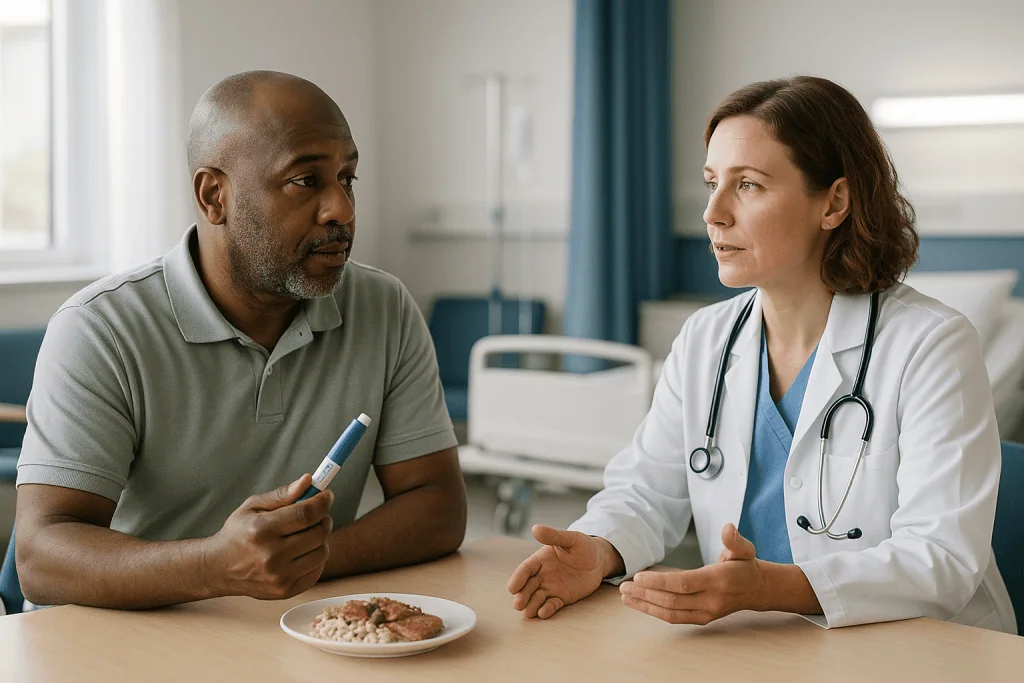
The pre-op nurse ran through her checklist the way she always does: allergies, blood thinners, last meal. Then a newer line, added to the form only recently: “Are you taking a weekly injection for diabetes or weight?” The patient hesitated. He had not thought of his Sunday shot as something a surgeon would care about.
That hesitation is why ozempic and surgery has become one of the most searched medical phrases of the past year. As of January 2026, the questions have a fresh urgency: US prescribing information for semaglutide products now carries a warning about pulmonary aspiration during general anesthesia or deep sedation, anesthesia and gastroenterology societies rewrote their joint guidance in late 2024, and social feeds are full of alarming claims that these medicines make surgery dangerous.
The honest picture sits between panic and shrug. Something real is happening in the stomach. It is manageable, but only if the right people know about it before the anesthetic starts.
Why ozempic and surgery became an anesthesia question in the first place
Ozempic and Mounjaro belong to a family of medicines called GLP-1 receptor agonists. A GLP-1 receptor agonist is a drug that mimics a gut hormone released after eating, telling the pancreas to release insulin, the brain to feel full, and the stomach to slow down. Mounjaro adds a second hormone signal (GIP), but the effect on the stomach is broadly similar.
That last action is the one anesthesiologists care about. Gastric emptying is the speed at which food and liquid leave the stomach for the small intestine. On these medicines, a meal that would normally clear in a couple of hours can linger considerably longer, which is part of why people feel satisfied on smaller portions and why nausea is the most common side effect early on.
Surgery collides with that mechanism at one specific moment: induction of general anesthesia. General anesthesia is a medicine-induced state of unconsciousness in which the reflexes that normally protect your airway, such as coughing and swallowing, are switched off. If the stomach is not empty at that moment, its contents can travel up the esophagus and down into the lungs. That event is called aspiration, and it can cause pneumonia, breathing failure, or, rarely, death.
Standard fasting rules exist to prevent exactly this. Anesthesia societies typically ask for no solid food for a set number of hours and no clear liquids for a shorter window before an anesthetic. Those rules were written for stomachs emptying at ordinary speed. The clinical worry, first raised in case reports around 2022 and 2023, is that a person taking a GLP-1 medicine could follow the fasting rules perfectly and still arrive with a stomach that looks like it belongs to someone who just ate breakfast.
Nobody is suggesting these medicines are unsafe as medicines. The question is narrower and more practical: how does the anesthesia team plan for a stomach that may not be empty?
Does semaglutide react with anesthesia? The glp-1 anesthesia interaction, explained
Strictly speaking, no. Semaglutide does not chemically interact with propofol, sevoflurane, or the other drugs used to put you to sleep. There is no dangerous cocktail forming in the bloodstream. Searches for glp-1 anesthesia interactions often assume that kind of reaction, and it is worth being clear that it is not what clinicians are worried about.

The concern is mechanical, not pharmacological. Picture the sequence in an operating room. The anesthesiologist injects a sedative, you lose consciousness within seconds, your muscles relax, and a breathing tube or mask is placed. In that brief window between losing your protective reflexes and having the airway secured, the stomach is the only thing standing between its contents and your lungs. If it is full, gravity and pressure changes can do the rest.
Several things make a stomach on a GLP-1 medicine more likely to be full at that moment:
- Slowed emptying of solids, most pronounced in the first weeks after starting or after a dose increase.
- Ongoing nausea, bloating, or reflux, which are themselves clues that food is sitting longer than usual.
- Conditions that already slow the stomach, such as long-standing diabetes with nerve damage (gastroparesis) or Parkinson disease.
Deep sedation carries a related risk. Deep sedation is a level of drug-induced sleepiness short of full general anesthesia, common for procedures like colonoscopy, where the patient breathes on their own but may not protect the airway reliably. Because no breathing tube is placed, a full stomach can matter just as much.
One reassuring point deserves emphasis. Aspiration remains uncommon overall, even in people taking these medicines. The large observational studies discussed later suggest the absolute risk stays low. The purpose of disclosure is not to cancel surgery; it is to let the team choose fasting instructions, timing, and airway techniques that keep that low risk as low as possible for you specifically.
What changed recently
The story has moved quickly, and much of the online confusion comes from people quoting guidance from different years as if it were all current.
June 2023. The American Society of Anesthesiologists issued its first consensus statement on GLP-1 receptor agonists before elective procedures. Working from case reports rather than trials, it took a cautious line: consider holding the medicine before an anesthetic, and treat anyone with gastrointestinal symptoms on the day of surgery as if they have a full stomach. That statement is the source of most “stop your shot before surgery” headlines still circulating.
2023 to 2024. Observational studies began to appear. Some used gastric ultrasound, a bedside scan that estimates how much is sitting in the stomach, and found residual solid contents in a meaningful minority of fasted patients on these medicines. Others analyzed large procedure databases and found that measurable aspiration events remained rare. Both findings were real; they answered different questions.
October 2024. A multi-society clinical practice guidance, developed by anesthesia, gastroenterology, bariatric surgery, and related organizations in the United States, replaced the blanket “hold it” approach. It concluded that most patients can continue their GLP-1 medicine around surgery, that decisions should be individualized, and that people at higher risk of delayed emptying may be advised to follow a liquid-only diet on the day before their procedure. It also endorsed gastric ultrasound where available to check the stomach directly.
Late 2024. US prescribing information for semaglutide products was updated to include a warning about pulmonary aspiration during general anesthesia or deep sedation, formally advising patients to tell their care team about the medicine before any procedure. MedlinePlus drug information for semaglutide and tirzepatide, cited in the references, reflects this advice.
Taken together, the arc runs from alarm, to measurement, to a more tailored approach. The direction of travel is toward keeping people on their medicine while planning the anesthetic more carefully, not toward routine interruption.
What the evidence actually says, graded honestly
Evidence in medicine comes in tiers, and this topic sits mostly in the lower ones. That does not make it wrong; it means conclusions should be held with appropriate looseness.
Strongest tier: randomized controlled trials. A randomized trial assigns people by chance to one approach or another, which is the fairest test of cause and effect. No large randomized trial has yet compared holding versus continuing a GLP-1 medicine before surgery and measured aspiration as the outcome. Trials of semaglutide and tirzepatide for diabetes and weight, which enrolled tens of thousands of people, were not designed to answer this question.
Middle tier: observational studies. Observational research watches what happens to people who were already on or off a medicine, without random assignment. Here the evidence is growing. Gastric ultrasound studies have reported residual stomach contents in a higher proportion of fasted GLP-1 users than non-users, sometimes even after the medicine had been held for the recommended interval. Database studies of endoscopy and surgery patients, by contrast, have generally shown that clinically significant aspiration remains rare, though some found modest increases in retained food seen during endoscopy or in procedures aborted for that reason.
Weakest tier: case reports and expert consensus. The earliest alarms came from individual reports of aspiration or of unexpected stomach contents in fasted patients. The 2023 and 2024 society statements are expert consensus informed by those reports and by the observational work. Consensus is valuable, but it is opinion built on evidence, not the evidence itself.
What does this add up to? The mechanism is well established: these medicines slow gastric emptying, and this is documented in their prescribing information. The link to retained stomach contents after fasting is supported by observational data. The link to actual harm, measured as aspiration events, is supported mainly by case reports and appears uncommon in larger datasets. The claim that a specific holding interval reliably eliminates the risk is the least well supported piece of the puzzle, which is exactly why guidance now leans on individual assessment rather than a single rule.
Ozempic before surgery: how guidance has shifted, side by side
People asking about ozempic before surgery usually want a single number of days. Guidance has moved away from offering one, and the table below shows why. It compares the two US approaches most often quoted online. Neither replaces the instructions your own anesthesia and prescribing clinicians give you.
| Question | 2023 consensus statement | October 2024 multi-society guidance |
|---|---|---|
| Default approach | Consider holding the medicine before elective procedures | Most patients may continue; individualize |
| Who is treated with extra caution | Anyone with nausea, vomiting, bloating, or abdominal pain on the day | Those on rising doses, with ongoing GI symptoms, or with conditions that slow the stomach |
| Fasting adjustments | Standard fasting; treat symptomatic patients as full stomach | Liquid-only diet on the day before for higher-risk patients may be advised |
| Checking the stomach | Consider gastric ultrasound if uncertain | Gastric ultrasound encouraged where available |
| Basis | Case reports, expert opinion | Observational studies plus expert opinion |
Two things stand out. First, the shift toward continuing the medicine reflects a growing appreciation that interrupting a diabetes treatment has costs of its own, including unstable blood sugar around an operation. Second, the emphasis has moved from the calendar to the patient: how long you have been on the medicine, whether your dose was recently increased, and how your stomach feels.
Where does that leave you? With a conversation rather than a formula. Tell the surgical team what you take, when you last took it, and how you have been feeling. They will apply their institution’s protocol, which may differ from the table above and may be more conservative for certain operations. Any change to when you take your medicine should come from the clinician who prescribes it or the anesthesia team coordinating with them, never from a post you read online.
Mounjaro before surgery: is tirzepatide any different?
Mounjaro before surgery raises the same core issue as Ozempic, with one wrinkle. Tirzepatide acts on two hormone receptors rather than one, and its effect on gastric emptying is, if anything, comparable to or slightly stronger than semaglutide’s in the early weeks of treatment, according to the pharmacology described in its prescribing information. Like semaglutide, this effect tends to lessen with continued use, a pattern pharmacologists call tachyphylaxis, meaning the body adapts and the response fades over time.
Both medicines are given once a week by injection, and both have long half-lives. A half-life is the time it takes for the amount of drug in the blood to fall by half; for both, it is measured in days, not hours. That is why holding a single weekly dose does not clear the medicine from the body, and why gastric ultrasound studies still find retained contents in some people who paused their injection. It is also why professional guidance stopped treating a one-week hold as a guarantee.
Are there meaningful differences the anesthesia team weighs?
- Tirzepatide is newer, so the surgical literature specific to it is thinner. Most observational data comes from semaglutide and older GLP-1 medicines; guidance extends to tirzepatide on the basis of shared mechanism.
- Tirzepatide is used both for type 2 diabetes and, under a different brand, for weight management. The indication matters because someone with diabetes has a second variable, blood sugar, to manage if the medicine is paused.
- Gastrointestinal side effects appear at similar rates for the two molecules in head-to-head trial data, so symptom-based screening on the day of surgery works the same way.
The practical advice does not diverge. Whether the label on your pen says Ozempic or Mounjaro, disclose it at the very first pre-operative contact, mention the date of your last injection, and report any recent dose change. The 2024 guidance treats the whole class together, and so should you when talking to the surgical team.
Who is most likely to have a full stomach despite fasting?
Not every patient on these medicines carries the same risk. The 2024 guidance made this explicit, and it is the single most useful idea for a patient to understand: the anesthesia team is sorting people into lower and higher likelihood of delayed emptying, then planning accordingly.
Factors that push someone toward the higher-caution group include:
- Early treatment or a recent dose increase. The slowing of gastric emptying is most pronounced in the first weeks after starting or stepping up, before the body adapts.
- Active gastrointestinal symptoms. Nausea, vomiting, bloating, a sense of fullness, or reflux in the days before surgery suggest food is lingering. Symptoms on the morning of the procedure are treated as a strong signal.
- Conditions that already slow the stomach. Diabetic gastroparesis, Parkinson disease, and certain other neurological or connective-tissue conditions compound the effect.
- Other medicines with the same effect. Opioid pain relievers and some anticholinergic drugs also slow the gut.
- Type of procedure. Operations on the abdomen or with the patient positioned head-down, and any procedure without a secured airway, leave less margin for error.
People on a stable dose for months, with no gut symptoms, having a procedure with a fully protected airway, sit at the lower-risk end. For them, recent guidance generally supports continuing the medicine with standard or modestly adjusted fasting.
Where you fall on that spectrum is a clinical judgment. It can shift within days if your dose changed or you developed nausea. This is why the question is asked at the pre-operative visit and asked again on the morning of surgery, and why it is worth answering both times with fresh, specific detail rather than a quick “same as before.”
What the anesthesia team may do differently when they know
Disclosure changes plans, not outcomes you can predict. Here is what typically happens behind the scenes once the team knows you take a GLP-1 medicine.
Fasting instructions get personalized. Instead of the standard window for solids, you may be asked to have only liquids for a longer period, in line with the 2024 guidance for higher-risk patients. Clear liquids leave the stomach quickly even when solid emptying is slow, which is why this adjustment is favored over simply extending the fast for everything.
The stomach may be scanned. Gastric ultrasound is a quick, painless scan over the upper abdomen that lets the anesthesiologist estimate the volume and type of stomach contents. An empty or fluid-only stomach reassures the team; visible solids may prompt a delay or a change in technique.
Airway technique may change. Rapid sequence induction is a method in which the anesthesiologist gives medicines in fast succession and secures the airway with a breathing tube within seconds, minimizing the unprotected interval. It is standard for known full stomachs and can be chosen for GLP-1 patients judged at higher risk.
Sedation depth may be reconsidered. For endoscopy or minor procedures, the team might choose lighter sedation that preserves protective reflexes, or a full general anesthetic with a secured airway, depending on the scan and your symptoms.
Timing may shift. Occasionally a procedure is postponed to a later date. This is a safety decision, not a punishment, and it is more likely when the team learns about the medicine only on the day.
The common thread is preparation. Every one of these adjustments is easier to arrange days in advance than in the holding bay. That is the strongest argument for mentioning your injection at the earliest pre-operative call, even if nobody has asked yet.
Blood sugar: the other half of the equation if you have diabetes
Debate about the stomach has drowned out an equally important consideration for people who take Ozempic or Mounjaro for type 2 diabetes: what happens to glucose control if the medicine is paused.
Surgery is a metabolic stress. The body responds to tissue injury and anesthesia by releasing stress hormones, which raise blood sugar even in people without diabetes. Fasting, missed meals, and nausea afterward pull in the opposite direction. For someone with diabetes, that tug-of-war is harder to manage, and observational studies across many surgical specialties associate poor perioperative glucose control with higher rates of wound infection and slower recovery.
A GLP-1 medicine helps stabilize glucose in a glucose-dependent way, meaning it lowers blood sugar mainly when it is high and rarely causes hypoglycemia on its own. Removing it for a week or more can allow sugars to drift upward before an operation, which is one reason the 2024 guidance moved away from routine holding. On the other side of the ledger, these medicines can cause post-operative nausea to feel worse, and they are typically paused when a patient cannot eat or drink normally after surgery.
The people who make this call are your prescribing clinician, often working with the surgical or anesthesia team. Depending on the situation they may:
- Continue the medicine and adjust fasting.
- Pause it and arrange temporary glucose monitoring or an alternative approach around surgery.
- Ask you to check blood sugar more often in the days before and after.
What you should not do is decide this on your own. Pausing a diabetes medicine without a plan can leave glucose unmanaged at the moment your body needs it controlled most. Ask directly at your pre-operative visit: “What is the plan for my diabetes medicines, and who is coordinating it?” A clear answer to that question is a sign the team is thinking about both halves of the problem.
Do's and don'ts when taking Ozempic or Mounjaro around an operation
People searching for the do’s and don’ts when taking Ozempic tend to get generic lists about hydration and protein. Around surgery, the priorities are more specific.
Do
- Name the medicine, brand and generic, at the first pre-operative contact, even if the form does not ask. Include weight-management versions; they contain the same active molecules.
- Write down the date of your last injection and any dose change in the previous two months. The team will ask, and precision helps.
- Report gut symptoms honestly, including mild nausea or feeling full for hours after small meals. These are clinically useful, not complaints.
- Follow the fasting instructions you are given, which may differ from those a friend received or from a leaflet you read.
- Ask who is managing your diabetes medicines through surgery if you have diabetes.
- Tell the endoscopy unit before a colonoscopy or gastroscopy. Sedation for these procedures carries the same consideration.
Don’t
- Stop the medicine on your own because of something you read. The decision belongs to your prescribing clinician and anesthesia team.
- Assume that holding one injection has emptied your stomach. The medicine stays in the body for days.
- Eat a small “just in case” snack if you feel hungry during the fasting window. It defeats the purpose of the fast.
- Downplay reflux or heartburn. Under anesthesia, reflux is the route by which stomach contents reach the lungs.
- Take a scheduled injection on the morning of surgery without checking whether the team wants you to.
One detail trips people up: pre-operative questionnaires often list “diabetes medicines” and “weight-loss medicines” separately, and people taking Ozempic for weight, off-label, may not tick either box. The anesthesia team does not care why you take it. They care that you do, and when. If in doubt, mention it twice.
Restarting after surgery: nausea, appetite, and healing
The end of an operation is not the end of the GLP-1 question. If your medicine was paused, someone has to decide when it resumes, and the answer depends on how your gut is behaving.
Post-operative nausea and vomiting affect roughly a quarter to a third of patients after general anesthesia, more in some higher-risk groups, according to anesthesia literature. GLP-1 medicines can produce nausea independently, especially after any gap in dosing, since the stomach has partly readapted to normal speed. Layering the two can make the first days at home miserable and can interfere with keeping down fluids and pain medicines.
For that reason, clinicians commonly wait until a patient is eating and drinking normally before advising a restart. The surgical team is also alert to a specific post-operative concern: ileus, a temporary slowdown of the bowel that follows many abdominal operations and shows up as bloating, absent bowel movements, and inability to tolerate food. A medicine that slows the gut is not something most surgeons want in the picture while an ileus resolves.
There is a nutritional angle too. Healing tissue needs protein and calories, and appetite suppression can make it harder to meet those needs in the recovery weeks. Some surgeons, particularly after larger operations, prefer a longer pause so patients can eat well. Others, especially for people with diabetes, want the medicine back promptly to keep glucose steady. There is no randomized evidence settling this; it is individual judgment.
Practical steps for you:
- Leave the hospital knowing who will tell you when to restart and how to reach them.
- Do not resume an injection while still nauseated or unable to eat normally without checking first.
- Report persistent vomiting, a swollen belly, or no bowel movement for several days.
Restarting is a prescribing decision, and it belongs to the clinician who manages the medicine, coordinated with the surgeon.
Common myths about Ozempic, Mounjaro, and anesthesia
The viral version of this topic contains real grains of truth wrapped in exaggeration. Here are the claims that circulate most, and what the evidence supports.
Myth: “You cannot have surgery while on Ozempic.” Not supported. Current multi-society guidance explicitly states that most patients can continue their medicine around procedures with appropriate planning. Postponement happens in specific circumstances, not as a rule.
Myth: “Skip one shot and you are fine.” Oversimplified. The medicine’s half-life spans days, and gastric ultrasound studies have found residual stomach contents in some patients who held their weekly dose. Guidance now emphasizes symptoms, dose history, and direct assessment over a fixed interval.
Myth: “Semaglutide reacts dangerously with anesthesia drugs.” There is no pharmacological interaction. The risk is mechanical, from a stomach that may not be empty.
Myth: “Aspiration is happening constantly in operating rooms now.” Case reports drove the initial alarm, but large observational datasets show aspiration remains uncommon. The medicines shift the odds of a full stomach; they do not make a bad outcome likely.
Myth: “If you take it for weight rather than diabetes, it doesn’t count.” The molecule is identical. The stomach does not know why you take it.
Myth: “Compounded semaglutide is different, so you don’t need to mention it.” Compounded versions are not FDA-approved products, their contents and strength are not verified in the same way, and they carry at least the same anesthesia considerations. They are not for self-use, and the anesthesia team needs to know about them.
Myth: “A liquid diet the day before is a new rule for everyone.” The 2024 guidance suggests it for patients judged at higher risk of delayed emptying, not universally. Follow the instructions given to you.
The pattern across all of these is the same: a real mechanism, inflated into a certainty. The reality is a manageable risk that depends on disclosure and planning.
Sedation for colonoscopy, endoscopy, and dental work counts too
Much of the search traffic assumes “surgery” means an operating room, a surgeon, and a hospital stay. Some of the most relevant scenarios for GLP-1 users are far smaller than that.
Colonoscopy and upper endoscopy are performed under sedation in tens of millions of people each year in the United States alone. Endoscopy is the passage of a flexible camera through the mouth or rectum to inspect the digestive tract. Because these procedures are usually done with deep sedation and without a breathing tube, the airway is less protected than during a full general anesthetic. Observational studies of endoscopy patients on GLP-1 medicines have reported higher rates of retained food seen in the stomach during upper endoscopy and occasional procedures cut short for that reason, even though serious aspiration stayed rare.
Upper endoscopy has a second wrinkle: food in the stomach blocks the view. A gastroenterologist who cannot see the lining cannot complete the examination, and the procedure may need to be repeated, including a second round of bowel preparation for combined procedures.
Dental and oral surgery under intravenous sedation, cataract surgery under sedation, cardiac procedures in a catheterization lab, and imaging under sedation all sit in the same category. Anywhere a medicine dulls your reflexes, the state of your stomach is relevant.
What this means for you:
- Tell the endoscopy unit or dental office about your medicine when the appointment is booked, not on the day.
- Expect that some units follow their own protocol, which may include adjusted fasting or a liquid diet the day before.
- Do not assume a small procedure means the question does not apply.
The 2024 multi-society guidance was co-authored by gastroenterology organizations precisely because endoscopy is where this issue shows up most often. If a procedure involves anything stronger than local anesthetic, disclose the medicine.
Different countries, different clocks: when to stop Ozempic before surgery in Australia, the UK, and the US
A surprisingly common search is “when to stop Ozempic before surgery in Australia,” and it points to something worth understanding: national anesthesia bodies have issued their own guidance, and they do not perfectly agree.
The United States, as covered above, moved in 2024 toward continuing the medicine for most patients with individualized fasting and gastric assessment. Australian and New Zealand anesthesia and endocrine bodies published guidance in the same period that, while sharing the same underlying concern, placed different weight on timing and on liquid-diet instructions. The United Kingdom’s approach, reflected in NHS medicines information, centers on the same principle: tell the team you take the medicine and follow their pre-procedure instructions, which local hospitals set through their own policies.
Why the differences? Three reasons:
- The evidence is observational and still evolving, so reasonable experts weigh it differently.
- Healthcare systems differ in how readily gastric ultrasound is available on the day of surgery, which affects how much a team can rely on direct assessment rather than a fixed rule.
- Guidance documents were written at different points along the fast-moving timeline.
For a patient, this has one practical consequence. The instruction you receive from your own anesthesia team, in your own country and hospital, is the one that applies. A protocol described on a forum by someone in another country is not evidence that your team is wrong. Nor should you combine rules from several sources into a personal plan.
If you are traveling for a procedure, or your surgery is scheduled through a different service from the one that prescribes your medicine, make sure the two are communicating. A written note of your medicine, last injection date, and recent dose changes travels well between systems and languages.
The decision about whether and when to pause remains with the prescribing clinician and anesthesia team, wherever you are.
When to see a doctor: red flags before and after surgery
Most people on Ozempic or Mounjaro will move through a procedure without incident. Certain situations, though, warrant a call before the day arrives, and others need urgent attention afterward.
Contact your surgical or pre-operative team before surgery if:
- You realize you have not told them about your GLP-1 medicine, including a compounded or weight-management version.
- Your dose was increased within the past two months, or you started the medicine recently.
- You develop nausea, vomiting, bloating, or reflux in the week before the procedure, or on the morning of it.
- You have diabetes and no one has told you how your glucose medicines will be managed around the operation.
- You are unsure whether to take a scheduled injection that falls close to your surgery date.
Seek urgent medical care after any anesthetic or sedation if you notice:
- A new cough, fever, or chest pain in the hours or days after the procedure, or shortness of breath. These can signal aspiration pneumonia.
- Coughing up discolored or bloody sputum.
- Persistent vomiting, especially if you cannot keep down fluids or medicines.
- A swollen, painful abdomen with no bowel movements for several days.
- Blood sugar readings that are very high or very low, or symptoms such as confusion, sweating, or extreme thirst.
Separately, GLP-1 medicines carry their own established warnings, described in their prescribing information: severe, persistent abdominal pain radiating to the back can indicate pancreatitis, and right-sided upper abdominal pain with fever or yellowing of the skin can indicate gallbladder problems. Either of these needs prompt evaluation, whether or not surgery is planned.
Every decision to continue, pause, or restart these medicines around a procedure belongs to the clinician who prescribes them, working with the anesthesia and surgical team. This article describes the evidence and the guidance; it cannot substitute for their assessment of your situation. When in doubt, ask, and ask early.
Frequently asked questions
Does semaglutide react with anesthesia?
No, there is no chemical interaction between semaglutide and anesthetic drugs. The concern is mechanical: semaglutide slows stomach emptying, so food may remain in the stomach after fasting, and under general anesthesia or deep sedation the reflexes that protect your airway are suppressed. Stomach contents can then enter the lungs, an event called aspiration. Telling the anesthesia team lets them adjust fasting and airway plans.
Does Ozempic mess with surgery?
Ozempic does not interfere with the operation itself, the surgeon’s work, or wound healing in any established way. Its relevance is limited to the anesthetic: a stomach that may not be empty when you go to sleep. Current guidance says most patients can continue Ozempic around procedures with individualized fasting instructions. In some cases the team may recommend a liquid diet the day before or check the stomach with ultrasound.
Do I have to stop Ozempic before surgery?
Not necessarily. Guidance from anesthesia and gastroenterology societies issued in late 2024 states that most patients can continue GLP-1 medicines around surgery, with fasting and airway plans tailored to their risk. Some people, such as those recently started or with ongoing nausea, may be advised differently. Whether to pause is a decision for your prescribing clinician and anesthesia team, never something to do on your own.
Is Mounjaro before surgery handled differently from Ozempic?
In practice, no. Mounjaro (tirzepatide) works on two gut hormone receptors and slows gastric emptying in a similar way to Ozempic, with the effect most pronounced early in treatment or after a dose increase. Professional guidance treats the whole GLP-1 class together. Disclose the medicine, the date of your last injection, and any recent dose changes, and follow the instructions your anesthesia team provides.
What are the do's and don'ts when taking Ozempic before an operation?
Do tell the surgical team about the medicine at the first pre-operative contact, report the date of your last injection and any dose changes, and mention any nausea, bloating, or reflux. Do follow the exact fasting instructions you are given. Don’t stop the medicine on your own, don’t assume skipping one shot empties your stomach, and don’t eat during the fasting window even if you feel hungry.
When to stop Ozempic before surgery in Australia?
Australian anesthesia bodies have issued their own guidance, which differs in emphasis from US recommendations, and individual hospitals apply local protocols. There is no single interval that applies everywhere. The correct instruction is the one your own anesthesia team gives you, based on how long you have taken the medicine, your dose history, and your symptoms. Ask them directly and confirm with your prescribing doctor.
Does the glp-1 anesthesia concern apply to colonoscopy sedation?
Yes. Colonoscopy and upper endoscopy are usually done under deep sedation without a breathing tube, so the airway is less protected than during a full general anesthetic. Observational studies have found more retained stomach contents in GLP-1 users during upper endoscopy, occasionally leading to incomplete procedures. Tell the endoscopy unit when you book so they can give appropriate fasting or diet instructions.
Can I take my weekly Ozempic injection the day before surgery?
Do not decide this alone. Whether to take a scheduled injection that falls near your surgery date depends on your anesthesia team’s protocol and your prescribing clinician’s assessment, including how long you have been on the medicine and whether you have gut symptoms. Contact the pre-operative team as soon as you know the dates conflict; they can coordinate an answer that also accounts for your blood sugar if you have diabetes.
How strong is the evidence that Ozempic raises aspiration risk during surgery?
Moderate for the mechanism, weaker for actual harm. The slowing of gastric emptying is well documented in prescribing information. Observational gastric ultrasound studies show more retained stomach contents in fasted GLP-1 users. Evidence that this translates into aspiration events comes mainly from case reports, and large observational datasets show such events remain uncommon. No randomized trial has compared holding versus continuing the medicine.
When should I restart Ozempic or Mounjaro after surgery?
Restarting is a decision for the clinician who prescribes the medicine, coordinated with your surgeon. Clinicians commonly wait until you are eating and drinking normally, because both post-operative nausea and GLP-1 medicines can cause vomiting, and after abdominal surgery the bowel may be temporarily slow. Leave the hospital knowing who will advise you on timing and how to contact them if you develop persistent vomiting or bloating.
References
- MedlinePlus: Semaglutide Injection
- MedlinePlus: Tirzepatide Injection
- Cleveland Clinic: GLP-1 Agonists
- NHS: Semaglutide
This article is for general information only and is not a substitute for professional medical advice. Please consult a qualified doctor about your individual situation.

More from the Blog

The GLP-1 Diet: What to Eat to Support (or Naturally Boost) Your Own Gut Hormones
A GLP-1 diet is not an official eating plan. It describes two things: foods that modestly stimulate your own glucagon-like peptide-1, mainly protein, fiber-rich…

Survodutide: The Glucagon-GLP-1 Dual Agonist Being Studied for Obesity and Liver Disease
Survodutide is an investigational injectable peptide that activates both the glucagon receptor and the GLP-1 receptor. In phase 2 trials it produced average weight…

Ozempic Feet: What Rapid Weight Loss Does to the Fat Pads of the Feet
Ozempic feet is a social-media term, not a medical diagnosis. It describes feet that look bonier or feel sore under the heel or ball…

Is Ozempic Safe? What Years of Semaglutide Data Say About Risks and Benefits
Ozempic (semaglutide) is considered safe for most adults with type 2 diabetes when prescribed and monitored by a clinician. Large randomized trials covering tens…

Food Noise: Why GLP-1 Medicines Quiet It, and What Helps When You Are Not on Them
Food noise is the persistent, intrusive stream of thoughts about food that continues when the body does not need fuel. GLP-1 medicines such as…

Weight Loss Injections Explained: The Approved Medicines, How They Differ and Who Qualifies
Weight loss injections are prescription medicines that mimic gut hormones to reduce appetite and slow digestion. Three are FDA-approved for chronic weight management: semaglutide…