

The Military Sleep Method and 4-7-8 Breathing: Do the Viral Fall-Asleep Techniques Work?
Key Takeaways
- The military sleep method dates to coach Bud Winter's 1981 book, and his own account describes six weeks of twice-daily practice before cadets could fall asleep quickly.
- The viral 96 percent success figure is an unverified anecdote; no randomized or observational study has tested the routine as published.
- Relaxation training is a recognized component of CBT-I, which in controlled trials shortens the time to fall asleep by roughly 10 to 20 minutes on average.
- 4-7-8 breathing slows the breath to about three cycles per minute, which measurably lowers heart rate and blood pressure, but direct trials for sleep onset are lacking.
- A normal sleep onset latency is about 10 to 20 minutes; consistently falling asleep in under five minutes can signal sleep deprivation or a disorder such as sleep apnea.
- Caffeine's half-life is about five hours, so a mid-afternoon coffee still leaves roughly a quarter of the dose circulating at 1 a.m.
The military sleep method and 4-7-8 breathing are relaxation routines that combine muscle release, slow breathing and calming imagery. They are low-risk and can shorten the time it takes to drift off for some people, but the viral promise of sleep in two minutes is not supported by clinical trials. Evidence comes from small studies and the broader science of relaxation training, not from tests of these exact routines.
Scroll through any short-video feed this spring and you will meet a confident voice promising that soldiers fall asleep in 120 seconds, sitting upright, with artillery in the background. The clip usually ends with a number: 96 percent success. As of March 2026, the military sleep method is pulling record search traffic again, revived by a fresh wave of creators pairing it with a second favorite, the 4-7-8 breathing pattern, and presenting both as a kind of off switch for the brain.
The appeal is obvious. Roughly one adult in three sleeps less than the seven hours most health bodies recommend, and lying awake while the clock ticks is one of the most universal small miseries there is. A technique that costs nothing, needs no app and takes two minutes sounds like a gift.
So it is worth asking the plain question: what do these routines actually do, where did the two-minute claim come from, and what does the medical evidence say once the background music stops?
What is the military sleep method?
The military sleep method is a structured relaxation routine. You lie down, release tension from your face downward through the body, slow your breathing, and then hold a calm mental image for about ten seconds. If thoughts intrude, you repeat a short phrase such as ‘don’t think’ to crowd them out. The whole sequence is meant to take about two minutes, and the promise attached to it is that you will be asleep by the end.
Strip away the branding and you will recognize three well-established tools. The first is progressive muscle relaxation, a technique in which you deliberately loosen muscle groups one at a time so the body stops sending ‘alert’ signals to the brain. The second is paced breathing, meaning breathing slower and deeper than usual on purpose. The third is guided imagery, which simply means picturing a restful scene in enough detail that your attention has nowhere else to go.
None of those pieces is military in origin. Progressive muscle relaxation was described by a Chicago physician, Edmund Jacobson, in the 1920s. Imagery and breathing exercises appear in sleep clinics and cognitive behavioral therapy for insomnia, usually shortened to CBT-I, which is the structured talking therapy that the NHS and the Mayo Clinic describe as the first-line treatment for persistent insomnia.
What the military label adds is a story, and stories travel. The routine’s selling point is not a new mechanism but a memorable sequence and a bold number. That matters for how you should judge it: as a tidy package of known relaxation skills, not as a secret with its own body of proof.
Where did the military sleep method come from?
The trail leads to a 1981 book called Relax and Win: Championship Performance, written by Lloyd ‘Bud’ Winter, a track and field coach at San Jose State University. Winter had worked with United States Navy pre-flight cadets during the Second World War and described teaching them a relaxation drill so they could sleep in noisy, cramped and frightening conditions. His account says that after six weeks of daily practice, 96 percent of the cadets could fall asleep within two minutes, even sitting up, even with gunfire recorded nearby.

Two details tend to vanish when that story is retold online. The first is the six weeks. Winter never claimed instant results; he described a skill that took daily rehearsal, twice a day, before it worked reliably. The second is the source. The 96 percent figure is a coach’s recollection in a self-help book, not a published study with a control group, a defined measure of sleep onset or independent verification. No peer-reviewed trial of the method has ever reproduced it.
That does not make the routine worthless. Coaches in the 1940s were drawing on the same relaxation science that clinicians still use, and the sequence is sensible. It does mean the headline number belongs in the category of anecdote, which in evidence terms sits well below observational research and far below randomized trials.
The book went largely unnoticed for decades, resurfaced in a widely shared magazine piece in 2019, and then exploded on short-video platforms from 2022 onward. Each retelling has shaved a little more nuance off the original, which is why a slow, six-week training program is now sold as a two-minute trick.
What changed recently
Nothing has changed about the technique itself since 1981. What has changed is the context around it, and three developments explain why it is trending again.
First, the viral cycle restarted. Short-video creators in late 2025 and early 2026 began bundling the military sleep method with 4-7-8 breathing, the 10-3-2-1-0 rule and ‘sleep hygiene’ checklists into single clips, which widened the audience well beyond its original fitness and veteran communities. As of March 2026, searches for the method sit at a multi-year high.
Second, public health messaging on sleep has become clearer and more prominent. The CDC’s current sleep guidance, part of its 2024 website overhaul, states that adults need seven or more hours per night and frames short sleep as a risk factor for heart disease, type 2 diabetes, depression and injuries. That kind of plain statement sends people looking for practical fixes.
Third, mainstream clinical sources have started addressing the viral routines directly rather than ignoring them. Cleveland Clinic has published an explainer on 4-7-8 breathing that describes it as a relaxation exercise with modest evidence, useful for calming the nervous system but not a treatment for insomnia. Harvard Health has similarly placed breath control inside the broader family of relaxation techniques that counter the stress response. The tone across these sources is consistent: worth trying, low risk, no miracle.
So the honest summary of what is new is this: the claims are louder, the audience is bigger, and the expert commentary has caught up. The underlying evidence base has not grown in any meaningful way.
How to do the military sleep method, step by step
Many people ask about a ‘military sleep position’. There isn’t one. Winter described cadets practicing in chairs because that is where they were, but the routine works in any position that lets your muscles go slack. On your back with arms at your sides is easiest for beginners; side sleepers can stay on their side.
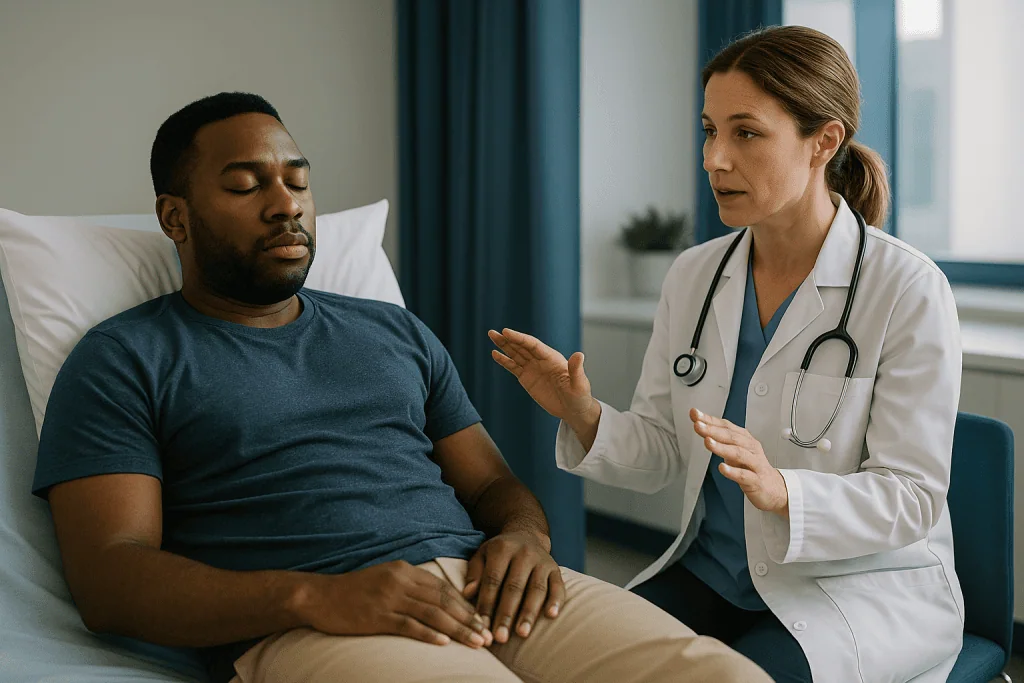
The sequence runs roughly like this:
- Settle in and take a few slow breaths, exhaling longer than you inhale.
- Relax the face in order: forehead, eyelids, cheeks, jaw, tongue. The jaw is the one most people are clenching without knowing it.
- Drop the shoulders as far from the ears as they will go, then let one arm go heavy, upper arm first, then forearm, then hand. Repeat on the other side.
- Breathe out and let the chest soften. Then move down through the thighs, calves and feet, releasing each in turn.
- Hold a calm image for about ten seconds. The classic examples are lying in a canoe on still water or in a black velvet hammock in a dark room.
- If thoughts return, silently repeat ‘don’t think’ for ten seconds, then go back to the image.
A few practical points help. Keep the lights off and avoid checking the time, because clock-watching raises arousal. Do not rush the body scan; the point is to notice tension you were not aware of, not to tick boxes. And treat the first week as rehearsal. Winter’s own account assumed daily practice, and the research on progressive muscle relaxation also suggests the skill improves with repetition.
What is 4-7-8 breathing and how does it work?
The 4-7-8 breathing pattern was popularized by the integrative medicine physician Andrew Weil, who adapted it from pranayama, the breath-control practices of yoga. The numbers are counts: breathe in through the nose for four, hold for seven, breathe out slowly through the mouth, often with a soft whooshing sound, for eight. That is one cycle, and the usual advice is to repeat it four times, twice a day.
The arithmetic matters more than the mysticism. A full cycle at a comfortable pace takes roughly 19 seconds, which works out to about three breaths per minute. Most adults at rest breathe 12 to 20 times a minute. Slowing to that degree, with a long exhale, is one of the most reliable ways to nudge the autonomic nervous system, the part of the nervous system that runs background functions like heart rate without conscious control, toward its ‘rest and digest’ branch, called the parasympathetic branch.
The long exhale is the key ingredient. Breathing out stimulates the vagus nerve, a long nerve running from the brainstem to the abdomen that acts as a brake on heart rate. Studies of slow breathing at around six breaths per minute show measurable drops in heart rate and blood pressure within minutes, and small trials in people with anxiety report short-term reductions in self-rated tension.
What 4-7-8 breathing does not have is a strong trial record for sleep specifically. Cleveland Clinic’s explainer is candid on this point: the evidence that it calms the body in the moment is reasonable; the evidence that it treats insomnia is thin. The counts themselves are not magic either. If holding for seven feels like a strain, a shorter hold with the same long exhale delivers most of the benefit.
What the evidence actually says about the military sleep method
It helps to grade the claims separately, because they rest on very different foundations.
Claim: relaxation techniques help people fall asleep. Grade: moderate, from randomized trials. Relaxation training is a recognized component of CBT-I, and controlled trials of CBT-I show it shortens sleep onset latency, the time from lights out to actually falling asleep, typically by 10 to 20 minutes on average, with benefits that persist after treatment ends. Progressive muscle relaxation on its own has a smaller but real effect in several trials, mostly in people with mild to moderate insomnia.
Claim: the specific military sequence works. Grade: anecdote and expert opinion. No randomized or even observational study has tested Winter’s routine as published. Its plausibility is borrowed from its ingredients.
Claim: 96 percent of people fall asleep in two minutes. Grade: unverified anecdote. The figure comes from a single recollection of a wartime training program with no methodology on record. No study since has produced anything close.
Claim: 4-7-8 breathing improves sleep. Grade: weak and indirect. Small studies show slow breathing lowers heart rate, blood pressure and anxiety scores in the short term, and one small randomized study in older adults found a breathing exercise improved sleep quality ratings. Direct trials of the 4-7-8 pattern against a placebo for sleep onset are lacking.
Put together, the fair conclusion is that both routines are reasonable ways to practice skills that trials support, while the numbers attached to them online are not. A sleep clinician would likely encourage either one as a low-cost habit and discourage any expectation of an instant result, particularly for people whose insomnia has lasted more than a few weeks.
Military sleep method vs 4-7-8 breathing vs other fall-asleep techniques
Readers often want to know which routine to choose. The table below compares the two viral methods with the approaches that sleep medicine actually tests, using evidence grades drawn from the pattern of published research.
| Technique | What it involves | Time needed | Evidence for sleep onset | Best suited to |
|---|---|---|---|---|
| Military sleep method | Head-to-toe muscle release, slow breathing, calming image | 2 min per session; weeks to learn | Indirect; components supported by trials, routine itself untested | People who like a clear script |
| 4-7-8 breathing | Inhale 4, hold 7, exhale 8, four cycles | About 1–2 min | Weak; good short-term calming data, little sleep-specific data | Racing heart or anxious wakefulness |
| Progressive muscle relaxation | Tense then release each muscle group | 10–20 min | Moderate; several small randomized trials | Physical tension at bedtime |
| Stimulus control | Bed only for sleep; get up if awake after about 20 min | Ongoing habit | Strong; core CBT-I element | Chronic insomnia, clock-watching |
| Full CBT-I | Structured program with a therapist or validated digital course | 4–8 weeks | Strong; first-line in NHS and Mayo Clinic guidance | Insomnia lasting over 3 months |
Two patterns stand out. The techniques with the strongest evidence are the ones that change behavior over weeks, not the ones that promise a result tonight. And the viral routines sit at the low-effort, low-risk end, which is a perfectly good place to start as long as you know that is where they sit.
There is also no rule against combining them. Several people find 4-7-8 breathing a natural opening for the military sequence, using the long exhales to settle before the body scan. The combination has no special evidence, but it costs nothing and fits in the same two minutes.
Why does relaxing your body help you fall asleep?
Sleep researchers describe insomnia largely as a problem of hyperarousal, a state in which the brain and body stay switched on at a time they should be powering down. Hyperarousal shows up physically: a slightly faster heart rate, higher core temperature, more stress hormone, tighter muscles. It also shows up mentally as the familiar 3 a.m. loop of worries and replayed conversations.
Sleep onset requires the opposite. In the minutes before you drift off, heart rate slows, breathing deepens, muscle tone drops and the brain’s electrical activity shifts from the fast patterns of wakefulness to the slower rhythms of light sleep. Relaxation techniques work by deliberately nudging those physical dials in the direction they need to go, on the reasonable bet that the brain follows the body.
Each piece of the military sleep method targets one signal. Loosening the jaw and shoulders cuts the stream of tension messages from muscle to brain. Slow exhalation tilts the autonomic balance toward the parasympathetic side, easing heart rate. The mental image occupies working memory, the mental scratchpad that holds whatever you are currently thinking about, so there is less room for the worry loop.
This is also why the routine can fail on a bad night. If you are frightened, in pain or jet-lagged, the arousal signals may simply be louder than anything a two-minute drill can counter. Winter’s cadets were young, physically exhausted and drilled for weeks; a stressed adult trying the method for the first time after three coffees is working under different conditions. The mechanism is real, but it is a lever, not a switch.
Can you really fall asleep in 2 minutes?
Rarely, and if you can, it may be a warning sign rather than an achievement. Sleep clinicians consider a sleep onset latency of about 10 to 20 minutes normal for healthy adults. Falling asleep in under five minutes, consistently, often points to sleep deprivation or a disorder such as sleep apnea, a condition in which breathing repeatedly stops and starts during sleep, leaving a person exhausted by day.
Seen in that light, the two-minute promise is aimed at the wrong target. The goal of a good night is not to crash as fast as possible but to fall asleep without a struggle and stay asleep long enough. A person who routinely takes 15 minutes to doze off is sleeping normally. A person who takes 45 minutes three nights a week for several months meets the usual definition of insomnia, and that is where the techniques earn their keep.
What relaxation practice can realistically do, based on the trial literature, is shave minutes off a prolonged latency and, perhaps more importantly, remove the dread. Much of the suffering in insomnia comes not from the lost minutes but from the frustration of lying there, which itself raises arousal. A routine that gives you something calm to do with your attention breaks that loop even on nights it does not produce sleep.
It is also worth remembering that most people badly misjudge how long they take to fall asleep. In laboratory studies, insomnia patients often report lying awake for an hour when recordings show 20 or 30 minutes. If the military sleep method makes the wait feel shorter, that is a genuine benefit, even if a stopwatch would be unimpressed.
How to sleep under stress: what helps on the worst nights
Winter designed his drill for people under extraordinary pressure, and that is still the situation in which readers search for it: the night before surgery, during a bereavement, after a layoff. Stress raises cortisol, the body’s main stress hormone, and cortisol is supposed to be at its lowest around midnight. When it is not, sleep fights an uphill battle.
A few strategies have better support than any single breathing pattern. Keeping a fixed wake-up time, even after a terrible night, protects the body clock and prevents one bad night from becoming a bad week. Getting out of bed if you are still wide awake after roughly 20 minutes, and doing something dull in dim light until you feel sleepy, is a core CBT-I technique known as stimulus control; it works by stopping the bed from becoming a place the brain associates with frustration.
Writing tomorrow’s to-do list before bed, rather than rehearsing it in the dark, has small trial support for shortening sleep onset. Daylight exposure in the morning, caffeine cut-off by early afternoon and a cool, dark bedroom are unglamorous but consistently backed by observational and experimental data.
Where the military sleep method and 4-7-8 breathing fit is as the thing you do once you are in bed and your mind is loud. They give the attention a job. On a high-stress night, expect them to lower the volume rather than silence it, and give yourself permission for that to be enough.
If stress-related sleeplessness is coming with panic, chest tightness or a sense that something is seriously wrong, that is a reason to speak to a clinician rather than a reason to breathe harder.
Does exercise help with sleep, and what is the 10-3-2-1-0 rule?
Exercise is one of the better-supported sleep aids that is not a medicine. Across randomized trials and large observational studies, regular moderate aerobic activity, such as brisk walking for 30 minutes most days, is linked to falling asleep faster, more deep sleep and better self-rated sleep quality. The effect is modest for any single session but builds over weeks, and it is strongest in people who were previously inactive and in middle-aged and older adults with mild insomnia.
Timing worries are mostly overstated. The old advice to avoid all evening exercise has not held up well; most studies find that moderate activity finishing more than an hour before bed does not harm sleep, and some find it helps. Very vigorous training in the last hour before lights-out can delay sleep onset in some people, probably through raised core temperature and adrenaline.
The 10-3-2-1-0 rule, another viral favorite, packages several of these ideas into a countdown: no caffeine within 10 hours of bed, no heavy meals or alcohol within 3, no work within 2, no screens within 1, and 0 presses of the snooze button in the morning. It has never been tested as a rule, but each line borrows from real evidence. Caffeine has a half-life of about five hours, so a 3 p.m. coffee still leaves a quarter of the dose in the body at 1 a.m. Alcohol shortens sleep onset but fragments the second half of the night. Bright screens and demanding work both delay the evening rise in melatonin, the hormone that signals darkness to the brain.
Treat the numbers as rough fences rather than laws. The useful idea underneath is that the evening is a runway, and the military sleep method works better at the end of a gentle descent than after a nosedive.
Common myths about the military sleep method and 4-7-8 breathing
Viral explainers tend to repeat the same handful of claims. Here is what the evidence says about each.
Myth: it works for 96 percent of people. The figure is a coach’s recollection from the 1940s, published in 1981, with no study behind it. No trial has measured anything like it.
Myth: it works the first night. Winter’s own text describes six weeks of twice-daily practice. The research on relaxation skills likewise shows improvement with repetition; first attempts often feel awkward and may even raise arousal if you are straining to ‘do it right’.
Myth: there is a special military sleep position. There is not. The routine was practiced sitting because cadets were sitting. Any position in which your muscles can go slack is fine.
Myth: 4-7-8 breathing is a natural tranquilizer. Slow breathing does lower heart rate and blood pressure for a few minutes, which is a real and measurable effect. Comparing it to a sedative is marketing language, and no study supports equivalence with any medicine.
Myth: if it does not work, you are doing it wrong. Relaxation techniques have limits. Pain, sleep apnea, restless legs, certain medicines and major life stress can all keep a person awake regardless of technique. Failure to fall asleep is information about the night, not a verdict on the person.
Myth: these routines treat insomnia. They are components of a treatment, not the treatment. For insomnia lasting more than three months, the NHS and the Mayo Clinic point to CBT-I, which has the strongest randomized evidence, and to a clinician’s review of possible underlying causes.
Who should be cautious with breath-holding and relaxation routines?
Both techniques are safe for the overwhelming majority of adults, which is part of their appeal. A few groups should adapt them or check with a clinician first.
The seven-count hold in 4-7-8 breathing can feel uncomfortable for people with chronic lung conditions such as COPD or poorly controlled asthma, and for anyone recovering from a chest infection. Shortening the hold, or simply breathing in for four and out for eight without a pause, keeps the calming long exhale while removing the strain. People who feel lightheaded, tingly or anxious during breath-holding should stop and breathe normally; this usually reflects over-breathing rather than anything dangerous, but there is no benefit in pushing through it.
Anyone with a history of panic attacks may find that focusing closely on breathing initially makes them more aware of their heartbeat, which can trigger the very sensation they are trying to avoid. Starting with the body-scan part of the military sleep method, and introducing breathing exercises gradually, tends to work better.
People living with the effects of trauma sometimes find that lying still with eyes closed and attention turned inward is distressing rather than restful. Trauma-informed therapists often suggest grounding techniques with eyes open, or practicing relaxation first during the day in a safe setting. That is a conversation for a mental health professional, not a reason to force a routine.
Pregnant readers can use both techniques comfortably; the usual advice is to favor side-lying positions in later pregnancy and avoid any breath-hold that feels effortful. And for anyone taking a prescribed sleep medicine, these routines are an addition, not a substitute. Any change to a prescription belongs with the prescribing clinician.
When to see a doctor about trouble falling asleep
A relaxation routine is a reasonable first step. It is not a reason to delay a medical conversation when sleep problems persist or come with other signs. Mainstream guidance from the NHS, the Mayo Clinic and MedlinePlus points to the same thresholds.
Make an appointment if:
- You have trouble falling or staying asleep at least three nights a week for three months or longer, despite reasonable sleep habits.
- Poor sleep is affecting your work, driving, mood or relationships, or you are relying on alcohol or over-the-counter products to get to sleep.
- A bed partner notices loud snoring, gasping or pauses in breathing, or you wake unrefreshed with morning headaches; these are classic features of sleep apnea.
- You have an irresistible urge to move your legs at night, often with crawling or tingling sensations, which suggests restless legs syndrome.
- You fall asleep without warning during the day, or experience sudden muscle weakness with strong emotion, which can indicate narcolepsy.
- Sleeplessness is accompanied by persistent low mood, loss of interest, or thoughts of self-harm. Insomnia and depression commonly travel together, and both are treatable.
- You are already taking a prescribed sleep medicine and want to change or stop it. Do not alter the dose on your own; the prescribing clinician should guide any change.
Seek urgent care if sleeplessness comes with chest pain, severe shortness of breath, confusion, or thoughts of harming yourself.
A clinician can check for medical causes such as thyroid disorders, pain conditions, reflux and medicine side effects, and can refer you for CBT-I or a sleep study where appropriate. The viral techniques work best as part of that wider picture, never as a replacement for it.
The honest verdict: how to use the military sleep method well
Here is where the evidence leaves us. The military sleep method is a sensible, well-constructed relaxation script built from techniques that randomized trials support. The 4-7-8 breathing pattern is a reliable way to calm the body for a few minutes, with thin evidence as a sleep treatment on its own. Neither will put most people to sleep in two minutes, and the 96 percent figure should be retired from any serious conversation.
What matters most, in this writer’s reading of the research, is not the choice between them but the way they are used. Practiced daily for a few weeks, as Winter intended, the routine becomes an automatic cue for winding down, and that conditioning is where the real benefit lives. Tried once on a desperate night with a stopwatch running, it is likely to disappoint, because the pressure to perform is itself a form of arousal.
A practical approach looks like this. Protect the evening runway: an early caffeine cut-off, a dim and cool bedroom, screens down for the last half hour. In bed, open with a few 4-7-8 cycles or any slow long-exhale breathing that feels comfortable. Move into the head-to-toe release and the calm image. If you are still wide awake after what feels like 20 minutes, get up, sit somewhere dim, and return when sleepy. Keep the morning wake time fixed.
Give it three or four weeks before judging. If the struggle continues past three months, or if snoring, daytime sleep attacks or low mood are part of the picture, the next step is a clinician, not a louder video. The techniques are a good start. They were never meant to be the whole answer, and the best evidence says they are not.
Frequently asked questions
Does the military sleep method really work in 2 minutes?
Not for most people, and not without weeks of practice. The two-minute claim comes from a 1981 coaching book describing cadets after six weeks of daily rehearsal, not from a clinical trial. The routine’s components, muscle relaxation, slow breathing and imagery, do have trial evidence for shortening the time to fall asleep, but by minutes rather than to an instant result. Expect a calmer wait, not an off switch.
What is the military sleep position?
There is no official position. The original cadets practiced sitting upright because that is where they were, and the routine was designed to work anywhere. Lying on your back with arms loose at your sides makes the head-to-toe muscle release easiest to learn. Side sleepers can stay on their side; the only requirement is that your muscles can go slack and you are not straining to hold a posture.
How does 4-7-8 breathing help you fall asleep?
It slows breathing to about three cycles a minute with a long exhale, which stimulates the vagus nerve and shifts the nervous system toward its calming parasympathetic branch, lowering heart rate and blood pressure within minutes. Small studies confirm the short-term calming effect. Evidence that it treats insomnia or reliably speeds sleep onset is weak, so it is best viewed as a way to settle before sleep rather than a sleep treatment.
Is it safe to hold your breath for seven seconds in 4-7-8 breathing?
For most healthy adults, yes. People with COPD, poorly controlled asthma, recent chest infections or a history of panic attacks may find the hold uncomfortable or dizzying. In that case, shorten the hold or drop it entirely and keep the long exhale, which carries most of the calming effect. Stop if you feel lightheaded or tingly, and raise persistent breathing difficulty with a clinician.
What is the 10-3-2-1-0 rule for sleep?
It is a viral countdown: no caffeine within 10 hours of bed, no heavy meals or alcohol within 3, no work within 2, no screens within 1, and zero snooze presses in the morning. The rule itself has never been tested, but each line draws on genuine evidence about caffeine’s five-hour half-life, alcohol fragmenting late-night sleep, and bright light delaying melatonin. Treat the numbers as rough fences rather than laws.
Does exercise help with sleep?
Yes, with moderate evidence from randomized trials and large observational studies. Regular moderate aerobic activity, such as 30 minutes of brisk walking most days, is linked to falling asleep faster and more deep sleep, with benefits building over weeks. Evening exercise finishing more than an hour before bed does not harm sleep for most people, though very intense sessions right before lights-out can delay sleep onset in some.
How do you sleep under stress?
Protect the basics first: a fixed wake time, morning daylight, early caffeine cut-off and a cool dark room. Write tomorrow’s worries down before bed. In bed, use a relaxation routine such as the military sleep method to give your attention a job, and if you are still wide awake after about 20 minutes, get up and sit somewhere dim until sleepy. Expect techniques to lower the volume of stress, not silence it.
How long should you practice the military sleep method before it works?
Plan on three to six weeks of daily practice. The original description assumed twice-daily rehearsal over six weeks, and research on relaxation skills shows they improve with repetition. Early attempts often feel awkward and may not produce sleep. The benefit comes from the routine becoming an automatic cue for winding down, which takes time, so judge it after several weeks rather than after one night.
Can the military sleep method replace sleep medicine?
No. It is a relaxation skill, not a treatment, and it has not been tested against any medicine. For insomnia lasting more than three months, guidance from the NHS and the Mayo Clinic points to CBT-I as the first-line approach. If you take a prescribed sleep medicine, relaxation routines can sit alongside it, but any decision to change or stop a prescription belongs with the prescribing clinician.
When should you see a doctor about trouble falling asleep?
See a clinician if trouble falling or staying asleep occurs at least three nights a week for three months, affects your daytime functioning, or comes with loud snoring, gasping, restless legs, daytime sleep attacks or persistent low mood. Seek urgent care if sleeplessness is accompanied by chest pain, severe breathlessness, confusion or thoughts of self-harm. A doctor can check for underlying causes and refer you for CBT-I or a sleep study.
References
This article is for general information only and is not a substitute for professional medical advice. Please consult a qualified doctor about your individual situation.

More from the Blog
The Best Temperature for Sleep: Why a Cooler Room Deepens Sleep
For most healthy adults the best temperature for sleep is roughly 60 to 67°F (about 15.5 to 19.5°C), with some guidance settling around 64…
How to Sleep Better: The 12 Evidence-Backed Habits, Ranked by How Much They Actually Help
To sleep better, keep the same wake time every day, get outdoor light within an hour of waking, use the bed only for sleep,…

Caffeine Half-Life: Why a 3 pm Coffee Is Still in Your Blood at Midnight
Caffeine half life is the time your body needs to clear half of a dose, about five hours in a typical healthy adult, with…
Sleep Score: What the Number Means and How Seriously to Take It
A sleep score is a proprietary estimate, usually on a 0-to-100 scale, that blends how long you slept, how restless you were, and sleep…
Sleep Cycles Explained: The 90-Minute Rhythm, the Stages and Why Waking Time Matters
A sleep cycle is one pass through the light, deep and REM stages of sleep, lasting roughly 90 to 120 minutes in adults, with…
Is 7 Hours of Sleep Enough? What the Research Says About the Minimum That Protects Health
For most healthy adults, yes: seven hours of actual sleep a night is the minimum that major sleep medicine and public health bodies recommend,…