

Traumatic Brain Injury Rehabilitation: The Stages From Intensive Care to Returning Home
Key Takeaways
- The Glasgow Coma Scale runs from 3 to 15, with 13 to 15 classed as mild, 9 to 12 as moderate and 3 to 8 as severe injury, and it is rescored repeatedly because it is a snapshot rather than a forecast.
- Intensive care after brain injury is largely about preventing secondary injury from swelling, low oxygen and pressure, which is why sedation, ventilation and pressure monitoring are so prominent in the first days.
- The Rancho Los Amigos scale describes ten levels of cognitive functioning, and therapists use the current level to decide what kind of therapy is realistic on a given day.
- Most recovery after moderate and severe traumatic brain injury happens in the first six months, but gains commonly continue for up to two years and sometimes longer at a slower pace.
- Most concussions improve within a couple of weeks, and mild injuries rarely need the inpatient rehabilitation pathway that severe injuries follow.
- Fatigue, irritability and memory problems are often the last effects to improve and the ones most likely to persist after walking and speech have returned.
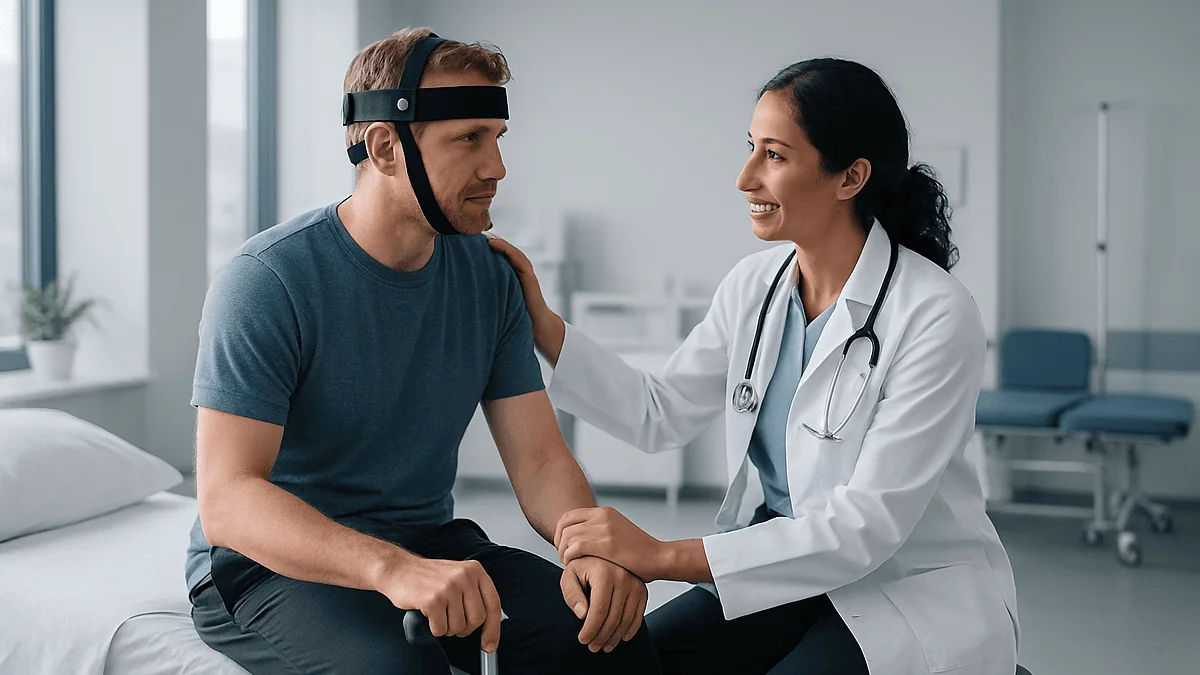
Traumatic brain injury rehabilitation usually moves through several stages: emergency and intensive care to stabilize the brain, an acute hospital ward where therapy begins at the bedside, inpatient rehabilitation with daily physical, occupational, speech and cognitive therapy, then outpatient or home-based programs. Progress is measured with scales such as the Glasgow Coma Scale and Rancho Los Amigos levels, and the pace varies widely between individuals.
The first thing Maria noticed in the neuro intensive care unit was the sound: the soft rhythm of the ventilator, the beep that changed pitch when her husband’s blood pressure drifted. The second thing she noticed was that nobody would tell her when he would wake up, or what he would be like when he did. Not because they were hiding anything. Because they honestly did not know yet.
Families in that room ask the same questions in the same order. Will he survive? Will he be himself? How long until he comes home? The traumatic brain injury rehabilitation stages that follow are the medical system’s best answer to the third question, and they are shaped by the first two. The path runs from a sedated patient on a monitor to a person relearning how to make coffee in their own kitchen, and it rarely runs in a straight line.
This explainer walks that path step by step, using the language clinicians actually use, so that the next time a doctor says “post-traumatic amnesia” or “Rancho level four,” you know what is being described and what is not yet known.
What actually happens in intensive care after a traumatic brain injury?
The brain sits inside a rigid box. When it is injured, it can swell, and there is nowhere for that swelling to go. The core job of intensive care in the first hours and days is to prevent a second wave of damage caused by pressure, low oxygen or poor blood flow, on top of the injury that already happened. Clinicians call the original impact the primary injury and everything that follows the secondary injury; the ICU exists to limit the second.
What that looks like at the bedside is a lot of monitoring and a few interventions. A patient may be sedated and on a ventilator, a machine that breathes for them, so that oxygen levels stay steady and the brain is not fighting to stay awake. A small pressure sensor, or a drain that lets fluid out, may be placed through the skull to measure intracranial pressure, the pressure inside the head. Bleeding that presses on the brain may need surgery to remove it, and occasionally a section of skull is temporarily removed to give a swollen brain room. The Mayo Clinic describes these steps as the mainstays of acute care for moderate and severe injuries.
Rehabilitation, oddly, starts here too, even if it does not look like it. Nurses and therapists position limbs to prevent stiff joints, turn patients to protect the skin, and begin gentle passive movement. A speech-language pathologist may assess swallowing before anyone eats or drinks. None of this is dramatic. All of it matters later, because a contracted ankle or a pressure injury can delay walking by weeks.
Families are often asked to keep the room quiet and visits short during this stage. It is not a brush-off. An injured brain is easily overloaded, and the team is trying to keep stimulation low while pressure settles.
Traumatic brain injury rehabilitation stages at a glance
People tend to picture recovery as a single long climb. Clinicians picture it as a series of rooms, each with a different goal, a different team, and a different way of measuring whether the patient is ready for the next door. The table below lays out the sequence most patients with moderate or severe injury pass through, as described by Johns Hopkins Medicine and other mainstream sources. Not everyone visits every room, and some go back a step before moving forward.
| Stage | Where it happens | Main goal | Typical sign of readiness to move on |
|---|---|---|---|
| Emergency and intensive care | Emergency department, ICU | Keep the brain oxygenated, control pressure and bleeding | Stable breathing and blood pressure without heavy support |
| Acute hospital ward | Neurosurgery or neurology ward | Wake, begin sitting, swallowing and bedside therapy | Medically stable, able to tolerate short therapy sessions |
| Inpatient rehabilitation | Rehabilitation unit | Intensive daily therapy across disciplines | Goals met for safe transfer to a less intensive setting |
| Post-acute or residential program | Transitional living or specialized brain injury program | Real-world skills, behavior, community reintegration | Safe with reduced supervision |
| Outpatient and home-based rehab | Clinic visits, home therapy | Refine function, return to roles, manage fatigue and mood | Self-managing with periodic review |
Two things are worth saying about this table. First, mild injuries, including most concussions, skip almost all of it; the CDC notes that most people with a concussion improve within a few weeks with rest and a graded return to activity. Second, the right-hand column is deliberately vague. Readiness is a clinical judgment made by the treating team, not a countdown, and it depends on medical stability, engagement in therapy, and what support exists at the next level.
How do doctors grade severity? Glasgow Coma Scale and post-traumatic amnesia
Within minutes of arrival, someone will score the patient on the Glasgow Coma Scale, or GCS. It is a bedside test of three things: whether the eyes open, what the person says, and how they move in response to a command or a stimulus. The scores are added to give a total from 3 to 15. According to the Mayo Clinic, a score of 13 to 15 is classed as mild, 9 to 12 as moderate, and 3 to 8 as severe. The number gets repeated by nurses through the night, and a falling score is one of the signals that prompts urgent rescanning.
The GCS is a snapshot, not a forecast. A person can have a low score on arrival because of alcohol, sedation or a seizure, and a higher one an hour later. That is why teams also track the length of post-traumatic amnesia: the period after injury when a person cannot form reliable new memories, even if they seem awake and talk in sentences. Someone in post-traumatic amnesia may ask the same question every ten minutes and have no memory of yesterday’s visit. Its duration tends to be a more useful guide to how much recovery work lies ahead than the first GCS.
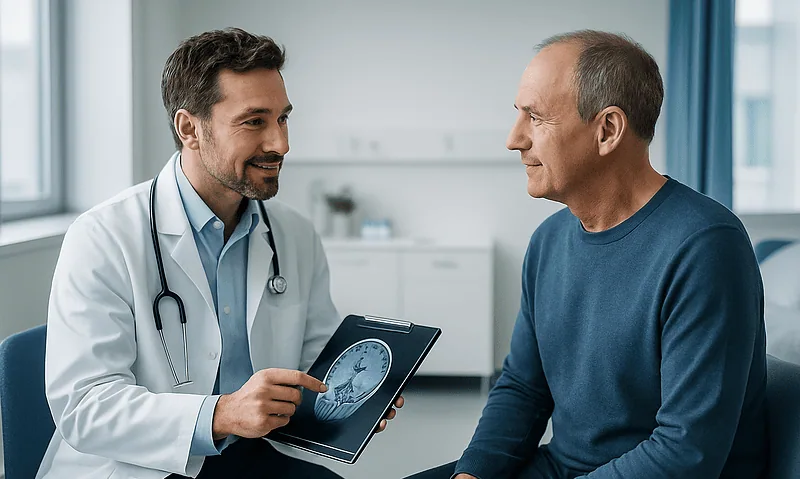
Imaging fills in the rest. A CT scan shows bleeding, skull fractures and swelling quickly; an MRI, usually later, shows finer damage to the brain’s wiring, sometimes called diffuse axonal injury, meaning stretching or tearing of the long fibers that connect brain regions. The NIH’s neurological institute notes that scans can look reassuring while symptoms are significant, and the reverse, which is why no single test decides the rehabilitation plan.
Ask which scale your team is using and what today’s number was. It gives you a shared vocabulary for the weeks ahead.
Stage one on the ward: waking up, sitting up, swallowing
Leaving intensive care feels like a graduation to families, and in a sense it is. The patient no longer needs a ventilator or minute-by-minute monitoring. What follows can be harder to watch, because this is often the stage when the person is awake but not yet themselves.

Emergence from coma is rarely the cinematic eyes-open moment. More often it is a gradual return: tracking a face, squeezing a hand on request, then a word or two. Some people pass through a phase of agitation, pulling at lines, swearing, trying to climb out of bed. It is distressing, and it is also a recognized part of recovery for many patients rather than a sign of a bad personality emerging. The NHS lists confusion, restlessness and changes in behavior among the common effects of severe head injury in the early period.
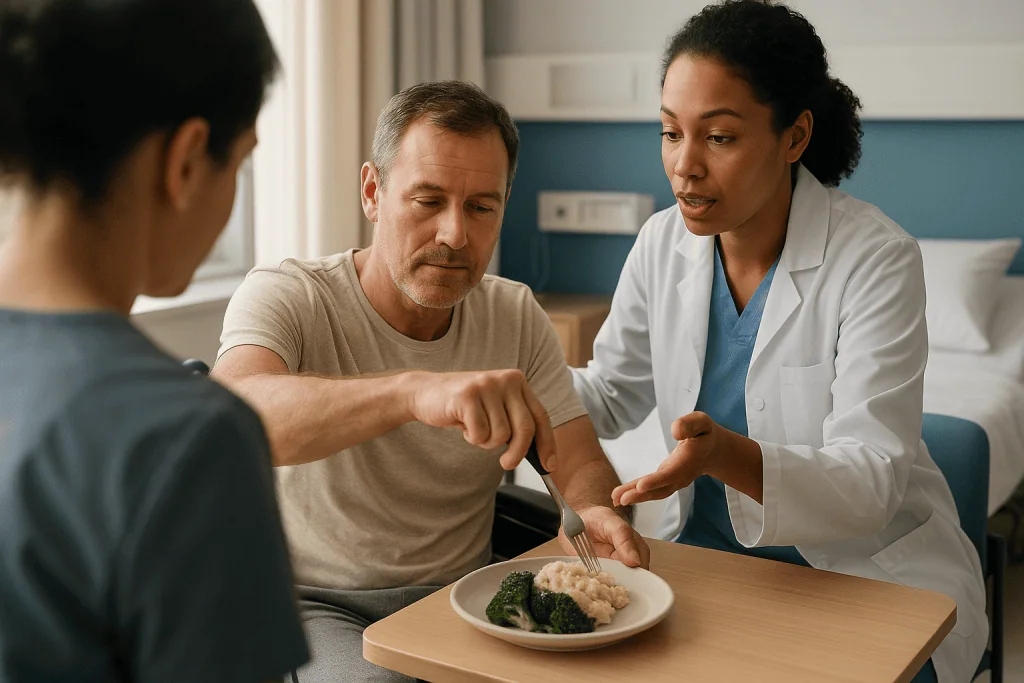
Therapy on the ward is short and frequent. A physiotherapist may sit the patient on the edge of the bed for a few minutes, watching blood pressure and balance. An occupational therapist tests whether the person can follow a two-step instruction or hold a cup. Swallowing is assessed carefully before the feeding tube comes out, because food or liquid entering the lungs, called aspiration, can cause pneumonia and set the whole timeline back.
Behind the scenes, the team is making the decision that shapes everything after: where should this person go next? The answer depends on medical stability, on whether they can participate in therapy for meaningful stretches, and on whether the cognitive and physical deficits are ones that intensive rehabilitation is designed to address. Families are usually invited to a meeting at this point. Bring a notebook; the amount of information is large, and post-traumatic amnesia is not only a patient phenomenon when you are exhausted.
What is the Rancho Los Amigos scale, and why do therapists keep mentioning it?
Around the time a patient leaves the ICU, a new number enters the conversation. The Rancho Los Amigos scale, named after the rehabilitation hospital where it was developed and described in patient resources from institutions such as Johns Hopkins, describes ten levels of cognitive functioning after brain injury. Unlike the Glasgow Coma Scale, which asks whether the brain is responding at all, the Rancho scale asks how the person is thinking and behaving, and therapists use it to plan what kind of therapy makes sense today.
The early levels describe no response, generalized response (the same reaction to any stimulus) and localized response (turning toward a voice, pulling away from something uncomfortable). Level four is the confused and agitated stage, when the person may be awake, restless and unable to process what is going on. Levels five and six describe confusion without agitation, first inappropriate and then more appropriate responses, with attention improving but memory still unreliable. The upper levels describe someone who is oriented, can carry out routines, and increasingly manages their own planning and judgment, first with prompting and later independently.
Why it matters: the level tells the team how to pitch the session. At level four, therapy is about structure, calm and safety; nobody hands a level-four patient a worksheet. At level six, memory aids and step-by-step routines come in. At level eight and above, the work shifts toward the messy tasks of real life such as cooking, shopping, and handling a schedule.
People do not always move through the levels in order, and some plateau at a level for a period before shifting. A Rancho level is a description of today, not a prediction about next month, and the treating team will be the ones to interpret changes over time.
Who is usually offered inpatient rehab after brain injury, and who is asked to wait?
Inpatient rehabilitation is the most intensive rehab setting: the patient lives on a rehabilitation unit and receives therapy from several disciplines most days, with rehabilitation physicians and nurses overseeing medical issues. It is a demanding program, and not everyone is ready for it at the same moment.
Candidates typically share a few features. They are medically stable enough to be off intensive monitoring. They have deficits, in movement, speech, thinking or self-care, that are expected to respond to structured therapy. And they can engage, even briefly, with what a therapist asks of them. Cleveland Clinic describes rehabilitation as tailored to the type of injury and its specific effects, which is a polite way of saying there is no fixed admission list; the match between a patient’s needs and what a program can offer is judged case by case.
Who tends to wait? Someone still requiring frequent surgical review, or with an unstable chest infection, may spend longer on the acute ward first. A person in a prolonged state of very limited responsiveness may be better served by a specialized slower-stream program that focuses on medical care, positioning and sensory stimulation, with regular reassessment for signs of emerging awareness. At the other end, a person with a mild injury and no physical deficits usually does not need an inpatient bed at all; outpatient cognitive rehabilitation or a graded return-to-activity plan may be more appropriate.
Family circumstances weigh in too. A discharge plan that assumes a caregiver is available around the clock is only as good as that caregiver’s own health and job. Rehabilitation teams will ask blunt questions about who lives at home and what the bathroom looks like. Answer them honestly; the plan is being built on those answers.
Inside inpatient rehab after brain injury: what a typical day looks like
The rhythm of a rehabilitation unit is closer to a school than a hospital. Mornings begin early, and the first therapy session is often getting washed and dressed, supervised by an occupational therapist who is watching sequencing, balance and attention as much as buttons.
A day usually includes sessions with physical therapy for walking, balance and strength; occupational therapy for daily tasks and hand function; and speech-language pathology, which covers not just speech but swallowing, reading, and the cognitive skills of attention and memory. Between sessions there is rest, and rest is not optional. Brain injury fatigue, described by the NHS as a common lasting effect, is a physiological phenomenon in which even modest mental effort empties the tank; therapists build schedules around it rather than pushing through.
A neuropsychologist, a psychologist who specializes in how brain injury affects thinking and mood, may carry out formal testing once the person is past post-traumatic amnesia, to map strengths and weaknesses and guide return-to-work planning. A social worker or case manager keeps the discharge plan moving. Rehabilitation nurses handle medicines, bladder and bowel programs, and the practicalities of nights, which are often when confusion peaks.
Weekly team meetings set goals in plain terms: walk to the bathroom with one person helping, prepare a simple breakfast, remember three appointments using a diary. Families are increasingly included in sessions so they can learn techniques such as how to give one instruction at a time, or how to redirect rather than argue when the person insists it is Tuesday.
Length of stay is decided by progress toward those goals and by what the next setting can safely provide. Ask the team what the current goals are and how they are measured. The conversation will be more useful than asking for a date.
Physical, occupational, speech and cognitive therapy: who does what in TBI rehab
The alphabet of rehabilitation can be baffling on day one, so here is the cast, and the reasoning behind each role.
Physical therapists work on the body’s ability to move: sitting balance, standing, walking, stairs. After brain injury the problem is often not weak muscles but a brain that has lost its map of where the body is and how to coordinate it. Practice, repeated many times, is how that map redraws, a process the NIH describes under the umbrella of neuroplasticity, the brain’s ability to reorganize connections after injury.
Occupational therapists focus on the tasks of living: dressing, cooking, managing money, using a phone, eventually driving assessments and workplace adaptation. They are also the people who spot that a patient who “can’t cook” can actually cook fine but cannot plan the steps in order, which is a cognitive problem wearing a kitchen apron.
Speech-language pathologists cover swallowing, speech clarity, language comprehension and the cognitive-communication skills that make conversation work, such as staying on topic and reading facial cues. They are often the first to notice subtle changes in how a person processes language.
Neuropsychologists assess memory, attention, processing speed and executive function, meaning the brain’s management system for planning and self-control. Their reports shape the return-to-work conversation months later.
Rehabilitation physicians, sometimes called physiatrists, oversee the medical side: spasticity (involuntary muscle tightness), pain, sleep, bladder function, seizures and mood. A dietitian manages nutrition, which is easy to overlook and hard to recover from if neglected.
The disciplines overlap on purpose. A walk to the therapy gym doubles as a memory exercise if the patient has to find the way. That overlap is the point of doing this on one unit rather than in scattered appointments.
TBI recovery timeline: what do the following weeks and months usually look like?
The honest answer to “how long” comes with a shape rather than a number. Recovery after moderate and severe traumatic brain injury tends to be fastest in the early months and then slow, without stopping entirely. The NIH’s neurological institute notes that most improvement occurs within the first six months, with further gains commonly seen up to two years and sometimes beyond, at a slower pace. That curve, steep then flattening, is why the intensity of therapy is front-loaded.
For mild injury, the shape is different. The CDC reports that most people with a concussion feel better within a couple of weeks, though a minority have symptoms that persist for longer and benefit from targeted support with headache, sleep, balance or cognitive complaints.
Within the longer curve, certain domains often move at different speeds. Walking frequently returns before fine hand control. Speech may come back before the ability to hold a complex conversation in a noisy room. Fatigue, irritability and subtle memory problems are among the effects the NHS lists as potentially persisting for months or years, and they are often the last things that improve and the first things employers and friends fail to see.
Plateaus happen. A week without measurable change is not the end of recovery, and neither is a good week a guarantee of the next one. Setbacks from infection, a fall or poor sleep are common and usually temporary.
None of this can be applied to an individual as a forecast. Age, injury severity, other injuries, and pre-existing health all shift the curve, and only the treating team, watching the person over time, can say how it is unfolding in their case.
Medicines during brain injury rehabilitation: what they are for
Rehabilitation is mostly not about tablets, but medicines do appear at each stage, and knowing why helps families make sense of the medication chart. What follows describes classes and purposes only; every choice, change and timeline belongs to the prescribing clinician.
In intensive care, sedatives keep an agitated, ventilated patient calm and lower the brain’s demand for oxygen. Medicines that draw fluid out of swollen tissue may be used to reduce pressure inside the skull. Anti-seizure medicines are sometimes given for a limited period after severe injury, because the injured brain is more prone to seizures in the first week; the Mayo Clinic lists these among the acute-phase medications. Whether and when they stop is a decision reviewed by the team.
On the rehabilitation unit the focus shifts. Muscle relaxants or targeted injections may be considered for spasticity, the involuntary tightness that can pull a wrist into a fist or an ankle downward, when stretching and splinting alone are not enough. Medicines that affect alertness or attention are sometimes considered for people who are slow to engage, and antidepressants may be discussed if low mood or anxiety is holding back participation. Sleep is a frequent target, because a brain that does not sleep does not consolidate what it practiced in the gym.
Two cautions run through all of this. First, the injured brain can be unusually sensitive to sedating medicines, so teams often aim to simplify rather than add. Second, medicines started in a crisis are routinely reviewed as the person improves, which is why a chart at discharge can look very different from one at admission. If a medicine’s purpose is unclear, ask what it is for and when it will be reviewed. Never adjust anything without that conversation.
Stepping down: outpatient rehab, day programs and the move toward home
Leaving the rehabilitation unit is the transition families anticipate most and find most disorienting. The structure that carried the day disappears, and the deficits that were manageable in a quiet, adapted environment suddenly meet stairs, traffic and a phone that keeps ringing.
Programs are designed to soften that step. Day rehabilitation brings the person in for several hours of therapy on set days while they sleep at home. Transitional or residential programs, described among the rehabilitation options by Johns Hopkins, offer supported living where cooking, budgeting and community trips are the therapy. Outpatient therapy continues individual sessions at lower frequency. Home-based therapy, when available, has the advantage of practicing in the actual kitchen and on the actual front steps.
Before discharge from any inpatient setting, a home assessment is common. An occupational therapist may visit or review photographs to check for grab rails, step heights, lighting and trip hazards. Equipment is arranged. A weekend home trial is sometimes scheduled, an overnight or two at home before the formal discharge, to discover the problems nobody predicted while support is still in place.
Follow-up appointments should be booked before the person leaves, with the rehabilitation physician, with therapists, and with the surgeon if there is a skull plate or shunt to monitor. Ask for a written summary of current medicines, current abilities, and who to call about what. The MedlinePlus overview stresses that rehabilitation after serious TBI is a long-term process, which means the handover to community services deserves the same care as the one from ICU to ward.
A practical tip from families who have done it: assume the first two weeks at home will be harder than the last two weeks in rehab, and arrange extra help for exactly that window.
Returning home after traumatic brain injury: fatigue, mood, driving and work
Home is where the invisible injuries show up. A person who walks and talks normally may be unable to follow a group conversation, may forget a conversation from an hour ago, or may flare with anger over a misplaced remote. Friends who saw the wheelchair leave assume the recovery is done. It is not.
Fatigue is the most consistent complaint. The NHS lists tiredness among the effects that can persist long after a severe head injury. Practical management is about pacing: planning the day around a predictable energy budget, scheduling rest before it is needed, and protecting sleep with a regular routine.
Mood changes are common and deserve active attention rather than a stiff upper lip. Depression, anxiety and irritability after brain injury are partly biological, a result of damage to the circuits that regulate emotion, and partly a natural response to loss. Neuropsychology and counseling services that specialize in brain injury exist precisely because ordinary talk therapy sometimes needs adapting for memory and attention problems.
Driving is a medical and legal question, not a personal one. Most jurisdictions require notification after a significant brain injury, and a formal driving assessment, arranged through the rehabilitation team, tests reaction time, visual scanning and judgment in ways a spouse in the passenger seat cannot. Returning to work usually goes better in stages: reduced hours, a quieter role, a written task list, and a named contact at work who understands the injury. Occupational therapists and neuropsychologists often help design that plan and liaise with employers.
Caregivers need their own plan. Support groups, respite arrangements and a frank conversation with a family doctor about the caregiver’s sleep and mood are not luxuries; they are part of keeping the household functioning through a recovery that the NIH describes as often continuing for years.
What people often get wrong about the stages of brain injury recovery
Myths about brain injury are stubborn, and most of them come from film. A few corrections, grounded in what the evidence actually shows.
“Waking from a coma is a moment.” It is almost always a process, unfolding over days or weeks through the Rancho levels described earlier. Expecting a single moment sets families up to miss the small changes that matter.
“If the scan looks fine, the brain is fine.” The NIH notes that imaging can appear normal while symptoms are real, particularly with diffuse injury to the brain’s wiring. Function, observed over time, is the better guide.
“Recovery stops at six months.” Improvement is typically fastest in the first six months, but the same source describes gains continuing to two years and, more slowly, beyond. The curve flattens; it does not end.
“Agitation means the person has become violent.” Restlessness and aggression in the confused stage are recognized features of the recovery process for many patients, listed by the NHS among common early effects, and they usually settle as awareness improves.
“More therapy is always better.” Fatigue is part of the injury. Overloading a tired brain does not accelerate learning and can worsen headaches, irritability and sleep. Therapists schedule rest for a reason.
“Being able to walk means being ready to work.” Physical recovery often outpaces cognitive recovery, and it is the cognitive and emotional effects that most often complicate a return to work and relationships.
“Unproven treatments can’t hurt.” Supplements, devices and intensive programs marketed for brain recovery rarely have quality evidence behind them. Anything promising to speed recovery should be discussed with the treating team before money or hope is spent on it.
Questions to ask your care team at each rehabilitation stage
Good questions get better answers, and they also signal to a busy team that the family wants to be part of the plan. These are grouped by stage so you can pick the ones that fit today.
In intensive care
- What is the current Glasgow Coma Scale score, and what would a change in either direction mean?
- What is the pressure inside the head doing, and what is the plan if it rises?
- Which of today’s medicines are for sedation, pressure or seizure prevention, and when will each be reviewed?
- Is there anything we can do at the bedside that helps, and anything that overstimulates?
On the acute ward
- Is the patient still in post-traumatic amnesia, and how are you tracking it?
- What Rancho level best describes the current behavior, and what does therapy look like at that level?
- What criteria are you using to decide the next setting, and what are the alternatives?
In inpatient rehabilitation
- What are this week’s goals, and how will we know they are met?
- How can we practice what therapists are teaching without undoing it?
- Who is coordinating the discharge plan, and what does the home need to have in place?
- Has a neuropsychological assessment been done, and what did it show about strengths as well as difficulties?
Before and after going home
- What follow-up is booked, and who do we call for a new symptom, a mood crisis, or an equipment problem?
- What is the plan for driving, and who arranges the formal assessment?
- What support is there for the caregiver, including respite?
- Which warning signs should send us straight to emergency care?
Write down the answers. Memory problems after brain injury are not confined to the patient; stress does something similar to the people at the bedside, and a notebook levels the field.
When to call your doctor: red-flag signs after traumatic brain injury
Most of the ups and downs of recovery are expected, and the team will have told you which ones to ignore. Some signs are not in that category. They may indicate new bleeding, a blood clot, infection, a seizure or a blocked shunt, and they warrant urgent contact with the treating team or emergency services rather than watchful waiting. The NHS and Mayo Clinic describe the following among the warning signs that should be treated as emergencies.
- A new or sudden decline in alertness: harder to wake, more confused than yesterday, or newly unresponsive.
- A seizure, whether a first one or a return after a period without them.
- A severe or rapidly worsening headache, especially with repeated vomiting.
- New weakness, numbness or drooping on one side of the face or body, new slurred speech, or new trouble with vision.
- Unequal pupil sizes, or clear or blood-stained fluid from the nose or ears.
- Fever with neck stiffness, or redness, swelling or leaking around a surgical wound, shunt or skull plate.
- A hot, swollen or painful calf, or sudden breathlessness or chest pain, which can signal a blood clot in someone who has been immobile.
- Any fall involving a blow to the head, even a minor one, in a person with a recent brain injury or a missing section of skull.
- Talk of self-harm, or a sudden change in mood or behavior that frightens the family.
Call sooner for problems that are less dramatic but still matter: swallowing difficulties or coughing with meals, a pressure sore, urine infection symptoms, sleep that has fallen apart, or a plateau in therapy that worries you. Rehabilitation teams expect these calls. The worst outcome is the problem nobody mentioned because it seemed too small. If in doubt, ring; the decision about what to do next is theirs to make with you.
Frequently asked questions
What are the main stages of brain injury recovery?
The main stages are emergency and intensive care, an acute hospital ward, inpatient rehabilitation, then outpatient or home-based rehabilitation, sometimes with a residential or day program in between. Each stage has a different goal, from stabilizing the brain to relearning daily tasks. Not everyone passes through every stage; people with mild injuries usually skip the intensive settings, and readiness to move on is judged by the treating team.
What is the typical TBI recovery timeline?
There is no single timeline, but recovery after moderate and severe injury tends to be fastest in the first six months and to continue more slowly for up to two years or longer, according to the NIH. Most concussions improve within a couple of weeks, per the CDC. Individual factors such as age, injury severity and other health conditions change the pace, so only the treating team can describe how it is unfolding for a particular person.
What does the Rancho Los Amigos scale measure?
It describes ten levels of cognitive functioning after brain injury, from no response to purposeful, independent behavior. The early levels cover generalized and localized responses, the middle levels describe confusion with or without agitation, and the upper levels describe increasingly independent planning and judgment. Therapists use the current level to decide how to structure sessions, and the level describes today rather than predicting the future.
Who qualifies for inpatient rehab after brain injury?
Inpatient rehabilitation is usually considered for people who are medically stable, have deficits in movement, thinking, speech or self-care that are expected to respond to structured therapy, and can engage with therapists for meaningful stretches. People still needing intensive medical or surgical care may spend longer on an acute ward first, while those with mild injuries typically go straight to outpatient support. The decision is made case by case by the treating team.
How long does someone stay in intensive care after a traumatic brain injury?
It varies with how severe the injury is and how the brain responds to treatment for swelling and pressure. Some people leave within a few days; others need longer ventilation and monitoring. The team moves a patient to the ward once breathing and blood pressure are stable without heavy support and the pressure inside the head has settled. Ask the ICU team which specific milestones they are waiting for.
Why is my relative so agitated and aggressive after waking up?
Agitation, restlessness and verbal or physical aggression are recognized features of the confused stage of recovery for many patients, corresponding roughly to level four on the Rancho Los Amigos scale. The NHS lists such behavior changes among common early effects of severe head injury. It usually settles as awareness improves. Staff will focus on a calm environment and safety, and families can help by keeping visits quiet and instructions simple.
Can a person fully recover from a severe traumatic brain injury?
Outcomes range widely, and no one can promise a particular result for an individual. Many people regain a great deal of function, while others live with lasting effects such as fatigue, memory problems or mood changes. Recovery is generally fastest in the first six months and continues more slowly afterward. The treating team, watching progress over time, is best placed to discuss what is realistic in a specific case.
What is post-traumatic amnesia?
Post-traumatic amnesia is the period after a brain injury when a person cannot form reliable new memories, even if they appear awake and can hold a conversation. Someone in this state may ask the same question repeatedly and have no memory of a visit an hour earlier. Clinicians track how long it lasts because its duration is often a useful guide to how much rehabilitation work lies ahead.
When can someone drive again after a brain injury?
Driving after a significant brain injury is a medical and legal decision, not a personal one. Most jurisdictions require the driver to notify the licensing authority, and the rehabilitation team can arrange a formal driving assessment that tests reaction time, visual scanning and judgment. The timing depends on recovery of those skills and on any seizure history, and the treating team will advise when an assessment is appropriate.
What can family members do to help during brain injury rehabilitation?
Families help most by following the team’s guidance on stimulation, learning the techniques therapists use, and keeping a notebook of questions and answers. Practical support includes preparing the home before discharge, protecting the person’s rest, and arranging extra help for the first weeks at home. Caregivers should also look after their own sleep and mood, since recovery often continues for months or years.
References
- Traumatic Brain Injury (TBI): National Institute of Neurological Disorders and Stroke (NIH)
- Severe head injury: NHS
- About Traumatic Brain Injury and Concussion: CDC
- Traumatic Brain Injury: MedlinePlus
This article is for general information only and is not a substitute for professional medical advice. Please consult a qualified doctor about your individual situation.

More from the Blog
Temporal Lobectomy or Laser Ablation: How Does Each Epilepsy Surgery Reach the Seizure Focus?
A temporal lobectomy reaches the seizure focus from the outside: the surgeon opens a section of skull and removes the front of the temporal…

Is Insomnia Treated Differently in Older Adults? What Sleep Specialists Adjust and Why
Yes. Insomnia treatment in older adults still begins with cognitive behavioral therapy for insomnia, but clinicians adjust how they apply it and become far…

Migraine Myths a Neurologist Would Correct: It Is Not Just a Bad Headache
Migraine is a neurological disorder, not simply a severe headache. Attacks often unfold in phases, can occur without head pain or aura, affect men…

Which Headaches Are Expected After Brain Shunt Surgery and When to Contact Your Neurosurgeon
A dull, incision-focused headache after shunt surgery is common in the first days and usually settles as swelling fades and the brain adapts to…

What Does a Programmable Valve Change in Brain Shunt Surgery vs a Fixed-Pressure Valve?
A programmable shunt valve lets a neurosurgeon adjust the pressure at which excess cerebrospinal fluid drains, using an external magnetic tool in clinic, without…

Before a Dysphagia Evaluation: Fasting Rules, Reflux History and the Reports to Bring
Preparing for a dysphagia evaluation usually means following the fasting instructions on your appointment letter (X-ray-based swallow studies often require an empty stomach, while…