

Tumescent Liposuction Recovery: Fluid Drainage in the First Days, Compression and Walking

Key Takeaways
- The pink fluid that drains from incisions in the first day or two is mostly the dilute anesthetic solution infused during tumescent liposuction, tinted with a little blood, and the small openings are designed to let it out.
- Soreness and swelling commonly peak on the second and third days after the local anesthetic wears off, and the treated area can look larger than before surgery before it begins to shrink.
- Compression garments are typically worn for several weeks to limit fluid collection and help skin settle, and a correct fit matters more than maximum tightness.
- Short, frequent walks starting within hours of surgery reduce the risk of deep vein thrombosis, which the CDC lists as a recognized complication of surgery and immobility.
- Gross swelling usually subsides within a few weeks, but the NHS notes it can take up to six months for the area to settle fully, so early photographs show fluid rather than final shape.
- Advice to avoid caffeine after liposuction rests on plausible mechanisms such as blood pressure and sleep rather than liposuction-specific trials, so it is a reasonable precaution with low-certainty evidence.
Tumescent liposuction recovery usually begins with a day or two of pink, watery drainage from the small incisions as leftover anesthetic solution leaves the body, followed by soreness and swelling that commonly peak in the first few days. Most surgeons ask patients to wear a compression garment for several weeks and to start short, gentle walks within hours, with full results appearing over months.
The first night home, most people are not thinking about their new shape. They are thinking about the towel. A pale pink fluid keeps seeping from the tiny openings along the hip or abdomen, the garment underneath feels damp, and the question that seemed too small to ask at the consultation suddenly feels urgent: is this supposed to happen?
It usually is. Tumescent liposuction recovery has a rhythm that few brochures describe honestly. The leaking, the stiffness that makes standing up from a chair feel like a project, the odd numbness, the swelling that seems to get worse before it gets better. None of it is glamorous, and almost all of it is expected.
This explainer walks through what the first days, weeks and months typically look like, what the fluid is, why compression and walking matter more than any other two habits, and where the evidence is thinner than the internet suggests. Every decision about your own care belongs with the surgeon and team who know your case.
What actually happens during tumescent liposuction
Liposuction removes fat from beneath the skin using a thin hollow tube called a cannula attached to suction. The word tumescent means swollen and firm, and it describes the technique rather than the result. Before any fat is removed, the surgeon infuses a large volume of dilute salt-water solution into the fatty layer. That solution carries two active ingredients: a local anesthetic, most often lidocaine, which numbs the tissue, and epinephrine, a substance that narrows small blood vessels so that less blood is lost during the procedure.
The tissue swells until it feels tight, a bit like a well-filled water balloon. That firmness makes the fat easier to break up and suction, and it separates the fat from the muscle and skin layers so the cannula moves in a more predictable plane. Because so much of the anesthetic is delivered directly into the treatment area, many tumescent procedures are done while the patient is awake or lightly sedated, although some surgeons still combine it with general anesthesia depending on the areas being treated and the patient’s health, according to the Mayo Clinic.
The incisions themselves are small, often a few millimeters, and are usually left partly open or loosely closed so fluid can escape afterward. That design choice is the reason the first days of tumescent liposuction recovery are wetter than most people expect, and it is deliberate. Fluid that drains out cannot pool inside and form a collection.
Not all of the solution comes back out during surgery. A meaningful share stays in the tissue and is either absorbed slowly by the body or drains through the openings over the following day or two. Understanding that single fact explains most of what happens in the first 72 hours.
Why fluid drains in the first days after tumescent liposuction, and what color is normal
The pinkish fluid on the towel is mostly the tumescent solution you were infused with, tinted by a small amount of blood and mixed with some liquefied fat and tissue fluid. It is not a sign that a wound has opened or that something inside is bleeding heavily. The MedlinePlus patient guide lists drainage from the incisions among the ordinary early effects, alongside bruising and swelling.

Color and consistency tell you more than volume. Thin, watery fluid ranging from nearly clear to pale pink or light red is what surgeons expect. A darker, more concentrated red early on can simply reflect a little more blood in the mix, but a steady flow of bright red blood that soaks dressings quickly is a different matter and belongs in the red-flag list later in this article. Thick, cloudy, yellow-green or foul-smelling fluid is also not normal drainage and warrants a call.
Timing varies with the area treated and how much solution was used. Drainage is typically heaviest in the first day, tapers over the second, and has usually slowed to a damp patch or stopped within a few days. Some surgeons place small temporary drains in larger areas to speed this process, as the Mayo Clinic notes, and those are removed at an early follow-up visit.
Practical care is simple: absorbent pads under the garment, a protective cover on the mattress and car seat, and dark clothing for the drive home. Changing pads when they are saturated, rather than sealing the openings tightly, keeps fluid moving out. If your team gave you specific wound-care instructions, those override anything general here. When drainage stops abruptly while swelling in one spot grows tense and tender, mention it; a collection may be forming beneath the skin rather than escaping.
What the first 72 hours usually look like
Picture the first three days as a sequence rather than a single blur. Day one is dominated by drainage and a heavy, waterlogged feeling. The local anesthetic in the tumescent solution keeps working for many hours after surgery, so the treated area often feels numb and oddly comfortable at first. People sometimes wonder what the fuss was about. Then the anesthetic wears off.
By the evening of day one or the morning of day two, soreness arrives. Most patients describe it as a deep, bruised ache, similar to the muscle pain after a hard workout you were not prepared for, rather than a sharp incision pain. Moving from lying to sitting and from sitting to standing is when it bites, because the treated tissue is being stretched. Once you are upright and moving, it usually eases.
Day two and three are when swelling and stiffness tend to peak. The area can look larger than before surgery, which unsettles people who expected to see a difference immediately. Bruising spreads and darkens, sometimes tracking downward with gravity to areas that were not treated at all. That migration is normal; bruising follows fluid, and fluid follows gravity.
Through all of this, two tasks matter most: keeping the compression garment on as instructed, and getting up to walk for a few minutes every hour or two while awake. The Mayo Clinic notes that swelling typically subsides within a few weeks and that a garment is usually worn for a few weeks to help control it. Fatigue is common in these days as well; the body is repairing a wide area of disturbed tissue, and rest between walks is part of the plan rather than a lapse in it.
What are the worst days after liposuction?
Ask a room of people who have been through it and most will point to the same window: the second and third days. That is when the local anesthetic has fully worn off, swelling has reached its high point, and the body’s inflammatory response is at its loudest. Guideline sources such as the NHS do not assign a specific worst day, and individual experiences range widely, so treat this as a common pattern rather than a rule.
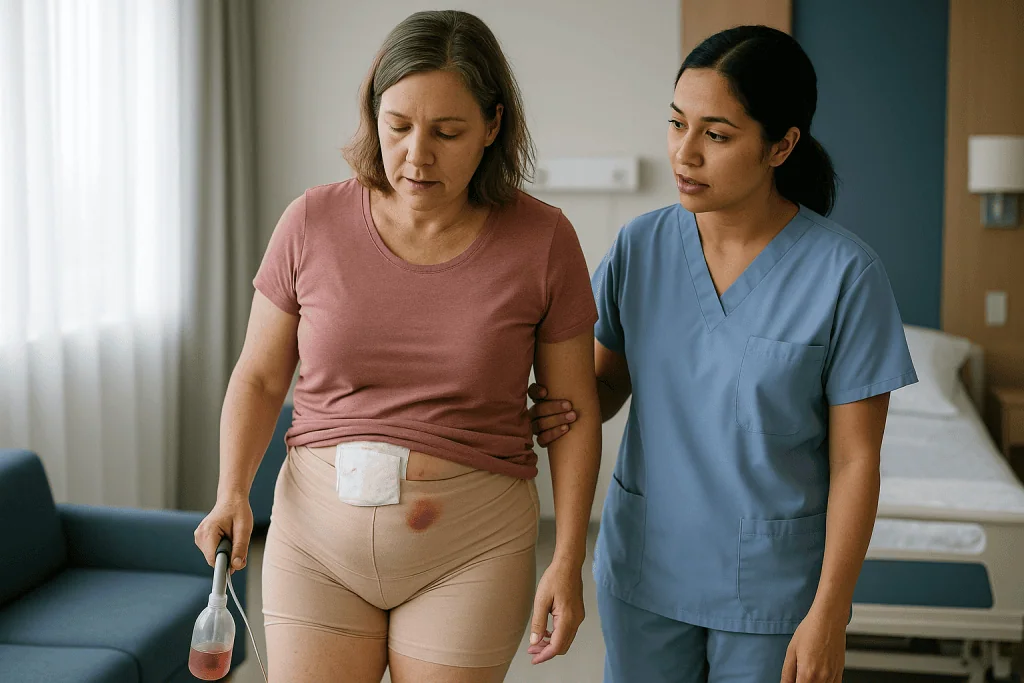
Several things make those days feel harder than the procedure itself. Sleep is disrupted because most comfortable positions press on the treated area, and many people are asked to sleep on their back with legs slightly raised. The garment, which felt supportive on day one, can feel confining once swelling increases beneath it. Getting to the bathroom becomes a small logistical event. Appetite may dip while thirst rises, since the body is shifting fluid.
Emotionally, the swelling is often the hardest part. Seeing an area look puffier than before surgery, combined with bruising in colors you did not know skin could produce, can trigger a wave of regret that surgeons hear about so routinely they warn patients in advance. The feeling generally lifts as swelling begins to recede toward the end of the first week.
What helps is unglamorous: taking any prescribed pain relief on the schedule your team set rather than waiting for pain to build, walking briefly and often, sipping fluids steadily, and having someone home to help for at least the first day or two. By day four or five most people notice a turn. Stiffness eases, drainage has usually stopped, and the ache becomes background rather than foreground.
How painful is tumescent liposuction, really?
Pain is the question people ask most often and answer least honestly afterward, partly because memory softens it. A fair description: the procedure itself is usually tolerable because the tumescent solution numbs the area so thoroughly, while the recovery involves days of significant soreness that is manageable for most people with the plan their surgeon provides.
During surgery under local tumescent anesthesia, patients commonly feel pressure, pulling and vibration from the cannula rather than sharp pain. Some describe brief stinging as the solution is first infused, before it takes effect. If sedation or general anesthesia is used, that experience is absent entirely.
Afterward, the pain has a specific character. Because fat has been removed across a broad surface rather than through a single deep cut, the sensation is diffuse: aching, tightness, a burning or tingling quality as nerves in the skin react to being disturbed. Areas with more fibrous tissue, such as the back, flanks and male chest, are often reported as sorer than softer areas like the outer thigh. Larger treated volumes generally mean more soreness.
Pain relief after liposuction is usually built around simple analgesics. Some teams advise avoiding one class of over-the-counter painkillers, non-steroidal anti-inflammatory drugs, in the early days because of theoretical effects on bleeding; others permit them. This varies by surgeon and by patient, so follow the instructions you were given and ask before adding anything, including supplements. Never adjust a prescribed medicine on your own.
Numbness deserves its own mention. Patches of reduced or altered sensation are common and can last weeks to months as small skin nerves recover, according to the MedlinePlus guide. Occasionally, as sensation returns, the area feels hypersensitive or itchy for a period. That is usually a sign of healing rather than a problem.
Liposuction compression garment: what it does and how long people usually wear it
The compression garment is the least glamorous and arguably most important piece of the recovery. It is a firm, elasticated wrap, corset or bodysuit fitted over the treated area, and it does several jobs at once.
First, it applies gentle, even pressure that limits how much fluid can collect in the space where fat used to be. Second, it helps the skin lie down against the underlying tissue as that space closes, which supports a smoother final contour. Third, it reduces movement of the healing tissue, which many people find eases soreness when they walk or turn in bed. The NHS describes wearing an elasticated support corset or compression bandages for several weeks after surgery as a standard part of the plan, and the Mayo Clinic gives a similar timeframe of a few weeks.
Fit matters more than tightness. A garment that is punishingly tight can dig into skin folds, create pressure marks, and in some cases produce uneven indentations if worn incorrectly. One that is too loose does little. Many surgeons switch patients from a heavier first-stage garment to a lighter second-stage one as swelling recedes. Ask when and whether that applies to you.
Common practical questions have practical answers. Most teams allow the garment to be removed briefly for showering once they have cleared it, then replaced immediately. Washing it daily and having a second one to rotate keeps skin healthier. Wearing a thin cotton layer underneath reduces chafing. If a seam or edge is causing persistent redness, blistering or numbness beyond the treated area, that is a fit problem worth reporting rather than enduring.
How long to wear it, how many hours a day, and when to stop are decisions for your surgeon, who has seen your tissue and knows how much was removed. General ranges from reputable sources are a starting point for the conversation, not a substitute for it.
Walking after liposuction: why the first lap matters more than the first workout
Nobody feels like walking on the evening of surgery. Almost everyone is asked to do it anyway, and the reason is not about shape. It is about blood clots.
Any surgery, combined with lying still, raises the risk of a deep vein thrombosis, a clot that forms in a deep vein, usually in the leg. If part of that clot breaks off and travels to the lungs it becomes a pulmonary embolism, which can be life-threatening. The CDC lists recent surgery and prolonged immobility among the leading risk factors. Muscle contraction in the calves is the body’s own pump for returning blood from the legs, and walking switches it on. Surgeons ask patients to stand and take slow steps within hours of the procedure and then repeat short walks throughout the day for exactly this reason.
Walking also helps the fluid situation. Gentle movement encourages remaining tumescent solution to drain, keeps lymphatic channels moving, and reduces the stiffness that builds when tissue sits in one position. People who move a little and often typically report feeling less locked-up than those who stay in bed.
The key word is gentle. Early walking means a few minutes around the house or garden, not a brisk mile. Pace, distance and stairs can build gradually over the first week or two as soreness allows. Strenuous exercise, heavy lifting, running and anything that raises heart rate and blood pressure substantially are usually deferred for several weeks, because they can increase swelling and, early on, bleeding. The Mayo Clinic describes waiting a few weeks before resuming normal activities including exercise; your surgeon will translate that into a schedule for you.
If walking causes calf pain, a hot swollen leg, or breathlessness, stop and seek care urgently. Those are not signs to walk through.
Tumescent liposuction recovery timeline, week by week
Timelines are the most requested and least reliable part of any recovery guide, because the body does not read calendars. The ranges below draw on the Mayo Clinic and the NHS, and they describe what is common, not what is promised. Larger treated areas, multiple sites, older age, smoking and certain health conditions can all stretch them.
| Phase | What is commonly happening | Typical activity level |
|---|---|---|
| Days 1 to 3 | Fluid drainage, numbness giving way to soreness, swelling and bruising rising toward a peak | Short, frequent walks indoors; rest between; garment worn as instructed |
| Days 4 to 7 | Drainage usually stopped; ache easing; bruising spreading then starting to fade at the edges | Longer walks; light household tasks; many desk-based workers return around this point or the following week |
| Weeks 2 to 4 | Swelling visibly receding; firmness and lumpiness under the skin common; numbness patches persist | Most people back at work; driving once off sedating medicines and able to brake comfortably; no strenuous exercise yet |
| Weeks 4 to 8 | Contour becoming clearer; garment often transitioned or discontinued on surgeon’s advice | Gradual return to exercise as cleared by the team |
| Months 3 to 6 | Residual swelling resolving; skin retracting; final shape emerging | Full activity for most; final review with surgeon |
The NHS notes it can take up to six months for the treated area to settle fully, and the Mayo Clinic describes a leaner appearance developing over several months as swelling clears. Anyone expecting a finished result at two weeks will be disappointed; anyone expecting steady, uneven progress will be closer to the truth.
Who tumescent liposuction is usually for, and who is asked to wait
Liposuction is a contouring procedure, not a weight-loss treatment. That single sentence prevents most disappointment. The Mayo Clinic describes the typical candidate as someone at or near a stable weight who has localized pockets of fat that have not responded to diet and exercise, with reasonably firm, elastic skin and good muscle tone. Skin elasticity matters because the skin must shrink back over a smaller volume; skin that has lost elasticity may look loose or rippled afterward.
Surgeons also weigh general health. Conditions that affect blood flow or healing, such as poorly controlled diabetes, heart disease, or a history of blood clots, raise the risk of complications and may lead a surgeon to decline or to ask for optimization first. Smoking impairs healing and is a common reason to be asked to stop well before and after surgery. Medicines that affect bleeding, including anticoagulants and some antiplatelet drugs, need to be reviewed with the prescribing clinician; a surgeon will never want a patient to stop these on their own initiative.
People are commonly asked to wait when their weight is still changing, when they are pregnant or recently postpartum, when they are planning a pregnancy soon, or when expectations do not match what the procedure can deliver. Someone hoping liposuction will treat cellulite or tighten loose skin is usually redirected, because it does neither reliably. The NHS is explicit that it is not a treatment for obesity and that results depend on maintaining a stable weight afterward.
A candid consultation should cover the amount of fat that can be safely removed in one session, which is limited for safety reasons and varies by patient, and whether staging the work across more than one procedure would be wiser. The final judgment always rests with the surgical team, informed by examination and your medical history.
Why no caffeine after liposuction? What the evidence does and does not show
Many discharge sheets say to avoid or limit caffeine for a period after liposuction, and patients reasonably want to know why. The honest answer is that this is a precautionary tradition more than a rule backed by strong trial evidence specific to liposuction.
The reasoning surgeons give is threefold. Caffeine is a mild stimulant that can raise heart rate and blood pressure for a few hours, and in the earliest days after surgery higher blood pressure is thought to increase oozing and bruising in freshly disturbed tissue. Caffeine also has a modest diuretic effect, and at a time when the body is shifting large volumes of fluid, some teams prefer patients focus on water. Finally, caffeine disrupts sleep, and sleep is when much tissue repair happens. None of these mechanisms has been tested in a liposuction-specific study that mainstream guideline sources cite, so consider the advice reasonable but low-certainty.
What the evidence does support more clearly is the broader picture of what to consume in recovery. Steady fluid intake helps the kidneys handle the anesthetic solution being absorbed and offsets what drains out. Adequate protein supports wound healing. Very salty foods can worsen fluid retention and swelling. Alcohol is more firmly discouraged early on: it dilates blood vessels, can increase bruising, interacts with prescribed pain medicines and sedatives, and dehydrates.
If your surgeon has asked you to skip coffee for a set period, the modest inconvenience is probably worth it, and a caffeine-withdrawal headache in the first days is a known nuisance you can plan for by tapering before surgery, if your team agrees. If they have not mentioned it, ask rather than assume. As with everything in this article, the team who performed your procedure gets the final word.
Swelling after liposuction: the slow part nobody photographs
Swelling is the reason the mirror lies for weeks. When fat is suctioned out, the body responds as it does to any injury: blood vessels become leaky, fluid rushes into the tissue, and inflammatory cells arrive to clear debris and begin repair. Layered on top is whatever tumescent solution has not drained. The result is an area that can look fuller at day three than it did before surgery.
The Mayo Clinic notes that swelling typically subsides within a few weeks but that a leaner appearance takes several months to develop, and the NHS gives up to six months for full settling. The gap between those two statements is where most patient anxiety lives. Gross swelling goes down relatively quickly; the fine, residual puffiness that blurs the final contour lingers far longer, especially in the lower abdomen, flanks and inner thighs where lymphatic drainage is slower.
Along the way the tissue often feels firm, lumpy or ropey under the fingers. This is organizing fluid and early scar tissue in the fat layer, and it usually softens over months. Some surgeons recommend gentle massage or lymphatic drainage techniques to help; evidence for these in liposuction specifically is limited to small studies and expert opinion rather than large trials, so they are best viewed as reasonable adjuncts rather than proven necessities. Do not begin massage without your surgeon’s clearance, since pressing on healing tissue too early can worsen bruising.
Swelling that fluctuates, worse at the end of the day or after standing, is expected. Swelling that is one-sided, rapidly enlarging, tense, hot or painful is not, and belongs in the red-flag conversation. Weight gain during recovery also shows up first in swollen areas, which is one more argument for the stable-weight advice surgeons repeat.
What people often get wrong about tumescent liposuction recovery
Recovery myths are stubborn because they contain a grain of truth. A few deserve correcting plainly.
The drainage means something went wrong. It means the opposite. Openings that drain are doing their job; the procedure is designed for it. Alarm is warranted only when the fluid is heavy bright red blood, foul or pus-like, or when drainage stops abruptly while one area balloons.
Tighter compression gives a better result. Even, well-fitted pressure supports skin retraction; excessive pressure can cause skin damage and indentations. Follow the fit and wear schedule you were given.
You should rest completely for a week. Total bed rest raises clot risk and stiffness. Short, frequent, gentle walks from day one are standard advice, with strenuous exercise deferred.
The fat comes back in the same spot. Fat cells that are removed do not regenerate in adulthood, but remaining fat cells anywhere in the body enlarge with weight gain. The Mayo Clinic is clear that results are lasting only if weight stays stable, and that weight gain can change fat distribution.
Liposuction treats cellulite and loose skin. It does not reliably improve either and can make loose skin more apparent. Skin-tightening or excisional procedures are separate discussions.
Results should be visible at two weeks. Swelling hides the contour for weeks and fine swelling for months. Judging the outcome early is judging fluid, not shape.
Before-and-after pictures show what you will get. Photos show one person, chosen by the person publishing them, under particular lighting and posture, at a chosen time point. They are marketing artifacts, not evidence. This article deliberately includes none.
Numbness that lasts weeks is nerve damage. Temporary altered sensation is common and usually resolves over months as small skin nerves recover, according to MedlinePlus. Persistent or worsening numbness still deserves review.
Risks and alternatives, described neutrally
Any honest recovery guide has to include what can go wrong, because knowing the possibilities is what makes the red flags meaningful. The Mayo Clinic and NHS list the following recognized complications of liposuction.
- Contour irregularities: bumpy, wavy or withered-looking skin from uneven removal, poor elasticity or unusual healing; can be permanent.
- Fluid accumulation (seroma): temporary pockets of fluid under the skin that may need to be drained with a needle.
- Numbness or altered sensation: usually temporary, occasionally lasting.
- Infection: uncommon but potentially serious, presenting with fever, spreading redness, warmth or pus.
- Internal puncture: rare injury to an internal organ from the cannula, which may require emergency repair.
- Fat embolism: rare but life-threatening, when loosened fat enters a blood vessel and travels to the lungs or brain.
- Kidney, heart and fluid problems: from the large shifts in fluid involved in tumescent technique, particularly with high volumes.
- Local anesthetic toxicity: a rare risk when large amounts of anesthetic are used, which is why total volumes are carefully limited by the surgeon.
- Blood clots: deep vein thrombosis and pulmonary embolism, as with any surgery.
Risk rises with the number of areas treated in one session, the total volume removed, and the patient’s underlying health, which is why surgeons impose limits and sometimes stage procedures. A peer-reviewed review of the tumescent technique in the NIH National Library of Medicine discusses these safety considerations in detail.
Alternatives depend on the goal. Lifestyle approaches to weight and body composition remain the foundation. For people with loose skin, excisional procedures such as an abdominoplasty may be more appropriate. Various non-surgical fat-reduction technologies exist; their evidence base is more limited and their results more modest, so they are best discussed with a clinician who has no financial stake in the choice. Doing nothing is also a legitimate option, and a good surgeon will say so.
Questions to ask your care team before you go home
The most useful moment to ask recovery questions is before the procedure, when you can write down answers and are not medicated. A second useful moment is the first follow-up visit. The list below is a starting point; your situation will add more.
- How much drainage should I expect, for how long, and what color or amount would you want to hear about the same day?
- Are my incisions left open, closed with stitches, or covered with adhesive strips, and how do I care for each?
- When may I shower, and may I remove the garment to do so?
- How many hours a day should I wear the compression garment, and for how many weeks? Will I switch to a different garment later?
- What signs would suggest a fluid collection under the skin, and what would you do about it?
- How far and how often should I walk in the first week? When may I climb stairs, drive, lift my child, return to my job, and resume exercise?
- Which pain relievers may I take, which should I avoid, and for how long? Is there anything I currently take, including supplements, that I should discuss with the clinician who prescribes it?
- Is there any reason you want me to limit caffeine, alcohol or salt, and for how long?
- Do you recommend massage or lymphatic drainage, when should it start, and who should perform it?
- When will I see the final result, and at what point would you consider a touch-up conversation?
- Who do I call at night or on a weekend, and at what point should I go to an emergency department rather than call?
Write the answers down or have someone with you do so. Recovery instructions delivered while a patient is groggy are among the most commonly misremembered pieces of medical information, and a written sheet from your own team beats any general guide, including this one.
When to call your doctor: red flags during tumescent liposuction recovery
Most recoveries are uneventful, and most worries turn out to be ordinary drainage, swelling and bruising. A small number of problems need prompt attention, and the difference between a phone call and an emergency visit can matter. Contact your surgical team the same day if you notice any of the following, and go to an emergency department or call emergency services for the items marked urgent.
- Urgent: chest pain, sudden shortness of breath, coughing up blood, or a racing heartbeat. These can signal a clot in the lungs or, rarely, a fat embolism.
- Urgent: pain, swelling, warmth or redness in one calf or thigh, which may indicate a deep vein thrombosis, as described by the CDC.
- Urgent: confusion, severe dizziness, fainting, ringing in the ears, a metallic taste, or numbness around the mouth in the hours after surgery, which can be early signs of local anesthetic toxicity.
- Urgent: heavy bright red bleeding that soaks through dressings and garment repeatedly.
- Urgent: severe or worsening abdominal pain, a rigid abdomen, or vomiting after abdominal liposuction.
- Fever, chills, or spreading redness, warmth and increasing pain around an incision.
- Thick, cloudy, yellow-green or foul-smelling drainage.
- A tense, rapidly enlarging, painful swelling in one area, especially if drainage from that side has stopped.
- Skin over the treated area turning dusky, purple-black or developing blisters.
- Pain that is escalating rather than easing after the first few days, or pain not controlled by the plan you were given.
- Numbness spreading well beyond the treated area, or weakness in a limb.
- Little or no urine output despite drinking, or unusually dark urine.
When in doubt, call. Surgical teams would far rather hear about a false alarm than learn of a real problem late. Keep the after-hours number somewhere you can find it at three in the morning, because that is when questions arrive.
Frequently asked questions
How painful is tumescent liposuction?
The procedure itself is usually tolerable because the tumescent solution numbs the area thoroughly, so patients under local anesthesia report pressure and vibration rather than sharp pain. Recovery is sorer: most describe a deep bruised ache that peaks around days two and three and eases over the first week. Fibrous areas such as the back and flanks are often reported as more uncomfortable than softer areas. Your surgeon will set a pain-relief plan; follow it rather than waiting for pain to build.
Why no caffeine after liposuction?
Surgeons who advise limiting caffeine cite its short-term effect on heart rate and blood pressure, which could theoretically increase early oozing and bruising, along with its mild diuretic effect and its disruption of sleep. These are plausible mechanisms, but no liposuction-specific trial cited by mainstream guideline sources confirms a benefit, so treat it as a low-certainty precaution. If your team asked you to skip it for a set period, following that is reasonable; if not, ask rather than assume.
What are the worst days after liposuction?
Most people identify the second and third days as the hardest. By then the local anesthetic has worn off, swelling has reached its peak, sleep is disrupted by positioning, and the garment can feel confining. Guideline sources do not assign a specific worst day and experiences vary. A noticeable turn usually comes around day four or five, when drainage has stopped and stiffness eases. Having help at home for the first two days makes this window considerably easier.
Can you show me pictures of tumescent liposuction before and after?
This article deliberately includes none. Before-and-after images are chosen by whoever publishes them, often at flattering lighting, posture and time points, and show one person’s tissue rather than yours. They function as marketing, not evidence, and can set expectations that swelling and skin elasticity will not match. A more useful question for a consultation is what realistic outcome your surgeon expects for your body, and what range of results they have seen in people with similar skin and fat distribution.
How long does fluid drain after tumescent liposuction?
Drainage is typically heaviest in the first day, tapers over the second, and has usually slowed to a damp patch or stopped within a few days, with variation depending on the areas treated and how much solution was used. MedlinePlus lists drainage from the incisions among expected early effects. Watery pink to light red fluid is normal. Heavy bright red bleeding, thick or foul-smelling fluid, or drainage that stops while one area becomes tense and swollen should be reported to your team.
How long do you wear a liposuction compression garment?
The NHS and Mayo Clinic both describe wearing a compression garment for several weeks after liposuction, and many surgeons transition patients to a lighter garment as swelling recedes. The exact number of hours per day and total duration depend on the areas treated, how much fat was removed and your skin quality, so your surgeon’s instructions take precedence over general ranges. Fit matters more than tightness; excessive pressure can cause skin damage or indentations.
When can I start walking after liposuction, and when can I exercise?
Gentle walking usually starts within hours of surgery and is repeated in short bouts through the day to reduce clot risk and stiffness. Distance builds gradually over the first week or two as soreness allows. Strenuous exercise, running and heavy lifting are commonly deferred for several weeks because they can increase swelling and early bleeding; the Mayo Clinic describes waiting a few weeks before resuming normal activities including exercise. Your surgeon will give you a specific schedule based on your procedure.
How long does swelling after liposuction last?
Gross swelling typically subsides within a few weeks according to the Mayo Clinic, but fine residual swelling that blurs the final contour lingers far longer, and the NHS notes it can take up to six months for the area to settle. Lower abdomen, flanks and inner thighs are often slowest. Firm, lumpy tissue under the skin during this period is usually organizing fluid and early scar tissue that softens over months. One-sided, rapidly enlarging, hot or tense swelling is not typical and should be reported.
What does a typical liposuction recovery timeline look like for returning to work?
Many people with desk-based jobs return within the first one to two weeks, while physically demanding work often requires longer, according to the NHS and Mayo Clinic. Driving is usually possible once you are off sedating medicines and can brake comfortably without pain. Swelling, garment wear and fatigue continue well past the return to work, so a phased return or lighter duties for the first weeks back is a sensible conversation to have with your employer and surgeon.
Is it normal to feel numb weeks after liposuction?
Yes, patches of reduced or altered sensation over the treated area are common and can last weeks to months as small skin nerves recover, as MedlinePlus notes. As feeling returns, some people experience itching, tingling or temporary hypersensitivity, which usually indicates healing. Numbness that spreads well beyond the treated area, is accompanied by weakness in a limb, or worsens rather than gradually improving should be reviewed by your surgical team.
References
- NHS – Liposuction
- MedlinePlus Medical Encyclopedia – Liposuction
- NIH National Library of Medicine (PMC) – Tumescent Liposuction: A Review
- CDC – About Venous Thromboembolism (Blood Clots)
This article is for general information only and is not a substitute for professional medical advice. Please consult a qualified doctor about your individual situation.

More from the Blog

How Long Do Fat Grafting Results Last? Graft Take, Volume Settling and Realistic Expectations
Fat grafting results are generally considered long-lasting once the transferred fat has survived, but not all of it does. Published reviews report that roughly…

When a Thigh Lift Needs Revision: Scar Migration, Residual Laxity and Timing of a Redo
A thigh lift revision is a second operation to correct problems left after an earlier thigh lift, most often a scar that has drifted…
CoolSculpting After Pregnancy: When It Helps, When It Does Not and Why Timing Matters
Cryolipolysis, the fat-freezing treatment sold under the CoolSculpting name, can reduce small, pinchable fat pockets that persist after pregnancy, but it does not tighten…

When Compression Is No Longer Enough: How Doctors Decide Lymphedema Surgery Is the Next Step
Lymphedema surgery is usually considered only after months of consistent conservative care, including compression, decongestive therapy and skin care, has failed to control swelling,…

Cycling, Running and Tight Clothing After Labiaplasty: A Realistic Return-to-Activity Guide
Exercise after labiaplasty is usually rebuilt in stages: short walks within days, light low-impact activity often from about two weeks, and strenuous exercise, running…

Arm Liposuction Risks: Contour Unevenness, Numbness and Which Signs to Report Early
Arm liposuction risks include contour unevenness (lumps, dents or asymmetry), temporary or occasionally lasting numbness, bruising, fluid collections called seromas, infection and, rarely, blood…