

Walking Pneumonia: The Mycoplasma Infection Behind the Lingering Cough
Key Takeaways
- Mycoplasma pneumoniae has no cell wall, which is why amoxicillin and other penicillin-type antibiotics cannot treat walking pneumonia.
- CDC surveillance showed pneumonia diagnoses linked to Mycoplasma in children ages 2 to 4 rising from about 1 percent of emergency visits in March 2024 to just over 7 percent by October 2024.
- The incubation period runs one to four weeks, roughly ten times longer than influenza, which is why school outbreaks are so hard to trace.
- A Cochrane review found too little high-quality trial evidence to prove antibiotics shorten Mycoplasma illness in children, even though the drugs clearly kill the organism in the laboratory.
- Macrolide resistance affects more than 80 percent of Mycoplasma isolates in parts of East Asia but an estimated one in ten or fewer in the United States.
- The cough typically lasts three to six weeks, and a lingering cough after treatment usually reflects healing airways rather than antibiotic failure.
Walking pneumonia is a mild form of pneumonia most often caused by the bacterium Mycoplasma pneumoniae. It typically brings a dry, hacking cough that lingers for weeks, low-grade fever, tiredness and sore throat, yet most people stay upright and active. Cases in US children rose sharply in 2024. Clinicians diagnose it by examination and sometimes swab testing; some patients are prescribed antibiotics such as macrolides, while many recover with rest and time.
The pediatric urgent care waiting room in October 2024 had a particular sound: not the barking cough of croup or the wet rattle of RSV, but a dry, insistent hack coming from toddlers who otherwise looked fine, sitting up, eating crackers, asking to go home. Parents kept saying the same thing. “It’s been three weeks.”
That sound explains why walking pneumonia is trending. In an October 2024 update, the CDC reported that pneumonia diagnoses linked to Mycoplasma pneumoniae had climbed steeply in US emergency departments since spring, with the sharpest rise in children ages 2 to 4, an age group the bacterium rarely troubled before the pandemic. As of early 2025, activity remains higher than in a typical year.
The infection is usually mild. It is also misunderstood, mislabeled and frequently treated with an antibiotic that cannot touch it. Here is what the evidence supports, and where it runs thin.
What changed recently: the 2024 walking pneumonia surge
For most of the past decade, Mycoplasma pneumoniae sat quietly in the background of respiratory season. Then the pandemic years happened. Masking, distancing and school closures interrupted its usual spread, and the bacterium all but vanished from surveillance between 2020 and 2023. Immunity in the population thinned. When it returned, it found a much larger pool of children who had never met it.
The rebound showed up in the numbers. According to the CDC, the share of emergency department visits among children ages 2 to 4 that ended in a pneumonia diagnosis linked to M. pneumoniae rose from about 1 percent in late March 2024 to just over 7 percent by early October 2024. Among children 5 to 17, the figure roughly doubled over the same stretch, from 3.6 to 7.4 percent. The CDC published this update in October 2024 and, as of early 2025, still describes activity as elevated compared with pre-pandemic years.
Two features make this wave different. The first is age: historically the classic patient was a school-age child or young adult, not a preschooler. The second is length. Mycoplasma has always cycled in epidemics every three to seven years, but this one began in spring and stretched through autumn and winter rather than fading in a few months.
Similar surges were reported in Europe and Asia in late 2023, which points to a shared post-pandemic dynamic rather than a new or more dangerous strain. Surveillance laboratories have not flagged any change in the organism itself. What changed was us, and how many of us were susceptible at once.
What is walking pneumonia, and why is it called that?
Pneumonia is an infection that inflames the small air sacs of the lungs, where oxygen crosses into the blood. Walking pneumonia is the everyday name for a mild case, mild enough that the person keeps walking around rather than taking to bed. Doctors more often say “atypical pneumonia,” a term coined in the 1930s when physicians noticed a pneumonia that did not look like the sudden, high-fever illness caused by pneumococcus and did not respond to the drugs of the day.

The most common culprit is Mycoplasma pneumoniae, a bacterium so small and stripped-down that it lacks the rigid cell wall most bacteria carry. That single missing structure explains a great deal. It is why the organism is hard to grow in a laboratory, why it is invisible on the standard Gram stain, and why penicillin-type antibiotics, which work by attacking cell walls, have nothing to attack.
Other organisms can cause a similar picture, including Chlamydia pneumoniae, Legionella and several viruses. But when clinicians use mycoplasma pneumonia and walking pneumonia in the same breath, they are usually describing the same illness.
The scale is larger than most people assume. The CDC estimates roughly two million M. pneumoniae infections in the United States each year, though the true number is unknowable because most are never tested. The majority cause a chest cold, or what clinicians call tracheobronchitis, inflammation of the windpipe and its main branches. Only a minority, historically around one in ten infected people, progress to pneumonia. Even then, most recover at home without ever hearing the bacterium’s name.
How does mycoplasma pneumonia spread, and how long is it contagious?
Mycoplasma travels in the fine droplets released when an infected person coughs, sneezes or talks. It is less explosively contagious than influenza or measles; a brush past someone in a grocery aisle rarely passes it on. Prolonged closeness does. Households, classrooms, college dormitories and military barracks are where it moves, and outbreaks in those settings can smolder for months.
The slow burn comes down to timing. The incubation period, the gap between catching a germ and feeling sick, is unusually long for Mycoplasma: one to four weeks, compared with one to four days for flu. A child exposed in September may not cough until October, by which point the classmate who infected them has long since recovered. Chains of transmission become nearly impossible to trace, which is part of why school outbreaks seem to come from nowhere.
People are contagious while they have symptoms, and because the cough persists for weeks, the window for spread is wide. Studies that followed patients after treatment suggest antibiotics shorten the time the bacterium can be recovered from the throat, though it can still be detected for a while afterward, and people without symptoms may carry it briefly. Cold air, wet hair and open windows do not transmit it; a person does.
Infection does not grant lasting protection. The immune response fades, and reinfection years later is well documented, which is one reason the bacterium produces epidemic cycles every three to seven years as population immunity waxes and wanes. The pandemic stretched that cycle by suppressing spread for several years, then released it all at once.
Walking pneumonia symptoms: what the lingering cough actually feels like
Walking pneumonia symptoms creep in rather than strike. Typical pneumococcal pneumonia can turn someone from well to shaking with fever in a matter of hours. Mycoplasma takes days. The first complaints are vague: a scratchy throat, headache, tiredness, a temperature that hovers just above normal. Then the cough arrives, and the cough defines the illness.
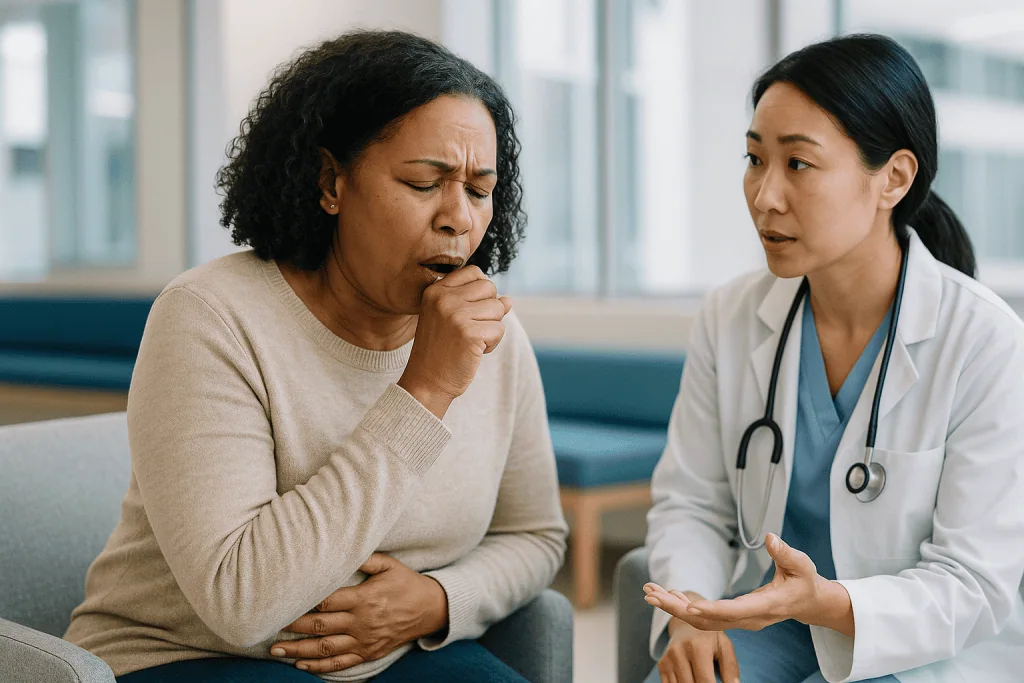
Dry at first, it may later produce small amounts of clear or white mucus. It worsens over the first week or two, often flares at night, and can leave the chest and abdominal muscles sore. Some people describe a rattle or mild tightness. Wheezing is common in children and in anyone with asthma. Ear pain, a sore throat and swollen neck glands sometimes accompany it.
What the cough is not: it is not usually paired with the rust-colored sputum, sharp stabbing chest pain or teeth-chattering chills of classic bacterial pneumonia. Shortness of breath at rest is uncommon in otherwise healthy people and should prompt an evaluation.
Children under 5 often follow a different script, which matters given who filled clinics in 2024. Preschoolers may have a runny nose, sneezing, watery eyes, vomiting or diarrhea alongside the cough, a picture that resembles a stubborn cold. Fever may run higher than in older children.
Across all ages, the defining feature is duration. A cold’s cough fades in seven to ten days. This one is still there at three weeks, sometimes six, long after the fever and fatigue have gone. That mismatch between how long it lasts and how ill the person feels is the clue clinicians listen for.
Cold, bronchitis, walking pneumonia or classic pneumonia? A side-by-side table
Four respiratory illnesses share a cough and confuse one another in the first few days. Their trajectories diverge. The table below summarizes patterns described in the clinical sources cited at the end of this article; individual cases vary, and only an examination can sort them out.
| Feature | Common cold | Acute bronchitis | Walking pneumonia (Mycoplasma) | Classic bacterial pneumonia |
|---|---|---|---|---|
| Onset | Over 1 to 3 days | Follows a cold | Gradual, over several days | Sudden, often within hours |
| Fever | Low or none | Low or none | Low-grade; sometimes higher in young children | High, with chills and sweats |
| Cough | Mild, gone in 7 to 10 days | Productive, 2 to 3 weeks | Dry, hacking, 3 to 6 weeks | Productive, sometimes rust-colored |
| How ill the person seems | Mildly | Mildly | Tired but functional | Visibly unwell, often bedbound |
| Chest X-ray | Normal | Normal | Patchy, diffuse shadows | Dense consolidation in one area |
| Usual cause | Viruses | Mostly viruses | M. pneumoniae | Streptococcus pneumoniae and others |
Two rows deserve emphasis. Consolidation, a solid-looking patch where air sacs have filled with fluid and inflammatory cells, is the hallmark of classic pneumonia; Mycoplasma more often produces scattered, hazy shadows that can look worse than the patient feels. And the “how ill” row is the one clinicians weigh most heavily, because a person’s overall appearance predicts complications better than any single symptom.
Bronchitis deserves a word of its own. Most acute bronchitis is viral and gains nothing from antibiotics, which is why a prescriber may reasonably watch a two-week cough rather than treat it. The pivot point comes when the cough keeps building past that mark, particularly with a fever that will not settle.
Who is most likely to get walking pneumonia?
The textbook patient is a school-age child, teenager or young adult, and that profile still holds for most of the year. Crowded classrooms and shared bedrooms give the bacterium the sustained contact it needs.
The 2024 surge added preschoolers to the list. CDC surveillance found the steepest rise in emergency visits among 2- to 4-year-olds, a group that historically accounted for a small share of diagnoses. The likely explanation is immunological rather than microbiological: these children were born during or just before the pandemic and had never been exposed, so when Mycoplasma returned it met an entire age cohort with no prior immunity.
Adults are not spared. Parents catch it from children. Teachers, healthcare workers and people in group housing see more of it. Older adults are infected less often, probably because of accumulated partial immunity, but when they do develop pneumonia they are more likely to need hospital care.
Certain conditions raise the stakes at any age. People with asthma or chronic obstructive pulmonary disease may find their breathing worsens sharply during infection. Those with weakened immune systems, whether from disease or treatment, and people with sickle cell disease face a higher risk of severe pneumonia and complications such as acute chest syndrome. Smokers clear the organism more slowly.
One pattern is worth naming because it is so widely believed: the disease is not more common in people who are run down, stressed or underdressed for the weather. Exposure and susceptibility drive it. Anyone who shares air for hours with someone who is coughing can get it, including people in excellent health.
How do doctors diagnose walking pneumonia?
Most walking pneumonia is diagnosed the old-fashioned way, by listening. A clinician asks how the cough began, how long it has lasted, who else at home is sick and whether there is fever. Then comes the stethoscope: crackles, wheezes or diminished breath sounds in one region raise suspicion. A pulse oximeter, the clip-on finger sensor that estimates blood oxygen, is checked at almost every visit; a normal reading is reassuring.
A chest X-ray is not always needed. When ordered, Mycoplasma often shows patchy or streaky shadows spread through one or both lungs rather than the dense block of classic pneumonia. The film can look surprisingly busy in someone who is chatting comfortably, a discrepancy that itself hints at an atypical organism.
Laboratory confirmation exists but has limits. The most useful test is PCR, a method that detects the bacterium’s genetic material from a swab of the throat or the back of the nose. Results return within hours to a couple of days, and PCR is now the CDC’s preferred approach. Culture, growing the organism in a dish, takes weeks and is rarely attempted. Blood tests for antibodies can stay positive for months after a past infection, which makes them poor at answering “is this Mycoplasma right now?”
Testing is often skipped in mild cases because the result would not change the plan. It earns its place when a child is sick enough for the hospital, when a first antibiotic has failed, when an outbreak is under investigation, or when the choice of drug depends on the answer. Many multiplex respiratory panels include Mycoplasma, so a swab taken for flu and COVID may report it incidentally.
How is walking pneumonia treated? Which antibiotics work and which don’t
Many mycoplasma pneumonia infections resolve without any antibiotic, especially the chest-cold form. Rest, fluids and time do most of the work. When the infection has reached the lungs, or when symptoms are dragging on or worsening, clinicians usually prescribe an antibiotic, and the choice is more specific than for other pneumonias.
Because Mycoplasma has no cell wall, the penicillin family and cephalosporins do not work against it. That includes amoxicillin, the standard first choice for childhood pneumonia. A child who has had two days of amoxicillin with no improvement is a common reason the diagnosis gets reconsidered.
Three drug families do work. Macrolides, a class that blocks bacterial protein production, are the usual first-line choice; azithromycin and clarithromycin are the familiar names. Tetracyclines such as doxycycline are effective and generally used in older children and adults, since the class can affect developing teeth. Fluoroquinolones such as levofloxacin are typically reserved for adults or for cases where other options have failed, because of their side-effect profile. The prescriber chooses based on age, allergies, other medicines and local resistance patterns; those specifics belong to that conversation, not to an article.
Resistance is the variable people ask about most. In parts of East Asia, more than 80 percent of Mycoplasma isolates resist macrolides. In the United States, the CDC’s estimate is far lower, roughly one in ten or fewer, though surveillance is sparse. If someone is not improving after two to three days on a macrolide, the clinician may switch classes rather than wait.
What antibiotics do not do is silence the cough quickly. Even when the drug works, the airway inflammation left behind takes weeks to settle.
What the evidence actually says, graded by strength
Confidence in what we know about walking pneumonia varies sharply by question, and honesty about that matters more than a tidy answer.
On the 2024 surge, the evidence is strong for describing what happened and modest for explaining why. CDC surveillance draws on emergency department diagnoses and laboratory reports nationwide. That is observational data: good at tracking trends, poor at proving causes. The idea that post-pandemic children lacked prior exposure is plausible and fits the age pattern, but it remains a well-supported hypothesis rather than a demonstrated fact.
On antibiotics, the evidence is thinner than most patients assume. Randomized trials, in which patients are assigned by chance to a treatment or comparison group, are the gold standard for judging whether a drug works. For Mycoplasma in children, a Cochrane systematic review pooled the available trials and concluded there was not enough high-quality evidence to say whether antibiotics shorten the illness. That is not the same as saying they do not help. Laboratory studies show clearly that macrolides kill the organism, and adult pneumonia guidelines recommend covering Mycoplasma on the basis of trials in community-acquired pneumonia generally plus expert consensus. The specific benefit in an otherwise healthy child with mild disease is genuinely uncertain.
On macrolide resistance, the data are observational and geographically uneven. Asian surveillance is extensive; US data rely on a handful of sentinel sites, so the one-in-ten estimate carries wide error bars.
On cough duration and complications, evidence comes from case series and cohort studies, which describe what typically happens without a control group. They agree on two things: most people recover fully within a month or two, and serious complications are rare.
How long does walking pneumonia last, and how do you recover at home?
Expect a month. That is the honest answer, even though fever and body aches usually lift within a week or two, sooner when an antibiotic is working. The cough is the last guest to leave. Three to four weeks is common, six is not unusual, and a small number of people cough for two or three months after the infection itself has cleared. Clinicians call this post-infectious cough: lingering irritation in airways that are healing but still twitchy.
Recovery is mostly supportive. Sleep matters more than any remedy; fatigue after Mycoplasma is real and tends to outlast the fever. Fluids keep mucus loose. A cool-mist humidifier or steam from a shower eases the nighttime cough for many people. A spoonful of honey soothes coughing in children older than 1 year, according to NHS guidance; it must never be given to infants under 12 months because of the risk of botulism.
Over-the-counter cough and cold medicines are not recommended for young children, and evidence that they help adults is weak. Fever reducers such as acetaminophen or ibuprofen can be used according to package directions and a clinician’s advice. Anyone with asthma should keep prescribed inhalers close and follow their action plan, since Mycoplasma is a recognized trigger for flares.
Returning to school or work is reasonable once fever has been gone for 24 hours without fever-reducing medicine and the person feels well enough to participate, in line with the CDC’s general guidance for respiratory infections. The cough alone need not keep someone home, though covering it and washing hands protect others. Smoking or vaping during recovery slows healing of the airway lining and prolongs the cough.
Can walking pneumonia become serious? Complications to know
Serious problems from Mycoplasma are uncommon, but the bacterium has an unusual habit of causing trouble outside the lungs, and knowing the patterns helps a family recognize when a mild illness has become something else.
In the chest, the main risk is pneumonia severe enough to need hospital care, with low oxygen levels or fluid collecting around the lung. This happens in a minority of cases and more often in people with underlying conditions. Asthma flares are the most frequent complication overall; wheezing that does not respond to a usual reliever inhaler is a reason to be seen. Ear and sinus infections can follow.
The skin is a surprising target. Some patients, mostly children and teenagers, develop a rash. Most are harmless and fade. A rarer form, called Mycoplasma-induced rash and mucositis, causes painful sores in the mouth, eyes or genitals with or without much skin rash, and it needs urgent medical attention.
The bacterium can also provoke the immune system to attack the body’s own red blood cells, producing a form of anemia that shows as unusual paleness, fatigue or dark urine. The nervous system is affected very rarely, with encephalitis, inflammation of the brain, the most serious example; confusion, seizures or a severe headache with a stiff neck are emergency signs. During the 2024 wave, US hospitals reported more children admitted with Mycoplasma, including some with neurologic complications, but the great majority recovered fully.
None of this is a reason for alarm about a common infection. It is the reason clinicians ask to be told when a “just a cough” illness starts doing something a cough should not.
Is there a vaccine for walking pneumonia? Prevention that holds up
No vaccine exists against Mycoplasma pneumoniae. Decades of research have not produced one, partly because natural infection itself confers only short-lived immunity, which makes a durable vaccine a hard target. Prevention therefore rests on the unglamorous measures that reduce all respiratory spread.
Handwashing with soap for 20 seconds, coughing into a tissue or elbow, and staying home while feverish remain the CDC’s core recommendations. Ventilation helps in shared spaces. A household with a coughing child can reasonably avoid sharing cups and utensils for a few weeks, given the long incubation period. Masks reduce droplet spread and were almost certainly part of why the bacterium disappeared during 2020 and 2021.
Vaccines do have an indirect role. Pneumococcal vaccines protect against Streptococcus pneumoniae, the leading cause of classic bacterial pneumonia, and lower the chance that a Mycoplasma infection is complicated by a second, more dangerous bacterial infection. The CDC recommends pneumococcal vaccination for all children younger than 5, all adults 50 and older, and adults 19 to 49 with certain medical conditions or risk factors; a clinician can confirm which product and schedule applies. Annual influenza vaccination is recommended for everyone 6 months and older, and COVID-19 vaccination follows the current CDC schedule. Neither prevents Mycoplasma, but both reduce the odds of overlapping infections that make any pneumonia harder to manage.
Two everyday factors also count. Not smoking, and not exposing children to secondhand smoke, protects the airway’s natural clearance. For people with asthma or COPD, keeping the underlying condition well controlled with prescribed medicines blunts the impact when infection arrives. The goal is not to dodge every germ, which is impossible in a school or a household, but to meet the ones that come with the healthiest lungs possible.
Common myths about walking pneumonia, corrected
Search interest brings out confident claims, and several deserve a correction.
“Walking pneumonia isn’t real pneumonia.” It is. The label describes severity, not a different disease. On an X-ray, Mycoplasma pneumonia shows lung involvement like any other; the difference is that most people tolerate it well.
“If you can go to work, you can’t be spreading it.” The opposite is closer to true. Because people with walking pneumonia stay mobile, they attend school, ride buses and sit in meetings while coughing for weeks, which is exactly how outbreaks grow.
“Amoxicillin treats all pneumonia.” Not this one. Mycoplasma has no cell wall for penicillin-type drugs to attack. A child who is not improving on amoxicillin may have Mycoplasma, and the prescriber, not the parent, decides what comes next.
“Antibiotics will stop the cough in a couple of days.” Even a well-matched antibiotic clears the bacterium faster than it calms the inflamed airway. Weeks of residual cough after treatment are typical and do not by themselves mean the drug failed.
“You catch it from cold air, wet hair or a draft.” A person spreads it, through prolonged close contact. Temperature and damp play no role.
“Once you’ve had it, you’re immune.” Protection fades within a few years, and reinfection is well documented.
“Leftover antibiotics from last time will do.” An old prescription risks the wrong drug, the wrong duration and undetected resistance, and it delays a proper assessment. Any antibiotic for pneumonia should be prescribed for the current illness.
“The 2024 surge means a new, more dangerous strain.” Surveillance has found no such thing. The rise fits the pattern expected after several years of interrupted spread.
When to see a doctor about a lingering cough
Most people with walking pneumonia see a clinician at some point, if only because a cough that outlasts a cold deserves an examination. Certain signs move that visit from “this week” to “today” or to the emergency department.
Seek urgent care or call emergency services for:
- Breathing that is fast, labored or noisy, or in a child, flaring nostrils, grunting, or skin between the ribs pulling in with each breath
- Blue, gray or dusky lips, face or fingernails
- Chest pain that is sharp or worsens with breathing
- Confusion, unusual drowsiness, a severe headache with stiff neck, or a seizure
- Painful sores in the mouth, eyes or genitals, with or without a rash
- Signs of dehydration: no urine for eight hours or more, very dry mouth, no tears when crying
- Fever in an infant younger than 3 months
Arrange a same-day or next-day appointment for a fever lasting more than three days, a cough that is worsening after the first week or still present at three weeks, wheezing that does not respond to a prescribed reliever inhaler, unusual paleness or dark urine, or no improvement after two to three days on an antibiotic. Anyone with asthma, COPD, a weakened immune system, sickle cell disease or heart disease, and anyone who is pregnant, should have a lower threshold for being seen.
Every decision about testing, whether to start an antibiotic, which one to use and when to change it belongs to the clinician who has examined the patient and knows their history. Never stop, restart or swap a prescribed medicine without that conversation. Trust the instinct that something is off, too: a child who is unusually quiet, refuses to drink or seems worse after a day of improvement deserves a phone call, even if nothing on a list has been ticked.
Frequently asked questions
Is walking pneumonia contagious?
Yes. Mycoplasma pneumoniae spreads through respiratory droplets during prolonged close contact, such as within a household or classroom. People are contagious while they have symptoms, and because the cough lasts weeks, the window for spread is long. Casual, brief contact is less likely to transmit it than with influenza. Covering coughs, handwashing and staying home while feverish reduce the risk to others.
How long does walking pneumonia last?
Most people feel noticeably better within one to two weeks, but the cough commonly lasts three to six weeks and occasionally two to three months. This lingering cough, called post-infectious cough, reflects airways that are still healing rather than ongoing infection. Fatigue can also outlast the fever. A cough that is worsening, rather than slowly fading, after the first week warrants a clinical review.
What is the difference between mycoplasma pneumonia and regular pneumonia?
Mycoplasma pneumonia usually starts gradually with a dry cough, low fever and tiredness, and most people stay active. Classic bacterial pneumonia, often caused by Streptococcus pneumoniae, tends to begin suddenly with high fever, chills and a productive cough, and the person is visibly unwell. The two also respond to different antibiotics, since Mycoplasma lacks the cell wall that penicillin-type drugs target.
Do you always need antibiotics for walking pneumonia?
No. Many mild infections resolve with rest and time. When pneumonia is confirmed or symptoms are worsening, clinicians usually prescribe a macrolide such as azithromycin, or an alternative class depending on age and history. Trial evidence on how much antibiotics shorten the illness in children is limited, so the decision rests on the clinician’s assessment of the individual patient.
Why doesn’t amoxicillin work for walking pneumonia?
Amoxicillin and other penicillin-type antibiotics kill bacteria by damaging their cell walls. Mycoplasma pneumoniae has no cell wall, so there is nothing for these drugs to attack. This is why a child who is not improving after a couple of days of amoxicillin for suspected pneumonia may be reassessed for Mycoplasma. Any change in antibiotic should come from the prescribing clinician.
Can adults catch walking pneumonia from children?
Yes. Parents, teachers and caregivers frequently catch Mycoplasma from children, since household and classroom contact provides exactly the prolonged closeness the bacterium needs. Adults often have milder symptoms because of partial immunity from earlier infections, but older adults and people with lung disease or weakened immune systems can develop more significant pneumonia and should have a lower threshold for seeking care.
Can you get mycoplasma pneumonia more than once?
Yes. Immunity after infection is short-lived, typically fading within a few years, so reinfection is well documented. This waning protection is one reason Mycoplasma causes epidemic waves every three to seven years as population immunity drops. The interruption of spread during the pandemic likely widened that gap and contributed to the large 2024 surge in children.
Does walking pneumonia show up on a chest X-ray?
Often, yes, though an X-ray is not always needed. Mycoplasma typically produces patchy or streaky shadows scattered through one or both lungs rather than the dense, single-area consolidation of classic pneumonia. The film can look more dramatic than the patient feels, which itself hints at an atypical organism. Clinicians order imaging when the examination is unclear or symptoms are severe.
Is there a vaccine for walking pneumonia?
No vaccine exists against Mycoplasma pneumoniae. Pneumococcal vaccines protect against a different bacterium, Streptococcus pneumoniae, and the CDC recommends them for all children under 5, all adults 50 and older, and adults 19 to 49 with certain risk conditions. Influenza vaccination is recommended for everyone 6 months and older. These reduce other pneumonias and co-infections but do not prevent Mycoplasma.
When can my child go back to school after walking pneumonia?
In general, once fever has been gone for 24 hours without fever-reducing medicine and the child feels well enough to participate, consistent with the CDC’s guidance for respiratory infections. The cough alone does not require staying home, though it can persist for weeks. Schools may have their own policies, and a child on antibiotics should complete the course as prescribed.
References
- CDC – About Mycoplasma pneumoniae Infection
- MedlinePlus – Atypical pneumonia
- Cleveland Clinic – Atypical (Walking) Pneumonia
- CDC – Pneumococcal Vaccine Recommendations
This article is for general information only and is not a substitute for professional medical advice. Please consult a qualified doctor about your individual situation.

More from the Blog
Tick Bites: Safe Removal and the Signs of Infection to Watch For
Tick bites are best handled by removing the tick as soon as you find it: grasp it close to the skin with fine-tipped tweezers,…

Salmonella Infection: When Doctors Order a Stool Test and How the Result Changes Treatment
Doctors usually order a salmonella stool test when diarrhea is severe, bloody, lasting more than a few days, accompanied by high fever, or occurring…
After a Tick Bite: When Doctors Recommend an Evaluation and How Lyme Disease Care Begins
See a doctor after a tick bite if you cannot remove the tick fully, if it was likely attached for 36 hours or more,…
Athlete’s Foot and Nail Fungus: Why They Return and What Actually Clears Them
Athlete's foot is a fungal skin infection of the feet that usually clears with an over-the-counter antifungal cream, spray or powder used for the…

Does Dengue Need Hospital Care? When Fluids and Monitoring Move From the Clinic to a Ward
Most people with dengue recover at home with rest, oral fluids and daily check-ins, because there is no specific antiviral and care is supportive.…

Long COVID Symptoms: The Patterns Doctors Now Recognize and the Tests That Help
Long COVID symptoms are health problems that persist or newly appear at least three months after a COVID-19 infection and last two months or…