

What Causes Brittle Nails? Why They Split, Peel or Crack and How the Cause Is Treated

Key Takeaways
- Brittle fingernails that peel symmetrically while toenails stay normal almost always point to water, chemical and mechanical damage rather than internal disease.
- A nail plate cannot repair itself, so any change in routine or treatment needs roughly three to four months of new growth before it can be fairly judged.
- Iron deficiency and an underactive thyroid are the two medical causes worth testing for, and both usually bring companion symptoms such as fatigue, pallor or cold intolerance.
- The NIH Office of Dietary Supplements rates the evidence for biotin in brittle nails as limited and warns that it can distort thyroid and troponin blood tests.
- Thick, yellow, crumbling nails on one or two digits suggest fungal infection, which the NHS advises confirming with a laboratory nail clipping before any long treatment course.
- Nail hardeners stiffen the plate and can make cracking worse; the Mayo Clinic advises limiting them and using moisturizer on nails and cuticles instead.
Brittle nails most often result from repeated wetting and drying, harsh nail products and age-related changes that dry out the nail plate, which then splits, peels or cracks. Less commonly, they signal iron deficiency, an underactive thyroid, nail psoriasis or a fungal infection. Treatment targets the cause: protecting nails from water and chemicals, moisturizing, and correcting any deficiency or illness a clinician identifies through examination and blood tests.
It usually starts with a snag. A fingernail catches on a sweater, a thin layer lifts off the tip like a sheet of mica, and by the end of the week three other nails are doing the same thing. Nobody goes to a clinic for that. They go to a search engine and type: what causes brittle nails?
The honest answer is less dramatic than most of the results suggest. Nails are made of dead, compacted keratin, the same protein as hair, and they behave much like a thin sheet of wood. Soak them, dry them, soak them again, and the layers loosen. That cycle, not a mysterious vitamin gap, explains the large majority of splitting, peeling and cracking seen in adults.
A smaller group of causes does deserve a proper look, because the nail is one of the few places where iron stores, thyroid function and skin disease leave a visible mark. This article walks through both groups, how clinicians separate them, and which home measures the evidence actually supports.
What causes brittle nails? The short answer first
Most brittle nails are dry nails. The nail plate holds a small amount of water and oil between its keratin layers, and anything that repeatedly strips that out leaves the layers free to separate. The Mayo Clinic lists the everyday culprits plainly: frequent hand washing, dishwater, swimming, acetone-based polish removers and nail hardeners used too often, which it notes can weaken rather than strengthen the nail.
Dermatologists give the two common patterns names worth knowing. Onychoschizia means the nail splits into horizontal layers at the free edge, the classic peeling-in-sheets look. Onychorrhexis means fine lengthwise ridges with a tendency to crack along them. Both are overwhelmingly linked to moisture loss and mechanical wear, and both become more common with age as the nail grows more slowly and holds less water.
The less common causes form a shorter list: low iron stores, an underactive thyroid, nail psoriasis, a fungal infection, eczema around the nail fold and, rarely, side effects of certain medicines. These are the ones a clinician checks for when brittleness is severe, sudden, confined to one or two nails, or arrives alongside other symptoms such as tiredness, hair thinning or skin changes.
So the ordering of this article is deliberate. The dull, mechanical causes come first because they are the likeliest explanation. The medical causes follow, with the specific features that would make a clinician suspect them.
How a nail is built, and why it splits, peels or cracks
A fingernail is produced by the nail matrix, a strip of living tissue tucked under the skin at the base, just behind the pale half-moon. The matrix lays down keratin cells that flatten, die and press together into a plate roughly a hundred layers thick. Once formed, the plate cannot repair itself; damage simply grows forward until it is clipped off.

That one fact shapes everything about brittle nails. Whatever you do today changes the nail that emerges from the matrix, not the nail already on show. MedlinePlus and the NHS both note that a damaged nail takes months to grow out, and the NHS advises that a fungal toenail can need 6 months to a year to look normal again because the whole plate must be replaced. Any change in habit, supplement or treatment therefore needs patience before it can be judged.
The plate’s layers are held together by a mix of protein bonds and a small quantity of lipids and water. Water makes the nail flexible; too little and it becomes glassy and cracks, while repeated swelling and shrinking from washing loosens the glue between layers so they peel. Chemicals such as acetone and some detergents dissolve the lipids outright. Trauma, from typing with long nails to using nails as tools, adds micro-fractures that water then widens.
Understanding this mechanism is more useful than any list of remedies, because it predicts which measures help: fewer wet-dry cycles, fewer solvents, a protected free edge and a little applied oil or moisturizer to replace what has been lost.
Water, washing and wear: the most common cause of brittle fingernails
Ask a nurse, a chef, a hairdresser or a parent of a toddler about their fingernails and the answer is usually the same. Hands that are wet and dry twenty or thirty times a day develop nails that peel at the tips, and the pattern is symmetrical, affects several nails and spares the toenails. That distribution is itself a clue: toenails are rarely washed, so a problem limited to the fingers points strongly toward external causes rather than internal ones.
Nail products sit in the same category. The Mayo Clinic advises limiting acetone-based removers and warns that nail hardeners, often containing formaldehyde-type resins, can make nails more brittle with repeated use. Gel and acrylic systems add two further insults: the filing of the surface before application thins the plate, and the removal process, whether soaking in solvent or peeling, pulls keratin layers off with the coating. Many people notice a cycle of weeks of brittleness after each removal.
Mechanical habits matter too. Prying open lids, scraping labels, picking at cuticles and biting all leave fractures that spread. Long nails act as levers and snap more readily than short ones.
What usually accompanies this cause: otherwise healthy nails with normal color and a normal nail bed, no pain, no pitting, and improvement over a few months once the exposure drops. If that improvement never arrives despite genuine changes in routine, the search widens.
Age, hormones and what causes brittle fingernails later in life
Nails slow down with age. The matrix produces keratin at a lower rate, the plate thins in some people and thickens in others, and lengthwise ridges become the rule rather than the exception. MedlinePlus lists these longitudinal ridges among normal age-related nail changes. Because the slower-growing plate spends longer exposed to water and chemicals before it is clipped away, cumulative damage shows more readily.

Hormonal shifts play a supporting role. Many women notice their nails change around menopause, when falling estrogen levels affect skin hydration and the blood supply to the nail fold. The evidence here is largely observational; what can be said with confidence is that dryness of skin and nails is common at this stage of life and responds to the same moisture-protecting measures as any other dry nail.
Pregnancy pushes in the other direction for many people, with faster nail growth, although some report increased splitting. Neither change needs investigation on its own. During pregnancy, any persistent nail change alongside fatigue or breathlessness is worth mentioning at a routine antenatal check so that iron and thyroid status can be reviewed through the usual pathway.
Circulation is the last piece. Reduced blood flow to the fingertips, whether from cold sensitivity, smoking or vascular disease, deprives the matrix of oxygen and nutrients and can leave nails slow-growing and fragile. A clinician who sees brittle nails together with cold, pale or bluish fingertips will think about the blood supply before the diet.
Iron, thyroid and the medical causes that need a check
Two internal conditions appear in almost every clinical discussion of brittle nails, and both are common enough to justify a blood test when the picture fits.
Iron deficiency, with or without anemia, affects the nail because the matrix is one of the body’s faster-dividing tissues and feels the shortfall early. The NHS lists brittle nails and spoon-shaped nails (koilonychia, where the plate dips in the middle like a shallow spoon) among the signs of iron deficiency anemia, alongside tiredness, shortness of breath, pale skin and heart palpitations. Heavy periods, a diet low in iron, pregnancy and blood loss from the gut are the usual reasons stores run low.
An underactive thyroid (hypothyroidism) slows the metabolism of every tissue, including the matrix. The NHS includes brittle hair and nails in its list of hypothyroidism symptoms, together with fatigue, weight gain, feeling the cold, constipation, dry skin and low mood. Nails in this setting tend to be slow-growing, dull and thin rather than peeling in sheets.
Other medical contributors are rarer: poorly controlled diabetes, chronic kidney or liver disease, and some medicines, including certain chemotherapy and retinoid drugs, can all change nail texture. A clinician does not screen for all of these at once. The pattern of nail change, the rest of the history and a simple examination decide which tests are worth ordering, and the person who ordered the test interprets the result.
Fungal infection, psoriasis and conditions that mimic brittle nails
Not everything that crumbles is brittle in the dry-nail sense. Several conditions destroy or distort the plate and are easy to mistake for simple fragility.
Fungal nail infection (onychomycosis) is the most frequent impostor, especially in toenails. The NHS describes the typical signs: the nail thickens, turns white, yellow or brown, becomes crumbly at the edge and may lift from the bed. It usually begins in one nail, often after a bout of athlete’s foot, and spreads slowly. Because treatment choices depend on confirming the organism, the NHS notes that a nail clipping sent for laboratory testing is often the first step; the Mayo Clinic adds that treatment can take months because the infected plate must grow out.
Nail psoriasis shows a different fingerprint: tiny pits like the surface of a thimble, orange-pink patches under the plate, crumbling and lifting at the tip. The NHS reports that nail changes affect a large share of people with psoriasis, and skin plaques on the elbows, knees or scalp usually point the way, though nails can occasionally be the first site involved.
Eczema or chronic irritation of the skin around the nail fold inflames the matrix and produces ridged, uneven plates. Lichen planus, a less common inflammatory condition, thins and ridges the nail and can scar it permanently. Each of these looks different under a dermatologist’s hand lens, and some need a clipping or a small biopsy to settle the diagnosis, which is why one-nail or asymmetric disease earns a referral.
What deficiency causes brittle nails, and what vitamin helps splitting?
This is the question behind most searches, and the evidence is thinner than the supplement aisle implies. In people eating a varied diet, the only deficiency with a strong, consistent link to brittle nails is iron, discussed above. Protein deficiency and general malnutrition also weaken nails, but these are usually obvious from the wider picture.
Biotin, a B vitamin, is the one most often marketed for nails. The NIH Office of Dietary Supplements summarizes the state of play fairly: a few small, older studies reported thicker, less splitting nails in people with brittle nails who took biotin supplements, but the trials were small, mostly uncontrolled, and the evidence is described as limited. True biotin deficiency is rare, because gut bacteria produce it and it is widely present in food.
The same NIH fact sheet carries a warning that matters more than the benefit: biotin supplements can interfere with common laboratory tests, including thyroid hormone assays and the troponin test used to diagnose heart attacks, producing falsely high or low results. Anyone taking it should tell the clinician before blood is drawn.
Zinc, vitamin D and vitamin B12 are frequently blamed online. Deficiency of each can cause nail changes, but only as part of a broader deficiency syndrome, and there is no good evidence that extra amounts strengthen nails in people whose levels are normal. The sensible approach is to test when the history suggests a shortfall, correct what is actually low, and otherwise rely on protection and moisture.
Can fingernails show signs of illness?
Yes, within limits. The nail grows outward at a steady pace, so it acts as a slow recording of what the body was doing weeks or months earlier. Clinicians read it for that reason, but they read the whole nail, not just its fragility.
MedlinePlus catalogues the signs that carry weight. Beau’s lines are horizontal grooves across the plate that mark a pause in growth, typically after a serious illness, high fever, surgery or chemotherapy; counting back from the groove dates the event. Spoon nails suggest iron deficiency. Clubbing, where the fingertip swells and the nail curves over it like the back of a spoon, is associated with long-term lung and heart disease and always warrants assessment. A dark streak running the length of a nail that is new, widening or confined to one digit needs prompt dermatology review to exclude melanoma of the nail unit.
Whitish nails with a pink band at the tip have been linked to liver and kidney disease; half-and-half nails to kidney disease; pitting to psoriasis or alopecia areata. None of these diagnoses can be made from the nail alone, and each has innocent look-alikes, which is why the nail prompts questions rather than conclusions.
Plain brittleness, by contrast, is a weak signal. Peeling tips on all ten fingers in someone who feels well almost never reflect internal disease. It is the combination of nail change with other symptoms, or an unusual pattern limited to a few nails, that turns a cosmetic complaint into a clinical one.
Brittle nail causes at a glance: features and usual next step
The table below gathers the causes covered so far. It is a guide to how clinicians think, not a self-diagnosis tool; several causes can coexist, and a water-damaged nail can also be an iron-deficient one.
| Cause | Typical features | Usual next step |
|---|---|---|
| Water and chemical exposure | Peeling tips on most fingernails; toenails spared; no pain or discoloration | Reduce wet-dry cycles, gloves, moisturizer; review after a few months |
| Nail products and gel removal | Thin, rough plates after removal; improves in untreated gaps | Pause coatings, gentle removal, short nails |
| Age and reduced circulation | Lengthwise ridges, slow growth, dry skin; symmetric | Moisture protection; vascular review if fingertips cold or discolored |
| Iron deficiency | Brittle or spoon-shaped nails with tiredness, breathlessness, pallor | Full blood count and iron studies ordered by a clinician |
| Underactive thyroid | Thin, dull, slow-growing nails with fatigue, cold intolerance, weight gain | Thyroid function blood test |
| Fungal infection | One or few nails; thick, yellow, crumbly, lifting; often toenails | Nail clipping for laboratory confirmation before treatment |
| Nail psoriasis or eczema | Pitting, lifting, orange patches, ridging; skin changes elsewhere | Dermatology assessment; treat the skin condition |
| Medicines | Onset after a new drug; often with Beau’s lines | Discuss with the prescribing clinician; never stop a medicine unprompted |
Two patterns deserve emphasis. Symmetric, painless peeling in someone who feels well sits at the top of the table and rarely needs a test. Asymmetric change, color change or any companion symptom moves the problem down the table and into the clinic.
How do you fix brittle fingernails at home? What the evidence supports
The measures that work are the unglamorous ones, and they work because they address the mechanism rather than a supposed deficiency. The Mayo Clinic’s guidance on nail care forms the backbone of the list.
- Keep nails short and file them in one direction with a fine file, rounding the tips slightly; short nails have less leverage to crack.
- Wear waterproof gloves for dishwashing and cleaning, ideally cotton-lined so hands do not sweat inside them.
- Apply a plain hand cream or petroleum-jelly-type moisturizer to nails and cuticles after each wash and at bedtime; the Mayo Clinic specifically suggests rubbing moisturizer into the nails and cuticles.
- Limit acetone removers and nail hardeners, and give coated nails a break between gel or acrylic applications.
- Stop using nails as tools and avoid picking at or cutting cuticles, which protect the matrix from infection.
None of these produce visible results quickly. Because only new growth is unaffected, the realistic test is three to four months of consistent change before deciding whether it has helped. People often abandon the routine at week three, just as the healthier nail is beginning to emerge from under the cuticle.
What the evidence does not support: nail-strengthening polishes with formaldehyde resins, which can worsen brittleness; gelatin or collagen for nails, which have no convincing trials; and megadose vitamins in people with normal levels. Biotin occupies a gray zone, with weak supporting evidence and a real risk of distorting blood tests. If a deficiency is suspected, the right step is a test and a conversation with a clinician, who decides whether and how to correct it.
What the examination and tests involve, and how the cause is treated
A consultation for brittle nails is brief and mostly conversational. The clinician asks how long the change has been present, whether it affects fingers, toes or both, what the hands do all day, which products touch the nails, and whether there is fatigue, hair loss, skin rash, joint pain, heavy periods or a change in weight. A medication list is reviewed for drugs known to affect nails.
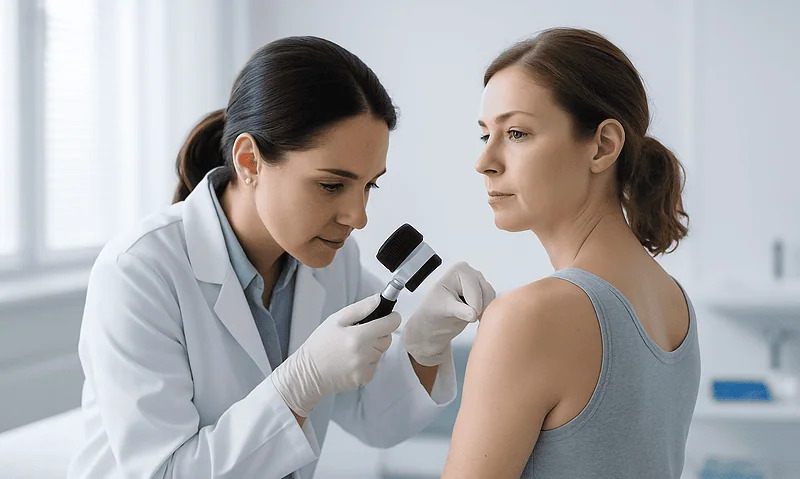
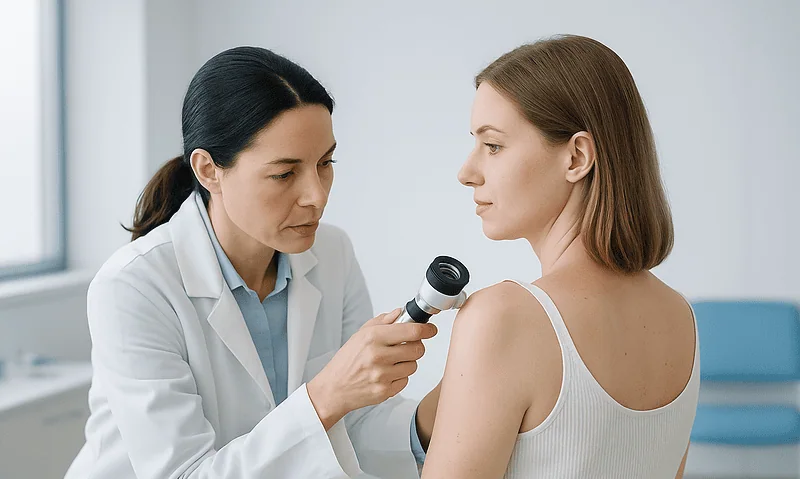
The examination covers all twenty nails, the skin around them, the scalp, elbows and knees for psoriasis, and sometimes the fingertips for clubbing or poor circulation. A magnifier reveals pits, ridges and the fine detail of a pigmented streak.
Tests follow the findings rather than a fixed menu. The common ones are a full blood count and ferritin (a protein that reflects iron stores) when iron deficiency is possible, and a thyroid-stimulating hormone test when hypothyroidism is. Reference intervals for these differ between laboratories and shift with age and pregnancy, so the clinician who ordered the test, not a general chart, interprets the number. A nail clipping goes to the laboratory when fungus is suspected, because the NHS notes that antifungal tablets are long courses with potential side effects and should not be started on appearance alone. A biopsy is reserved for suspected inflammatory disease or a worrying pigmented band.
Treatment then matches the cause. Iron and thyroid problems are corrected under medical supervision, and nails typically improve over the following months as new plate grows in. Fungal and psoriatic nails are treated with condition-specific therapy chosen by the clinician. Dry, damaged nails are treated with the protective routine above. In every case, decisions about starting, continuing or changing medicines rest with the prescribing clinician.
What people often get wrong about brittle nails
The first and biggest error is assuming a deficiency. Search results and product labels push the idea that splitting nails mean the body is short of something, when the most common finding in an otherwise healthy adult with peeling fingernails is a sink and a bottle of remover. Supplements taken on that assumption cost nothing in harm for most people, but biotin in particular can skew thyroid and cardiac blood tests, and the habit delays the changes that would actually help.
The second is expecting speed. The plate on show today was formed months ago. A product or routine judged after two weeks is being judged on nail that it never touched.
The third is strengthening polish. Hardeners stiffen the plate, and a stiff plate cracks where a flexible one bends. The Mayo Clinic’s advice to limit their use runs against decades of marketing but matches the physics.
The fourth is treating every thick, yellow toenail as fungal. Psoriasis, repeated trauma from footwear and age-related thickening all mimic infection, and antifungal tablets taken for months will not help a nail that was never infected. A laboratory clipping sorts this out before treatment begins.
The last is the opposite mistake: dismissing a single changed nail as cosmetic. One nail that lifts, darkens or develops a new lengthwise band while the others stay normal is exactly the pattern that deserves a look, because localized change is how infection, inflammation and, rarely, a nail-unit melanoma announce themselves.
When to see a doctor about brittle nails
Brittle nails are not an emergency, and most people can try protective measures for a few months before seeking advice. Arrange a routine appointment if brittleness persists despite genuine changes to water and product exposure, if it is severe enough to cause pain or interfere with daily tasks, or if it arrives with tiredness, breathlessness, hair thinning, unexplained weight change, feeling the cold, dry skin or heavy periods, since these point toward iron or thyroid causes that a simple blood test can confirm or exclude.
See a clinician sooner for any of the following red-flag signs:
- A new dark brown or black streak running the length of one nail, especially if it widens, the skin at the base darkens, or it appears in a single nail in an adult.
- A nail that lifts from its bed, bleeds, or develops a lump, ulcer or persistent crack that will not heal.
- Redness, swelling, warmth, pus or throbbing pain around a nail, which suggests a bacterial infection of the nail fold.
- Fingertips that swell and nails that curve over them (clubbing), or nails that have turned white, half white or bluish.
- Nail changes in someone with diabetes, poor circulation or a weakened immune system, where a minor infection can progress quickly.
- A thick, crumbling nail in a child, which is less likely to be fungal and merits assessment.
During pregnancy, mention persistent nail changes at an antenatal visit rather than treating them yourself, so that iron and thyroid status can be checked through the usual route. For everyone else, the goal of the visit is the same: to decide whether the nail is a dry nail or a messenger, and that decision is made with a history, an examination and, where needed, a test.
Frequently asked questions
What deficiency causes brittle fingernails?
Iron deficiency is the only nutritional shortfall with a strong, consistent link to brittle fingernails, and it typically comes with tiredness, breathlessness and sometimes spoon-shaped nails. Severe protein deficiency can also weaken nails. Deficiencies of biotin, zinc or vitamin D are rare in people eating a varied diet, and extra amounts do not strengthen nails when levels are already normal.
How do you fix brittle fingernails?
Protect them from the cause: wear gloves for wet work, moisturize nails and cuticles after washing, keep nails short, limit acetone removers and hardeners, and stop using nails as tools. Expect three to four months before new, stronger nail grows through. If brittleness persists or comes with other symptoms, a clinician checks iron and thyroid status and looks for skin or fungal disease.
What vitamin do you need if your nails are splitting?
Usually none, because splitting nails are mostly a moisture problem rather than a vitamin problem. Biotin is the vitamin most often suggested, but the NIH Office of Dietary Supplements describes the supporting evidence as limited and based on small studies, and warns it can interfere with thyroid and heart blood tests. If a deficiency is suspected, a blood test should guide any correction.
Can fingernails show signs of illness?
They can, though brittleness alone is a weak signal. Clinicians look for horizontal grooves after serious illness, spoon-shaped nails in iron deficiency, pitting in psoriasis, clubbing in long-term lung or heart disease, and a new dark streak in one nail that needs urgent assessment. Each sign has innocent look-alikes, so the nail prompts questions and tests rather than a diagnosis on its own.
Does an underactive thyroid cause brittle nails?
Yes, it can. The NHS lists brittle hair and nails among the symptoms of hypothyroidism, alongside fatigue, weight gain, feeling the cold, constipation and dry skin. Nails in this setting tend to be thin, dull and slow-growing. A thyroid-stimulating hormone blood test confirms or excludes it, and nails generally improve over months once treatment is established under the prescribing clinician’s care.
Why do my nails peel in thin layers at the tips?
Layered peeling at the free edge is called onychoschizia, and it reflects separation of the keratin sheets that make up the nail plate. Repeated wetting and drying, solvents such as acetone, and gel or acrylic removal are the usual triggers. Because it affects the oldest part of the nail, it improves only as protected new growth reaches the tip, which takes several months.
Can gel polish or acrylics cause brittle nails?
They can. The surface filing before application thins the plate, and removal by soaking or peeling strips keratin layers with the coating, leaving nails rough and fragile for weeks. Nails usually recover during a break from coatings. Short nails, gentle removal by a trained technician rather than peeling, and moisturizer during the gap all reduce the damage.
Are brittle toenails caused by the same things as brittle fingernails?
Often not. Toenails are rarely exposed to water and solvents, so brittleness there more commonly reflects fungal infection, psoriasis, repeated pressure from footwear or age-related thickening. A thick, discolored, crumbly toenail should be assessed, and the NHS recommends laboratory testing of a clipping before any long course of antifungal treatment, since several conditions look alike.
How long does it take for brittle nails to improve?
Allow three to four months for fingernails and up to a year for toenails, because the nail must grow out completely before the damaged section is gone. The NHS notes a fungal toenail can take 6 months to a year to look normal after treatment for the same reason. Judging a routine or treatment sooner than this means judging nail that it never affected.
When should brittle nails be checked by a doctor?
Book a routine appointment if brittleness persists after months of protective measures, affects only one or two nails, or comes with tiredness, breathlessness, hair loss, weight change or skin rashes. See a clinician promptly for a new dark streak in a nail, a nail lifting or bleeding, pus or throbbing pain around the nail, or fingertips that swell and curve.
References
- MedlinePlus: Nail abnormalities
- NHS: Fungal nail infection
- NHS: Iron deficiency anaemia
- NHS: Underactive thyroid (hypothyroidism)
This article is for general information only and is not a substitute for professional medical advice. Please consult a qualified doctor about your individual situation.

More from the Blog
Scalp vs Face: Why Seborrheic Dermatitis Treatment Differs by Area and Rarely Fits One Plan
Seborrheic dermatitis is treated differently on the scalp and the face because the two areas differ in skin thickness, oil output, hair cover and…
How Atopic Dermatitis Treatment Escalates: Barrier Repair, Topicals, Phototherapy and Beyond
Atopic dermatitis treatment steps move up a ladder: daily barrier repair with moisturizers and gentle bathing first; then anti-inflammatory creams such as topical corticosteroids…

When Is It Time to See a Dermatologist for Acne? Signs Over-the-Counter Care Is Not Enough
It is usually time to see a dermatologist for acne when a consistent over-the-counter routine has not helped after roughly two to three months,…

When Does Cellulitis Need Hospital Care? How Doctors Decide Between Tablets and IV Antibiotics
Most cellulitis is treated at home with oral antibiotics, usually for about a week. Doctors move to hospital care and intravenous antibiotics when the…

Hair and Scalp Care With Alopecia Areata: Sun Protection, Gentle Styling and What to Avoid
Hair care with alopecia areata is about protecting the scalp and the hair you still have, not forcing patches to regrow. Wash gently with…

Dandruff Myths Corrected: Hygiene, Dryness and Why Washing Less Often Rarely Helps
Dandruff is not caused by poor hygiene or a dry scalp. It is a mild form of seborrheic dermatitis, driven by scalp oil, a…