

What Changes After Gallbladder Removal? How Digestion Adjusts Over the Long Term
Key Takeaways
- The gallbladder stores and concentrates bile but does not make it; after removal the liver keeps producing bile, which now flows into the intestine continuously rather than in meal-timed bursts.
- Mayo Clinic reports that up to about 20 percent of people experience diarrhea after gallbladder surgery, and in most cases it stops soon afterward.
- The NHS describes a return to normal activity in about two weeks after keyhole surgery and six to eight weeks after an open operation, with most people eventually eating an unrestricted diet.
- Loose stools that persist for months may be bile acid diarrhea, a recognized and investigable condition, not a sign the operation went wrong.
- Gallstones can no longer form in a removed gallbladder, but they can occasionally develop in the bile ducts, which is why new jaundice or severe pain after surgery is always checked.
- No major guideline links gallbladder removal to weight gain or shortened life expectancy; observed associations in database studies are confounded by the shared risk factors for gallstones.
After gallbladder removal, bile flows from the liver into the small intestine in a steady trickle instead of being stored and released with meals. Most people digest normally within weeks, though loose stools, bloating, or discomfort after fatty food can occur early on and usually settle. A minority have longer-lasting symptoms that a doctor can investigate and manage.
The first proper breakfast after surgery is a small act of courage. Four days home, incisions still taped, a plate of scrambled eggs on the table, and one question sitting heavier than the food: will this hurt, or send me running to the bathroom? Anyone who has had a cholecystectomy recognizes that pause before the first bite.
It is a fair worry, and an oddly under-answered one. Discharge leaflets cover wound care and lifting limits in detail. Life after gallbladder removal, the months and years when the body quietly rewires how it handles fat, tends to get a single reassuring line.
This article fills that gap. It explains what the gallbladder was doing, what the liver and intestine do once it is gone, which symptoms are common and usually temporary, which ones deserve a phone call, and where the evidence genuinely runs thin. No miracle diets, no scare stories, just what the research and major guidelines actually show.
What does the gallbladder do, and what actually happens when it is gone?
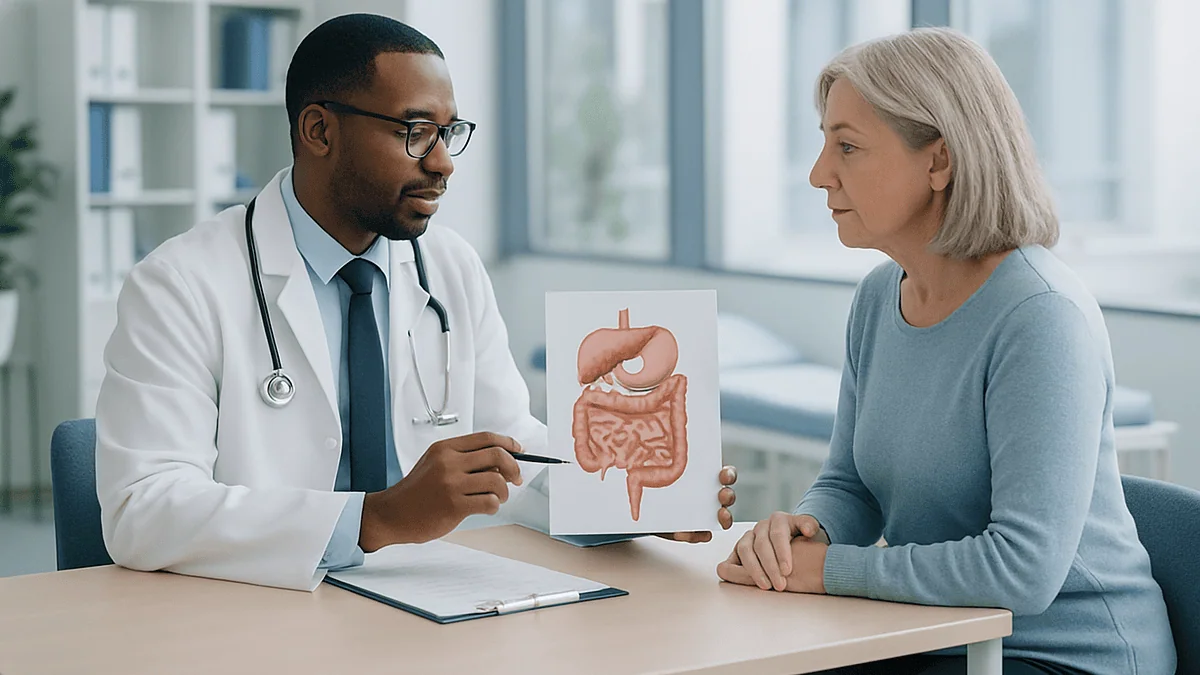
Picture a small pear-shaped pouch tucked under the right side of the liver. That is the gallbladder, and its job is storage, not manufacture. The liver makes bile continuously, a greenish fluid that helps break down dietary fat. Between meals, the gallbladder collects that bile and concentrates it, drawing out water so the fluid becomes several times stronger. When food containing fat reaches the small intestine, a hormone signal tells the gallbladder to squeeze, and a concentrated dose of bile flows down the common bile duct into the gut.
Gallstones are hardened lumps that form when substances in bile, most often cholesterol, crystallize. The NIH’s National Institute of Diabetes and Digestive and Kidney Diseases estimates that 10 to 15 percent of adults in the United States have them, and most never know. Trouble starts when a stone blocks the outlet: the gallbladder contracts against a closed door, producing the intense upper abdominal pain doctors call biliary colic.
Removing the gallbladder, a cholecystectomy, takes the storage pouch out of the circuit. The liver keeps producing bile at the same rate. The bile ducts, which carry bile from liver to intestine, stay in place. What disappears is the concentrating step and the meal-timed squeeze. Bile now drips into the intestine steadily, around the clock, at roughly liver strength rather than gallbladder strength.
Most operations today are done laparoscopically, meaning through a few small incisions with a camera, and the NHS notes that many people go home the same day or the next. An open operation through a larger incision is used when the anatomy is difficult or inflammation is severe. Either way, the digestive change that follows is the same: a reservoir has been removed, and the rest of the system adapts around its absence.
Life after gallbladder removal: what the first days and weeks usually look like
The early weeks are dominated by two overlapping stories, and it helps to keep them separate. One is surgical recovery: incision soreness, tiredness, and the shoulder-tip ache that can follow the gas used to inflate the abdomen during keyhole surgery. The other is digestive adjustment, which lags a little behind.
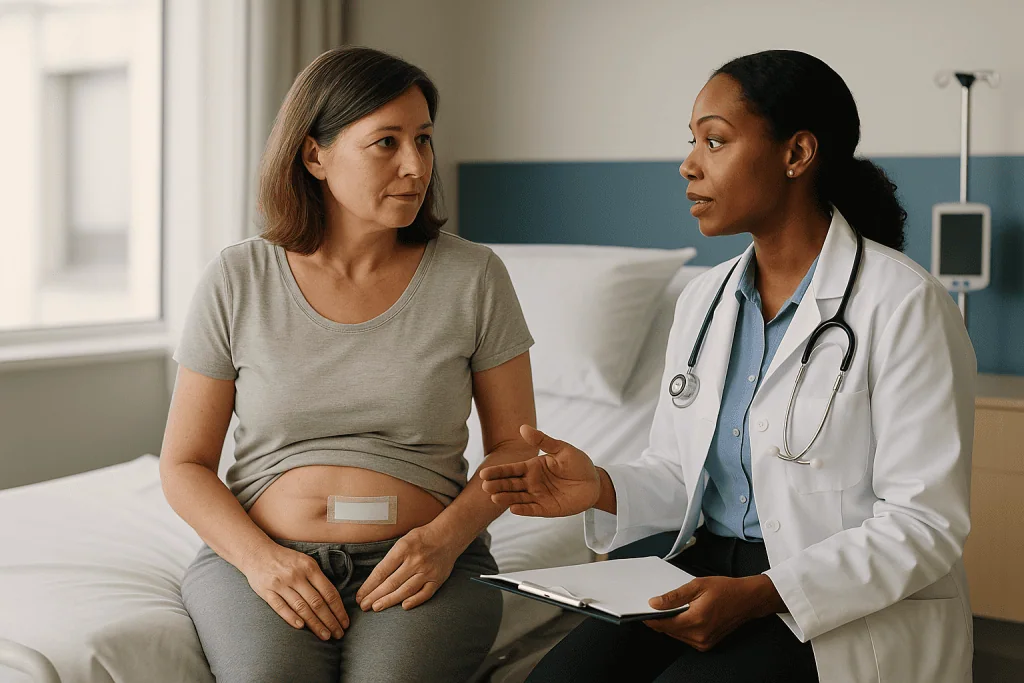
On the surgical side, the NHS describes a typical return to normal activities within about two weeks after laparoscopic surgery and six to eight weeks after an open operation. Mayo Clinic frames laparoscopic recovery as roughly a week before ordinary activity feels manageable and four to six weeks for open surgery. Those are ranges observed across many patients, not deadlines. Your surgeon’s advice on lifting, driving and returning to work overrides any general figure.
On the digestive side, appetite is often muted for the first few days. Anesthesia, pain relief and reduced movement all slow the gut, so constipation is common early, which surprises people expecting the opposite. Once eating resumes, some notice that a richer meal produces urgency, looser stools or a bloated, full feeling faster than before. The steady trickle of dilute bile is meeting a fatty load it is not yet matched to.
What most people report is a gradual settling. Mayo Clinic’s guidance is that diarrhea after gallbladder surgery usually stops soon after the operation, though it can occasionally persist for much longer. Bowel habits tend to find a new normal over weeks rather than days. A bowel diary, even a few scribbled notes about meals and stools, is genuinely useful at this stage: it turns a vague sense of things being off into a pattern you and your care team can read.
How digestion adjusts without a bile reservoir
Fat digestion is a two-part job. Enzymes from the pancreas do the chemical cutting, but they can only work on fat that has been emulsified, broken into tiny droplets, the way dish soap breaks up grease on a pan. Bile is the soap. Concentrated bile delivered in a burst is very good at emulsifying a large fatty meal quickly. Dilute bile arriving continuously is less good at handling a sudden large load, but perfectly adequate for a steady, moderate one.
That single mechanical difference explains most early symptoms. Undigested fat moving into the lower bowel draws in water and feeds bacteria, producing looser stools, gas and cramping. Bile acids themselves, arriving in the colon in greater quantity than before because there is no reservoir to hold them back between meals, stimulate the colon lining to secrete fluid and speed up movement.
The body compensates in several ways. Over time, the bile ducts can dilate slightly and take on a modest storage role, though never equal to the gallbladder’s. The liver also runs a recycling loop: bile acids are reabsorbed in the final section of the small intestine and returned to the liver to be used again, many times a day. Without a gallbladder this loop cycles faster, and the liver adjusts production accordingly.
The practical upshot, reflected in Mayo Clinic’s dietary guidance, is that spreading fat intake across smaller, more frequent meals asks less of the system than one large rich dinner. Nothing about this is a deficiency. The gallbladder is a convenience organ, useful for feast-and-famine eating patterns humans evolved with, and considerably less critical for the regular meals most people eat today.
Diet after gallbladder removal: what tends to help in the early weeks
There is no official post-cholecystectomy diet, and it is worth saying that plainly because the internet is full of rigid ones. Major sources, including Mayo Clinic and the NHS, offer the same modest set of principles rather than a forbidden-food list.
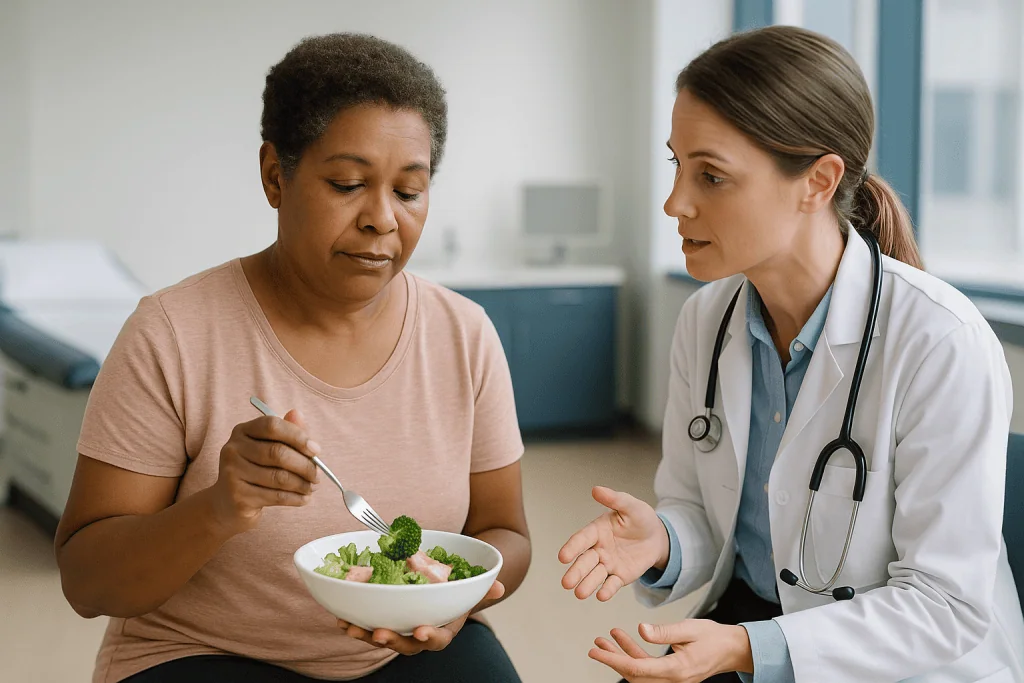
The first principle is to keep fat moderate at first and reintroduce it gradually. A lower-fat approach in the initial weeks gives the dilute bile supply a fair chance, then fat can be increased as tolerance becomes clear. Mayo Clinic suggests favoring lean proteins, low-fat dairy and cooking methods such as baking, grilling or steaming rather than frying.
The second is meal size. Smaller portions eaten more often match the way bile is now delivered. Several people find that a large restaurant meal is the one thing that reliably triggers symptoms, while the same food split across two sittings passes without incident.
The third is fiber, handled with care. Soluble fiber, the kind in oats, beans, lentils and many fruits, absorbs water and can firm loose stools. Mayo Clinic advises increasing it slowly, because a sudden jump in fiber can worsen gas and cramping while the gut is still recalibrating.
Hydration matters too if stools are loose, since fluid lost through the bowel needs replacing. Caffeine, alcohol and very sugary drinks can all speed the gut and are reasonable things to reduce temporarily while observing the effect.
The honest caveat is that individual tolerance varies enormously. One person’s trigger is another’s staple. This is exactly why a food and symptom diary, not a downloaded list, is the most useful dietary tool in the first two months. Anyone with diabetes, kidney disease or another condition that already shapes their diet should route changes through their own clinician or dietitian rather than general advice.
What foods should you avoid if you have no gallbladder?
The answer people want is a list. The answer the evidence supports is a pattern. No mainstream guideline names specific foods that everyone without a gallbladder must avoid permanently, because tolerance differs so widely and because most people return to an unrestricted diet.
That said, certain categories predictably challenge a system running on dilute bile, especially in the early months. Deep-fried food, fatty cuts of meat, cream-based sauces, full-fat cheese in quantity, pastries and rich desserts all deliver a large fat load in one sitting. Mayo Clinic’s guidance singles out high-fat and fried foods as the most common culprits for post-surgery diarrhea and discomfort. Very spicy dishes and large amounts of caffeine or alcohol can add gut-speeding effects on top.
Notice what is not on that list: fat itself. Healthy fats from olive oil, nuts, avocado and oily fish are digested by the same mechanism and are usually well tolerated in moderate portions once the initial adjustment passes. Cutting fat to near zero is neither necessary nor wise, since fat carries the fat-soluble vitamins A, D, E and K and provides essential fatty acids.
A more useful way to frame the question is: which of my usual foods, in which portions, cause symptoms right now? For many people, the answer changes month by month as tolerance improves. A food that produced urgency in week three may be entirely fine by month four. Reintroducing suspects one at a time, in small amounts, is the standard approach and lets you build a personal map rather than living by someone else’s.
If a food seems to cause severe or persistent symptoms, or if the list of problem foods keeps growing rather than shrinking, that is a reason to raise it with your care team rather than to keep restricting.
Gallbladder removal side effects: diarrhea, bloating and gas explained
Ask a room of people who have had the operation and the same three complaints come up: loose stools, a bloated feeling after eating, and more gas than before. All three trace back to the change in bile delivery, and all three are usually temporary.
Diarrhea is the best studied. Mayo Clinic notes that it is unclear exactly how many people develop it, but that studies have found up to 20 percent of people experience diarrhea after gallbladder surgery, and that in most cases it stops soon afterward. The mechanism is twofold: fat that escapes full digestion pulls water into the colon, and the bile acids reaching the colon act as a mild natural laxative, stimulating fluid secretion and motility.
Bloating and gas follow from the same undigested fat becoming a meal for colonic bacteria, which release gas as they ferment it. Larger, richer meals tend to produce more of this; smaller ones less. Some of the early bloating is also surgical, from the gas used to inflate the abdomen during laparoscopy and from the general slowing of the gut after anesthesia, and that component fades within days.
Less common side effects include a sense of upper abdominal discomfort or fullness after meals, mild nausea and, in some people, a temporary change toward constipation rather than looseness. Pain around the incision sites that flares with movement is normal in the first week or two and should steadily improve.
The key distinction is trajectory. Symptoms that are present but easing week by week are the expected adjustment. Symptoms that are worsening, that started well after surgery rather than immediately, or that come with fever, jaundice or severe pain belong in a different category and are covered in the red-flag section later in this article.
Bile acid diarrhea: when loose stools do not settle
For most people, the early looseness fades within weeks. For a smaller group it does not, and the likely explanation has a name worth knowing: bile acid diarrhea, sometimes called bile acid malabsorption.
The mechanism builds on what has already been described. Bile acids are meant to be reabsorbed in the last stretch of the small intestine and recycled to the liver. Without a gallbladder to hold bile between meals, more of it flows through continuously, and in some people the reabsorption step cannot keep up. Excess bile acids then spill into the colon, where they trigger fluid secretion and speed transit. The result is watery, often urgent stools, sometimes with a yellowish color, frequently worse after fatty meals and sometimes striking first thing in the morning.
Mayo Clinic acknowledges that while post-surgery diarrhea usually resolves soon, it can rarely last for years. That persistence is the clue. Diarrhea that is still troublesome several months after surgery, particularly if it is watery rather than simply loose, warrants a proper conversation with a doctor rather than more dietary trial and error.
Diagnosis is usually clinical, meaning based on history and pattern, sometimes supported by a trial of treatment or, where available, a specialized scan that measures how well bile acids are retained. Your doctor will also want to rule out other causes of ongoing diarrhea that happen to coincide with the surgery, such as a bowel infection, celiac disease or an inflammatory condition.
Where treatment is needed, clinicians may consider a class of medicines called bile acid sequestrants, which work by binding bile acids in the gut so they cannot irritate the colon. Whether one is appropriate, and how it fits alongside other medicines a person takes, is a decision for the prescribing clinician, who will also weigh timing and side effects. Dietary fat moderation and soluble fiber remain part of management alongside any prescription.
Post cholecystectomy syndrome: what the label means, and what it does not
Post cholecystectomy syndrome is a term that sounds like a diagnosis and functions more like a filing folder. It describes the situation where symptoms similar to the original gallbladder complaint, such as upper abdominal pain, indigestion, bloating or nausea, persist or reappear after the gallbladder has been removed. Cleveland Clinic and the NHS both list it among recognized outcomes, affecting a minority of patients.
The label does not mean the surgery went wrong. It means the symptoms have not gone, and something needs explaining. That something falls into a few broad groups.
Sometimes the cause is still biliary: a stone that was already sitting in the common bile duct at the time of surgery, or one that formed there later, since the ducts remain and stones can occasionally develop within them. A narrowing or spasm at the muscular valve where the bile duct meets the intestine, called the sphincter of Oddi, is another possibility. Rarely, a leak of bile from the duct stump causes pain in the early weeks.
Often, though, the cause was never the gallbladder in the first place. Acid reflux, a stomach ulcer, irritable bowel syndrome, pancreatitis and functional dyspepsia can all produce pain in the same neighborhood. Gallstones are so common that they are sometimes found on a scan and blamed for symptoms that actually had another origin. When the gallbladder is removed and the pain stays, the real culprit becomes visible.
The practical message is that persistent or recurring pain after surgery is a reason for further investigation, not something to accept as the price of the operation. Blood tests, ultrasound and sometimes more detailed imaging of the bile ducts can usually sort the biliary causes from the rest. Treatment then depends entirely on what is found, which is why this is firmly a conversation for the treating team.
Do people gain weight after gallbladder removal?
This question comes up constantly and deserves a straight answer: some observational studies have reported modest weight gain in the years after cholecystectomy, but the evidence is inconsistent, and none of the major guideline sources cited in this article identify gallbladder removal as a direct cause of weight gain.
Consider the confounders. Gallstones are more common in people with higher body weight, so the population having surgery already tends toward gaining weight over time regardless of the operation. Many people restrict their eating for months before surgery because fatty food triggers pain, then resume normal eating afterward and regain what they lost. Rapid weight loss itself raises gallstone risk, which the NIH notes, so some patients arrive at surgery after a period of dieting that was never going to be permanent. Untangling the surgery’s own effect from all of that is genuinely difficult.
What the operation does not do is change how many calories the body absorbs in any meaningful way. Fat digestion is slightly less efficient with dilute bile, if anything nudging absorption down rather than up. There is no plausible mechanism by which removing a storage pouch would make the body store more energy.
The more useful framing is that weight after surgery follows the same rules as weight before it: intake, activity, sleep, medicines and medical conditions. If food that previously caused pain is now enjoyable again, appetite may rise, and that is worth being aware of without being anxious about. Anyone concerned about weight change after surgery can raise it with their doctor or a registered dietitian, who can look at the whole picture rather than attributing everything to a missing gallbladder. Weight is a health metric, not a verdict, and it belongs in a supportive clinical conversation.
Does having your gallbladder removed change your life expectancy?
The NHS states it directly: you can lead a perfectly normal life without a gallbladder. The liver continues to make bile, digestion continues, and no essential function is lost. Cholecystectomy is one of the most commonly performed operations worldwide precisely because the organ is dispensable in a way that, say, the pancreas is not. No mainstream guideline links gallbladder removal to a shortened lifespan.
Where people sometimes encounter alarming claims is in large database studies that report associations between prior cholecystectomy and later conditions such as fatty liver, metabolic disorders or certain digestive cancers. These need reading with care. Association is not causation, and the people who develop gallstones share risk factors, including higher body weight, insulin resistance and particular dietary patterns, with the people who develop those later conditions. Separating the effect of the surgery from the effect of the underlying metabolic picture is methodologically hard, and the studies themselves usually say so. None of the sources allowed in this article, from the NIH to the NHS, translate those associations into guidance to avoid surgery when it is indicated.
The comparison that actually matters is not surgery versus a gallbladder-free life; it is surgery versus living with symptomatic gallstones. Untreated stones can cause acute cholecystitis, an inflamed and infected gallbladder; blockage of the bile duct with jaundice and infection; and gallstone pancreatitis, an inflammation of the pancreas that can be serious. Those are the outcomes surgery prevents, and they carry real risk.
Long-term follow-up after routine cholecystectomy is not usually required unless symptoms persist. Ordinary preventive health care, including attention to weight, blood pressure, blood sugar and lipids, matters for the same reasons it matters for everyone. The gallbladder’s absence does not add a special item to that list.
Who is usually offered gallbladder removal, and who is asked to wait?
The strongest indication is symptomatic gallstones: repeated episodes of biliary colic, or an attack of acute cholecystitis. NIDDK guidance is that surgery is generally recommended when stones cause symptoms, because once a first attack has occurred, further attacks become likely. Surgery is also the standard route when stones have caused complications such as pancreatitis or a blocked bile duct, once the acute episode has been stabilized. Gallbladder polyps above a certain size, a non-functioning gallbladder demonstrated on specialized imaging, and a heavily calcified gallbladder wall are less common reasons.
Timing varies with the situation. An acutely inflamed gallbladder is often removed during the same hospital admission where the anatomy allows; in other cases the team may settle the inflammation first and schedule surgery weeks later. Pregnant patients with symptomatic stones are managed case by case, with the second trimester generally considered the most favorable window if surgery cannot wait.
The group usually asked to wait, or more precisely not offered surgery at all, is people with silent gallstones found incidentally on a scan done for another reason. NIDDK notes that most gallstones never cause symptoms, and current practice is to leave them alone and treat only if trouble arises. The exceptions are specific higher-risk situations that a surgeon would identify individually.
Some people are asked to wait because the risk of an operation is temporarily raised: an uncontrolled medical condition, a recent heart attack, a chest infection, or blood-thinning medicine that needs a planned pause. In frail or very high-risk patients, a drain placed through the skin into the gallbladder may be used instead of removal, at least initially.
Alternatives such as medicines to dissolve stones or shock-wave fragmentation exist but are rarely used, because stones tend to recur and the treatments suit only a narrow group. Every one of these decisions is individual and sits with the treating surgeon and the wider team.
What are the benefits of no gallbladder? The trade-offs at a glance
Framing the outcome as a set of trade-offs is more honest than either celebrating or dreading it. The clear gains are freedom from gallbladder attacks and protection against the complications stones can cause. The costs are a period of digestive adjustment and, for a minority, longer-lasting bowel changes. The table below summarizes what the cited sources describe as typical.
| Aspect | Before surgery (with symptomatic stones) | Typical experience after removal | Source |
|---|---|---|---|
| Attacks of biliary pain | Recurrent, unpredictable, often after fatty meals | Gallbladder attacks no longer possible; duct stones remain a rare possibility | NIDDK, Cleveland Clinic |
| Risk of cholecystitis or gallstone pancreatitis | Present and rises after a first attack | Removed with the gallbladder | NIDDK |
| Bowel habit | Often normal | Loose stools in up to about 1 in 5 early on, usually settling | Mayo Clinic |
| Fat tolerance | Often reduced by fear of attacks | Reduced early, usually improving over weeks to months | Mayo Clinic, NHS |
| Return to normal activity | Not applicable | About 1 to 2 weeks keyhole; 4 to 8 weeks open | NHS, Mayo Clinic |
| Long-term diet | Restricted by symptoms | Most return to an unrestricted diet | NHS |
The single most underrated benefit is psychological. People who have lived with biliary colic describe a low hum of dread around meals, especially social ones. Removing the possibility of an attack lifts that. Against it sits the honest acknowledgment that a small number of people trade one problem for a persistent, if usually manageable, bowel issue. Knowing that in advance, and knowing it can be investigated and treated, is part of informed consent rather than a reason for alarm.
What people often get wrong about living without a gallbladder
Some misunderstandings are so common they are worth naming one by one.
The first is that you must follow a low-fat diet for life. The NHS is explicit that most people can return to a normal diet once they have recovered, and Mayo Clinic frames fat reduction as a temporary measure while the gut adjusts. Permanent restriction is not the goal, and cutting fat too hard risks missing fat-soluble vitamins and essential fatty acids.
The second is that gallstones can never trouble you again. The gallbladder cannot form stones once it is gone, but stones can occasionally develop in or migrate to the bile ducts. This is uncommon, but it is why new jaundice or severe pain after surgery is always investigated rather than dismissed.
The third is that diarrhea afterward means something went wrong in the operation. It almost always reflects the change in bile flow described earlier, not surgical error, and it usually eases. Persistent diarrhea deserves attention, but as a treatable condition, not as evidence of a mistake.
The fourth is that supplements such as ox bile, digestive enzymes or various herbal blends are needed to replace the gallbladder’s function. There is no good-quality evidence from the sources used here that people without a gallbladder need such products, and the NIH Office of Dietary Supplements consistently advises discussing any supplement with a clinician, particularly alongside prescribed medicines.
The fifth is that the operation causes weight gain or shortens life, both addressed earlier and neither supported by mainstream guidance. The sixth, quieter misconception is that ongoing pain simply has to be tolerated. It does not. Recurring upper abdominal pain after cholecystectomy has a list of possible causes, several of them treatable, and it belongs in front of a doctor.
Questions to ask your care team
A good consultation is a two-way exchange, and arriving with questions changes its shape. These are the ones that tend to matter most, before and after surgery.
- Which approach, keyhole or open, is planned for me, and what would make you switch during the operation?
- Is there any sign that stones are already in my bile duct, and how would that be handled?
- What recovery timeline do you expect in my case, given my age, health and job?
- Which of my regular medicines need pausing or adjusting around surgery, and who manages that?
- What symptoms in the first two weeks are normal, and which ones should make me call you?
- How long should I keep fat intake moderate, and is a referral to a dietitian available if I struggle?
- If loose stools continue beyond a couple of months, what is the pathway for investigating and treating them?
- What follow-up, if any, is planned, and who is my point of contact if symptoms return later?
Two further questions are worth asking even if they feel awkward. The first is about alternatives: if surgery were not done, what would you expect to happen, and over what timescale? The answer helps you weigh the operation against watchful waiting in your particular situation rather than in the abstract. The second is about the surgeon’s own approach to the rare complications, such as bile duct injury or bile leak, and how those are recognized and managed, since knowing a plan exists is itself reassuring.
Write the answers down, or bring someone who will. Consultations are short and memory under stress is unreliable. Your care team should welcome the questions; a well-informed patient is easier to look after, not harder.
When to call your doctor
Most of what this article describes is the ordinary settling of a digestive system after losing a storage organ. A few symptoms are different in kind and should prompt a same-day call to your surgical team or doctor, or emergency care if severe.
- Fever, chills or shaking, which may signal infection in the wound, the abdomen or the bile ducts.
- Yellowing of the skin or the whites of the eyes, dark urine or pale, clay-colored stools, which suggest bile is not draining properly, possibly because of a duct stone, leak or narrowing.
- Severe or steadily worsening abdominal pain, especially pain that is not eased by the medicines you were sent home with.
- Persistent vomiting, or inability to keep fluids down for more than a day.
- A swollen, tense or increasingly tender abdomen.
- Redness spreading from an incision, pus, a foul smell, or a wound that opens.
- Shortness of breath, chest pain, or a painful swollen calf, which can indicate a blood clot after any operation.
- Bleeding that soaks through a dressing, or black or bloody stools.
Beyond the acute period, some longer-term patterns also warrant an appointment rather than more waiting. Diarrhea that is still watery and disruptive several months after surgery, unintended weight loss, recurring episodes of upper abdominal pain that resemble the original attacks, or a growing list of foods that provoke symptoms all deserve investigation. Cleveland Clinic and Mayo Clinic both note that persistent symptoms after cholecystectomy have identifiable causes in many cases, and several are treatable once found.
Trust the trajectory test. Symptoms that are easing, however slowly, are usually adjustment. Symptoms that are new, escalating or accompanied by fever or jaundice are not. When in doubt, a phone call costs nothing and the people who operated on you would much rather hear from you early than late. Every decision about further tests or treatment sits with them, informed by what you tell them.
Frequently asked questions
What foods should you avoid if you have no gallbladder?
No specific foods are permanently off-limits for everyone, but deep-fried items, fatty meats, cream-based sauces and rich desserts are the most common early triggers because they deliver a large fat load that dilute bile handles poorly. Mayo Clinic suggests keeping fat moderate and portions small at first, then reintroducing foods gradually. Most people find their tolerance widens over weeks to months and return to a normal diet.
Does having your gallbladder removed change your life expectancy?
Mainstream guidance does not link gallbladder removal to a shorter life. The NHS states that people can lead a perfectly normal life without a gallbladder, since the liver continues to make bile and no essential function is lost. Database studies reporting associations with later conditions are confounded by the metabolic risk factors gallstones share with those conditions. Untreated symptomatic stones, by contrast, carry real risks of infection and pancreatitis.
Do people gain weight after gallbladder removal?
The evidence is mixed and no major guideline identifies the surgery as a cause of weight gain. Some observational studies report modest gains, but people with gallstones often already trend toward higher weight, and many restrict eating before surgery then resume normal meals afterward. The operation does not increase calorie absorption. Weight after surgery follows the same factors as before, and concerns are best discussed with a doctor or dietitian.
What are the benefits of no gallbladder?
The main benefit is freedom from gallbladder attacks and from the complications stones can cause, including acute cholecystitis and gallstone pancreatitis, which NIDDK notes become more likely after a first attack. Many people also describe relief from the anxiety around meals that biliary colic creates. Against this sits a period of digestive adjustment and, in a minority, longer-lasting loose stools that can be investigated and managed.
How long does diet after gallbladder removal need to stay low in fat?
Usually only for the initial adjustment period, which Mayo Clinic frames as a matter of weeks rather than a permanent change. Fat is reintroduced gradually as tolerance becomes clear, and the NHS notes most people return to a normal diet once recovered. The exact pace is individual, so a food and symptom diary is more useful than a fixed date. Anyone with another condition shaping their diet should follow their own clinician’s advice.
What are the most common gallbladder removal side effects long term?
The most common longer-term issue is a change in bowel habit, typically looser or more frequent stools, which Mayo Clinic says usually settles soon after surgery but can rarely persist for years. Some people notice bloating or discomfort after very fatty meals. Persistent upper abdominal pain resembling the original attacks is less common and is labeled post cholecystectomy syndrome; it has identifiable causes and should be investigated rather than accepted.
What is bile acid diarrhea and how is it diagnosed?
Bile acid diarrhea occurs when more bile acids reach the colon than the small intestine can reabsorb, triggering fluid secretion and faster transit, producing watery, often urgent stools. It is a recognized cause of persistent diarrhea after gallbladder removal. Diagnosis is usually clinical, sometimes supported by a trial of treatment or a specialized retention scan, after other causes are excluded. Management may include dietary measures and, if a clinician judges appropriate, a bile acid binding medicine.
What is post cholecystectomy syndrome?
It is a descriptive label for symptoms such as upper abdominal pain, indigestion or bloating that persist or return after gallbladder removal. Causes range from stones in the bile duct or spasm at the duct’s outlet to unrelated conditions such as reflux, ulcers or irritable bowel syndrome that were misattributed to the gallbladder. Cleveland Clinic notes it affects a minority of patients. Because several causes are treatable, ongoing pain warrants investigation.
How long does it take to recover after gallbladder removal?
The NHS describes a return to normal activities in about two weeks after keyhole surgery and six to eight weeks after an open operation. Mayo Clinic cites roughly a week for laparoscopic recovery and four to six weeks for open surgery. Digestive adjustment can lag slightly behind wound healing, with bowel habits often settling over several weeks. Your surgeon’s individual advice on lifting, driving and work takes precedence over general ranges.
Can gallstones come back after the gallbladder is removed?
Stones cannot form in a gallbladder that has been removed, but they can occasionally develop in or migrate to the bile ducts, which remain in place. This is uncommon and typically causes pain, jaundice or fever rather than silent recurrence. New yellowing of the skin or eyes, dark urine, pale stools or severe pain after surgery should always prompt a prompt medical review so a duct stone or other cause can be identified.
References
- NHS – Gallbladder removal
- Cleveland Clinic – Gallbladder removal (cholecystectomy)
- NIH NIDDK – Gallstones
- MedlinePlus – Gallbladder removal, laparoscopic
This article is for general information only and is not a substitute for professional medical advice. Please consult a qualified doctor about your individual situation.

More from the Blog

When Is Anti-Reflux Surgery Considered for GERD? The Treatment Ladder Explained
Anti-reflux surgery is usually considered only after GERD has been confirmed with testing and has not been controlled by lifestyle changes and an adequate…

What Remission Really Means in Crohn’s Disease and How Follow-Up Keeps It on Track
In Crohn's disease, remission means the inflammation has quieted enough that symptoms settle and, ideally, blood tests, stool markers and the gut lining itself…

Acid Disorders: How Meal Timing, Weight and Sleep Position Work With Medication
For acid disorders such as gastroesophageal reflux disease, lifestyle changes and medication work on different parts of the same problem. Finishing meals three to…

Eating After Hiatal Hernia Surgery: Liquids, Soft Foods and the Return to Normal Meals
After hiatal hernia surgery, eating usually moves through stages: clear liquids in the first day or two, then thicker liquids and puréed or very…
How IBS Is Treated Today: Diet, Stress Management and Medicines Matched to Your Pattern
IBS is treated in layers rather than with a single fix. Guidelines start with regular meals, fiber adjustments and a food-and-symptom diary, then a…

What to Eat After Food Poisoning: Bland Foods, Fluids and Pacing Your Return to Normal
After food poisoning, start with fluids, not food: small, frequent sips of water or an oral rehydration solution once vomiting settles. When appetite returns,…