

What Happens at a Composite Bonding Appointment: Shade Matching, Layering and Polishing

Key Takeaways
- Cleveland Clinic gives a typical appointment time of 30 to 60 minutes per tooth, and most cosmetic bonding is done without an injection.
- Shade is chosen at the very start, while the tooth is still wet, because a dehydrated tooth looks temporarily whiter than it will once it rehydrates.
- Resin is placed in thin increments and light-cured one at a time because the blue light penetrates only a short distance and thin layers minimize shrinkage at the margins.
- Composite does not respond to whitening, so if a brighter shade is the goal, bleaching should happen before bonding, not after.
- Cleveland Clinic reports that bonding typically lasts three to ten years before needing a touch-up, with bite position, grinding habits and staining diet driving where in that range a repair falls.
- Because little or no enamel is removed, a bonded tooth can later receive a veneer or crown if needs change, whereas veneer preparation is not reversible.
A composite bonding procedure usually takes 30 to 60 minutes per tooth and rarely needs an injection. The dentist selects a resin shade against your natural teeth, gently roughens the enamel with a mild etching gel, paints on a bonding agent, builds the tooth-colored resin in thin layers hardened by a blue light, then shapes and polishes it so it blends with neighboring teeth.
The mirror in the treatment room is angled just so, and the person in the chair keeps glancing at it. A chipped front tooth from a childhood fall, a small gap that photographs wider than it feels, an edge that has worn flat over twenty years of grinding. None of it hurts. All of it is noticed, every morning.
People who book a composite bonding procedure often arrive braced for drilling and leave surprised that the loudest part of the visit was a beeping curing light. What they remember instead is the dentist holding a fan of little colored tabs against their teeth, squinting, asking them to close their lips and relax.
That squinting is the real work. Bonding is less about power tools than about matching color, building resin one thin layer at a time, and polishing until light bounces off the new surface the way it bounces off enamel. Here is what actually happens, step by step, and what the evidence says about how it holds up.
What a composite bonding procedure actually involves
Composite bonding is a dental repair in which a tooth-colored resin, a soft, moldable plastic filled with tiny glass particles, is stuck directly to a tooth and hardened in place. The same material fills cavities; in bonding it is used to reshape, lengthen or close small spaces between teeth.
The appointment follows a predictable arc. First the dentist chooses a shade, usually before the tooth dries out, because a dehydrated tooth looks temporarily whiter than it will an hour later. Next the enamel is cleaned and roughened with a mild acidic gel for a matter of seconds, then rinsed. A thin liquid bonding agent is brushed on and set with a blue light. Only then does the resin arrive, pressed on in increments no thicker than a fingernail, each one cured before the next.
Once the rough shape is built, the dentist trims it with fine burs and flexible discs, checks how the upper and lower teeth meet, and polishes through several grades of grit until the surface is glossy. According to Cleveland Clinic, the whole sequence typically takes 30 to 60 minutes per tooth and most people need no numbing unless a cavity is being treated at the same time.
Two things distinguish a well-done bonding from an average one, and neither is visible from across the room. One is the seal at the edge where resin meets enamel; a good margin resists staining and leakage. The other is the polish, which decides whether the tooth reflects light like its neighbors or sits flat and slightly dull. Both are technique, not luck, and both are why the last fifteen minutes often matter more than the first.
Who composite bonding is usually for, and who is usually asked to wait
Bonding suits small, contained problems. Cleveland Clinic lists the typical reasons: repairing chips and cracks, closing narrow gaps, masking discoloration on one tooth, lengthening a tooth that is shorter than its neighbors, changing a tooth’s shape, and covering a root exposed by receding gums. The common thread is that the underlying tooth is structurally sound and the change needed is modest.

The people for whom dentists most often recommend a pause fall into a few groups. Anyone with active gum disease or untreated decay is usually asked to sort those out first, because resin bonded to an inflamed or infected mouth is being asked to do a job it was never designed for. People who grind or clench heavily may be offered a night guard as a companion to bonding, or steered toward a stronger material, since composite is more likely to chip under repeated heavy force than porcelain.
Teenagers are a nuanced case. Bonding is often used on young people precisely because it removes little or no enamel and can be revised as the face grows, but a dentist may prefer to wait until the gum line has stabilized before finishing cosmetic edges.
Expectations matter as much as anatomy. If someone wants a dramatically whiter smile across many teeth, or has large old fillings and heavy wear, bonding may not be the tool that gets them there, and a candid consultation should say so. If you plan to whiten your teeth, the usual advice is to whiten first and bond afterward, because resin does not respond to bleaching and the shade chosen today is the shade you keep.
None of these are rules that a magazine can apply to your mouth. They are the patterns behind the recommendation your own dentist will make after an examination and, often, an x-ray.
Before the appointment: what the consultation looks like
The bonding itself is quick. The thinking that precedes it is not, and it usually happens at a separate visit.
A dentist will look at the tooth, the teeth on either side, and how the jaws close. Small chips on a front tooth that meets its opposite number edge-to-edge behave very differently from the same chip on a tooth that is protected by overlap. X-rays may be taken to check for decay or a crack extending toward the nerve, either of which changes the plan.
Photographs are standard. They serve two purposes: a record of where you started, and a tool for planning proportion. A tooth that is lengthened by even a millimeter can look wrong if its neighbor is not adjusted too, and photos let the dentist study symmetry without asking you to hold still for ten minutes.
Many dentists offer a mock-up, in which uncured resin is pressed onto the tooth without etching so you can see the intended shape in the mirror, then simply peeled away. It is a low-stakes rehearsal, and worth asking about if you are anxious about the result.
You will also be asked about habits. Nail biting, pen chewing, opening packaging with the front teeth, and nighttime grinding all shorten the life of resin. This is not a lecture; it is the dentist weighing whether bonding is the right material or whether to recommend a guard alongside it.
Bring a list of medicines and any history of dental anxiety. Bonding rarely needs an injection, but if you would prefer numbing anyway, saying so at this stage lets the team plan for it rather than improvise in the chair.
Shade matching: why the color is chosen before anything else
Ask a dentist which part of bonding they find hardest and many will say the color, not the sculpting.

Natural teeth are not one shade. The neck near the gum tends to be warmer and more saturated, the body slightly lighter, and the biting edge often translucent, with a faint grey or blue cast where enamel has no dentin behind it. A single-color repair, however smooth, tends to read as a patch.
Shade selection therefore starts as soon as you sit down, while the tooth is still wet with saliva. A dehydrated tooth loses water from the enamel and looks brighter and more opaque for an hour or two, so a shade chosen after twenty minutes of open-mouth work would be too light once the tooth rehydrates. Dentists work quickly here for good reason.
The standard tool is a shade guide, a fan of plastic or ceramic tabs in graded colors. The dentist holds tabs beside the tooth, ideally in daylight or under color-corrected lamps, because ordinary overhead lighting distorts color. Some practices photograph the tooth with a grey card in frame, or use an electronic shade-reading device, though a trained eye remains the usual final judge.
You may be asked to remove bright lipstick or, if you are wearing a strongly colored top, to have a neutral bib placed across your chest. Reflected color from clothing genuinely shifts how a tooth appears.
Most modern resin kits offer separate dentin shades, which are opaque and warm, and enamel shades, which are more translucent. The dentist will typically pick one of each, and sometimes a small quantity of a tinted resin to mimic the greyish edge of a front tooth. The plan for those layers is settled now, on paper or in the dentist’s head, before any etching begins.
Preparing the tooth: cleaning, etching and the bonding agent
Resin does not stick to a smooth, oily surface any better than paint sticks to glass. The preparation steps exist to change that.
The tooth is first cleaned with a paste that contains no fluoride or oil, since either would interfere with the bond. Any old, stained resin at the site is removed. If the shape of the chip is very smooth, the dentist may lightly roughen the enamel with a fine bur or bevel the edge so the new resin can feather out gradually rather than ending at a visible line. Cleveland Clinic notes that bonding removes little or no natural enamel, which is one reason it is considered a conservative treatment.
A thin rubber sheet or a small gel barrier may be placed to keep saliva and gum fluid away from the working area. Moisture is the enemy of adhesion, and a bond made on a wet tooth will fail early, often silently.
Etching comes next. A mild acidic gel is applied to the enamel for a short period, then rinsed thoroughly and the tooth is dried. Under a microscope, etched enamel looks like a honeycomb; those microscopic pits are what the bonding agent flows into. You may notice a chalky white look to the tooth at this point. That is expected and disappears once the tooth is covered.
The bonding agent itself is a liquid resin, painted on with a tiny brush, gently thinned with a puff of air so it does not pool, and hardened with a blue curing light for a few seconds. It behaves like a primer, locking into the etched surface below and chemically linking to the composite that will sit on top.
None of this hurts on healthy enamel. If the repair extends onto exposed root or near a nerve, the dentist may offer numbing, and this is the moment they would give it.
Layering: how the resin is built up like paint on canvas
Watch a dentist work resin and it looks less like dentistry than like a very small sculpture class.
Composite comes in syringes as a putty. The dentist places a small amount on the prepared tooth with a flat instrument and shapes it with brushes, silicone tips and hand pressure. Each increment is kept thin, generally a couple of millimeters or less, for two reasons. The blue curing light penetrates only so far, so a thick blob would harden on the outside and stay soft underneath. Resin also shrinks very slightly as it sets; thin layers keep that shrinkage small and spread it out, protecting the seal at the edges.
The first layers are usually a dentin shade, opaque and warm, placed at the back of the repair to block the darkness of the mouth from showing through. If a gap is being closed, the dentist may cure an initial thin wall against a clear plastic strip held between the teeth, creating a new edge to build against. The strip is then removed and the shape is completed.
Enamel shade goes on last, in a thinner coat. This is the layer that gives translucency and depth, and where a skilled dentist introduces subtle features: a faint groove that echoes the neighboring tooth, a slight variation in surface texture, a whisper of grey translucency at the tip.
Between layers, the light is held close for the time the manufacturer specifies. The beep you hear is a timer, not an alarm. The light is intense enough that the team may shield your eyes with orange glasses or a hand.
Layering is where most of the appointment time goes on a front tooth. A small chip may need three or four increments; a full edge rebuild or gap closure can need many more. Speed here is not a virtue.
Curing, shaping and checking the bite
When the last layer has set, the tooth is larger and rougher than it should be, by design. Now the dentist takes away.
Fine diamond or carbide burs trim the bulk. Flexible abrasive discs refine the outline from the front, working from coarse to fine. Thin abrasive strips slide between teeth to open a natural contact point where floss can pass; a gap that has been closed too tightly is a food trap and a gum irritant.
Then the bite check. You will be asked to close on a strip of colored marking paper and to slide your jaw side to side. Wherever the new resin touches first or catches, a colored spot appears, and the dentist adjusts it. Composite that sits even a fraction high on a front tooth takes the full force of every closure and is the single most common reason a repair chips within weeks. Take this step seriously and say so if anything feels off; you are the only person who can feel it.
The dentist will also run a finger and an instrument across the margin, the line where resin meets enamel. You should not be able to feel a ledge with your tongue. A tiny overhang at the gum line collects plaque and can inflame the gum, and a shallow gap does the same in reverse. Both are corrected now.
Shaping is also where proportion is decided. Front teeth have a golden-ratio quality to their widths and a subtle curve from the gum to the edge. A dentist who steps back, has you sit up, and looks at your whole face rather than the tooth alone is doing the job properly. Ask to see it in a hand mirror before polishing begins, because this is the easiest moment to change your mind about length or shape.
Polishing: why the final ten minutes decide how it looks
A perfectly shaped tooth with a dull surface still looks like a repair. Polishing is what turns resin into something that passes for enamel.
Enamel is glassy. It reflects light in sharp highlights and shows fine horizontal ripples called perikymata. Freshly trimmed composite is matte, with microscopic scratches from the burs that scatter light and grab pigments from coffee, tea and red wine. The polishing sequence exists to remove those scratches in ever finer steps, from coarse discs through medium and fine, then rubber points and finally a diamond or aluminum-oxide paste on a soft cup or felt wheel.
Done well, this takes real time. Skipping grits leaves scratches that the finest paste cannot reach, and those scratches are exactly where stain will settle over the following months. Cleveland Clinic notes that composite is not as stain-resistant as porcelain, and the quality of the polish is one of the few things that influences how quickly that difference shows.
Some dentists deliberately leave gentle surface texture on a front tooth to mirror its neighbor, then polish the texture itself to a shine. Others apply a thin unfilled resin glaze over the surface. Both approaches are used; neither has been shown in guideline-level evidence to be clearly superior, so this is a matter of technique and preference.
You may notice a faint chemical taste and a slightly gritty sensation as paste is rinsed away. The tooth might feel odd to your tongue for a day or two simply because it has a new shape. That fades as your brain updates its map of your mouth.
Before you leave, the dentist will usually take a final photograph and check the shade once more against your now-rehydrated neighbors. If the color looks slightly off in the first hour, it is worth waiting a day before judging, for the reasons described earlier.
Is composite bonding painful? What people actually feel
The honest answer for most people is: very little, and often nothing.
Bonding onto healthy enamel does not disturb the nerve. Enamel has no living tissue and no pain fibers, so etching it and bonding to it is felt as pressure, coolness from the rinse, and the mild taste of the materials, nothing more. Cleveland Clinic states that anesthesia is usually unnecessary for cosmetic bonding and is typically reserved for cases where a cavity is being filled or the repair is close to the nerve.
There are exceptions worth knowing about. If the chip has exposed dentin, the softer layer under enamel that contains microscopic tubes leading toward the nerve, the tooth may already be sensitive to cold, and the air used to dry it can produce a brief sharp twinge. Bonding covers those tubes and often makes the tooth more comfortable afterward, not less. Repairs at the gum line, where root surface is involved, are the other situation where numbing is more often offered.
Jaw fatigue is the more common complaint. Keeping your mouth open for forty minutes is tiring, and people with jaw joint problems should mention this beforehand so breaks can be built in. A small bite block, a soft wedge you rest your teeth on, can help.
Afterward, mild sensitivity to hot and cold for a few days is described as common and generally settles on its own. Mayo Clinic notes that sensitive teeth in general often respond to desensitizing toothpaste and gentle brushing, though persistent or worsening sensitivity after any dental work should be reported rather than waited out.
If you are someone for whom dental anxiety, rather than pain, is the barrier, say so. Practices routinely accommodate this with slower pacing, hand signals to pause, and, where appropriate, numbing even for procedures that technically do not require it.
How long does composite bonding last?
Composite bonding is durable but not permanent, and anyone who tells you otherwise is selling rather than informing.
Cleveland Clinic gives a typical lifespan of three to ten years before a repair needs touching up or replacing. That range is wide because so many variables sit inside it: where the tooth is, how much resin was used, how you bite, what you eat and drink, and how the repair was placed.
Position matters most. A small chip repair on a front tooth that is protected by the way your teeth overlap may last well past a decade. A rebuilt biting edge on a tooth that meets its opposite number squarely takes force with every meal and is more likely to chip sooner. Bonding used to close a gap has more resin exposed to stress and to staining than a tiny edge repair.
Habits are the second big factor. Nighttime grinding, nail biting, chewing ice, and using teeth as tools are the classic shorteners. A guard worn at night, if your dentist recommends one, protects resin the same way it protects enamel.
Diet affects appearance more than strength. Coffee, tea, red wine, curry and tobacco gradually tint composite, particularly at the margins and in any microscopic scratches. A well-polished repair resists this longer, and a professional polish at routine check-ups can refresh the surface.
When bonding does fail, it usually does so gracefully: a chip at the edge, a stained line at the margin, a small piece that comes away. In most cases the dentist can add new resin to the existing repair rather than starting from scratch, which is one of the material’s genuine advantages over porcelain.
Treat the three-to-ten-year figure as a planning horizon, not a guarantee. The person who can narrow it for your mouth is the dentist who has seen your bite.
Composite bonding downsides and risks, stated plainly
Every dental material trades something for something. Composite’s trade-offs are modest but real, and they deserve a straight accounting.
Staining is the most common disappointment. Cleveland Clinic describes composite as less stain-resistant than porcelain, and over years the repair can drift slightly darker or yellower than the surrounding tooth, especially if the enamel around it is later whitened. Resin does not bleach; if you whiten after bonding, the natural tooth may lighten while the repair stays put.
Chipping is next. Composite is strong enough for everyday eating but weaker than natural enamel and than ceramic. Biting into something hard at the wrong angle can fracture the edge. Repairs are usually straightforward, but it is a maintenance relationship, not a one-time fix.
Sensitivity after the procedure is usually mild and short-lived, but a small proportion of people notice it for longer, particularly if dentin was exposed before treatment. A poorly sealed margin can also allow bacteria to creep beneath the resin over time, which is why routine check-ups matter after bonding as much as before.
Gum irritation can occur if resin extends slightly below the gum line or leaves a ledge that traps plaque. This is a technique issue, correctable by reshaping, but it is a reason to mention any persistent redness or bleeding at the site.
Allergic reactions to resin components are described in the literature but are rare. Tell your dentist about any known sensitivities to acrylics or dental materials.
The alternatives sit on either side. Doing nothing is a legitimate choice for a purely cosmetic chip that is not sharp and not sensitive. Porcelain veneers offer greater stain resistance and strength at the cost of removing more enamel and being harder to repair. Orthodontic treatment can close gaps without adding material at all. Which trade-off fits you is a conversation for the chair, not the page.
Composite bonding aftercare: the following days and weeks
The resin is fully hard when you leave the chair; the curing light does that. What changes over the following days is you, not the tooth.
In the first day or two, expect the new shape to feel prominent to your tongue and lips. This is normal and passes as you stop noticing it. Some dentists suggest avoiding strongly pigmented food and drink for a short period; the evidence here is thin, but a freshly polished surface is at its most vulnerable to uptake, and the habit costs nothing.
Mild temperature sensitivity for a few days is common and usually eases without treatment. Brushing gently with a soft brush and a fluoride toothpaste, and avoiding very hot or cold extremes at the repaired tooth, is the ordinary advice. If sensitivity is sharp, lingering, or getting worse rather than better after a week or two, that is a phone call.
Flossing around bonded teeth is not only allowed but important. Slide the floss in and out rather than snapping it upward against the edge of the repair. If the floss shreds or catches, the margin may need smoothing.
Over the following weeks, pay attention to your bite. A repair that felt fine in the chair can reveal itself as slightly high once you chew normally. Signs include a tooth that feels tender when you tap it, a sense that it hits first when you close, or a small chip appearing early. All are easily adjusted and none should be tolerated in silence.
Longer term, the NHS guidance on keeping teeth clean applies unchanged: brush twice daily with fluoride toothpaste, clean between teeth daily, cut down on sugary food and drink, and attend check-ups at the interval your dentist recommends. Composite lives or dies by the health of the tooth beneath it.
Composite bonding vs veneers vs crowns: a side-by-side view
People often arrive asking for bonding when a dentist would suggest something else, or the reverse. A neutral comparison helps frame the conversation.
| Feature | Composite bonding | Porcelain veneer | Crown |
|---|---|---|---|
| What it is | Resin added directly to the tooth and shaped in the mouth | Thin ceramic shell made in a lab and cemented to the front surface | Cap covering the whole visible tooth |
| Enamel removed | Little or none | A thin layer from the front surface | Significant, around the whole tooth |
| Visits | Usually one | Usually two or more | Usually two or more |
| Typical lifespan | Three to ten years (Cleveland Clinic) | Generally longer than composite; varies with care | Generally longest of the three; varies with care |
| Stain resistance | Lower; can discolor over time | High | High |
| Repair if damaged | Often patched in the chair | Usually replaced | Usually replaced |
| Reversible | Largely, since little enamel is lost | No | No |
| Best suited to | Small chips, narrow gaps, minor reshaping, single discolored tooth | Larger cosmetic changes across several front teeth | Heavily damaged, decayed or root-treated teeth |
The table is a starting point, not a verdict. Where it says veneers or crowns last longer, that reflects general clinical consensus rather than a single trial with a percentage attached, and outcomes for any option depend heavily on how the tooth is used afterward.
Bonding’s distinctive strength is that it commits you to little. Because enamel is preserved, a bonded tooth can later receive a veneer or crown if needs change. Once enamel has been removed for a veneer, that door does not reopen. For a young person, or for anyone uncertain about a permanent change, that reversibility is a substantial argument in bonding’s favor, and it is one many people do not hear until they ask.
What people often get wrong about the composite bonding procedure
Some misconceptions come from marketing, some from old experiences, and some from the way bonding looks on social media. A few are worth correcting.
The first is that bonding is a lesser version of veneers, a compromise for people who cannot have the real thing. This gets the logic backward. Bonding preserves enamel; veneers remove it. For a small chip or gap, adding material is the more conservative choice, and conservatism in dentistry is not a downgrade.
The second is that bonding whitens teeth. Resin is matched to the shade you have, not the shade you want. If a brighter smile is the goal, whitening comes first and bonding afterward, and the sequence matters because the resin will not change color later.
The third is that the procedure is permanent. Cleveland Clinic’s three-to-ten-year range is a maintenance schedule, not a lifetime warranty. Expecting a touch-up down the line is realistic; being surprised by one is not.
The fourth is that no injection means no skill required. Bonding is, if anything, more operator-dependent than a lab-made veneer, because every layer, every shade decision and every stroke of the polishing disc happens in the chair by hand. Ask to see photographs of a dentist’s own previous work rather than stock images.
The fifth is that bonded teeth need special products. They do not. Ordinary fluoride toothpaste, a soft brush and daily interdental cleaning, as the NHS recommends for everyone, are what keep the tooth under the resin healthy. Abrasive whitening pastes may dull the polish over time, which is a reason for moderation, not for a specialized regimen.
The last is that a chipped bonding is a failure. It is a repair reaching the end of its service, exactly as expected, and in most cases the fix is quicker than the original.
Questions to ask your care team before you sit in the chair
A good consultation is a two-way exchange. These are the questions that tend to surface the information people wish they had asked about afterward.
- Is bonding the most conservative option for my tooth, or would you suggest something different, including doing nothing for now?
- Will you need to remove any enamel, and if so, roughly how much and why?
- Do I have any decay, gum inflammation or grinding wear that should be addressed before cosmetic work?
- If I want to whiten my teeth, should that happen before bonding, and how long should I wait between the two?
- How will you choose the shade, and can I see the proposed shape as a mock-up before you etch anything?
- Will I need numbing, and if I would prefer it for comfort, is that an option?
- How many layers or shades of resin do you expect to use on this tooth?
- What does the bite check involve, and what should I do if the tooth feels high once I am home?
- What is your typical experience of how long a repair like mine lasts, and what most often causes it to need attention?
- Would a night guard help protect the bonding in my case?
- If the repair chips or stains, is it usually patched or replaced, and does that mean another full appointment?
- May I see photographs of similar cases you have treated yourself?
Notice that none of these asks the dentist to promise a result. They ask about process, reasoning and contingency, which is where honest practitioners are most comfortable and where the real information lives.
Write the answers down. The composite bonding procedure is quick enough that details blur afterward, and knowing what was planned makes it far easier to judge, weeks later, whether anything feels different from what you were told.
When to call your doctor
Most people have no complications after bonding beyond a day or two of mild sensitivity. Some signs, though, should prompt a call to your dentist rather than a wait-and-see approach.
- Pain that is sharp, throbbing or keeps you awake, or sensitivity to hot and cold that is worsening after the first week rather than easing. This can indicate the nerve is irritated or that the repair is high in the bite.
- A tooth that feels noticeably high when you close, or tenderness when you tap it, since sustained excess pressure can chip the resin or bruise the ligament around the root.
- Swelling of the gum or face near the tooth, a bad taste, or a small pimple-like bump on the gum, which can signal infection beneath or beside the repair.
- Bleeding, redness or persistent soreness of the gum at the repair edge that does not settle with gentle cleaning within a couple of weeks.
- A piece of resin that has come away leaving a sharp edge, or a chip you can feel with your tongue.
- Floss that repeatedly shreds or catches at the bonded tooth, suggesting a ledge or open margin.
- Any sign of an allergic reaction, such as itching, blistering or swelling of the lips or inside of the mouth after the appointment.
Seek urgent care the same day if facial swelling is spreading, if you develop a fever alongside tooth pain, or if swelling makes it difficult to swallow or breathe. Those are signs of a dental infection that has moved beyond the tooth and are not related to the cosmetic resin itself, but they need prompt assessment.
For anything short of an emergency, call the practice that did the work. Adjustments to the bite, smoothing of a margin and small re-bonding are routine follow-ups. Your dentist would far rather hear from you at day five than see you at month six with a repair that has been failing quietly, and every decision about what to do next belongs with them.
Frequently asked questions
How painful is composite bonding?
For most people it is not painful. Bonding onto healthy enamel does not involve the nerve, and Cleveland Clinic notes that anesthesia is usually only needed when a cavity is being treated at the same time. You may feel coolness from rinsing and mild pressure. Brief sensitivity to hot or cold for a few days afterward is common and typically settles. If you would prefer numbing for comfort, ask beforehand.
How long does composite bonding last?
Cleveland Clinic gives a typical range of three to ten years before a bonding repair needs touching up or replacing. Where the repair sits in your bite, whether you grind or clench, and how much coffee, tea, wine or tobacco reaches it all influence the outcome. Small edge repairs on protected teeth tend toward the longer end; rebuilt biting edges under heavy force tend toward the shorter end.
How much does 1 composite bonding cost?
This article does not quote prices, because they vary widely by region, by the number and position of teeth treated, and by how complex the reshaping is. A single small chip repair and a full edge rebuild across several front teeth are very different pieces of work. Ask the practice for a written estimate after examination, and ask what any future touch-up or repair would involve.
What are the downsides of composite bonding?
The main composite bonding downsides are staining over time, since resin is less stain-resistant than porcelain, and a greater tendency to chip than ceramic or natural enamel. Mild short-term sensitivity is common. Resin does not respond to whitening, so the shade is fixed once placed. A poorly finished margin can irritate the gum or trap plaque. Allergic reactions to resin components are rare but reported.
Is composite bonding painful afterward, and what is normal?
Mild sensitivity to temperature for a few days is normal and usually eases without treatment. The new shape may feel prominent to your tongue until you adjust. What is not normal is sharp or throbbing pain, sensitivity that worsens after the first week, a tooth that feels high when you bite, gum swelling, or a bad taste. Any of those should prompt a call to the dentist who placed the repair.
What does composite bonding aftercare involve?
Composite bonding aftercare is largely ordinary oral hygiene: brushing twice daily with a fluoride toothpaste and a soft brush, cleaning between teeth daily, and attending check-ups at the interval your dentist advises, in line with NHS guidance for everyone. Avoid biting nails, ice or hard objects with the bonded tooth, slide floss rather than snapping it, and mention any high spot in your bite promptly so it can be adjusted.
Can I whiten my teeth after composite bonding?
You can whiten natural teeth after bonding, but the resin will not change color, so the repair may end up darker than the surrounding enamel. Most dentists therefore advise whitening first, waiting for the shade to stabilize, and then bonding to match the new color. If you already have bonding and want a whiter smile, ask your dentist whether the repair would need replacing afterward.
Does composite bonding damage your natural teeth?
Bonding is considered one of the more conservative cosmetic treatments because, as Cleveland Clinic notes, it removes little or no enamel. The etching gel creates microscopic roughness in the outer enamel to help the resin adhere but does not weaken the tooth. The main risk to the natural tooth comes later, if a margin opens and allows plaque to collect, which is why routine check-ups remain important after bonding.
How many visits does a composite bonding procedure take?
The bonding itself is usually completed in a single visit, because the resin is shaped and hardened directly in the mouth rather than made in a laboratory. Many practices schedule a separate consultation beforehand for examination, x-rays, photographs and shade planning. A short follow-up may be offered to check the bite and polish once the tooth has rehydrated and you have used it for a few days.
What is the difference between composite bonding and a filling?
They use the same tooth-colored resin, applied and cured the same way. The difference is purpose. A filling replaces tooth lost to decay and is placed after the decay is removed. Bonding adds material to a structurally sound tooth to change its shape, length or color, usually for cosmetic reasons. In practice the two often overlap, as when a decayed edge is both filled and reshaped in one appointment.
References
- Cleveland Clinic: Dental Bonding
- NHS: How to keep your teeth clean
- MedlinePlus: Dental Health
- NIH National Institute of Dental and Craniofacial Research: Tooth Decay
This article is for general information only and is not a substitute for professional medical advice. Please consult a qualified doctor about your individual situation.

More from the Blog

Bleeding Gums and Blood Thinners: What Your Dentist Checks Before Gum Treatment
Blood thinners do not cause gum disease, but they can make inflamed gums bleed longer and more visibly. Before gum treatment, a dentist reviews…

Clear Aligner Problems to Watch: Tracking Issues, Sore Spots and Gum Irritation
Most clear aligner problems are minor and fixable: trays that stop fitting usually reflect too few hours of wear, sore spots come from pressure…
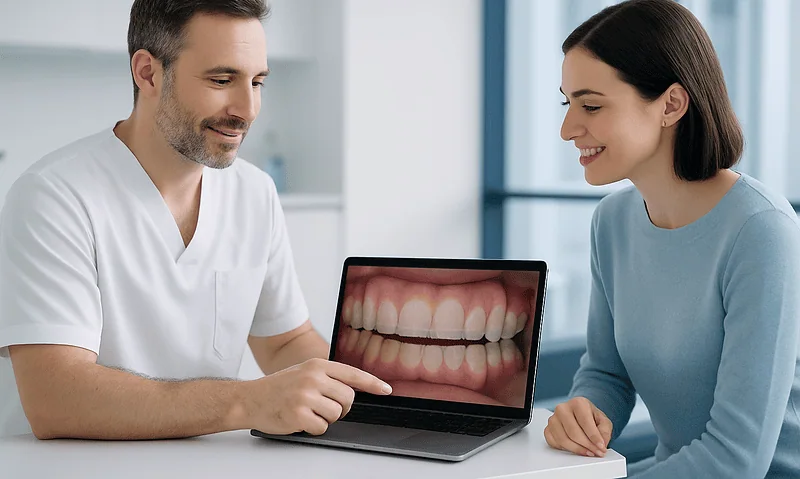
How Digital Smile Planning Shapes Gummy Smile Treatment Before Anything Is Reshaped
Digital smile design for a gummy smile uses photographs, video and a scan of the teeth to map how much gum shows, why it…
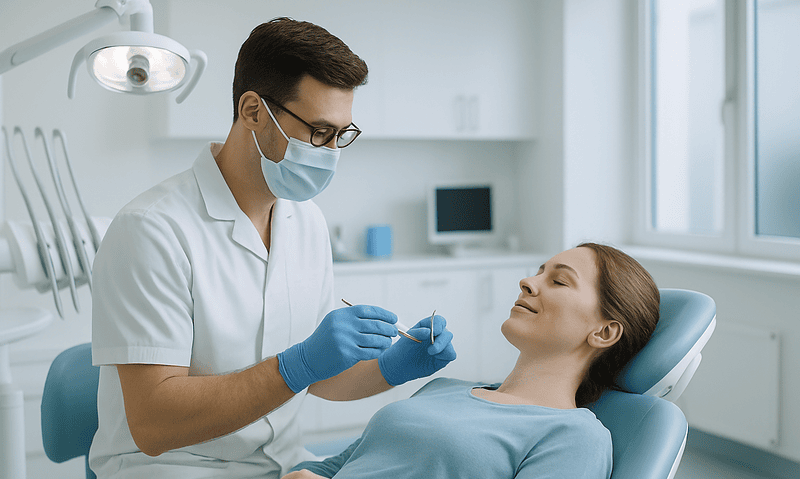
The First 48 Hours After Teeth Whitening: Foods, Drinks and Habits to Pause
For roughly the first 48 hours after teeth whitening, most dental teams advise pausing strongly colored or acidic foods and drinks such as coffee,…

What to Do With a Knocked-Out Tooth in the First Hour Before Emergency Dental Care
If a permanent tooth is knocked out, pick it up by the crown, not the root, rinse it briefly in milk or water without…

Preparing for a Tooth Extraction: Medication Lists, Eating and Arranging Your Ride Home
Preparing for a tooth extraction comes down to three practical steps: give your dentist a complete list of every medicine and supplement you take,…