

What Happens During Molluscum Lesion Removal: Numbing, the Procedure and Aftercare
Key Takeaways
- Molluscum is caused by a poxvirus, not by HPV, and the two are unrelated even though both spread by skin contact and produce bumps.
- The CDC notes that molluscum usually clears without treatment in 6 to 12 months, and can take up to 4 years, leaving no scar when left alone.
- Curettage, cryotherapy and clinician-applied blistering agents remove only the lesions visible that day; new bumps incubating for 2 to 7 weeks can still emerge afterward.
- The NHS does not usually recommend removal in children because the procedures can hurt and may scar, which is why watchful waiting is a legitimate first choice.
- Cryotherapy can permanently lighten skin by destroying pigment cells, so clinicians often avoid it on the face and in darker skin tones.
- Squeezing a molluscum core at home spreads virus across the skin, whereas curettage works because the core is caught on gauze under controlled conditions.
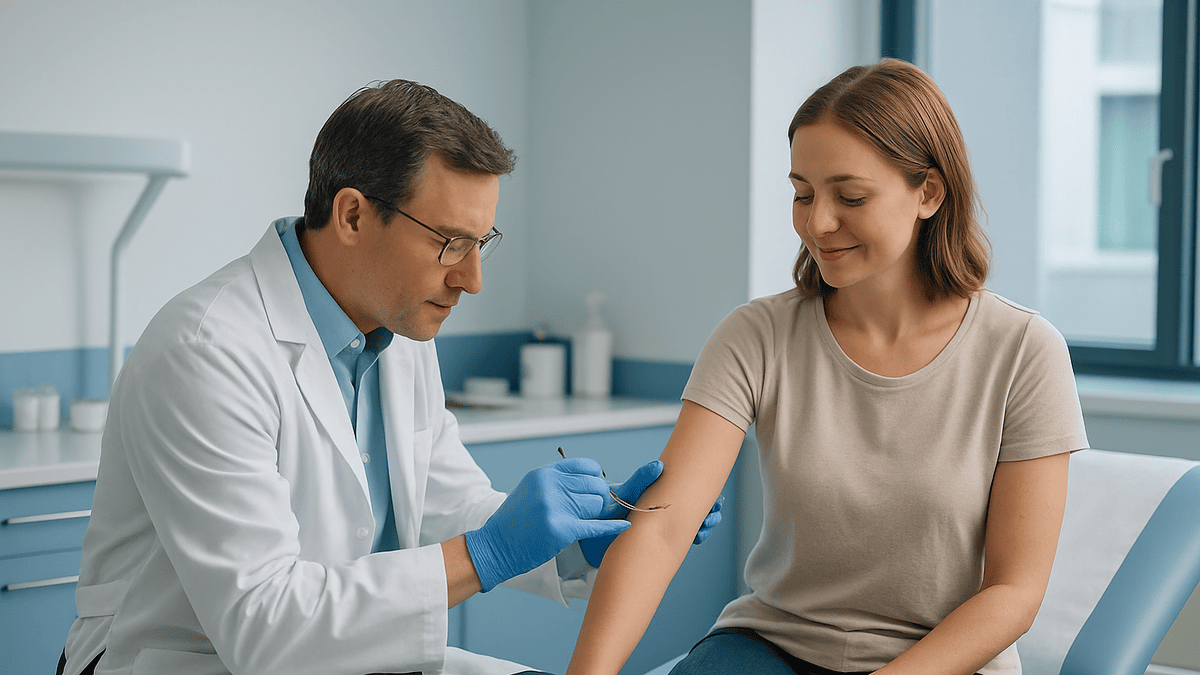
A molluscum removal procedure is a short outpatient visit in which a clinician either scrapes the bumps off with a small spoon-shaped tool (curettage), freezes them with liquid nitrogen (cryotherapy), or paints on a blistering solution. Numbing cream is often applied first. Afterward, small scabs form and heal over days to weeks. Because molluscum usually clears on its own, the decision to treat rests with your care team.
The pediatrician tilts the lamp and counts under her breath: eleven pearly bumps along a seven-year-old’s ribcage, each with the same tiny dimple in the middle. The child is more interested in the sticker jar. His mother has three questions written on her phone, and the first one is simply, “Do we have to do anything about these?”
That is the honest starting point for any conversation about a molluscum removal procedure. The bumps are harmless, they are contagious, and they almost always disappear without help. So why would anyone choose to have them scraped, frozen or blistered off? Sometimes because they itch, sometimes because they keep spreading, sometimes because a school swim team or a sibling with eczema changes the math.
What follows is what actually happens in the room: the numbing, the tools, the sounds and sensations, and the unglamorous days of scabs afterward. No promises, just what the evidence supports.
What is the root cause of molluscum, and is it a form of HPV?
Molluscum contagiosum is caused by a poxvirus, a large DNA virus in the same family as the one behind smallpox, though it behaves nothing like it. The molluscum contagiosum virus infects only the top layer of skin, the epidermis, and it never spreads to internal organs. That surface-only habit is why the infection looks the way it does: small, firm, flesh-colored or pink domes, typically 2 to 5 millimeters across, often with a central pit, according to the CDC.
People frequently ask whether molluscum is a form of HPV. It is not. Human papillomavirus is a different family of viruses altogether and causes warts. Both spread by skin-to-skin contact and both produce raised bumps, which is where the confusion starts, but the genetics, the microscopic appearance and the natural course differ. Molluscum has a shorter, more predictable lifespan on the skin and does not carry HPV’s association with cancer.
The virus travels by direct contact with a lesion, by shared towels, razors or sports mats, and by autoinoculation, the medical term for spreading it to yourself by scratching one bump and then touching another patch of skin. MedlinePlus puts the incubation period at roughly 2 to 7 weeks, so a child may pick it up at a pool party and show nothing for a month or more.
Children, people with atopic eczema and anyone with a weakened immune system tend to develop more numerous lesions. In adults, lesions clustered on the lower abdomen, thighs or genitals are usually acquired sexually, and the CDC advises evaluation for other sexually transmitted infections in that setting.
Knowing the root cause matters for one practical reason: every removal method is really just a way of destroying or provoking the immune system to clear a handful of infected cells. Nothing reaches a hidden reservoir, because there isn’t one.
Do the bumps need removing at all? Who is offered the molluscum removal procedure and who is asked to wait
Start with the number that shapes every decision: molluscum usually clears without treatment in 6 to 12 months, and the CDC notes it can take up to 4 years in some people. The bumps leave no mark when they resolve on their own. That is why watchful waiting is a genuine, evidence-supported option rather than a fallback.

So who is usually offered a procedure? Clinicians tend to consider active removal when lesions are:
- Multiplying quickly, especially in a child who scratches, because each scratch seeds new spots.
- On the face, eyelids or genitals, where spread is troublesome or where lesions can irritate the eye.
- Itchy, inflamed or repeatedly infected with bacteria after picking.
- Present in someone with widespread eczema, in whom lesions often spread across inflamed skin.
- Present in someone who is immunocompromised, in whom lesions can grow larger and persist far longer.
- Causing real distress, bullying or avoidance of swimming and sport.
Who is usually asked to wait? Very young children with a small number of spots in covered areas are the classic case. The NHS advises that treatment is not usually recommended for children because the procedures can be painful and may scar, and because the infection is harmless. A toddler who would need to be held down for curettage of three bumps on the back is rarely a good candidate for the procedure; the risk of a frightened child and a scar outweighs the benefit of clearing spots that will leave on their own.
Adults often tip toward treatment sooner, partly because they can tolerate the discomfort and partly because genital lesions carry a transmission conversation of their own.
None of this is a formula. The same eleven bumps might be treated in one family and left alone in another, and both choices can be correct. The treating clinician weighs location, symptoms, temperament and immune status, and the decision belongs to that team and the family together.
How is molluscum removed? The main methods compared
There are four broad approaches, and most clinics use two or three of them depending on the patient’s age and the number of lesions. Each works by destroying the infected epidermal cells or by irritating them enough that the immune system finishes the job.
| Method | What it involves | Typical sensation | Usual candidates |
|---|---|---|---|
| Curettage | Scraping each lesion off with a small, sharp, spoon-shaped instrument (a curette) | Pressure and a brief sting; numbing cream usually applied first | Older children and adults with a manageable number of lesions |
| Cryotherapy | Freezing each lesion with liquid nitrogen by spray or cotton applicator | Sharp cold and a burning ache for a minute or two | Adults and cooperative older children; fewer, larger lesions |
| Blistering agent (cantharidin) | Clinician paints a solution on each lesion; a blister forms and lifts the bump | Painless when applied; blister may sting later | Children who would not tolerate scraping or freezing |
| Prescription topical (for example, a nitric oxide-releasing gel) | Applied at home over weeks under a prescriber’s direction | Possible redness or irritation | Families who prefer to avoid a procedure; multiple lesions |
Laser treatment exists and is mentioned in Mayo Clinic’s overview, but it is generally reserved for difficult or numerous lesions, and access is more limited. Imiquimod, a cream that stimulates local immune activity, appears in older guidance; the CDC notes that studies did not show it to be effective in children and it is no longer routinely recommended for them.
Which method wins? No high-quality head-to-head trial has crowned one. Cochrane reviewers who examined molluscum treatments have repeatedly concluded that the evidence base is thin and that no single intervention has been shown to be clearly superior to placebo or to waiting. That uncertainty is not a failure of medicine; it reflects a condition that resolves regardless, which makes proving any treatment’s added value genuinely hard.
The practical upshot: the “best” molluscum removal procedure is the one a particular patient can tolerate, in a location where it is least likely to scar, chosen by a clinician who has explained the alternatives, including doing nothing.
Numbing before the molluscum removal procedure: what to expect
The single question children ask most is whether it will hurt, so the numbing step deserves its own explanation. For curettage, and sometimes before cryotherapy, the clinician or nurse applies a topical anesthetic cream, a local numbing medicine that soaks through the outer skin, to each lesion. A clear plastic film or dressing is placed over the cream so it stays put and penetrates rather than drying out. The waiting period varies by product and by how thick the skin is, and the team will tell you how long they want it left on.
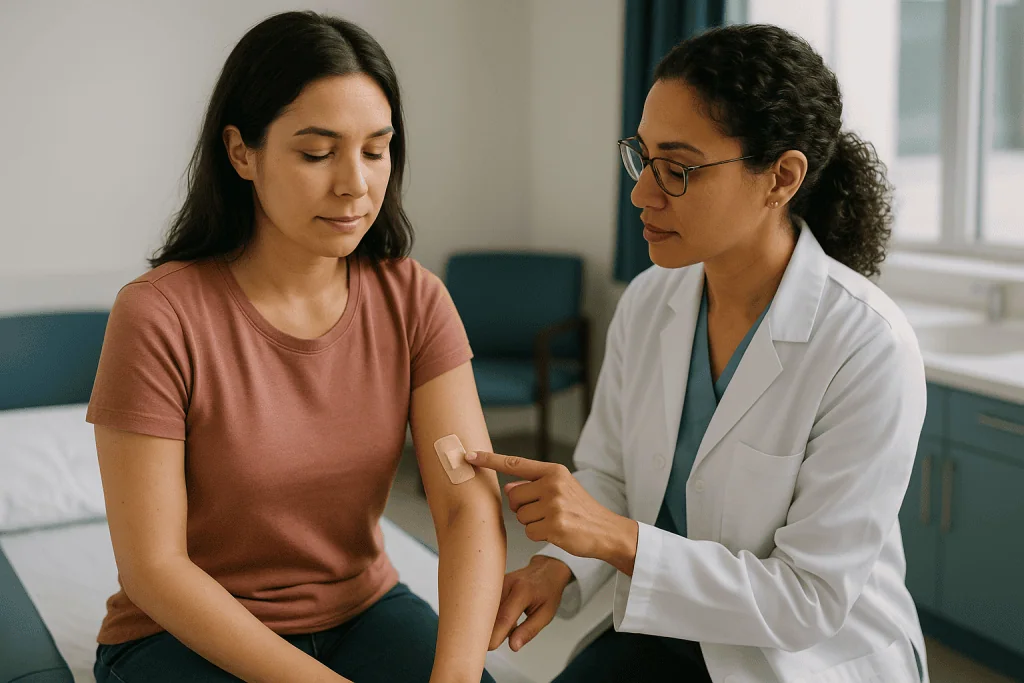
Numbing cream dulls the sharp sting of the curette, but it does not switch off all sensation. Most people still feel pressure and a tugging or scraping sensation. Warning a child that they will feel “a push and a scratch” is more honest than saying they will feel nothing, and honesty pays off at the second appointment.
A few practical points families often ask about:
- Topical anesthetics have limits on how much skin they can safely cover at once, which is one reason clinicians sometimes treat a large crop over several visits rather than in one go. The team decides the area, not the caregiver.
- Injected local anesthetic is rarely used for molluscum because the needle would hurt more than the scraping.
- Cryotherapy is usually done without numbing cream because the cold itself dulls the skin within seconds; the discomfort is short and sharp rather than lingering.
- Blistering solutions are painless to apply, which is precisely why they are favored for younger children; any discomfort comes later as the blister forms.
Sedation or general anesthesia is almost never appropriate for molluscum. If a child cannot tolerate treatment awake, the usual and sensible answer is to wait, not to escalate.
Tell the team about any previous reaction to numbing creams, dental anesthetics or adhesive dressings. Those small details change what they reach for.
Molluscum curettage step by step
Curettage is the most direct of the methods, and understanding the mechanics takes much of the fear out of it. A curette is a small metal instrument with a sharp-edged loop or cup at the tip, roughly the size of a grain of rice to a lentil. The molluscum bump sits in the epidermis like a bead pressed into wax; the curette is designed to lift that bead out with a single scoop.
Here is the usual sequence once the numbing cream has done its work:
- The dressing and cream are wiped away and the skin is cleaned with an antiseptic.
- The clinician stretches the skin around the lesion with the fingers of one hand so the bump stands proud.
- With the other hand, a quick, firm scrape removes the dome and the waxy white core inside it. That core contains the highest concentration of virus, which is why the team takes care to catch it on gauze rather than let it smear on surrounding skin.
- A tiny pinpoint of bleeding follows. Pressure with gauze stops it within moments; occasionally a drop of a styptic solution is applied to seal the spot faster.
- Each lesion takes seconds. A cluster of a dozen can be dealt with in a few minutes.
The sensation people describe most often is a scratch followed by a dull ache, similar to grazing a knee. Children usually object more to being held still than to the scraping itself, which is why one adult positioned to hold a hand and talk about something unrelated is more useful than two adults watching the curette.
Once finished, the spots look like small raw dots. A simple non-stick dressing or a dab of plain petroleum ointment is applied, and the appointment ends. Mayo Clinic lists scraping among the standard options and notes that treatment can leave scars; the risk is lowest when scraping is shallow and the wound is left clean and undisturbed.
Curettage removes what is visible on the day. New lesions incubating beneath the surface can still emerge in the following weeks, which is not a sign the procedure failed.
Molluscum cryotherapy: what freezing actually does
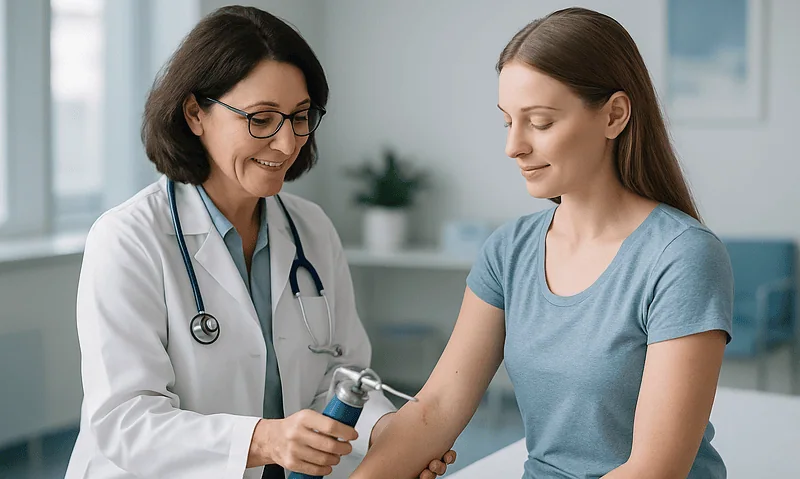
Cryotherapy means destroying tissue with extreme cold. The clinician uses liquid nitrogen, which boils at about minus 196 degrees Celsius, delivered either as a fine spray from a small canister or on a cotton-tipped applicator dipped in a flask. The tip is held against or just above the bump until the lesion and a thin rim of surrounding skin turn white and frosted.
Freezing kills infected cells in two ways. Ice crystals form inside the cells and rupture their membranes, and the tiny blood vessels supplying the area clamp shut so the tissue cannot recover. Over the following day, fluid collects beneath the frozen skin and a blister forms, lifting the dead lesion away from the healthy layer below.
What it feels like: a sharp sting that builds to a burning ache during the freeze, which usually lasts a few seconds per lesion, followed by a throbbing that fades over minutes as the skin thaws. Adults often describe it as similar to holding an ice cube against the skin too long. Because the pain is brief and the cold itself numbs nerves, topical anesthetic is often skipped, though some clinics apply it for children.
Cryotherapy suits fewer, larger lesions on tougher skin such as the trunk, arms and legs. Clinicians are more cautious about it on the face and in people with darker skin, because freezing can damage the pigment-producing cells and leave a pale patch that persists long after the molluscum has gone. That risk, hypopigmentation, is one of the most common reasons a dermatologist will steer a patient toward curettage or a blistering agent instead.
Repeat sessions are common. Mayo Clinic’s overview notes that treatments may need to be repeated as new lesions appear, and freezing is no exception. Each session addresses what is visible; the schedule, if any, is set by the treating clinician based on how the skin responded last time.
Blistering agents and prescription creams: molluscum contagiosum treatment without scraping
Two families of treatment avoid the curette entirely, and both matter most for children.
The first is cantharidin, a blistering compound originally derived from blister beetles. A clinician paints a small amount onto each lesion with a fine applicator, sometimes covering it with tape, and the family washes it off at home after the interval the clinic specifies. Within hours the treated bump lifts on a small fluid-filled blister. The blister dries and the crust falls away, taking the molluscum with it. Application is painless, which is the whole point; the sting comes later, if at all, and is usually mild. The CDC lists a cantharidin-based topical among the treatments with regulatory approval for molluscum, and it is applied only by a trained clinician, never at home.
The second is a home-applied prescription gel that releases nitric oxide into the skin. Nitric oxide is a small molecule the body uses in immune signaling, and in molluscum it appears to interfere with viral replication and prompt local inflammation that clears the lesion. It is applied by the family over a period of weeks under the prescriber’s direction. Redness, itching and mild irritation at the site are the expected trade-offs. The CDC’s treatment page notes this class among approved options; whether it fits a given child, and for how long, is a conversation with the prescribing clinician.
Older creams appear in internet searches and deserve a fair hearing. Imiquimod, which stimulates immune activity in the skin, is no longer routinely recommended for children because studies did not show it worked in that group. Tretinoin and salicylic acid preparations are sometimes tried for their irritant effect, but evidence is limited and they can inflame surrounding skin. Oral cimetidine, an antacid once proposed for molluscum, has not held up in controlled studies.
None of these should be started, stopped or swapped based on a magazine article. They are listed here so that when a clinician suggests one, the name is not a mystery.
What a child's molluscum appointment usually looks like
The appointment itself tends to be short. The longer part is the preparation, and most of it happens at home.
Telling a child the truth in advance works better than surprise. “The doctor is going to put magic cream on your spots, then scoop them off. You will feel a push. Then it is done.” Children who know the sequence cooperate more, and a cooperative child means a shallower, quicker scrape and less risk of a scar.
What families often bring or arrange:
- Loose clothing that gives easy access to the lesions without undressing fully.
- A tablet or phone with a favorite show for distraction; many clinics encourage it.
- A snack for afterward, since the visit may run long if cream needs time to work.
- One calm adult in the room. A second adult waiting outside is often better than two anxious faces.
Inside the room, the nurse marks or counts the lesions, applies numbing cream if curettage is planned, and covers each spot. The waiting time is the boring stretch. Then the clinician works quickly, usually starting with the spots the child cannot see, and finishes with the ones on the face or neck if any are being treated at all. Blistering solution appointments are even faster: paint, tape, home.
Praise the child for a specific thing, not the outcome. “You kept your arm so still” carries more weight than “that wasn’t bad.”
Clinicians are quick to stop if a child is distressed, and that is correct medicine, not failure. The NHS is explicit that treatment is not usually recommended in children because of pain and scarring risk. A partly completed session, or a decision to switch to watchful waiting, is a legitimate result.
Comfort afterward is simple: a cool compress if the sites sting, ordinary clothing that does not rub, and a normal bedtime. Any pain relief, including over-the-counter options, should follow the care team’s specific guidance for that child’s age and weight rather than general advice.
Aftercare in the first 48 hours
The treated spots behave like small grazes, and grazes heal best when they are kept clean, slightly moist and left alone. The first two days set the pattern.
After curettage, each site is a pinpoint wound that will weep a little and then crust over. After cryotherapy, a blister forms within hours; it may be clear or slightly blood-tinged, and both are normal. After a blistering agent, the same thing happens on a slightly slower clock. In all three cases the instructions overlap:
- Leave dressings on for as long as the team advised, then let the sites breathe.
- Wash gently with lukewarm water and a mild soap once a day. Pat dry rather than rub.
- Do not pop blisters. The fluid protects the healing layer underneath and popping raises infection risk. If a blister bursts on its own, keep the area clean and cover it loosely.
- A thin layer of plain petroleum-based ointment keeps crusts soft and reduces the chance of a pitted mark.
- Avoid swimming pools, hot tubs and contact sports until the sites have sealed, both to protect the wounds and to protect other people; open lesions shed more virus.
- Use a separate towel for the treated person and wash it after each use, which the CDC recommends throughout the infection.
Some redness around each site and mild soreness are expected. Itching is common as crusts form. Scratching reopens the wound and, more importantly, can transfer virus from any untreated lesion to fresh skin. Short fingernails on a child do a surprising amount of good here.
Bleeding from a curettage site that restarts should stop with a few minutes of firm pressure using clean gauze. If it does not, that is a phone call.
One thing families often forget: untreated lesions elsewhere are still contagious. Cover them with clothing or a small bandage during this period, particularly for children heading back to school, as the CDC advises.
What the following days and weeks usually look like
Recovery from a molluscum removal procedure is undramatic, which is exactly what you want. It unfolds in roughly three phases, though timing varies with the method, the location and the person.
In the first week, curettage sites scab. Cryotherapy blisters flatten, darken and dry into crusts. Blistering-agent sites do the same. Crusts are ugly and tempting, particularly to children, but every crust that falls off on its own rather than being picked is one fewer small scar.
Over the following one to three weeks, crusts detach and leave pink, slightly shiny new skin. Pinkness fades over weeks to months. In darker skin tones the healed spots may look temporarily lighter or darker than the surrounding skin; this post-inflammatory color change usually settles with time but can be slow, and sun protection helps it fade.
Then the part nobody warns you about: new bumps. Lesions that were incubating at the time of treatment will surface in the following weeks. MedlinePlus puts the incubation window at 2 to 7 weeks, so a crop of fresh spots a month after a “successful” session is expected biology, not evidence that the procedure did not work or that the family did something wrong. Clinicians typically plan a review visit for exactly this reason and decide together whether to treat the newcomers, wait, or alternate.
Several treatment sessions spaced weeks apart are common in the guidance from Mayo Clinic and the CDC. How many, and how far apart, depends on how the skin healed and how many new lesions arrived, and the treating team sets that schedule.
The infection is considered over when no lesions remain. At that point, according to the CDC, the person is no longer contagious and immunity, though not lifelong or absolute, makes reinfection uncommon. Scars, if any, are what remain, and they are the reason so much of this article is about gentle technique and patience rather than speed.
Risks, scarring and what can go wrong
Every removal method trades the certainty of a small wound for the possibility of clearing a lesion that would have cleared anyway. Naming the risks plainly is part of informed consent, and families deserve the list.
Pain is the most immediate. Numbing cream reduces but does not abolish it, and children in particular may find the experience frightening. The NHS cites pain as one of the two main reasons treatment is not usually recommended in children.
Scarring is the second. A shallow curettage or a light freeze usually heals with no visible trace, but deeper wounds, picked scabs, secondary infection and overly aggressive freezing can leave small pitted or raised marks. The CDC notes that treatment may cause scarring where the natural resolution of untreated lesions does not. That asymmetry is the central argument for restraint on the face.
Pigment change is the third, and it is underappreciated. Cryotherapy in particular can destroy melanocytes, the cells that make skin pigment, leaving pale patches that may be permanent, especially in darker skin. Blistering agents and curettage can also leave temporary darkening.
Infection of the wound is uncommon with good aftercare but possible; signs are covered in the section on when to call.
Spread of the virus during the procedure is a real consideration. The white core of each lesion is rich in virus; if it smears on surrounding skin, new lesions can appear nearby. Careful technique with gauze minimizes this.
Skin reactions to numbing cream, adhesive dressings or topical agents range from redness to, rarely, blistering beyond the treated area.
Finally, there is the risk of over-treatment: repeated sessions chasing every new bump when the infection would have burned out on its own. A good clinician revisits the decision at each review rather than assuming that because treatment started, it must continue. Asking “should we still be doing this?” is not doubting the team; it is part of the plan.
What people often get wrong about getting rid of molluscum
Search engines are full of confident answers about the fastest way to get rid of molluscum. Most of them are wrong in the same few ways.
“There is a fast way.” There is not, in the sense people mean. A clinician can remove the visible bumps in a single visit, but lesions incubating beneath the skin will still emerge over the following weeks, and the evidence from systematic reviews does not show that any treatment shortens the overall course compared with waiting. Speed on the day is not speed overall.
“It’s a type of wart or HPV.” Molluscum is caused by a poxvirus. Warts are caused by human papillomavirus. They are unrelated families, which is why wart remedies do not reliably work on molluscum.
“Home remedies like apple cider vinegar, tea tree oil or duct tape clear it.” None has good-quality trial evidence. Vinegar and essential oils can burn or sensitize skin, particularly in children with eczema, and an irritated patch is fertile ground for spread. If something seemed to work, the likelier explanation is that the lesion was already resolving.
“Squeezing the white core out at home is the same as curettage.” Squeezing releases the most virus-rich material onto surrounding skin and fingernails. It is a reliable way to grow the crop. Curettage works because the core is caught on gauze under controlled conditions.
“Kids with molluscum should be kept out of school or the pool.” The CDC does not recommend exclusion from school or daycare. Lesions should be covered with clothing or a watertight bandage for swimming and contact sports, towels should not be shared, and that is sufficient.
“Once treated, it can’t come back.” New lesions after treatment are expected. Reinfection after complete clearance is uncommon but possible, since immunity is not absolute.
“It means poor hygiene.” It means skin touched skin. Swimmers, wrestlers, toddlers and people with eczema get it more, and none of that is about cleanliness.
Questions to ask your care team before a molluscum removal procedure
A useful appointment is one where the family leaves knowing why a choice was made, not just what it was. These questions tend to surface the reasoning.
- Given the number and location of these lesions, what would happen if we did nothing for now? What would make you change that advice?
- Which method are you suggesting, and why that one for this person rather than the others?
- Will numbing cream be used, how long does it need to stay on, and what will it still feel like afterward?
- How many lesions will you treat in one session, and why that number?
- What does the healing look like day by day for this method, and what would be abnormal?
- How likely is scarring or a change in skin color with this method on this part of the body, and is there a lower-risk option for the face?
- New bumps often appear after treatment. When should we come back, and how will we decide together whether to treat those or wait?
- Is there anything about eczema, other skin conditions or the immune system that changes the plan?
- What should we do about school, swimming and sport in the meantime, and which lesions need covering?
- If a prescription cream is part of the plan, what is it meant to do, how will we know it is working, and what side effects should prompt a call?
- Who do we contact if something looks wrong in the evening or at the weekend?
For adults with genital lesions, one further question belongs on the list: should I be tested for other sexually transmitted infections, and should a partner be examined? The CDC advises considering this evaluation, and asking directly removes awkwardness on both sides.
Write the answers down or ask permission to record them. Aftercare instructions given at the end of a slightly tearful appointment are easily lost by the time the family reaches the car.
When to call your doctor after molluscum treatment
Most recoveries need no phone call at all. The signs below are the ones that do.
Contact the care team promptly if a treated site shows spreading redness, increasing warmth, swelling, or yellow or green discharge, or if it becomes more painful after the second day rather than less. These are the usual signs of bacterial infection, which is treatable but should not be left to see how it develops.
Call the same day if bleeding from a curettage site does not stop after a sustained period of firm pressure, if a blister is unusually large or filled with dark blood, or if the skin around a cryotherapy site turns very dark or looks like it is breaking down.
Seek urgent care if there is fever with a spreading red streak from a lesion, if a child is unusually drowsy or refusing fluids, or if there is any facial swelling, wheezing or hives after numbing cream or a topical agent, which can indicate an allergic reaction.
Arrange a routine appointment, rather than an emergency one, if lesions near the eye are becoming irritated or the eye is red, gritty or weeping; if an adult develops lesions on the genitals for the first time; if bumps are growing larger than usual, spreading rapidly across a wide area, or persisting well beyond the typical course; or if the person is known to have a weakened immune system and lesions are increasing. Extensive or giant lesions can be a marker of reduced immunity and warrant assessment.
Call as well if aftercare is simply not going to plan: a child who cannot stop picking, a family struggling to keep sites covered, or a prescription cream causing more irritation than expected. Those are solvable problems, and the team would rather hear about them early.
Whatever the concern, the person who treated the skin is the right first contact. They know which method was used, how deep, and where, and that context shapes the advice more than any general description can.
Frequently asked questions
What is the fastest way to get rid of molluscum?
There is no method proven to shorten the overall infection compared with waiting. A clinician can remove visible bumps in one visit by scraping, freezing or applying a blistering solution, but lesions still incubating beneath the skin will surface over the following weeks. Systematic reviews have not shown any treatment to be clearly superior. The quickest visible result and the quickest end to the infection are different things.
Is molluscum a form of HPV?
No. Molluscum contagiosum is caused by a poxvirus, while HPV is a separate virus family that causes warts. Both spread through skin-to-skin contact and both make raised bumps, which explains the confusion, but they differ genetically, look different under a microscope and follow different courses. Molluscum has no link to cancer, and wart treatments do not reliably work on it.
How much does it cost to get molluscum removed?
Costs vary widely depending on the method, the number of lesions, how many visits are needed and how insurance treats the condition, so no single figure is meaningful. Because molluscum usually resolves on its own, some plans regard removal as optional. The billing office of the practice treating you, together with your insurer, is the only reliable source for what applies to your situation.
What is the root cause of molluscum?
The root cause is infection of the outer skin layer by the molluscum contagiosum virus, a poxvirus that spreads by direct contact with a lesion, by shared towels, razors or mats, and by scratching one bump and touching another patch of skin. Children, people with eczema and people with weakened immunity develop more lesions. It is not caused by poor hygiene.
How is molluscum removed by a doctor?
A clinician usually chooses one of three approaches: curettage, in which each bump is scraped off with a small spoon-shaped tool after numbing cream; cryotherapy, in which liquid nitrogen freezes the lesion so it blisters and lifts away; or a clinician-applied blistering agent painted onto each spot. Prescription creams used at home are another option. The choice depends on age, lesion location and tolerance.
Does molluscum curettage hurt?
Numbing cream takes away most of the sharp sting, but people still feel pressure and a scraping or tugging sensation, followed by a dull ache like a grazed knee. Each lesion takes seconds. Children usually mind being held still more than the scraping itself. If a child is distressed, clinicians typically stop, and switching to watchful waiting is a reasonable outcome rather than a failure.
What does molluscum cryotherapy feel like and does it scar?
Freezing produces a sharp cold sting that builds to a burning ache for a few seconds, then a throbbing that fades as the skin thaws. A blister forms within hours and crusts over. Scarring is possible but uncommon with light freezing; a more frequent concern is a pale patch where pigment cells were damaged, which is why clinicians are cautious about using it on the face or in darker skin.
Why did new molluscum bumps appear after treatment?
Because treatment removes only the lesions visible that day. The virus incubates for roughly 2 to 7 weeks before a bump appears, so spots that were already developing under the skin will surface in the weeks after a session. This is expected and does not mean the procedure failed. Clinicians typically schedule a review to decide together whether to treat the new lesions or wait.
Can my child go to school or swim with molluscum?
Yes. The CDC does not recommend excluding children with molluscum from school or daycare. Lesions should be covered with clothing or a watertight bandage during swimming and contact sports, towels and sports gear should not be shared, and the child should avoid scratching. After a removal procedure, wait until treated sites have sealed before returning to the pool.
How long does molluscum contagiosum treatment take to heal?
Treated spots behave like small grazes. Scabs or blisters form within the first day or two and generally detach over the following one to three weeks, leaving pink new skin that fades over weeks to months. The overall infection, including new lesions, may need several sessions spaced weeks apart. Timelines vary with method and location, and the treating clinician sets the schedule.
References
- CDC – About Molluscum Contagiosum
- NHS – Molluscum contagiosum
- MedlinePlus – Molluscum contagiosum
- Cleveland Clinic – Molluscum Contagiosum
This article is for general information only and is not a substitute for professional medical advice. Please consult a qualified doctor about your individual situation.

More from the Blog

How Is Chronic Urticaria Treated When Antihistamines Are Not Enough? The Next Steps Explained
When antihistamines are not enough for chronic urticaria, international guidelines describe a stepwise pathway: the prescriber first reviews the antihistamine choice and timing, then…
Before Your First Acne Appointment: Products to Pause and What Your Dermatologist Will Ask
Before a first acne appointment, most dermatologists prefer to see your skin as it usually looks, so avoid starting new products, skip harsh scrubs…

Rosacea That Affects the Eyes: Gritty, Red or Watery Eyes That Need Medical Attention
Ocular rosacea is rosacea affecting the eyes and eyelids. Typical eye symptoms include a gritty or burning sensation, redness of the eyes and lid…

How to Stop and Prevent Dandruff for Good: Causes, Treatments and Daily Habits
Dandruff is usually controlled, not cured, by washing regularly with a medicated anti-dandruff shampoo, leaving it on the scalp for a few minutes before…
When Does Seborrheic Dermatitis Need a Dermatologist? Persistent Scaling and Facial Flares
Most seborrheic dermatitis can be managed with over-the-counter antifungal or anti-dandruff products, but it is reasonable to see a dermatologist when scaling persists after…
Cryotherapy, Topical Treatment or Lesion Removal for Molluscum: How the Options Compare
Cryotherapy, topical treatments and lesion removal all aim to clear molluscum bumps faster than the body would on its own, but no single option…