Molluscum Contagiosum Treatment
Molluscum contagiosum is a common viral skin infection causing small, dome-shaped bumps. Treatment may include observation, topical medicines, cryotherapy, or careful lesion removal by a dermatologist.
Quick answer
Molluscum contagiosum is a common viral skin infection that causes small, smooth, dome-shaped bumps and is often managed with either watchful waiting or dermatologist-led treatment when lesions are persistent, spreading, or bothersome. At Acibadem in Turkey, evaluation focuses on confirming the diagnosis and choosing appropriate care such as topical therapy, cryotherapy, or careful removal of lesions.
Molluscum Contagiosum: What It Is and Why It Appears
Molluscum contagiosum is a common viral skin infection caused by the molluscum contagiosum virus, a member of the poxvirus family. It produces small, firm, dome-shaped bumps, often with a central dimple, and it affects children most often, though adolescents and adults develop it too. In otherwise healthy people the infection is usually harmless and eventually clears without treatment, but the bumps remain contagious for as long as they are present. Treatment, when chosen, aims to remove visible lesions, limit spread and protect the surrounding skin.
Finding new bumps on your skin, or on your child’s skin, can be unsettling. The spots may look harmless at first, yet they can multiply, become irritated or cause embarrassment when they sit on the face, neck, arms, legs, trunk or genital area. For parents, the concerns are usually practical and emotional at the same time: is it contagious, can my child go to school or swim, will it leave scars? For adults, the questions may involve intimacy, immune health, cosmetic appearance, or whether the bumps could be something more serious. All of these are reasonable questions, and all of them have honest answers.
Molluscum contagiosum is common and usually not dangerous in healthy people. In many cases the body clears the virus over time without aggressive treatment. Waiting it out is not always the right choice, however. Lesions can spread through scratching, shaving, close skin contact, shared towels or sports equipment. They can become inflamed, infected, itchy or psychologically distressing. In people with eczema or weakened immunity, molluscum can be more extensive, more persistent and harder to manage. The purpose of a dermatology assessment is to confirm the diagnosis, weigh these factors honestly, identify anything driving recurrence, and choose the safest approach for the patient’s age, skin type, lesion location, lesion count and overall health.
What do molluscum contagiosum look like?
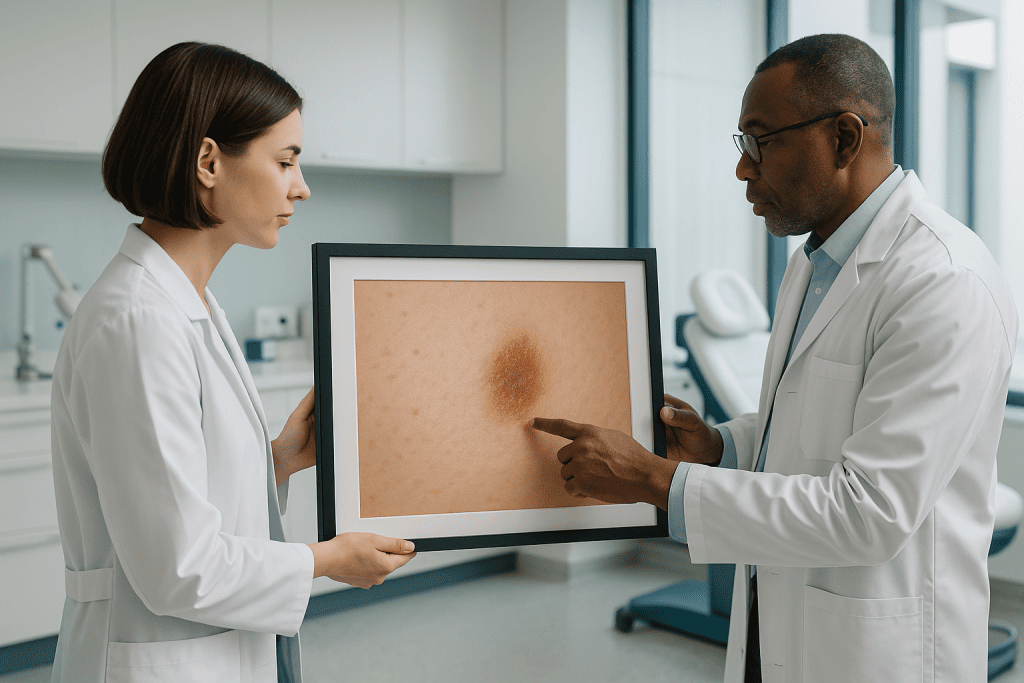
Molluscum contagiosum lesions are small, round, raised bumps that are typically skin-coloured, pink or pearly white, with a smooth, sometimes waxy surface. Many have a central indentation or dimple that becomes easier to see under magnification. Individual bumps usually measure a few millimetres across. They can appear as a handful of isolated spots or as dozens of lesions in clusters, most often on the trunk, arms, legs and face and, in adults, sometimes on the genital region and lower abdomen. In older medical texts the lesions are occasionally written as mollusca contagiosa, the Latin plural of the same name.
The bumps are usually painless, but they may itch, redden, or develop a patch of dry, eczema-like skin around them. When the immune system begins to react against the virus, lesions can look inflamed, swollen or crusted. This is frequently mistaken for bacterial infection, although it is often part of the natural clearance process. Scratched or picked lesions can bleed, weep or scab, which raises the chance of both bacterial infection and further spread across the skin.
What is the main cause of molluscum contagiosum?
The main cause of molluscum contagiosum is infection with the molluscum contagiosum virus, a poxvirus that lives in the outer layer of the skin. It passes from person to person through direct skin-to-skin contact and, less efficiently, through contaminated objects such as towels, razors, sponges, clothing and shared sports equipment. Warm, humid environments and close-contact activities make transmission easier, which is part of the reason the infection is so common among young children who play, wrestle and swim together.
The virus also spreads across a single person’s own skin, a process called autoinoculation. Scratching a bump and then touching another area can seed new lesions, and shaving through affected skin can spread the virus along the razor’s path. Broken or inflamed skin, particularly eczema, gives the virus an easier route in, which is why children with atopic dermatitis often develop more numerous and more persistent lesions than children with intact, well-moisturised skin.
Is molluscum contagiosum an STD?
Not usually. In children, molluscum contagiosum spreads through everyday skin contact and shared items, and genital-area lesions in a young child most often reflect ordinary spread from scratching rather than anything more concerning. In adolescents and adults, however, lesions on the genitals, inner thighs or lower abdomen can be sexually transmitted, because the virus passes readily through the close skin contact of intimacy.
When an adult presents with new genital lesions, a careful examination matters for two reasons. First, molluscum can be confused with genital warts, herpes, folliculitis and other conditions that need different management. Second, when transmission was likely sexual, the consultation may reasonably include a discussion of other sexually transmitted infections. This is handled respectfully and confidentially; the aim is accurate diagnosis, not alarm.
Does molluscum mean I have HPV?
No. Molluscum contagiosum and human papillomavirus (HPV) are entirely different viruses from different families. HPV causes warts, including genital warts, and certain HPV strains carry longer-term health implications of their own. The molluscum contagiosum virus is a poxvirus: it stays in the outer layer of the skin, behaves differently at the cellular level, and has no known link to cancer. The two infections can look similar to the untrained eye, which is one of the practical reasons a dermatologist’s examination is worth having: the distinction changes both the advice you receive and the follow-up you need.
What Is Molluscum Contagiosum Treatment?
Molluscum contagiosum treatment refers to the medical strategies used to clear the visible lesions, reduce spread and manage the irritation that often accompanies the infection. Because the cause is viral, treatment differs from what you might expect for acne, warts, bacterial folliculitis or allergic rashes. Antibiotics are not used unless a secondary bacterial infection develops. Antiviral tablets are not routinely required for healthy patients. Management instead rests on four pillars: careful observation, topical therapies, physical removal or destruction of lesions, and treatment of the associated skin inflammation.
How do you get rid of molluscum contagiosum?
There are three honest routes: wait for the immune system to clear the virus, use topical treatments under medical guidance, or have individual lesions removed in clinic through procedures such as cryotherapy or curettage. No single route is right for everyone, and dermatologists frequently combine them, removing lesions in visible or high-friction areas, for example, while observing the rest and treating any surrounding eczema at the same time.
The choice between routes usually turns on:
- the number and location of lesions
- the patient’s age and tolerance of procedures
- whether eczema or inflamed skin is present
- cosmetic priorities and skin tone
- immune status and overall health
- how quickly new lesions are appearing
How do you get molluscum to go away on its own?
In most healthy people, molluscum goes away when the immune system recognises the virus and clears it: a process that typically takes months and can occasionally take a year or longer. Observation is a legitimate medical choice when lesions are few, not bothersome, not in sensitive areas and not spreading quickly. Waiting is not the same as ignoring: throughout this period the lesions remain contagious through direct contact and autoinoculation, so the patient still needs practical guidance on avoiding scratching, covering exposed bumps where sensible, and keeping towels, razors and sponges strictly personal.
A useful signal that clearance is under way is the inflammatory reaction: previously quiet bumps become red, swollen or crusted as the immune system attacks the virus. It looks like a setback but is often the opposite. A dermatologist can distinguish this from genuine bacterial infection, which changes what the skin needs next.
Topical treatment involves medicines applied to the lesions or the surrounding skin under medical guidance. Depending on the product, the aim may be to stimulate a local immune response, to irritate the lesion just enough to trigger clearance, or to calm the eczema and itching that drive scratching and spread. Some over-the-counter products marketed for molluscum can burn the skin or cause pigment changes when used incorrectly, so professional direction matters, particularly for children, for facial or genital lesions, and for patients with darker skin tones, whose skin is more prone to lasting colour change after irritation.
Procedural treatment includes cryotherapy, curettage, gentle extraction of the central core and other dermatologist-performed techniques. The right method depends on the location and number of lesions, the patient’s age and pain tolerance, cosmetic concerns and whether the skin is inflamed. In sensitive areas, the eyelids, face, genitals and eczema-affected skin, treatment is planned with particular care to protect healthy tissue.
In short, molluscum contagiosum treatment is personalised. Some patients need reassurance and monitoring. Others benefit from active lesion removal. The consultation exists to work out which approach is safest, most effective and most realistic for the patient’s life, schedule and skin.
Who May Need Molluscum Contagiosum Treatment?
Many people first seek advice because the bumps are spreading or because they are unsure what the lesions are. The condition is especially common in children, but adolescents and adults are also affected. Treatment becomes worth discussing when lesions are increasing in number, sit on the face or other visible areas, are irritated by clothing or shaving, or itch enough to provoke scratching. It is also usually recommended when lesions sit near the eyes, in the genital area, or on eczema-affected skin, because inflamed skin lets the virus travel more easily. Children involved in close-contact sports, swimming or shared equipment may need guidance that reduces transmission without isolating them unnecessarily.
How is molluscum contagiosum diagnosed?
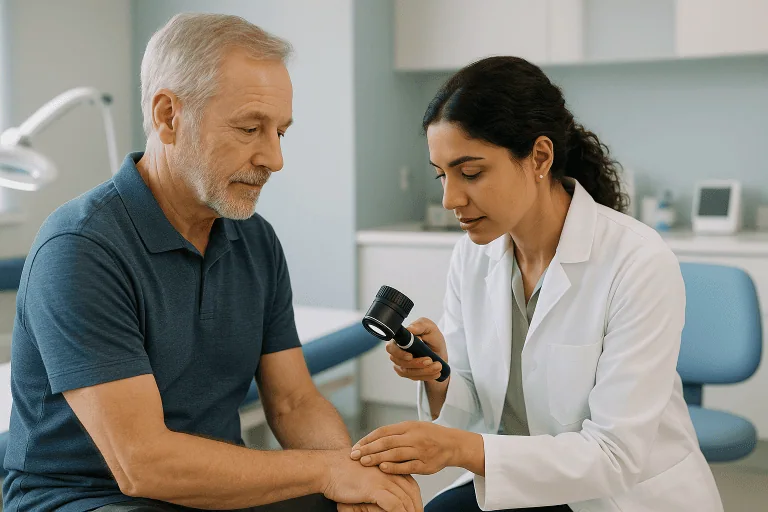
Diagnosis is usually clinical: a dermatologist can often recognise molluscum by examining the skin directly and, where needed, with dermoscopy: a magnified skin examination that does not break the skin and helps reveal the characteristic central core and vessel patterns of a molluscum lesion. Dermoscopy also helps distinguish molluscum from warts, milia, acne-like eruptions, folliculitis, skin tags, syringomas and other benign or, rarely, malignant lesions that can look similar to the naked eye. When lesions are atypical, or when they persist despite appropriate treatment, a small skin sample can be examined under a microscope to confirm the diagnosis. Blood tests are not routinely needed.
Do children with molluscum need treatment?
Often they do not, but they do need a plan. Parents who have read kidshealth molluscum pages and similar paediatric resources usually arrive with the same three questions: can my child attend school, can they swim, and will the spots scar? Children with molluscum can normally attend school and nursery. Swimming is generally acceptable when lesions are covered by clothing or a waterproof plaster and towels are not shared. Scarring from the infection itself is uncommon, although scratched, infected or aggressively self-treated lesions can leave marks. The practical goal for most families is containment and comfort rather than dramatic intervention.
Treatment decisions in children lean conservative for good reason. A frightened child gains little from a procedure that could have been avoided, and gentler options, observation, control of surrounding dermatitis, staged treatment of a few selected lesions, frequently achieve the same end with far less distress.
Adults with new genital lesions should be evaluated rather than self-diagnosed. Molluscum in this area is usually benign, but it shares territory with conditions that require entirely different care, and the examination may reasonably include a wider sexual health discussion when transmission was likely intimate. The purpose is not to alarm the patient but to make sure the diagnosis is correct and that any associated health considerations are addressed, with privacy respected throughout.
Patients with weakened immune systems deserve particular attention. In this group molluscum may be more numerous, larger, resistant to standard therapy or extensively distributed across the face and neck. This can occur in people receiving certain immune-suppressing medications, in patients with advanced immune disorders, or during complex medical treatment. Here dermatology care is often coordinated with the physicians managing the underlying condition, so that skin treatment fits the broader health picture rather than working against it.
Conditions and Indications Addressed by Treatment
The most common indication is uncomplicated molluscum in children or adults, where lesions are limited but persistent. Even when the condition is medically mild, patients may choose treatment for cosmetic reasons, discomfort, social anxiety or the wish to protect siblings, partners, teammates and other body areas from spread. These are legitimate reasons; a benign diagnosis does not oblige anyone to live with visible lesions for months.
Molluscum-associated dermatitis is the second major indication. Some patients develop dry, itchy, red patches around the bumps: an eczema-like reaction that leads to scratching and, through scratching, to new lesions. Treating this dermatitis is often as important as treating the bumps themselves, because inflamed skin makes the virus easier to spread. A dermatologist may recommend moisturisers, short courses of anti-inflammatory topical medicines or adjustments to the daily skin-care routine, always tailored to the individual patient.
Inflamed or irritated lesions are a third indication. Molluscum can become red, swollen, crusted or tender. Sometimes this represents the immune system attacking the virus; sometimes it signals bacterial infection, particularly when increasing pain, warmth, pus, spreading redness or fever accompany it. Medical evaluation distinguishes normal inflammation from a complication that needs additional care: a distinction that is genuinely difficult to make at home.
Facial molluscum, particularly in children and adolescents, is frequently treated actively. Lesions near the eyelids can be associated with eye irritation or conjunctivitis, and the skin around the eyes is too delicate for home remedies or harsh topical agents. Dermatologist-directed care protects the eye and the surrounding tissue while still clearing the lesions.
Genital molluscum in adolescents and adults calls for careful diagnosis and sensitive counselling. The lesions are usually benign, but they can be confused with genital warts, herpes and folliculitis. Correct diagnosis lets the patient understand transmission, partner considerations and whether any additional testing is advisable.
Widespread or recurrent molluscum may prompt a broader medical review. Extensive disease is still usually benign, but it can be associated with eczema, frequent skin trauma, sustained close-contact exposure or immune factors. A structured plan reduces the number of active lesions and interrupts the cycle of repeated spread.
How Molluscum Contagiosum Treatment Is Performed
What happens at the consultation?
Treatment begins with a dermatology consultation. The physician asks when the lesions appeared, how quickly they are spreading, whether they itch or bleed, what has already been tried, and about household exposures, sports, swimming, shaving habits, sexual exposure where relevant, and any history of eczema or immune suppression. For children, the discussion includes school, nursery and family concerns.
The examination itself is straightforward. The dermatologist inspects the lesions, often using dermoscopy for magnification, and conducts any examination of sensitive areas with privacy, consent and, when appropriate, a chaperone or parent present. Clinical photographs may be used in some settings to document progress, with the patient’s permission and according to privacy standards.
A typical treatment visit follows a predictable sequence:
- History-taking and skin examination, with dermoscopy where useful.
- Discussion of the options, observation, topical therapy or lesion removal, and consent for whatever is agreed.
- Skin preparation and, for removal procedures, application of a topical anaesthetic with time for it to take effect.
- Lesion-directed treatment of the agreed areas only.
- Aftercare instructions and, where needed, a follow-up plan for remaining or newly appearing lesions.
How to treat molluscum contagiosum with observation and skin care
If observation is chosen, the visit still produces a concrete plan. Patients learn to avoid scratching, to cover exposed lesions where practical, to keep towels and razors strictly personal, and to avoid shaving over affected skin. The daily skin-care routine may be adjusted to reduce dryness and irritation, and if eczema is present, controlling it becomes a priority in its own right, calmer skin spreads the virus less readily and simply feels better to live in.
Topical therapy in clinic and at home
When topical treatment is recommended, the dermatologist explains exactly where, how often and for how long to apply it. Some preparations are applied in clinic; others are used at home between visits. Because the goal is to trigger clearance without damaging healthy skin, precise application matters. Irritant products are kept away from the eyes, lips, genital mucosa and inflamed skin unless specifically directed. Follow-up lets the physician adjust the approach, easing off if irritation becomes excessive, or changing course if lesions persist despite consistent use.
Molluscum contagiosum cryotherapy
Molluscum contagiosum cryotherapy uses controlled freezing to damage individual lesions so the body can clear them. The dermatologist applies the freezing agent to each bump for a short, measured time. Patients typically feel stinging or burning during application, followed over the next days by redness, swelling or a small blister where the lesion was treated. You can read more about how the technique works and what it is used for on our cryotherapy page.
Cryotherapy suits older children, adolescents and adults with a manageable number of lesions. It is generally not the first choice for very young children, who tolerate the sting poorly, or for areas where pigment change or scarring would be conspicuous. Because freezing can lighten or darken healing skin, dermatologists use conservative settings on darker skin tones and on the face, and may prefer another method altogether when the cosmetic stakes are high.
Curettage and core removal
Curettage involves opening or scraping away the central core of a lesion using sterile technique, usually after a topical anaesthetic cream has had time to work. It removes lesions quickly and is particularly efficient when there are only a few. Done carelessly, it can cause unnecessary trauma, bleeding or scarring, so technique and restraint matter. For anxious children, a dermatologist may prefer a gentler approach or treat in stages rather than attempt many lesions in one sitting.
Some dermatologists use careful expression of the lesion core, chemical destruction or other office-based techniques depending on lesion location and patient factors. The principle is constant: treat the infected bump while protecting the surrounding skin. In patients prone to post-inflammatory hyperpigmentation or hypopigmentation, treatment intensity is chosen cautiously to limit dark or light marks after healing.
How long does treatment take?
A consultation plus treatment of a limited number of lesions usually fits within a single outpatient visit. More extensive disease may need staged sessions over several weeks. The procedures themselves are brief; most of the visit is spent on assessment, discussion, consent, skin preparation, anaesthetic effect where used, and aftercare instructions. It is unrealistic to expect that every lesion can or should be treated in one session: a measured, staged plan often heals better than an aggressive single sitting, and it leaves room to respond to how the skin actually behaves.
Aftercare and early recovery
After treatment, the skin may be red, tender, crusted or mildly swollen, and small scabs may form and fall away on their own. Patients are advised not to pick at treated areas, to keep the skin clean, to apply any recommended ointment or moisturiser, and to protect healing skin from friction and sun exposure. Swimming, close-contact sport and intimate contact may need temporary adjustment depending on lesion location, treatment method and whether open areas are present.
Most patients return to normal daily activities immediately after an office-based procedure, although visible redness or crusting can last several days. Healing takes longer when many lesions were treated or when treated skin sits in a high-friction area. Your dermatologist explains which healing changes are expected and which would warrant review at follow-up. One point deserves emphasis: new lesions can appear after treatment because the virus may already have spread invisibly before the treated bumps were removed. This does not mean treatment failed. It means lesions seeded earlier are now surfacing, and they can be addressed as they appear.
Why Acting Early Matters
Molluscum contagiosum is often described as self-limited, and for many healthy patients it is. Early assessment still earns its keep. The sooner the diagnosis is confirmed, the sooner a patient can stop the habits that spread the virus, scratching, shaving over lesions, sharing towels, uncovered contact in sport. Children with eczema can otherwise enter a cycle in which itching spreads the virus and new lesions worsen the itch.
Delay also increases the eventual workload. A single bump on the arm is easy to observe or remove; dozens across the trunk, thighs and face require a longer plan, more visits, more visible healing spots and more anxiety for the patient or the family.
Diagnostic certainty is another reason not to wait. Not every small bump is molluscum. Warts, folliculitis, acne-like eruptions, milia, allergic reactions and skin tags can all look similar to a non-specialist, and in adults with genital lesions, assuming the diagnosis without examination can delay care for conditions that need different management. Widespread molluscum in a patient with weakened immunity can also be a clue that a broader medical review is warranted.
Finally, early professional input prevents the complications of improvisation. Scratched lesions can become infected. Aggressive home treatment can cause burns, pigment changes, scarring or irritation severe enough to damage the skin barrier. A dermatologist prevents most of these problems simply by choosing a measured strategy and spelling out what is safe to do at home.
Benefits of Molluscum Contagiosum Treatment
The benefits of treatment depend on the patient’s age, skin condition, lesion burden and the method chosen, but the goals are consistent: control spread, improve comfort and protect the skin.
| Benefit | What It Means for You |
|---|---|
| Confirmed diagnosis | A dermatologist can distinguish molluscum from similar-looking skin conditions and guide the right next step. |
| Reduced spread | Treating selected lesions and improving skin care can lower the chance of spreading bumps to other body areas or close contacts. |
| Relief from itching and irritation | Managing associated dermatitis helps reduce scratching, discomfort and secondary skin problems. |
| Improved cosmetic appearance | Careful lesion-directed treatment may clear visible bumps faster than observation alone in selected patients. |
| Lower risk of self-treatment injury | Professional guidance helps patients avoid harsh remedies that may cause burns, pigmentation changes or scars. |
| Personalised planning | The treatment plan can be adapted for children, sensitive areas, darker skin tones, eczema or immune concerns. |
Recovery Timeline After Treatment
Recovery varies with the treatment type and the number and location of lesions, but most patients can expect a gradual, undramatic healing process supported by simple aftercare.
| Time Period | What Patients Can Expect |
|---|---|
| Day 1 | Treated areas may be red, tender, swollen or mildly irritated. Patients usually return to routine activities, depending on the extent and location of treatment. |
| First Week | Small scabs, crusting or blisters may develop after procedural treatment. The skin should be kept clean, and patients should avoid picking or scratching. |
| First Month | Many treated lesions flatten or resolve. New lesions may appear if the virus had already spread before treatment, and follow-up may be recommended. |
| Longer Term | Skin colour changes usually fade gradually, although timing varies. Continued skin care and avoidance of scratching help reduce recurrence and spread. |
What Influences a Good Result?
A good result in molluscum care means more than removing bumps. It means clearing lesions with minimal discomfort, avoiding unnecessary scarring or pigment change, limiting spread, and leaving the patient confident about skin care and transmission precautions. Several factors shape that outcome.
The number and location of lesions come first. A few lesions on the trunk may be simple to treat or observe. Lesions on the face, eyelids, genitals or areas of friction require a more cautious approach. Treating delicate skin too aggressively can create more harm than benefit, while under-treating actively spreading disease can prolong the whole problem.
The patient’s age and comfort level matter just as much. Young children may find even brief procedures frightening, and a staged plan, topical anaesthetic, observation or gentle topical therapy may serve them better. Adolescents and adults may prefer faster lesion removal for cosmetic or personal reasons, but they still need to understand aftercare and the real possibility of new lesions surfacing later.
Skin type affects planning. Any skin can develop temporary redness or marks after inflammation, but patients with darker skin tones are more prone to post-inflammatory pigment change, either darker or lighter patches where lesions healed. This does not rule out treatment; it argues for careful technique, conservative settings when freezing is used, diligent sun protection and a firm rule against picking.
Underlying eczema is one of the most important contributors to persistent molluscum. Dry, itchy, inflamed skin gives the virus constant opportunities to spread. Moisturising, treating the dermatitis, using gentle cleansers and reducing scratching can be central to success. In some cases, controlling the eczema changes the course of molluscum more than repeated lesion removal alone ever would.
Immune status influences how quickly the body clears the virus. In most healthy people molluscum is temporary. In patients with immune suppression, lesions may be more stubborn, and treatment may need coordination with the physician managing the underlying condition, particularly when molluscum is widespread, unusually large, facially prominent or recurrent despite appropriate care.
Consistency with aftercare is the factor most within the patient’s control. That means not picking scabs, not shaving over affected areas, not sharing towels or razors, and not applying unapproved caustic agents. Covering lesions during close-contact activities reduces transmission, and clothing that limits friction helps treated skin heal. If treatment is performed shortly before a holiday or a sports season, the patient should understand how to care for treated sites through swimming, sport and long days away from home.
Finally, realistic expectations hold the plan together. Molluscum may resolve quickly after targeted treatment, but some patients need multiple visits. New bumps can appear because of earlier, invisible viral spread. Mild temporary marks can follow either the infection or its treatment. A good dermatology plan anticipates all of this and adapts as the skin responds, rather than promising a tidy ending on a fixed date.
How Acibadem Approaches Molluscum Contagiosum Care
Molluscum contagiosum is a common condition, but the quality of the evaluation still matters. Patients often want more than lesion removal: they want clarity: an accurate diagnosis, a safe plan, careful handling of cosmetically sensitive areas, and guidance they can actually follow afterwards. Dermatologists at Acibadem evaluate molluscum through expert clinical examination and dermoscopy, reserving biopsy and laboratory testing for cases where lesions are atypical, persistent, infected or tied to broader health concerns.
Care is personalised rather than routine. A child with a few lesions and sensitive skin needs a different approach from an adult with genital molluscum, or an athlete with rapidly spreading lesions before a competitive season. Treatment may involve observation, topical therapy, cryotherapy, careful removal, management of surrounding dermatitis, or a staged combination, always weighed against comfort, skin type, lesion location and cosmetic priorities.
The hospital setting adds value in selected situations. Lesions near the eyelids that irritate the eye may benefit from ophthalmology input. An adult with genital lesions may need broader sexual health evaluation, arranged discreetly. Molluscum appearing in the context of immune suppression or complex medical treatment can be managed jointly with the relevant specialists, so a seemingly simple rash is not treated in isolation when the clinical picture calls for a wider view.
Second opinions follow the same logic. A useful review considers photographs of the lesions over time, previous prescriptions, any biopsy reports and the history of treatments already tried. Sometimes the outcome is not a more aggressive procedure but a safer plan: selective treatment, eczema control and prevention guidance combined.
Living With Molluscum Until It Clears
Because molluscum contagiosum can take months to resolve, day-to-day life has to continue around it. Children can attend school and nursery as normal. Swimming is generally fine when lesions are covered and towels are not shared. In close-contact sports, covering exposed lesions with clothing or a plaster protects teammates without benching the athlete. For adults with genital lesions, intimate contact can spread the virus while lesions are present, and this is worth an honest conversation with a partner and, where the diagnosis is uncertain, with a doctor first.
How can you stop molluscum spreading at home?
The most effective household measures are simple and mechanical: they deny the virus the skin contact it needs:
- Discourage scratching and picking; keep children’s fingernails short.
- Keep towels, flannels, razors and sponges strictly personal.
- Cover exposed lesions with clothing or a waterproof plaster during close-contact activities and swimming.
- Avoid shaving or waxing over affected skin.
- Moisturise dry or eczema-prone skin so the virus finds fewer entry points.
- Wash hands after touching or treating lesions.
None of these steps requires isolation, and none needs to disrupt family life. They simply narrow the routes the virus uses to travel, from bump to bump on one person, and from one person to the next.
Molluscum contagiosum rarely threatens health, but it tests patience. The condition rewards a steady, informed approach: confirm the diagnosis, treat what genuinely needs treating, calm the surrounding skin, and block the routes of spread while the immune system finishes the job. Whether that plan centres on observation, topical therapy, cryotherapy or careful removal, the measure of success is the same, clear skin, minimal marks, and a patient who understood every step along the way.
Preparation
- A dermatologist examines the skin to confirm the diagnosis and rule out similar conditions. Tell your doctor about immune system problems, pregnancy, allergies, or medicines you use. Avoid scratching, shaving over lesions, or applying unapproved creams before the visit.
Aftercare
- Keep treated areas clean and avoid picking or scratching to reduce spread and scarring risk. Do not share towels, razors, or personal items until lesions clear. Follow-up may be needed because new bumps can appear over several weeks.
Frequently Asked Questions
What affects the cost of molluscum contagiosum treatment?
The main cost factors are the dermatologist consultation, extent and location of lesions, treatment method, need for prescriptions or procedures, follow-up requirements, and whether international patient services such as interpretation or transfers are included.
How can I get a personalised quote from Acibadem?
You can request a free consultation and share clear lesion photos, symptom history, previous treatments, and any relevant medical conditions. A dermatologist can review the information and the international patient team can prepare a personalised estimate based on the recommended care plan.
Is observation less costly than active treatment?
Observation may avoid procedure-related fees, but it is not suitable for every patient. If lesions spread, become irritated, or cause concern, a dermatologist may recommend treatment, which changes the final cost.
Does the number of lesions change the treatment plan and cost?
Yes. More extensive or sensitive-area lesions may require additional clinical time, a different treatment approach, staged care, or follow-up, all of which can affect the final quote.
Are travel and language services included in the quote?
International patient packages may include coordination support, interpretation, appointment scheduling, and local logistics, but inclusions vary by case. It is best to confirm exactly what is included before travel.
Medically reviewed by the Acıbadem International Medical Board August 31, 2026
See our medical review board →
Update history
- PublishedJune 8, 2026
- Medical review approvedAugust 31, 2026
- Last content updateSeptember 8, 2026
References1
- Molluscum contagiosum nhs.uk
Trusted care for international patients
From the Acibadem Blog

Why New Molluscum Bumps Can Appear After Treatment: What to Expect and When to Return
New molluscum bumps after treatment are common and usually do not mean the treatment failed. The molluscum virus has an incubation period of about…