

When a Chalazion Keeps Coming Back: Repeat Treatment and Why a Biopsy May Be Advised

Key Takeaways
- A chalazion is a blocked meibomian oil gland walled off by inflammation, not an infection, which is why antibiotics alone rarely shrink it.
- Most recurrences are driven by chronic blepharitis, rosacea or meibomian gland dysfunction, so daily lid care after the lump fades is the part of treatment people most often skip.
- Steroid injection and incision and curettage give broadly comparable results for a straightforward chalazion, but only a cutting procedure yields tissue for examination.
- A chalazion that returns at the identical site is the classic disguise of rare sebaceous gland carcinoma, and clinical guidance recommends biopsy in that situation regardless of how healthy you feel.
- Lash loss over the lump, lid-margin thickening, ulceration or a stubborn one-sided blepharitis are features that raise a clinician's concern beyond simple recurrence.
- Draining a young child's chalazion usually requires general anesthesia, which is why clinicians extend conservative care longer in children than in adults.
A recurring chalazion is an eyelid oil-gland blockage that returns after it has settled or been drained. Repeat episodes are usually linked to ongoing blepharitis, rosacea or meibomian gland dysfunction, and are managed with lid care, a steroid injection or incision and curettage. When a lump keeps returning in the same spot, especially in an older adult, clinicians often send tissue for biopsy to exclude rare eyelid tumors.
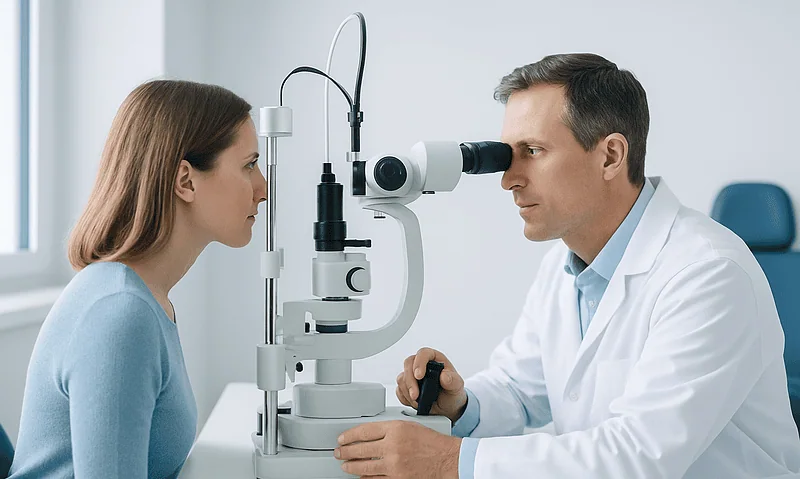
The second time the lump appeared, in the same corner of the same upper lid, she knew the drill: warm washcloth, gentle massage, wait. It faded. The third time, her optometrist paused over the slit lamp a beat longer than usual and said the words nobody wants to hear about a pea-sized eyelid bump: “I’d like to send this off.”
A recurring chalazion is common, mostly harmless, and genuinely frustrating. It sits on the border between a nuisance you manage at home and a problem that needs a procedure, and every so often it is the reason an eye specialist requests a biopsy. That request unsettles people far more than the lump itself.
This explainer walks through why one eyelid gland keeps clogging, what repeat treatment involves in plain terms, and the specific reasons a clinician may want a small piece of tissue examined under a microscope. The short version: the biopsy is usually a safety net, not a verdict.
What is a chalazion, and why does one form in the first place?
Each eyelid carries a row of oil glands, called meibomian glands, opening just behind the lashes. Their job is unglamorous and essential: with every blink they release a thin film of oil that slows the evaporation of tears. When one gland’s opening clogs, oil backs up, the gland swells, and eventually its contents leak into the surrounding lid tissue.
The body treats that leaked oil as a foreign substance and walls it off. The result is what pathologists call a lipogranuloma: a slow, sealed-off pocket of inflammation built around trapped fat. That pocket is the chalazion. MedlinePlus describes it as a small, usually painless lump caused by a blocked oil gland rather than by infection, which is why antibiotics on their own rarely shift it.
The distinction matters. An infected lash follicle produces a hot, tender, red pimple at the lid edge; a chalazion is typically firmer, deeper and less sore, and it lingers. Some begin life as a stye and then quietly harden into a chalazion once the infection settles but the oil remains.
Why a gland blocks in the first place usually comes down to the quality of the oil. In meibomian gland dysfunction, a condition where the glands produce thick, waxy oil instead of a free-flowing film, secretions behave more like cold butter than olive oil and stall at the exit. Blepharitis, the medical term for chronic inflammation of the lid margins, thickens the oil further and adds crusting at the gland openings. Skin conditions such as rosacea and seborrheic dermatitis push in the same direction.
Understanding this plumbing explains almost everything that follows: why heat helps, why the lump can return, and why a clinician who has drained the same gland twice starts asking harder questions.
Why does a chalazion keep coming back?
When a chalazion keeps coming back, the most likely explanation is the least dramatic one: the conditions that clogged the gland never went away. Blepharitis and meibomian gland dysfunction are chronic. They ease and flare, and each flare thickens the oil again. The NHS notes that blepharitis is a long-term condition managed with daily lid care rather than something that is treated once and forgotten. A gland that clogged under those conditions in spring can clog again in autumn.
Several other patterns also masquerade as recurrence:
- The lump never fully cleared. A chalazion can shrink to a barely noticeable nodule and then re-swell when the gland refills. What feels like a new problem is often the old one flaring.
- A neighboring gland is the culprit. Lids hold many glands side by side. A second chalazion a few millimeters along is a new blockage in a new gland, not the same lesion returning, and it carries a different meaning for the clinician.
- Incomplete drainage. If a procedure removes most but not all of the granuloma, the remnant can regrow. This is a recognized reason for a second incision and curettage.
- Skin and lash-line factors. Rosacea, seborrheic dermatitis and heavy colonization of the lash roots by Demodex mites are all associated with recurrent blockages, according to the clinical review of chalazion on the NIH Bookshelf.
The evidence on other suspected contributors is thinner than social media suggests. Diabetes, raised blood lipids and screen time are frequently blamed; the published data are mixed and mostly small, and none of them is established as a cause. It is fair to say your clinician may ask about them, and equally fair to say they cannot yet promise that changing them will stop the lumps.
Then there is the rare explanation that changes everything, covered in detail later: a growth in the lid that looks like a chalazion, gets treated like one, and returns because it was never a chalazion at all.
Chalazion vs stye: telling the two apart when a lump returns
People use the words interchangeably, and it causes real confusion when a lump comes back. The two conditions overlap, but they behave differently and are handled differently.
A stye, medically a hordeolum, is an infection, usually of a lash follicle or the small glands at the lid margin. It arrives fast, hurts, looks red and angry, and often develops a tiny yellow head near the lashes. The NHS advises that most styes settle within one to two weeks with warm compresses and no other treatment.
A chalazion is a blocked oil gland with inflammation but, in most cases, no active infection. It sits deeper in the lid, feels like a firm bead under the skin, is usually painless or only mildly tender, and takes far longer to fade. MedlinePlus notes that a chalazion often disappears without treatment in a month or so, and some persist well beyond that.
The overlap is the tricky part. A stye that does not fully drain can leave behind trapped oil that matures into a chalazion. So a lid that had a painful red lump last month and a firm painless one this month may be describing a single episode in two acts rather than two separate problems.
Why does the distinction matter for someone whose lump keeps returning?
- Repeated styes point toward bacterial colonization and lid-margin hygiene; repeated chalazia point toward oil quality and chronic gland dysfunction. The long-term plan differs.
- Antibiotic ointments have a logical role for an infected stye. For an uninfected chalazion they mainly treat the surrounding blepharitis, not the lump itself.
- Recurrence of a true chalazion at the identical site is one of the triggers for a biopsy discussion. Recurrent styes at various sites are not.
If you are unsure which you have had, describe the sequence to your clinician rather than the label. Pain, redness, speed of onset and position relative to the lash line tell the story better than the word you chose.
Do warm compresses still work on a recurring chalazion?
They remain the first thing most eye specialists recommend, even on the third or fourth episode, and the reasoning is physical rather than folkloric. The waxy oil trapped in a clogged meibomian gland softens as it warms. Heat applied to the closed lid brings that oil closer to a flowing state, and gentle pressure toward the lash line encourages it out through the gland opening.
Cleveland Clinic and the NHS both describe the basic routine: a clean cloth soaked in warm (not hot) water held against the closed eye, repeated several times a day, followed by light massage of the lid toward the lashes. Rewarm the cloth as it cools, because a compress does its work only while it is warm. Commercial heat masks exist and hold heat longer, though no specific product has been shown to outperform a well-managed washcloth.
Two cautions, both grounded in how the lid is built:
- Never squeeze or lance the lump. The contents are walled off for a reason. Forcing them can drive inflammation deeper, introduce bacteria and, on the delicate lid skin, leave a scar.
- Test the temperature on the inside of your wrist first. Eyelid skin is among the thinnest on the body and burns easily. Hotter is not better.
How long to persist is a common question. Because the underlying granuloma takes time to reabsorb, clinicians typically judge compresses over weeks rather than days; MedlinePlus frames spontaneous resolution in terms of a month or so. A lump that has not changed after a sustained trial, or that is growing, is the point at which most eye specialists discuss the next step.
Compresses also carry a second benefit for people with recurrences. Used daily even when no lump is present, they keep oil moving through all the glands, which is exactly the maintenance that blepharitis and meibomian gland dysfunction require. This is the part most people stop doing once the lump fades, and it is the part that matters most for the gland next door.
Recurrent chalazion treatment: what the clinic can offer beyond compresses
Once home care has had a fair trial, three clinic-based approaches dominate recurrent chalazion treatment. The NIH Bookshelf review describes each, and none is automatically superior; the choice depends on the lump’s size, position, duration and how many times it has returned.
Intralesional corticosteroid injection. A small volume of a steroid medication is injected directly into the lump. Corticosteroids dampen the inflammatory reaction around the trapped oil, allowing the granuloma to shrink and be reabsorbed. The procedure takes a minute or two after numbing. Its recognized drawbacks are cosmetic and, rarely, more serious: the skin over the injection site can lighten, particularly in people with darker skin, the fat under the skin can thin and leave a small dent, and very rarely the medication can enter a blood vessel supplying the eye. Clinicians weigh these against the appeal of avoiding a cut.
Incision and curettage. Often shortened to I&C, this is the mechanical option: numb the lid, open the lump, scoop out its contents. It is described in detail in the next section. Its advantage in recurrence is that it removes tissue that can be examined, which an injection cannot.
Treating the gland disease underneath. For people with rosacea or significant meibomian gland dysfunction, clinicians sometimes prescribe tetracycline-class antibiotics taken by mouth over a period of weeks. The interesting point is that at the way they are used for lid disease, the benefit is thought to come mainly from changing the chemistry of the oil and calming inflammation rather than from killing bacteria. Whether such a course is appropriate, and for how long, is a decision for the prescribing clinician, who will weigh sun sensitivity, pregnancy, age and other medicines.
The NIH Bookshelf review notes that injection and I&C produce broadly comparable results for a straightforward chalazion, and that a lump which returns after either approach at the same location should prompt tissue examination rather than a third round of the same treatment. That principle, not any single technique, is what protects people with recurring lumps.
What actually happens during incision and curettage
Knowing the sequence in advance takes most of the dread out of it. The procedure is done awake, in a clinic chair or minor-procedures room, and for most adults it is over in under fifteen minutes from first drop to final dressing, based on the standard description in the NIH Bookshelf review.
First, numbing. An anesthetic eye drop goes in, then a small injection of local anesthetic into the lid around the lump. The injection stings for a few seconds and is usually the only genuinely uncomfortable moment.
Next, the clamp. A small ring clamp is placed around the chalazion and tightened. It looks alarming and feels like firm pressure. It does two jobs: it holds the lid steady and it squeezes the local blood vessels, so the incision barely bleeds. The lid is then flipped so the clinician works from the inner, conjunctival surface. This is why most chalazion procedures leave no visible scar; the cut is on the moist inner lining, not the skin. Occasionally a lump that points outward is approached through the skin instead, with a tiny incision hidden in a natural lid fold.
Then the curette, a small spoon-shaped instrument. The clinician opens the lump and scoops out the thick, often cheesy contents along with the inflamed capsule. Some clinicians also snip away part of the capsule wall, and this is the moment tissue can be set aside for the laboratory if a biopsy has been planned.
Finally, pressure and dressing. The clamp comes off, pressure is applied for a few minutes, antibiotic ointment is placed in the eye and a pad is usually taped over the closed lid for a few hours. You will need someone to drive you home if the pad covers your only good eye.
Children are a separate story. Young children cannot hold still for a clamp on their eyelid, so the same procedure requires general anesthesia in an operating room, and clinicians therefore lean harder on conservative care before offering it.
Who is usually offered a procedure, and who is usually asked to wait
Eye specialists do not drain every chalazion, and the decision follows a fairly consistent logic. Understanding it helps explain why one person is offered I&C at the first visit and another is told to keep up the compresses.
Usually offered a procedure or injection:
- A lump that has persisted despite a sustained trial of warm compresses, which MedlinePlus frames as roughly a month or more of spontaneous resolution time.
- A lump large enough to press on the cornea. Pressure from a heavy upper-lid chalazion can temporarily distort the eye’s curvature and blur vision; that blurring is a recognized reason not to wait.
- A chalazion that has returned at the same site after prior treatment, where tissue examination is part of the purpose.
- Cosmetic distress, which is a legitimate reason and one clinicians take seriously.
Usually asked to wait, or offered something else first:
- Early lumps, typically those present for only a couple of weeks and still changing, because many will resolve on their own.
- A lid that is hot, red and tender, suggesting active infection. Clinicians generally settle the infection first; cutting into an infected lid risks spreading it.
- Young children, for whom I&C means a general anesthetic, so conservative care is pushed further.
- People taking anticoagulant or antiplatelet medicines, who are not excluded but may need planning around bleeding risk. Never stop these medicines on your own to prepare for a lid procedure; that is a conversation with the prescriber.
- Anyone for whom a steroid injection carries specific concerns, such as very dark skin where lightening would be conspicuous, or a lump sitting close to the lid margin where fat thinning would be visible.
None of these is an absolute rule. They are the considerations a treating team balances, and the final call always sits with the clinician who has examined the lid, ideally after you have said clearly how much the lump is bothering you.
Repeat treatment options for a recurring chalazion compared
The table below summarizes the main approaches as described in mainstream sources such as the NIH Bookshelf review and Cleveland Clinic. It is a map of the territory, not a ranking; the right option depends on the individual lid.
| Approach | How it works | Main drawbacks | Yields tissue for biopsy? |
|---|---|---|---|
| Warm compresses and lid hygiene | Heat softens trapped oil; massage moves it toward the gland opening; daily cleaning reduces crusting at the lash line | Slow; requires weeks of consistency; does not address a lump that is already fully walled off | No |
| Intralesional steroid injection | Corticosteroid calms the inflammatory reaction so the granuloma shrinks and is reabsorbed | Skin lightening (more visible on darker skin), fat thinning, rare vascular complications; may need repeating | No |
| Incision and curettage | Lump is opened from the inner lid and contents are scooped out under local anesthetic | Brief discomfort, bruising and swelling for days, small risk of bleeding or infection; incomplete removal can allow regrowth | Yes, if the clinician sets tissue aside |
| Oral tetracycline-class antibiotic course | Alters oil chemistry and reduces lid inflammation over weeks; treats the gland disease rather than the lump | Sun sensitivity, stomach upset, not suitable in pregnancy or young children; prescriber decision only | No |
| Excisional biopsy | Lump and capsule removed with a margin of surrounding tissue specifically for pathology | Slightly larger wound; sometimes done through the skin; may be followed by further surgery if findings are abnormal | Yes, by design |
Two observations from this table deserve emphasis. First, only the cutting procedures produce tissue, which is why a clinician facing a lump on its second or third return often steers toward I&C or excision rather than another injection, even if injection worked well before. Second, every option in the top four rows treats a symptom of gland disease, not the gland disease itself; the bottom row and the antibiotic row are the only ones aimed at what comes next. People who combine a procedure with a lasting lid-care routine tend to be the ones who stop coming back.
Why a biopsy may be advised for a recurring chalazion
Here is the sentence that matters: a chalazion that keeps returning in exactly the same place, despite competent treatment, is the classic presentation of a rare eyelid cancer called sebaceous gland carcinoma. The NIH Bookshelf review states plainly that recurrent chalazion at the same site warrants biopsy to exclude it. That is why your clinician’s tone changed.
Sebaceous gland carcinoma is a tumor arising from the same oil-producing cells that form a chalazion, most often from the meibomian glands. Because it grows in the same tissue, produces a similar firm lump and sits in the same location, it can be mistaken for a chalazion and drained as one. The drainage removes some tissue, the lump shrinks, and then it grows back because the underlying tumor was never removed. This pattern, a lump that behaves like a chalazion but refuses to stay gone, is exactly what a biopsy is designed to catch.
Features that raise concern in clinical reviews include:
- Recurrence at the identical site rather than at a neighboring gland.
- Loss of lashes over the lump, known as madarosis. A chalazion pushes lashes aside; a tumor destroys their roots.
- Thickening, distortion or yellowish discoloration of the lid margin.
- Ulceration or bleeding of the overlying skin or inner lining.
- A one-sided, stubborn blepharitis that does not respond to usual care.
- Older age, since the tumor is markedly more common in later life.
It is essential to hold two facts together. Sebaceous carcinoma is rare, and the overwhelming majority of recurring chalazia are simply recurring chalazia. At the same time, it is a tumor that can spread if left, and its only reliable disguise is a chalazion. Clinicians therefore accept a low threshold for sending tissue, knowing that most results will come back as ordinary lipogranuloma.
Other eyelid tumors, including basal cell and squamous cell carcinoma, can occasionally mimic a chalazion too, particularly when they arise on the skin side of the lid. A biopsy sorts all of them out at once. Being asked to have one is a mark of careful practice, not a diagnosis.
Chalazion biopsy: what happens to the tissue and what the pathologist looks for
The word biopsy simply means removing a sample of tissue so it can be examined under a microscope. For a chalazion, that sample is usually the contents and capsule wall already being removed during incision and curettage, or the whole lump when an excisional biopsy is planned from the start. There is rarely a separate, additional procedure.
Once removed, the tissue is placed in a preservative and sent to a pathology laboratory. There it is embedded in wax, sliced thinner than paper, stained and mounted on glass slides. A pathologist, a doctor who specializes in diagnosing disease from tissue, then reads those slides.
In a straightforward chalazion, the pathologist sees lipogranulomatous inflammation: scattered fat droplets surrounded by immune cells, including large multinucleated cells that form when the body tries to engulf material too big to swallow. This is the reassuring, expected finding and by far the most common result.
What the pathologist is checking for instead is a population of abnormal sebaceous cells: cells that are enlarged, irregular, dividing rapidly and invading beyond the boundary of a gland. Special stains can highlight fat within these cells, confirming their sebaceous origin. The pathologist also looks at the surface lining for a pattern called pagetoid spread, where tumor cells creep along the conjunctiva far from the main lump. If that pattern is suspected, an eye specialist may later take several small additional samples from around the lid, known as map biopsies, to chart how far the abnormal cells extend.
Results are not available on the day. Processing, sectioning and expert review take time, and complex cases may be reviewed by more than one pathologist. Ask your team when to expect the report and how it will be communicated, so you are not left refreshing a patient portal.
If the report shows ordinary chalazion, the biopsy has done its job and the plan returns to preventing further blockages. If it shows anything else, the same team will explain the findings and the next steps, which sit entirely within their care.
What the days and weeks after repeat treatment usually look like
The immediate aftermath of a chalazion procedure looks worse than it feels, and knowing that spares a lot of anxious mirror-checking.
The first hours. After incision and curettage, expect the eye pad to stay on for a few hours as your clinician directs. When it comes off, the lid is usually swollen and there may be a little blood-tinged discharge from the inner surface; a smear on the pad is normal. After a steroid injection, the lump may briefly look larger because of the injected volume before it begins to settle.
The first days. Bruising of the lid, sometimes spreading below the eye, is common after I&C and follows the usual color sequence from purple to yellow over about a week. Mild aching responds to whatever pain relief your team suggests; if you were given an antibiotic ointment, it is typically used for a short course as instructed. Cleveland Clinic advises avoiding eye makeup and contact lenses until the lid has settled and your clinician clears you. Warm compresses often restart within a day or two, both to help the remaining swelling and to keep neighboring glands flowing.
The following weeks. A drained chalazion leaves behind a small area of firmness that softens gradually; some residual thickening for several weeks is expected and does not mean the lump has returned. After steroid injection, shrinkage happens over weeks rather than days, and a second injection is sometimes offered if the response is partial. Any pathology result arrives during this period.
The follow-up visit. Most teams review the lid within a few weeks to confirm healing, check the biopsy report if one was sent, and set the long-term plan for lid care.
Timelines here are typical ranges drawn from Cleveland Clinic and MedlinePlus descriptions, not promises. Lids that were very inflamed take longer; small, quiet lumps settle faster. The single most useful thing you can do in this period is to note the exact position of any firmness so that, if it returns, you and your clinician can tell whether it is the same gland.
Can you stop a chalazion from coming back?
You can lower the odds meaningfully, though no routine eliminates them, because the gland disease underneath is chronic. The strategy is less about the lump and more about the lids as a whole.
Daily lid hygiene, permanently. The NHS describes the core routine for blepharitis: warmth to soften oil, gentle massage toward the lashes, then cleaning the lash line with a clean cloth or a clinician-recommended lid wipe to lift crusts and debris. Done once daily, this keeps every gland’s exit clear rather than just the one that misbehaved. Most people abandon it once a lump fades; the ones who keep going are the ones whose stories stop here.
Treat the skin condition. Rosacea and seborrheic dermatitis drive lid inflammation. If either is present, managing it with your primary care clinician or dermatologist is chalazion prevention in disguise.
Rethink eye makeup habits. Products applied to the inner waterline sit directly on the gland openings. Applying liner outside the lash line, replacing mascara regularly and removing all makeup fully each night are sensible, low-cost changes. No specific product is required.
Contact lens discipline. Lenses do not cause chalazia directly, but poor lens hygiene inflames lid margins. Follow your fitter’s replacement and cleaning schedule.
Blink. Concentrated screen work suppresses blink rate, and incomplete blinks fail to express the glands. Deliberate full blinks during breaks are a small, evidence-consistent habit.
Omega-3 supplements. Frequently recommended for meibomian gland dysfunction. The NIH Office of Dietary Supplements characterizes the evidence for omega-3s in dry eye conditions as mixed, with a large trial showing no clear benefit over placebo. They are not harmful for most people, but they are not a proven fix, and anyone on blood thinners should check first.
Where recurrences continue despite all of this, a clinician may revisit oral tetracycline-class therapy or in-office gland treatments. Those decisions, and their timing, belong to your treating team.
What people often get wrong about a chalazion that keeps coming back
Recurring lumps attract confident advice, and much of it is wrong in ways that make things worse. Here are the misconceptions clinicians hear most.
“It’s an infection, so I need antibiotics.” A chalazion is a blocked gland with inflammation, not a bacterial abscess. MedlinePlus and Cleveland Clinic both make this distinction. Antibiotic ointments may calm surrounding blepharitis or treat a coexisting stye, but they do not dissolve a walled-off granuloma. Expecting them to do so leads to disappointment and, sometimes, delayed proper treatment.
“If I squeeze it, it will pop like a pimple.” It will not, and the attempt drives inflammation deeper into the lid and risks scarring thin skin. The contents are thick and encapsulated; they leave through a curette or through weeks of warmth, not through thumbs.
“It went away, so it’s gone.” A chalazion can shrink to a barely palpable seed and refill. Many so-called recurrences are one lesion cycling. Feeling the lid carefully after the lump fades tells you whether anything remains.
“Recurrence means I’m unhygienic.” Chalazia recur because of oil chemistry and chronic gland disease, conditions people are born toward, not because of dirtiness. Lid hygiene helps, but its absence is not a moral failing and its presence is not a guarantee.
“A biopsy means they think it’s cancer.” A biopsy means the clinician wants certainty. The NIH Bookshelf review recommends it for same-site recurrence precisely because a rare tumor can hide there; the recommendation applies to everyone in that situation, and most reports come back as ordinary chalazion.
“Hotter compresses work faster.” Eyelid skin burns at temperatures that feel tolerable on a hand. Warm, sustained and repeated beats hot and brief every time.
“Children can just have it drained like adults.” Draining a child’s chalazion typically requires general anesthesia, which is why clinicians push conservative care further in children and why a parent’s patience is a genuine part of the treatment.
Questions to ask your care team about a recurring chalazion
Appointments are short and eyelids are small, so it helps to arrive with the questions that actually change decisions. These are the ones eye specialists say they wish more people asked.
- Is this the same gland as last time, or a neighbor? The answer shapes everything, including whether biopsy is on the table.
- Do you see any features that make you want to send tissue? Ask directly. Clinicians respect the question and will explain what they are and are not seeing.
- What is the underlying gland condition, and how do I manage it long term? Blepharitis, meibomian gland dysfunction and rosacea each have their own maintenance plan.
- Which option are you recommending, and why that one for me? Injection, incision and curettage and watchful waiting each have trade-offs; hearing the reasoning helps you own the decision.
- If you inject steroid, what is my personal risk of skin lightening or a dent? This matters more for darker skin and for lumps near the lid edge.
- Will the procedure be from inside the lid or through the skin, and will there be a visible mark?
- What should I stop or continue before the procedure? Especially blood thinners, which must never be paused without the prescriber’s agreement.
- If tissue is sent, when and how will I hear the result?
- What should the lid look like at one week, and what would be abnormal? A clear picture of normal healing prevents unnecessary worry and missed warnings alike.
- How many recurrences would change your approach? Knowing the threshold in advance means you are not surprised when a biopsy is suggested.
- Is there anything about my health, medicines or skin that raises my risk of this happening again?
Bring a note of previous episodes: which lid, roughly where along it, how long each lasted and what was done. A simple sketch of the lid with a dot marks the site better than memory does. That record is often the single most useful thing you can hand a clinician trying to decide whether a lump is a recurrence or a new arrival.
When to call your doctor about a recurring chalazion
Most chalazia, including recurring ones, are safely managed at home and in routine clinic visits. A small number of situations need prompt attention, and a handful need same-day care. Do not wait for a scheduled follow-up if any of the following apply.
Seek urgent care the same day if you notice:
- Redness and swelling spreading across the whole lid or onto the cheek, especially with fever or feeling unwell. This can signal cellulitis, a spreading skin infection around the eye that needs prompt medical treatment.
- Pain on moving the eye, double vision, the eye appearing pushed forward or the lid too swollen to open. These are warning signs of infection behind the eye and are treated as an emergency.
- Sudden loss or blurring of vision that does not clear with blinking, particularly after a steroid injection.
- Heavy bleeding from the lid after a procedure that does not stop with several minutes of firm pressure.
Arrange a prompt appointment, within days, if:
- The lump has returned in exactly the same position as a previously treated chalazion.
- Lashes are falling out over or around the lump, or the lid margin looks thickened, notched or discolored.
- The lump or the skin over it has ulcerated, crusted persistently or bled without injury.
- The lump is hard, irregular or fixed rather than a smooth movable bead.
- A chalazion has not improved after a sustained trial of warm compresses, or is steadily growing.
- A child has a lid lump that is red, painful or accompanied by fever, or any child’s chalazion that is large enough to cover part of the pupil.
Mention at your next routine visit any new lumps at different sites, persistent crusting at the lash line, or gritty, burning eyes, since these point to the underlying gland disease that drives recurrence.
These lists are prompts, not a diagnostic tool. Only an examination can determine what a lid lump is, and every treatment decision rests with the clinician who performs that examination. If you are worried and unsure which category you fall into, calling is always the right choice.
Frequently asked questions
Why does my chalazion keep coming back in the same spot?
Same-site recurrence has two main explanations: the original granuloma was never fully cleared and refills, or the gland’s exit remains blocked by chronic lid disease such as blepharitis. Rarely, a lump that returns in exactly the same place is a tumor that was mistaken for a chalazion. Because of that possibility, eye specialists typically recommend removing and examining the tissue rather than repeating the same treatment a third time.
Is it 'recurring chalazion' or 'recurrent chalazion'?
Both are correct and mean the same thing: a chalazion that returns after having settled or been treated. Clinical notes and research papers more often use “recurrent,” while patients and search engines tend to say “recurring.” The words “recurringly” and “a recurring problem” simply describe something that happens again and again. Your clinician will understand either term; what matters is describing where and how often the lump returns.
Does a chalazion biopsy mean my doctor thinks I have cancer?
No. A biopsy means your clinician wants certainty about a lump that is behaving unusually, most often because it has returned in the same location. Mainstream guidance recommends this for everyone in that situation, precisely because a rare eyelid tumor can look identical to a chalazion. The great majority of such biopsies confirm an ordinary blocked gland. The request reflects careful practice, not a suspicion about you specifically.
What is the difference between a chalazion vs stye when the lump returns?
A stye is an infection at the lash line: painful, red, fast to appear, and usually settling within one to two weeks according to the NHS. A chalazion is a blocked oil gland deeper in the lid: firmer, less painful, slower to fade. A stye that does not fully drain can turn into a chalazion, so what feels like two problems may be one episode in two stages. Recurrent styes and recurrent chalazia point to different underlying issues.
How long should I try warm compresses before seeing someone about a returning chalazion?
Clinicians generally judge compresses over weeks rather than days, because the walled-off inflammation takes time to reabsorb; MedlinePlus describes many chalazia resolving in a month or so. That said, a lump returning at a previously treated site, one that is growing, or one causing blurred vision should be assessed sooner rather than waiting out a full trial. If in doubt, an earlier look costs little and can change the plan.
What is recurrent chalazion treatment likely to involve at the clinic?
The usual options are a steroid injection into the lump, which calms inflammation so it shrinks, or incision and curettage, in which the lid is numbed, clamped and the contents scooped out from the inner surface. Clinicians may also address the underlying gland disease with long-term lid hygiene or, in selected people, a prescribed course of tetracycline-class medication. For a lump that has returned at the same site, a procedure that yields tissue is often preferred.
What are the risks of a steroid injection into a chalazion?
The recognized risks are mostly cosmetic: lightening of the skin over the injection site, which is more noticeable on darker skin, and thinning of the fat under the skin that can leave a small dent. Very rarely, injected medication can enter a blood vessel supplying the eye and affect vision. Clinicians weigh these against the advantage of avoiding an incision, and the choice depends on the lump’s position, your skin tone and your preferences.
Will incision and curettage of a chalazion leave a scar?
Usually not. Most chalazia are opened from the inner, conjunctival surface of the lid after it is flipped, so no cut is made on the skin. Lumps that point outward are occasionally approached through a tiny skin incision hidden in a natural lid fold, which typically fades to a barely visible line. Ask your clinician which approach they plan; the answer depends on where the lump sits within the lid.
What signs make an eyelid lump more worrying than a simple chalazion?
Features that raise concern in clinical reviews include recurrence at exactly the same site, loss of lashes over the lump, thickening or yellow discoloration of the lid margin, ulceration or bleeding of the surface, and a one-sided blepharitis that does not respond to usual care. Older age also increases suspicion. None of these confirms anything on its own, but each is a reason for prompt examination and, often, tissue analysis.
Can children get recurring chalazia, and is treatment different?
Yes, children get chalazia and can have repeated episodes, often alongside blepharitis. The approach leans more heavily on warm compresses and lid cleaning because incision and curettage in a young child requires general anesthesia rather than a quick numbing injection. Clinicians therefore extend conservative care longer before offering a procedure. A child’s lid lump that is red, painful or accompanied by fever should be assessed promptly for infection.
References
This article is for general information only and is not a substitute for professional medical advice. Please consult a qualified doctor about your individual situation.

More from the Blog

Is PRK or SMILE Better for You? No Flap in Either, Very Different Recoveries
Neither PRK nor SMILE is better for everyone. Both reshape the cornea without a LASIK-style flap, but PRK removes the eye's surface layer and…

How Trabeculectomy Lowers Eye Pressure: The Tiny Flap, the Bleb and the Operating Room Steps
Trabeculectomy lowers eye pressure by creating a new, controlled exit for the fluid inside the eye. The surgeon lifts a tiny trapdoor in the…

When Does a Damaged Cornea Need Surgical Repair? Injuries, Infections and Thinning Explained
A damaged cornea needs surgical repair when the injury, infection or thinning threatens the eye's structure or cannot heal with medicines alone: a full-thickness…
Pain, Light Sensitivity or Blurred Vision With Pink Eye: Why These Need Same-Day Review
Most pink eye is mild conjunctivitis that settles on its own, but eye pain, sensitivity to light, or blurred vision that does not clear…

Oculoplastic Surgery Recovery: Cold Compresses, Sleeping Propped Up and Bruise Timelines
Oculoplastic surgery recovery, including eyelid procedures such as blepharoplasty, usually brings the most swelling and bruising in the first two to three days, with…

Is Your Keratoconus Progressing? How Specialists Read the Topography Map
Keratoconus is considered progressing when repeated corneal scans show a consistent trend rather than a single change: steepening of the front surface (often tracked…