

When an Arm Lift Needs Revision: Widened Scars, Residual Laxity and a Second Procedure
Key Takeaways
- Arm lift scars sit on a curved, constantly moving surface, and that mechanical tension, not surgical error, is the main reason they widen more often than scars elsewhere.
- A widened flat scar, a raised hypertrophic scar and a keloid that spreads beyond the wound edges have different causes and different treatments, so the first step in any revision is identifying which one is present.
- The NHS notes scars can take up to two years to fully settle, which is why surgeons usually wait until maturation before judging whether revision is worthwhile.
- Residual loose skin often reflects deliberate surgical caution, zones outside the original design or later weight change, and revising it before weight is stable invites a third conversation.
- MedlinePlus reports that keloids frequently recur after removal, so excision alone is generally avoided in favor of combined, specialist-led treatment.
- Redness spreading from the incision, drainage, fever or a wound that opens are early complications needing same-day contact with the surgical team, not candidates for a wait-and-see revision plan.
An arm lift revision is a second operation, or sometimes a smaller office procedure, that addresses problems left after a brachioplasty: scars that have stretched wide, thickened or migrated into view, leftover loose skin, contour irregularities or asymmetry. Surgeons usually wait until scars have fully matured, often a year or more, before deciding whether revision is likely to help and which approach fits.
The photograph was taken eleven months after her surgery, in the same bathroom, with the same phone held at the same angle. The upper arms were slimmer, no question. But the scar that had once been a fine pink line now looked like a flat, shiny ribbon nearly as wide as a shoelace, and when she raised her hand to wave, a soft fold of skin still gathered near the elbow. She had done everything she was told. So what now?
This is the moment many people quietly reach: the arm lift worked, mostly, and yet something about the result nags. It is also the point at which the phrase arm lift revision starts appearing in search history, usually late at night.
The honest answer is that a second procedure is neither a failure nor a formality. Some findings settle on their own. Others reflect the physics of skin under tension and can be improved. A few cannot be changed much at all. Knowing which is which is the whole task.
Why some arm lifts end up needing a second look
An arm lift, or brachioplasty, is an operation that removes excess skin and some fat from the upper arm and tightens what remains, usually through an incision that runs along the inner arm from the armpit toward the elbow. It is most often requested after major weight loss, when the skin has lost the elastic recoil needed to shrink back on its own.
The catch is built into the design. Skin removed from the arm cannot be hidden in a natural crease the way an abdominal scar tucks below the waistline. The closure sits on a curved, mobile surface that swings, stretches and rubs against the body dozens of times an hour. Every reach for a shelf pulls on it. That constant, low-grade tension is the single biggest reason arm lift scars behave differently from scars elsewhere, and it explains why a proportion of people eventually consider a revision.
Mayo Clinic lists visible scarring, asymmetry, changes in skin sensation and problems with stitches among the recognized risks of the procedure, and notes that the scars are permanent even when they fade well. The NHS makes the same point plainly: the scar is a trade for the improved shape, and it may be thick, red or raised in some people.
Revision, then, usually addresses one of four things. The scar has widened, thickened or drifted onto a more visible surface. Skin remains loose because the original operation was conservative or because weight changed afterward. The contour is uneven, with a bulge, a dip or a dog-ear (a small puckered fold of skin at the end of a scar). Or the two arms simply do not match. Each has its own cause, its own timeline and its own realistic ceiling for improvement, which is why the rest of this article separates them rather than treating revision as a single fix.
How does an arm lift revision actually work?
Strip away the vocabulary and an arm lift revision does one or more of three mechanical jobs: it removes more skin, it moves a scar, or it rebuilds a scar under less tension.
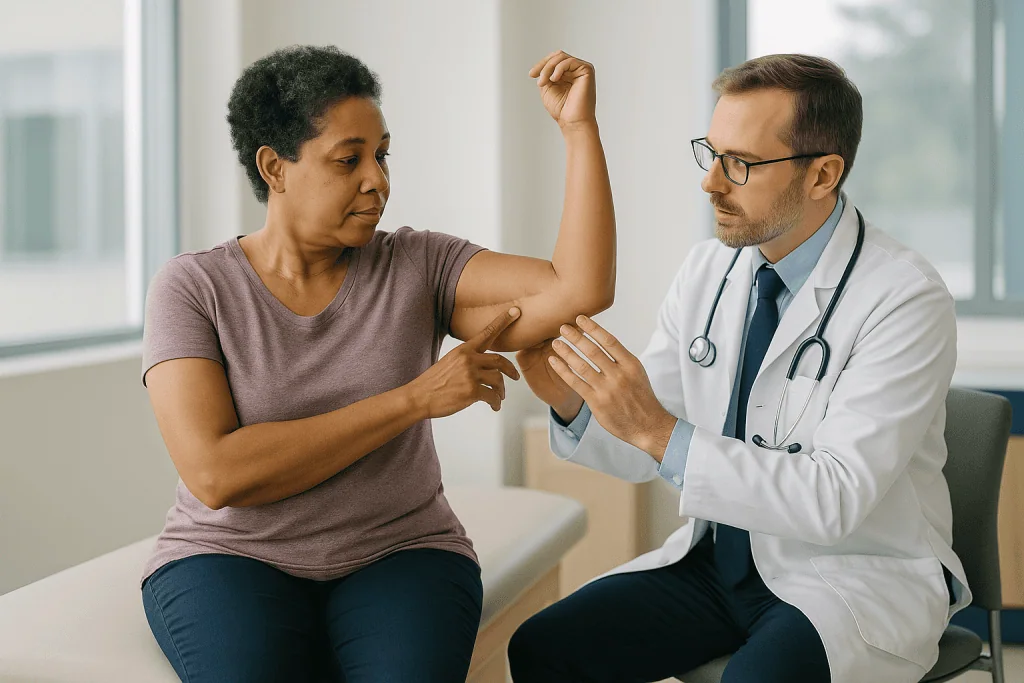
When residual laxity is the main complaint, the surgeon reopens part or all of the original incision, lifts the skin edges, trims the excess and closes again. Because the earlier scar tissue is removed in the same pass, the person is not left with two parallel lines. The operation is typically shorter than the first brachioplasty because there is less tissue to take, though scar tissue can make the dissection slower and bleeding harder to predict.
When the scar itself is the issue, the approach is different. Scar revision means cutting out the existing scar and closing the wound in a way designed to spread or redirect tension. Surgeons may use layered sutures deep in the tissue so that the skin surface carries almost none of the pull, or techniques such as a Z-plasty or W-plasty, which are patterns of small angled cuts that break a straight scar into segments the eye reads less easily and that stretch in several directions instead of one. A scar that has migrated forward onto the visible part of the arm can sometimes be repositioned closer to the inner line, although the amount of skin available limits how far it can move.
Small problems often need less. A dog-ear at the armpit or elbow can be excised under local anesthetic. A localized fatty fullness may be addressed with liposuction alone, without any new skin incision. Hypertrophic scar tissue, which is a raised scar that stays within the original wound boundary, is frequently managed first with non-surgical measures described later in this article.
Whatever the plan, the operating principle is the same one that governed the first surgery, now applied with hindsight: close the arm so that the skin, not the scar, absorbs the daily tug of movement.
Why do arm lift scars widen, thicken or migrate?
A fresh surgical scar is not a finished product. For weeks after closure the wound is held together largely by sutures and a temporary collagen scaffold; the mature, cross-linked collagen that gives skin its tensile strength takes many months to lay down. The NHS notes that scars can take up to two years to fade and settle, and during that window they are vulnerable to being pulled apart microscopically, a process sometimes called scar spread or stretching.
On the upper arm, three forces conspire. The first is direction: the incision runs along the arm, but many everyday movements pull across it, which is the worst orientation for a healing wound. The second is skin quality. After substantial weight loss the dermis is often thinner, with fewer elastic fibers, so it resists tension poorly and simply gives. The third is gravity plus mobility. The tissue of the inner arm hangs and swings, so the scar experiences cyclical loading that a scar on the back or scalp never does.
Widening is distinct from thickening. A widened scar is usually flat, pale or shiny and simply broad, and it reflects mechanical stretch. A hypertrophic scar is raised and often red or itchy, and it reflects an overactive healing response confined to the wound. A keloid is a scar that grows beyond the original wound edges into surrounding healthy skin; MedlinePlus describes keloids as more common in people with darker skin and as having a tendency to recur after removal, which matters when weighing a surgical revision.
Migration is the third pattern. Skin on the arm shifts as swelling resolves and as the person regains full shoulder motion, and a scar placed on the inner line at surgery can end up slightly forward, where it catches the light in short sleeves. None of these outcomes necessarily means anything went wrong in the operating room. They are the arm doing what arms do, and a good revision plan starts by naming which of the three is actually present.
Arm lift scar revision: what can realistically be changed
The question people most want answered is whether a scar can be made to disappear. It cannot. Every scar revision replaces one scar with another, and the goal is a line that is narrower, flatter, paler and better positioned, not an arm that looks unoperated. The NHS is direct about this: scars are permanent, though they usually fade over time.

Within that constraint, the ceiling varies by scar type.
- Widened, flat scars generally respond best to surgical revision, because the underlying problem is mechanical. Excising the broad scar and closing with deep tension-bearing sutures gives the new wound a genuine chance to heal narrow, provided activity is controlled during maturation.
- Hypertrophic scars often improve with non-surgical care first, and surgeons are cautious about cutting them out early because the same biology that produced them can produce them again.
- Keloids are the most stubborn. MedlinePlus notes that surgical removal alone carries a meaningful risk of the keloid returning, sometimes larger, so treatment plans typically combine approaches and are led by a clinician experienced with keloid-prone skin.
- Malpositioned scars can sometimes be shifted toward the inner arm, but only as far as the available skin allows without creating new tightness.
Skin color also shapes expectations. Scars in deeply pigmented skin may stay darker than the surrounding skin (hyperpigmentation) or lighter (hypopigmentation) for a long period, and revision does not reliably change that tendency. Sun exposure during the first year deepens discoloration in any skin tone, which is one reason surgeons ask people to keep new scars covered or protected.
A useful mental exercise before consenting to arm lift scar revision is to ask what a good outcome would look like in twelve months and whether that difference would matter enough to justify another period of healing, restriction and risk. For some people the answer is a clear yes. For others, the scar has become part of a body they have worked hard for, and leaving it alone is a legitimate choice.
Loose skin after arm lift: why residual laxity happens
Seeing loose skin after arm lift surgery is disheartening, but it has a short list of causes, and most are predictable in hindsight.
The first is deliberate conservatism. Surgeons generally err toward removing slightly less skin rather than more, because over-resection can make closure tight, compromise blood supply to the wound edges and, in the worst case, restrict lymphatic drainage or shoulder motion. A little residual laxity is the safer error. Some of it tightens as swelling resolves; some does not.
The second is location. A standard brachioplasty addresses the segment between the armpit and elbow. Skin that gathers near the elbow, in the armpit fold or across the side of the chest often lies at the edge of, or outside, the original design. When the elbow or lateral chest was never part of the plan, the laxity there is not a recurrence but an untreated zone, and the conversation becomes whether to extend the operation.
The third is ongoing change. Mayo Clinic notes that arm lift results are generally long lasting but that skin continues to lose firmness with age, and that significant weight gain or loss after surgery can change the outcome. After bariatric surgery in particular, weight may continue to fall for a year or longer, and skin that fit snugly at the time of the lift can loosen as the underlying volume shrinks.
Finally, there is the quality of the skin itself. Weight-loss skin has lost elastin, the protein that lets skin snap back. Tightened skin with poor elasticity can relax over the months after surgery in a way that has nothing to do with technique.
The practical implication is that a revision for laxity is a decision about timing as much as anatomy. Operating while weight is still falling or swelling has not settled invites a third conversation later. Most surgeons want to see a stable weight and a mature scar before committing.
Complication or expected result? A quick comparison
People often use the word complication for anything they dislike about a result. Clinically, the term is narrower, and separating the two changes how urgently a finding needs attention and whether a second operation is the right tool. The table below sorts the common reasons for brachioplasty revision into rough categories; a surgeon’s assessment always overrides it.
| Finding | Usual cause | Typical first step | Usual timing of any revision |
|---|---|---|---|
| Widened, flat scar | Mechanical tension during healing | Observe; scar care; protect from sun | After scar maturation, often a year or more |
| Raised, red, itchy scar (hypertrophic) | Overactive but confined healing response | Non-surgical scar therapies first | Surgery considered only if conservative care fails |
| Scar growing beyond wound edges (keloid) | Genetic predisposition; more common in darker skin | Specialist-led combined treatment | Excision alone generally avoided due to recurrence risk |
| Residual loose skin | Conservative resection, later weight change, poor elasticity | Wait for weight stability and swelling to resolve | After several months to a year of stable weight |
| Dog-ear or contour bump | Skin bunching at incision ends | Often settles partly; small excision if not | Minor procedure, sometimes under local anesthetic |
| Persistent fluid pocket (seroma) | Fluid collecting in the surgical space | Drainage by the surgical team | Managed early, not a planned revision |
| Wound opening or infection | Tension, poor blood supply, bacteria | Urgent review by the treating team | Immediate care, not elective |
Two patterns stand out. Anything involving fluid, redness spreading beyond the incision, fever or a wound that opens belongs in the early complication column and needs prompt contact with the surgical team, not a wait-and-see plan. Everything else rewards patience. Mayo Clinic and the NHS both describe scar maturation as a slow process, and a scar judged at three months frequently looks different at fifteen. Revising too early risks operating on a problem that was about to improve on its own.
Who is a good candidate for arm lift revision, and who is asked to wait?
The selection logic for a revision mirrors the logic for the first arm lift, with a stronger emphasis on timing and realistic goals.
People who tend to be reasonable candidates share a few features. Their weight has been stable for months, so the tissue being tightened is the tissue they will keep. Their scars have matured, meaning the pink has faded and the texture has softened, so the surgeon is judging a final product rather than a work in progress. They can describe the specific thing that bothers them, whether that is width, position, a fold near the elbow or a mismatch between arms, and they understand that a new scar will replace the old one. They do not smoke, or have stopped well in advance; Mayo Clinic notes that smoking slows healing and raises the risk of complications after an arm lift, and the same applies to a revision.
Others are usually asked to wait, and the reasons are protective rather than dismissive.
- Weight is still changing, whether after bariatric surgery, during a new medication regimen or through lifestyle change. Operating on a moving target rarely ends well.
- The scar is still red, raised or actively remodeling. The NHS notes scars can continue to change for up to two years.
- A medical condition that impairs healing, such as poorly controlled diabetes, is not yet optimized. Mayo Clinic lists such conditions among the reasons a surgeon may advise against arm surgery.
- The main concern is a hypertrophic or keloid scar that has not yet been given a fair trial of non-surgical care.
- Expectations center on an invisible scar or a fully unoperated appearance, which no revision can deliver.
A minority of people are gently steered away from further surgery altogether: those for whom the anticipated improvement is small relative to the risk, or whose skin quality suggests a revised scar would likely widen again. That advice can be hard to hear after investing so much in the first operation, but it reflects the treating team’s duty to weigh benefit against harm rather than to keep operating.
How long should you wait before a second arm lift surgery?
Timing is the variable people most often want to shortcut and the one surgeons most often defend. There are two clocks running.
The first is the scar clock. In the early months a scar is red because it is full of small blood vessels feeding an active repair process, and it is firm because collagen is being deposited faster than it is being reorganized. Over time the vessels recede, the collagen fibers realign along lines of tension and the scar softens, flattens and pales. The NHS notes that this remodeling can take up to two years, and that most scars end up paler and less noticeable than they were at the start. Revising before this process finishes means cutting into tissue that is still biologically busy, which raises the odds of the new scar behaving like the old one.
The second is the body clock. Swelling after an arm lift can take months to fully resolve, and residual fullness that looks like laxity at eight weeks may simply be fluid. Weight may still be drifting. Sensation along the inner arm, which is often altered after surgery, typically improves over many months and may influence how the arm feels rather than looks.
Putting the two together, many surgeons prefer to assess candidacy for a second arm lift surgery after roughly a year, and to be more confident about scar-focused revision closer to the end of the maturation window described by the NHS. These are typical ranges, not rules; a dog-ear that clearly will not settle, or a scar so badly positioned that it will never improve, may be addressed sooner at the surgeon’s discretion.
Waiting is not passive. The interval is when non-surgical scar care has its best chance, when weight can be stabilized and when clear photographs can be taken under consistent lighting to track change. People who use the time this way tend to arrive at the revision consultation with better information and, sometimes, with a problem that has already half-solved itself.
What happens before a brachioplasty revision
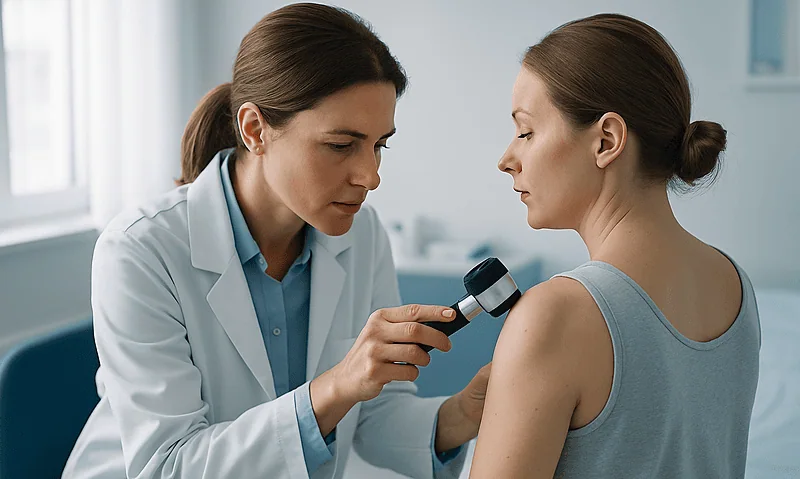
A revision consultation looks different from the original one because there is now a history to examine. Expect the surgeon, who may or may not be the one who performed the first operation, to ask for the previous operative notes, to compare current photographs with any taken before the first surgery and to examine the arm in several positions: hanging, raised, elbow bent, reaching across the body. Scars that look acceptable at rest can migrate or gape with movement, and laxity that seems minor with the arm down can gather dramatically overhead.
The examination usually covers skin thickness and elasticity (pinch tests), the exact position of the scar relative to the inner arm line, the presence of dog-ears, any firm nodules of scar tissue beneath the skin, and the condition of the armpit and elbow zones. Sensation is checked, since altered feeling from the first surgery affects how the arm should be protected afterward.
Medical preparation echoes the first operation. Mayo Clinic advises stopping smoking well before an arm lift because it impairs blood flow to the healing skin, and the same advice applies before revision. Medicines that affect bleeding are reviewed by the surgical and prescribing teams; decisions about pausing or continuing any prescribed medicine belong to those clinicians and should never be made alone. Blood pressure and blood sugar are optimized where relevant, because both influence wound healing.
The surgeon will also talk through what the new scar will look like, where it will sit and how the arm will be restricted afterward. Consent for a revision should name the specific change being attempted, because vague goals produce vague results. Some surgeons draw the planned excision on the skin with the person standing in front of a mirror, which is often the moment the trade-offs become concrete.
Practical planning matters too. Arrange help at home for the first days, since reaching, lifting and even dressing pull on the incision, and confirm exactly how to contact the team out of hours before the day arrives.
What the days and weeks after revision usually look like
Recovery from a revision follows the same arc as recovery from the first arm lift, though the intensity depends on how much was done. A minor scar excision or dog-ear correction may feel like a large cut healing. A full re-lift with additional skin removal feels closer to the original operation.
In the first days, the arms are typically wrapped or placed in a compression garment, which is a snug elastic sleeve that limits swelling and supports the healing tissue. Bruising and tightness are expected. Mayo Clinic notes that small drainage tubes are sometimes placed to remove excess fluid and are removed by the team once output falls. Movement is deliberately limited: reaching overhead, lifting anything of weight and pushing up from a chair all load the incision line at exactly the moment it is weakest.
Through the following weeks, the incision is checked for signs of healing and the person is usually cleared for gradually more activity. The NHS describes recovery from an arm lift as taking several weeks, with strenuous activity and heavy lifting avoided during that time so the wound is not pulled apart. Because a revision is often being done precisely to fix a scar that stretched, surgeons tend to be stricter, not more lenient, about this phase.
Once the incision has sealed, attention shifts to scar management. Protecting the scar from sun, keeping the skin supple and using any scar therapies the team recommends give the new line its best chance to heal narrow and pale. Sensation along the inner arm may be reduced or oddly heightened for months, which is common after operations in this area and usually improves gradually.
The final result cannot be judged early. The same maturation process that governed the first scar, running up to two years in the NHS description, governs the second. People who photograph the arm monthly under the same light often find the change easier to see than those relying on memory.
Risks of a second procedure compared with the first
Every operation carries risk, and a revision carries the same list as the original plus a few that come from operating on previously treated tissue. Neutral language matters here: none of these is inevitable, and none should be minimized.
Mayo Clinic lists the recognized risks of arm lift surgery as scarring, asymmetry, changes in skin sensation, problems with stitches, and the general surgical risks of bleeding, infection and reaction to anesthesia. The NHS adds that the scars may be thick and raised, that nerve damage can cause numbness, and that wound problems can occur. All of these apply to a revision.
What changes with a second operation is the tissue itself. Scar from the first surgery has a poorer blood supply than untouched skin, which can slow healing at the edges and raise the chance of small areas of the wound separating. Dissection through scar can be less predictable, and small nerves and lymphatic channels that survived the first operation may be disturbed the second time, so numbness or swelling of the forearm and hand can occur or worsen. Arm swelling that persists is a recognized concern after operations near the armpit, and surgeons plan the extent of a revision with that in mind.
There is also the possibility of recurrence of the original problem. A scar revised under less tension has a better chance than the first, but skin that stretched once has demonstrated a tendency, and the honest expectation is improvement rather than perfection. Keloids in particular have a documented tendency to return after excision, per MedlinePlus, which is why they are usually handled with a combination of approaches.
Infection risk deserves a specific mention. The CDC describes surgical site infections as infections occurring at or near the incision within the weeks after surgery and lists redness, pain, fever and drainage as the warning signs. Prompt contact with the surgical team, rather than home treatment, is the correct response to any of these.
Weighing all of this is the surgeon’s job in partnership with the person considering surgery, and either party can reasonably conclude that the balance does not favor operating.
Non-surgical alternatives for troublesome arm lift scars
Surgery is not the first tool for many post-brachioplasty scar problems, and for some it is the last. The evidence for non-surgical options varies in quality, and it helps to know where each stands.
Silicone sheets and gels are the most widely recommended first-line measure for raised or maturing scars. The NHS lists silicone gel sheeting among treatments that can help flatten and soften scars, and it is generally considered low risk. The mechanism is thought to involve hydration and reduced tension at the scar surface. The evidence base is moderate rather than definitive, but the low risk makes it a common starting point.
Pressure therapy, meaning sustained compression from a garment, is used for hypertrophic scars, particularly after burns. The NHS includes pressure dressings among established scar treatments, though studies are mixed on how much they add.
Corticosteroid injections into a raised scar are a mainstream option for hypertrophic scars and keloids. Corticosteroids are anti-inflammatory medicines that, when placed directly into scar tissue, reduce collagen production and can soften and flatten the scar over a course of treatments. Both the NHS and MedlinePlus describe this approach. Whether it is appropriate, how it is delivered and how often are decisions for the treating clinician; this article does not describe regimens.
Laser and light-based treatments are used to reduce redness and improve texture in some scars. The NHS notes that laser therapy may help, while acknowledging that evidence for scar improvement is limited and that results vary. They should be described as options with uncertain benefit rather than proven fixes.
Massage and sun protection are simple, low-cost habits with plausible mechanisms: massage may help soften scar tissue, and shielding a young scar from ultraviolet light limits the pigmentation that makes scars stand out. Neither has strong trial evidence, but neither carries meaningful risk.
What none of these can do is remove excess skin. For true residual laxity, the choice is between accepting it and a surgical revision; creams and devices marketed as skin-tightening have not been shown to produce the degree of change a brachioplasty delivers.
What people often get wrong about arm lift revision
Myths gather around second surgeries the way they gather around first ones, and several actively harm decision-making.
“A widened scar means the surgeon made a mistake.” Sometimes technique contributes, but the dominant cause is the biomechanics of the upper arm: a mobile, curved surface with thin post-weight-loss skin under constant tension. The NHS and Mayo Clinic both list noticeable scarring among the expected risks precisely because it happens even with careful work.
“Revision will make the scar invisible.” It will not. Revision replaces one scar with another that, under better conditions, has a good chance of being narrower and flatter. The NHS is explicit that scars are permanent.
“The sooner the better.” The opposite is closer to the truth for scar-related revision. Operating on a scar that is still remodeling, a process the NHS describes as lasting up to two years, risks reproducing the problem.
“Loose skin after an arm lift means it didn’t work.” Some laxity reflects deliberate surgical caution, some reflects zones outside the original design, and some reflects weight change or aging afterward. Mayo Clinic notes that weight fluctuation and normal aging alter results over time.
“Creams can tighten loose skin.” Topical products can improve the surface appearance of skin and may help scars; they cannot remove excess skin or restore lost elastin.
“If it’s a keloid, just cut it out.” MedlinePlus notes keloids often recur after removal, which is why specialists usually combine approaches rather than relying on excision alone.
“A different surgeon will get a different result.” A second opinion is reasonable and often useful. But the constraints of arm anatomy do not change with the operator, and any claim that a particular provider can guarantee a scar-free or perfect result should be treated with skepticism.
The thread running through these errors is impatience with a slow biological process and a wish for certainty that surgery cannot provide. Replacing that wish with realistic, specific goals is the most useful thing a person can do before a revision consultation.
Questions to ask your care team about a revision
A revision consultation is more productive when the person arrives with precise questions. The list below is a starting point, not a script; the answers should come from the surgeon examining the arm, not from any article.
- Which of my concerns are likely to improve with more time, and which are unlikely to change without surgery?
- Is the problem mainly the scar, residual skin, contour, or a combination, and which does the proposed procedure address?
- Where exactly will the new scar sit, how long will it be, and how will it differ from the current one?
- Have my scars finished maturing, and if not, how will we judge when they have?
- Should I try non-surgical scar treatments first, and for how long before we reassess?
- Given my skin type and how my first scars healed, what is the realistic chance the revised scar widens or thickens again?
- Do I have any features of keloid formation, and how would that change the plan?
- How will my weight, smoking status or other medical conditions affect your recommendation, and what would you like me to do before surgery?
- What are the specific risks of operating through the previous scar, including numbness and arm swelling?
- What will activity restrictions look like in the first weeks, and how strict do you want me to be about lifting and reaching?
- How should I contact the team if something worries me after surgery, including out of hours?
- If we decide not to operate, what would you suggest instead, and when might we revisit the decision?
It is reasonable to ask for the answers in writing or to bring someone to take notes. It is equally reasonable to seek a second surgical opinion before committing; a thoughtful surgeon will not object. What matters is that the decision to proceed, to wait or to stop rests on a shared, specific understanding of what a second operation can and cannot do, and that the final call sits with the treating team and the person whose arm it is.
When to call your doctor
Most of what this article covers is slow and elective. A short list of findings is neither, and they apply after the original arm lift and after any revision.
Contact the surgical team the same day if you notice any of the following:
- Redness that is spreading away from the incision, increasing warmth, or new or worsening pain around the wound.
- Pus or cloudy, foul-smelling fluid from the incision, or any part of the wound opening up. The CDC lists redness, pain, fever and drainage as signs of a surgical site infection, which needs assessment by the team rather than home management.
- Fever or chills.
- A rapidly enlarging swelling or a tense, painful collection under the skin, which may indicate bleeding or a fluid pocket needing drainage.
- Skin near the incision turning dusky, purple or black, which can signal compromised blood supply.
- New swelling of the forearm or hand that does not settle with elevation, or a hand that feels cold, pale or unusually weak.
Seek emergency care immediately for chest pain, sudden shortness of breath, coughing up blood, or a swollen, painful calf, which can be signs of a blood clot in the leg or lung; these are recognized risks after any operation and are time-critical.
Beyond these red flags, call for the ordinary reasons too. Numbness that is not improving, a scar that becomes markedly raised and itchy, a fold of skin that seems to be worsening rather than settling, or simply uncertainty about whether what you are seeing is normal all justify a call or an earlier follow-up visit. Surgical teams generally prefer a question they can answer quickly to a problem discovered late. The threshold for contacting them should be low, and no decision about wound care, medicines or further treatment should be made without them.
Frequently asked questions
What is arm lift scar revision and how is it different from a full second arm lift?
Arm lift scar revision removes an unsatisfactory scar and closes the wound under less tension, sometimes using angled patterns that break up a straight line, without necessarily removing more skin. A full second arm lift reopens the incision and trims additional loose skin as well. Many revisions combine both, since the old scar is excised as part of tightening. The surgeon decides which is appropriate based on whether the main problem is the scar, the laxity or both.
Why do I still have loose skin after arm lift surgery?
Loose skin after an arm lift usually has one of three explanations: the surgeon deliberately removed slightly less skin to avoid a closure too tight for safe healing, the laxity lies near the elbow or armpit outside the original design, or weight and skin elasticity changed after surgery. Mayo Clinic notes that weight fluctuation and normal aging alter results over time. A surgeon can examine the arm in several positions to tell you which applies.
How long after brachioplasty can a revision be done?
Most surgeons prefer to wait until scars have matured and weight is stable, which often means a year or more; the NHS notes scars can continue to change for up to two years. Operating earlier risks cutting into tissue that is still actively remodeling and reproducing the problem. Small issues such as a dog-ear that clearly will not settle may be addressed sooner at the surgeon’s discretion. Timing is always an individual decision with the treating team.
Can brachioplasty revision surgery make my arm lift scar disappear?
No. Every revision replaces one scar with another, and the realistic goal is a line that is narrower, flatter, paler and better positioned on the inner arm. The NHS is explicit that surgical scars are permanent even when they fade well. Skin tone, scar history and how strictly activity is limited during healing all influence the final appearance. Anyone promising a scar-free arm after revision is describing something surgery cannot deliver.
Is a widened arm lift scar a sign of a surgical mistake?
Usually not. Widening reflects mechanical stretch on a healing wound placed along a mobile, curved surface in skin that often has poor elasticity after weight loss. Both Mayo Clinic and the NHS list noticeable scarring among the expected risks of an arm lift regardless of technique. Surgical factors can contribute, and a second opinion is reasonable, but a wide scar on its own does not indicate error.
Will a second arm lift surgery hurt more or take longer to heal than the first?
It depends on the extent. A small scar excision or dog-ear correction typically heals like a large cut, while a full re-lift with additional skin removal feels closer to the original operation. Scar tissue has poorer blood supply, so wound edges can heal more slowly, and surgeons are often stricter about lifting and reaching afterward. The NHS describes arm lift recovery as taking several weeks, and revision follows a similar arc.
Can steroid injections or silicone sheets fix a raised arm lift scar instead of surgery?
Often they are tried first. The NHS lists silicone gel sheeting, pressure dressings and corticosteroid injections among established treatments for raised scars, and MedlinePlus describes steroid injections for keloids. Corticosteroids placed into scar tissue reduce inflammation and collagen production, softening the scar over a course of treatment. Whether, how and how often they are used is a decision for the treating clinician. These options cannot remove excess skin, only improve scar quality.
Do keloids after an arm lift come back after revision?
They can. MedlinePlus notes that keloids, which grow beyond the original wound edges, are more common in people with darker skin and have a tendency to recur after surgical removal, sometimes larger than before. For that reason specialists generally avoid excision alone and combine approaches such as injections, pressure and careful wound management. If your scar has features of a keloid, tell your surgeon before any revision is planned.
What can I do while waiting for my arm lift scar to mature?
Use the waiting period actively. Protect the scar from sun to limit darkening, keep the skin supple, follow any scar therapy your team recommends, and stabilize your weight so any later revision addresses tissue you will keep. Photograph the arm monthly under the same lighting and angle so change is easy to track. Stopping smoking, which Mayo Clinic notes impairs healing, also improves the odds if surgery is eventually chosen.
What signs after arm lift revision mean I should call my surgeon right away?
Call the same day for spreading redness, increasing pain, pus or foul-smelling drainage, a wound that opens, fever, a rapidly enlarging or tense swelling, dusky or dark skin near the incision, or new hand or forearm swelling that does not settle with elevation. The CDC lists redness, pain, fever and drainage as signs of surgical site infection. Chest pain, sudden breathlessness or a swollen painful calf need emergency care immediately.
References
This article is for general information only and is not a substitute for professional medical advice. Please consult a qualified doctor about your individual situation.

More from the Blog

What Are the Risks of Fat Transfer? Cysts, Fat Necrosis and Uneven Volume Explained
Fat transfer risks fall into two groups. At the liposuction donor site: bruising, numbness, fluid collections, contour dents and infection. At the recipient site:…
How Does J Plasma Skin Tightening Work? Helium Plasma and Radiofrequency Explained Simply
J Plasma is a common name for helium plasma skin tightening, a procedure in which radiofrequency energy ionizes helium gas into a plasma that…

Fat Grafting Recovery: Protecting the Grafted Area While the Donor Site Heals
Fat grafting recovery runs on two tracks at once: the grafted area needs protection from pressure, heat and movement while transplanted fat cells form…

BBL Safety Explained: Why Fat Placement Depth Matters and How Surgeons Reduce the Risk
A Brazilian butt lift (BBL) is safest when fat is placed only in the subcutaneous layer above the gluteal muscle. Fat injected into or…
Laser Liposuction vs Traditional Liposuction: Incisions, Downtime and Skin Response Compared
Laser liposuction and traditional liposuction both remove fat through small skin incisions with a thin tube called a cannula. The laser version first heats…
Loose Skin After Weight Loss: What Improves on Its Own, and When Surgery Is the Answer
Mild skin laxity after weight loss often improves gradually over 12 to 24 months as collagen remodels, especially in younger people who lost a…