

When Can You Shave After a Beard Transplant? Trimming, Razors and Grooming in the First Months

Key Takeaways
- Grafts are held only by a clot for the first few days and gain their own blood supply over roughly the first two weeks, which is why scabs falling away on their own is the milestone most teams wait for before any tool touches the area.
- Scissor trimming of transplanted hairs is usually allowed once the skin surface has closed, well before a razor, because scissors cut hair without contacting the skin.
- Electric shavers are generally permitted before blade razors because their cutting blades sit behind a foil and never touch the skin, though they still press and vibrate against healing tissue.
- Transplanted hair shafts shed two to four weeks after surgery and regrow over the following months, so shaving during the shedding phase neither causes nor prevents it.
- A razor cuts the shaft near the surface while the hair-producing bulb sits deep in the dermis, so shaving an anchored follicle does not thin, weaken or destroy it.
- Shaving with the grain in single light passes follows the angles the surgeon set and lowers the risk of ingrown hairs, which are more likely in coarse or curly hair according to the Mayo Clinic.
Most surgical teams ask patients not to shave the transplanted beard area for at least two weeks, and many prefer around four weeks before a blade touches the skin. Scissor trimming is usually allowed earlier once scabs have fallen away. Exact timing depends on how your skin is healing, so the date should come from your treating team, not a general rule.
The mirror is the problem. On the eighth morning after his procedure, a man stands close to the glass, chin tilted, and sees a patchwork he did not sign up for: stubble that has grown a few millimeters on the old parts of his beard, a few hundred tiny crusts where the new grafts sit, and, above it all, a neck that badly needs cleaning up. His razor is on the shelf. His discharge sheet says wait. Which one wins?
Nearly everyone who has this operation asks a version of the same question, and shaving after beard transplant is a search that peaks in that second week for a reason. The face is public in a way the back of the head is not. You cannot hide a chin under a cap.
The honest answer has a shape, and it comes from how skin heals rather than from any surgeon’s preference. This article walks through that shape, week by week, and explains what a blade can and cannot do to a graft at each stage.
Why shaving is a bigger question after a beard transplant than after a scalp one
A scalp transplant hides itself. Hair around the grafts is usually left long, a loose cap covers the rest, and most people are back at a desk within days without anyone noticing. MedlinePlus puts the typical return to work at two to five days after a hair transplant, and that estimate is built partly on how easy the scalp is to conceal.
The face offers no such cover. Beard hair grows fast, roughly the same rate as scalp hair at around a third of a millimeter a day, so by day seven the untouched parts of the beard are visibly longer while the grafted patch still carries its crusts. The contrast draws the eye. Add a neckline that sits exactly where collars rub, and the urge to tidy becomes almost physical.
Two further things make the beard a special case. Facial skin is thinner and more mobile than scalp skin, moving every time you speak, chew or smile, and that movement matters when grafts are relying on nothing more than a fibrin seal to hold them. Beard follicles also grow at a low angle to the skin, far flatter than scalp hair, which is why a razor dragged across them later in life produces the tug and the bumps many men already know.
So the razor question is really three questions stacked together: when is the graft anchored, when has the skin surface closed, and when have the follicles settled enough that the ordinary mechanics of shaving will not disturb them. The sections below take those in order, and the timeline table pulls them into one view.
How a beard transplant works and why the grafts are fragile at first
A beard transplant moves living hair follicles from a place where they are plentiful to a place where they are sparse. The follicles usually come from the back and sides of the scalp, an area that keeps its hair for life in most people. Each unit is called a graft: a tiny plug of skin containing one to four follicles plus the fat that feeds them.
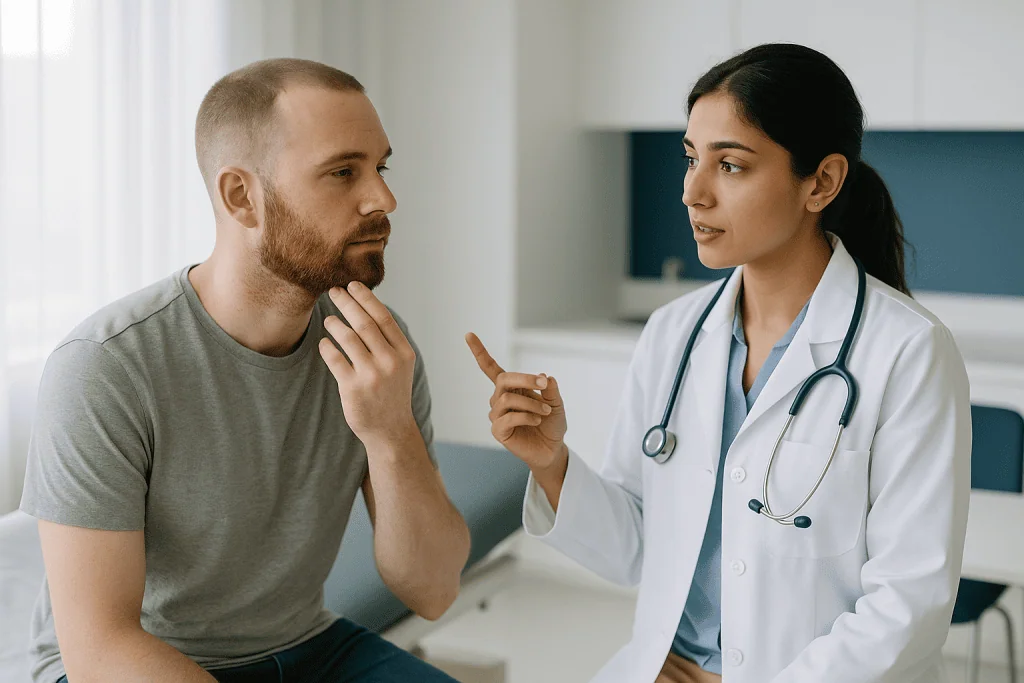
Surgeons harvest grafts in one of two ways. Follicular unit extraction, or FUE, punches out each graft individually with a small circular tool, leaving pinpoint marks. Follicular unit transplantation, or FUT, removes a thin strip of scalp that is then divided under magnification and leaves a fine line scar. The Cleveland Clinic and NHS describe both methods as standard.
At the receiving end, the surgeon makes hundreds of tiny incisions in the cheek, chin or neck, each angled to match the way beard hair naturally lies, and places one graft in each. Nothing stitches a graft in. For the first few days it is held by a clot and by the swelling of the surrounding tissue. Only as new blood vessels grow into the graft, a process called revascularization, does it become part of you rather than a passenger.
That biological fact is the whole reason for the shaving rules. A blade, a trimmer guard, even a towel rubbed the wrong way can lift a graft that has not yet grown its own blood supply. MedlinePlus notes that scabs form over the grafts and fall off within about two weeks, and that window of crusting is a fair proxy for the period when the grafts are most vulnerable.
Shaving after beard transplant: the typical timeline at a glance
Aftercare sheets vary from team to team, but they tend to follow the same healing biology. The table below shows the ranges most commonly described and, more usefully, the reason behind each one. Treat every figure as a typical range from the sources cited at the end of this article, never as a promise, and let your own team’s instructions override it.
| Stage | Typical window | What is happening in the skin | What grooming is usually allowed |
|---|---|---|---|
| Fresh grafts | Days 1 to 5 | Grafts held by clot only; swelling peaks | Nothing touches the area; gentle rinsing only as instructed |
| Anchoring | Days 5 to 14 | New blood vessels enter grafts; scabs loosen and fall (MedlinePlus) | Soft washing; no trimmers, no razor on grafted skin |
| Surface closed | Around week 2 to 3 | Skin surface re-epithelialized; grafts anchored | Scissor trimming over the grafts; careful shaving of untouched areas |
| Settling | Around week 3 to 4 | Redness fading; transplanted hairs begin shedding (NHS: 2 to 4 weeks) | Electric shaver on grafted area if the team agrees |
| Established | Beyond month 1 | Follicles dormant, then regrowing over months | Blade shaving usually permitted; normal routine returns |
Two things stand out. First, the gap between “can trim” and “can shave with a blade” is the stage most people underestimate, because the grafts look healed well before the follicle beneath has settled. Second, the shedding that begins around weeks two to four is expected. Shaving does not cause it, and skipping the shave will not prevent it.
Re-epithelialization, the term in the third row, simply means new skin cells have grown across the surface so there is no open wound left. It is the milestone most surgeons want to see before any tool touches grafted skin.
Are my grafts secure after 7 days? The first two weeks explained
Day seven is the most common moment for this question, and the honest answer is: more secure than on day three, less secure than on day fourteen. Anchoring is a process, not a switch.
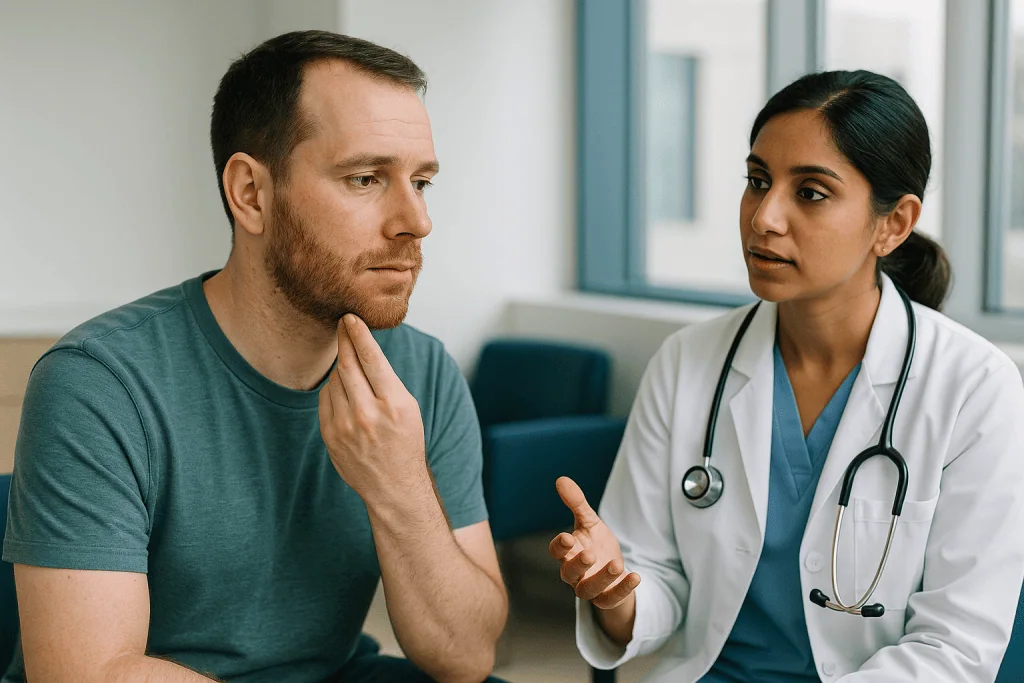
In the first two or three days a graft sits in its slit surrounded by a clot. Firm pressure, a knock, or a scab pulled off with a fingernail can lift it out entirely, and a lost graft at this stage is gone for good. By about day five the tiny blood vessels of the recipient site have started growing into the graft, and by the end of the first week most grafts will resist gentle touch. Surgeons often tell patients that once the scabs have separated on their own, the grafts beneath are unlikely to be dislodged by everyday contact, and MedlinePlus places that scab separation at roughly two weeks.
What “secure” means in practice is narrower than people hope. Secure against a pillowcase, a soft towel and running water is not the same as secure against a trimmer guard pressed into the skin or a blade pulling hairs at a low angle. The follicle has anchored, but the skin around it is still remodeling, still red, and still prone to inflammation if irritated.
A practical way to read your own face during this window: if crusts are still present, treat the area as day one. If the crusts have fallen away by themselves and the skin underneath is intact, pink rather than raw, the anchoring phase is largely done. Washing techniques also change across these two weeks, usually moving from pouring water over the area to a light fingertip lather, and the same instructions that let you wash more firmly are a good sign that trimming is not far off.
Trimming after beard transplant: what scissors and trimmers can safely do
Trimming and shaving are different acts with different risks, and separating them solves most of the second-week frustration. Trimming cuts the hair shaft above the skin. Shaving takes the shaft down to or below the surface and, in the process, drags the blade across it.
Once the scabs have fallen and the surface has closed, most teams allow scissor trimming of the transplanted hairs. Small, sharp scissors, held so that only the blade tips approach the skin, can shorten the grafted hairs to match the surrounding beard without touching the skin at all. The aim is to remove the visual mismatch, not to reach the skin.
Electric trimmers are a step further. Even with a long guard, the guard’s teeth press into the skin, and the vibration transfers to the follicles beneath. That is why many aftercare protocols allow scissors before trimmers, and trimmers on the untouched beard before trimmers over the grafts. If you are trimming the non-grafted parts of your beard in the first fortnight, keep the tool well clear of the transplanted edge and let the length difference stand for a few more days rather than chase it.
A useful sequence, pending your team’s approval:
- Scissors on the transplanted hairs once crusts have gone and the skin is intact.
- Guarded trimmer on the surrounding, untouched beard, angled away from the grafts.
- Guarded trimmer over the grafts only after the team confirms the surface is fully healed.
Hold the skin still rather than stretching it. Stretching is a normal shaving habit, but taut skin over fresh grafts puts shear force on exactly the tissue you want left alone.
Electric shaver or blade: when each becomes reasonable
When the day for a true shave arrives, the choice of tool matters. An electric foil or rotary shaver cuts hairs at surface level through a perforated screen, so the cutting blades never touch the skin. A blade razor cuts below the surface by stretching the skin and slicing the shaft at an angle, which is what gives a closer result and also what tugs the follicle.
Most surgeons therefore permit an electric shaver over grafted skin earlier than a blade. The timing described in aftercare literature clusters around three to four weeks for electric shaving and around a month for a blade, but those are typical ranges drawn from the healing milestones in the cited sources, not fixed rules, and your team may ask for longer if your skin is still red or bumpy.
The first blade shave over a transplanted area calls for technique rather than courage:
- Shave after a warm shower, when the hair shaft is softened and the skin is clean.
- Use a fresh, sharp blade; a dull one drags more.
- Shave with the grain, in the direction the surgeon angled the grafts, not against it.
- Use single light passes without pressing, and do not go back over the same patch.
- Skip alcohol-based aftershave on healing skin; a bland, fragrance-free moisturizer is gentler.
The Mayo Clinic notes that shaving against the grain, pulling the skin taut and shaving very close all raise the risk of ingrown hairs in curly or coarse beard hair. Transplanted follicles have been placed at chosen angles, and shaving with those angles from the start builds a habit that protects the result for years.
When can I shave after hair transplant on the donor area at the back of the head?
The beard is the visible half of the operation. The donor area on the back and sides of the scalp is the other half, and it heals on its own schedule.
With FUE, the donor zone is usually clipped very short before surgery so the surgeon can see and extract individual follicles. That leaves a field of tiny puncture marks that seal within a few days and fade over weeks. With FUT, there is a linear wound closed with stitches or staples, and the surrounding hair is often left longer to cover it. MedlinePlus describes stitches being removed at around ten days when they are not the dissolving kind, and any clipper or razor should stay away from a closed incision until the team confirms it has healed.
Donor-area grooming usually resumes sooner than beard grooming, because nothing was placed there that can be dislodged. The concern is instead irritation of healing skin and, with FUT, stress on the scar line. Typical guidance allows a guarded clipper over an FUE donor area once the puncture marks have closed and stopped weeping, often in the second week, and asks FUT patients to wait for the incision to be checked before running anything over it.
A small point that saves grief: if you normally shave your head to the skin, ask before surgery how long you will need to keep the donor area covered by hair. Some people are surprised that a short haircut is part of the plan for several weeks. A patient who shaves the back of the head to the skin too early does not usually harm the transplant, but may leave the donor marks more visible for longer, and with FUT can widen a scar that would otherwise have settled thin.
Beard transplant recovery timeline: shedding, dormancy and regrowth
Shaving decisions in the first month sit inside a much longer arc, and knowing that arc prevents a common panic. The transplanted hairs are meant to fall out.
The NHS describes transplanted hair falling out two to four weeks after surgery, with regrowth beginning around six months and the full result visible at twelve to eighteen months. MedlinePlus gives a similar shape, noting new growth typically appears within a few months. The follicle itself stays put. What sheds is the hair shaft that came with it, which was cut off from its blood supply during the move and enters a resting phase called telogen. New shafts grow from the same follicles once they have recovered.
Some people also notice thinning of their pre-existing beard hairs around the grafts. This is called shock loss: temporary shedding of native hairs stressed by the surgery and swelling nearby. It usually reverses over the following months, though the treating team is the right judge of what is normal in an individual case.
A rough map of what the face looks like across the year:
- Weeks 1 to 2: crusting, redness, swelling that may drift downward toward the neck.
- Weeks 2 to 6: shedding of transplanted shafts; the area can look thinner than before.
- Months 2 to 4: quiet phase; a few fine, sometimes lighter hairs emerge.
- Months 4 to 8: visible density building; hairs thicken and darken.
- Months 12 to 18: settled result.
Shaving during the shedding phase does not damage a follicle in telogen. Many people find that a clean shave in weeks four to eight is easier to live with than the sparse in-between stage, and once the team has cleared blade shaving there is no biological reason to avoid it.
Can shaving too early cause permanent damage?
The fear behind the search “if I shave after a beard transplant will there be permanent damage” is specific: that a blade will kill the follicle. Understanding what a blade can and cannot reach makes the risk clearer.
A razor cuts the hair shaft at or just below the skin surface. The part of the follicle that produces new hair, the bulb and the stem cells around it, sits deep in the dermis, well below any blade. Shaving a healthy, anchored follicle does not harm it, which is why decades of shaving do not thin a natural beard. The same holds for a transplanted follicle once it has anchored.
The damage that can happen is mechanical and early. In the first one to two weeks, before the graft has its own blood supply, the shear force of stretching skin and pressing a blade can lift a graft out or shift it in its slit, and a graft that comes out with its bulb is lost. A graft pushed deeper or tilted may survive but grow at the wrong angle, which shows later as a hair standing away from its neighbors.
Beyond the anchoring phase, the risks of shaving shift from graft loss to skin problems: nicks on thin healing skin, infection of a cut, and inflammation that slows the fading of redness. None of these destroys follicles in the usual course, but an infected cut over the grafts can, in rare cases, scar and leave a bare spot. MedlinePlus lists infection and scarring among the recognized risks of hair transplantation generally.
The message, then, is proportionate rather than frightening. Early shaving carries real risk to individual grafts; later shaving carries the ordinary risks of shaving on tender skin. The waiting period is short compared with the year the result takes to mature.
Ingrown hairs, folliculitis and razor bumps in a new beard
Once shaving resumes, the transplanted area behaves like any other beard skin, with one twist: the hair now growing there has been moved from the scalp and may have a slightly different texture and curl from the native beard around it.
An ingrown hair happens when a shaved hair curls back and re-enters the skin, or grows sideways under the surface, producing a red bump. The Mayo Clinic notes ingrown hairs are most common in people with coarse or tightly curled hair and are aggravated by shaving very close, against the grain or with the skin pulled tight. When many follicles become inflamed, the picture is called folliculitis, which MedlinePlus describes as inflammation of the follicle that may be caused by bacteria, irritation or blockage. Pseudofolliculitis barbae is the specific term for shaving bumps on the beard area.
A healing transplant is more prone to these problems for a few months. The skin is thinner, hairs are emerging at new angles, and some regrowing shafts are finer and more likely to curl. Practical habits that lower the risk are the same ones that protect the grafts:
- Shave with the grain in single light passes, and accept slightly less closeness.
- Use a clean, sharp blade and rinse it between strokes.
- Keep the area moisturized so hairs emerge through softer skin.
- Leave a bump alone rather than digging at it; warm compresses are gentler.
Most bumps settle on their own within days. A cluster that is spreading, filling with pus or accompanied by fever is a different matter and belongs in the “when to call your doctor” section further down. The treating team can also advise whether an electric shaver, which cuts less close, suits your skin better in the long run.
Who is usually asked to wait longer before shaving
The typical ranges in the table above assume ordinary healing in an otherwise healthy adult. Several groups are routinely asked to extend the wait, and knowing whether you belong to one sets realistic expectations before surgery rather than after.
People with diabetes, especially when blood sugar has been hard to control, tend to heal more slowly and carry a higher infection risk with any skin wound, which is why MedlinePlus wound-care guidance treats them as a special case. Smokers heal more slowly too, because nicotine narrows the small vessels that new grafts depend on, and many surgeons ask patients to stop for a period before and after the operation. Anyone on medicines that thin the blood or suppress the immune system will be managed individually by the prescribing clinician, and the timing of shaving is one of many details that follow from that plan.
Skin type matters as well. People with a history of keloid or hypertrophic scars, raised scars that spread beyond the original wound, may be counseled cautiously about the procedure itself and asked to avoid anything that irritates the area for longer. Those who already experience razor bumps in their native beard are often steered toward electric shaving or a longer trimmed style, since transplanted hair does not escape the same tendency.
Finally, the extent of the work counts. A small touch-up of a patchy cheek heals differently from a full beard reconstruction with thousands of grafts and swelling that tracks down the neck. Bigger sessions mean more incisions, more swelling and usually a longer hands-off period.
None of this is a reason to feel singled out. It simply means the calendar on your discharge sheet was written for you, and a friend’s shorter timeline is not evidence that yours is wrong.
What people often get wrong about shaving after a beard transplant
Forums are full of confident advice about beard transplant grooming, and a good deal of it confuses cause and effect. A few corrections, each grounded in how follicles actually behave.
“Shaving makes the new hair grow back thicker.” It does not. Shaving cuts the shaft bluntly, so regrowth feels coarser at the tip, but the follicle produces the same diameter of hair. Density is set by the number of surviving follicles, not by anything a razor does.
“If I never shave, the transplanted hairs will not fall out.” The shedding at two to four weeks described by the NHS is driven by the follicle’s move into a resting phase, not by grooming. Leaving hairs untouched delays nothing.
“Once the scabs are gone I can shave normally.” Scab separation marks the end of the highest-risk period for graft loss, but the skin surface is still remodeling and follicles are still settling. This is why scissors come before trimmers and trimmers before blades.
“An electric shaver is completely safe from day one.” A foil shaver does not touch skin with its blades, but the head still presses and vibrates against the surface. It is gentler than a razor, not risk-free, and it belongs in the third or fourth week rather than the first.
“Shaving off the transplanted hair means I’ve wasted the procedure.” The result lives in the follicles, which sit below the reach of any blade. A man who prefers a clean-shaven look most of the time still benefits from a transplant every time he grows a beard, and shaving the grafted area once it has healed has no effect on the final density.
The pattern in all five myths is the same: they treat the visible hair as the thing being protected, when the real asset is buried under the skin.
Beard transplant aftercare beyond shaving: washing, sun, sweat and sleep
Shaving is the most-asked question, but the grafts do not know which rule they are being protected by. The other aftercare habits in the first weeks are worth setting out, since the same milestones govern all of them.
Washing. Teams typically move patients through stages: no water on the grafts for the first day or two, then poured or sprayed water without rubbing, then a light fingertip lather once crusts have loosened. Patting dry with a clean towel replaces rubbing until the team says otherwise. MedlinePlus general wound-care guidance echoes the principle: keep the area clean, avoid soaking, and do not pick at crusts.
Sun. Healing skin burns more easily and can darken, so a wide-brimmed hat is usually preferred to sunscreen on the grafts themselves during the first fortnight, with a gentle mineral sunscreen added later. Redness fades more evenly on skin that has not been sunburned.
Sweat and exercise. Sweat is salty and irritating, and vigorous exercise raises blood pressure and the chance of knocking the face. The NHS advises avoiding strenuous exercise for about a month after a hair transplant. Gentle walking is usually fine within days.
Sleep. Sleeping on the back with the head slightly raised for the first several nights reduces swelling and keeps the face off the pillow. A travel pillow or rolled towel on either side of the head helps people who roll in their sleep.
Touching. The single most common cause of early graft loss is the patient’s own fingers: scratching an itch, picking a crust, resting a chin in a hand. Itch is normal as the skin heals and usually eases once washing becomes more thorough.
These rules relax on roughly the same schedule as the shaving rules, and a team that has cleared one will often clear the others in the same visit.
Will a beard transplant look natural, and how does shaving style affect that?
Naturalness in a beard comes from three things: the angle at which hairs leave the skin, the softness of the border where beard meets bare cheek, and a density that matches what sits around it. Shaving interacts with all three.
Angle is set on the operating table. Beard hairs lie flatter than scalp hairs, and the surgeon cuts each recipient slit to mirror the natural direction in that zone, downward on the cheeks, forward under the chin, and so on. Once the follicles anchor, they hold that direction for life. Shaving with the grain follows the same map and leaves the hairs lying as intended; repeated against-the-grain shaving does not change the follicle’s angle but does raise the chance of ingrown hairs along the new lines, which can make a transplanted zone look bumpier than the rest.
Borders are where a transplant most often gives itself away. A natural cheek line is irregular, with scattered single hairs fading into bare skin. A shaved edge that is too crisp, drawn with a trimmer along a ruler-straight line, can make even excellent grafting look drawn on. Most people find that letting the upper border fade rather than shaving it sharp reads as more natural, and a barber who understands this can help once shaving is permitted.
Density is the honest limitation. Transplanted hair adds coverage, but no procedure delivers the follicle count of a naturally dense beard, and the final result is not visible until the twelve-to-eighteen-month mark the NHS describes. A short, even trim tends to flatter a moderate density; a very close shave shows the skin between hairs; a long beard can look uneven if regrowth is still patchy. Trying different lengths after month six, when most of the hair is back, is a reasonable way to find the look that suits the result you actually have.
Questions to ask your care team about grooming and recovery
A good aftercare sheet answers most of what follows, but the answers that matter are the ones tied to your own skin, your own graft count and your own habits. Ask these before the day of surgery when you can, and again at the first follow-up.
- On what day, in your protocol, may I trim the transplanted hairs with scissors, and what should I look for on the skin before I do?
- When may I use a guarded trimmer over the grafts, and when an electric shaver?
- When is a blade razor acceptable, and would you prefer I avoid blades permanently given my skin type?
- How should I handle the untouched parts of my beard and my neckline in the first two weeks?
- My donor area was clipped: when can I have it cut or shaved again, and does the type of harvest change that?
- What does the shedding phase usually look like, and at what point would you want to see me if the area looks thinner than expected?
- Which of my regular medicines or supplements might affect healing, and who decides whether anything changes around surgery?
- If I get a razor bump or a small cut over the grafts, what should I do and what would make you want to see it?
- Do I have any history, such as slow healing, diabetes, smoking or raised scars, that changes the usual timeline for me?
- How will you assess the result, and at what visits?
Write the answers down. Recovery advice given in a post-operative haze is easily misremembered, and a dated sheet in your own handwriting is more persuasive than a forum thread at two in the morning. If two members of the team give slightly different timelines, ask them to agree on one; the difference usually reflects how your skin looked on the day rather than any dispute about principle.
When to call your doctor
Most beard transplants heal quietly, with redness, mild swelling, crusting and itch that fade over two to three weeks. A short list of signs should prompt a call to the treating team the same day rather than a wait for the next appointment.
- Spreading redness, heat or swelling around the grafts or the donor area after the first few days, particularly if it is getting worse rather than better.
- Pus, cloudy discharge, or crusts that are yellow-green and re-forming after they have been cleaned.
- Fever, chills or feeling generally unwell, which MedlinePlus lists among signs that a surgical wound may be infected.
- Bleeding that does not stop with a few minutes of gentle pressure through clean gauze.
- Pain that is increasing after day three instead of easing, or pain out of proportion to what you see.
- Sudden loss of a cluster of grafts after a knock, a fall or a shave attempted too early, so the team can assess the area.
- A rash, hives or swelling of the lips or face after starting any new product on the skin or any new medicine.
- Small bumps that spread, multiply or fill with pus once shaving has resumed, which may indicate folliculitis needing assessment rather than home care.
Seek emergency care immediately, without waiting for the team, for difficulty breathing, swelling of the tongue or throat, or a rapidly expanding area of hot, painful skin, since these can indicate a severe allergic reaction or a fast-moving skin infection.
Decisions about any medicine, whether to treat an infection, calm inflammation or support regrowth, belong to the prescribing clinician who can see your skin. Do not start, stop or change anything on the basis of this article or of other patients’ experiences. The purpose of the list above is to lower the threshold for picking up the phone, not to help anyone diagnose themselves.
Frequently asked questions
How soon after a beard transplant can I shave?
Most teams ask for at least two weeks before any tool touches the grafted skin, with scissor trimming allowed first, an electric shaver around three to four weeks and a blade razor around a month. The ranges come from how long grafts take to anchor and the skin surface to close, described in the sources listed here, and your own team’s timeline should override any general figure.
Are my grafts secure after 7 days?
By day seven most grafts have begun to grow their own blood supply and will resist gentle contact, but they are not yet fully anchored. MedlinePlus describes scabs falling off at about two weeks, and that separation is a better marker than a fixed day. Until then, treat the area as fragile: no rubbing, no trimmer guards, no razors, and no picking at crusts.
When can I have sex or masturbate after a hair transplant?
The concern is the same as with exercise: raised heart rate, sweating and the chance of the face being rubbed or knocked while grafts are fragile. Many teams apply their exercise guidance, which the NHS gives as avoiding strenuous activity for about a month, while allowing gentler activity sooner. Ask your team directly; it is a routine question and they will give a specific answer for your case.
Will a beard transplant look natural?
Naturalness depends on the angle of the grafts, the softness of the borders and a density that matches the surrounding beard, and the full result is not visible until twelve to eighteen months according to the NHS. Shaving cannot change the angle of an anchored follicle, but letting the cheek border fade rather than trimming it razor-straight usually reads as more natural once grooming resumes.
What does trimming after beard transplant involve, and how is it different from shaving?
Trimming shortens the hair shaft above the skin, while shaving cuts it at or below the surface and drags a blade across the skin. Because scissors held tip-first never touch the grafts, trimming is usually allowed once crusts have gone and the surface has healed. Guarded trimmers press into the skin and come later, and blade razors later still.
What is the typical beard transplant recovery timeline?
Redness, swelling and crusting dominate the first two weeks, transplanted shafts shed at two to four weeks, a quiet phase follows through roughly month three, and visible regrowth builds from around month four to six, with the settled result at twelve to eighteen months. These are the ranges described by the NHS and MedlinePlus, and individual healing varies.
When can I shave after hair transplant on the donor area of my scalp?
Donor skin heals on its own schedule and has nothing in it that can be dislodged, so clipping usually resumes sooner than beard grooming. FUE puncture marks close within days; a FUT incision needs the team to confirm healing, and MedlinePlus notes non-dissolving stitches are typically removed at around ten days. Avoid shaving to the skin over a fresh incision line.
If I shave too early, will there be permanent damage?
In the first one to two weeks, shaving can lift or shift grafts that have not yet anchored, and a graft pulled out with its bulb is lost. After anchoring, a blade cannot reach the follicle bulb, so shaving does not destroy transplanted hair, though nicks and infection on healing skin remain risks. The waiting period protects individual grafts, not the whole result.
What are the essentials of beard transplant aftercare in the first month?
Keep hands off the grafts, wash only as instructed in gentle stages, sleep on your back with the head raised for the first nights, avoid sun on the area, and skip strenuous exercise for around a month as the NHS advises. These rules relax on the same schedule as the shaving rules, and the treating team usually clears them together at follow-up.
Why am I getting razor bumps on the transplanted area after shaving?
Transplanted hair comes from the scalp and may curl differently from your native beard, and healing skin is thinner, both of which raise the chance of ingrown hairs and folliculitis. The Mayo Clinic links bumps to close shaving, shaving against the grain and stretched skin. Lighter passes with the grain, a sharp blade and moisturizer help; spreading or pus-filled bumps need assessment by your team.
References
- MedlinePlus – Hair transplant
- NHS – Hair transplant
- MedlinePlus – Folliculitis
- MedlinePlus – Surgical wound care – open
This article is for general information only and is not a substitute for professional medical advice. Please consult a qualified doctor about your individual situation.

More from the Blog

Norwood 6: What Advanced Loss Means for Donor Supply and Expectations
Norwood 6 is advanced male pattern hair loss: the frontal and crown bald areas have merged into one, leaving only a horseshoe of hair…
Mature Hairline or Receding? How to Tell the Difference Honestly
A mature hairline moves back evenly, about a finger's width, or 1 to 1.5 centimeters, above the adolescent line, and then stabilizes, with the…
The Norwood Scale: How Surgeons Stage Hair Loss to Plan a Transplant
The Norwood scale is a seven-stage classification of male pattern hair loss, running from a full youthful hairline (stage 1) to a single horseshoe…
Which Sleeping Position Protects Grafts After an FUE Hair Transplant? Elevation and Pillows
After an FUE hair transplant, most care teams ask patients to sleep on their back with the head raised on pillows or a wedge…
Why Hair Transplant Repair Is Often Staged: Sequencing Graft Removal, Redesign and Regrafting
Hair transplant repair is usually staged because each step changes the conditions for the next. Misplaced grafts are typically removed first, the scalp is…
DHI Explained: What Direct Hair Implantation Changes in Practice
DHI (direct hair implantation) is a variation of the FUE hair transplant in which extracted follicles are loaded into a spring-driven implanter pen and…