

When Eczema Keeps Flaring Despite Treatment: How Dermatologists Reassess the Plan
Key Takeaways
- Atopic dermatitis is relapsing by nature, so a flare after a calm spell is not the same as treatment failure; what matters is whether the agreed plan brings it under control within the window your clinician set.
- Under-use of topical corticosteroids, stopping at the first sign of improvement, is a far more common reason for persistent eczema than true loss of effect.
- Contact dermatitis, scabies, fungal infection, psoriasis and seborrheic dermatitis are regularly mistaken for eczema, which is why stubborn cases often prompt patch testing, skin scrapings or a biopsy.
- Weeping, honey-colored crusts or sudden spread usually signal bacterial infection, and anti-inflammatory creams alone will not settle infected eczema.
- Phototherapy, conventional immunosuppressants, biologics and JAK inhibitors are reserved for moderate to severe disease that has not responded to correctly used topical treatment, and each requires its own monitoring.
- Clusters of painful, punched-out sores on eczematous skin, especially with fever, may indicate eczema herpeticum and need same-day medical assessment.
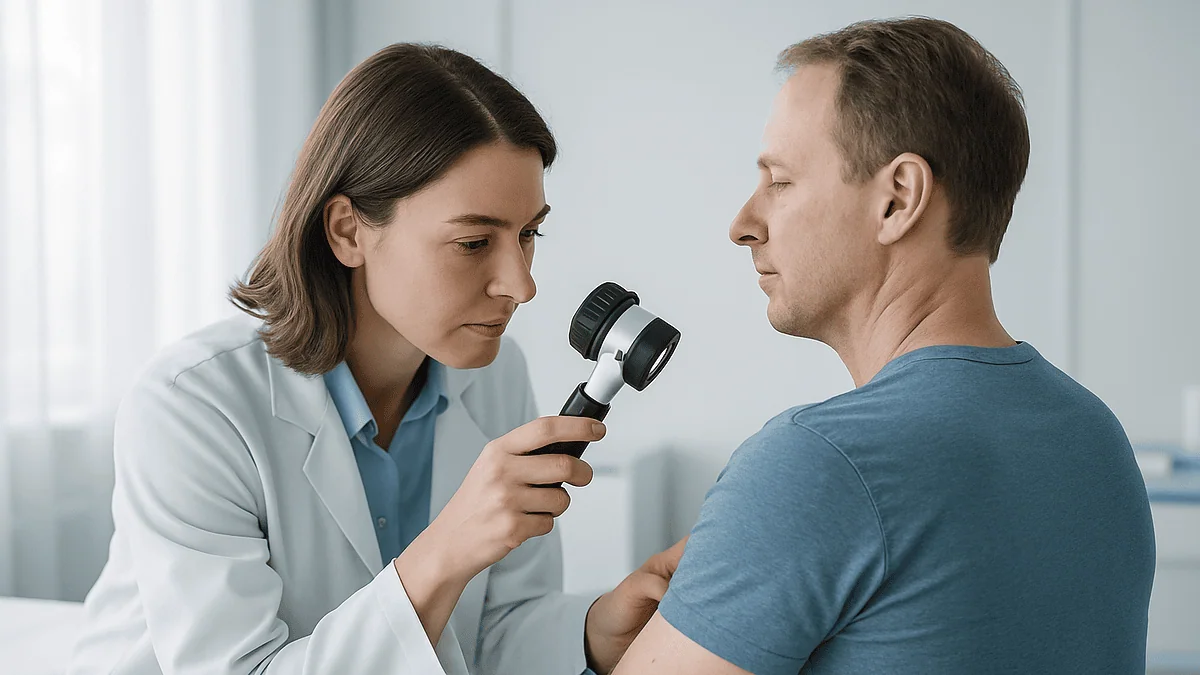
When eczema keeps flaring despite treatment, dermatologists usually reassess rather than simply add stronger medicine. They confirm the diagnosis, check how emollients and topical anti-inflammatories are actually being used, look for infection, contact allergy and overlooked triggers, and grade severity. Only then do they consider step-up options such as phototherapy, systemic immunomodulators, biologics or JAK inhibitors, always decided with the treating team.
The tube is nearly empty again. She has done everything the leaflet said: cream after showers, the prescribed ointment on the red patches, fragrance-free everything. For a week the skin behind her knees settled. Then, one humid Tuesday, the itch came back like a tide, and by the weekend she was awake at three in the morning scratching through the sheets.
This is the moment most people type “eczema treatment not working” into a search bar. What they rarely hear is that dermatologists see this situation constantly, and that they have a fairly disciplined way of thinking about it. The question in clinic is seldom “which stronger cream?” It is “what, exactly, is not working, and why?”
That reassessment is the subject of this article. It walks through how specialists take a stubborn case apart, piece by piece, before deciding whether the plan needs a tweak or a genuine change of direction.
What "eczema treatment not working" usually means in the clinic
Eczema is an umbrella word. Most adults and children who are told they have eczema have atopic dermatitis, a long-term inflammatory skin condition in which the skin barrier leaks moisture and lets irritants in, while the immune system overreacts. The NHS estimates it affects around one in five children in the UK, and a smaller share of adults, many of whom carried it from childhood.
Because the condition is chronic and relapsing by nature, flares after a good spell are not automatically a sign that treatment has failed. Mayo Clinic describes atopic dermatitis as something that tends to flare periodically, often with calm stretches in between. A dermatologist’s first job is to separate three different situations that patients tend to lump together.
The first is the expected rhythm of the disease: a flare that responds when the usual treatment is restarted promptly. The second is partial control: the skin is never really clear, sleep is still broken, and each flare takes longer to settle. The third is true non-response, where a correctly applied treatment at an appropriate strength makes little difference over the typical timeframe.
Those categories matter because they lead to different conversations. The first may need nothing more than a clearer action plan for early flares. The second usually prompts a close look at technique, triggers and whether the maintenance plan is adequate. The third is what specialists sometimes call treatment-resistant or difficult-to-treat eczema, and it is the one most likely to end with a change in the type of treatment altogether.
Understanding which of these describes you is the foundation of everything that follows. Keeping a brief note of flare timing, what was applied and for how long, and what sleep looked like gives the clinician far more to work with than “it just keeps coming back.”
How eczema treatment actually works, step by step
It helps to picture the skin as a brick wall. The bricks are skin cells; the mortar is a mix of fats and proteins that holds water in and keeps allergens, microbes and irritants out. In atopic dermatitis the mortar is faulty, partly for genetic reasons, so water escapes, the surface dries and cracks, and immune cells beneath respond with inflammation. Inflammation causes itch, scratching damages the wall further, and the cycle feeds itself.

Treatment targets each link in that chain. Emollients, which are moisturizing creams, ointments or lotions without active medicine, act as temporary mortar. Applied generously and often, they reduce water loss and lower the number of flares. The NHS places them at the core of management for everyone with the condition, even when the skin looks fine.
Topical corticosteroids are anti-inflammatory creams and ointments that quiet the immune signals in the skin. They come in a range of strengths matched to the body site and severity, and they are intended to be used during flares and then stepped down as the skin settles, under the direction of the prescriber. Topical calcineurin inhibitors are a second class of anti-inflammatory creams that work through a different pathway and are often used on delicate areas such as the face and eyelids.
Beyond the skin surface sit the systemic options: phototherapy, which uses controlled ultraviolet light to dampen inflammation; conventional immunosuppressant tablets; biologics, which are injected antibodies that block specific inflammatory messengers; and JAK inhibitors, oral medicines that interrupt signaling inside immune cells. Mayo Clinic and the NHS both describe these as options for moderate to severe disease that has not responded to well-used topical therapy.
The ladder only works if each rung has been given a fair trial. Much of the reassessment visit is about finding out whether it has.
Why is my eczema never going away? Five reasons dermatologists check first
Before anyone reaches for a new prescription, experienced clinicians run through a short list of explanations that account for a large share of “nothing works” stories.
The first is under-treatment. People are often cautious with topical steroids, applying a thin film once a day for two or three days and stopping as soon as the redness fades. The NHS advises continuing as prescribed until the flare has settled, with the prescriber deciding how to step down. Stopping too early leaves smouldering inflammation that rebounds within days.
The second is emollient drift. Early enthusiasm fades, the moisturizer becomes a once-a-day gesture, and the barrier is never properly restored. Mayo Clinic recommends moisturizing at least twice daily; many specialists suggest more during dry or cold weather.
The third is unidentified irritants and allergens. Soaps, foaming washes, wool, sweat, hard water, fragranced laundry products and some skincare ingredients can all keep the skin inflamed even while medicine is applied on top. The NHS lists these among the common triggers worth reviewing.
The fourth is infection. Broken eczematous skin is easily colonized by bacteria, and infected eczema does not respond to anti-inflammatory creams alone. Weeping, crusting or sudden worsening in one area are classic hints.
The fifth is that the itch-scratch cycle has taken on a life of its own. Chronic scratching thickens the skin, a change called lichenification, and thickened skin absorbs topical medicine poorly. Night-time scratching during sleep can undo a day’s careful care.
Only after these five are addressed does the question of a genuinely different treatment usually come up. Many people are surprised to find that a plan they thought had failed simply needed to be used as intended, with a clearer schedule and a plan for the first signs of a flare.
Is it really eczema? What is mistaken for eczema
Red, dry, itchy skin is not unique to atopic dermatitis, and one of the most important questions a dermatologist asks about a stubborn case is whether the label was right in the first place. A clinical diagnosis made quickly in a busy appointment is usually correct, but several look-alikes can mimic eczema closely enough to derail treatment for months.

Contact dermatitis is the most common impostor. It comes in two forms: irritant, caused by repeated exposure to something that damages the skin directly, and allergic, caused by an immune reaction to a specific substance such as nickel, fragrance, preservatives or rubber accelerators. The NHS notes that allergic contact dermatitis can appear hours after exposure and can coexist with atopic eczema, which is why hand or eyelid eczema that will not settle so often prompts patch testing.
Seborrheic dermatitis affects oily areas such as the scalp, eyebrows and sides of the nose and responds to different treatment. Psoriasis can resemble eczema on the hands, scalp and lower legs, although its scale tends to be thicker and more silvery. Scabies, an infestation by a tiny mite, produces intense night-time itch and is notoriously misdiagnosed as eczema; it will not improve until the mite is treated.
Fungal infections of the skin can look like a patch of eczema with a slightly raised edge, and applying steroid cream to them tends to make them spread. In adults with new, widespread, treatment-resistant eczema-like rashes, dermatologists also keep rarer conditions in mind, including cutaneous lymphomas, which is one reason persistent cases are sometimes biopsied.
The practical point is that treatment resistance is itself a diagnostic clue. A specialist faced with eczema that behaves oddly will often take a small skin sample, perform patch tests or scrape for mites before escalating therapy. That is not a sign that anyone got it wrong; it is how the diagnosis earns its keep.
Are the basics really covered? Emollients and application technique
If one message runs through dermatology guidance, it is that technique decides outcomes as much as the choice of product. The reassessment visit often turns into a demonstration.
Emollients work best when applied in generous amounts, smoothed in the direction of hair growth rather than rubbed vigorously, and reapplied whenever the skin feels dry. The NHS suggests using them as a soap substitute as well, because ordinary soaps strip the fats that eczema-prone skin already lacks. Greasier ointments hold moisture longer than lotions; many people use a lighter product by day and a heavier one at night.
With topical corticosteroids, the ordering matters. The NHS advises leaving a gap of around half an hour between applying emollient and applying the steroid so that one does not dilute the other. The steroid should go only on inflamed skin, in the amount and frequency the prescriber set, and should be continued until the flare has settled rather than stopped at the first improvement. Your clinician can show you how much is appropriate for each body area; this varies with the strength of the preparation and the site, which is why it is set individually rather than copied from a leaflet.
Bathing habits deserve a look too. Short, lukewarm baths or showers, patting rather than rubbing dry, and applying emollient within a few minutes while the skin is still damp all help to lock in water. Mayo Clinic highlights this “soak and seal” approach as a simple, evidence-supported habit.
Finally, there is the question of what happens on good days. Some prescribers recommend a maintenance pattern on previously affected areas to prevent flares rather than chase them; whether this suits you is a decision for your treating team. The aim of all this is not perfection. It is to be certain that when a dermatologist judges a treatment to have failed, it genuinely was given a fair chance.
What is the worst stage of eczema? Severity, infection and when it matters
People often ask what the “worst stage” of eczema is, imagining a fixed progression. Atopic dermatitis does not move through stages the way some diseases do. Instead, clinicians grade severity at a point in time, and the grade helps decide how far up the treatment ladder to go.
Mild eczema involves small areas of dry, itchy skin that respond to emollients and occasional mild anti-inflammatory treatment. Moderate disease covers larger areas, flares more often and begins to disturb sleep. Severe disease involves widespread redness, cracking, oozing or thickened skin, relentless itch and significant effects on sleep, mood, work or school. Dermatologists score this with validated tools that count both the extent of the rash and its intensity, alongside a measure of how the person feels day to day. The NIH’s NIAMS resources stress that impact on quality of life is a legitimate part of the severity picture, not an afterthought.
Two situations sit outside this scale and are treated as urgent regardless of baseline severity. The first is bacterial infection, usually with staphylococcal bacteria: patches that weep yellowish fluid, develop honey-colored crusts, feel hot or suddenly spread. The second is eczema herpeticum, a herpes simplex virus infection of eczematous skin that produces clusters of small, punched-out sores that are often painful rather than itchy, sometimes with fever. The NHS describes it as a medical emergency because it can spread rapidly.
Erythroderma, in which inflammation involves most of the body surface, is the other extreme. It is uncommon but can disturb temperature regulation and fluid balance and usually requires hospital assessment.
So the honest answer to “what is the worst stage?” is: whichever state is stealing your sleep, breaking your skin or carrying signs of infection. That is the state your care team wants to know about, promptly, so the plan can be adjusted before it escalates further.
Could a hidden contact allergy be making eczema worse with treatment?
There is a particular pattern that makes dermatologists reach for patch tests: eczema that worsens, or at least refuses to improve, after a new product or even after starting treatment. Allergic contact dermatitis to an ingredient in a cream, ointment or dressing is well recognized, and the culprit is sometimes an inactive ingredient such as a preservative, a fragrance, lanolin or a specific base, rather than the medicine itself.
Patch testing is a diagnostic procedure, not a treatment. Small amounts of common allergens are applied to the back under adhesive patches. The NHS describes the patches being left in place for around 48 hours, after which the skin is examined, often with a further reading a day or two later because some reactions develop slowly. The result is a list of substances that your skin reacts to, which then needs translating into a practical avoidance plan: which products to stop, which ingredient names to watch for on labels, and whether anything at work is involved.
Occupation deserves special attention. Hand eczema in healthcare workers, hairdressers, cleaners, caterers and mechanics frequently has an irritant or allergic contact component layered on top of an atopic tendency. Frequent handwashing, wet work, gloves and the chemicals handled all contribute. Clearing the atopic inflammation while the contact exposure continues is like bailing water out of a boat with the plug still out.
Not everyone with difficult eczema needs patch testing, and the decision sits with the treating dermatologist. It is most useful when the rash has an unusual distribution, is confined to the hands, face or eyelids, flares in relation to specific products or activities, or is simply not behaving the way atopic dermatitis should. When a relevant allergen is found and removed, the change can be striking, but the evidence does not support testing as a routine step for everyone, and a negative result does not mean the eczema is imaginary.
Treatment-resistant eczema: how the step-up options compare
Once the basics are confirmed, the diagnosis is solid and the disease is graded as moderate to severe, the conversation turns to treatments that work beyond the skin surface. The table below summarizes the main categories as described by the NHS and Mayo Clinic. It is a map, not a menu; which option, if any, is appropriate depends on age, other health conditions, pregnancy plans, lifestyle and the pattern of disease, and is decided with the prescribing clinician.
| Option | How it works | Typical pattern of use | What monitoring usually involves |
|---|---|---|---|
| Phototherapy (narrowband UVB) | Controlled ultraviolet light calms immune activity in the skin | Repeated sessions over a course of several weeks in a clinic setting | Skin checks; cumulative exposure is tracked because of long-term skin cancer and ageing considerations |
| Conventional systemic immunosuppressants | Oral medicines that broadly dampen the immune system | Often used for a defined period while other strategies are arranged | Regular blood tests and blood pressure checks depending on the medicine |
| Biologics | Injected antibodies that block specific inflammatory messengers involved in atopic inflammation | Ongoing injections at intervals set by the prescriber | Review of response and side effects such as eye inflammation; fewer routine blood tests for some agents |
| JAK inhibitors | Oral medicines that interrupt signaling pathways inside immune cells | Daily oral treatment with planned reviews | Blood tests and discussion of infection, cardiovascular and clotting risks before and during use |
Two honest caveats belong alongside this table. First, no option works for everyone; the aim is control, not permanent clearance. Second, each carries trade-offs. Phototherapy demands frequent visits. Conventional immunosuppressants need monitoring. Biologics and JAK inhibitors are newer, and while trial evidence for moderate to severe disease is substantial, the dermatologist will weigh individual risk factors carefully. A good reassessment visit lays these out side by side rather than presenting one as obviously right.
Who is usually offered step-up treatment, and who is usually asked to wait
Escalation is not a reward for persistence or a punishment for non-compliance; it follows from a fairly consistent set of criteria that specialists apply.
People usually considered for phototherapy or systemic treatment have moderate to severe atopic dermatitis that has not responded adequately to appropriately potent topical therapy used correctly, often with documented impact on sleep, mood, work or school. Mayo Clinic frames these as options for those whose eczema does not respond to topical treatment. The dermatologist will want to see that emollient use is consistent, that topical anti-inflammatories were used as directed for an adequate period, and that infection and contact allergy have been considered. Objective severity scores and a patient-reported quality of life measure are commonly recorded to support the decision and to track response later.
Others are usually asked to wait, at least for now. Someone whose flares respond well once the plan is used properly is more likely to be offered a clearer written action plan than a systemic medicine. A person with signs of skin infection will typically have that treated first, because judging the underlying eczema is impossible until the infection clears. If patch testing is pending, many specialists prefer to see the results before committing to long-term systemic therapy. Pregnancy, plans to conceive, certain infections, liver or kidney conditions and some cardiovascular histories shape which systemic options are suitable, and may mean a slower, more carefully monitored route.
Children and adolescents follow a similar logic with extra caution. Topical treatment and trigger management are explored thoroughly, and systemic options are reserved for those with severe, persistent disease, generally under specialist supervision.
Waiting can feel like being dismissed. It rarely is. Most dermatologists would rather fix a flawed foundation than build a more powerful treatment on top of it, because the second approach tends to disappoint and exposes people to risks they may not have needed.
What the following weeks usually look like after the plan is reset
A reassessment rarely produces an overnight transformation, and knowing the typical rhythm helps people judge whether the new plan is on track.
If the change is mainly about technique and consistency, the first week or two tend to bring a noticeable reduction in itch and redness on areas where topical anti-inflammatories are applied properly, with the barrier improving more gradually as emollient use becomes routine. The NHS notes that a flare generally settles within days to a couple of weeks of appropriate topical treatment; if nothing has shifted after that, your clinician wants to know rather than hear about it at the next scheduled visit months later.
Where infection was present and treated, improvement is often rapid once the bacteria are cleared, which can make the underlying eczema look much more manageable than it did.
Phototherapy builds slowly. Benefit usually becomes apparent over the course of several weeks of regular sessions, which is why courses are planned that way. Systemic medicines vary. Conventional immunosuppressants and JAK inhibitors often begin to reduce itch within a few weeks; biologics typically show meaningful change over several weeks to a few months, with the dermatologist assessing response at planned intervals. These are typical patterns described in mainstream guidance, not guarantees, and some people respond faster or slower.
During this period, expect check-ins. Blood tests may be scheduled for certain systemic treatments. You may be asked to keep a simple itch or sleep diary, and to photograph persistent areas so change can be judged objectively. Flares can still happen on systemic therapy, particularly in the early months; the goal is fewer, milder and shorter episodes rather than none.
One more practical point: topical treatment usually continues alongside systemic options rather than being abandoned. The brick wall still needs its mortar, whatever is happening underneath.
What people often get wrong about eczema that will not settle
Myths cluster around stubborn eczema, and several actively prolong it.
“The cream has stopped working.” True tolerance to topical corticosteroids is far less common than people assume. Far more often the cream is being applied too thinly, too briefly, on infected skin, or on skin so thickened that it cannot absorb well. A dermatologist tests these explanations before concluding that a product has lost its effect.
“Steroid creams are dangerous, so I use as little as possible.” Used as prescribed, on the right sites and for the right duration, topical corticosteroids have a long safety record; the NHS describes side effects as uncommon when they are used correctly. Under-use, by contrast, reliably leads to longer flares and more total exposure over time.
“It must be something I’m eating.” Food allergy can play a role in some infants and young children with severe eczema, but in older children and adults it is an uncommon driver. Unsupervised elimination diets carry nutritional risks and seldom calm the skin. Any food investigation should be guided by the care team.
“Antihistamines treat eczema.” The NHS is clear that antihistamines do not treat the inflammation itself; some sedating types are occasionally used short term for sleep, but they are not a substitute for skin-directed therapy.
“Natural means safer.” Essential oils, fragranced botanicals and some herbal preparations are frequent causes of contact allergy on already damaged skin. Unproven remedies can delay effective treatment, and the evidence base for most of them is thin or absent.
“If it keeps coming back, nothing can be done.” The relapsing nature of atopic dermatitis is not the same as untreatability. Mainstream guidance now describes a wider range of options for moderate to severe disease than existed a decade ago, and the reassessment process exists precisely to match people to them. Persistence is a reason to revisit the plan, not to give up on it.
What to do when nothing works for eczema: inside the reassessment visit
Knowing how a dermatologist structures a reassessment lets you prepare for it, and preparation changes what the visit can achieve.
The conversation usually starts with history, not skin. When did it begin, where does it sit on the body, what makes it better or worse, what has been tried, for how long, and at what strength? Bring the actual tubes and bottles, including over-the-counter products, washes and anything applied by a partner or relative. A short timeline of flares and treatments, even scribbled on a phone, is more valuable than memory under pressure.
Examination follows, often of the whole skin surface rather than just the areas that bother you. The pattern tells a story: flexural creases suggest atopic disease, eyelid or hand involvement raises the question of contact allergy, finger-web burrows point toward scabies, well-defined plaques toward psoriasis. The clinician looks for crusting and weeping that hint at infection, and for thickened, leathery areas that explain why creams seem to do nothing.
Tests come next, when needed: a swab of weeping skin, scrapings for mites or fungus, patch testing, occasionally a small biopsy. Blood tests are not routinely helpful for diagnosing eczema itself, but they are needed before some systemic treatments.
Then comes the plan, and the best plans are written down. A good one specifies which product goes where, how often, for how long, what to do at the first sign of a flare, how to step down, and when to make contact if things do not improve. Mayo Clinic and the NHS both emphasize that a clear, agreed routine is one of the strongest predictors of good control.
Finally, the visit should end with a review date and a threshold. If the agreed plan has been followed and the skin has not responded within the window your clinician sets, that is not failure on your part; it is the signal that moves the discussion to the next rung.
Questions to ask your care team
A reassessment visit is a two-way exchange, and the right questions often unlock the most useful parts of it. You do not need to ask all of these; pick the ones that fit your situation.
- Are you confident this is atopic dermatitis, or is there anything about the pattern that makes you want to test for something else?
- Can you show me exactly how much of each product to use on each area, and how to tell when a flare has settled enough to step down?
- Should I be applying anything on good days to prevent flares, or only treating when the skin is inflamed?
- Could any of my current products, including the prescribed ones, be irritating my skin or causing a contact allergy? Would patch testing help?
- Do you see any signs of infection, and how will I recognize it at home?
- What triggers in my home, work or routine are worth tackling first, and which are probably not worth worrying about?
- How severe would you grade my eczema today, and what would need to be true for me to be considered for phototherapy or a systemic treatment?
- If we move to a systemic option, what monitoring will I need, what are the main risks for someone with my health history, and how will we judge whether it is working?
- How long should I give this plan before I contact you if it is not helping, and what is the quickest way to reach the team?
- Is there anything about my sleep, mood or stress that you would like me to address alongside the skin treatment?
Writing the answers down during the appointment, or asking for them in a written plan, turns a ten-minute conversation into a reference you can return to during the next bad night. Clinicians generally welcome this; it reduces misunderstandings and makes the next review far more precise.
When to call your doctor
Most eczema care happens at home, on a schedule you and your clinician agree. Some situations should bring that schedule forward, and a few should not wait for office hours at all.
Contact your doctor or care team promptly if a flare has not begun to settle after following the agreed plan for the period your clinician specified; if patches start to weep, develop yellow or honey-colored crusts, or feel hot and tender, which can indicate bacterial infection; if the rash spreads rapidly or appears in new areas; if itch is preventing sleep on most nights; or if a prescribed treatment seems to be making the skin worse rather than better.
Seek urgent, same-day medical care if you notice clusters of small, painful, punched-out sores or fluid-filled blisters on eczematous skin, especially with fever or feeling generally unwell. The NHS identifies this pattern as possible eczema herpeticum, a viral infection that can spread quickly and needs prompt treatment. Urgent assessment is also warranted if inflammation involves most of the body surface, if you develop fever with widespread redness, or if you feel faint, confused or shivery alongside a severe flare.
For children, additional reasons to seek prompt advice include refusal to feed, unusual drowsiness, or a rapidly worsening rash with fever.
If you are on a systemic treatment, your team will have given you specific warning signs, often including persistent fever, unexplained bruising, severe abdominal pain, chest pain, breathlessness or sudden leg swelling. Report these without delay.
None of this is intended to alarm. The large majority of flares are uncomfortable rather than dangerous. The point is that your treating team can only adjust a plan they know is faltering, and the earlier they hear about it, the smaller the adjustment usually needs to be. Every decision about changing, adding or stopping treatment belongs with them.
Frequently asked questions
What should I do when nothing works for eczema?
Ask for a structured reassessment rather than another cream. A dermatologist will confirm the diagnosis, check how products are actually being applied, look for infection and contact allergy, review triggers and grade severity. Bring every product you use and a short timeline of flares. If the basics are genuinely in place and disease remains moderate to severe, phototherapy or systemic options can be discussed with your treating team.
Why is my eczema not going away even with treatment?
The most frequent explanations are inadequate topical treatment, inconsistent emollient use, an ongoing irritant or allergen, untreated skin infection, or thickened skin that absorbs medicine poorly. Less often the diagnosis itself needs revisiting. Because atopic dermatitis is a chronic condition, the realistic aim is control with fewer, milder flares rather than permanent disappearance, and a clear written plan usually makes a measurable difference.
What is mistaken for eczema most often?
Contact dermatitis, both irritant and allergic, is the commonest look-alike, followed by seborrheic dermatitis, psoriasis, fungal skin infections and scabies. Each needs different management, and some worsen with steroid creams. Dermatologists use the distribution of the rash, patch testing, skin scrapings and occasionally a biopsy to tell them apart. Treatment that behaves unexpectedly is often the clue that prompts these checks.
What is the worst stage of eczema?
Eczema does not progress through fixed stages; clinicians grade it as mild, moderate or severe at a given time based on extent, intensity and effect on sleep and daily life. The situations treated as most serious are bacterial infection, eczema herpeticum (a herpes virus infection of eczematous skin) and erythroderma, in which most of the body surface is inflamed. All three warrant prompt medical assessment.
Can eczema get worse with treatment?
Occasionally, yes. Allergic contact dermatitis to a preservative, fragrance, lanolin or other ingredient in a cream can inflame the skin further, and steroid creams applied to an unrecognized fungal infection can make it spread. Irritation from a product that is too drying is another cause. If a treatment seems to be making things worse, tell your prescriber rather than stopping or switching on your own.
How long should a topical steroid take to work on an eczema flare?
The NHS describes flares generally settling within days to a couple of weeks of appropriate topical corticosteroid use when the product is applied as prescribed to inflamed skin. If there has been no improvement within the timeframe your clinician set, contact the team. Possible reasons include infection, under-application, an irritant that is still present or a diagnosis that needs another look.
What is treatment-resistant eczema?
The term describes atopic dermatitis that remains moderate to severe despite correctly used, appropriately potent topical treatment, consistent emollient use and attention to triggers and infection. It is a working label rather than a formal diagnosis. Specialists use it to signal that systemic options such as phototherapy, immunosuppressants, biologics or JAK inhibitors should be considered, after confirming that the diagnosis is correct.
Does diet cause eczema that will not clear up?
Food allergy can contribute in some infants and young children with severe eczema, but in older children and adults it is rarely the main driver. Elimination diets without medical guidance risk nutritional problems and seldom improve the skin. If you suspect a food link, raise it with your care team, who can decide whether supervised allergy testing is appropriate alongside skin-directed treatment.
Will I need blood tests if my eczema treatment is stepped up?
It depends on the option chosen. Conventional immunosuppressants and JAK inhibitors usually require blood tests before starting and at intervals during treatment to monitor organ function, blood counts and other markers. Some biologics need less routine testing but still involve regular review for side effects. Phototherapy involves skin checks rather than blood work. Your prescriber will outline the specific schedule.
Is it normal to still flare while on a biologic or other systemic treatment?
Yes, flares can still occur, particularly in the first weeks to months while a treatment takes effect. The goal of systemic therapy is fewer, shorter and milder flares rather than complete absence, and topical treatment usually continues alongside it. If flares remain frequent or severe after the review period your clinician set, that is a reason to revisit the plan together.
References
- NHS: Atopic eczema – Treatment
- NHS: Atopic eczema – Overview
- NHS: Contact dermatitis
- NIH NIAMS: Atopic Dermatitis
This article is for general information only and is not a substitute for professional medical advice. Please consult a qualified doctor about your individual situation.

More from the Blog

Does Eczema Go Away? Genetics and the Autoimmune Question
Eczema often improves and can clear completely, but it rarely disappears in a way anyone can guarantee. Many children who develop atopic eczema see…

What Maintenance Treatment for Seborrheic Dermatitis Looks Like: Keeping Flares Away Long Term
Seborrheic dermatitis maintenance means continuing a lighter version of treatment after a flare settles, usually regular use of an antifungal shampoo or wash that…

Can Laser or Light Treatments Reduce Rosacea Redness? What They Target and Their Limits
Vascular lasers and intense pulsed light can reduce the persistent redness and visible blood vessels of rosacea by heating and closing dilated vessels in…

Sugar, Dairy and Skin: What the Studies Really Show About Diet and Acne
Current evidence links dairy, especially skim milk and whey protein, with modestly higher odds of acne in observational studies, but no randomized trial has…

Why Does Hair Turn Gray? The Pigment Cells That Clock Out Early
Hair turns gray when melanocytes, the pigment cells inside each hair follicle, produce less melanin and their stem-cell reserves gradually run out. Genetics sets…

What Long-Term Eczema Control Really Means: Fewer Flares, Calmer Skin and Ongoing Care
Long-term eczema control means having fewer and milder flares, skin that feels comfortable most of the time, and a routine you can realistically keep…