

When Is Basal Cell Carcinoma Treated Without Surgery? Topical and Procedural Options
Key Takeaways
- Basal cell carcinoma accounts for roughly three in four non-melanoma skin cancers and very rarely spreads, yet it destroys local tissue if left untreated, so every option aims to clear one spot completely.
- Non-surgical methods are mainly reserved for small, superficial, previously untreated tumors on the trunk and limbs; aggressive subtypes and facial sites usually call for surgery with margin checking.
- Prescription creams work by provoking an immune attack or blocking DNA synthesis, so marked redness and crusting during a course are the mechanism at work rather than a complication.
- Photodynamic therapy and cryotherapy penetrate only a few millimeters, which is why they suit superficial tumors and are not offered for nodular or deeper disease.
- Radiation therapy avoids a scalpel but commits the skin to permanent thinning and limits future treatment of that area, so it is generally favored for older patients and non-surgical candidates.
- Hedgehog pathway inhibitors and immune checkpoint inhibitors are reserved for locally advanced or metastatic basal cell carcinoma and are started, monitored and stopped only by an oncology team.
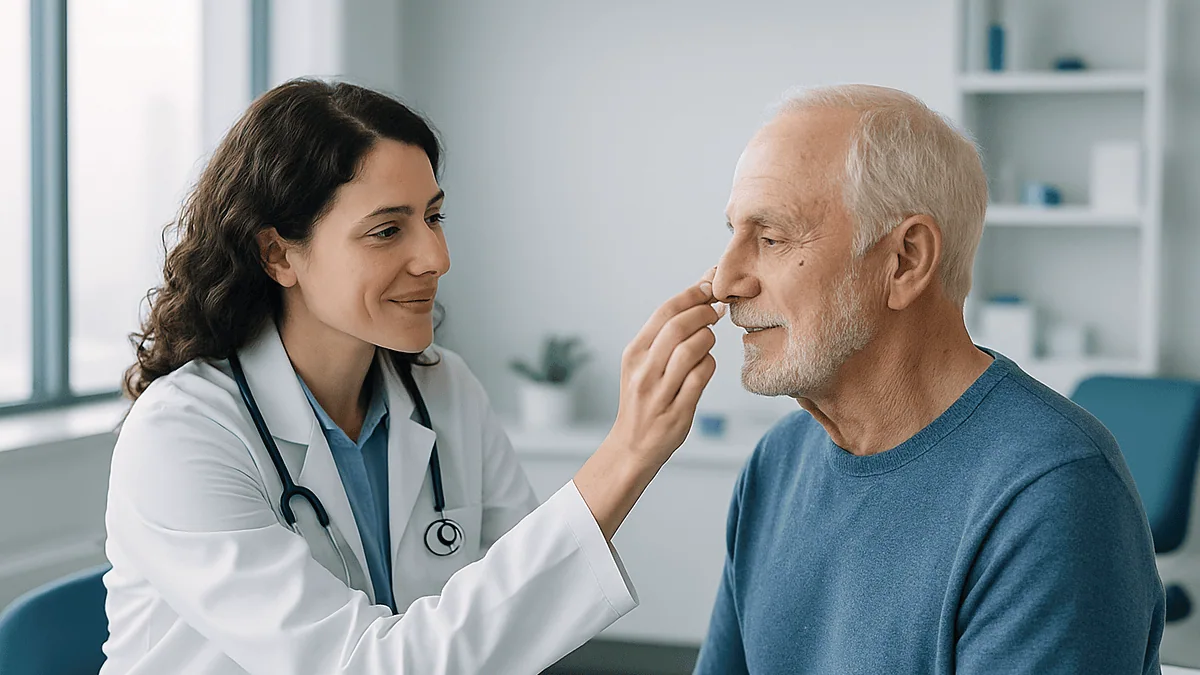
Basal cell carcinoma is usually removed surgically, but non-surgical treatment is considered when a tumor is superficial, low-risk and sits on the trunk or limbs, when a person cannot safely have surgery, or when the cancer is advanced. Options include prescription creams, photodynamic therapy, cryotherapy, curettage, radiation therapy and, for advanced disease, targeted or immune therapies. The treating dermatologist or oncology team decides based on the tumor's type, depth, location and the patient's overall health.
The biopsy report arrives, and the word is one most people have never had to say out loud: carcinoma. Then comes the second surprise. The dermatologist talks about a pale, flat patch on your shoulder as though it were a routine chore, mentions a cream, and asks whether you would prefer to avoid stitches. You leave the room relieved and slightly puzzled. A cancer you can treat with a tube?
That puzzlement is reasonable. Basal cell carcinoma is the most common cancer in the world, and surgical removal remains the default for good reason. Yet a meaningful minority of tumors are thin and slow enough that other approaches are considered, and some people have health reasons that make an operation the riskier choice.
This explainer walks through the basal cell carcinoma non surgical treatment options a care team may raise, how each one actually works, who they tend to suit, and where the evidence is firm or still thin.
What is basal cell carcinoma, and why is surgery usually offered first?
Basal cell carcinoma starts in the basal cells, the small round cells at the bottom of the epidermis that constantly produce new skin. Years of ultraviolet light damage the DNA in a few of them, and a slow-growing tumor results. According to the NHS, basal cell carcinoma accounts for roughly three in four non-melanoma skin cancers, and it very rarely spreads to distant organs.
That reassurance comes with a caveat. The tumor rarely travels, but it does burrow. Left alone for years, a basal cell carcinoma can erode cartilage, bone and nerves, which is why it was once nicknamed the rodent ulcer. The goal of treatment is therefore local: remove or destroy every cancerous cell in that one spot while preserving as much normal skin as possible.
Surgery does this most reliably. A surgeon cuts out the visible tumor with a rim of healthy skin and sends the tissue to a pathologist, who checks under a microscope that the edges are clear. Mohs surgery takes this further by examining each thin layer during the procedure, so the surgeon stops as soon as the margins are clean. Mayo Clinic lists both approaches as standard, particularly for tumors on the face or in people with a higher risk of recurrence.
Non-surgical treatment gives up that microscope check. Nobody can confirm afterward that every cell is gone; the team relies instead on the tumor’s appearance and on careful follow-up. That trade-off is the single most important idea in this article. Every other section is really about when the trade is worth making, and when it is not.
How do basal cell carcinoma non surgical treatment options actually work?
Each non-surgical method destroys cancer cells by a different route, and understanding the mechanism makes the side effects far less mysterious.
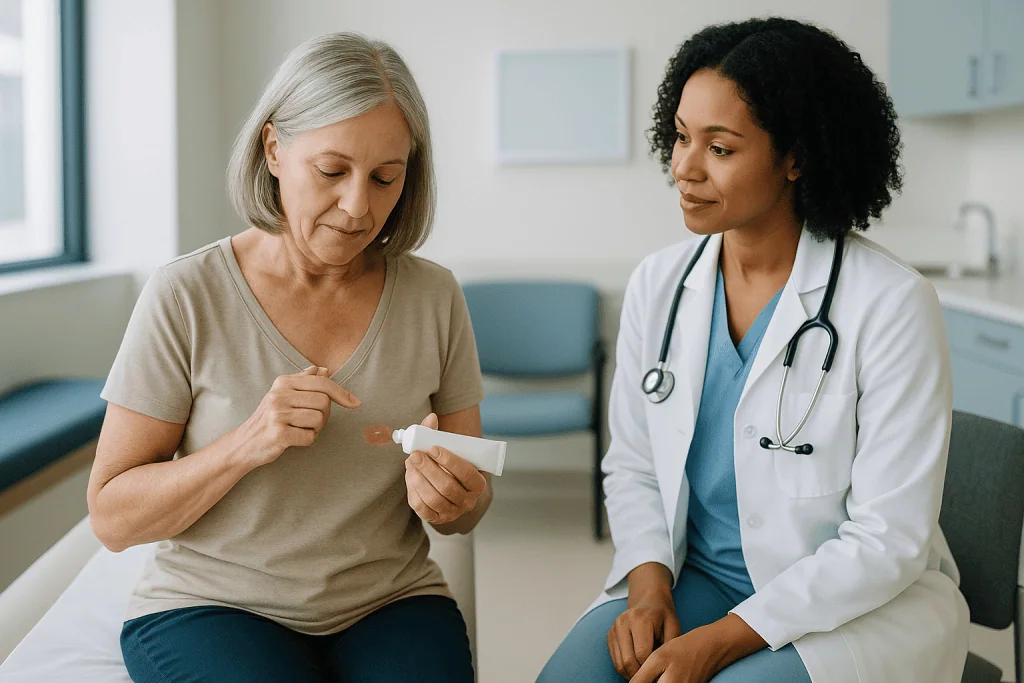
Topical immune-response modifiers, such as imiquimod, do not kill the tumor directly. The cream prompts skin cells to release signaling proteins that summon immune cells, which then attack the abnormal tissue. The redness and crusting that follow are the visible footprint of that immune reaction, not an allergy.
Topical chemotherapy, such as fluorouracil, interferes with DNA synthesis. Cancer cells divide faster than their neighbors, so they are hit hardest, although normal sun-damaged skin reacts too.
Photodynamic therapy relies on chemistry and light. A photosensitizing agent is applied to the lesion and absorbed preferentially by abnormal cells. When a lamp of a specific wavelength is shone on the area, the agent generates reactive oxygen species that destroy those cells. Cleveland Clinic describes the drug being left on the skin for a period of hours before illumination.
Cryotherapy uses liquid nitrogen to freeze tissue, rupturing cell membranes as ice crystals form. Curettage scrapes the soft tumor out with a spoon-shaped instrument, and electrodesiccation applies heat to the base to destroy residual cells and seal small vessels.
Radiation therapy delivers focused X-rays or electrons that break DNA strands. Cancer cells repair this damage less efficiently than healthy cells, so repeated small sessions tip the balance.
Finally, systemic therapies for advanced disease work at the molecular level. Hedgehog pathway inhibitors block a signaling chain that most basal cell carcinomas have switched permanently on, and immune checkpoint inhibitors release the brakes on T cells so they can recognize the tumor. Mayo Clinic describes both categories as options when surgery and radiation are not possible.
Who is usually offered treatment without surgery, and who is usually asked to have the operation?
Dermatology guidelines sort basal cell carcinomas into lower-risk and higher-risk groups, and that sorting largely decides whether a non-surgical route is reasonable.
Candidates for creams, photodynamic therapy or cryotherapy typically have the superficial subtype: a thin, scaly, pinkish patch that spreads along the top of the skin rather than downward. The lesion is usually small, has well-defined edges, sits on the trunk, arms or legs, and has not been treated before. The NHS notes that non-surgical treatments are mainly used for superficial basal cell carcinomas, with surgery remaining the main treatment overall.
Radiation therapy occupies a different niche. Mayo Clinic describes it as an option for people who cannot undergo surgery because of age, frailty or other medical conditions, and as a follow-on treatment after surgery when margins were not clear. It can also suit tumors in locations where removing tissue would be disfiguring.
Targeted and immune therapies are reserved for the small group whose cancer is locally advanced or, rarely, has spread, and for whom surgery and radiation are no longer suitable.
Who is steered toward surgery instead? People whose tumor shows an aggressive growth pattern on biopsy (infiltrative, morpheaform or micronodular), tumors on the nose, ears, lips or around the eyes, lesions larger than a couple of centimeters, recurrent tumors, and anyone with a weakened immune system from a transplant or long-term immunosuppressive medicine. In these situations the ability to check margins under the microscope matters too much to give up.
Pregnancy adds a specific rule: hedgehog pathway inhibitors cause severe birth defects and are not used in anyone who is or could become pregnant, so that conversation happens early.
Basal cell carcinoma cream treatment: what the prescription creams involve
Two classes of prescription cream are used for superficial basal cell carcinoma, and they feel different from the inside.
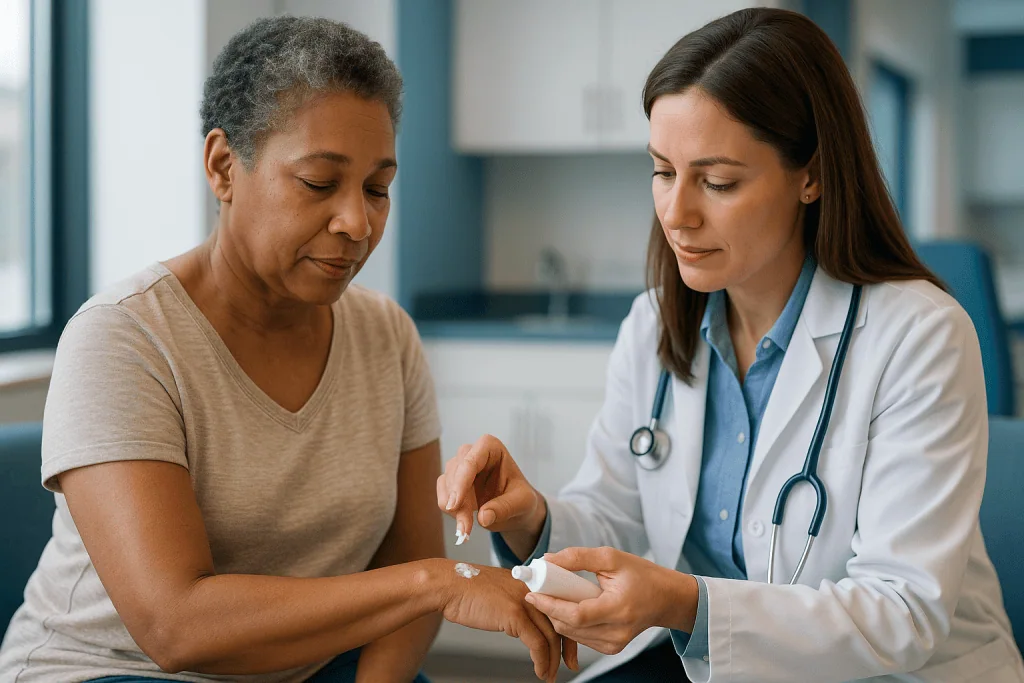
Imiquimod is an immune-response modifier. People usually apply it at home for a course lasting several weeks, following the schedule their dermatologist sets. Within the first week or two the area typically reddens, weeps and crusts. Many patients describe a short flu-like malaise on heavier reaction days, which the NHS and Mayo Clinic both list as a recognized effect. A strong reaction is not a sign of trouble; clinicians often read it as the immune response doing its job. The skin usually settles over a few weeks after the course ends, sometimes with a lighter or pinker patch.
Fluorouracil is a topical chemotherapy. It too is applied over several weeks, and it produces inflammation, soreness and sometimes shallow erosions. Because it also reacts with precancerous sun damage nearby, people are occasionally surprised to see spots light up where they had noticed nothing.
Both creams share limits. They work only on cells they can reach, so a tumor that dips deeper than expected can survive underneath apparently healed skin. They are not used on the face in most guidelines, and they are not suitable for nodular or aggressive subtypes. Compared with surgery, the chance of the tumor returning is higher; Mayo Clinic notes that creams are reserved for superficial tumors with a lower risk of recurrence.
Practical matters count. The cream is a prescribed medicine with a defined regimen, so any change in frequency, duration or area treated is a decision for the prescribing clinician, not something to adjust on a bad-skin day. Photographs at each visit help the team judge response, and a follow-up examination after healing is standard.
Photodynamic therapy for basal cell carcinoma: light, chemistry and a few hours of waiting
Photodynamic therapy, often shortened to PDT, is a clinic-based treatment that pairs a light-activated chemical with a lamp. Cleveland Clinic describes the sequence: the lesion is gently prepared, a photosensitizing cream is applied, and the area is covered for a few hours while abnormal cells absorb it. The patient then sits under a red or blue light for a set period, during which the chemical reaction destroys the targeted cells.
The sensation during illumination is the part people remember. Most describe stinging or burning that builds through the session, sometimes intense, then fades within hours. Cooling fans and sprays are often used. Afterward the skin looks sunburned, may crust for a week or so, and heals with little scarring, which is one reason PDT is considered for cosmetically sensitive areas such as the chest or lower legs.
Two sessions, spaced a week or more apart, are common in protocols for superficial basal cell carcinoma, though the exact plan is set by the treating team. Strict sun avoidance of the treated area is required for a couple of days afterward, because residual sensitizer can react with daylight.
Where does the evidence sit? For thin superficial tumors, PDT is an accepted guideline option, and its cosmetic results are generally favorable. For nodular tumors, outcomes are less reliable, and for anything deeper or aggressive it is not appropriate, because red light penetrates only a few millimeters. As with creams, there is no margin check, so clinical follow-up carries the weight of confirming that the treatment worked.
People with certain light-sensitivity disorders or porphyria are not candidates, and the team will ask about medicines that increase photosensitivity before scheduling.
Cryotherapy and curettage: the procedures that sit between a cream and an operation
Two office procedures are often grouped with non-surgical options because they involve no incision, no stitches and no pathology margin check, yet they are hands-on treatments done in a single visit.
Cryotherapy sprays liquid nitrogen onto the tumor and a small rim of surrounding skin, usually in two freeze-thaw cycles. Ice crystals rupture cell membranes and cut off tiny blood vessels. A blister forms within a day, weeps, then crusts and separates over two to three weeks, as MedlinePlus describes for superficial skin cancers. The healed site is often paler than the surrounding skin, which can be noticeable on darker complexions, and hair does not regrow in the treated area. Cryotherapy is generally considered for small superficial tumors on the trunk and limbs in people who prefer to avoid cutting.
Curettage and electrodesiccation, sometimes called scrape-and-burn, is performed under local anesthetic. The dermatologist uses a curette to scoop out the tumor, which is softer than healthy dermis, then applies an electric current to destroy remaining cells and control bleeding. The cycle is typically repeated two or three times. The wound heals from the base over several weeks, leaving a round, slightly depressed white scar. Mayo Clinic lists this procedure as a standard option for small tumors with a low risk of recurrence, outside the face and other high-risk sites.
Both methods depend entirely on the clinician’s feel and judgment, because no tissue is sent to confirm that the edges are clear. That is why they are not recommended for aggressive subtypes, recurrent tumors or hair-bearing areas where cancer can hide along follicles. In the right hands and the right tumor they are quick, inexpensive in time, and effective, but selection is everything.
Radiation therapy for basal cell carcinoma: who it suits and what the course looks like
Radiation therapy for basal cell carcinoma uses carefully shaped beams of X-rays or electrons aimed at the tumor and a small margin around it. Each session is painless and lasts minutes, but the course is spread over multiple visits. Mayo Clinic describes radiation as sometimes used after surgery when there is a risk cancer remains, and as an option when surgery is not possible.
Fractionating the dose over several weeks is deliberate. Healthy skin cells repair radiation damage between sessions better than cancer cells do, so splitting treatment widens the gap between harm to the tumor and harm to its surroundings. A shorter schedule with fewer, larger sessions is sometimes chosen for older or frailer patients; the radiation oncologist weighs convenience against the long-term look of the skin.
Side effects arrive gradually. Redness, dryness and peeling build during the course and peak a week or two after it ends. The skin then heals, but over years the treated patch may become thinner, paler and show fine dilated vessels. For this reason radiation is generally favored in people over about sixty, and avoided in younger patients when alternatives exist, since the long-term cosmetic change and a small risk of radiation-induced cancers accumulate over decades.
Radiation also has a specific strength: it does not remove tissue. On the eyelid, nose tip or ear, where surgery can require reconstruction, a radiation plan can treat the cancer while leaving the structure intact. The trade-off is that a tumor recurring in irradiated skin is harder to treat, and a second course to the same area is usually not possible.
People with certain genetic syndromes, such as basal cell nevus syndrome, are not offered radiation, because it provokes new tumors in that condition.
What is the newest treatment for basal cell carcinoma? Targeted and immune therapies for advanced disease
Most people with basal cell carcinoma will never need a tablet or an infusion. For the small number whose tumor has grown too large or deep for surgery and radiation, or has spread, two newer drug classes exist, and they illustrate how precisely this cancer is now understood.
Nearly all basal cell carcinomas carry mutations in the hedgehog signaling pathway, a chain of proteins that normally directs embryonic development and then falls quiet. In the tumor, a faulty gene leaves the pathway permanently switched on, telling cells to keep dividing. Hedgehog pathway inhibitors, including the generic agents vismodegib and sonidegib, bind to a protein in this chain and shut the signal off. Mayo Clinic lists targeted therapy as an option for basal cell carcinoma that does not respond to other treatments or has spread.
Their side effects follow from the mechanism, because the same pathway maintains muscle, hair follicles and taste buds in adults. Muscle cramps, hair thinning, altered taste, weight loss and fatigue are common, and many patients need treatment breaks. The drugs cause severe birth defects and demand strict contraception for everyone involved.
Immune checkpoint inhibitors are the second class. Basal cell carcinomas carry a very high number of mutations from ultraviolet damage, which makes them visible to the immune system once the braking signal on T cells is released. Mayo Clinic describes immunotherapy as considered for advanced basal cell carcinoma when other treatments have not worked.
What the evidence does and does not show matters here. These medicines can shrink tumors and hold them in check, sometimes for long periods, but responses vary and the long-term picture is still being described in registries. They are started, monitored and stopped by an oncology team, and they are not a substitute for surgery in ordinary tumors.
Basal cell carcinoma non surgical treatment options compared at a glance
Seeing the options side by side clarifies why no single one wins. Each occupies a niche defined by tumor depth, location and the patient’s circumstances. The table summarizes mainstream guidance as described by Mayo Clinic, the NHS and Cleveland Clinic; it is a map for conversation, not a menu to order from.
| Option | How it works | Usually considered for | Visits and timeline | Common effects |
|---|---|---|---|---|
| Imiquimod cream | Triggers local immune attack | Small superficial tumors on trunk or limbs | Home application over several weeks | Redness, crusting, flu-like days |
| Fluorouracil cream | Blocks DNA synthesis in dividing cells | Small superficial tumors off the face | Home application over several weeks | Soreness, erosions, inflammation |
| Photodynamic therapy | Light activates a sensitizer to kill cells | Superficial tumors, cosmetically sensitive sites | Clinic sessions, usually two, a week or more apart | Burning during light, sunburn-like healing |
| Cryotherapy | Freezing ruptures cells | Small superficial tumors | Single visit; heals in 2–3 weeks | Blister, pale scar, hair loss at site |
| Curettage and electrodesiccation | Scraping plus heat to the base | Small low-risk tumors outside the face | Single visit; heals over several weeks | Round white scar |
| Radiation therapy | DNA damage over repeated sessions | Non-surgical candidates, difficult sites, post-surgery margins | Multiple sessions over weeks | Skin reaction, long-term thinning |
| Hedgehog inhibitors or immunotherapy | Molecular or immune blockade | Locally advanced or metastatic disease | Ongoing oral or infusion therapy | Cramps, hair and taste changes, immune effects |
Two patterns stand out. The destructive and topical methods cluster around one tumor type, superficial and low-risk, while radiation and systemic drugs address the opposite end of the spectrum. Nothing in the middle rows is designed for an aggressive facial tumor, which is why surgery keeps its place as the default.
What the following days and weeks usually look like after non-surgical treatment
Non-surgical treatment trades a single wound for a slower, more visible healing process, and knowing the arc in advance prevents a lot of worried phone calls.
With creams, the first week often looks like nothing is happening. Then the patch reddens, becomes tender and begins to crust. The peak reaction usually comes in the middle of the course and can look alarming, with weeping and a raw surface larger than the original spot. Once the course ends, inflammation fades over two to four weeks and new pink skin fills in. A flat pale area is typical; it continues to blend over months.
After photodynamic therapy, stinging settles within hours, redness and swelling follow for a few days, and a thin crust separates within a week or two. Daylight must be kept off the area for the first couple of days.
Cryotherapy produces a blister within twenty-four hours that may fill with clear or bloody fluid. Leaving it intact protects the base. The crust lifts in two to three weeks, as MedlinePlus describes.
Curettage wounds are open and heal from the bottom up. Daily gentle cleansing and a layer of petroleum jelly under a dressing keep the surface moist, which speeds healing and softens the scar. Full healing commonly takes three to six weeks depending on size and location, with the lower leg slowest.
Radiation reactions build during the course, peak roughly a week after the last session, then heal over the following two to three weeks.
Across all methods, the first follow-up examination matters more than it does after surgery, because the clinician is looking for any residual tumor at the edge. Mayo Clinic advises regular skin checks after any basal cell carcinoma, since people who have had one are at higher risk of another.
Is there a new procedure instead of Mohs surgery, and is it an alternative to Mohs surgery for everyone?
Search engines are full of this question, often driven by advertising for image-guided superficial radiation, in which an ultrasound device maps the tumor’s depth before each low-energy radiation session. The honest answer has three parts.
First, it is not entirely new. Superficial radiation for skin cancer predates Mohs surgery by decades; the imaging component is the recent addition. The idea is sound: ultrasound can help confirm that the treated depth covers the tumor. Whether that imaging improves outcomes compared with conventional radiation planning has not yet been shown in randomized trials, and mainstream guidance from Mayo Clinic and the NHS continues to list radiation generally as an option for people who cannot have surgery, without singling out one delivery device.
Second, it is still radiation. Every consideration in the radiation section applies: a course of multiple sessions, cumulative skin changes, the preference for older patients, the difficulty of treating a recurrence in irradiated skin, and the lack of a pathology margin check.
Third, Mohs surgery holds a distinct advantage that no non-surgical method replicates. By examining the entire margin under the microscope during the procedure, it confirms clearance before the wound is closed. For high-risk facial tumors, recurrent tumors and aggressive subtypes, that confirmation is the reason dermatology guidelines rank it first.
None of this means radiation is a poor choice. For a frail eighty-year-old with a nasal tumor and a heart condition, avoiding anesthesia and reconstruction may be exactly right. The point is that an alternative to Mohs surgery exists for specific people with specific tumors, not as a general upgrade. When a clinic presents any single technology as the answer for most patients, that framing itself deserves a second opinion.
What aggravates basal cell carcinoma, and what makes a new one more likely?
People often ask whether something they did made the cancer worse. The accurate answer separates what drives tumor growth from what causes new tumors.
Ultraviolet radiation does both. The original mutation came from cumulative sun exposure, often decades earlier, and continuing exposure adds mutations to the surrounding skin, raising the chance of a second tumor. The CDC’s prevention guidance centers on shade, protective clothing, broad-spectrum sunscreen and avoiding indoor tanning for exactly this reason. Mayo Clinic lists a history of sunburns, fair skin, increasing age and prior radiation treatment among the risk factors.
Immune suppression accelerates the disease. People taking anti-rejection medicines after an organ transplant, or long-term immunosuppressants for autoimmune conditions, develop more skin cancers and more aggressive ones, because immune surveillance normally clears many abnormal cells before they become tumors.
Chronic irritation and wounds in the area can make a tumor more noticeable and may delay recognition, but picking at a lesion does not make the cancer spread. What it does is create bleeding, crusting and infection that mask what the clinician needs to see. Arsenic exposure, a rare cause today, and inherited conditions such as basal cell nevus syndrome also raise lifetime risk.
Time is the quieter aggravator. Basal cell carcinoma grows slowly, so a spot ignored for three years is usually larger and deeper than it needed to be, and more likely to require surgery rather than a cream. Delay turns a candidate for non-surgical treatment into a surgical one.
Finally, incomplete treatment matters. A tumor that regrows after a cream, freezing or curettage is reclassified as recurrent, which moves it into the higher-risk category where surgery is strongly preferred. This is why finishing the prescribed course and attending follow-up are not formalities.
What people often get wrong about treating basal cell carcinoma without surgery
Several myths circulate around this topic, and each has a kernel of truth that makes it stick.
“It’s the good cancer, so any treatment will do.” Basal cell carcinoma rarely spreads, but it destroys local tissue relentlessly. The subtype and location decide treatment, not the reassuring statistic. An infiltrative tumor on the nose treated with cream is undertreated.
“A strong reaction to the cream means it’s not working.” The opposite is closer to the truth. Inflammation is the mechanism. Clinicians worry more when the skin stays calm throughout a course of imiquimod, as Mayo Clinic’s description of the immune response implies.
“Natural remedies such as black salve or herbal pastes are a gentler alternative.” Caustic salves burn indiscriminately, often leaving the tumor’s roots intact beneath a scar. Mayo Clinic and the NHS list no herbal or over-the-counter product as a treatment for basal cell carcinoma, and no reliable trial supports one. Harm from these products is well documented in case reports.
“If the skin looks healed, the cancer is gone.” Without a margin check, apparent healing is a hopeful sign, not proof. Follow-up examination is how clearance is judged.
“Radiation is the gentle option.” It avoids a scalpel, yet it commits the skin to permanent changes and limits future treatment of that area. Gentle in the first month, demanding over decades.
“The newest drug must be the best.” Hedgehog inhibitors and immunotherapy are remarkable for advanced disease and irrelevant for the ordinary small tumor. Novelty tracks severity here, not quality.
“Once treated, I’m done.” Having had one basal cell carcinoma substantially raises the chance of another, which is why Mayo Clinic recommends routine skin checks afterward.
Questions to ask your care team before choosing a treatment
A good consultation about basal cell carcinoma non surgical treatment options is a negotiation between what the tumor allows and what you value. Arriving with specific questions turns a ten-minute appointment into a real decision. Consider asking:
- Which subtype did the biopsy show, and does that subtype make non-surgical treatment reasonable or risky?
- How deep do you believe the tumor goes, and how confident are you in that estimate without removing it?
- For my particular tumor, how does the chance of recurrence after this option compare with surgery, based on guidelines you follow?
- If the tumor comes back after this treatment, what would the next step be, and would it be harder than surgery now?
- How will you confirm the treatment has worked, and when?
- What will the area look like at one month, six months and five years?
- Which of my current medicines or health conditions affect this choice?
- How often should I have skin checks afterward, and who performs them?
Two further questions reveal a lot. Ask what the clinician would choose for a family member with the same report; the answer is usually more candid than the menu. And ask whether the team routinely offers surgery as well as the option being proposed. A practice that provides only one modality has an understandable reason to favor it, and a second opinion from a dermatologist who does both is a reasonable request, not an insult.
Write the answers down. Non-surgical plans involve home care and multiple visits, and the details of what to apply, what to avoid and when to call blur quickly once you leave the room. The treating team sets every parameter of the plan; your job is to understand it well enough to follow it and to notice when something departs from the script.
When to call your doctor during or after treatment for basal cell carcinoma
Non-surgical treatment deliberately provokes the skin, so some redness, weeping and crusting are expected. A few signs, however, mean the plan needs review rather than patience.
Contact your care team promptly if you notice:
- Spreading redness, warmth, swelling or thick yellow-green discharge beyond the treated patch, or a fever, which can signal infection rather than the intended reaction.
- Pain that escalates after the first few days instead of easing, or pain out of proportion to what you were told to expect.
- Bleeding that does not stop with ten minutes of firm pressure.
- A blister after cryotherapy that is very large, or any wound that has not begun to heal within the timeframe your clinician described.
- Reaction extending well beyond the treated area, hives, facial swelling or difficulty breathing, which require urgent care.
- With photodynamic therapy, severe swelling or blistering after accidental daylight exposure.
- During radiation, skin breakdown that becomes raw and weeping over a large area, or symptoms in nearby structures such as the eye.
- With hedgehog inhibitors or immunotherapy, severe muscle cramps, marked weight loss, persistent diarrhea, shortness of breath, a new rash or any symptom your oncology team asked you to report, and any possibility of pregnancy.
Seek care without delay if, in the months after treatment, the site develops a new pearly bump, a sore that bleeds and will not heal, a scaly patch that keeps returning, or a scar that thickens or changes shape. These are the ways a basal cell carcinoma announces that it was not fully cleared. Mayo Clinic advises reporting any skin change that persists for several weeks.
Never adjust the frequency or duration of a prescribed cream, skip radiation sessions or pause an oral medicine on your own. Call first. The treating team can modify the plan safely; a self-directed change can leave tumor behind or cause harm that is harder to undo.
Frequently asked questions
Can basal cell carcinoma be treated successfully without surgery?
Yes, for selected tumors. Small, superficial basal cell carcinomas on the trunk or limbs can be treated with prescription creams, photodynamic therapy, cryotherapy or curettage, and radiation is an option for people who cannot have surgery. Mainstream guidance from the NHS and Mayo Clinic still lists surgery as the main treatment because it allows the margins to be checked under a microscope, and the chance of recurrence is generally lower. The treating dermatologist decides based on subtype, depth and location.
What is the new procedure instead of Mohs surgery?
The procedure usually being advertised is image-guided superficial radiation, in which ultrasound maps the tumor before low-energy radiation sessions. It is a refinement of a long-established treatment rather than a new one, and no randomized trial has yet shown it outperforms conventional radiation planning. It carries the usual radiation trade-offs and cannot confirm clear margins. For high-risk facial tumors, Mohs surgery remains the guideline preference; radiation suits people who cannot have surgery.
What is the newest treatment for basal cell carcinoma?
The newest approaches are systemic: hedgehog pathway inhibitors, which block a signaling chain switched permanently on in most basal cell carcinomas, and immune checkpoint inhibitors, which free T cells to attack the tumor. Mayo Clinic describes both as options for advanced disease when surgery and radiation are not possible. They are not used for ordinary small tumors, where creams, procedures and surgery remain standard, and they are managed by an oncology team.
What aggravates basal cell carcinoma?
Continued ultraviolet exposure adds mutations to surrounding skin and raises the chance of new tumors, which is why the CDC emphasizes shade, clothing, sunscreen and avoiding tanning beds. Immune suppression from transplant or long-term immunosuppressive medicines leads to more and faster-growing tumors. Picking at a lesion does not make it spread but masks changes and delays diagnosis. Delay itself matters, since a slow-growing tumor becomes deeper and harder to treat non-surgically over time.
How does basal cell carcinoma cream treatment feel during the course?
Most people notice little in the first week, then the patch reddens, becomes sore, weeps and crusts, with the heaviest reaction in the middle of a course that typically lasts several weeks. Imiquimod can also cause flu-like tiredness on heavier reaction days. The reaction is the immune or chemical mechanism working, not an allergy. Skin usually settles within a few weeks after the course ends, often leaving a flat, paler patch that blends over months.
Is photodynamic therapy for basal cell carcinoma painful?
The light exposure often stings or burns, sometimes intensely, for the duration of the session, then eases within hours; clinics commonly use cooling fans or sprays. Afterward the skin looks sunburned and may crust for a week or two before healing with minimal scarring. Cleveland Clinic describes the sensitizer resting on the skin for a few hours before illumination. Strict daylight avoidance of the treated area for a couple of days afterward prevents a stronger reaction.
Who should not have radiation therapy for basal cell carcinoma?
Radiation is generally avoided in younger patients when alternatives exist, because treated skin thins and develops visible vessels over decades and carries a small long-term risk of new cancers. It is not used in people with basal cell nevus syndrome, in whom it provokes tumors. A tumor recurring in irradiated skin is harder to treat and usually cannot be irradiated again. Radiation oncologists weigh these factors against the benefits for each patient.
How do doctors know a non-surgical treatment has worked if no tissue is checked?
They rely on clinical examination, often with photographs taken before treatment, and on follow-up visits once the skin has healed. The clinician looks for any persistent pearly edge, scaling, bleeding or a sore that does not close. If doubt remains, a small biopsy of the healed site can be taken. Because this confirmation is less certain than a pathology margin check after surgery, Mayo Clinic advises regular skin checks after any basal cell carcinoma.
What happens if basal cell carcinoma comes back after cream or freezing?
A tumor that regrows is reclassified as recurrent, which places it in a higher-risk category where surgery, often Mohs surgery, is usually preferred so the margins can be examined. Repeating the same non-surgical method is rarely advised, because the remaining cells may lie deeper than the treatment can reach. This is why completing the prescribed course and attending follow-up matter, and why high-risk tumors are steered toward surgery from the start.
Do black salve or natural pastes work as an alternative to surgery for basal cell carcinoma?
No reliable evidence supports them, and mainstream sources including Mayo Clinic and the NHS do not list any herbal or over-the-counter product as a treatment for basal cell carcinoma. Caustic salves burn skin indiscriminately and frequently leave tumor beneath a scar, delaying effective care. Documented harms include deep wounds and disfigurement. Anyone considering such a product should discuss it openly with their dermatologist rather than using it in place of a prescribed plan.
References
- NHS: Non-melanoma skin cancer, treatment
- MedlinePlus: Basal cell skin cancer
- Cleveland Clinic: Basal cell carcinoma
- CDC: Skin cancer prevention
This article is for general information only and is not a substitute for professional medical advice. Please consult a qualified doctor about your individual situation.

More from the Blog
Living With One Kidney After Cancer Surgery: How Function Is Monitored Over Time
After a kidney is removed for cancer, the remaining kidney usually adapts to take over most of the filtering work, and most people go…
Molecular and Genetic Testing Before Targeted Therapy: How Tumor Markers Match the Drug
Molecular testing before targeted therapy examines a tumor sample for specific biomarkers, such as gene mutations, gene fusions, extra gene copies or abnormal proteins,…
CyberKnife vs Standard Radiation Therapy: Sessions, Precision and Who Suits Which
CyberKnife is a brand name for a robotic form of stereotactic radiosurgery, which delivers a small number of high-precision radiation treatments, typically one to…
Eating After Esophageal Cancer Surgery: Small Meals, Reflux Habits and a New Routine
Eating after esophageal cancer surgery usually means small, frequent meals instead of three large ones, chewing slowly, sitting upright during and after eating, and…
How a Stomach Cancer Tumor Board Decides Between Surgery First and Chemotherapy First
A stomach cancer tumor board is a scheduled meeting where surgeons, medical and radiation oncologists, radiologists, pathologists and nurse specialists review one patient's scans,…
Reading Your Radiation Therapy Plan: Fractions, Fields and Questions Worth Asking
A radiation therapy plan lists how many sessions (fractions) you will have, the areas being treated (fields), and the nearby structures the team is…