

When Lifestyle Measures Are Not Enough: How Doctors Decide a Gastric Sleeve Is the Next Step

Key Takeaways
- Guidelines consider a gastric sleeve at a BMI of 40 or more, or 35 or more with a weight-related condition, and the NHS also allows consideration at BMI 30 to 34.9 for people with recent-onset type 2 diabetes.
- Eligibility is measured in BMI, not pounds: at 5 feet 9 inches a BMI of 40 is roughly 270 pounds, while at 5 feet 4 inches it is roughly 233 pounds.
- A sleeve removes about 80 percent of the stomach, including most of the tissue that produces the hunger hormone ghrelin, which is why appetite usually falls rather than just portion size.
- Acid reflux is the signature downside of a sleeve and can be a reason teams steer someone toward a bypass instead; the operation also cannot be reversed.
- Mayo Clinic describes a typical post-sleeve diet progression of about one week of liquids, three weeks of pureed food, then regular food from around four weeks, with a one-to-two-night hospital stay.
- Lifelong vitamin and mineral supplements, regular blood tests and at least two years of structured follow-up are standard after surgery, and weight regain remains possible without them.
A gastric sleeve is usually recommended when someone has a body mass index of 40 or more, or 35 or more with a weight-related condition such as type 2 diabetes or sleep apnea, and structured diet, activity and medical treatment have not produced lasting results. The decision is made by a multidisciplinary team after assessment of health, readiness and alternatives, never from a number on a scale alone.
The folder on the kitchen table is thick. Printouts from a hospital-run weight program, a food diary that ran out of steam in March, a prescription that helped for a while and then quietly stopped helping. The person sitting in front of it has done the work, more than once, and is now wondering whether the next conversation with their doctor should be about surgery.
That conversation has a shape to it. Clinicians asking when is gastric sleeve recommended are not looking for a magic threshold; they are weighing a pattern. How long has excess weight been present? What has it done to blood sugar, joints, sleep and the heart? What has genuinely been tried, for how long, and with what support? And is this person ready for a procedure that permanently changes the stomach?
This explainer walks through that reasoning the way a bariatric team actually applies it, with the evidence and the uncertainties laid out plainly.
When is gastric sleeve recommended? The short, honest answer
Guidelines in the United States and the United Kingdom converge on the same starting point. Surgery is considered when body mass index (BMI, a ratio of weight to height squared) is 40 or higher, or 35 or higher alongside a condition that excess weight is driving or worsening, such as type 2 diabetes, high blood pressure, obstructive sleep apnea or fatty liver disease. The National Institute of Diabetes and Digestive and Kidney Diseases (NIDDK) describes these as the thresholds at which bariatric surgery may be an option, and the NHS adds a second requirement: that appropriate non-surgical measures have already been tried without achieving or maintaining a clinically useful result.
Two things in that sentence matter as much as the numbers. The first is the word ‘maintaining’. Plenty of people lose weight with diet and exercise; the problem, repeatedly shown in long-term studies, is that most of it returns within a few years as the body’s appetite hormones push back. The second is the phrase ‘may be an option’. A qualifying BMI opens the door to assessment. It does not mean surgery will be offered, and it certainly does not mean it is the right choice for a given person.
The sleeve itself, formally called a sleeve gastrectomy, is now the most commonly performed weight-loss operation in the United States, according to NIDDK. Its popularity comes from a combination of a relatively simple anatomy afterward, no rerouting of the intestine, and strong effects on appetite. Teams recommend it when they judge that those strengths fit the patient in front of them better than the alternatives, including a gastric bypass, continued medical treatment or no procedure at all.
Everything that follows unpacks how that judgment is reached.
How a gastric sleeve actually works
Picture the stomach as a soft, expandable pouch shaped a little like a kidney bean. In a sleeve gastrectomy, the surgeon removes the large curved portion, roughly 80 percent of the organ according to Mayo Clinic, and staples the remainder into a narrow tube about the width of a banana. The food pipe (esophagus) still connects to the top, and the outlet into the small intestine still sits at the bottom. Nothing is bypassed or rerouted.
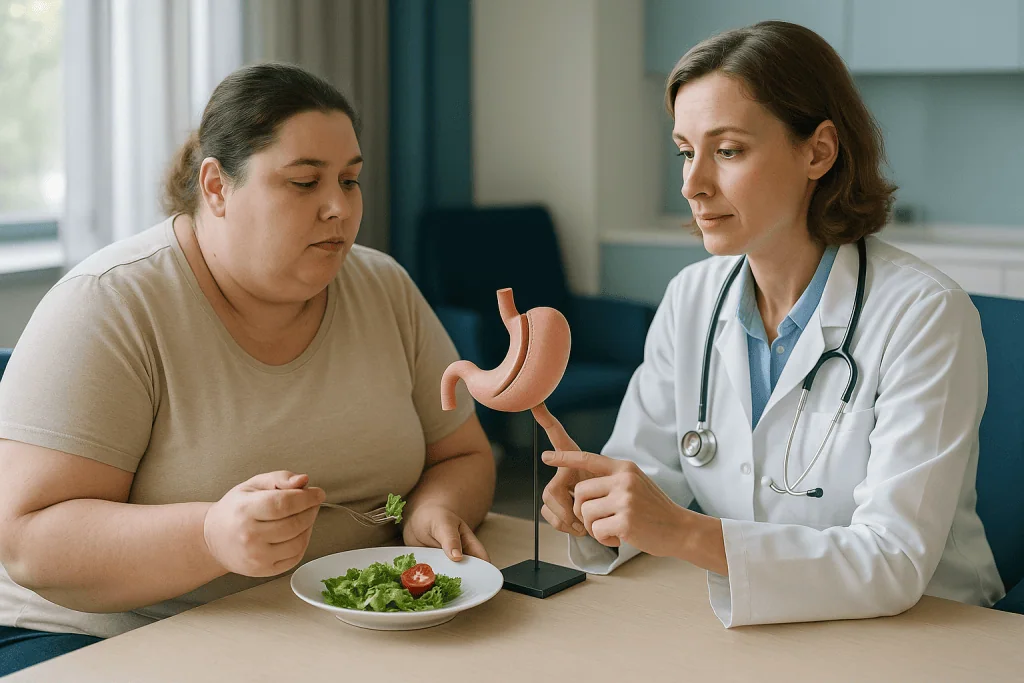
Almost all sleeves are done laparoscopically, meaning through several small incisions with a camera and long instruments rather than one large cut. Mayo Clinic notes the operation itself typically takes one to two hours under general anesthesia.
The obvious effect is mechanical: a smaller stomach fills sooner, so meals become small by necessity. The less obvious effect is hormonal, and many researchers think it is the more important one. The removed portion of the stomach produces most of the body’s ghrelin, a hormone that signals hunger to the brain. With that tissue gone, baseline hunger typically drops, and food passing faster into the intestine changes the release of other gut hormones that influence fullness and blood sugar. NIDDK summarizes this as surgery working partly by changing hormones, not just by restricting volume.
Because the operation removes stomach tissue rather than placing a device, it cannot be reversed. That permanence is one reason the recommendation threshold is high, and one reason teams spend months on assessment before scheduling anything.
What a sleeve does not do is change the absorption of nutrients as dramatically as a bypass. That is both an advantage, with fewer deficiency problems on average, and a limitation, since the metabolic effects on conditions like diabetes tend to be somewhat smaller than with bypass in comparative studies.
Gastric sleeve BMI requirements: how many pounds overweight do you have to be?
People search this question in pounds, but clinicians answer it in BMI, because the same number of excess pounds means something different on a 5-foot frame than on a 6-foot one. The CDC’s adult BMI calculator does the arithmetic, and a couple of worked examples make the thresholds concrete.
For an adult who is 5 feet 9 inches tall, a BMI of 40 corresponds to roughly 270 pounds, and a BMI of 35 to roughly 237 pounds. For someone 5 feet 4 inches tall, those same cutoffs land at about 233 pounds and 204 pounds. So there is no single answer to ‘how many pounds overweight’; a person could meet the surgical threshold at 200 pounds or not meet it at 260, depending on height.
The thresholds also shift with health status. The NHS lists BMI 40 or more as a qualifying level on its own, and 35 to 40 when a weight-related condition could improve with weight loss. The NHS further notes that surgery may be considered at a BMI of 30 to 34.9 for people with recent-onset type 2 diabetes, reflecting evidence that metabolic surgery can have strong effects on blood sugar in that group. Some guidance applies lower BMI cutoffs for people of South Asian, Chinese, other Asian, Middle Eastern, Black African or African-Caribbean background, because health risks from excess weight appear at lower BMI values in these populations.
BMI is a screening tool with known blind spots. It cannot distinguish muscle from fat, and it says nothing about where fat is stored. For that reason, teams usually pair it with waist measurement, blood tests and a thorough look at existing conditions. A BMI that technically qualifies is the beginning of a conversation, not the end of one.
What 'lifestyle measures have been tried' really means to a doctor
The phrase sounds like a box to tick. In practice, it describes something more specific: a sustained, supported attempt at change, usually lasting months rather than weeks, and usually documented. The NHS describes this as having tried all appropriate non-surgical measures without achieving or keeping clinically beneficial weight loss.
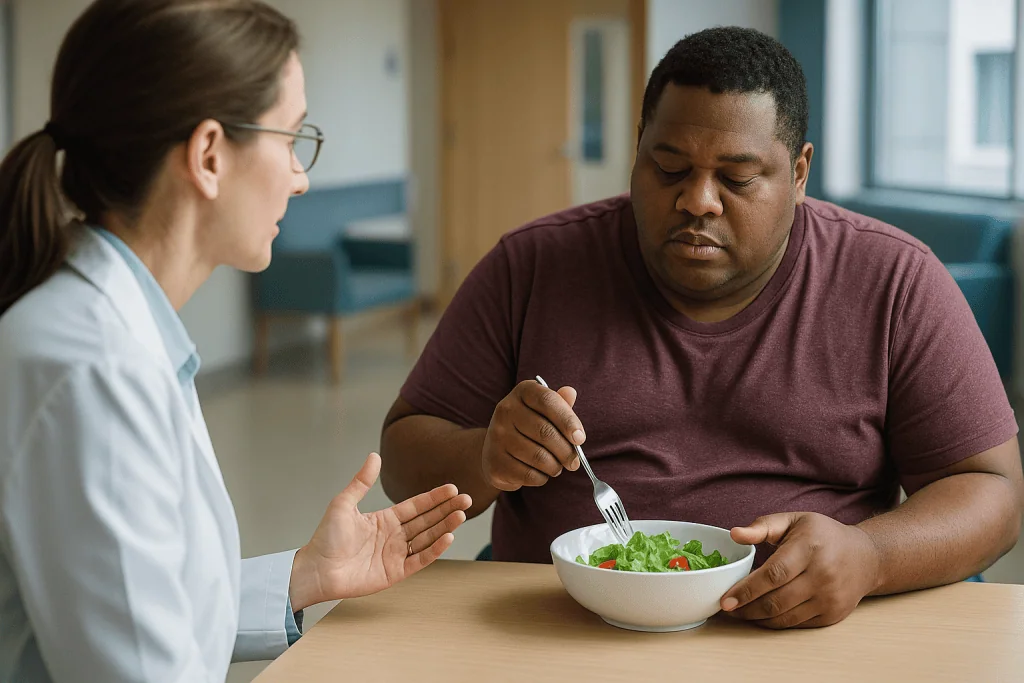
What counts? Typically a structured program that combined dietary change, physical activity and behavioral support, often with a dietitian or in a group setting. A series of self-directed diets that each lasted a few weeks is a different thing from six to twelve months in a program with regular check-ins, and assessment teams know the difference. Many health systems, including the NHS, expect people to have taken part in a specialist weight management service before referral for surgery.
The reasoning here is not moral. Nobody is being asked to prove effort before being ‘allowed’ an operation. The point is clinical. Someone who has not yet had access to good non-surgical support may do well with it and avoid a permanent procedure. Someone who has had that support and still regained weight is demonstrating the biology that surgery is designed to address. Harvard Health has written about how the body defends its weight after dieting, with metabolism slowing and hunger hormones rising, which is why repeated regain is a predictable physiological response rather than a personal failing.
Documentation matters for a practical reason too: insurers and public health systems often require it. If you are at the stage of wondering about surgery, keeping a record of what you have tried, for how long, and with what result will make the assessment smoother and the conversation more honest in both directions.
Who is usually a candidate, and who is usually asked to wait
Meeting the BMI criteria and having tried non-surgical options puts someone in the group a team will assess. Within that group, certain features make a sleeve more likely to be recommended and others make the team pause.
Features that tend to support going ahead include a weight-related condition that is likely to improve with substantial weight loss, a stable understanding of what the operation does and does not do, the capacity to attend long-term follow-up, and readiness to change eating habits permanently. The NHS lists being generally fit enough to have anesthesia and surgery, and committing to long-term follow-up, as core expectations.
Reasons a team may ask someone to wait, or to address something first, commonly include:
- Uncontrolled psychiatric illness or an active eating disorder, where surgery could destabilize things further; psychological assessment is a standard part of the pathway for this reason.
- Current alcohol or substance use disorder, since some studies have found changes in alcohol metabolism and risk after bariatric surgery.
- Severe acid reflux or confirmed Barrett’s esophagus, because a sleeve can worsen reflux; a bypass may be discussed instead.
- Medical conditions that make general anesthesia unusually risky until they are better controlled.
- Planning a pregnancy soon; the NHS advises avoiding pregnancy for 12 to 18 months after surgery while weight is changing rapidly.
- Smoking, which raises the risk of leaks and wound problems; most programs ask people to stop well before the operation.
Being asked to wait is rarely a ‘no’. More often it is a ‘not yet, and here is what we will work on together’. The treating team makes that call, and a good one explains the reasoning so that the path forward is clear.
Where weight-loss medicines fit before surgery is considered
Medicines have changed this conversation. A newer class of drugs, the GLP-1 receptor agonists, mimics a gut hormone that slows stomach emptying and signals fullness to the brain. In clinical trials these produced average weight losses well beyond older medicines, and many people now ask whether they should be tried before, or instead of, surgery.
The honest answer is that guidelines are still catching up, and decisions rest with the prescribing clinician. A few points are reasonably settled. Medicines are generally considered as an addition to lifestyle treatment, not a replacement for it. Their effects depend on continued use; studies that followed people after stopping found that much of the lost weight returned over the following year. They have side effects, mainly gastrointestinal, that lead some people to stop. And they do not suit everyone, including people with certain medical histories.
Surgery produces, on average, larger and more durable weight loss than any current medicine, which is why NIDDK describes it as the most effective treatment for severe obesity. Yet surgery carries risks medicines do not, and it is permanent. The two are increasingly used together rather than framed as rivals: medicines before surgery to reduce liver size or improve fitness for anesthesia, or after surgery if weight regain occurs years later.
What this means for the recommendation question is that a team may reasonably suggest a trial of medical treatment before surgery, especially at the lower end of the BMI range. Equally, for someone with a very high BMI and advancing complications, a team may judge that the window for waiting is narrow. Neither path is wrong in principle. The right one depends on the individual, and the prescribing clinician, not an article, decides whether and how any medicine is used.
Gastric sleeve vs bypass: how teams choose between them
Once surgery is on the table, the next fork is which operation. The gastric bypass (Roux-en-Y) creates a small stomach pouch and connects it directly to a lower part of the small intestine, so food skips most of the stomach and the first segment of intestine. The sleeve, as described above, narrows the stomach without rerouting anything. Randomized trials comparing the two have generally found that bypass produces somewhat greater weight loss and stronger effects on diabetes and reflux, while the sleeve has a simpler anatomy, fewer nutritional complications and lower rates of certain late problems such as internal hernias and ulcers.
| Factor | Gastric sleeve | Gastric bypass |
|---|---|---|
| What is done | About 80% of stomach removed; no rerouting | Small pouch created; intestine rerouted |
| Reversible | No | Technically possible but complex |
| Effect on acid reflux | Can worsen or cause it | Usually improves it |
| Nutrient absorption | Mostly preserved | Reduced; lifelong supplements essential |
| Dumping syndrome | Less common | More common |
| Typical weight loss | Substantial | Somewhat greater on average |
| Diabetes effect | Strong | Generally stronger |
So, do you lose weight faster with sleeve or bypass? Early on, the trajectories look similar, with rapid loss over the first six to twelve months in both, as the NHS describes for weight-loss surgery generally. Over several years, the comparative trials tilt modestly toward bypass. The gap is real but smaller than many people expect, and it is one factor among many. A person with severe reflux may be steered toward bypass; someone with a history of intestinal surgery, inflammatory bowel disease or a need to take certain anti-inflammatory medicines long term may be steered toward a sleeve. The surgeon weighs these trade-offs with the patient, and the choice belongs to that conversation.
What is the downside of gastric sleeve surgery?
Every recommendation for a sleeve is also a recommendation to accept its drawbacks. Being clear about them is part of informed consent, and it is where honest explainers earn their keep.
Acid reflux is the headline downside. Narrowing the stomach raises pressure inside it, and some people who never had heartburn develop it, while others find existing reflux gets worse. Mayo Clinic and Cleveland Clinic both list gastroesophageal reflux disease (GERD, chronic backflow of stomach acid into the esophagus) among the longer-term risks. Some of these people eventually need conversion to a bypass.
Irreversibility is the second. The removed stomach tissue does not grow back. If results disappoint or complications arise, the options are revision to another operation, not a return to the original anatomy.
Early surgical risks are those of any major abdominal operation plus a few specific ones. Mayo Clinic lists bleeding, infection, blood clots, adverse reactions to anesthesia, breathing problems and leaks from the staple line as short-term complications. A staple-line leak is uncommon but serious, which is why teams watch closely for fever and a racing heart in the first weeks.
Longer-term concerns include narrowing of the sleeve (stricture), gallstones as weight falls quickly, low blood sugar episodes, hernias and nutritional deficiencies. The NHS notes that people will need vitamin and mineral supplements for the rest of their lives and regular blood tests to check levels.
Then there are the downsides that are harder to tabulate: a permanently small appetite that changes how holidays and restaurants feel, excess skin after large weight loss, and the emotional work of adjusting to a different body and a different relationship with food. Weight regain over the years is possible, and the NHS is explicit that surgery is a tool that only works alongside sustained lifestyle change.
The assessment pathway: what the months before surgery look like
The gap between a first referral and an operating date is usually measured in months, and that is by design. Assessment is where the recommendation is actually made, refined or withdrawn.
Most programs begin with a medical evaluation covering heart and lung function, blood sugar, liver tests, vitamin levels and, often, screening for sleep apnea with an overnight study. Many people are found to have conditions they did not know about, and treating those first can make surgery safer.
A dietitian assessment follows or runs alongside. This is not a test to pass; it is where people learn the specific eating pattern they will need afterward: small portions, protein first, slow chewing, separating drinks from meals. Mayo Clinic notes that some people are asked to follow a particular diet in the weeks before surgery, partly to shrink the liver, which sits over the stomach and makes the operation technically easier when smaller.
Psychological assessment is standard. Its purpose is to identify untreated depression, disordered eating, substance use or unrealistic expectations, and to connect people with support where needed. Teams are looking for readiness, not perfection.
Finally there is a consent discussion with the surgeon, where the specific operation, its risks and the alternatives are laid out. This is the moment to raise doubts. A reputable program would rather hear hesitation beforehand than regret afterward.
Throughout this process the team may decide that a sleeve is the right recommendation, that a bypass fits better, that more time with medical treatment is wiser, or that surgery is not appropriate at present. All of those are legitimate outcomes of a good assessment, and the decision rests with the treating team working together with the patient.
What the first days and weeks after a gastric sleeve usually look like
Recovery has a fairly predictable rhythm, though every surgeon’s protocol differs slightly and the team’s instructions always take precedence over general descriptions.
Most people wake with several small dressings on the abdomen and a sore, tight feeling across the upper belly. Walking starts the same day or the next morning; it is the single most effective thing a patient can do to lower the risk of blood clots and lung complications. Mayo Clinic describes a typical hospital stay of one to two nights, while MedlinePlus notes some people stay longer depending on recovery.
Eating restarts in stages. Mayo Clinic outlines a common sequence: sugar-free, non-carbonated liquids for about the first seven days, then pureed foods for roughly three weeks, then a gradual return to regular foods around four weeks after surgery. Portions are tiny at every stage, and sipping slowly through the day replaces drinking with meals. Nausea and a feeling of fullness after a few spoonfuls are expected early on.
Pain usually eases substantially within the first week. Many people return to desk-based work within two to four weeks, with heavier physical activity delayed longer; the exact timing is set by the surgical team based on how the incisions are healing.
Appetite often feels strangely absent in these early weeks, which can be disorienting after years of hunger. Hair thinning a few months later is common and usually temporary, linked to rapid weight loss and protein intake. Follow-up appointments cluster in the first year; the NHS advises that people are seen regularly and have check-ups for at least two years, with lifelong supplement use and periodic blood tests. Keeping these appointments is part of what makes the operation work over time.
Life 2 years after gastric sleeve: what tends to happen
Two years is a meaningful marker because, for most people, the steep part of the weight-loss curve has flattened by then. The NHS describes rapid loss over the first six to twelve months and slower loss thereafter, and Mayo Clinic notes that people may lose a large share of their excess weight within two years. Where someone lands at that point tends to be close to their new long-term weight, give or take.
Health changes are often the more striking story. NIDDK reports that bariatric surgery may improve or resolve conditions related to obesity, including type 2 diabetes, high blood pressure, sleep apnea and joint pain, though outcomes vary and not everyone sees the same effects. Many people find their need for certain medicines changes; any adjustment to prescribed treatment is made by the prescribing clinician, not by the patient, and the two-year review is a natural point to revisit it.
This is also when the long-term work becomes visible. The small stomach stretches slightly over time, and appetite can return to some degree. People who have kept up with follow-up, protein-forward eating and activity usually hold their weight well; those who have drifted may notice regain beginning. Cleveland Clinic and the NHS both describe weight regain as a possibility, and a reason to stay connected with the bariatric team rather than disappearing after year one.
Nutrition checks matter here. Deficiencies in iron, vitamin B12, vitamin D and folate can develop slowly and silently, which is why blood tests continue. Some people consider body-contouring surgery for excess skin around this time; that is a separate decision with its own assessment.
Emotionally, two years out is often when the novelty has worn off and the identity shift settles in. Support groups and psychological follow-up remain available in most programs for exactly this stage.
What people often get wrong about when a gastric sleeve is recommended
Myths cluster around this topic, and some of them stop people from asking a question they are entitled to ask.
‘Surgery is the easy way out.’ The evidence runs the other way. Surgery requires months of assessment, a permanent change to the body, lifelong supplements and sustained habit change. Harvard Health and NIDDK both frame obesity as a chronic condition with strong biological drivers, and surgery as a medical treatment for it, not a shortcut around effort.
‘You have to be a certain number of pounds overweight.’ As explained earlier, eligibility rests on BMI and health conditions, not a pound count. Two people with identical excess weight can fall on opposite sides of the threshold because of height.
‘If I qualify, surgery will be recommended.’ Qualifying opens assessment. Teams regularly recommend waiting, choosing a different operation or continuing medical treatment.
‘The sleeve is the safe, minor option.’ It is less complex than a bypass, but it is still major abdominal surgery with real risks, including reflux and staple-line leaks, and it cannot be undone.
‘Doctors recommend surgery to people who have not really tried.’ Guidelines explicitly require prior non-surgical attempts, and most programs document them.
‘Weight-loss medicines have made surgery unnecessary.’ Medicines have expanded the options, but surgery remains the most effective treatment for severe obesity in current evidence, and the two are increasingly used in sequence.
‘After surgery, weight loss is guaranteed and permanent.’ Results vary, regain is possible, and outcomes depend heavily on follow-up and lifestyle. No reputable team promises a number.
Clearing these away does not make the decision simpler, but it makes it more honest, which is the better foundation.
Questions to ask your care team
A good consultation is a two-way exchange. Arriving with questions signals readiness and helps the team tailor the recommendation. Consider asking the following, and writing down the answers.
- Based on my BMI and health conditions, which guideline criteria do I meet, and which do I not?
- What non-surgical options have I not yet tried that you think are worth attempting first?
- Why are you suggesting a sleeve rather than a bypass, or the reverse, for me specifically?
- Do I have reflux or any other finding that changes which operation suits me?
- What are the most likely complications in my case, and how would I recognize them?
- What does your program’s follow-up look like at one, two and five years, and who will I see?
- Which vitamins and minerals will I need to monitor, and how often will blood tests happen?
- How might my current prescribed medicines need to be reviewed after surgery, and who manages that?
- What support is available if I struggle emotionally or with eating patterns afterward?
- If I regain weight in later years, what options would be open to me?
- What would make you advise me to wait or not proceed?
Notice that several of these questions invite the team to argue against surgery. That is deliberate. A program confident in its recommendation will answer them openly, and the answers tell you as much about the team as about the operation.
Bring someone with you if you can. People retain more from consultations when a second set of ears is present, and the person who will support you at home benefits from hearing the plan firsthand. Finally, ask for written information to take away. The decision to proceed, defer or decline rests with you and your treating team together, and it is a decision best made slowly.
When to call your doctor
Red flags exist at every stage of this journey, not only after an operation.
Before surgery is even discussed, seek urgent care for chest pain or pressure, sudden breathlessness, fainting, or signs of stroke such as facial drooping, arm weakness or slurred speech. These are emergencies in anyone, and excess weight raises the background risk. Arrange a prompt, non-emergency appointment if you have loud snoring with daytime sleepiness, increasing thirst and urination, or persistent swelling of the legs, since these may point to sleep apnea, diabetes or heart strain that needs assessment regardless of any surgical plans.
In the first weeks after a sleeve, contact the surgical team or seek emergency care without delay for any of the following, which Mayo Clinic, Cleveland Clinic and MedlinePlus associate with serious complications:
- Fever, or a heart rate that stays fast at rest, especially with worsening abdominal pain or pain spreading to the left shoulder, which can signal a staple-line leak
- Shortness of breath, chest pain, or coughing up blood, which may indicate a blood clot in the lungs
- Pain, warmth or swelling in one calf
- Vomiting that prevents you from keeping down fluids, or signs of dehydration such as very dark urine, dizziness and dry mouth
- Black or bloody stools, or vomiting blood
- Redness, spreading warmth or discharge from an incision
- Severe or worsening abdominal pain not relieved by prescribed measures
In the months and years afterward, book an appointment for persistent heartburn or regurgitation, food repeatedly getting stuck, unexplained fatigue or tingling in hands and feet (possible vitamin deficiency), repeated episodes of shakiness and sweating after meals, or steady weight regain. None of these is an emergency, but all deserve evaluation. When in doubt, call; bariatric teams would far rather hear about a false alarm than miss a real one.
Frequently asked questions
When is gastric sleeve recommended over trying another diet?
A sleeve is usually recommended when BMI is 40 or higher, or 35 or higher with a weight-related condition, and a structured program of diet, activity and behavioral support has already been completed without lasting results. The key word is lasting. Teams look for evidence that weight has been lost and regained despite proper support, since that pattern reflects biology that surgery is designed to address. The final decision rests with a multidisciplinary team after full assessment.
What are the gastric sleeve BMI requirements?
The standard thresholds are a BMI of 40 or more on its own, or 35 to 39.9 with a condition such as type 2 diabetes, high blood pressure or sleep apnea. The NHS also notes that surgery may be considered at BMI 30 to 34.9 for people with recent-onset type 2 diabetes, and some guidance uses lower cutoffs for people of certain ethnic backgrounds. BMI qualifies someone for assessment; it does not by itself mean surgery will be offered.
How many pounds overweight do you have to be to get the gastric sleeve?
There is no fixed pound figure because eligibility is based on BMI, which depends on height. For a person 5 feet 9 inches tall, a BMI of 40 is about 270 pounds and a BMI of 35 about 237 pounds. At 5 feet 4 inches, those same cutoffs are about 233 and 204 pounds. The CDC’s adult BMI calculator gives an exact figure for any height and weight, and your clinician will interpret it alongside your health history.
What is the downside of gastric sleeve surgery?
The main downsides are new or worsened acid reflux, permanence (the removed stomach cannot be restored), and the usual risks of major surgery such as bleeding, infection, blood clots and staple-line leaks. Longer term, people need lifelong supplements and blood tests, may develop gallstones or strictures, and can regain weight if follow-up and lifestyle changes lapse. Excess skin and the emotional adjustment to a permanently small appetite are also real, if less often discussed.
What happens 2 years after gastric sleeve?
By two years most people have passed the rapid weight-loss phase and are near their new long-term weight, with the NHS describing the steepest loss in the first six to twelve months. Many see improvement in conditions such as type 2 diabetes, blood pressure and sleep apnea, though results vary. This is also when the stomach may have stretched slightly and appetite can partly return, so continued follow-up, nutrition checks and habit maintenance matter most at this stage.
Gastric sleeve vs bypass: which do doctors recommend more often?
The sleeve is currently the most commonly performed weight-loss operation in the United States, according to NIDDK, largely because it avoids rerouting the intestine and carries fewer nutritional complications. Bypass tends to produce somewhat greater weight loss and better results for reflux and diabetes in comparative trials. Surgeons choose based on the individual: severe reflux often favors bypass, while prior intestinal surgery or a need for certain long-term medicines may favor a sleeve.
Do you lose weight faster with gastric sleeve or bypass?
In the first several months the pace of loss is broadly similar for both operations, with rapid change in the first six to twelve months. Over several years, randomized trials have shown modestly greater average weight loss with bypass, though the difference is smaller than many expect and varies widely between individuals. Speed is rarely the deciding factor; reflux history, nutritional risk, other medical conditions and personal preference carry more weight in the recommendation.
Can I have a gastric sleeve if I have acid reflux?
Possibly, but it is one of the findings most likely to change the recommendation. A sleeve raises pressure inside the narrowed stomach and can worsen existing reflux or cause it in people who never had it. For someone with significant reflux, or with Barrett’s esophagus (precancerous change in the esophageal lining caused by chronic acid exposure), teams often discuss a gastric bypass instead, since bypass usually improves reflux. Your surgeon may order an endoscopy to check before deciding.
Should I try weight-loss medicine before considering a sleeve?
Many teams do suggest a trial of medical treatment first, particularly at the lower end of the eligible BMI range, because newer GLP-1 medicines can produce meaningful weight loss alongside lifestyle change. Their effects depend on continued use, and surgery remains the most effective treatment for severe obesity in current evidence. Whether a medicine is appropriate, and for how long, is a decision for your prescribing clinician based on your full medical picture.
What makes a doctor say no, or not yet, to a gastric sleeve?
Common reasons to delay include an active eating disorder or unstable mental health, current alcohol or substance use disorder, smoking that has not yet stopped, medical conditions that make anesthesia unusually risky until controlled, severe reflux better suited to a different operation, or plans to become pregnant within the next 12 to 18 months. A ‘not yet’ usually comes with a plan to address the issue and reassess, rather than a permanent refusal.
References
- NHS: Weight loss surgery
- NIH NIDDK: Bariatric Surgery
- MedlinePlus: Vertical sleeve gastrectomy
- Cleveland Clinic: Gastric Sleeve Surgery
This article is for general information only and is not a substitute for professional medical advice. Please consult a qualified doctor about your individual situation.

More from the Blog

How Is a Mini Gastric Bypass Performed? The Pouch, the Loop and the Laparoscopic Steps
A mini gastric bypass, also called a one-anastomosis gastric bypass, is performed laparoscopically through a few small abdominal incisions. The surgeon staples the stomach…

What Does Gradual Weight Reduction With a Gastric Band Realistically Look Like Over Time?
With an adjustable gastric band, weight comes off slowly over about two years rather than in months, and long-term studies with 10 to 15…

Preparing for Robotic Bariatric Surgery: Sleep Study, Endoscopy and the Dietitian Visit
Preparing for robotic bariatric surgery usually involves three core steps: a sleep study to check for obstructive sleep apnea so anesthesia can be planned…
Long-Term Obesity Management: How Follow-Up Visits Keep Lifestyle Changes on Track
Long term obesity management works best as ongoing care rather than a single push. Regular follow-up visits let a care team track weight, waist…

Gastric Bypass vs Gastric Sleeve: Why Reflux, Diabetes and Eating Habits Shape the Choice
For people with established acid reflux, gastric bypass is usually favored over a gastric sleeve, because the small pouch produces little acid and the…
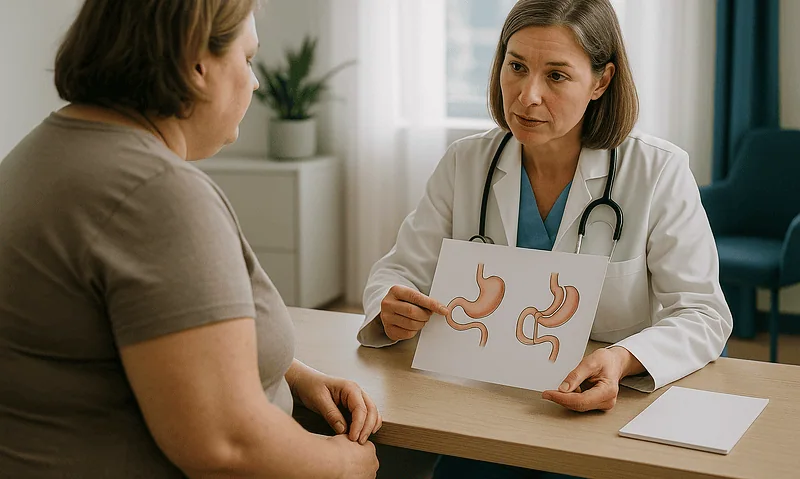
Mini Gastric Bypass vs Standard Gastric Bypass: One Connection or Two, and Why It Matters
A mini gastric bypass (one anastomosis gastric bypass) joins a long, narrow stomach pouch to the small intestine with a single connection, while a…