

Who Is a Candidate for an Arm Lift? Loose Upper-Arm Skin, Weight Stability and Skin Quality

Key Takeaways
- An arm lift removes excess skin, not primarily fat, so a full but firm arm with elastic skin usually points toward liposuction or exercise rather than brachioplasty.
- Surgeons care less about a target weight than about a weight that has stopped moving, because further loss or gain after surgery loosens or strains the tightened skin around a permanent scar.
- After bariatric surgery most weight loss happens within the first one to two years, according to NIDDK, which is why arm contouring is typically deferred until that phase has clearly ended.
- Skin elasticity is tested by pinching and releasing: skin that snaps back may retract after fat removal alone, while skin that hangs or drifts back slowly needs to be physically excised.
- The Mayo Clinic advises keeping the arms below shoulder level for about three to four weeks and avoiding arm-stretching exertion for roughly four to eight weeks after an arm lift.
- No mainstream guideline sets an ideal age for brachioplasty; readiness is defined by stable weight, controlled health, not smoking and acceptance of a lifelong visible scar.
An arm lift candidate is usually an adult whose upper-arm looseness comes mainly from excess skin rather than fat alone, whose weight has held steady for several months, who does not smoke, and who is in good general health with realistic expectations about a permanent, visible scar. People still losing weight, smoking, or managing uncontrolled medical conditions are commonly asked to wait, and the surgical team makes the final decision.
The moment usually arrives in a changing room. A sleeveless dress that fits everywhere else, an arm raised to check the shoulder seam, and a fold of skin that keeps moving after the arm has stopped. For many people it follows a hard-won weight loss; for others it is simply the way their arms have changed with the decades. Either way, the question forms quickly: could surgery fix this, and would I even be an arm lift candidate?
The honest answer is more interesting than a yes or no. Surgeons do not select patients by how much the skin hangs. They look at three things in a particular order: what the looseness is made of, whether the body underneath it has stopped changing, and how the skin itself is likely to behave once it is cut, tightened and stitched.
That is the framework this article follows. It will not tell you whether you should have the operation. It will show you how the people who perform it think, so that a consultation feels like a conversation rather than a verdict.
What an arm lift actually does to loose upper-arm skin
An arm lift, known medically as a brachioplasty, is an operation that removes surplus skin and a measured amount of fat from the underside of the upper arm and then closes the remaining tissue more snugly around the muscle. Nothing is lifted in the everyday sense; the word describes the tightened result, not the technique.
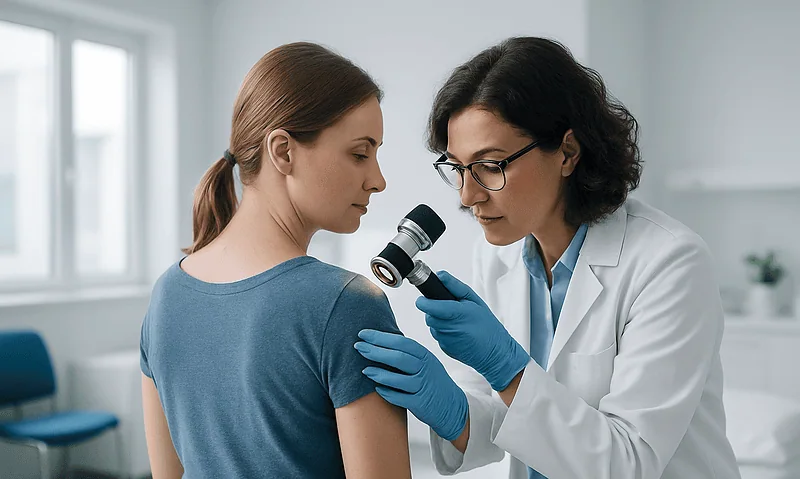
The surgeon draws the planned incision while the patient is standing or sitting, because skin drapes differently once someone lies down. The most common cut runs along the inner arm from near the armpit toward the elbow, placed where the arm naturally rests against the body. A shorter version confined to the armpit crease is sometimes used when the loose skin sits high, and an extended version may continue onto the chest wall when laxity spills past the armpit.
Under general anesthesia or deep sedation, the marked skin is excised, the underlying fatty layer is trimmed or suctioned, and the deeper connective tissue is stitched to take tension off the skin edges. Surgeons sometimes combine the procedure with liposuction, a technique that removes fat through thin tubes, to thin the arm before the skin is closed. The Mayo Clinic notes that this pairing is common when excess fat and excess skin coexist.
The trade is explicit: a smoother contour in exchange for a scar that never fully disappears. Over a year or more it usually fades from red to pale, but it remains a line on the arm. Understanding that exchange is the first, unglamorous test of candidacy, because a person who cannot accept the scar is not well served by the operation, however loose the skin.
Who is usually an arm lift candidate, and who is asked to wait
Across mainstream guidance the profile of a typical arm lift candidate is consistent. The Mayo Clinic describes someone with significant upper-arm sagging that has not responded to exercise, a body weight that is relatively stable, no smoking habit, no medical conditions that impair healing, and a realistic picture of what surgery can and cannot do.

Each item earns its place for a mechanical reason. Loose skin that persists after strength training suggests the skin envelope, not the muscle beneath it, is the problem. Stable weight means the arm the surgeon measures is the arm the scar will have to fit. Not smoking matters because nicotine narrows the tiny vessels that feed a long, thin flap of skin. Well-controlled health means the body can mount an orderly healing response along an incision that may be longer than a forearm.
The people asked to wait are usually not refused; they are redirected. Someone still losing weight is asked to come back once the scale has settled. A smoker is asked to quit for a sustained period first. A person with poorly controlled diabetes, an active infection, or an untreated clotting disorder is referred back to their physician before any plan is made. The NHS advises that anyone considering a cosmetic procedure should first discuss it with their general practitioner and take time before committing.
There is a softer category too: people whose expectations are anchored to a photograph rather than to their own anatomy, or who hope the operation will resolve a distress that has more to do with self-image than with skin. A thoughtful surgeon treats that as a reason to slow down, not as a rejection.
Is it skin, fat, or muscle? Sorting out what is sagging
Three tissues can make an upper arm look heavy or loose, and each responds to a different remedy. Confusing them is the most frequent reason people arrive at a consultation expecting one operation and leave discussing another.
Muscle is the innermost layer. When the triceps at the back of the arm loses tone, the arm looks softer but the skin still snaps back when pinched. Strength training can change this picture, which is why surgeons ask what a person has already tried before recommending anything.
Fat sits between muscle and skin. Excess fat with good skin over it produces a full, rounded arm without a hanging fold. Pinch the skin here and it feels thick but springs back; raise the arm and the contour follows. This is the arm that may suit liposuction alone, because removing the fat lets healthy skin retract on its own.
Skin is the outer envelope. When it has been stretched for years, whether by weight, pregnancy or time, the deep layer called the dermis, which provides the skin’s structure and rebound, loses its elastic fibers. The result is the classic sign: a fold that hangs when the arm is held out horizontally and swings independently of movement. Pinch it and it stays pinched for a beat before settling. No exercise rebuilds those fibers, and removing fat beneath already-loose skin can make the fold look emptier. This is the arm that an arm lift is designed for.
Most arms are a blend, which is why the examination involves the surgeon lifting, pinching and watching, not just looking. The proportions of skin to fat, more than the total volume, decide the technique.
Why weight stability matters more than the number on the scale
People often assume there is a weight cutoff for arm surgery. There is no single universal threshold in guideline-level sources; what surgeons care about far more is whether the number has stopped moving.

The logic is geometric. During a brachioplasty the surgeon removes a precise crescent of skin sized to the arm on the operating table. If the patient then loses a further meaningful amount of weight, the fat beneath the tightened skin shrinks and the envelope loosens again, sometimes leaving a visible fold beside a permanent scar. If the patient gains weight, the tightened skin may feel tight or the scar may widen under tension. Either direction undoes work that cannot be repeated without adding scar.
How long is long enough? Sources differ on the exact interval, and no fixed period is written into international guidance. The practical principle is that a person’s weight should have been steady for a period of months, and for those who have had bariatric surgery, the National Institute of Diabetes and Digestive and Kidney Diseases notes that most weight loss occurs during the first one to two years after the operation, which is why contouring is usually deferred until that phase has clearly ended.
Stability is also a health signal. Steady weight usually means eating patterns, activity and any medications have settled into a sustainable rhythm, and that the body is not in the catabolic state of active weight loss, when protein reserves needed for wound healing may be low. Surgeons sometimes ask for blood tests to check iron, protein and vitamin levels before scheduling, particularly after bariatric surgery, where deficiencies are common.
The takeaway is not to chase a target weight before a consultation. It is to arrive at a weight you can honestly say you have kept.
Skin quality: what surgeons look for when they pinch and pull
Two arms can hold the same amount of loose skin and be entirely different surgical propositions, because skin quality decides how the tissue will heal, how the scar will settle and how long the result will hold.
Elasticity comes first. The surgeon lifts the fold and lets go, watching how quickly the skin returns. Skin that snaps back may respond to fat removal alone; skin that drifts back slowly or hangs is telling you its elastic fibers are depleted and will need to be physically excised. Elasticity falls with age, with years of sun exposure, with smoking, and with prolonged stretching from weight, so a younger person who has lost a great deal of weight may present with skin that behaves older than they are.
Thickness matters next. Thin, crepe-like skin bruises more readily, tolerates tension poorly and can make a scar more conspicuous. Thicker skin holds sutures well but may heal with a raised scar in some people, particularly those with a history of keloids, which are scars that grow beyond the original wound.
Stretch marks are a visible record of dermal tearing. They do not rule anyone out, but they warn the surgeon that the remaining skin has limited reserve and that some marks will remain after the loose portion is removed.
Skin condition rounds out the picture. Chronic rashes in the armpit fold, fungal infection where skin rubs against skin, or areas of previous surgery all influence where an incision can safely go. The Mayo Clinic lists problems with wound healing and stitches among the specific risks of an arm lift, and skin that is already inflamed raises that risk.
A consultation that skips this hands-on assessment and moves straight to scheduling is a consultation worth questioning.
Brachioplasty candidate after major weight loss
Large weight loss, whether through lifestyle change, medication or bariatric surgery, produces a distinctive kind of arm. The skin envelope built to contain a larger body remains after the volume inside it has gone, and it rarely retracts fully once the stretch has lasted years. This is the group for whom the brachioplasty candidate question arises most often, and for whom the assessment is most careful.
The first hurdle is timing, covered above: the weight curve should be flat, not still descending. The second is nutrition. After bariatric procedures the body absorbs less protein, iron, vitamin B12, vitamin D and other nutrients, and NIDDK guidance emphasizes lifelong monitoring and supplementation. Low protein slows collagen production; low iron impairs oxygen delivery to a healing wound. Surgeons commonly ask that these levels be checked and corrected in partnership with the bariatric or primary care team before any skin surgery is planned.
The third consideration is extent. People who have lost a great deal of weight often have loose skin in several regions, and the arm may be one item on a longer list. Deciding which area to address first, and whether to combine procedures, involves weighing operating time, anesthesia exposure and recovery demands against the benefit of fewer separate recoveries. There is no universally correct sequence; it depends on what troubles the person most and what their health can safely support.
The fourth is the skin itself. Post-weight-loss skin is often thin, inelastic and marked, so the fold removed tends to be large and the resulting scar long, sometimes extending onto the chest wall. Candidates in this group are usually excellent anatomical matches for the operation precisely because their problem is almost entirely skin, but they need the most thorough conversation about scars.
Arm lift vs liposuction: which approach fits which arm
The arm lift vs liposuction question comes up in nearly every consultation, and the answer is rarely one or the other. It hinges on the ratio of skin to fat and on how much the skin can be trusted to shrink.
| Feature | Liposuction alone | Limited arm lift | Full or extended arm lift |
|---|---|---|---|
| Main problem | Excess fat, skin still elastic | Mild loose skin near armpit | Loose skin along the whole upper arm |
| Incisions | Small puncture sites | Short scar hidden in armpit crease | Scar from armpit toward elbow, sometimes onto chest |
| What it cannot do | Tighten skin that has lost elasticity | Remove laxity lower on the arm | Avoid a visible scar |
| Typical combination | Sometimes alone | Often with liposuction | Often with liposuction |
Liposuction removes volume through thin tubes and relies on the skin to contract afterward. In an arm with good elasticity, that contraction happens over the following months and the result can be a slimmer arm with almost no scar. In an arm whose skin already hangs, removing the fat beneath it deflates the fold without tightening it, and the appearance can worsen.
A limited arm lift suits the person whose laxity gathers high, near the armpit, and who would trade a modest improvement for a hidden scar. A full brachioplasty is for the arm where skin hangs along its length. The Mayo Clinic notes that liposuction is frequently used alongside an arm lift so that the fatty layer is thinned before the skin is closed, which lets the surgeon remove skin more predictably.
The decision belongs with the surgeon after a physical examination. What a patient can do beforehand is understand that asking for liposuction to avoid a scar is only realistic when the skin has the elasticity to reward it.
Is there an alternative to brachioplasty?
Yes, though every alternative comes with a ceiling on what it can achieve, and being honest about that ceiling is a service, not a discouragement.
Strength training is the first alternative for arms whose fullness is partly muscular softness. Building the triceps and shoulder can firm the arm’s shape and improve how skin drapes over it. It does not rebuild lost elastic fibers, so a true hanging fold will persist, but many people find that a stronger arm changes how they feel about the residual skin.
Liposuction alone is the alternative for the fat-dominant arm with elastic skin, as the previous section explained. It is a smaller operation with a shorter recovery, but selecting it for skin-dominant laxity trades one dissatisfaction for another.
Nonsurgical skin-tightening devices, which deliver radiofrequency or ultrasound energy to heat the deeper skin layers and prompt collagen remodeling, are widely marketed. The evidence base is mixed. Studies tend to be small, industry-linked and short in follow-up, and the changes reported are generally modest and temporary. These treatments have not been shown in high-quality trials to produce the degree of tightening that excising skin achieves, and no mainstream guideline recommends them as a substitute for surgery in someone with a hanging fold. They may have a role for very mild laxity or for people who will not accept a scar, provided expectations are set accordingly.
Doing nothing is also a legitimate alternative, and a surgeon should say so. Loose upper-arm skin is not a medical hazard in itself. When it causes rashes, chafing or difficulty finding clothing, those are practical problems with practical remedies, from moisture-managing fabrics to barrier creams, and a person is entitled to weigh them against the permanence of surgery and decide the scar is not worth it. The NHS encourages exactly this kind of unhurried reflection before any cosmetic procedure.
How risky is an arm lift? An honest look at complications
An arm lift is elective surgery on healthy tissue, so its risks deserve the same scrutiny as any operation, without either alarm or minimization. The Mayo Clinic groups them into two categories: risks specific to the procedure and general risks shared by all surgery.
Scarring leads the specific list. The incision is long and sits on skin that moves with every reach, so scars can widen, thicken or stay red longer than expected. In some people they become raised or, less commonly, form keloids. The scar is permanent; how it matures is only partly predictable.
Asymmetry is next. Arms are never perfect mirror images, and healing varies from side to side, so small differences in contour or scar position are common and occasionally need a minor revision.
Changes in skin sensation are frequent early on because small sensory nerves in the inner arm run through the operated area. Numbness or tingling usually improves over months, but a patch of altered feeling can persist.
Problems with stitches, wound edges that separate, or fluid collections called seromas, which are pockets of clear fluid under the skin, occur along a long incision in a mobile area. Most are managed in the clinic but can delay healing.
Less common but more serious concerns include lymphedema, a persistent swelling of the arm or hand caused by disruption of lymphatic channels near the armpit, which is why surgeons plan incisions to spare that region where possible.
The general risks are those of any operation under anesthesia: bleeding, including a collection of blood called a hematoma; infection; blood clots in the leg veins, known as deep vein thrombosis; and reactions to anesthetic drugs. Smoking, obesity, diabetes and prior clotting problems raise these risks, which is why they sit at the center of candidacy screening rather than being an afterthought.
Arm lift recovery time: what the first days and weeks look like
Arm lift recovery time is less about pain, which is usually manageable with what the team prescribes, and more about restriction. The incisions run along skin that stretches every time the arm rises, so protecting them shapes daily life for several weeks.
In the first days the arms are wrapped in dressings or a compression garment to limit swelling and support the new contour. Thin drainage tubes are sometimes placed to carry away fluid and are typically removed at an early follow-up visit. Bruising and swelling are expected and can extend toward the elbow and hand. Sleeping with the arms slightly elevated on pillows helps.
The Mayo Clinic advises avoiding lifting the arms above shoulder level for about three to four weeks, and avoiding physical and athletic activities that could stretch the incisions for roughly four to eight weeks. In practice that means someone else washes your hair for a while, high shelves are off limits, and pushing up from a chair is done with the legs. Driving is usually delayed until the arms can move freely and prescription pain medicine is no longer needed, timing the team will confirm.
Desk-based work often resumes within a couple of weeks; jobs involving lifting, reaching or repetitive arm movement take longer and should be discussed in advance.
Scars follow their own, slower calendar. They are typically red and firm for months and continue to soften and fade for a year or more. Sun protection over the scar during this period helps limit lasting discoloration. Swelling can obscure the final shape for several weeks, so judging the result early is unreliable.
These are typical ranges, not promises. Recovery varies with the extent of skin removed, whether liposuction was combined, general health and how faithfully the restrictions are kept.
What is a good age for brachioplasty?
People searching this question usually want a number, and the honest reply is that there is not one. No mainstream guideline sets a minimum or maximum age for brachioplasty in adults. Candidacy is assessed by the tissue and the health of the person, not by the birth date.
That said, age shapes the picture in predictable ways. In younger adults the operation is most often prompted by large weight loss, and the questions are about weight stability, nutrition and the scar’s long life ahead of it on a young arm. Skin quality in this group can be deceptively poor if the stretch was severe, so the examination matters more than the age.
In midlife the trigger is more often gradual laxity as elastic fibers thin with time and sun. Skin may be thinner, healing a little slower, and the decision often sits alongside other considerations such as menopause-related changes, blood pressure or thyroid conditions that the anesthesia team will want controlled.
In older adults there is no ceiling, but the general surgical risks rise with the number of coexisting conditions rather than with age alone. A fit person in their seventies with well-controlled health may be a more straightforward candidate than a younger person who smokes and has uncontrolled diabetes. Surgeons weigh cardiovascular fitness, medications that affect bleeding or clotting, and the ability to manage several weeks of restricted arm use at home.
The question underneath the question is usually whether to act now or wait. Waiting while still losing weight or still smoking is sensible; waiting for a mythical ideal age is not. The better frame is readiness: stable weight, stable health, a clear understanding of the scar and a life that can accommodate the recovery.
What people often get wrong about being an arm lift candidate
Several beliefs circulate widely enough to deserve direct correction, because they send people toward the wrong procedure or the wrong timing.
The first is that an arm lift removes fat. Its purpose is to remove skin. Fat may be reduced alongside it, but a person whose problem is fat with good skin needs a different conversation. Expecting a brachioplasty to slim a full but firm arm leads to a scar without the hoped-for change.
The second is that exercise can tighten loose skin. Muscle can be built and fat can be lost, both of which change how skin sits, but no exercise regenerates elastic fibers in the dermis. Being an arm lift candidate does not mean having failed at the gym; it means the tissue in question was never going to respond to it.
The third is that the scar will disappear. It will fade and flatten over a year or more and is placed where the arm rests against the body, but it remains permanently visible when the arm is raised. Anyone told otherwise should ask to see photographs of scars at a year or more.
The fourth is that a hidden armpit scar can fix the whole arm. The short-scar technique treats laxity near the armpit only. Skin hanging toward the elbow cannot be gathered into that crease without distortion.
The fifth is that a fixed weight or body mass index, which is a ratio of weight to height used to screen for weight categories, decides eligibility. Stability and health matter more than any single figure.
The sixth is that the result is permanent in every sense. The removed skin does not return, but the remaining skin continues to age and will respond to future weight change, which is why the Mayo Clinic frames results as long-lasting rather than fixed.
Questions to ask your care team
A good consultation is a two-way examination. The surgeon is assessing your arms and your health; you are assessing whether their plan matches your priorities and whether their answers hold together. These questions tend to surface the information that matters most.
- Looking at my arms specifically, how much of the looseness is skin and how much is fat, and how does that shape the technique you are proposing?
- Which incision pattern do you recommend for me, where exactly will the scar sit, and can I see photographs of your patients’ scars at one year and beyond, not just early results?
- Do you consider my weight stable enough to proceed, and if not, what would you want to see change and over what period?
- Are there blood tests or medical checks you want before scheduling, particularly if I have had bariatric surgery or have diabetes, thyroid or clotting conditions?
- Which of my current medicines and supplements might need review before surgery, and who coordinates that with my prescribing doctors?
- How will you protect the lymphatic channels near the armpit, and what is your approach if swelling of the arm or hand develops?
- What restrictions will I have on lifting, reaching and driving, and for roughly how long, given my job and home situation?
- Who do I contact after hours if something worries me, and how quickly would I be seen?
- What is your policy on revision if the scars widen or the arms heal unevenly?
- If you were advising a family member with my arms and my history, would you recommend proceeding now, waiting, or choosing a different approach?
The NHS recommends confirming that any cosmetic surgeon is appropriately registered and that you have had time to reflect before committing. A team that welcomes these questions, answers them plainly and is comfortable with you taking that time is giving you useful information about how they will care for you afterward.
When to call your doctor
Most recoveries follow the expected pattern of soreness, tightness and swelling that eases week by week. A small number do not, and knowing the difference between ordinary discomfort and a sign that needs prompt attention is part of being well prepared.
Contact your surgical team the same day if you notice increasing rather than decreasing pain, spreading redness or warmth along the incision, thick or foul-smelling drainage, a wound edge that has opened, or a fever. These can indicate infection or wound breakdown and are usually far easier to manage early.
Call urgently if one arm becomes suddenly and markedly more swollen, tight or discolored than the other, especially with severe pain, because this can signal bleeding under the skin. Persistent swelling of the hand or forearm that does not settle with elevation should also be reported, as it may reflect a lymphatic problem that benefits from early treatment.
Seek emergency care immediately for chest pain, sudden shortness of breath, coughing up blood, or pain and swelling in one calf. These are possible signs of a blood clot that has formed in a leg vein or traveled to the lungs, a recognized risk after any operation and one that requires urgent assessment.
Numbness or tingling in the inner arm in the early weeks is common and usually improves; sudden loss of movement or strength in the hand is not, and should be reported.
Do not adjust, stop or add any medicine, including pain relief or anything affecting bleeding, without speaking to the team that prescribed it. When in doubt, call. Surgical teams would far rather hear about a concern that turns out to be nothing than learn of a complication after it has progressed. Every decision about your care, before and after the operation, rests with them and with you together.
Frequently asked questions
How do I know if I am a good candidate for arm lift surgery?
You are more likely to be a good candidate for arm lift surgery if your upper-arm looseness is mainly skin that hangs when the arm is held out, your weight has been steady for months, you do not smoke, and your health is well controlled. A surgeon confirms this by examining skin elasticity and thickness in person; no online checklist replaces that assessment, and the final decision sits with the treating team.
How risky is an arm lift?
An arm lift carries the general risks of any operation, including bleeding, infection, blood clots and anesthesia reactions, plus procedure-specific risks that the Mayo Clinic lists as scarring, asymmetry, altered skin sensation and problems with stitches or wound healing. Less commonly, lymphatic disruption near the armpit can cause persistent arm swelling. Smoking, uncontrolled diabetes and clotting disorders raise these risks, which is why they are screened before surgery is offered.
Is there an alternative to brachioplasty?
Yes, but each has a ceiling. Strength training firms the muscle beneath the skin, liposuction slims a fat-dominant arm whose skin still retracts, and energy-based skin-tightening devices may modestly help very mild laxity, though high-quality evidence for meaningful tightening is lacking. None of these removes a true hanging fold of inelastic skin. Choosing to do nothing and manage chafing practically is also a reasonable option.
How much does an arm lift usually cost?
This article does not give prices, because figures vary widely by region, surgeon, facility, anesthesia, whether liposuction is combined and how much skin is removed. Cosmetic arm lifts are generally not covered by public health services or standard insurance, and the NHS notes cosmetic surgery is not usually provided on the health service. Ask any team for a written, itemized quotation and clarify what follow-up and revision policies include.
What is a good age for brachioplasty?
There is no ideal age in any mainstream guideline. Adults of any age may be considered if their skin, weight and health meet the criteria. Younger candidates often present after major weight loss and need nutrition and stability checked; older candidates need coexisting conditions well controlled, since surgical risk tracks health status rather than age itself. Readiness, not a birthday, is the useful measure.
How long should my weight be stable before an arm lift?
No fixed interval is set in international guidance, but surgeons generally want to see weight held steady for a period of months rather than weeks. For people who have had bariatric surgery, NIDDK notes that most weight loss occurs in the first one to two years, so contouring is usually discussed once that curve has flattened. Your surgeon will judge stability from your own history.
What is the difference between arm lift vs liposuction?
Liposuction removes fat through small puncture sites and relies on the skin to shrink afterward, so it suits arms with elastic skin. An arm lift removes loose skin through a longer incision and suits arms where the skin already hangs. Many procedures combine both: liposuction thins the fat layer, then the surgeon excises the surplus skin. The right choice depends on how much of the problem is skin versus fat.
What is the arm lift recovery time?
Typical guidance from the Mayo Clinic is to avoid raising the arms above shoulder level for about three to four weeks and to avoid strenuous or arm-stretching activity for roughly four to eight weeks. Swelling and bruising ease over several weeks, desk work often resumes sooner than physical work, and scars keep fading for a year or more. These are typical ranges, not promises; your team will tailor them to you.
Will the scar from an arm lift be visible?
Yes. The scar is permanent and typically runs along the inner arm where it rests against the body, so it is hidden with arms down and visible when they are raised. It usually fades from red to pale over a year or more. Some people develop wide, raised or keloid scars, particularly with a history of such healing. Ask to see long-term scar photographs before deciding.
Does smoking really affect whether I can have an arm lift?
It does. Nicotine narrows small blood vessels, reducing oxygen to the long, thin skin flap created during an arm lift and raising the risk of wound breakdown, infection and poor scarring. MedlinePlus advises stopping smoking well before any surgery, ideally weeks rather than days ahead, and staying off during recovery. Most surgeons ask for a sustained smoke-free period before scheduling; your team will set the specific requirement.
References
This article is for general information only and is not a substitute for professional medical advice. Please consult a qualified doctor about your individual situation.

More from the Blog

Is CoolSculpting for Weight Loss? Why It Only Suits Pinchable Fat and a Stable Weight
No. CoolSculpting, the brand name for a technique called cryolipolysis, is not a weight loss treatment. It cools a small, pinchable pocket of fat…
J Plasma vs Tummy Tuck: When Skin Tightening Energy Is Enough and When It Is Not
Energy-based skin tightening, including helium plasma devices sold under the J Plasma name, heats the underside of the skin to shrink mild to moderate…

How a Buttock Lift Is Performed: Where the Incision Runs and How Tissue Is Lifted
A buttock lift is performed under general anesthesia. The surgeon marks and removes a crescent of loose skin and fat along the upper buttock,…

J Plasma Recovery Timeline: Tightness, Swelling and How Long Compression Continues
J plasma recovery time is usually described in stages rather than in days. Most people return to desk work within about one to two…

Preparing for Labiaplasty: Stopping Smoking, Pausing Blood Thinners and Planning Time Off
Preparing for labiaplasty usually means stopping smoking and nicotine several weeks ahead, reviewing every medicine and supplement with your surgeon so any blood-thinning drug…

How Long After Your Last Pregnancy Can You Have a Mommy Makeover? Timing Explained
Most surgeons suggest waiting at least 6 to 12 months after your last delivery before a mommy makeover, and longer if you are still…