

Who Is a Candidate for Breast Fat Transfer? Donor Fat, Breast Volume Goals and Skin Quality

Key Takeaways
- Fat transfer moves your own fat from the abdomen, flanks or thighs into the breast in thin layers, and only the fat that gains a blood supply within days survives long term.
- The best candidates want a modest increase or better symmetry, have spare fat to harvest, keep a stable weight, do not use nicotine and have no unresolved breast findings.
- No guideline sets a BMI cutoff for breast fat transfer; surgeons judge harvestable fat and anesthesia safety, and Cleveland Clinic notes BMI does not measure where fat is stored.
- Fat cannot lift a low-sitting breast, so people whose main concern is sagging usually need a mastopexy, with or without added fat.
- Recovery involves two healing zones, and the NHS notes that liposuction swelling can take up to six months to settle, which is roughly when retained breast volume is judged.
- Transferred fat can form oil cysts or calcifications visible on mammograms, so every future imaging team must be told about the procedure.
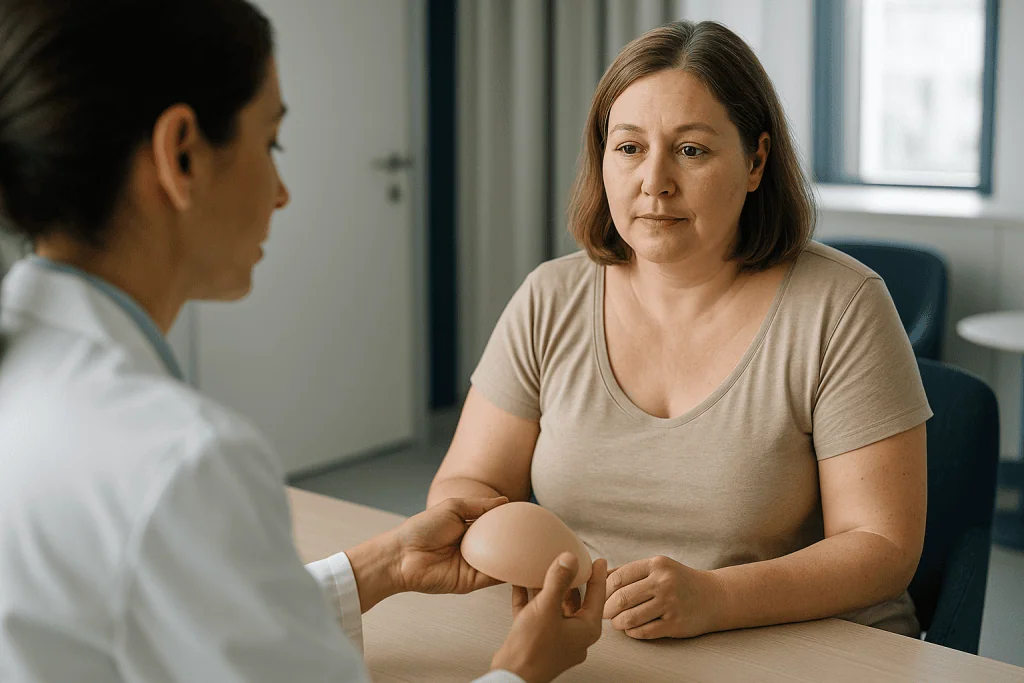
A good fat transfer breast augmentation candidate is a healthy adult who wants a modest increase in size or fullness, has enough spare fat on the abdomen, flanks or thighs to harvest, keeps a stable weight, does not smoke, and has breast skin that can accept added volume. Those wanting a large size jump, planning pregnancy or major weight change, or with unresolved breast findings are often asked to wait.
She has read the implant brochures twice and put them down twice. What she wants is small: a little more fullness in the upper breast, enough that a fitted top sits the way it did before two pregnancies. What she does not want is a silicone device. Then a friend mentions that surgeons can take fat from the hips and move it to the chest, and the question sharpens into something specific: am I a fat transfer breast augmentation candidate, or is that only for some body types?
The honest answer is that this operation is fussier about who it suits than most cosmetic procedures. It asks three things at once: is there fat to spare, is the breast able to accept it, and is the goal modest enough for fat to deliver? Weight stability, smoking status and breast health sit behind those three.
This explainer walks through each factor the way a surgical team would, including the people who are usually told to wait and why.
How does fat transfer breast augmentation actually work?
The procedure has three stages, and understanding them explains almost every candidacy rule that follows.
First comes harvesting. Liposuction, the suctioning of fat through a thin hollow tube called a cannula, removes fat from a donor area such as the abdomen, flanks or outer thighs. Most surgeons infuse the area beforehand with a dilute fluid containing local anesthetic and a vessel-constricting agent, an approach the Mayo Clinic describes as tumescent liposuction. It reduces bleeding and makes the fat easier to remove gently, which matters because rough handling damages the cells you are trying to keep alive.
Second comes processing. The harvested material is a mix of fat cells, blood, tumescent fluid and free oil from ruptured cells. Surgeons separate the usable fat by letting it settle, spinning it, rinsing it or passing it through filters. There is no single agreed best method; the goal in every case is clean, intact fat with as little fluid and oil as possible.
Third comes injection, often called lipofilling. Using small cannulas, the surgeon places the fat in many thin threads across several layers of the breast, above and around the gland rather than into it. The spacing is deliberate. A transferred fat cell has no blood supply of its own. It survives only if it sits close enough to existing capillaries for new vessels to grow toward it within days. Fat deposited in thick pools starves at the center, dies and turns into scar tissue or oil cysts.
That biology sets the ceiling on everything else: how much can go in per session, how much will stay, and why the receiving breast matters as much as the donor site. The operation is usually performed as a day case under general anesthesia or sedation, and it always creates two healing zones, one where fat left and one where it arrived.
Who is a good fat transfer breast augmentation candidate?
Surgeons tend to describe the ideal candidate in terms of fit rather than perfection. The features below are the ones that come up most often in consultation.
- A modest goal. The person wants a fuller, softer or more balanced breast rather than a dramatic change in size. Fat transfer rewards subtlety.
- Fat to spare. There must be enough soft tissue on the abdomen, flanks, hips or thighs to harvest safely while leaving those areas smooth.
- A stable weight. Transferred fat behaves like the fat it came from. Significant weight loss after surgery shrinks the result; significant gain enlarges it unpredictably.
- Non-smoking status. Nicotine narrows small blood vessels, and grafted fat depends entirely on new small vessels growing into it. MedlinePlus notes that smoking raises the risk of wound problems and other complications after any surgery.
- Good general health. Well-controlled long-term conditions, no bleeding disorder, and no active infection.
- Age-appropriate breast screening completed. Any lump, discharge or imaging finding is investigated before elective surgery is considered, not after.
- Realistic expectations about maintenance. The person understands that part of the fat will not survive and that a second session may be suggested.
A few groups are especially well matched. People with a small volume difference between the two breasts often do well, because fat can be placed exactly where the deficit is. So do those with contour hollows after implant removal, and people with dents or thin coverage over an existing implant, where a thin layer of fat softens visible edges. In reconstruction after cancer surgery, fat grafting is widely used to refine shape, though those decisions belong with the oncology and reconstructive team together.
None of this is a checklist you pass or fail alone. It is a conversation, and the surgeon weighs the whole picture.
Who is not a good candidate for breast augmentation with fat, or is asked to wait?
Being asked to wait is common and rarely permanent. These are the situations that most often lead a surgical team to pause or to suggest a different route.
Current smoking or nicotine use. This is the most frequent reason for delay. Because graft survival depends on tiny new vessels, most surgeons ask people to be fully off nicotine for a period before and after surgery. MedlinePlus advises quitting several weeks before an operation to lower complication risk; your surgeon will set the exact window.
A very lean frame. If there is little harvestable fat, the surgeon cannot collect enough to make a visible difference without over-treating the donor areas. Implants or simply no surgery may be more sensible.
A large size goal. Someone hoping to go up several cup sizes in one operation is asking fat to do what it cannot. The breast envelope can only accept so much before pressure starves the grafts.
Weight in flux. Active dieting, recent bariatric surgery with weight still falling, or a pattern of large swings all undermine predictability.
Pregnancy or breastfeeding plans in the near future. Pregnancy reshapes the breast profoundly. Most surgeons prefer to operate once a family is complete or at least not imminent.
Unresolved breast findings. A lump under investigation, unexplained nipple discharge or an overdue mammogram in someone of screening age all need sorting first.
Uncontrolled medical conditions. Poorly controlled diabetes, a bleeding tendency, or an illness that affects healing.
Age under 18. The NHS notes that cosmetic breast surgery is generally not carried out on people under 18, whose breasts may still be developing.
Distress about appearance that feels out of proportion. Reputable teams will gently explore this, and may suggest speaking with a psychologist first. That is care, not judgment.
How much fat is needed for breast fat transfer?
People often arrive with a number in mind from an online forum. Surgeons think about it differently, in three separate volumes that are easy to confuse.
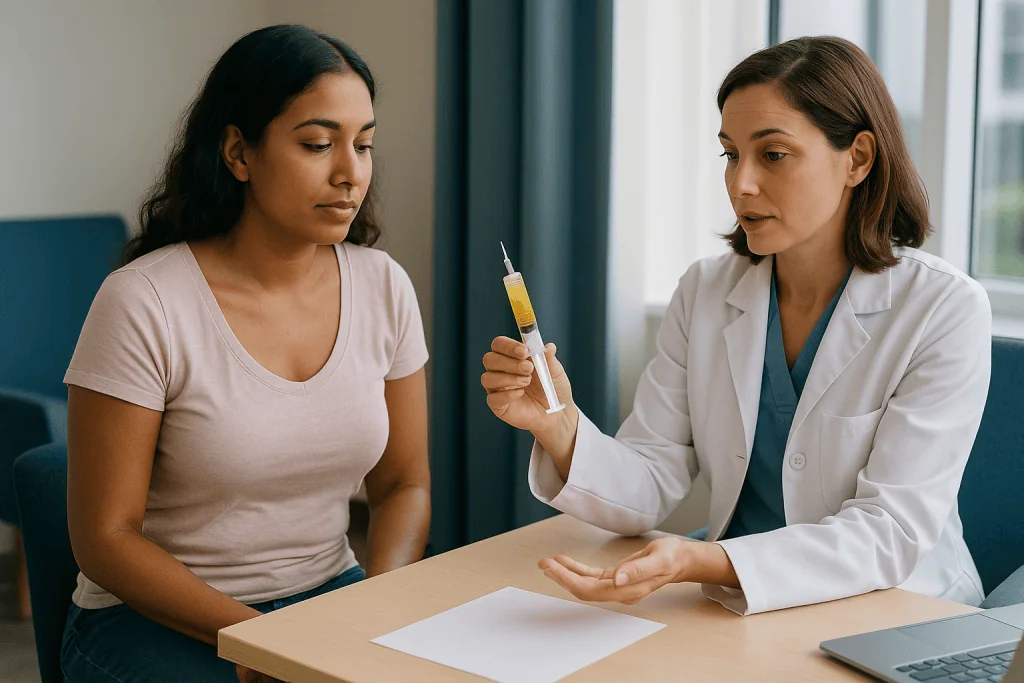
Harvested volume is what the liposuction cannula collects. It looks like a lot in the canister, but much of it is tumescent fluid and blood.
Injectable volume is what remains after processing: purified fat, free of most fluid and oil. It is always considerably less than the harvested amount.
Retained volume is what is still there once healing is complete, usually judged months later. A proportion of every graft is reabsorbed in the early weeks as cells that failed to gain a blood supply break down. Published estimates of how much survives vary widely between studies and depend on technique, the donor area, the recipient tissue and the patient’s habits, which is why responsible surgeons plan conservatively rather than quoting a percentage.
Working backward from these three numbers, the surgeon estimates whether your donor areas can supply enough clean fat to produce a visible change after expected loss. Two further limits apply.
The first is the receiving breast. Fat must be spread in thin layers with tissue between them. A tight, small breast simply has less room, and stuffing more in does not raise the amount that survives; it lowers it.
The second is the donor site itself. Liposuction is a contouring tool, not a weight-loss tool, and the NHS is clear that only limited volumes can be removed safely in one session. Taking too much from one area risks dents and loose skin there, trading one concern for another.
So the honest answer to “how much fat do I need” is: enough that your surgeon can harvest it without spoiling the donor area, and no more than your breast can host in thin layers. Often that means a modest result and, for some people, a planned second session.
What BMI do you need for breast fat transfer?
Body mass index, or BMI, is a ratio of weight to height used as a rough screen for weight categories. Cleveland Clinic lists 18.5 to 24.9 as the healthy-weight range for adults, with 25 to 29.9 classed as overweight and 30 and above as obesity, while stressing that BMI does not measure body fat directly or say where fat is stored.
That last point is why no major guideline sets a BMI threshold for breast fat transfer, and why a surgeon will not decide your eligibility from the number alone. Two people with the same BMI can have entirely different amounts of harvestable fat. One carries it on the hips and thighs, easily reached; the other carries it around internal organs, where liposuction cannot go.
Still, BMI is a useful conversation starter at both ends of the scale.
At the lower end, people who are very lean often lack enough subcutaneous fat to harvest a meaningful amount. The surgeon may be honest that a single session would produce a barely noticeable change, or that implants would serve the goal better.
At the higher end, the concerns shift to safety rather than supply. Higher BMI is associated with increased anesthesia and wound-healing considerations across elective surgery in general. A team may also worry about what happens next: if someone is actively losing weight, the transferred fat will shrink along with the rest of the body, and the result they paid in recovery time to achieve will fade.
The most useful framing is stability, not a target. Surgeons generally prefer that weight has been steady for some months and that the person is not planning a major change. If weight loss is a goal, most teams suggest reaching a comfortable, maintainable weight first and then reassessing. The decision, as always, rests with the treating team after examining you in person.
How much bigger can breasts get with fat transfer?
This is the question behind most consultations, and it deserves a straight answer: modestly, and less than an implant can achieve in one operation.
Several forces cap the result. The breast envelope, meaning the skin and underlying tissue that hold the breast’s shape, can only stretch so much acutely. Grafted fat needs thin distribution with living tissue between the threads. Some of what is placed will not survive. Each of these subtracts from the number people imagine.
Surgeons therefore describe the outcome of one session as a noticeable but subtle increase: a fuller upper pole, softer cleavage, a smoother transition from chest wall to breast, or evening-out of a size difference between sides. Those who want more are usually offered a staged approach, with a second session once the first has fully settled. Each session slightly expands the envelope, which can make room for more fat the next time, but it also means repeated anesthesia, repeated liposuction and repeated recovery.
Two further truths shape expectations.
Fat cannot lift. If the nipple sits low or the breast has stretched skin, adding volume may accentuate the droop. A lift, known as mastopexy, is a separate procedure that reshapes the skin envelope, and some people are candidates for both.
Fat is alive. Once it has healed in, it responds to weight change like any other fat in the body. Weight gain can enlarge the breasts more than intended; weight loss can shrink them. Menopause, pregnancy and hormonal treatment can also alter breast tissue around the graft.
People who thrive with this operation tend to be those who wanted a refinement rather than a transformation. If your mental image is a two- or three-size jump, the kinder course is for the surgeon to say so early, and for you to weigh implants, a combined approach or no surgery at all.
Why skin quality and the breast envelope decide so much
Donor fat gets most of the attention, but experienced surgeons often say the receiving breast is the real gatekeeper. Three qualities matter.
Room. A very tight, small breast with firm skin has little space between tissue planes. Fat placed under tension is squeezed, its blood supply compromised, and more of it dies. Some surgeons use pre-operative external tissue expansion to create space; evidence for how much this improves retention is mixed, and it demands considerable commitment from the patient.
Elasticity. Skin that recoils well after being stretched tends to drape smoothly over added volume. Skin that has been stretched and released repeatedly, for example through pregnancies or large weight swings, may show stretch marks and reduced recoil. Fat can still be transferred, but it will not tighten the skin, and the result may look full but low.
Position. Ptosis is the medical term for a breast that sits lower on the chest, with the nipple at or below the fold beneath the breast. Fat transfer alone does not correct ptosis. For someone whose main concern is sagging rather than size, a lift is the relevant operation, sometimes with fat added for upper fullness.
Scarring and prior treatment also count. Skin that has received radiotherapy is stiffer and less vascular; fat grafting is used in that setting within reconstruction, but under specialist supervision and often in smaller, repeated amounts. Dense scar tissue from previous surgery can make it harder to spread fat evenly.
A surgeon assesses all this by examining the breast: pinching skin thickness, measuring distances from nipple to fold, checking how the tissue moves. Photographs and tape measures cannot replace that, which is one reason online self-assessment is so unreliable. If a consultation skips the physical examination, that itself is information.
Breast fat transfer vs implants: a candidate-focused comparison
Neither option is better in the abstract. The useful question is which one fits a particular body and a particular goal. The table below summarizes the trade-offs surgeons usually walk through, drawing on descriptions from the Mayo Clinic and the NHS.
| Factor | Fat transfer | Implants |
|---|---|---|
| Typical size change per operation | Modest; larger goals usually need staged sessions | Chosen in advance; large increases possible in one operation |
| What is added | Your own living fat | A silicone shell filled with silicone gel or saline |
| Requires donor fat | Yes; very lean people may not qualify | No |
| Scars | Small puncture marks at donor and breast sites | Incision in breast fold, around areola or armpit |
| Predictability of volume | Variable; part of the graft is reabsorbed | High; the device volume is fixed |
| Response to weight change | Grows or shrinks with body fat | Implant volume unchanged; surrounding tissue changes |
| Long-term maintenance | No device to replace; second session sometimes chosen | Implants are not lifetime devices and may need replacement |
| Imaging considerations | Oil cysts or calcifications can appear; radiologist should be informed | Implant can obscure tissue; extra views often needed |
| Recovery zones | Two: donor area and breast | One: breast |
A few patterns emerge. Someone lean who wants a clear size increase leans toward implants. Someone with spare fat who wants softness, symmetry or a subtle lift of the upper pole leans toward fat. Someone who has had implants and wants them out, but does not want to lose all shape, sometimes uses fat to soften the transition. And a combination, a small implant with fat over its edges, exists for those in between.
Whatever the direction, the choice belongs in a two-way conversation with the surgical team, informed by examination rather than by which option is fashionable.
Breast health, imaging and screening: what to sort out first
Because this operation places tissue into the breast, it intersects with breast health in ways an implant consultation may not. Good teams address this before anyone talks about donor sites.
Baseline imaging. If you are of screening age or have a family history that warrants earlier imaging, most surgeons want a recent mammogram or other imaging on record. It serves two purposes: ruling out anything that needs attention first, and giving radiologists a “before” picture against which later changes can be judged.
Understanding oil cysts and fat necrosis. Fat necrosis is the death of transferred fat cells that did not gain a blood supply. Dead fat can liquefy into an oil cyst, a small fluid-filled pocket, or harden into a firm lump. Over time, calcifications, tiny deposits of calcium, can form in these areas. On a mammogram, most of these changes have recognizable features, and radiologists who know a person has had fat grafting can usually interpret them confidently. Occasionally, further imaging or a biopsy is needed to be sure. This is a genuine downside worth understanding, not a reason for alarm.
Telling every future imaging team. Fat transfer should appear in your medical record and be mentioned at every mammogram booking, for life.
History of breast cancer. Fat grafting is widely used in reconstruction after cancer surgery. Questions about whether transferred fat could influence residual disease have been studied; the evidence to date has not shown an increased recurrence risk in the populations examined, but decisions in this setting rest with the oncology and reconstructive team together, who know your particular history.
Genetic risk. People with a known high-risk gene variant should discuss timing and screening strategy with their breast specialist before elective augmentation of any kind.
None of these steps is a barrier. They are the groundwork that lets a cosmetic operation sit safely inside your broader breast care.
What the first days and weeks usually look like
Recovery has two halves, and people are often surprised that the donor area, not the breast, is the sorer one.
The first few days. Expect bruising, swelling and a dull ache at the liposuction sites, with some leakage of pink tumescent fluid from the tiny punctures for a day or so. Most teams fit a compression garment over the donor area straight away; the NHS describes wearing one for several weeks to limit swelling and support the skin. The breasts feel full and firm, and the skin may look shiny. Gentle walking is encouraged from the first day to keep blood moving and lower clot risk.
The first two weeks. The NHS suggests that most people return to desk-based work within about two weeks of liposuction, though individual advice varies with how much was harvested. The Mayo Clinic advises avoiding strenuous activity for at least a couple of weeks after breast augmentation in general, and fat transfer teams often add a specific request: avoid pressure on the breasts, including tight sports bras, sleeping face down and vigorous massage, while the grafts establish their blood supply. Bruising on the chest fades over this period.
Weeks three to twelve. Swelling in both zones recedes, and the breasts soften. Some early reduction in size is normal as fluid clears and non-surviving fat is reabsorbed. This is the stretch when expectations get tested, and it helps to know in advance that the immediate post-operative size was never the final one.
Months three to six and beyond. Mayo Clinic and the NHS both note that liposuction results take several months to settle fully, with the NHS citing up to six months. Surgeons generally judge the retained breast volume at a similar point, and only then discuss whether a second session is wanted.
Follow-up visits are typically scheduled at intervals across this period. Keep them even if everything feels fine.
What are the downsides of fat transfer breast augmentation? Fat grafting risks
The question is a direct one, and the answer should be too. Fat transfer is surgery, and it carries the general risks of any operation plus a set of its own.
Unpredictable retention. Some of the fat will not survive, and how much varies from person to person and even from breast to breast. This can produce a result that is smaller than hoped or, less often, a new asymmetry.
Lumps, oil cysts and calcifications. Areas of dead fat can be felt as firm nodules or show on imaging. Most are harmless and settle or stay stable, but some need investigation to be sure, and a few are removed if they are troublesome.
Infection. Uncommon, but possible at either the donor or the recipient site.
Donor-site irregularities. Dents, ripples, loose skin, numbness or persistent swelling where fat was taken. The Mayo Clinic lists contour irregularities and fluid collections among the recognized complications of liposuction.
Fat embolism. A rare but serious event in which fat enters a blood vessel and travels to the lungs or elsewhere. Careful injection technique is designed to minimize it, and it is one reason this is an operation for trained surgeons in accredited facilities.
Anesthesia and clot risk. Shared with all surgery, and higher in those who smoke, have a high BMI or have a clotting history.
Need for more than one session. Not a complication, but a downside for anyone who expected a single visit.
Imaging implications for life. Discussed above, and worth repeating.
Alternatives include implants, a lift without added volume, a combination, or the choice to do nothing. A good consultation lays all of these side by side without steering, and leaves the decision with you and the treating team.
What people often get wrong about breast fat transfer
Some of the most confident statements in online forums are the least accurate. Here are the ones surgeons hear most, corrected.
“It’s natural, so there’s no real risk.” The tissue is your own, which removes device-related problems, but the operation still involves general anesthesia, liposuction and injection into the breast, each with its own complications. Natural material does not mean risk-free surgery.
“The fat that survives is there forever, exactly as placed.” The fat that establishes a blood supply does persist, but it remains living tissue. It shrinks with weight loss, grows with weight gain and changes with hormones and age. The breast keeps evolving around it.
“I should gain weight before surgery so there’s more to harvest.” Deliberately gaining weight and then losing it afterward is one of the surest ways to lose the result, because the graft follows your body fat. Surgeons ask for stability, not bulk.
“Gaining weight afterward will make my breasts bigger, so it’s a bonus.” It may, but unevenly and unpredictably, and it enlarges everything else too.
“I can get implant-sized results if I find the right surgeon.” The limit is biological, not technical. No injection method makes a tight envelope hold more living fat than its blood supply can support.
“It’s basically a free liposuction.” The donor-site liposuction is real and carries its own recovery and risks. It is not a weight-loss procedure, and volumes are kept modest for safety.
“There are no scars.” The puncture marks are small, but they exist at every donor and injection point and may be visible in some skin types.
“It won’t affect mammograms.” It can, and every future imaging team needs to know.
Believing the first version of each of these leads to disappointment. Knowing the second lets you decide with clear eyes.
Questions to ask your care team before deciding
A consultation is a two-way examination. You are assessing whether the team’s approach fits you as much as they are assessing your candidacy. The questions below tend to produce the most useful answers.
- Based on your examination, do you think I am a good fat transfer breast augmentation candidate, and what specifically makes you say so?
- Where would you harvest fat from on my body, and what changes should I expect there?
- What size change do you realistically think one session could give me, and how confident are you in that estimate?
- How do you decide how much fat to place, and what do you do to protect the fat’s blood supply?
- Would I likely need a second session to reach my goal, and how long would you wait before judging?
- Do you think I need a lift instead of, or as well as, added volume?
- What imaging do you want before surgery, and what should I tell future mammogram teams?
- What are the most common complications you see with this operation, and how are they handled?
- What is your policy on smoking and nicotine, and on weight stability, before and after surgery?
- Who will I see for follow-up, and how do I reach the team out of hours if something worries me?
- Where is the operation performed, and what kind of anesthesia will be used?
- If you were advising a family member with my anatomy and goals, what would you suggest?
Notice what the list does not include: which option is most popular, which is trending, or which the clinic prefers to perform. Those answers tell you about marketing. The questions above tell you about your body.
Write the answers down, take time before deciding, and consider a second opinion if anything feels rushed. Elective surgery has no deadline.
When to call your doctor after breast fat transfer
Most recovery is uneventful: bruising, swelling, tenderness and fatigue that ease week by week. Some symptoms, though, need prompt contact with your surgical team rather than watchful waiting. Contact them the same day if you notice any of the following.
- Fever, chills or feeling generally unwell, which can signal infection at either the donor or the breast site.
- Increasing redness, warmth, hardness or pain in one area of the breast or donor site, rather than the gradual improvement you were told to expect.
- Pus, cloudy fluid or a foul smell from any puncture site.
- One breast becoming noticeably larger, tighter or more painful than the other, which may indicate bleeding or a fluid collection.
- Skin over the breast or donor area turning dusky, purple or very pale, or developing blisters.
- Wound edges opening or fluid leaking that does not slow after the first day or two.
Seek emergency care immediately, without waiting to reach the clinic, if you develop chest pain, sudden shortness of breath, coughing up blood, a rapid heartbeat, confusion or fainting. These can indicate a blood clot in the lungs or, rarely, fat entering the bloodstream, both of which need urgent hospital assessment. Pain, swelling or warmth in one calf is also a warning sign for a clot and should be checked the same day.
Later on, months or years after surgery, arrange a review if you feel a new lump, notice skin dimpling, nipple changes or discharge, or if a mammogram raises a question. Most such findings after fat grafting turn out to be oil cysts or scar tissue, but every new breast change deserves proper evaluation, and knowing your surgical history helps the team interpret it quickly.
When in doubt, call. Teams would far rather hear about a false alarm than miss a problem that was easier to manage early.
Frequently asked questions
What are the downsides of fat transfer breast augmentation?
The main downsides are unpredictable fat survival, modest size gains, and the possibility of lumps, oil cysts or calcifications that may need imaging follow-up. You also recover from two sites, the donor area and the breast, and may need a second session. General surgical risks such as infection, bleeding, clots and anesthesia complications apply as well.
What BMI do you need for breast fat transfer?
There is no guideline-set BMI requirement. Surgeons look at whether you have enough accessible fat to harvest safely and whether your weight is stable, rather than at a single number. Very lean people may lack sufficient donor fat, while higher BMI raises general surgical considerations and the risk that later weight loss shrinks the result.
Who is not a good candidate for breast augmentation with fat?
People who smoke or use nicotine, are very lean, want a large size increase, are actively losing or gaining weight, plan pregnancy soon, are under 18, or have an unresolved breast lump or imaging finding are usually asked to wait or offered another option. Poorly controlled medical conditions also count against elective surgery.
How much bigger can breasts get with fat transfer?
Usually a modest amount per session, noticeably less than an implant can add in one operation. The breast envelope limits how much fat can be placed in thin, survivable layers, and part of the graft is reabsorbed. Larger goals normally require staged sessions months apart, each with its own recovery.
What are the fat transfer breast augmentation requirements before surgery?
Typical requirements include being a healthy adult, stopping nicotine for a period set by the surgeon, having a stable weight, completing any age-appropriate breast imaging, disclosing all medicines and supplements, and having realistic goals. The surgical team confirms these at consultation and pre-assessment; they are not something you certify yourself.
Is breast fat transfer vs implants a matter of preference or of anatomy?
Both. Anatomy sets the boundaries: lean people may not have fat to spare, and tight or low-sitting breasts limit what fat alone can achieve. Within those boundaries, preference matters, including how you feel about a device, scars, maintenance and predictability. The surgeon explains what your body allows; you weigh what fits your life.
Does breast fat transfer affect mammograms?
It can. Areas of transferred fat that did not survive may form oil cysts or calcifications that show on imaging. Radiologists who know you have had fat grafting can usually distinguish these from other findings, though occasionally further imaging or biopsy is needed. Always mention the procedure when booking any breast imaging.
Can breast fat transfer lift sagging breasts?
No. Added fat increases volume but does not raise the nipple or tighten stretched skin, and it can make a low breast look heavier. A breast lift, or mastopexy, addresses sagging by reshaping the skin envelope. Some people are candidates for a lift with fat added for upper fullness, which the surgeon assesses in person.
How long does recovery from breast fat transfer take?
Most people return to desk work within about two weeks, according to NHS guidance on liposuction, and are asked to avoid strenuous activity and pressure on the breasts for a few weeks. Swelling can take several months to settle, with the NHS citing up to six months for liposuction sites, and final breast volume is judged around then.
Will the transferred fat last forever?
Fat that gains a blood supply in the first weeks persists as living tissue, but it is not fixed. It shrinks with weight loss, grows with weight gain and changes with hormones, pregnancy and age like the rest of your body fat. The fat that fails to survive is reabsorbed in the early months.
References
- NHS: Breast enlargement (cosmetic surgery)
- NHS: Liposuction
- Cleveland Clinic: Body Mass Index (BMI)
- MedlinePlus: Smoking and surgery
This article is for general information only and is not a substitute for professional medical advice. Please consult a qualified doctor about your individual situation.

More from the Blog
What Breasts Look Like After Prosthesis Removal: Volume, Skin and When a Lift Is Discussed
After implant removal without replacement, breasts usually look smaller and softer at first, with loose or deflated-looking skin, a lower nipple position and some…
Anesthesia for Aesthetic Breast Surgery: General vs Sedation and What Recovery Feels Like
Most implant-based aesthetic breast surgery is performed under general anesthesia, where you are fully unconscious and your breathing is supported; smaller procedures, such as…

Flying Home After Breast Augmentation: Stay Length, Lifting Limits and Comfort en Route
There is no fixed medical rule for flying after breast augmentation. Most surgical teams prefer that patients stay near the clinic until the first…
Nipple Reconstruction Results: Why Projection Softens Over Time and What Can Be Adjusted
Reconstructed nipples almost always lose some height in the first year because the small skin flap or graft has no ducts, muscle or firm…
Gummy Bear Implants: What Form-Stable Silicone Really Means (and Who They Suit)
Gummy bear implants are breast implants filled with highly cohesive, form-stable silicone gel that holds its shape even if the outer shell tears, much…
Capsular Contracture: Why It Happens, the Four Grades, and When to See Your Surgeon
Capsular contracture occurs when the scar tissue that naturally forms around a breast implant tightens and squeezes it, making the breast feel firm, look…