

Who May Benefit From Bobath Treatment? Cerebral Palsy, Stroke and Brain Injury Explained

Key Takeaways
- Bobath therapy and neurodevelopmental treatment (NDT) are the same hands-on approach under two regional names, developed for cerebral palsy, stroke and acquired brain injury.
- Cerebral palsy affects about 1 in 345 children in the United States, according to the CDC, making it the most common childhood motor disability.
- Systematic reviews using a traffic-light grading system placed NDT in the red category for improving motor function in cerebral palsy, because goal-directed and task-specific training performed as well or better.
- A Cochrane review of stroke rehabilitation found that no single named approach, including Bobath, outperformed others, and that mixing evidence-based techniques worked at least as well as any one philosophy.
- Most measurable recovery after stroke occurs in the first three to six months, per the American Heart Association, though improvement can continue for years with active practice.
- Approaches with the strongest evidence for cerebral palsy movement goals include goal-directed training, constraint-induced movement therapy, bimanual training and treadmill training.
Bobath therapy, also called neurodevelopmental treatment, is a hands-on physiotherapy approach used for cerebral palsy, stroke and acquired brain injury. It may suit people whose movement difficulties stem from abnormal muscle tone and posture. Large systematic reviews find it no more effective than goal-directed, task-specific practice for cerebral palsy, so most current guidance favors practicing real-life tasks, with the treating team deciding what fits each person.
The therapy room smells faintly of rubber mats. A father sits cross-legged on the floor while a physiotherapist kneels behind his three-year-old daughter, one hand resting lightly on the child’s pelvis, the other guiding her shoulder as she reaches for a wooden ring. Nothing dramatic happens. The girl leans, wobbles, corrects, and the therapist’s hands follow rather than lead. Afterward the father asks the question he has been rehearsing since the diagnosis: is this the right kind of therapy?
He is asking about bobath therapy for cerebral palsy, though he may not know its name. The approach has been part of rehabilitation for the better part of a century, and families still encounter it in children’s clinics, stroke units and brain injury services around the world.
What follows is an honest account of who it was designed for, what actually happens on the mat, and, crucially, what the research now says when it is compared with other ways of helping a body learn to move.
What is bobath therapy for cerebral palsy, in plain language?
Bobath therapy is a hands-on approach to rehabilitation in which a therapist uses touch, positioning and guided movement to help a person with a neurological condition move more efficiently. In North America it is more often called neurodevelopmental treatment, or NDT, and the two names describe the same family of ideas.
The approach grew out of the work of a physiotherapist and a physician, Berta and Karel Bobath, who worked with children with cerebral palsy and adults after stroke in the decades following the Second World War. Their central observation was simple: many people with brain injury were not weak so much as trapped in patterns of abnormal muscle tone and posture that made ordinary movement clumsy or impossible.
Cerebral palsy itself is a group of lifelong conditions affecting movement and posture, caused by damage to the developing brain before, during or shortly after birth. The Centers for Disease Control and Prevention estimates that about 1 in 345 children in the United States has cerebral palsy, making it the most common motor disability of childhood.
Bobath practitioners try to influence tone through the way they handle the body. A therapist might stabilize a child’s trunk so the arms are free to reach, or shift weight across the hips so a standing leg learns to bear load. The child is not asked to perform exercises in the gym sense; the movement emerges from what the therapist facilitates.
That description sounds gentle, and it is. The harder question, which this article returns to repeatedly, is whether gentleness translates into skills a child or adult can use when the therapist’s hands are gone. The evidence on that point has shifted considerably, and families deserve to hear it plainly.
How does the Bobath technique work?
The theory rests on a concept called neuroplasticity, the brain’s ability to reorganize its connections in response to experience. Bobath therapists reason that if a person repeatedly experiences movement that feels typical, the brain will gradually adopt those patterns and abandon the abnormal ones.

Three ideas do most of the work. The first is postural control: the ability to hold the trunk and head steady so limbs can move freely. The Bobaths argued that a wobbly trunk makes every reach and step harder, so they often started there. The second is tone normalization. Muscle tone is the baseline tension in a resting muscle; in cerebral palsy it is frequently too high (spasticity) or too low (hypotonia), and sometimes both in different parts of the body. Handling techniques aim to bring tone closer to a workable middle. The third is inhibition of what the original literature called abnormal reflex activity, primitive patterns that a maturing brain would usually suppress.
In a session, the therapist’s hands act as both sensor and guide. By feeling how a shoulder resists or a hip collapses, the therapist adjusts pressure and position moment by moment. The technique is sometimes described as a conversation between two nervous systems.
Here the theory meets a difficulty. Neuroplasticity is real and well documented, but the research on how movement skills are actually learned has converged on a different recipe: many repetitions of a meaningful task, actively attempted by the learner, with errors allowed and corrected. Passive or heavily guided movement generates fewer of the signals the brain uses to strengthen a skill. Modern Bobath teaching has absorbed some of this and now emphasizes active participation, which is one reason the approach today looks different from the approach a grandparent might remember.
What are the exercises involved in the Bobath technique?
Strictly speaking, classical Bobath does not have a fixed list of exercises. Practitioners describe it as a concept rather than a protocol, and that flexibility is both its appeal and its scientific weakness, because a treatment that varies with every therapist is hard to study.
Even so, certain activities recur across children’s and adult sessions:
- Weight shifting: moving the body’s center of gravity from one side to the other while sitting, kneeling or standing, so the supporting side learns to hold and the free side learns to move.
- Trunk activation: working on a therapy ball or bench, with the therapist supporting the pelvis, to encourage the deep muscles that keep the spine upright.
- Facilitated reaching and grasping: guiding the shoulder and elbow so a hand can arrive at a toy or cup with less compensatory shrugging.
- Transitional movements: practicing the in-between moments, such as rolling to sitting or moving from sitting to standing, where abnormal tone often takes over.
- Facilitated gait: the therapist walks alongside or behind, applying pressure at the pelvis to time the step and loading of each leg.
Sessions for children are usually built around play, because a toddler will not tolerate twenty minutes of abstract weight shifting but will happily lean sideways a dozen times to knock over a tower of blocks.
Parents are typically taught to carry the principles home: how to position a child in a high chair so the pelvis stays level, how to carry a child to discourage stiff extension of the legs, how to encourage two-handed play. Several reviews note that this handling education is one of the elements families value most, even when the formal movement outcomes are modest. Whether that value comes from Bobath specifically or from any skilled therapist coaching a family is a fair question, and one the research has not fully answered.
Who is Bobath therapy usually for, and who is usually asked to wait?
The approach was designed for people whose movement problems come from injury to the brain rather than to muscles, nerves or joints. Three groups account for most referrals.
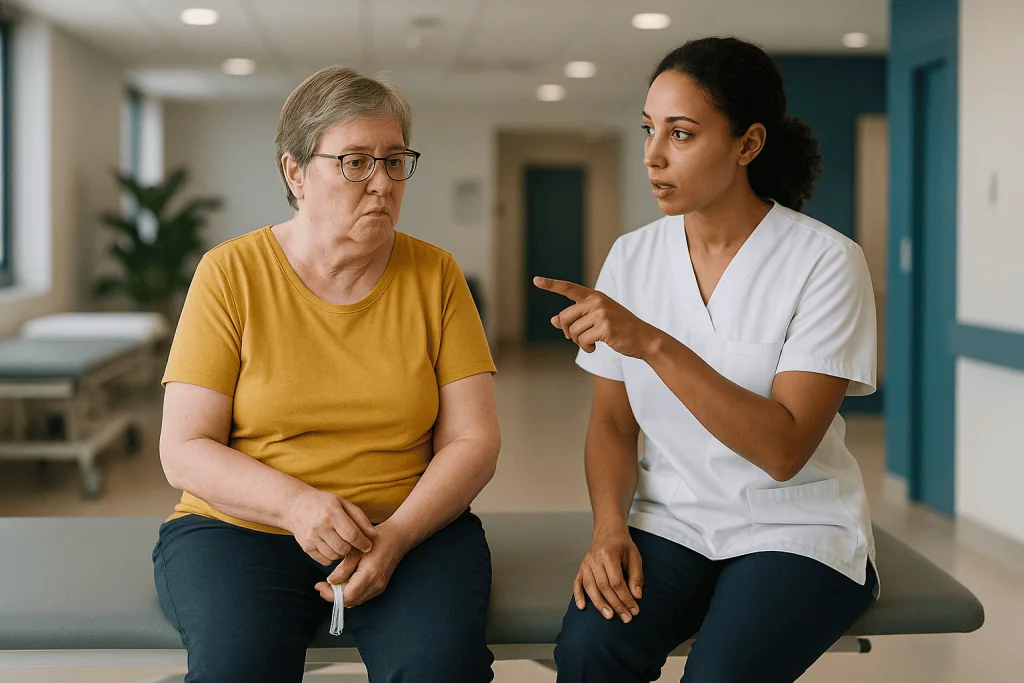
Children with cerebral palsy are the historical core. Bobath has been used across all types, from a child with mild one-sided involvement (hemiplegia) to a child who uses a wheelchair and needs support to sit. Adults after stroke form the second group, particularly in the first weeks and months when tone is changing rapidly. Adults and children with acquired brain injury, from trauma, infection or lack of oxygen, form the third.
Who is usually asked to wait, or steered elsewhere? Someone in the first hours or days after a stroke or head injury will be managed for medical stability before any hands-on movement work begins; rehabilitation teams follow the American Heart Association’s guidance that early mobilization is beneficial but very early intensive movement can be harmful in some people. A child with an unstable hip, a recent fracture or uncontrolled seizures will typically have those addressed first. Anyone with a progressive neurological disease, such as a degenerative condition of the spinal cord, falls outside what Bobath was designed for, though general physiotherapy still has a role.
There is a subtler group: children and adults who are fully able to practice real tasks actively. For them, current evidence suggests the time is better spent on goal-directed training than on facilitated handling, and many therapists will say so. The National Health Service describes physiotherapy for cerebral palsy in terms of strengthening, stretching and functional practice rather than any named school of thought, which reflects where mainstream guidance has settled.
None of this is a rule a family should apply alone. Eligibility is a judgment the treating team makes after assessment, and it can change as a person’s abilities change.
Bobath therapy for cerebral palsy: what the evidence actually shows
The most influential summary of cerebral palsy treatments is a series of systematic reviews that grade each intervention using a traffic-light system: green for effective, yellow for uncertain, red for evidence of no benefit or harm. The first version, published in Developmental Medicine and Child Neurology, examined 64 different interventions. Only about 6 percent earned a green light, and neurodevelopmental treatment was placed in the red category for improving motor function, largely because trials comparing it directly with goal-directed, task-specific practice found the alternatives did as well or better.
The updated review, in Current Neurology and Neuroscience Reports, reached the same conclusion with more data. It recommended that clinicians stop using NDT to improve motor outcomes and instead offer approaches with green ratings: goal-directed training, constraint-induced movement therapy for one-sided weakness, bimanual training, treadmill training for walking goals, and home programs built around the child’s own priorities.
Why did a well-loved approach fare so poorly? Partly it is a problem of dose. Studies of motor learning consistently find that the number of active, self-initiated repetitions predicts improvement, and a facilitated Bobath session produces fewer of these than a child practicing a chosen task with a therapist coaching from the side. Partly it is a problem of specificity: skills learned lying on a mat do not automatically transfer to climbing stairs at school.
Fairness demands two caveats. Many older trials studied a version of Bobath its modern practitioners no longer recognize, and the red rating applies to motor function, not to every possible benefit, such as caregiver confidence or comfort in positioning. The reviews themselves acknowledge these limits.
Still, the direction of the evidence is clear enough that a family asking whether Bobath should be the main therapy for their child’s movement goals can reasonably expect their team to explain what else is available and why.
Which therapy is best for cerebral palsy? A side-by-side look
There is no single best therapy, because cerebral palsy is not a single condition. A child who walks independently but drags one foot needs something different from a child learning to sit. The table below summarizes how the major movement approaches are graded in the systematic reviews cited in this article, so families can see where Bobath sits among its alternatives.
| Approach | What it involves | Evidence grade for motor function (systematic review) | Typically considered for |
|---|---|---|---|
| Bobath / NDT | Therapist handling to normalize tone and facilitate movement | Red: not recommended over alternatives | Historically all types; now often as an adjunct for positioning and handling education |
| Goal-directed training | Repeated practice of tasks the child or family chooses | Green: effective | Children able to attempt tasks actively, any severity level |
| Constraint-induced movement therapy | Restraining the stronger arm to force use of the weaker one | Green: effective | One-sided (hemiplegic) cerebral palsy |
| Bimanual training | Intensive two-handed play and tasks | Green: effective | One-sided cerebral palsy, especially when constraint is poorly tolerated |
| Treadmill training | Supported walking practice on a treadmill | Green: effective for walking goals | Children with walking as a goal |
| Strength training | Progressive resistance exercise | Yellow-to-green: improves strength; effect on function varies | Older children and adolescents |
A grade is not a verdict on an individual. A red rating means that, across groups of children in trials, the approach did not outperform alternatives; it does not mean no child ever benefited. What the grades do is set a sensible default. Mainstream guidance, including that from the National Health Service and Mayo Clinic, now describes physiotherapy for cerebral palsy in terms of functional practice, strengthening and stretching, with the specific mix tailored to each child’s goals.
The most useful question, then, is not which school of therapy is best but which specific goal the family wants to work on next, and which approach has the strongest evidence for that goal.
Does the Bobath approach for stroke and brain injury help adults?
Adults arrive at Bobath by a different road. A stroke, which the American Heart Association describes as a sudden interruption of blood flow to part of the brain, typically leaves weakness and altered tone on one side of the body. Traumatic brain injury and injury from lack of oxygen produce more scattered patterns. In both cases, rehabilitation aims to help the surviving brain tissue take over lost functions.
The Bobath approach for stroke follows the same logic as in children: normalize tone, restore postural control, facilitate typical movement. For decades it was the dominant model in many stroke units, and generations of therapists trained in it.
The best independent test is a Cochrane systematic review of physical rehabilitation approaches after stroke, which pooled data from dozens of randomized trials. Its conclusion was measured. Physical rehabilitation of any kind improved function and mobility compared with none. No single named approach, including Bobath, outperformed the others. Rehabilitation that mixed elements from several approaches appeared to do at least as well as any single school. The reviewers recommended that therapists choose techniques based on evidence for the specific task rather than allegiance to one philosophy.
American Heart Association guidance on stroke rehabilitation points in the same direction, emphasizing task-specific practice, adequate intensity and early involvement of the person in setting goals. It also notes that most measurable recovery happens in the first three to six months, though improvement can continue for much longer with practice.
For brain injury the trial evidence is thinner, and much of what is done borrows from stroke rehabilitation. Bobath handling may still be used early, when a person cannot yet initiate movement and a therapist’s hands are the only way to produce it. As active control returns, most teams shift toward the person practicing meaningful tasks themselves, which is where the stronger evidence lies.
Neurodevelopmental treatment for cerebral palsy: how it fits within a wider plan
Movement therapy is one strand of a much larger effort. A child with cerebral palsy typically has a team that can include a pediatrician or neurologist, a physiotherapist, an occupational therapist, a speech and language therapist, an orthopedic surgeon and, depending on needs, specialists in feeding, vision, hearing and learning. Neurodevelopmental treatment for cerebral palsy, where it is still used, sits inside this web rather than on top of it.
Several other interventions commonly run alongside movement therapy. Orthoses, which are custom braces for the ankle, foot or hand, hold joints in better alignment during activity. Serial casting can gradually lengthen a tight muscle. Medicines that reduce spasticity work by dampening the nerve signals that keep muscles overactive; they include oral muscle relaxants and, for focal tightness, injections into specific muscles that reduce activity for a period of months. Which of these is appropriate, and when, is a decision for the prescribing clinician, who weighs benefit against side effects for that particular child.
Surgery has a role for some children, whether to lengthen tendons, realign bones or, in selected cases, interrupt some of the sensory nerve roots that contribute to spasticity. The National Health Service and Mayo Clinic both describe these options as considerations after conservative approaches, and always as team decisions.
Where does Bobath handling add value in this landscape? Many therapists would say in the practical, everyday teaching of families: how to position, carry and dress a child in ways that discourage stiff patterns. That coaching function is less about the Bobath label and more about a skilled clinician spending time with a family. A parent who has learned to seat a child so the hips stay level and the hands come together has gained something useful regardless of the name on the therapist’s certificate.
What do the following weeks and months usually look like?
Rehabilitation rarely follows a straight line, and anyone promising a tidy timeline should be treated with caution. Some patterns, though, are common enough to describe.
For a child newly diagnosed with cerebral palsy, the first weeks are usually about assessment. A physiotherapist will observe how the child moves, measure joint range and tone, and use standardized tools to describe functional level. Families are often introduced to the Gross Motor Function Classification System, a five-level scale describing how a child moves, from walking without limitation at level I to needing full physical assistance at level V. This does not predict everything, but it helps the team set realistic goals.
Therapy frequency varies widely by service and by goal. Intensive blocks, in which a child practices a specific skill daily for a few weeks, are supported by the systematic reviews cited here for goal-directed and constraint-based approaches. Lower-frequency maintenance therapy, punctuated by more intensive periods when a child is ready to learn a new skill, is another common pattern. There is no fixed number of Bobath sessions with evidence behind it, and any figure a family is quoted is a service convention rather than a research finding.
After a stroke, the American Heart Association describes an early phase in hospital, often followed by inpatient or outpatient rehabilitation, with the steepest gains in the first three to six months. Fatigue is nearly universal in this period, and a good program builds rest into the plan.
Across all three conditions, what families notice week to week is usually small: a steadier sit, a hand that opens more easily, a step that lands flatter. These are worth recording, because progress in rehabilitation is easier to see in a video from two months ago than in the mirror this morning.
What is the newest treatment for cerebral palsy?
This question comes up in nearly every family conversation, usually followed by a link someone shared. The honest answer is that the most important recent change in cerebral palsy care is not a new device or medicine but a shift in timing and emphasis.
Earlier diagnosis is the first part. Standardized assessments of infant movement, combined with brain imaging, now allow cerebral palsy to be identified reliably in the first months of life rather than around a child’s second birthday, according to reviews cited in this article. That matters because the brain’s plasticity is greatest in infancy, and early, active intervention can be started while a baby is still forming basic movement patterns.
Task-specific intensive training is the second part. Approaches such as constraint-induced movement therapy and bimanual training were developed within living memory and have accumulated the green ratings that older approaches lack. They are not high-tech; they are, in essence, structured play with a great deal of repetition.
Technology is the third and most publicized part. Robotic gait trainers, virtual-reality games that reward reaching and stepping, and wearable sensors that count repetitions at home are all being studied. The systematic reviews grade most of these as yellow: promising, but without enough evidence to know whether they beat well-delivered conventional practice. Stem cell treatments for cerebral palsy remain experimental, and the National Institutes of Health and major children’s neurology bodies advise that they be offered only within registered clinical trials.
Families should be wary of anything advertised as the newest breakthrough that is not offered through a recognized rehabilitation service or trial. The genuinely new thing in cerebral palsy is a stronger commitment to what the evidence supports, delivered earlier. That is less exciting than a headline, and considerably more useful.
Risks, alternatives and the cost of time
Bobath handling is physically low-risk. A therapist’s hands on a child’s pelvis or an adult’s shoulder rarely cause harm, and the reviews cited here report no pattern of injury. Muscle soreness after a session is possible, as with any physical activity, and a person with fragile skin or osteoporosis needs handling adjusted accordingly. Those are ordinary precautions any physiotherapist takes.
The more meaningful risk is opportunity cost. A child has only so many hours of energy and attention each week, and a family has only so much capacity to attend appointments and carry out home programs. Time spent on an approach with a red evidence rating is time not spent on approaches with green ratings. The systematic reviews make this argument explicitly: recommending against NDT for motor goals is not a claim that it hurts, but that better options exist for the same investment.
Alternatives have been described above and are worth restating briefly in neutral terms. Goal-directed training asks the person to practice tasks they have chosen, with coaching. Constraint-induced movement therapy and bimanual training target one-sided weakness. Treadmill training supports walking goals. Strength training builds muscle capacity. For adults after stroke, the Cochrane review supports a mixed approach drawing on whichever techniques have evidence for the specific task.
There is also a psychological dimension that deserves respect. Some families find Bobath’s gentle, relationship-centered style reassuring during a frightening period, and that reassurance has value even if it is hard to measure. A thoughtful team can honor that while being candid about what the movement evidence shows.
Nothing here should be read as advice to stop a therapy a family is receiving. Changes to a rehabilitation plan belong in a conversation with the treating team, who know the person and the goals.
What people often get wrong about Bobath
Misunderstandings cluster around a few themes, and clearing them up saves families both hope and disappointment.
Bobath repairs the brain damage. It does not, and neither does any other therapy. Cerebral palsy involves a lifelong, non-progressive injury to the developing brain. Rehabilitation helps the person use the abilities they have more effectively and prevents secondary problems such as contractures, but the underlying lesion remains. Anyone using language that implies otherwise is overstating.
Bobath is the standard therapy for cerebral palsy. It was, in many countries, for decades. Current guidance from the National Health Service, Mayo Clinic and the systematic reviews cited here describes functional, goal-directed practice as the mainstream approach. A service still built entirely around classical Bobath is now the exception.
If it is red on the evidence chart, it must be harmful. The red rating in the cerebral palsy reviews means no advantage over alternatives for motor function, not physical harm. The distinction matters for families who have had positive experiences and may feel judged.
More sessions mean more progress. Intensity does matter, but only when the person is actively practicing. Passive handling does not accumulate the way active repetitions do, so simply adding facilitated sessions is unlikely to change trajectory.
Bobath and NDT are different things. They are the same concept under regional names, though individual training organizations differ in emphasis.
Adults are too old to benefit from rehabilitation. The American Heart Association is clear that recovery after stroke continues well beyond the early months with continued practice, and age alone is not a barrier to improvement.
Any therapist can deliver Bobath. Formal Bobath and NDT training involves lengthy postgraduate courses. This does not make trained practitioners better clinicians overall, but it does mean the label has a specific meaning worth asking about.
Questions to ask your care team
Good rehabilitation is a partnership, and the most productive appointments are the ones where families arrive with questions. These are worth writing down and bringing along.
- Which specific movement goals are we working on this month, and how will we know if they are being met?
- Which approach are you using for each goal, and what does the evidence say about it compared with the alternatives?
- If Bobath or NDT handling is part of the plan, what is its purpose here: improving movement, teaching us positioning at home, or something else?
- How many active repetitions of the target task is my child or family member getting in a typical session, and how can we add more at home?
- What functional classification level has been assigned, and what does that usually mean for the kinds of goals that are realistic?
- Are there intensive programs, such as constraint-induced or bimanual training, that would suit this stage?
- How will you decide when to change or stop an approach that is not producing results?
- Which other team members should be involved right now, and who coordinates between them?
- Are there registered clinical trials we could consider, and how would participation affect current therapy?
- What should we watch for at home that would mean we need to be seen sooner?
A team confident in its plan will welcome these questions. Answers that rely on tradition rather than evidence, or that discourage the family from asking about alternatives, are a signal to ask again or to request a second opinion within the same service.
Families sometimes worry that asking about evidence will offend a therapist they like. In practice, most clinicians appreciate an engaged partner and are themselves following the same research. The relationship with a skilled, attentive therapist is one of the most consistently valuable parts of rehabilitation, whatever techniques that therapist uses on a given day.
When to call your doctor
Rehabilitation is a slow process, and most changes families notice are gradual. Some are not, and these warrant a prompt call to the treating team or, in the case of the first group below, emergency services.
Seek emergency care immediately for any adult with sudden new weakness or numbness on one side, sudden confusion or difficulty speaking, sudden loss of vision, a sudden severe headache, or loss of consciousness. The American Heart Association’s guidance stresses that these can signal a new or recurrent stroke, and that minutes matter. For a child, call emergency services for a seizure lasting more than five minutes, a first-ever seizure, repeated seizures without recovery between them, or any difficulty breathing.
Call your doctor or therapist the same day if you notice:
- A sudden increase in muscle stiffness, or a child who is much floppier than usual.
- New or worsening pain in a hip, knee or back, especially if the child refuses to bear weight or a leg looks shortened or turned outward; hip displacement is common in cerebral palsy and is monitored through regular surveillance.
- A joint that has lost range it recently had, which may signal a developing contracture.
- Persistent fever, vomiting or drowsiness in a child with a shunt or recent surgery.
- Choking, coughing during meals or unexplained weight loss, which can indicate swallowing difficulty.
- Skin redness that does not fade over a bony area in someone who sits or lies for long periods.
- A sudden change in mood, sleep or alertness that is out of character.
Losing a skill that was previously secure deserves attention in any of these conditions, because cerebral palsy itself does not progress and stroke recovery should not reverse. Regression is a reason to be reassessed rather than to wait for the next scheduled appointment.
Trust the instinct that something is different. Families and caregivers know the person better than any clinician can from a single visit, and a call that turns out to be unnecessary is far preferable to a delay.
Frequently asked questions
How does the Bobath technique work in simple terms?
A therapist uses hands-on guidance to steady the trunk, shift weight and shape movement so that a person with brain injury experiences more typical patterns, with the aim of retraining the brain through repetition. The theory draws on neuroplasticity, the brain’s capacity to reorganize. Current motor-learning research, however, finds that active, self-initiated practice of real tasks produces stronger learning than guided movement, which is why modern Bobath teaching emphasizes participation.
Which therapy is best for cerebral palsy?
No single therapy is best for every child, because cerebral palsy varies enormously in type and severity. Systematic reviews grade goal-directed training, constraint-induced movement therapy, bimanual training and treadmill training as effective for movement goals, while neurodevelopmental treatment is not recommended over these alternatives. The right mix depends on the child’s specific goals and is a decision for the treating team after assessment.
What are the Bobath technique exercises?
Classical Bobath has no fixed exercise list; it is described as a concept rather than a protocol. Common activities include weight shifting in sitting or standing, trunk work on a therapy ball, facilitated reaching, practicing transitions such as sitting to standing, and guided walking with the therapist’s hands at the pelvis. For children these are built into play, and parents are taught positioning and carrying techniques to use at home.
What is the newest treatment for cerebral palsy?
The most significant recent change is earlier diagnosis, now possible in the first months of life using standardized infant movement assessments and imaging, which allows active intervention to begin while the brain is most adaptable. Intensive task-specific approaches have the strongest new evidence. Robotics, virtual reality and wearable sensors are being studied but remain graded as uncertain, and stem cell treatments are experimental and appropriate only within registered trials.
Is Bobath therapy still used today?
Yes, though less centrally than in past decades. Many rehabilitation services still include Bobath or NDT handling, particularly for early stroke care, positioning education and children who cannot yet initiate movement. Mainstream guidance from bodies such as the National Health Service now describes physiotherapy for cerebral palsy in terms of functional practice, strengthening and stretching, and systematic reviews favor goal-directed approaches for movement outcomes.
Does the Bobath approach for stroke work better than other methods?
The evidence says no. A Cochrane systematic review pooling dozens of randomized trials found that physical rehabilitation of any kind improved function after stroke compared with none, but no single approach, including Bobath, was superior. Mixed approaches drawing on several techniques did at least as well. The reviewers recommended choosing methods by evidence for the specific task rather than by allegiance to one school.
Is neurodevelopmental treatment for cerebral palsy harmful?
There is no evidence that NDT causes physical harm; the reviews grading it red do so because it did not outperform alternatives for motor function, not because of injury. The main concern is opportunity cost: hours spent on an approach without a motor-function advantage are hours not spent on approaches with stronger evidence. Any decision to change therapy should be made with the treating team, not unilaterally.
Can adults with brain injury benefit from Bobath?
Bobath handling is sometimes used early after traumatic or hypoxic brain injury, when a person cannot initiate movement and a therapist’s hands are the only way to produce it. Trial evidence specific to brain injury is limited, and most rehabilitation borrows from stroke research, which favors active, task-specific practice as control returns. Age alone is not a barrier; the American Heart Association notes recovery continues with ongoing practice.
How long does Bobath therapy take to show results?
There is no evidence-based timeline for Bobath specifically, and any figure quoted is a service convention rather than a research finding. For rehabilitation generally, the American Heart Association describes the steepest gains after stroke in the first three to six months. In cerebral palsy, systematic reviews support intensive blocks of goal-directed practice lasting a few weeks for specific skills. Progress is usually gradual and best tracked with periodic video or standardized measures.
Who should not have Bobath therapy?
People who are medically unstable in the first hours or days after a stroke or head injury are stabilized before hands-on movement work begins. A child with an unstable hip, recent fracture or uncontrolled seizures will usually have those addressed first. Progressive neurological diseases fall outside the approach’s original purpose. For anyone able to practice tasks actively, current evidence favors goal-directed training, and the treating team decides what fits.
This article is for general information only and is not a substitute for professional medical advice. Please consult a qualified doctor about your individual situation.

More from the Blog

Physical Therapy Program Milestones: How Therapists Progress You From Pain Relief to Strength
Physical therapy program milestones are the checkpoints a therapist uses to move you through rehabilitation in stages: first calming pain and swelling, then restoring…

Your First Pulmonary Rehabilitation Assessment: Inhalers, Walking Tests and What to Wear
A first pulmonary rehabilitation appointment is an assessment, not a workout. A physiotherapist or respiratory therapist reviews your diagnosis, medicines and inhaler technique, asks…

Vestibular Rehabilitation: Retraining Balance After Dizziness
Vestibular rehabilitation therapy is an exercise-based program that retrains the brain to compensate for inner-ear balance problems. Guided by a specially trained physical therapist,…

Who May Need to Avoid Manual Therapy? Osteoporosis, Blood Thinners and Recent Surgery
People with osteoporosis, those taking blood thinners and anyone recovering from recent surgery are the groups most often asked to avoid or modify manual…

Feeling Dizzier After Vestibular Rehabilitation Exercises? Why It Happens and When to Call
Feeling dizzier after vestibular exercises is usually expected rather than a sign of harm. The exercises deliberately provoke mild symptoms so the brain can…
Who Benefits From Robotic Rehabilitation After Stroke, Spinal Injury or Surgery?
Robotic rehabilitation tends to help people who need many supervised movement repetitions they cannot yet perform alone: those with moderate to severe arm weakness…