Hemiplegia
Hemiplegia is weakness or paralysis on one side of the body, often after a stroke. Learn about symptoms, causes, diagnosis, and treatment options.
Quick answer
Hemiplegia is paralysis or severe weakness affecting one side of the body, including the arm, leg, and often the face. It results from damage to the brain or, less commonly, the spinal cord, most often from a stroke in adults or cerebral palsy in children. Treatment targets the cause and relies heavily on rehabilitation.
What is hemiplegia?
Hemiplegia is paralysis (loss of the ability to move voluntarily) that affects one side of the body. It can involve the arm, the leg, and often the face on the same side. The word comes from Greek: hemi means half, and plegia means paralysis. A closely related term is hemiparesis, which means weakness rather than complete paralysis on one side. In everyday medical practice the two terms are sometimes used loosely, and many people described as having hemiplegia still have some movement.
Hemiplegia is not a disease in itself. It is a sign that part of the nervous system has been damaged, most often the brain. Because the right side of the brain controls movement on the left side of the body and vice versa, damage to one side of the brain usually causes hemiplegia on the opposite side.
Hemiplegia can affect people of any age. In adults it is most commonly the result of a stroke. In children it may be present from birth or early infancy, in which case it is often part of a condition called hemiplegic cerebral palsy (a group of movement disorders caused by damage to the developing brain). Hemiplegia may be permanent, or it may improve partly or fully over time, depending on the cause and the extent of the damage.
Hemiplegia symptoms
Hemiplegia symptoms vary from person to person. They depend on which part of the nervous system is damaged, how severe the damage is, and how much time has passed since it occurred. Common signs include:
- Inability to move, or severe weakness in, the arm and leg on one side of the body
- Drooping of one side of the face, sometimes with difficulty closing the eye or smiling evenly
- Loss of balance and difficulty walking, standing, or sitting upright
- Muscle stiffness or tightness (spasticity) on the affected side
- Floppy or limp muscles (flaccidity), especially soon after the injury
- Numbness, tingling, or reduced sensation on the affected side
- Difficulty gripping objects or performing fine hand movements
- Trouble speaking or understanding speech, if the language areas of the brain are involved
- Difficulty swallowing
- Changes in vision, such as loss of part of the visual field
- Difficulty with attention or awareness of the affected side
Symptoms by stage. Immediately after a brain injury such as a stroke, the affected limbs are often limp and floppy. In many cases, over the following days and weeks, the muscles begin to tighten. This spasticity can cause the arm to bend at the elbow and wrist and the leg to stiffen, which may make walking more difficult and cause pain. Some people move through these stages and regain useful movement; others remain in one stage for a long time.
Symptoms by side. Damage to the left side of the brain (causing right-sided hemiplegia) is more often associated with problems with speech and language, because language centers are located on the left in most people. Damage to the right side of the brain (causing left-sided hemiplegia) is more often linked with difficulties in spatial awareness, judging distances, and paying attention to the left side of the body or environment, a problem sometimes called neglect.
Symptoms in children. In infants, hemiplegia may first be noticed as a strong preference for one hand before the age of one, keeping one hand in a fist, or asymmetry when crawling or walking. Because a baby’s brain is still developing, the picture may change as the child grows.
Hemiplegia causes and risk factors
Hemiplegia causes are varied, but nearly all involve damage to the movement pathways in the brain or, less commonly, the spinal cord.
- Stroke. This is the most common cause in adults. A stroke happens when blood flow to part of the brain is blocked by a clot (ischemic stroke) or when a blood vessel bursts and bleeds into the brain (hemorrhagic stroke). Brain cells deprived of oxygen are damaged quickly.
- Traumatic brain injury. A blow to the head from a fall, road accident, or assault can bruise or tear brain tissue or cause bleeding that presses on the brain.
- Brain tumors. A growth in the brain, whether cancerous or not, can press on or invade the areas that control movement.
- Infections. Encephalitis (inflammation of the brain, often caused by a virus), meningitis, or a brain abscess (a pocket of infection) can damage motor pathways.
- Cerebral palsy. Damage to the developing brain before, during, or shortly after birth may lead to hemiplegic cerebral palsy. Possible contributors include lack of oxygen, a stroke in the womb or newborn period, infection, or bleeding in the brain.
- Multiple sclerosis. This condition damages the protective coating of nerve fibers in the brain and spinal cord and can occasionally produce one-sided weakness or paralysis.
- Hemiplegic migraine. A rare form of migraine in which temporary one-sided weakness accompanies the headache. Symptoms usually resolve, but they can be difficult to distinguish from a stroke.
- Spinal cord injury. Damage to one side of the spinal cord can cause weakness on the same side of the body below the level of injury.
- Other causes. Less common causes include certain inherited conditions, blood vessel abnormalities, and prolonged seizures.
Risk factors depend largely on the underlying cause. Because stroke is the leading cause of hemiplegia in adults, the risk factors for stroke are especially relevant:
- High blood pressure
- Diabetes
- Smoking
- High cholesterol
- An irregular heart rhythm called atrial fibrillation, which can cause clots to form in the heart
- Older age
- Previous stroke or transient ischemic attack (a brief, stroke-like episode that resolves)
- Physical inactivity and obesity
In children, risk factors for cerebral palsy include premature birth, low birth weight, complications during delivery, and infections during pregnancy. A family history of migraine may be relevant for hemiplegic migraine.
Hemiplegia diagnosis
Hemiplegia diagnosis has two parts: recognizing the paralysis itself and finding out what is causing it. The cause matters because it determines treatment, and some causes, such as stroke, are emergencies.
Medical history and examination. The doctor will ask when the symptoms began, how quickly they developed, and whether there were other symptoms such as headache, seizures, or a fall. A neurological examination tests strength, muscle tone, reflexes, sensation, coordination, speech, vision, and the movements of the face. The pattern of findings often points to which part of the nervous system is affected.
Brain imaging. Imaging is usually the key step in confirming the cause.
- CT scan (computed tomography) uses X-rays to produce cross-sectional images of the brain. It is fast and is often the first test in an emergency, because it can quickly show bleeding.
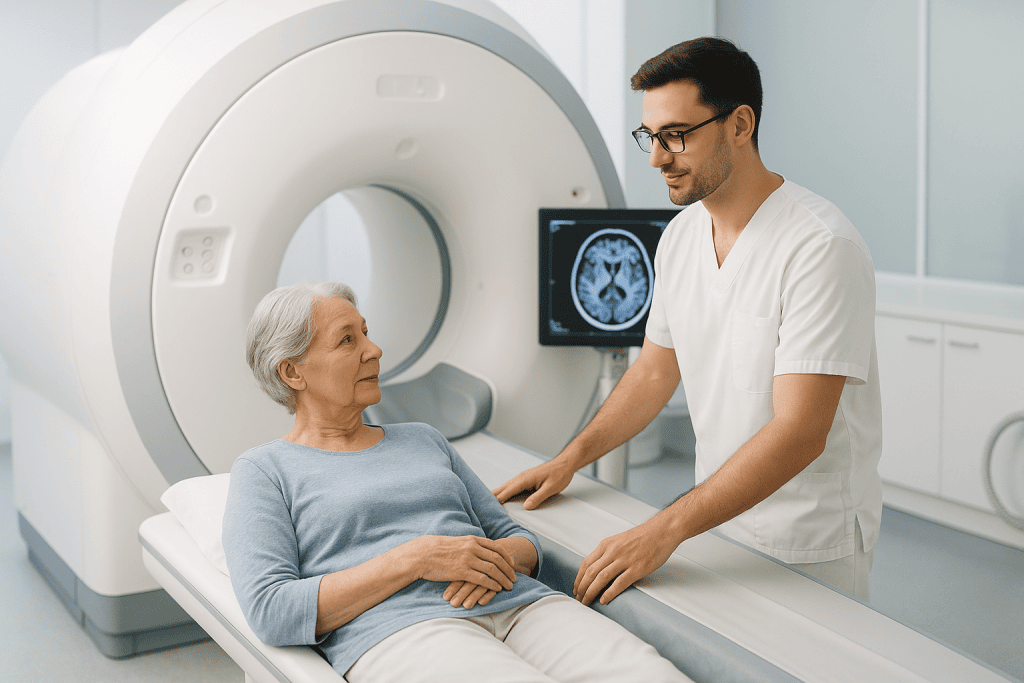
- MRI scan (magnetic resonance imaging) uses magnetic fields to produce detailed images. It is more sensitive than CT for detecting small strokes, tumors, inflammation, and damage from cerebral palsy.
- CT or MR angiography shows the blood vessels of the brain and neck and can reveal blockages, narrowing, or abnormal vessels.
Other tests that may be used, depending on the suspected cause, include:
- Blood tests to check blood sugar, clotting, cholesterol, infection markers, and other factors
- An electrocardiogram (ECG) or heart rhythm monitoring to look for atrial fibrillation
- An echocardiogram (ultrasound of the heart) to look for a source of clots
- Carotid ultrasound to check the main arteries in the neck
- An electroencephalogram (EEG), which records the brain’s electrical activity, if seizures are suspected
- A lumbar puncture (spinal tap), in which a small sample of the fluid around the spinal cord is taken, if infection or inflammation is suspected
In children with suspected hemiplegic cerebral palsy, diagnosis is often based on the pattern of movement problems over time, supported by MRI findings. Because a young child’s nervous system is still maturing, doctors may follow the child for months before confirming the diagnosis.
Hemiplegia treatment options
Hemiplegia treatment aims to address the underlying cause where possible, limit further damage, manage complications, and help the person regain as much function and independence as possible. There is no single cure that reverses paralysis, and the plan is tailored to each individual.
Treating the cause.
- For an ischemic stroke, emergency treatment may include clot-dissolving medication given through a vein or a procedure called mechanical thrombectomy, in which a thin tube is threaded through blood vessels to remove the clot. Both are time-sensitive and are only suitable for some patients.
- For a hemorrhagic stroke, treatment focuses on controlling blood pressure and, in some cases, surgery to relieve pressure or repair a damaged vessel.
- Brain tumors may be treated with surgery, radiation therapy, or medication, depending on their type and location.
- Infections are treated with antibiotics or antiviral medications as appropriate.
Medications. Your doctor may prescribe medicines to manage the effects of hemiplegia or to prevent the cause from recurring:
- Muscle relaxants such as baclofen or tizanidine to reduce spasticity
- Botulinum toxin injections into tight muscles, which temporarily weaken them and can improve positioning and comfort
- Pain medication for muscle, joint, or nerve pain
- Blood thinners, blood pressure medication, and cholesterol-lowering medication to reduce the risk of another stroke
- Anti-seizure medication if seizures occur
Rehabilitation. Rehabilitation is the cornerstone of long-term hemiplegia treatment and usually begins as soon as the person is medically stable. It is typically provided by a team that may include physical therapists, occupational therapists, speech and language therapists, and rehabilitation physicians. At Acibadem, this care is coordinated through the Physical Medicine & Rehabilitation department in cooperation with neurology. Common elements include:
- Physical therapy to improve strength, balance, walking, and range of motion, and to prevent joints from becoming permanently stiff
- Occupational therapy to relearn daily tasks such as dressing, eating, and bathing, often using adapted techniques or equipment
- Speech and language therapy for communication and swallowing difficulties
- Constraint-induced movement therapy, in which the unaffected arm is restrained for periods of time to encourage use of the affected arm
- Electrical stimulation of weak muscles to help produce movement
- Braces and splints (orthoses) to support the ankle, wrist, or hand and improve positioning
- Mobility aids such as canes, walkers, or wheelchairs when needed
Surgery. In some cases, particularly in children with cerebral palsy or adults with long-standing severe spasticity, orthopedic surgery may be considered. Procedures can include lengthening tight tendons, releasing contracted muscles, or correcting bone alignment. A pump that delivers baclofen directly into the fluid around the spinal cord is another option for severe spasticity in selected patients. Surgery is usually considered only after other approaches have been tried and is weighed carefully against its risks.
Observation. For conditions such as hemiplegic migraine, where paralysis is temporary, treatment may focus on managing the migraine and monitoring rather than on rehabilitation.
Living with hemiplegia and outlook
The outlook for hemiplegia depends heavily on the cause, the size and location of the damage, the person’s age and general health, and how quickly treatment and rehabilitation begin. It is not possible to predict recovery precisely for any individual.
After a stroke, the most rapid improvement tends to occur in the first weeks and months, as swelling settles and the brain begins to adapt. This adaptability, known as neuroplasticity, allows undamaged areas of the brain to take over some functions. Slower gains can continue for a year or more, and some people continue to improve function with ongoing practice well beyond that. Others are left with lasting weakness or paralysis. Recovery of walking is often more complete than recovery of fine hand movement.
In children with hemiplegic cerebral palsy, the underlying brain damage does not worsen, but the way it affects the child can change with growth. Many children with hemiplegia walk independently and attend mainstream school, though they may need support with hand function and certain activities.
Living with hemiplegia often involves managing complications, which may include:
- Contractures (permanent shortening of muscles and tendons) if joints are not moved regularly
- Shoulder pain and partial dislocation on the weak side
- Falls, because of impaired balance
- Pressure sores from prolonged sitting or lying in one position
- Blood clots in the legs due to reduced movement
- Depression, anxiety, and fatigue, which are common and treatable
- Difficulty returning to work or driving
Regular follow-up with the care team, continued exercise as advised by therapists, home adaptations, and support for family caregivers can all make daily life more manageable. Many people with hemiplegia lead active and independent lives with the right support.
Frequently asked questions
What is the difference between hemiplegia and hemiparesis?
Hemiparesis means weakness on one side of the body, while hemiplegia means complete or near-complete paralysis on one side. In practice the terms are often used interchangeably, and a person may move from one to the other as their condition changes. Both indicate damage to the nervous system and are evaluated in the same way.
What are the first hemiplegia symptoms of a stroke?
Stroke-related hemiplegia usually comes on suddenly, over seconds to minutes. Early signs often include a drooping face, weakness or numbness of one arm or leg, and slurred or confused speech. Sudden severe headache, loss of vision, or loss of balance may also occur. These symptoms are a medical emergency, even if they seem to improve.
What are the most common hemiplegia causes in children?
In children, hemiplegia is most often part of cerebral palsy, resulting from damage to the developing brain around the time of birth. Strokes can also occur in newborns and children, though they are less common than in adults. Head injuries, infections, and rarely inherited conditions are other causes that doctors consider.
Can hemiplegia be cured?
There is currently no treatment that reliably reverses paralysis caused by brain damage. However, many people regain some or a great deal of movement through natural recovery and rehabilitation, especially after stroke. The degree of improvement varies widely and cannot be guaranteed, so the focus of hemiplegia treatment is on maximizing function and independence.
How is hemiplegia diagnosis confirmed?
Doctors confirm hemiplegia through a neurological examination that tests strength, tone, reflexes, and sensation on both sides of the body. To find the cause, they typically use brain imaging such as a CT or MRI scan, along with blood tests and, when a stroke is suspected, heart and blood vessel tests. The specific tests depend on the suspected cause and how suddenly symptoms began.
What does hemiplegia treatment usually involve?
Treatment usually combines urgent management of the cause, such as stroke treatment or surgery, with longer-term rehabilitation. Physical, occupational, and speech therapy are central. Medications or injections may be used to control muscle stiffness, and braces or mobility aids can help with daily activities. Surgery is reserved for selected cases.
Is hemiplegia permanent?
It may or may not be. Some causes, such as hemiplegic migraine, produce temporary paralysis that resolves. After stroke or brain injury, some people recover substantially while others have lasting deficits. In cerebral palsy the condition is lifelong, but its impact can often be reduced with therapy. Your doctor can discuss what is realistic for your situation.
When to see a doctor
Any new weakness or paralysis on one side of the body should be assessed by a doctor promptly. Sudden symptoms may indicate a stroke, and emergency treatment for stroke works best when given within the first few hours. Call emergency services immediately if you or someone else has any of the following:
- Sudden weakness, numbness, or drooping of the face, arm, or leg, especially on one side
- Sudden difficulty speaking, slurred speech, or trouble understanding others
- Sudden loss of vision in one or both eyes, or double vision
- Sudden severe headache with no known cause, particularly if it is the worst headache ever experienced
- Sudden dizziness, loss of balance, or trouble walking
- Confusion, drowsiness, or loss of consciousness
- A seizure in someone who has not had one before
- One-sided weakness following a head injury
For people already living with hemiplegia, contact your care team if you notice new or worsening weakness, increased stiffness or pain, signs of a pressure sore, swelling or pain in a leg (which may suggest a blood clot), difficulty swallowing, choking on food or liquids, or symptoms of depression such as persistent low mood or loss of interest in daily activities.
Medically reviewed by the Acıbadem International Medical Board September 13, 2026
See our medical review board →
Update history
- PublishedSeptember 13, 2026
- Medical review approvedSeptember 13, 2026
- Last content updateSeptember 13, 2026