

Who Should Wait Before Mesotherapy: Health Factors Your Dermatologist Will Ask About
Key Takeaways
- Most mesotherapy contraindications are temporary: pregnancy, active cold sores, acne flares, poorly controlled diabetes and recent isotretinoin all describe a moment in time, not a permanent answer.
- MedlinePlus advises avoiding cosmetic skin procedures during isotretinoin treatment and for at least 6 months after, and dermatologists apply that caution to mesotherapy.
- Blood thinners increase bruising from every puncture, but MedlinePlus is clear they must never be stopped for a cosmetic procedure without the prescribing clinician's involvement.
- Keloids are more common in people with darker skin, tend to run in families, and can appear months after an injury, so a single previous keloid is usually enough to advise against elective needling.
- Slow-growing nontuberculous mycobacterial infections after mesotherapy typically surface as tender nodules two or more weeks later, which is why sterile single-use equipment and a follow-up contact matter.
- No mesotherapy mixture holds US regulatory approval for cosmetic injection, and no standardized evidence defines how many sessions are needed or how long results last.
People usually asked to wait before mesotherapy include anyone who is pregnant or breastfeeding, taking blood thinners or living with a bleeding disorder, carrying an active skin infection such as a cold sore or acne flare, using medicines that suppress the immune system, managing poorly controlled diabetes, prone to keloid scars, recently treated with isotretinoin, or allergic to any ingredient in the injected mixture. The treating clinician makes the final decision after a full health history.
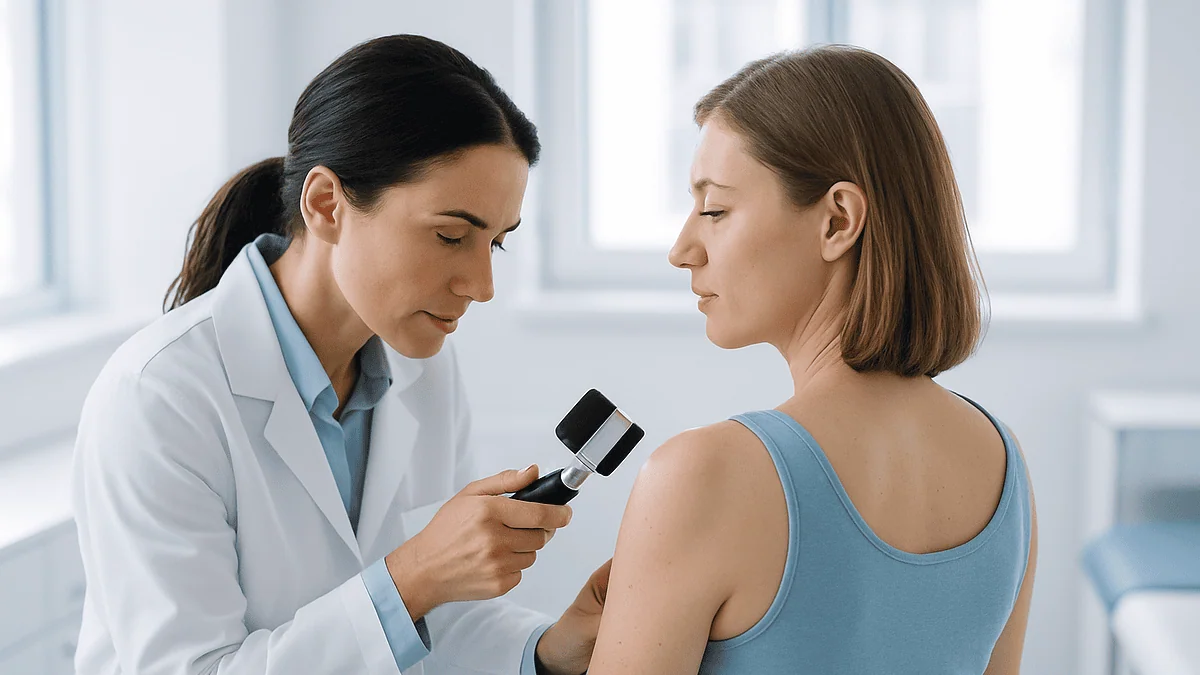
The consent form arrives on a clipboard before anyone has looked at your skin. Are you pregnant? Any cold sores in the past year? Blood thinners? Steroid tablets, transplant medicines, acne treatment? For a procedure that is often described as a light vitamin drink for the face, the questions can feel out of proportion.
They are not. The list of who should not get mesotherapy, or at least who should wait, is built almost entirely from those questions, and the answers matter more than the brand of syringe or the reputation of the room you are sitting in. A hundred or more tiny punctures are still a hundred small wounds, and what your body does with a wound depends on hormones, medicines, blood clotting and immune defenses that no cosmetic consultation can see from the outside.
This explainer walks through each health factor a dermatologist will ask about, what the evidence actually says, and why a temporary no is usually a sign of careful practice rather than an obstacle.
How mesotherapy works and what is actually in the syringe
Mesotherapy is a series of very shallow injections that place a liquid mixture into the dermis, the middle layer of skin that holds collagen and elastin, or just beneath it. A practitioner may use a fine handheld needle, a multi-needle stamp or a mechanized injector gun, spacing punctures a few millimeters apart across the cheeks, forehead, neck or hands.
The mixture varies enormously, which is the first reason screening matters. Common components include hyaluronic acid, a sugar molecule that binds water; assorted vitamins and amino acids; minerals; plant extracts; and sometimes lidocaine, a local anesthetic. Some mixtures are prepared by the practitioner from separate vials, so two clinics offering the same name can inject quite different things.
Two mechanisms are proposed. The first is direct hydration and nutrition of skin cells from the injected ingredients. The second is the needling itself: each micro-injury triggers a repair response in which fibroblasts, the cells that manufacture collagen, become more active. Honest framing is needed here. Controlled trials are small, the mixtures studied differ from one paper to the next, and in the United States no mesotherapy mixture holds regulatory approval for cosmetic injection. Mainstream summaries of injectable cosmetic procedures, such as those published by the NHS, note the same gap: reported side effects are documented reasonably well, while long-term benefit data remain thin.
That uncertainty is exactly why the health history carries so much weight. When a procedure has modest proven upside, the acceptable downside shrinks. A clinician who cannot tell you every ingredient, or who skips the medical questions, is removing the one safeguard the evidence base actually supports.
Who should not get mesotherapy: the list dermatologists start with
There is no single international guideline devoted to mesotherapy, so clinicians borrow contraindications from the wider world of skin injections and needling. A contraindication is a health circumstance that makes a treatment inadvisable, either permanently or until something changes. Most mesotherapy contraindications fall into the second group.

The usual list, grouped by the underlying concern, looks like this:
- Unknown safety in a developing baby: pregnancy and breastfeeding.
- Bleeding and bruising: anticoagulant or antiplatelet medicines, inherited clotting disorders, some supplements.
- Spreading infection: active cold sores, acne flares, impetigo, eczema breaks, any open wound in the treatment area.
- Weakened healing or immunity: autoimmune disease in flare, transplant medicines, chemotherapy, long-term steroid use, poorly controlled diabetes.
- Abnormal scarring: personal or family history of keloids or hypertrophic scars.
- Fragile skin from medicines or recent procedures: isotretinoin, recent laser, peel or filler, sunburn.
- Reactions to ingredients: known allergy to lidocaine, specific vitamins, plant extracts or preservatives.
Notice the pattern. Almost nothing on this list is about the face. It is about the whole person: circulation, immunity, hormones and medicine cabinets. A dermatologist asking about your kidney transplant is not being nosy; the same immune-suppressing medicine that protects a graft also blunts the body’s response to a hundred punctures.
The other pattern is time. Pregnancy ends, infections clear, acne courses finish, glucose control improves. For most people the answer to who should not get mesotherapy is really who should not get it yet, and the consultation is the place to map out what would need to change and roughly when a reassessment makes sense.
Pregnancy and breastfeeding: why nearly every clinician says wait
No study has deliberately injected mesotherapy mixtures into pregnant or breastfeeding people to see what happens, and none ever will. That absence, not a proven harm, is the reason for the pause. NHS guidance on dermal fillers, a closely related injectable category, states plainly that the procedure is not recommended in pregnancy or while breastfeeding because the effects are unknown. Clinicians extend the same logic to mesotherapy.
The gap in evidence is wider than it first appears. Vitamins and amino acids sound harmless, yet some mixtures include plant extracts, preservatives and lidocaine, and the amounts absorbed from a hundred dermal punctures have never been measured in pregnancy. Whether any ingredient reaches breast milk is equally unstudied.
Pregnancy also changes skin in ways that complicate cosmetic decisions. Rising estrogen and progesterone increase pigment production, which is why melasma, patchy brown discoloration on the cheeks and forehead, appears or worsens during pregnancy. Any inflammation from needling can deepen pigment in skin already primed to over-produce it. Blood volume rises, small vessels dilate and bruising becomes easier. Immune tolerance shifts to protect the pregnancy, altering how skin handles minor infection.
Practically, most dermatologists ask people to wait until after delivery and, if breastfeeding, until weaning is complete. Some will discuss timing sooner for a person who has stopped breastfeeding but is still seeing hormonal skin changes, since melasma can persist for months after birth. That conversation belongs with the treating team, ideally with the obstetric or midwifery record available.
If pregnancy is possible but not confirmed, say so. A clinician who postpones a session until a test clarifies the picture is following the same principle applied across all elective cosmetic care: when the evidence is silent, the decision should be reversible.
Blood thinners and bleeding disorders: the bruising question
Every mesotherapy puncture nicks capillaries, the smallest blood vessels in the skin. In most people a platelet plug seals each one within seconds. Anything that slows that plug turns pinpoint marks into bruises that spread under the skin and last longer.

Two medicine classes matter most. Anticoagulants, such as warfarin or the newer direct oral anticoagulants, slow the chemical cascade that forms a fibrin clot. Antiplatelet medicines, including low-dose aspirin taken for heart protection and clopidogrel, make platelets less sticky. MedlinePlus notes that people on blood thinners bruise and bleed more easily, and it stresses that these medicines should never be stopped or skipped without the prescribing clinician’s involvement, because the clot they are preventing, often in the heart or legs, is far more dangerous than a facial bruise.
This is the point where a cosmetic practitioner and a cardiologist need to be on the same page. The dermatologist’s job is not to alter your anticoagulation; it is to weigh whether extra bruising is acceptable, whether a lighter needling pattern is appropriate, or whether the treatment should simply wait. Some people on long-term anticoagulation proceed with clear expectations about bruising; others are advised against it. Both outcomes are reasonable when reached jointly.
Inherited bleeding disorders such as hemophilia or von Willebrand disease belong in the same conversation, as does a history of unexplained heavy bleeding after dental work or minor cuts. So do supplements. Fish oil, high-dose vitamin E, ginkgo and garlic extracts have all been associated with easier bruising, and people rarely think to list them. Bring the full contents of your bathroom cabinet, not just the prescriptions.
Active skin infection, cold sores and acne flares
Needles do not distinguish between skin you want treated and skin currently fighting an infection. Passing a needle through an area colonized by bacteria or virus can seed those organisms into deeper layers or carry them across the face along the injection pattern.
Herpes simplex, the cold sore virus, is the classic example. It lives dormant in nerve roots and reactivates with triggers such as sun, stress and physical trauma to the skin. Needling around the mouth is exactly that kind of trauma, which is why clinicians ask about cold sores even if none is visible on the day. An active blister is a straightforward reason to postpone. For people with a strong history of recurrences, some dermatologists discuss preventive antiviral medicine before injectable procedures; that decision, and anything about how it is taken, rests with the prescriber.
Acne is the second common culprit. Inflamed pustules are small pockets of bacteria and pus. Injecting through or beside them risks spreading inflammation and can worsen post-inflammatory marks. Most practitioners ask people with an active flare to wait until the skin has settled, and many prefer that acne be managed medically first.
Other reasons to pause include impetigo, a bacterial skin infection; broken or weeping eczema; open wounds; and any rash of uncertain cause. Fungal infections in the treatment area count as well.
One more reason sits behind these questions. Medical case series have described clusters of infection with nontuberculous mycobacteria, slow-growing environmental bacteria, after mesotherapy performed with non-sterile mixtures or reused equipment. These infections appear as persistent tender nodules weeks later and can require months of treatment. Screening your skin is half the safeguard; sterile single-use materials and a clinician willing to show them are the other half.
Autoimmune disease, transplant medicines and a suppressed immune system
The immune system does two jobs after mesotherapy: it clears the small amount of bacteria that inevitably enters with any needle, and it orchestrates the repair that is supposed to deliver the cosmetic benefit. Anything that dampens immunity weakens both.
Immunosuppressant medicines are the clearest case. People who have received a kidney, liver or heart transplant take medicines that deliberately quiet immune responses so the organ is not rejected. Biologic medicines for rheumatoid arthritis, psoriasis, Crohn disease and similar conditions target specific immune signals. Long-term oral corticosteroids thin the skin and slow healing. Chemotherapy lowers white cell counts. In each situation the risk of a puncture becoming an infected nodule rises, and the collagen response the procedure relies on may be muted, so the balance of benefit and harm shifts.
This does not always mean never. A person who is years past a stable transplant may be a candidate after their transplant team weighs in; someone in the middle of induction therapy generally is not. The decision has to include the specialist managing the immune-altering medicine, because only they can say how deeply immunity is currently suppressed.
Autoimmune skin conditions add a specific concern. Psoriasis, vitiligo and lichen planus can show the Koebner phenomenon, in which new patches of the disease appear at sites of skin injury, including needle tracks. Lupus can flare with sun exposure and physical trauma to the skin. A quiet, well-controlled condition is treated very differently from one that is actively flaring, and the dermatologist will usually want the condition stable for a period before considering elective needling.
Active cancer treatment, HIV with a low CD4 count, and any recent serious infection round out this group. Openness here protects you; there is no cosmetic gain worth a systemic infection.
Diabetes, circulation and a history of keloid scars
Chronic conditions shape how skin heals long after the redness fades, and three deserve their own questions on the intake form.
Diabetes is first. Persistently high blood glucose stiffens small vessels, dulls the function of infection-fighting white cells and slows the arrival of repair cells at a wound. Well-controlled diabetes with normal circulation is often not a barrier. Poor control, recent hospital admissions for glucose problems, or diabetic complications such as neuropathy and poor peripheral circulation are reasons most dermatologists will ask to defer until the medical team confirms things are stable. Numbers, not impressions, guide that call, and they belong to your diabetes clinician.
Circulation matters on its own. Peripheral arterial disease, severe Raynaud phenomenon and heavy smoking all reduce blood flow to skin. For body mesotherapy on the thighs or abdomen, poor circulation slows recovery and increases the risk that a small infection lingers.
Keloids are the third. A keloid is a scar that grows beyond the boundary of the original wound, becoming raised, firm and sometimes itchy or painful. Mayo Clinic notes that keloids are more common in people with Black or brown skin, tend to run in families, and can take months to appear after an injury. Mesotherapy delivers dozens to hundreds of tiny injuries, each a potential trigger. A single keloid after ear piercing or a caesarean scar that spread beyond its line is enough for many clinicians to counsel strongly against elective needling on visible areas. Hypertrophic scars, which stay within the wound edges but rise above the skin, prompt a similar, slightly less firm caution.
None of these conditions is a judgment on the person. They are simply reasons the healing arithmetic changes, and a good consultation says so plainly.
Isotretinoin and recent procedures: why timing matters
Some reasons to wait have nothing to do with a chronic condition and everything to do with the calendar of what your skin has been through recently.
Isotretinoin, an oral retinoid prescribed for severe acne, is the best-known example. It shrinks oil glands and thins the outer skin, which is why it works, and also why skin becomes fragile and slow to repair while taking it. MedlinePlus advises avoiding cosmetic skin procedures such as waxing, dermabrasion and laser treatment during a course and for at least 6 months afterward because of the risk of scarring. Dermatologists extend that caution to mesotherapy. Some newer expert opinion suggests shorter waits may be reasonable for gentle, non-ablative treatments, but that judgment sits with the prescribing dermatologist, who knows the dose history and how the skin has recovered. Do not adjust or pause an acne course to fit a cosmetic appointment.
Recent procedures stack risk in a similar way. A chemical peel or resurfacing laser leaves the barrier compromised for days to weeks. Botulinum toxin injections and dermal fillers occupy tissue that a needling pass could disturb, and the NHS advises keeping the area undisturbed in the days after fillers to avoid displacing the product. Practitioners commonly space treatments apart; the interval depends on what was done and how the skin looks, so ask rather than assume.
Sun counts as a procedure here. Sunburn is an inflamed, damaged barrier, and tanning, whether from sun or a bed, primes pigment cells so that any inflammation from needling is more likely to leave brown marks. Topical retinoids, prescription-strength exfoliating acids and hair removal in the treatment area are often paused briefly beforehand on the clinician’s advice. Arriving with calm, protected, unaltered skin is the simplest way to avoid being sent home.
Allergies and reactions: knowing what you are being injected with
A vitamin in a breakfast cereal and a vitamin injected into the dermis are not the same exposure. Swallowed nutrients pass through the gut and liver; injected ones meet immune cells directly. That difference is why a full ingredient list is not a formality.
Lidocaine appears in many mixtures for comfort. True allergy to this class of local anesthetic is uncommon, but reactions to preservatives packaged with it are reported, and anyone who has had a bad reaction at the dentist should say so. Thiamine (vitamin B1) has a documented history of rare but serious allergic reactions when injected. Plant extracts such as artichoke, centella or ginkgo are common in imported mixtures and can trigger reactions in people with plant or pollen allergies. Sulfite preservatives can provoke wheezing in sensitive people with asthma. Some products list animal-derived ingredients, relevant for both allergy and personal preference.
Multi-ingredient products create a specific problem: if a reaction occurs, no one can tell which component caused it, and the entire mixture is off the table thereafter. This argues for asking to see the packaging and, where a practitioner mixes vials, for a written list of everything included.
A history of anaphylaxis, the severe whole-body allergic reaction that closes airways and drops blood pressure, warrants a different level of caution. Ask whether the clinic has an emergency protocol and adrenaline available, and whether a clinician trained to use it will be present. Those are reasonable questions anywhere needles are used.
Finally, distinguish allergy from expected irritation. Redness and small raised wheals at each puncture are a normal short-lived response. Hives spreading away from the treated area, lip or eyelid swelling, or any breathing difficulty are not, and they belong in the red-flag section below.
Mesotherapy contraindications at a glance
The table below condenses the health factors covered so far into the way clinicians tend to sort them: reasons to wait, reasons that need a shared decision with another specialist, and reasons most practitioners consider a firm no. It is a summary of common practice, not a rulebook; the treating team decides.
| Health factor | Why it matters | Usual approach |
|---|---|---|
| Pregnancy or breastfeeding | No safety data; hormonal pigment changes | Wait until after delivery and weaning |
| Anticoagulant or antiplatelet medicine | Extended bruising and bleeding | Discuss jointly with prescriber; never stop on your own |
| Bleeding disorder | Impaired clotting at each puncture | Specialist input; often avoided |
| Active cold sore, acne flare or skin infection | Spread of infection along needle tracks | Wait until fully healed |
| Immunosuppressants, transplant, chemotherapy | Higher infection risk, blunted repair | Decision with the specialist team |
| Autoimmune skin disease in flare | New lesions at injury sites | Wait for stable control |
| Poorly controlled diabetes | Slow healing, infection risk | Defer until glucose is stable |
| Keloid or hypertrophic scar history | Raised scars at puncture sites | Usually advised against on visible areas |
| Isotretinoin, current or recent | Fragile skin, scarring risk | Wait per prescribing dermatologist |
| Recent laser, peel or filler; sunburn | Compromised barrier, product displacement | Wait for full recovery |
| Allergy to any listed ingredient | Local or systemic allergic reaction | Avoid that mixture entirely |
Reading down the third column, the striking thing is how often the word wait appears. Only allergy and established keloid tendency tend to be permanent. Everything else is a snapshot of your health on one day, and a second consultation later may reach a different answer.
Mesotherapy side effects and what the next two weeks usually look like
Knowing the ordinary course of recovery is what lets you recognize the extraordinary. Immediately after a session the treated area is typically red and studded with tiny raised bumps at each puncture, sometimes with pinpoint bleeding. This is the wheal-and-flare response of skin to needling and to the volume of fluid placed in it. The bumps generally flatten within hours as the liquid disperses.
Over the first few days, the most common mesotherapy side effects are bruising, tenderness and mild swelling, more noticeable around the eyes and on thinner skin. NHS guidance on injectable cosmetic procedures describes redness, swelling and bruising that usually settle within a few days; people on blood thinners or with fragile vessels can expect a longer tail. Itching is common as the skin calms. Practitioners often advise avoiding makeup, heavy exercise, saunas and direct sun for a short window, and using a broad-spectrum sunscreen daily afterward to limit pigment changes.
By the end of the first week most visible signs have faded for people with uncomplicated healing. The second week is when less common problems declare themselves. Small firm lumps that persist rather than shrink, patches of darker or lighter skin, or spots that become tender and warm rather than calmer all deserve a call. Infections with slow-growing bacteria, described earlier, characteristically appear as nodules two to several weeks out, after a person has stopped thinking about the procedure.
Courses are usually offered as a series of sessions spaced weeks apart, followed by occasional maintenance. There is no standardized, evidence-based number of sessions or interval; protocols vary by mixture and practitioner. Treat any confident promise about how many treatments you will need, or how long results will hold, as marketing rather than medicine, and ask what that clinic’s own follow-up has actually shown.
Mesotherapy vs microneedling and other alternatives: how they differ
People weighing whether to wait often ask what else might address the same concern. The alternatives differ in what they put into skin, how deep they go and how much evidence supports them.
Microneedling uses a device carrying dozens of fine needles to create controlled micro-channels without injecting anything. The mechanism is the repair response alone: fibroblasts lay down new collagen over weeks. It has been studied more systematically than mesotherapy, particularly for acne scarring, and is sometimes combined with topical serums applied to the freshly opened channels. Because nothing is injected, ingredient allergy is less of an issue, but every other contraindication in this article still applies; needles are needles.
Platelet-rich plasma, or PRP, is prepared by spinning a sample of the patient’s own blood to concentrate platelets, which release growth factors, and then injecting or needling it back in. Cleveland Clinic describes PRP as investigational for many uses, with evidence that varies by condition. Using your own blood removes foreign-ingredient allergy but not infection, bruising or healing concerns.
Dermal fillers are gels, most often hyaluronic acid, placed in specific volumes to restore contour rather than spread thinly across skin. The NHS states that filler effects typically last between 6 and 18 months depending on the product and site, a far better characterized duration than anything reported for mesotherapy.
Then there is the least glamorous option: daily broad-spectrum sunscreen, a prescription topical retinoid from a dermatologist, and treating any underlying acne or pigment disorder. These carry the strongest evidence base for skin quality over time and none of the injection risks.
Asking which is better is really asking which matches your goal, your health history and your tolerance for uncertainty. A dermatologist can lay those out side by side; a treatment menu cannot.
What people often get wrong about who should not get mesotherapy
Several beliefs circulate widely enough to be worth correcting directly.
It is only vitamins, so screening is a formality. The route matters as much as the ingredient. Injected substances bypass the gut and meet immune cells directly, plant extracts and preservatives are common in mixtures, and the needling itself carries every risk of any skin puncture. The health history is the safety mechanism, not a box-ticking exercise.
Being told to wait means being refused. As the summary table shows, most reasons to pause are temporary: an infection clears, a course of isotretinoin ends, glucose control improves, breastfeeding finishes. A clinician who says not yet and explains what would change the answer is practicing well.
Over-the-counter supplements do not count as medicines. Fish oil, vitamin E, ginkgo and garlic extracts can all increase bruising, and herbal products may interact with lidocaine or immune responses. Everything you swallow regularly belongs on the form.
Mesotherapy is a gentler filler. Fillers place a measurable volume of gel to reshape; mesotherapy spreads a thin liquid to influence skin quality. They are different tools with different evidence, and the NHS duration figures for fillers cannot be borrowed for mesotherapy.
Body mesotherapy melts fat. Fat-dissolving injections use a specific class of medicine, deoxycholic acid, with regulatory approval in some countries only for the area under the chin. Cosmetic vitamin mixtures injected into thighs or abdomen are a different procedure with far weaker evidence, and injecting into fat carries its own infection and nodule risks.
A healthy person does not need a doctor involved. The person best placed to judge who should not get mesotherapy is someone with medical training who can take a history, examine the skin, recognize a contraindication and manage a complication. That is the minimum, not a luxury.
Questions to ask your care team before you book
A consultation is a two-way screening. The clinician is assessing whether you are a suitable candidate; you are assessing whether this is a setting where a problem would be recognized and handled. The questions below tend to surface both.
- What exactly is in the mixture you plan to use, and can I have the ingredient list in writing? Is it a single licensed product or mixed on site?
- Given my medicines, supplements and health conditions, is there anything on my history that makes you hesitate, and what would need to change for you to feel comfortable?
- If I take a blood thinner or an immune-suppressing medicine, will you contact the clinician who prescribes it before we proceed?
- What are the most common side effects you see with this specific mixture, and how long do they usually last in your patients?
- What is your protocol if I develop an allergic reaction, and is adrenaline available on site with someone trained to use it?
- How do you make sure needles, cartridges and vials are sterile and single use?
- What should I do differently with my skincare, sun exposure and hair removal in the days before and after?
- If a lump, infection or pigment change appears two or three weeks later, who do I contact, and will a doctor assess it?
- What does your own follow-up show about how long any change tends to last? What is the evidence for that beyond the manufacturer’s leaflet?
- What alternatives would you consider for my goal, including options that involve no injections at all?
Answers that are specific, unhurried and willing to include the word no are reassuring. Vague reassurance, pressure to book a course on the day, or reluctance to name ingredients are reasons to take your health history elsewhere. Write the answers down; a second consultation with another qualified clinician is a reasonable step for any elective procedure.
When to call your doctor after mesotherapy
Most people experience only redness, small bumps and bruising that settle within days. The signs below fall outside that ordinary course and should prompt contact with the treating clinician the same day, or emergency care where indicated.
- Signs of infection: redness that spreads outward rather than fading, increasing warmth or pain, pus or cloudy fluid from puncture sites, or a fever. Firm, tender lumps that appear or persist two to several weeks after treatment need medical assessment because slow-growing bacterial infections have been reported after mesotherapy and require specific testing.
- Allergic reaction: hives spreading beyond the treated area, swelling of the lips, tongue, eyelids or throat, wheezing, difficulty breathing, dizziness or faintness. Any breathing difficulty or throat tightness is an emergency; call your local emergency number rather than the clinic.
- Skin color change: a patch that turns dusky, purple, blotchy or unusually pale in the hours after injection, especially with severe pain, can indicate compromised blood supply. This is rare with superficial injection but is an urgent finding.
- Vision or eye symptoms: sudden blurred vision, double vision, eye pain or drooping after treatment near the eyes needs immediate assessment.
- Bleeding that does not stop with gentle pressure after 10–15 minutes, or bruising that continues to expand after the first day, particularly if you take a blood thinner.
- Persistent problems: pigment changes, raised scars or lumps still present a month later.
Keep the clinic’s after-hours contact and the name of the mixture used; both help whoever assesses you. If you are unwell and cannot reach the treating practitioner, any emergency department or primary care clinician can evaluate an infection or allergic reaction. Delaying because a problem feels cosmetic is the most common mistake; infections and scarring are far easier to manage when treated early.
Frequently asked questions
What is the downside of mesotherapy?
The main downsides are limited evidence of lasting benefit and a real, if usually modest, risk of side effects. Bruising, swelling and redness are common for a few days. Less often, people develop infections, persistent nodules, pigment changes or allergic reactions to ingredients such as lidocaine, vitamins or plant extracts. Because mixtures vary and none holds US regulatory approval for cosmetic injection, the strength of results is hard to predict.
Which is better, microneedling or mesotherapy?
Neither is better in every case; they work differently. Microneedling creates micro-channels with a needle device and injects nothing, relying on collagen repair, and it has more systematic evidence, especially for acne scars. Mesotherapy injects a liquid mixture, adding ingredient hydration but also ingredient allergy risk. Both share the same health contraindications. A dermatologist can match the option to your goal and history.
How long does mesotherapy last?
There is no reliable, evidence-based answer. Unlike dermal fillers, for which the NHS reports effects lasting roughly 6 to 18 months, mesotherapy has no standardized duration data because mixtures and protocols vary widely. Practitioners commonly offer sessions spaced weeks apart with maintenance afterward, but that reflects convention rather than trial evidence. Treat confident promises about durability with caution and ask what a clinic’s own follow-up shows.
Are mesotherapy injections worth it?
That depends on your goal, your health history and your tolerance for uncertainty, and only you and your clinician can weigh it. The evidence for meaningful, lasting improvement in skin quality is limited and based on small studies of differing mixtures. Side effects are usually minor but not trivial. For many concerns, daily sunscreen and prescription topical treatments have stronger evidence and no injection risk.
What are the main mesotherapy contraindications?
Clinicians usually pause or avoid mesotherapy in pregnancy and breastfeeding, with blood thinners or bleeding disorders, active skin infection such as cold sores or acne flares, immune-suppressing medicines or autoimmune flares, poorly controlled diabetes, a history of keloid scars, current or recent isotretinoin, recent laser, peel or filler, and any allergy to ingredients in the mixture. Most are temporary; allergy and keloid tendency are usually permanent.
Can I have mesotherapy if I take a blood thinner?
Sometimes, but only after a shared decision between the injecting clinician and the prescriber. Anticoagulant and antiplatelet medicines increase bruising and bleeding from each puncture. MedlinePlus stresses that these medicines must never be stopped or skipped for a cosmetic procedure without medical guidance, because the clot they prevent is far more serious than a bruise. Some people proceed with clear expectations; others are advised to wait.
How long after isotretinoin should I wait before mesotherapy?
MedlinePlus advises avoiding cosmetic skin procedures such as waxing, dermabrasion and laser while taking isotretinoin and for at least 6 months afterward because of scarring risk, and dermatologists generally extend that to mesotherapy. Some expert opinion supports shorter waits for very gentle treatments, but that judgment belongs to the dermatologist who prescribed the course and can see how your skin has recovered.
Is mesotherapy safe during pregnancy or breastfeeding?
It has not been studied in pregnancy or breastfeeding, so safety cannot be confirmed, and clinicians almost universally advise waiting. NHS guidance on dermal fillers, a closely related injectable, states they are not recommended in pregnancy or while breastfeeding for the same reason. Pregnancy also increases pigment production and bruising, which raises the chance of unwanted marks after needling.
Can I have mesotherapy after a kidney transplant?
Only with your transplant team’s involvement. Anti-rejection medicines suppress immunity, which increases the risk that punctures become infected and may blunt the collagen response the procedure relies on. Someone stable for years on a settled regimen is assessed differently from someone recently transplanted, but the decision cannot be made by a cosmetic practitioner alone.
What mesotherapy side effects should make me seek care?
Contact your clinician the same day for spreading redness, warmth, pus, fever, or firm tender lumps appearing weeks later, since slow-growing infections have been reported. Seek emergency care immediately for hives with lip, tongue or throat swelling, wheezing or breathing difficulty. Dusky or pale skin with severe pain, sudden vision changes, or bleeding that will not stop with pressure also need urgent assessment.
References
This article is for general information only and is not a substitute for professional medical advice. Please consult a qualified doctor about your individual situation.

More from the Blog

When Pigmentation Returns After Treatment: Sun, Hormones and What the Next Step Looks Like
Pigmentation often comes back after treatment because creams, peels and lasers reduce or remove existing pigment without switching off the pigment-making cells underneath. Ultraviolet…

Plexr Plasma Exeresis vs Surgical Blepharoplasty: Which Eyelids Suit a Non-Surgical Lift?
Plasma exeresis and surgical blepharoplasty address different problems. Plasma exeresis vaporizes tiny points of eyelid skin so it contracts, which suits mild skin laxity…

How Long Does a Facelift Last? Longevity by Technique, Honestly Assessed
A full facelift that repositions the deeper SMAS layer typically keeps the jawline and neck visibly firmer for about seven to ten years, though…
Vascular Lesion Laser Recovery: Cool Compresses, Bruising and the Crusts You Must Not Pick
After vascular laser treatment, expect redness, swelling and sometimes a deep purple bruise-like mark called purpura that typically fades over one to two weeks.…
Is Masseter Botox Right for Teeth Grinding? Who Tends to Benefit and Who Should Wait
Masseter Botox, meaning botulinum toxin injected into the main chewing muscle, is generally considered for adults whose grinding or clenching causes jaw pain, muscle…

Who Is a Candidate for LASIK? Corneal Thickness, Stable Prescription and Eye Pressure
A typical LASIK candidate is an adult whose glasses or contact lens prescription has stayed stable for at least a year, whose cornea is…