

Why Does Tuberculosis Treatment Last for Months? How the Phases of a TB Course Are Planned

Key Takeaways
- Mycobacterium tuberculosis takes roughly a day to divide and shelters inside immune cells and walled-off lung lesions, which is why antibiotics need months, not days, to reach every bacterium.
- A standard drug-susceptible course runs about six months in two phases, a two-month intensive phase with four medicines and a four-month continuation phase with two, according to the CDC.
- The NHS notes that most people with pulmonary TB stop being infectious after around two weeks of treatment, even though the course has months left to run.
- TB meningitis is typically treated for about 12 months because medicines cross into the nervous system more slowly, per NHS guidance.
- Interrupted or partial courses are the main way drug-susceptible TB becomes multidrug-resistant, which the WHO defines as resistance to at least isoniazid and rifampin.
- Latent TB infection is treated preventively with one or two medicines over three to nine months depending on the regimen, and only after active disease has been ruled out.
Tuberculosis treatment lasts months because Mycobacterium tuberculosis divides slowly, hides inside immune cells and walled-off lung lesions, and includes dormant bacteria that antibiotics can only kill when they briefly reactivate. For drug-susceptible pulmonary TB, standard courses run about six months in two phases: an intensive phase with four medicines, then a continuation phase with two. Stopping early risks relapse and drug resistance. The TB care team sets the exact length.
The pharmacy bag is heavier than expected, and the sentence that comes with it lands harder still: you will be on these for six months, and we will see you every few weeks. For many people, that is the moment tuberculosis stops being a word from old novels and becomes a calendar. A chest infection, in most people’s experience, is a week of antibiotics and a slow return to normal. Half a year sounds like a different category of illness.
It is, and the reason deserves a proper explanation. Why TB treatment takes months has little to do with caution for its own sake and everything to do with the peculiar biology of one bacterium. It grows slowly, hides well, and keeps a sleeping fraction in reserve that medicines can only reach when it wakes.
This explainer walks through that biology, how the phases of a course are planned, what the first weeks usually feel like, and the questions worth putting to your TB team.
What is Mycobacterium tuberculosis, and why is it so hard to kill?
Mycobacterium tuberculosis is the bacterium that causes tuberculosis; the mycobacteria are a family wrapped in an unusually thick, waxy outer coat. That coat is the first clue to the whole story. Where most bacteria have a thin, porous wall that antibiotics cross easily, this one is sealed in lipids called mycolic acids, so medicines move in slowly and some never get in at all.
The second clue is pace. Microbiology textbooks put the doubling time of M. tuberculosis at roughly a day; many familiar bacteria divide in well under an hour. Antibiotics tend to work best on cells that are busy building new walls or copying DNA, so a slow organism simply offers fewer vulnerable moments.
The third clue is where it lives. After inhalation, the bacterium is swallowed by macrophages, the immune cells whose job is to digest invaders. It survives inside them. The body then walls the infected cells into granulomas, small clusters of immune tissue that contain the infection but also shield it from circulating medicines and oxygen. In older granulomas the center breaks down into a cheesy material called caseum, a low-oxygen, acidic pocket with poor blood supply where bacteria can sit for years.
Scale matters too. The WHO estimates that about a quarter of the world’s population carries the bacterium in this contained, inactive state, that roughly 5 to 10 percent of those people will develop active TB disease in their lifetime, and that more than 10 million people fall ill with it each year.
Put the three features together, a sealed coat, a slow clock and a hidden address, and the long course begins to look less like excess and more like arithmetic.
Why does TB need long treatment when strep throat needs days?
Compare two infections. A streptococcal throat infection involves a fast-dividing bacterium sitting in well-supplied tissue near the surface. A short course of a penicillin-class antibiotic meets most organisms while they are actively replicating, the immune system mops up the stragglers, and the episode closes within days.
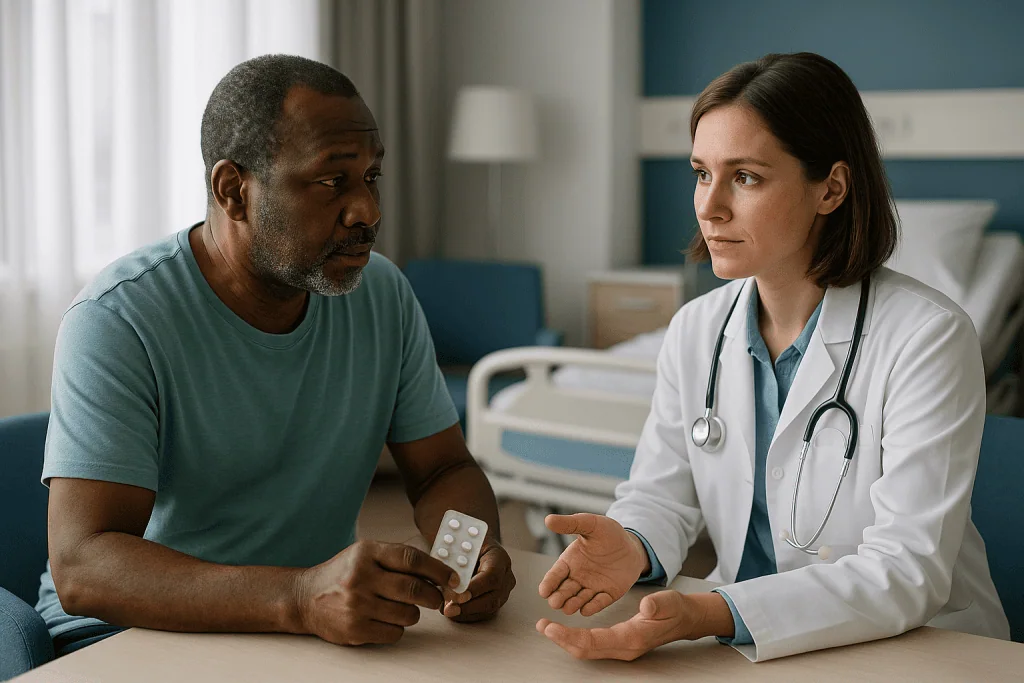
Tuberculosis breaks every one of those conditions. The bacterial load in a lung cavity can be enormous, the organisms replicate slowly, and a meaningful share are not replicating at all. Bacteria in that resting state are sometimes called persisters: cells genetically identical to their neighbors but metabolically quiet, and therefore largely untouched by medicines that need an active target.
Persisters are not permanent. Over weeks, individual cells drift back into activity, divide once or twice, and become vulnerable. Treatment has to be present during those brief windows, and nobody can predict when each cell will take its turn. The practical answer is to keep an effective level of medicine in the body long enough that every bacterium has had its moment of exposure. Months, not days.
Resistance adds a second constraint. In any large bacterial population, a handful of cells carry random mutations that make one medicine useless against them. A single drug would clear the susceptible majority and leave those mutants to repopulate. Combination therapy exists so that a cell resistant to one medicine is still killed by another; the odds of one bacterium resisting two or three drugs at once are vanishingly small.
The NHS describes the result plainly: a course of several antibiotics taken for around six months for most people with active pulmonary TB. The length is the biology’s demand, not a safety margin added on top.
Why TB treatment takes months: the four bacterial populations
Clinicians often describe the bacteria in an untreated TB lesion as four overlapping groups, each with its own vulnerability. The framework is a simplification, but it explains why the course has the shape it does.
The first group divides rapidly in the oxygen-rich wall of a lung cavity. These cause most of the symptoms and most of the transmission. Isoniazid, a medicine that blocks construction of the mycolic-acid coat, kills this group efficiently, which is why people often feel better and become far less infectious within weeks.
The second group lives inside macrophages, in an acidic environment where many antibiotics lose potency. Pyrazinamide is unusual in working better in acid, so it earns its place early and loses most of its value once that population is gone.
The third group sits in caseous material, metabolizing in fits and starts. Rifampin, which blocks the enzyme bacteria use to read DNA into working instructions, acts quickly enough to catch these cells during short bursts of activity. That property makes it the backbone of the continuation phase.
The fourth group is fully dormant. No current medicine reliably kills a bacterium doing nothing, so the strategy is patience: keep rifampin and isoniazid present until these cells reawaken and join the third group.
Ethambutol, the fourth standard medicine, is less about a population and more about insurance. It restrains bacteria that happen to resist one of the others until laboratory testing confirms the strain is fully susceptible, at which point the care team often stops it. This is the mechanism-level reason a TB course front-loads four medicines and then narrows. Which medicines any one person receives is decided by the treating team from culture results, other conditions and tolerance.
TB treatment phases explained: intensive and continuation
A standard course for drug-susceptible pulmonary TB is built in two phases, and knowing why each exists makes the calendar easier to accept.

The intensive phase comes first. According to the CDC, it typically lasts two months and uses four medicines together: isoniazid, rifampin, pyrazinamide and ethambutol. Its goals are to cut the bacterial population quickly, to end infectiousness, and to stop resistant mutants gaining ground while the load is high. This is when most people notice the biggest change in cough, fever and energy, and when the care team watches most closely for side effects.
The continuation phase follows, usually four months with two medicines, most often isoniazid and rifampin. Its job is different: to keep pressure on the slow and intermittently active bacteria that survived the first phase. The numbers are now small, so fewer medicines are needed, but the window for those cells to wake and die must stay open.
Checkpoints sit between the phases. Drug-susceptibility results, which can take weeks because the bacterium grows slowly even in a dish, confirm the medicines are the right ones. A sputum sample at the end of the second month shows whether the lungs have cleared on schedule; a positive result then, or a cavity on the first chest X-ray, may prompt a longer continuation phase, which the CDC notes can extend the total to nine months.
Directly observed therapy, in which a healthcare worker or trained supporter watches each dose being taken, is standard in many programs through both phases. It exists because interrupted courses are the main route to relapse and resistance, not because of any judgment about the patient. The phase structure is a template, and templates get adapted; your own course is decided by the prescribing clinician.
How is the length of a TB course decided?
Six months is a starting point, not a universal rule. The length is set by where the infection is, how sensitive the strain is to standard medicines, and how the person responds. The ranges below are typical figures from public health guidance, not promises for any individual.
| Situation | Typical course length | Why it differs |
|---|---|---|
| Drug-susceptible pulmonary TB, standard regimen | About 6 months (CDC, NHS) | Two-month intensive phase plus four-month continuation |
| Drug-susceptible pulmonary TB, selected adults and adolescents | 4 months (CDC) | Regimen including rifapentine and moxifloxacin; eligibility criteria apply |
| TB of the brain lining (TB meningitis) | About 12 months (NHS) | Medicines cross into the nervous system less easily |
| Sputum still positive or lung cavities at 2 months | Up to 9 months (CDC) | Higher relapse risk prompts a longer continuation phase |
| Multidrug-resistant TB | 6 months with newer all-oral regimens; longer with older regimens (WHO) | Standard medicines fail; replacement combinations differ |
| Latent TB infection | 3 to 4 months with rifamycin-based regimens; 6 to 9 months with isoniazid alone (CDC) | Tiny bacterial load; goal is prevention |
Two rows deserve comment. The four-month option is relatively new and applies only to people who meet specific criteria, including site of disease and susceptibility results; the CDC frames it as an alternative the care team may choose, not a default anyone can request. The 12-month figure for TB meningitis reflects an anatomy problem: the barrier protecting the brain from the bloodstream also slows medicines, so clearing bacteria there takes longer.
Beyond these categories, individual factors nudge the plan. A weakened immune system, interactions with other prescribed medicines, liver or kidney disease and pregnancy all shape which medicines are used and for how long. The decision belongs to the treating team and is routinely revisited as results arrive.
Who gets which course, and who is usually asked to wait?
Not everyone who tests positive for TB infection starts four medicines, and not everyone who needs treatment starts it on the day of the first test.
People with active TB disease, meaning the bacterium is multiplying and causing illness, are the clear candidates for the full phased course. Diagnosis usually rests on symptoms, chest imaging and laboratory tests on sputum or tissue. Because the organism grows slowly, confirming it in culture can take weeks; molecular tests give a faster first answer, and the clinician may begin treatment on strong clinical suspicion while the culture finishes.
People with latent TB infection, where the bacterium is contained and causing no illness, sit in a different category. They are not infectious and have no symptoms, and the question is whether a shorter preventive course is worthwhile. The CDC recommends treatment for those at higher risk of progression, such as recent contacts of an infectious case, people with weakened immunity, and those whose imaging suggests old untreated TB.
Who is asked to wait, or to be assessed further first? Someone whose initial test is positive but whose X-ray and symptoms are still being evaluated to rule out active disease; starting a one- or two-medicine latent regimen in a person who actually has active TB would risk breeding resistance. Someone with markedly abnormal liver tests may need the plan adjusted before starting, since several first-line medicines are processed by the liver. During pregnancy, treatment of active TB is generally not delayed, but the choice of medicines changes, which again sits with the clinician.
Children follow their own pathway, with age-appropriate formulations and a pediatric team setting the details. In every case the shared principle holds: confirm what is being treated, choose medicines the strain cannot shrug off, then commit to the full length.
What actually happens in the first weeks of TB treatment?
The opening weeks are the busiest part of the course, for the bacteria and for the care team.
In the first few days many people notice nothing, and that is normal. Fever often eases first, over the first couple of weeks, with cough and night sweats improving more gradually and energy returning last. The NHS advises that most people with pulmonary TB stop being infectious after around two weeks of treatment, though the care team confirms this with repeat sputum tests rather than assuming it, and some people are asked to stay away from work or school until then.
Side effects are most likely in this window. Rifampin turns urine, sweat and tears an orange-red color, which is harmless but startling, and it can stain soft contact lenses. Nausea and reduced appetite are common early on. Mayo Clinic notes that first-line medicines can affect the liver, so blood tests are usual before starting and at intervals afterward, with closer monitoring for people who drink alcohol regularly or have existing liver disease. Ethambutol can affect color vision in a minority of people, so clinicians usually check vision at the outset and ask patients to report any change.
Around the end of the second month the plan is reviewed formally. Susceptibility results are back, so ethambutol is often dropped. A sputum sample is examined; if it has cleared, the continuation phase begins with two medicines. Appointments usually settle into a monthly rhythm, each checking weight, symptoms, side effects and adherence.
Feeling well by week three is expected and welcome, but it tells you only about the first bacterial population. The remaining groups are the reason the course continues. A side effect that worries you is a reason to call the clinic, never a reason to adjust medicines yourself.
Why TB treatment takes months even after you feel better
By the second month, most people on treatment feel close to normal. The temptation to stop is real, so it is worth naming the two things that happen if someone does.
The first is relapse. Symptoms track the fast-dividing bacteria, which die early. The slow and dormant populations cause no symptoms while they wait, so a person can feel entirely well with thousands of viable organisms still sitting in caseous tissue. When medicines stop, those cells resume dividing on their own timetable and the disease returns, sometimes months later. Relapse is the single reason the continuation phase exists.
The second is resistance. During an interrupted or partial course, bacteria meet one or two medicines at uneven concentrations, close to a laboratory recipe for selecting resistant strains. Multidrug-resistant TB, defined by the WHO as resistance to at least isoniazid and rifampin, is harder to treat, needs different medicines with more side effects, and can be passed to others in that resistant form.
Programs have built a great deal around this problem. Directly observed therapy, video-observed therapy, pill organizers, reminder systems and fixed-dose combination tablets that bundle several medicines into one all exist to make completion easier. None implies distrust; they respond to the fact that six months is long and ordinary life intrudes.
Think of the difference between extinguishing flames and extinguishing embers. The flames go out in weeks. The embers, buried and invisible, need the hose kept on them until the last one is cold. The care team cannot see the embers either, which is why the full course is defined by time and test results rather than by how a person feels.
What happens if doses are missed or the course is interrupted?
Missed doses happen. Travel, shift work, side effects, a lost prescription, a difficult week: TB programs expect interruptions and have procedures for them.
What matters, from the biology’s point of view, is how much of the course has been completed and how long the gap lasted. A single missed day in the continuation phase is a different situation from a three-week gap during the intensive phase. CDC guidance for clinicians sets thresholds for when a course can simply resume, when it should be extended to make up lost time, and when it should restart from the beginning with fresh susceptibility testing. Those decisions need the full picture, which is why the right response to a missed dose is to tell the clinic, not to double up or stay quiet.
A longer gap raises a specific worry: the bacteria may have met sub-therapeutic levels of medicine, the condition that favors resistant cells. Repeat sputum testing and, if positive, repeat susceptibility testing let the team check whether the original medicines still work before continuing.
Side effects are the most common reason people interrupt treatment on their own, and the least necessary. Many problems have workable solutions: shifting the time of day, treating nausea, pausing one medicine temporarily under supervision while the others continue, or switching to an alternative. Stopping everything at once removes the combination that protects against resistance; pausing one medicine under a clinician’s direction does not.
Honesty is clinically useful here. A patient who reports missing a week allows the team to adjust the end date and recheck sputum; one who does not may finish on schedule with the embers still warm. Most programs now frame adherence as a shared task rather than a test.
How are drug-resistant TB courses planned differently?
When laboratory testing shows the strain resists one or more first-line medicines, the whole plan changes. The phases survive in spirit, but the medicines, the length and the monitoring are rebuilt.
Resistance to isoniazid alone is the most common pattern and is usually managed by substituting another medicine and adjusting the course. Resistance to rifampin, with or without isoniazid, is the serious category, because rifampin is the medicine that reaches the intermittently active population. Without it, the slow and dormant bacteria are far harder to clear, which until recently meant courses the WHO describes as lasting 18 months or more, often with injectable medicines and considerable toxicity.
That picture has changed. The WHO now recommends, for many people with multidrug- or rifampin-resistant TB, an all-oral six-month regimen built around newer medicines, including bedaquiline, which starves the bacterium of energy by blocking its ATP synthase, and pretomanid, which damages the cell wall and interferes with respiration under low-oxygen conditions. Nine-month all-oral options exist for some situations, and longer individualized regimens remain for strains with more extensive resistance.
Planning a resistant course involves more laboratory work, because the team needs to know which of a wider set of medicines the strain still responds to. Monitoring is heavier too: some second-line medicines can affect heart rhythm, nerves or blood counts, so electrocardiograms and blood tests are scheduled through the course, usually under a specialist TB service.
Drug-resistant TB is not a sign that a person did anything wrong. Many people acquire a resistant strain directly from someone else. The same two principles apply as in susceptible TB, combination therapy and completion, but the stakes of interruption are higher because fallback options are fewer. Decisions rest with the specialist team.
Does inactive (latent) TB need months of treatment too?
Many people first meet TB through a positive skin or blood test with no symptoms at all, often after workplace screening or contact tracing. This is latent TB infection: the bacterium is present and contained, the person is not ill and cannot pass it on, but the infection can activate later, especially if immunity weakens.
Treating this state is preventive, and the logic differs from treating disease. The bacterial load is tiny and largely dormant, there is no cavity and no fast-dividing population to control. One or two medicines are enough, because small numbers make resistant mutants unlikely. The target is still that slow-waking population, though, so the course is measured in months rather than weeks.
The CDC lists several regimens and now prefers the shorter rifamycin-based ones, which run three to four months, over the older six- to nine-month isoniazid-only course, chiefly because people are more likely to finish them. Which regimen suits a given person depends on age, other medicines (rifamycins interact with many, including some HIV treatments and hormonal contraception), liver health and pregnancy.
Before any preventive course starts, the care team rules out active disease with a symptom review and chest X-ray. This step is not optional: giving a latent regimen to someone who actually has active TB would treat a large bacterial population with too few medicines, the scenario most likely to select resistance.
Who is generally offered treatment? The CDC prioritizes people at higher risk of progression: recent contacts of an infectious case, people living with HIV or taking immune-suppressing medicines, those with imaging suggesting prior untreated TB, and people with conditions such as diabetes or kidney failure. For others, the clinician weighs the small risk of side effects against the lifetime activation risk the WHO puts at roughly 5 to 10 percent. That conversation, and the decision, belong to the two of you.
What people often get wrong about TB treatment
Myths cluster around long treatments, and TB has gathered more than most. A few common ones, set against what the evidence shows.
“If I feel better, the TB is gone.” Symptoms come from the fast-dividing bacteria, which die first. The populations that cause relapse are silent. Completion is defined by time and sputum results, not by how someone feels.
“Six months means the doctors are being over-cautious.” The length is the measured minimum needed to reach dormant bacteria during their brief active windows and to prevent resistant mutants surviving. Shorter regimens exist only where specific combinations, tested in trials, can do the same job in less time, and only for people who meet the criteria.
“A TB diagnosis means isolation for months.” The NHS notes that most people with pulmonary TB are no longer infectious after around two weeks of treatment. Where isolation is advised, it is short and lifted on the care team’s assessment.
“TB is a disease of the past.” The WHO counts it among the leading infectious causes of death worldwide, with more than 10 million people falling ill each year.
“Only the lungs are affected.” TB can involve lymph nodes, bones, kidneys, the lining of the brain and, rarely, the skin. Treatment principles are the same; the length may differ.
“Orange urine means something is wrong.” It means rifampin is being absorbed. The color change is expected and harmless, though it stains.
“Herbal or dietary remedies can replace the medicines.” No supplement or traditional preparation has evidence of clearing M. tuberculosis. Good nutrition supports recovery alongside treatment; it is not a substitute for it.
Questions to ask your care team
A TB course is long enough that a few early conversations pay off for months. Taking a written list to the first appointments is reasonable and welcomed by most clinics.
On the plan itself: Which type of TB do I have, and where is it? Have laboratory results confirmed the medicines are the right ones, and when will susceptibility results be back? How long is my course expected to last, and what would change that? Which phase am I in now, and what marks the move to the next one?
On daily life: Am I still infectious, and until when? When can I return to work or school, and what should my household know? Should anyone in my home be tested? Should I take the medicines with food or at a particular time, and what should I do if I vomit shortly after a dose?
On safety: Which side effects are expected, which should I report the same day, and which mean I should call immediately? Which of my other medicines, supplements or contraceptives interact with the TB medicines? How often will liver tests, vision checks or other monitoring happen, and how will I get the results?
On support: Is directly observed or video-observed therapy part of my program, and how does it work day to day? Who do I contact outside clinic hours? What happens if I miss doses, and how much notice does the clinic need if I travel?
On the end of treatment: How will you confirm the course has worked? Will I need follow-up appointments or imaging afterward, and for how long? What symptoms after finishing should bring me back?
None of these is a challenge to the team’s judgment. They are the ordinary questions of someone planning six months of their life, and clinics would rather answer them early than untangle a misunderstanding in month four.
When to call your doctor
Most problems during TB treatment are minor and manageable, but a handful of signs need prompt attention, some the same day. Do not stop or change any medicine on your own; call, describe what is happening, and let the clinician decide.
Contact your TB clinic or doctor promptly if you notice yellowing of the skin or eyes, urine that turns brown rather than the expected orange, pale stools, pain in the upper right abdomen, or nausea and vomiting lasting more than a day or two. These can mean the liver is reacting to one of the medicines, which Mayo Clinic flags as the side effect clinicians watch for most closely with first-line treatment.
Call the same day if your vision changes in any way, including blurring, difficulty telling red from green, or a dim patch in the center of sight. Report numbness, tingling or burning in the hands or feet, a new rash, especially with fever or blistering, unexplained bruising or bleeding, or a fever that returns after it had settled.
Seek emergency care immediately for severe difficulty breathing, coughing up more than a small streak of blood, chest pain, confusion, a severe headache with a stiff neck, fainting, or swelling of the lips, tongue or throat.
Some events are quieter but still worth a call: symptoms that were improving and then worsen, weight that keeps falling, missed doses of more than a day or two, a new medicine prescribed by another clinician, a new pregnancy, or difficulty keeping up with appointments. Each can change the plan, and the plan is the clinic’s to change.
After the course ends, cough, fever, night sweats or weight loss returning in the following months should prompt a return visit. Relapse is uncommon after a completed course, but it is managed most straightforwardly when caught early.
Frequently asked questions
Why does TB need long treatment?
Because Mycobacterium tuberculosis divides slowly, hides inside immune cells and walled-off lung lesions, and includes dormant bacteria that medicines can only kill when they briefly reactivate. A course has to stay in the body long enough to catch each of those windows, and long enough for combination therapy to eliminate resistant mutants. For drug-susceptible pulmonary TB that is about six months, according to CDC and NHS guidance.
What are the first signs of TB?
The earliest features are usually vague: a cough lasting more than three weeks, tiredness, poor appetite, gradual weight loss, low-grade fever and night sweats, as described by the NHS and Mayo Clinic. None is specific to TB, and people with latent infection have no symptoms at all. A persistent cough, especially with blood or after contact with someone who has TB, warrants a medical assessment rather than self-diagnosis.
What is Mycobacterium tuberculosis?
It is the bacterium that causes tuberculosis, a slow-growing organism with a thick, waxy wall made of mycolic acids that blocks many antibiotics. It spreads through the air when someone with active lung disease coughs, survives inside the immune cells sent to destroy it, and can remain dormant in the body for years. The WHO estimates about a quarter of the world’s population has been infected.
What are the symptoms of skin tuberculosis?
Cutaneous TB is rare and takes several forms, most often slowly enlarging painless lumps, ulcers or warty plaques, sometimes where an infected lymph node breaks through the skin. It is diagnosed by biopsy and culture, not appearance alone, because many skin conditions look similar. Treatment follows the same phased multi-medicine course as other TB outside the lungs, with the length set by the treating team.
Can TB treatment be shorter than six months?
Sometimes. The CDC describes a four-month regimen including rifapentine and moxifloxacin for certain adults and adolescents with drug-susceptible pulmonary TB who meet specific criteria. The WHO also recommends six-month all-oral regimens for many people with drug-resistant TB, replacing courses that once lasted 18 months or more. Eligibility depends on susceptibility results, site of disease and other factors, so the care team decides.
Am I still infectious during TB treatment?
In the first weeks, usually yes. The NHS advises that most people with pulmonary TB are no longer infectious after around two weeks of effective treatment, but clinics confirm this with repeat sputum tests rather than assuming it. People with TB outside the lungs are generally not infectious. Your care team will tell you when it is safe to return to work, school or shared spaces.
What happens after completing six months of TB treatment?
The care team confirms completion with sputum tests or imaging, depending on the type of TB, and then usually schedules follow-up for a period afterward. Most people need no further medicines. Relapse is uncommon after a fully completed course but can occur, so returning cough, fever, night sweats or weight loss in the months after finishing should prompt a prompt return to the clinic.
What does the intensive phase of TB treatment mean?
It is the first phase, typically two months according to the CDC, during which four medicines are taken together to cut the bacterial population rapidly, end infectiousness and prevent resistant strains gaining ground while numbers are high. It is followed by a continuation phase, usually four months with two medicines, which targets the slow and dormant bacteria that survived the opening attack.
Does drug-resistant TB take longer to treat?
Often, though less than it used to. Older regimens for multidrug-resistant TB lasted 18 months or more and relied on injectable medicines. The WHO now recommends six-month all-oral regimens for many people, with nine-month and longer individualized options for others. Resistant courses involve more laboratory testing and closer monitoring of heart rhythm, nerves and blood counts, and are planned by a specialist TB service.
What should I do if I miss a dose of TB medicine?
Tell your TB clinic rather than doubling up or staying quiet. A single missed dose is usually a small matter, but the clinician needs to know the length of any gap and which phase you are in, because CDC guidance sets thresholds for simply resuming, extending the course or restarting with repeat testing. Reporting missed doses is what allows the team to keep the course effective.
References
- CDC: Treating Tuberculosis
- NHS: Tuberculosis (TB)
- WHO: Tuberculosis fact sheet
- MedlinePlus: Tuberculosis
This article is for general information only and is not a substitute for professional medical advice. Please consult a qualified doctor about your individual situation.
Add us as a Preferred Source to see more of our trusted health content across Google Search, AI Overviews and Discover.

More from the Blog

Can Herpes Be Fatal? Rare Serious Complications, Who Is Most Vulnerable and When to Seek Care
For the vast majority of people, herpes simplex is not fatal; cold sores and genital herpes are lifelong but manageable infections. Deaths are rare…

How Long Does Flu B Last? Influenza Stages Day by Day and When You Are No Longer Contagious
Flu B usually lasts five to seven days: fever and aches peak in the first three days and most people feel better within a…

What Happens After Malaria Treatment? Follow-Up Blood Tests, Anemia Checks and Regaining Energy
After malaria treatment, follow-up usually means repeat blood smears to confirm the parasites have gone, a hemoglobin check for anemia that can deepen for…

Can You Get Gonorrhea from Kissing? How It Spreads and the Signs of a Throat Infection
Kissing is not a recognized route of gonorrhea transmission in CDC and NHS guidance, which name unprotected vaginal, anal and oral sex as the…

Can Salmonella Be Fatal? When an Infection Turns Serious and Who Needs Closer Medical Care
Yes, salmonella can be fatal, but death is rare. The CDC estimates about 1.35 million infections, 26,500 hospitalizations and 420 deaths in the United…

Viral Rash: What It Looks Like in Adults and Children, Common Causes and Whether It Is Contagious
A viral rash is a skin eruption triggered by a viral infection, usually appearing as small pink or red spots, flat patches or fluid-filled…